
端侧AI

Search documents
端侧AI爆发了!终端智能革命已至!
格隆汇APP· 2025-08-31 07:57
Core Viewpoint - The article emphasizes that edge AI is not merely a migration of AI from the cloud to the edge, but represents a next-generation revolution in terminal intelligence, fundamentally altering the value logic of the technology industry [3][4]. Summary by Sections 1. Edge AI: A Next-Generation Revolution - Edge AI enables devices to actively perceive and make real-time decisions, transforming them from passive executors of commands [3]. - The three major pain points of cloud AI have been addressed, opening new growth opportunities for the terminal industry: - Privacy and security are enhanced as data is processed on-device, reducing leakage risks and aligning with regulatory requirements [4]. - Response times have improved significantly, with latency reduced from seconds to milliseconds, enabling applications in high-demand scenarios [4]. - Cost efficiency is optimized, with operational costs reduced by 30%-50%, allowing edge AI to penetrate mid-range and low-end devices [4]. 2. The "Eve of Explosion" for Edge AI - The anticipated breakthrough for edge AI by 2025 is attributed to the convergence of policy, technology, and demand: - Policies provide a clear roadmap, aiming for a 70% penetration rate by 2027, which encourages enterprise R&D and market promotion [5][6]. - Technological advancements in hardware and software are enabling devices to run large models effectively [7][8]. - Demand is surging as manufacturers seek differentiation through AI capabilities, leading to significant performance increases in related companies [9][10]. 3. Value Reconstruction in Edge AI - The shift from cloud AI to edge AI is leading to a reallocation of industry value: - Hardware products with integrated edge AI features command a premium, with specialized AI chips priced 20-30% higher than standard chips [11]. - Software components, including lightweight models and algorithms, are becoming increasingly essential, with potential revenue growth exceeding 50% [12][13]. - Companies that successfully bind edge AI to high-value scenarios can enjoy long-term ecological benefits, significantly enhancing their growth potential [14]. 4. Capturing Edge AI Opportunities - The current phase of edge AI mirrors the early stages of solid-state batteries, with policies, technology, and demand converging to create a multi-trillion market opportunity [15].


欧洲智能手机市场整体承压,荣耀逆势增长11%领跑行业
Guan Cha Zhe Wang· 2025-08-29 13:10
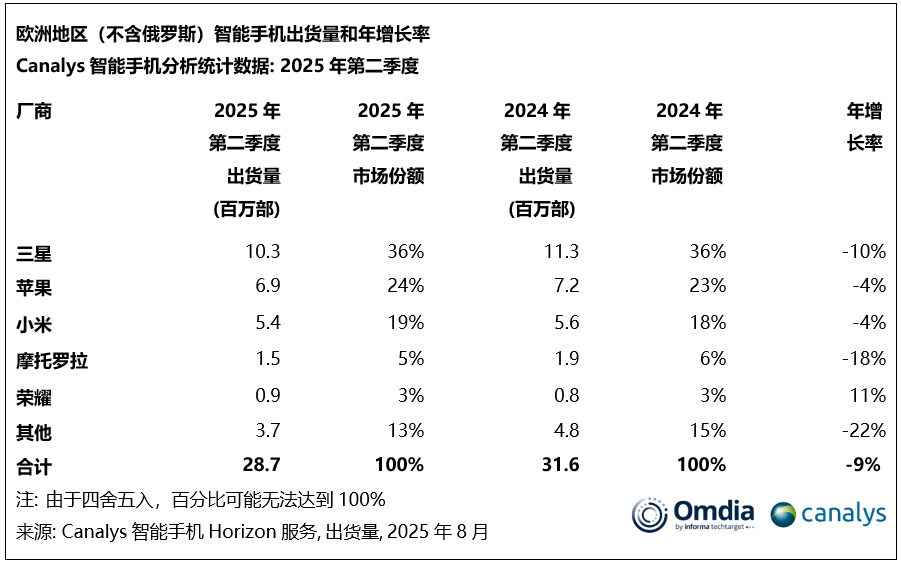
根据Canalys(现并入Omdia)最新数据,2025年第二季度欧洲智能手机市场出货量同比下降9%,整体环境面临挑战。在此背景 下,荣耀逆势实现11%的同比增长,以90万部的出货量稳居市场前五,展现出强劲的品牌韧性与市场竞争力。 荣耀的逆势表现,源于对技术创新的坚持与用户需求的深度洞察。据悉,8月28日,荣耀Magic V5海外版正式在欧洲上市,这款 旗舰产品将搭载离线、实时翻译功能,为跨语言沟通场景提供便捷支持;而该功能的核心技术已获国际权威认可——近日,荣 耀联合上海交通大学完成的相关端侧AI语音研究论文,已在国际语音顶会INTERSPEECH上发表,印证了其技术的前沿性。 在阿尔法战略引领下,荣耀长期深耕端侧AI领域,面对全球智能手机市场的机遇与挑战,荣耀凭借对用户需求的深刻洞察与持 续的技术投入,逐步建立起差异化的全球竞争力。此次荣耀Magic V5海外上市与技术成果的落地,正是荣耀将学术与技术研究 转化为用户体验的又一实践,也为其在海外市场的持续发展奠定基础。未来,荣耀将继续以技术创新为驱动,为全球消费者带 来更优质的智能终端体验。 | 欧洲地区(不含俄罗斯)智能手机出货量和年增长率 | | | ...
恒玄科技(688608):2Q25:可穿戴产品供不应求
HTSC· 2025-08-29 11:07
Investment Rating - The report maintains an "Overweight" rating for the company with a target price of 372 RMB [6][4]. Core Insights - The company achieved a revenue of 1.938 billion RMB in 1H25, representing a year-over-year increase of 26.58%, and a net profit of 305 million RMB, up 106.45% year-over-year [1][2]. - In 2Q25, the company experienced a revenue of 944 million RMB, a year-over-year increase of 7.48%, but a quarter-over-quarter decline of 5.09% due to supply chain adjustments leading to a temporary supply shortage [1][2]. - The gross margin returned to over 40% in 2Q25, reaching 40.12%, marking the first time since 3Q22 that it exceeded this threshold [2]. - The company is expanding its market share in traditional segments like headphones and smartwatches while also entering new application areas such as smart glasses and wireless microphones [3][4]. Summary by Sections Financial Performance - 1H25 revenue was 1.938 billion RMB, with a net profit of 305 million RMB, and a significant increase in R&D expenses to 228 million RMB in 2Q25, up 36.37% quarter-over-quarter [1][2]. - The company expects revenue to recover in 3Q25, driven by new applications in wireless microphones and smart glasses [1][3]. Market Position and Strategy - The company is successfully increasing its market share in the headphone and smartwatch markets, with new clients and product launches contributing to growth [3]. - The BES2800 chip is gaining traction in various applications, enhancing the company's revenue potential in emerging markets [2][3]. Profitability and Valuation - The report projects revenue for 2025 to be 4.595 billion RMB, with corresponding net profits of 835.54 million RMB, reflecting a downward adjustment from previous estimates [4][10]. - The target price of 372 RMB corresponds to a 75x PE ratio for 2025, indicating a favorable valuation compared to market expectations [4][6].

黑芝麻智能2025中报解读:全球营收增长40.4%,海外定点创新高
市值风云· 2025-08-29 10:16
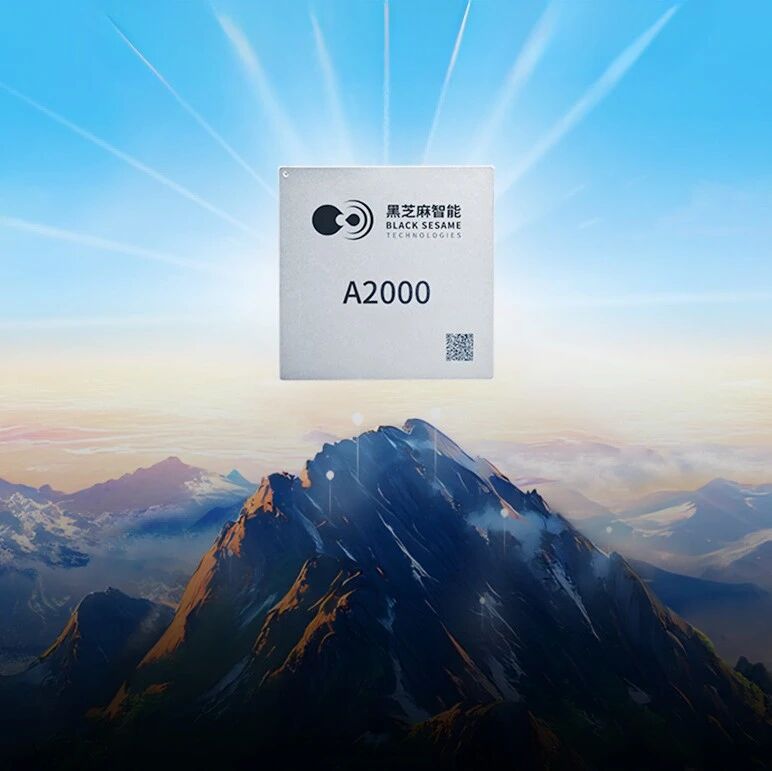
Core Viewpoint - The company aims to become a leader in the edge AI chip sector, showcasing strong growth and strategic advancements in autonomous driving and robotics [1][12]. Financial Performance - In the first half of 2025, the company achieved a revenue of 253 million yuan, representing a year-on-year growth of 40.4%, exceeding market expectations and setting a new record for the same period [3][4][12]. Global Strategy - Despite challenges in the global automotive semiconductor market, the company demonstrated exceptional product competitiveness and strategic execution, marking a new phase in its globalization strategy [4][5]. - The company has significantly increased its overseas model count and project scale, establishing a solid foundation for large-scale deliveries in key markets such as Europe, Southeast Asia, and the Middle East [5][12]. Autonomous Driving and Robotics Innovations - The company accelerated the mass production of its A1000 series chips for advanced driver-assistance systems (ADAS), collaborating with major clients like Geely and BYD [6][12]. - The C1200 series chips have enabled seamless navigation from parking space to parking space (P2P) across various road scenarios, with plans for mass deployment in multiple new energy vehicle projects [7][12]. - The introduction of the A2000 high-performance chip, which supports full-scene functionality for urban NOA, is set to lead the next generation of autonomous driving [7][12]. - In robotics, the company has developed motion control solutions and perception computing schemes, collaborating with leading bipedal robot firms to create multi-modal perception modules [8][12]. Technological Advancements - The company maintains a leading position in key algorithms and self-developed NPU architecture, enhancing perception accuracy and reducing reliance on high-precision maps [9][12]. - The proprietary "Jiushao" NPU architecture has shown excellent AI computing efficiency and flexibility, supporting mixed-precision training and deployment [9][12]. Commercialization and Strategic Acquisitions - The company has made significant progress in commercializing its L4-level unmanned logistics vehicle systems, demonstrating practicality and reliability in controlled environments [10][12]. - The expansion into AI smart glasses and other emerging terminal products indicates the company's ability to leverage technology across various industries [10][12]. - Plans for acquiring a high-performance, low-power AI chip company are underway, aimed at strengthening the company's position in edge computing and achieving its strategic goal in the edge AI chip market [11][12].
广和通(300638):公司信息更新报告:收入结构不断优化,机器人+端侧AI发展加速
KAIYUAN SECURITIES· 2025-08-29 08:08
Investment Rating - The investment rating for the company is "Buy" (maintained) [1][4] Core Views - The company is accelerating its development in solutions and edge AI, particularly in the robotics sector, and maintains a "Buy" rating. The company reported a revenue of 3.707 billion yuan for H1 2025, a year-on-year decrease of 9.02%. Excluding the impact of the Ruilin wireless vehicle-mounted business, revenue increased by 23.49%. The net profit attributable to the parent company was 218 million yuan, down 34.66% year-on-year, but grew by 6.54% when excluding the same business impact. The company is expected to benefit from the rapid growth in demand for intelligent computing modules driven by the AI wave and the commercialization of robotics [4][5][6]. Financial Summary - For 2025, the company is projected to achieve a revenue of 8.621 billion yuan, with a year-on-year growth of 5.3%. The net profit attributable to the parent company is expected to be 545 million yuan, reflecting a year-on-year decrease of 18.4%. The gross margin is projected to be 19.9%, and the net margin is expected to be 6.3% [7][9]. Product Development - The company has launched multiple new AI solutions and products in H1 2025, including the FG390 series 5G module based on the MediaTek T930 platform, the "Nebula" series AI modules covering 1T to 50T, and various other AI solutions aimed at enhancing collaboration with ecosystem customers [5][6]. Market Position - The company is recognized as a global leader in wireless communication modules and AI solutions. With the acceleration of robotics commercialization and the growing demand for intelligent computing modules, the company is well-positioned to continue benefiting from these trends [4][6].

传音控股(688036):25Q2业绩触底回升,看好新兴市场长期增长+扩品类+移动互联网+端侧AI发展
EBSCN· 2025-08-29 07:06
Investment Rating - The report maintains a "Buy" rating for the company [1] Core Views - The company is expected to see a recovery in performance in Q2 2025, driven by long-term growth in emerging markets, expansion of product categories, mobile internet, and edge AI development [1][6] - Despite a decline in revenue and net profit in the first half of 2025, the company shows signs of improvement with a significant quarter-on-quarter revenue increase in Q2 2025 [5][7] - The company leads in market share in emerging markets, ranking third globally among smartphone manufacturers, with a focus on diversifying its product offerings and enhancing internet services [6][8] Financial Performance Summary - In H1 2025, the company reported revenue of 29.077 billion, a year-on-year decrease of 15.86%, and a net profit of 1.213 billion, down 57.48% [5] - Q2 2025 results showed revenue of 16.074 billion, a year-on-year decline of 6.09% but a quarter-on-quarter increase of 23.61%, with a net profit of 0.723 billion, down 41.03% year-on-year but up 47.47% quarter-on-quarter [5][7] - The gross margin for H1 2025 was 20.09%, with Q2 2025 showing a slight improvement to 20.76% [7] Business Segment Analysis - The smartphone segment generated revenue of 24.389 billion, down approximately 17% year-on-year, while the feature phone segment saw revenue of 1.704 billion, down about 35% year-on-year [6] - The company has a 12.5% share of the global smartphone market, ranking third, with a 7.9% share in the global smartphone market, ranking sixth [6] - Other business segments, including digital accessories and home appliances, achieved revenue of 2.971 billion, a year-on-year increase of 15% [6] Future Outlook - The company anticipates accelerated revenue growth in H2 2025 due to factors such as the US dollar interest rate cuts and ongoing product launches [7][8] - The report projects a downward revision of net profit forecasts for 2025 and 2026, with estimates of 3.601 billion and 4.816 billion respectively, while introducing a new forecast for 2027 at 5.685 billion [8][9] - The current market valuation corresponds to a PE ratio of 27X for 2025, 20X for 2026, and 17X for 2027 [8]

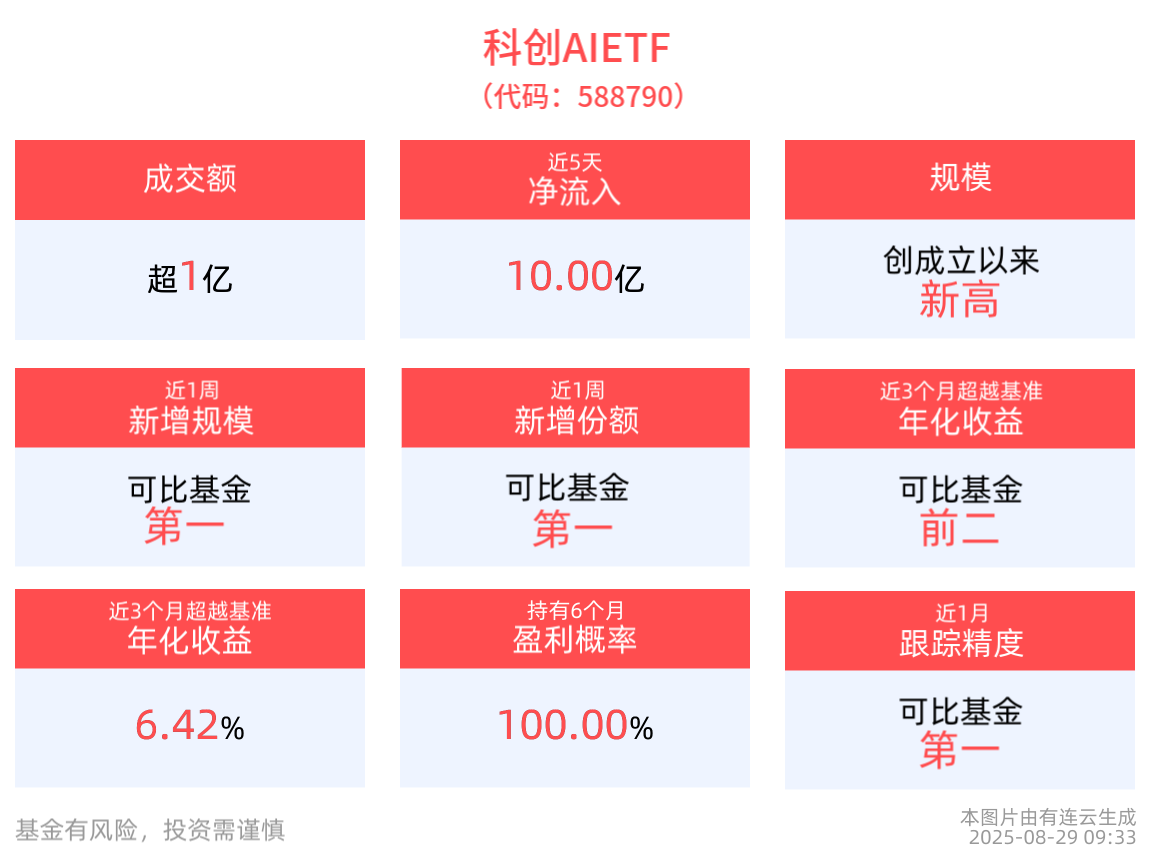
同类规模第一的科创AIETF(588790)最新单日资金净流入7.58亿元,AI商业化势能强劲,消费电子延续复苏态势
Xin Lang Cai Jing· 2025-08-29 02:09
Core Viewpoint - The AI sector is experiencing significant developments with various companies launching new products and technologies, while the market shows a positive trend in liquidity and investment opportunities in AI-related ETFs [3][5]. Group 1: AI Sector Developments - Meta is set to release multiple AI hardware products, including the third generation of RayBan-Meta glasses and other devices, indicating a competitive push in the consumer electronics space [3]. - Google has launched its self-developed TensorG5 chip, enhancing the Gemini model experience, while Meta is restructuring its AI team and pausing hiring [3]. - The AI sector is witnessing a shift towards edge AI, which enhances real-time capabilities and privacy for smart devices, transforming them into intelligent agents [4]. Group 2: Financial Performance and Market Trends - Hengxuan Technology reported a revenue of 1.938 billion yuan for H1 2025, a year-on-year increase of 26.58%, with a net profit of 305 million yuan, up 106.45% [3]. - The AI ETF (588790) has seen a significant increase in trading volume and liquidity, with a recent net inflow of 758 million yuan and a weekly average trading volume of 1.387 billion yuan [7][8]. - The AI ETF has achieved a 27.75% increase in net value over the past six months, ranking in the top 10% among similar funds [8]. Group 3: Investment Opportunities - The AI ETF is positioned as a leading product in the market, with a focus on the entire AI industry chain, including hardware, models, and applications [7]. - The ETF's top holdings include key players in the AI sector, such as Cambricon and Kingsoft Office, which collectively account for 67.36% of the index [9]. - The favorable liquidity environment and expected easing of monetary policy in the U.S. are likely to benefit growth-oriented stocks in the A-share market, including those in the AI sector [5].

黑芝麻智能2025中报:全球营收增长40.4%,海外定点创新高
3 6 Ke· 2025-08-29 01:21
Core Insights - Black Sesame Intelligence reported a revenue of 253 million yuan for the first half of 2025, marking a year-on-year growth of 40.4% [1] - The company achieved record highs in overseas targeted models and quantities during the reporting period, indicating a continuous expansion of its global business footprint [1][3] - The A1000 series chips have accelerated in mass production, with successful integration into multiple new vehicle models from leading clients such as Geely and BYD [1] Financial Performance - The revenue for the first half of 2025 reached 253 million yuan, reflecting a 40.4% increase compared to the same period last year [1] Product Development - The C1200 and A2000 series chips are pivotal in enhancing advanced driver-assistance systems (ADAS) capabilities, with the C1200 enabling full-line NOA (Navigation on Autopilot) [2] - The A2000 series supports full-scene NOA functions and can be expanded to L3/L4 autonomous driving levels, incorporating advanced algorithms for high-level intelligent driving [2] Market Expansion - Black Sesame Intelligence's market presence has significantly expanded, with record highs in overseas targeted models and quantities [3] - The company aims to achieve mass production targets in collaboration with leading Tier 1 suppliers and algorithm partners, promoting open and technologically advanced intelligent driving solutions [3] Strategic Initiatives - The company is extending its mature mass production experience into emerging fields such as humanoid robotics, aiming for a strategic transition from "vehicle penetration" to "full-scene coverage" [3] - Black Sesame Intelligence has completed technical layouts in the robotics sector, collaborating with Fourier Intelligence on the "Dexterous Hand" product and participating in the development of Wuhan University's "Tianwen" humanoid robot [3] Emerging Fields - The L4 unmanned logistics system has achieved low-speed autonomous driving in closed environments like ports and parks, entering a continuous delivery phase [4] - The company is actively pursuing acquisitions of cost-effective, low-power AI chip firms to strengthen its position in the edge AI chip sector, aiming to become a leader in this field [4]

黑芝麻智能(02533)发布2025中报:全球营收增长40.4% 辅助驾驶出海与机器人双线告捷
智通财经网· 2025-08-29 01:21
Core Insights - Black Sesame Intelligence reported a 40.4% year-on-year increase in revenue, reaching 253 million yuan in the first half of 2025, driven by successful overseas expansion in assisted driving and robotics [1] - The company has established deepened collaborations with major clients such as Geely, BYD, Dongfeng, and FAW, achieving mass production of its A1000 series chips in several vehicle models [1] - Black Sesame is actively developing its robotics business, leveraging its C1200 and A2000 series chips for various applications, including humanoid and wheeled robots [1][2] Revenue Growth - The company achieved a revenue of 253 million yuan in the first half of 2025, marking a 40.4% increase compared to the previous year [1] Assisted Driving Business - Black Sesame has strengthened partnerships with leading automotive manufacturers, with its A1000 series chips being mass-produced in models like Geely Galaxy E8 and Dongfeng Yipai 007 [1] - The C1200 series chip solutions have completed testing in multiple cities and are set for mass deployment in several new energy vehicle projects [1] Robotics Development - The company is developing a motion control solution for robots based on the C1200 series chip and a perception computing solution for embodied intelligence using the A2000 chip [1] - Strategic collaborations with leading bipedal robot companies are underway to develop multimodal perception computing modules for various applications, including humanoid robots and lawnmowers [1][2] Technological Innovation - Black Sesame has built a core competitive advantage through continuous technological innovation, utilizing BEV+E2E algorithms to enhance perception accuracy and reduce reliance on high-definition maps [2] - The self-developed "Jiushao" NPU architecture and toolchain optimizations support mixed training, improving AI computing efficiency and compatibility [2] Commercial Applications - The company's L4 unmanned logistics system has achieved low-speed autonomous driving in closed environments like ports and parks, with ongoing shipments [2] - Smart imaging solutions have expanded into new product forms such as AI smart glasses, achieving commercial deployment with multiple clients [2] Future Strategy - Black Sesame is actively pursuing acquisitions of cost-effective, low-power AI chip companies to strengthen its edge in edge AI deployment and create comprehensive AI inference solutions [2] - The company aims to accelerate the mass production of high-performance chips and implement its edge AI strategy, leading the global trend in assisted driving and opening new chapters in the robotics industry [2]
黑芝麻智能发布2025中报:全球营收增长40.4% 辅助驾驶出海与机器人双线告捷
Zhi Tong Cai Jing· 2025-08-29 01:11
Core Viewpoint - Black Sesame Technology reported a significant increase in revenue and successful advancements in both the autonomous driving and robotics sectors, laying a solid foundation for its global strategy [1][2]. Group 1: Financial Performance - The company achieved a revenue of 253 million yuan in the first half of the year, representing a year-on-year increase of 40.4% [1]. - The overseas targeted models and quantities reached a historical high, with deliveries to international markets set to commence in the second half of the year [1]. Group 2: Autonomous Driving Sector - Black Sesame Technology deepened collaborations with major clients such as Geely, BYD, Dongfeng, and FAW in the autonomous driving field [1]. - The A1000 series chips have been mass-produced in models like Geely Galaxy E8 and Dongfeng Yipai 007 [1]. - The C1200 series chip solutions have completed testing in multiple cities and are set for mass deployment in several new energy client projects [1]. Group 3: Robotics Sector - The company developed a motion control solution for robots based on the C1200 series chip and a perception computing solution for embodied intelligence based on the A2000 chip [1]. - Strategic partnerships with leading bipedal robot companies are underway to develop multimodal perception computing modules, targeting applications in humanoid robots, bipedal robots, and lawnmowers [1]. - The company is expanding its robotics scenarios through capital operations and is developing chip solutions for both domestic and international markets [1]. Group 4: Technological Innovation - Continuous technological innovation has established a core competitive advantage for the company [2]. - The use of BEV+E2E algorithms has significantly improved perception accuracy and generalization capabilities while reducing reliance on high-precision maps [2]. - The self-developed "Jiushao" NPU architecture and toolchain optimization support mixed training, enhancing AI computing efficiency and compatibility [2]. Group 5: Commercial Applications - The company's L4 unmanned logistics system has achieved low-speed autonomous driving in closed environments such as ports and parks, with ongoing shipments [2]. - Smart imaging solutions have expanded to new product forms like AI smart glasses, achieving commercial deployment with multiple clients [2]. Group 6: Future Strategy - The company is actively pursuing acquisitions of cost-effective, low-power AI chip enterprises to strengthen its edge in edge AI deployment [2]. - The goal is to become a leader in the edge AI chip sector and accelerate the mass production of high-performance chips, driving the globalization of autonomous driving and opening new chapters in the robotics industry [2].