消费升级

Search documents
从买成品到造专属
Xin Lang Cai Jing· 2025-12-21 21:43
Core Insights - The article discusses the shift in consumer behavior from material ownership to emotional resonance, highlighting a transformation in consumption patterns driven by rising disposable income and a growing preference for personalized experiences [4][5]. Group 1: Economic Trends - In 2024, the national per capita disposable income in China is projected to reach 41,314 yuan, with an average annual real growth rate of 5.5% from 2021 to 2024 after adjusting for price factors [4]. - The average annual growth rate of residents' service consumption expenditure is 9.5%, outpacing the growth of goods consumption expenditure by 3.8 percentage points [4]. Group 2: Consumer Behavior - Consumers are increasingly seeking emotional value and self-expression through participation in DIY activities rather than traditional purchasing methods [5][6]. - The average transaction price at DIY workshops ranges from 800 to 1,500 yuan, with a 40% repurchase rate, indicating strong customer loyalty [6]. Group 3: Demographics and Participation - DIY workshops are attracting a diverse demographic, including younger consumers (90s and 00s) who prefer unique experiences over luxury goods, as well as older adults seeking social engagement and creative outlets [6][7]. - A survey indicated that 82% of participants consider professional guidance a key factor in choosing DIY workshops, while 95% believe that the quality of materials directly influences their selection [9]. Group 4: Technological Integration - Many DIY workshops are incorporating advanced technologies such as VR and AI to enhance the consumer experience, allowing for personalized design previews and recommendations [8]. - The integration of technology not only makes the creative process more accessible but also adds an element of fun and convenience to participation [8]. Group 5: Community Engagement - Community-based DIY workshops are gaining popularity, providing convenient access to creative activities and fostering a sense of belonging among participants [10]. - Unique settings such as tourist attractions and cultural sites are being utilized for DIY experiences, enriching consumer engagement through cultural interaction [10]. Group 6: Value of Experience - The article emphasizes that the process of creating is often valued more than the final product, with 78% of surveyed consumers believing that the experience of participation holds greater significance [10]. - Consumers are willing to pay a premium of 20% to 50% for enhanced experiences, reflecting a shift towards valuing emotional and experiential aspects of consumption [10].


促进形成投资和消费良性互动机制
Xin Lang Cai Jing· 2025-12-21 19:39
Group 1 - The core idea emphasizes the importance of both consumption and investment in driving domestic demand and social reproduction, highlighting the need for effective government investment to stimulate a virtuous cycle between investment and consumption [1][2] Group 2 - The focus should shift towards "investment in people," prioritizing social infrastructure such as education, healthcare, and cultural services to enhance human capital and boost consumption [1] - Investment should be directed towards consumption upgrade areas, particularly in technology innovation, new infrastructure, and green consumption, to unlock new growth avenues [1] - There is a need to enhance urban infrastructure and public services to release the consumption potential of urban residents and migrant populations [1] Group 3 - Deepening reforms is essential to promote the linkage between investment and consumption, addressing market access restrictions and price controls that hinder private investment in sectors like education and healthcare [2] - By adjusting prices and attracting social capital investment, the government can amplify the effects of public investment while ensuring that wage increases and subsidies for low-income groups keep pace with rising costs [2] - Expanding investment in social welfare and consumption upgrade sectors will not only stimulate domestic demand and consumption but also support long-term economic transformation [2]
今冬 成都人实现“车厘子自由”?
Xin Lang Cai Jing· 2025-12-21 17:38
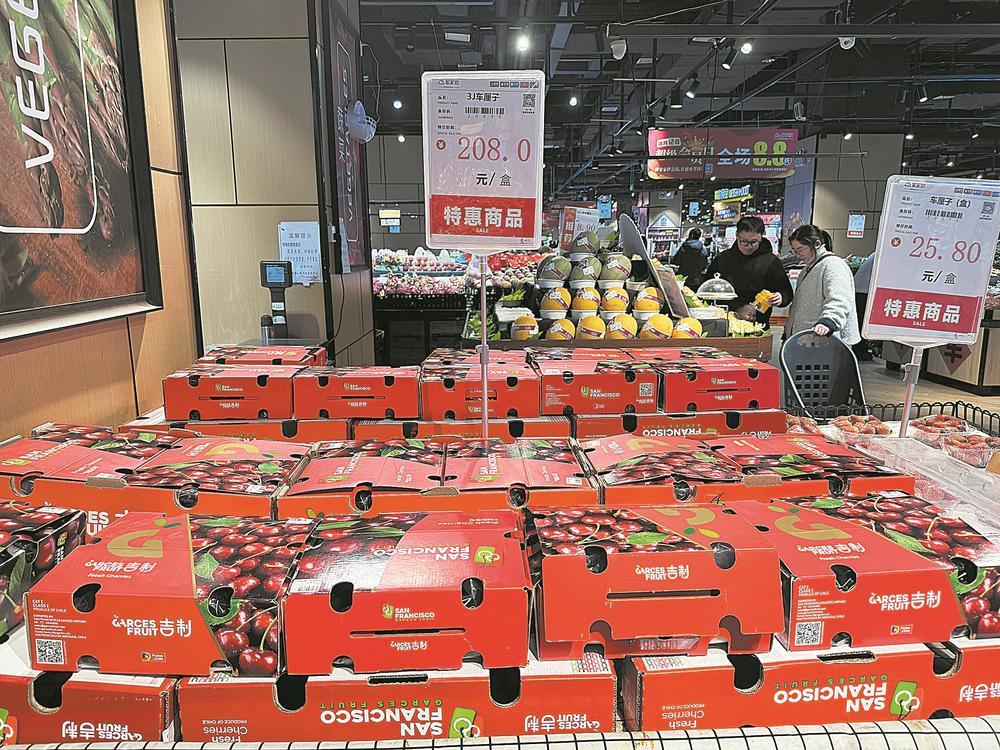
转自:成都日报锦观 供应放量、物流提速、电商让利,三重因素驱动价格"跳水" 今冬 成都人实现"车厘子自由"? 成都某大型商超内,一盒5斤重的3J车厘子售价208元。 近期,成都车厘子市场迎来降价潮,多个销售渠道的售价普遍下调,吸引众多市民选购。昨日,记者走访了成都部分商超,对此进行了调查。 多渠道价格普降 亲民价激发购买热 在一家大型商超内,一盒5斤重的3J车厘子售价208元。超市销售人员透露:"这款昨天还是218元一盒,今天降低了10元。"他还补充,通过在 线上下单预售,购买一盒能节省60多元。 一位水果店经营者告诉记者,本次车厘子降价始于12月初,较往年略早,且销量因价格走低而明显上升。"最近卖得很好。"他表示,"预计这 种价格实惠、销售活跃的市场状况将延续至年末。" 供应、物流、电商三重发力 推动价格走向亲民 车厘子价格缘何"跳水"?核心原因在于供应、物流、电商三重发力,让这款曾经的"贵族水果"逐步走向平价。 供应放量是价格走低的关键。公开数据显示,2023—2024产季,智利对华出口车厘子37.6万吨,占其车厘子总出口量的93%;而2025—2026产 季截至12月10日,智利已向中国出口约11.2万 ...
北京多家商业项目冲刺开业:发力年末消费
Bei Jing Ri Bao Ke Hu Duan· 2025-12-21 16:36
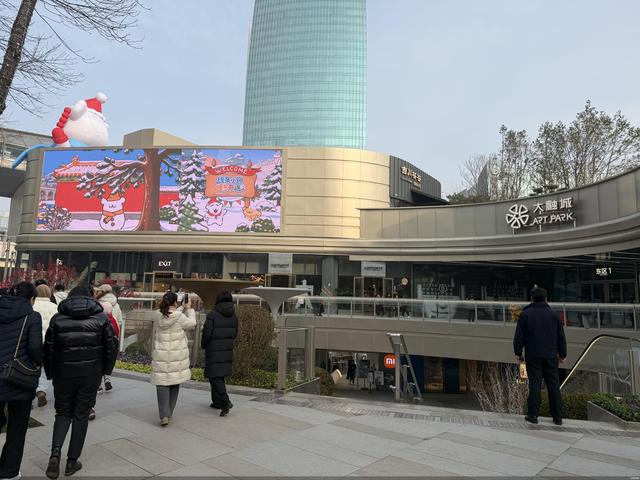
Core Insights - Beijing's commercial market is experiencing a wave of new openings by the end of 2025, with projects like Zhongguancun Daluocheng East District officially opening, enhancing the supply of brand goods in the area [1][3] - The new projects aim to capitalize on the upcoming peak consumption seasons during the New Year and Spring Festival, with multiple commercial projects launching to attract consumer attention [3][4] - The openings reflect a response to the trend of consumption upgrades, aiming to activate potential demand with higher quality offerings [5] Group 1: Project Openings - Zhongguancun Daluocheng East District has opened with over 60 first stores, including COACH concept store and gaga flagship store, enhancing the area's commercial offerings [3][6] - Other projects like Lianhua Hui and Wanli in Tongzhou District are set to open by the end of the year, with Wanli already in trial operation and focusing on cultural, sports, and family entertainment [3][4] - Lianhua Hui is transforming from a hypermarket to a "neighborhood lifestyle space," introducing tech retail brands like Huawei and Xiaomi, along with various dining options [3][7] Group 2: Market Positioning - The new projects have distinct positioning, with Zhongguancun Daluocheng focusing on high-end consumption and filling gaps in brand offerings in Haidian District [6][7] - Wanli aims to leverage its proximity to Universal Beijing Resort to attract tourists and convert them into overnight and experiential consumers [6][7] - Lianhua Hui's transformation caters to community needs, maintaining its supermarket while expanding dining and entertainment options [7] Group 3: Consumer Engagement Strategies - New commercial projects are encouraged to create engaging experiences through events and unique offerings to maintain consumer interest and ensure sustainable operations [8][9] - Operators should adapt tenant mixes based on market changes and consumer feedback, continuously innovating marketing activities to attract diverse customer groups [8][9] - The integration of online and offline shopping experiences is crucial, with a focus on creating themed spaces for younger consumers and utilizing data analytics for targeted marketing [9]
北京多家商业项目年末冲刺开业
Bei Jing Shang Bao· 2025-12-21 15:55
Core Viewpoint - The Beijing commercial market is experiencing a wave of openings by the end of 2025, with new projects enhancing consumer offerings and responding to market demand, particularly in the context of the upcoming holiday shopping season [1][4]. Group 1: New Openings and Market Dynamics - The Zhongguancun Daluocheng East District has officially opened, complementing the West District, and features over 60 first stores, including brands like COACH and gaga [3][5]. - The upcoming openings in Tongzhou District, such as Lianhua Hui and Wanli, aim to capitalize on the year-end consumption peak, with Wanli set to officially open on December 26 [3][4]. - The new commercial projects are strategically timed to attract consumers during the New Year and Spring Festival, which are critical periods for achieving annual sales targets [4][6]. Group 2: Differentiated Positioning - Despite their proximity in opening dates, the new projects in Tongzhou and Zhongguancun have distinct market positions, targeting different consumer segments [5][6]. - Zhongguancun Daluocheng East District aims to fill gaps in brand offerings in a tech-rich area, while Wanli focuses on leveraging tourist traffic from nearby Universal Studios [5][6]. - Lianhua Hui's transformation into a "neighborhood lifestyle space" retains its supermarket roots while expanding into dining and entertainment, catering to community needs [5][6]. Group 3: Supply and Consumer Engagement - The concentration of new commercial openings enriches market supply, prompting businesses to innovate in order to maintain consumer interest and ensure sustainable operations [7][8]. - Key strategies for new projects include event-driven marketing, creating unique attractions, and continuously refreshing tenant mixes based on sales data and consumer feedback [7][8]. - The integration of online and offline shopping experiences is increasingly important, with projects encouraged to utilize data analytics for targeted marketing and enhanced consumer experiences [8].

黄奇帆:今后十年人民币将逐步升值至6.0左右
Bei Jing Shang Bao· 2025-12-21 14:43
Group 1 - China's foreign trade achievements are a natural result of deep transformation and high-quality development in the manufacturing sector over the past decade [2] - China's industrial added value accounts for 32% of the global total, establishing a "one-third" structure where Chinese manufacturing represents one-third, developed countries one-third, and other developing countries one-third [2] - China has formed global competitive advantages in five key sectors: automotive, shipbuilding, high-speed rail, power equipment, and renewable energy (photovoltaics) [2] Group 2 - The structure of foreign investment in China continues to optimize, with actual foreign investment doubling over the past decade to an average of approximately $120 billion annually [3] - Foreign-funded enterprises contribute about 30% of national exports, 50% of high-value-added equipment and electronic product exports, and 15% of industrial and commercial tax revenue [3] - Exports have shifted from a focus on processing trade to a cluster-based export model with embedded domestic value [3] Group 3 - China should promote a balanced approach to imports and exports, enhance trade quality, and increase the internationalization of the Renminbi [4] - An appropriate appreciation of the Renminbi is suggested to enhance purchasing power and promote import growth, aiming for a doubling of per capita GDP in USD terms over the medium to long term [4] Group 4 - It is recommended to moderately reduce export tax rebates based on industry differences and overall needs, reallocating fiscal resources to domestic welfare and innovation [5] - There is an emphasis on improving minimum wage standards and implementing paid leave to promote common prosperity and consumption upgrades [5] Group 5 - The need to prevent "involution" domestically from affecting international trade is highlighted, with a focus on enhancing the brand value and overall profit levels of Chinese manufacturing [6] - China aims to improve service trade, targeting that by 2040, service trade will account for 20% of the total volume of goods and service trade, aligning with the global average [6]

专家:如何让“零负债人群”在扩大内需中“激流勇进”
Zhong Guo Jing Ying Bao· 2025-12-21 14:00
Core Insights - The "zero-debt population" has gained popularity online, characterized by rational financial planning that ensures financial security and a relaxed lifestyle [1] - This group prioritizes essential goods with high cost-performance ratios and avoids luxury items, leading to lower economic pressure and greater autonomy in time management [1] - The shift from a survival-based consumption model to a development-oriented one is evident, with a growing focus on service consumption as opposed to durable goods [4] Group 1: Zero-Debt Population Characteristics - The zero-debt population emphasizes absolute financial safety, allowing them to focus on personal interests and learning rather than material consumption [1] - A young entrepreneur in the intangible cultural heritage sector transitioned from a high-pressure job in a first-tier city to achieve zero debt, enabling full commitment to his new venture [2] - Only 13.4% of the 90s generation in China is currently debt-free, highlighting the relative scarcity of this demographic [2] Group 2: Economic Context and Policy Implications - The National Development and Reform Commission (NDRC) emphasizes the need to activate the consumption potential of the zero-debt population through increased investment in public services [4] - By 2024, service consumption is projected to account for 46.1% of per capita consumer spending, indicating a significant shift in consumer preferences [4] - Current public services and social security systems in China face challenges, including insufficient supply in areas like elderly care and childcare, which could hinder the growth of the zero-debt population [5][6]
商贸零售行业周报(12.15-12.19):多政策出台推进扩大内需,服务消费环比加速增长-20251221
Shenwan Hongyuan Securities· 2025-12-21 13:19
Investment Rating - The report maintains a positive outlook on the retail industry, indicating a "Buy" rating due to expected growth driven by policy support and market recovery [1]. Core Insights - Multiple policies have been introduced to promote domestic demand and enhance the retail sector's recovery, positioning it as a key focus for economic growth [2][5]. - The retail sector is experiencing a steady recovery, with various formats showing stable growth, particularly benefiting from the "胖改" model which enhances operational efficiency and profitability [10][12]. - November 2025 saw a year-on-year increase of 1.3% in total retail sales, although this was below market expectations, influenced by high base effects from previous policies [12][13]. Summary by Sections Investment Analysis - The retail sector is currently under pressure from short-term performance but is expected to see a significant rebound due to systematic support for quality and service transformation during the 14th Five-Year Plan [2][5]. - The report highlights that core companies in the retail sector may exceed profit expectations due to improved operational efficiencies and market conditions [2][5]. Market Performance - During the period from December 15 to December 19, 2025, the retail index grew by 6.66%, outperforming the Shanghai and Shenzhen 300 index by 6.94 percentage points, ranking first among the Shenwan primary industries [22]. - The social service index increased by 2.66%, ranking fourth among the Shenwan primary industries [22]. Policy Developments - Recent policies focus on expanding domestic demand and integrating consumer welfare with consumption promotion, aiming to stimulate market vitality [5][6]. - The retail industry is identified as a critical area for nurturing the domestic demand system, with ongoing reforms expected to enhance the sector's resilience and growth potential [5][6]. Company Updates - Major retail companies are adopting the "胖改" model to improve their operational frameworks, with significant progress reported in store renovations and supply chain management [10][11]. - The report notes that companies like Yonghui Supermarket and Bubu Gao have successfully implemented changes that have led to increased customer traffic and sales [10][11]. Consumer Trends - The report indicates that service consumption is becoming a significant growth driver, with policies aimed at enhancing consumer spending and adapting supply to meet demand [12][16]. - Online retail sales growth has been robust, with a cumulative increase of 9.1% year-on-year for the first eleven months of 2025, surpassing overall retail growth by 5.1 percentage points [15][16].
顺丰控股11月快递业务量15.34亿票 同比增20.13% 物流升级激活内需与跨境贸易双引擎
Di Yi Cai Jing· 2025-12-20 04:33
Core Insights - SF Holding reported a total revenue of 27.173 billion yuan in November, representing a year-on-year growth of 7.85% [1] - The express logistics business generated revenue of 20.66 billion yuan, up 9.88% year-on-year, with a business volume of 1.534 billion parcels, an increase of 20.13% [1] - The company has successfully narrowed the year-on-year decline in single parcel prices for three consecutive months following the implementation of the "Gain Plan" [1] Group 1: Service Upgrade and Market Trends - The express delivery industry experienced a total business volume of 18.06 billion parcels during the "Double 11" shopping festival, reflecting a 5.0% year-on-year increase, indicating strong seasonal logistics demand [2] - The consumer market is transitioning from a phase of "scale expansion" to "quality upgrade," with increasing demands for product quality and service experience [2] - SF Holding launched a "late delivery compensation" service on December 1, allowing customers to receive cash compensation for delayed deliveries, enhancing service quality in the industry [2] Group 2: New Consumption Scenarios - The upgrade in service efficiency has opened new consumption scenarios for SF Holding, including logistics for golf equipment, snow sports gear, and international touring materials, which require high standards of timeliness and professionalism [3] - The company has successfully penetrated various emerging niche markets by providing customized service solutions, expanding its business growth opportunities [3] Group 3: Global Supply Chain and Cross-Border Trade - SF Holding is strategically positioning itself within global supply chain nodes, capitalizing on the growing demand for cross-border logistics as China's openness increases [4] - The company has launched a series of cross-border logistics products, including "China-Vietnam Smart Express" and "China-India Fast Shipping," addressing traditional pain points in cross-border logistics [4] - SF Holding has developed a comprehensive service matrix tailored to different markets in the Asia-Pacific region, enhancing service efficiency and reliability [4] Group 4: Transformation into Supply Chain Partner - SF Holding is evolving from a mere cross-border logistics service provider to a comprehensive supply chain partner, integrating various services such as supply chain finance and just-in-time delivery [5] - This transformation enhances collaboration with enterprises and supports their logistics needs for large items, while also facilitating the entry of foreign goods into the Chinese market [5] - The company's strategic positioning is expected to further drive growth in cross-border trade as consumer upgrades and international trade continue to advance [5]

消费市场新意浓(锐财经)
Ren Min Ri Bao Hai Wai Ban· 2025-12-19 23:40
Group 1 - The core viewpoint of the articles highlights the steady growth of the consumption market in China, driven by various policies aimed at boosting consumption and the emergence of new consumption patterns [1][3][5] - From January to November, the total retail sales of consumer goods increased by 4% year-on-year, surpassing both the same period last year and the overall growth rate for the previous year [1][2] - The service consumption sector has shown rapid growth, with service retail sales increasing by 5.4% year-on-year, outpacing the growth of goods retail sales [2][5] Group 2 - The trend of quality upgrading in consumption is evident, with new consumption models such as instant retail and live e-commerce gaining traction [4][5] - Digital, green, and health-related consumption are emerging as new hotspots, contributing significantly to the overall consumption landscape [5][6] - The potential for consumption upgrade remains substantial, with a large middle-income group in China and expectations for GDP per capita to exceed $13,000 in 2024, leading to a shift from basic needs to more discretionary spending [5][6] Group 3 - There are challenges in enhancing residents' consumption capacity and confidence, with the current consumption rate at 39.9%, which is significantly lower than that of developed countries [6][7] - Future efforts will focus on increasing residents' consumption willingness and enhancing their purchasing power through various policies, including employment stabilization and urban renewal initiatives [6][7] - The market's resilience and potential are expected to continue to manifest as new consumption scenarios and environments are developed [7]