
算力

Search documents
算力“牛”回?——通信ETF(515880)大涨超5.5%点评
Sou Hu Cai Jing· 2025-12-17 11:00
Market Performance - The market experienced a significant increase in the afternoon, with the Shanghai and Shenzhen stock exchanges recording a transaction volume of 1.81 trillion yuan, an increase of 87 billion yuan compared to the previous trading day. The Shanghai Composite Index rose by 1.19%, the Shenzhen Component Index by 2.4%, and the ChiNext Index by 3.39%. The computing power sector saw substantial gains, with the communication ETF rising by 5.56% and the AI ETF on the ChiNext increasing by 5.10% [1]. Factors Driving the Increase - Following the release of Google's Gemini 3 series models, market expectations for computing power in 2026 have risen. In addition to GPUs, ASICs are becoming a significant incremental component in upstream computing chips, which may continue to drive the acceleration of optical modules and other accessories [2]. - Concerns about Japan's interest rate hikes affecting global market liquidity have eased. Former Deputy Governor of the Bank of Japan, Masazumi Wakatabe, indicated that Japan must enhance its neutral interest rate through fiscal policy and growth strategies. While a rise in the neutral rate could lead to natural interest rate hikes, the Bank of Japan should avoid premature tightening of monetary policy [2]. Future Outlook - The demand for computing power is expected to continue growing, particularly in the training segment, with projections for increased requirements in 2024. The performance breakthroughs of Google's Gemini 3 Pro have exceeded expectations, challenging previous beliefs about diminishing returns in pre-training. Major model manufacturers are expected to invest more in pre-training [3]. - Innovations in video models, such as Google's use of autoregression for generating images and videos, may enhance content consistency and could be adopted industry-wide. The inference segment of large models is already demonstrating significant utility, with advanced overseas models typically offering both standard and premium versions, indicating substantial scaling potential in inference [3]. - By 2026, computing power is anticipated to remain one of the most promising sectors in technology. Google's comprehensive AI ecosystem and decades of development may accelerate advancements in the AI industry, with computing chips still in an upward trend. Although there are currently no blockbuster AI applications, large models are enhancing traditional business growth for cloud providers, which have shown high performance since 2023. This revenue growth may support ongoing capital expenditures without excessive concerns in the short to medium term [4]. Investment Focus - The optical module market is expected to double in size by 2026, with continued high growth rates anticipated beyond 2027. The communication ETF is highlighted as a key area of interest, as it holds core stocks from the overseas computing power industry chain, with optical modules, servers, optical fibers, and copper connections making up over 76% of its components. This ETF is seen as a good representation of the fundamental performance of the overseas computing power sector, suggesting a strategy of continued attention and opportunistic investments [4][5].


见证历史,史上首位
Ge Long Hui· 2025-12-17 10:13
Group 1: Market Overview - The market has been reignited by technology stocks, with the Shanghai Composite Index rising by 1.19%, the Shenzhen Component Index by 2.4%, and the ChiNext Index by 3.39% [1] - There is a coexistence of weak index performance and strong structural excitement in the market, indicating a complex investment environment as the year-end approaches [1][6] Group 2: Tesla and SpaceX Developments - Tesla's stock price has rebounded significantly after a 36% drop in the first quarter, reaching a new closing high of $489.88, up 3.1% recently [3] - Elon Musk's wealth has surged, making him the first person in history to surpass $600 billion, currently at $684.2 billion, with projections for SpaceX to reach a valuation of $1.5 trillion upon its IPO [2][3] - The potential for Tesla's full self-driving technology to be commercialized could push its valuation towards $2 trillion, solidifying its position as a global tech leader [2] Group 3: Autonomous Driving Developments - The Chinese Ministry of Industry and Information Technology has issued the first batch of L3 autonomous driving licenses, marking a shift from "technical validation" to "commercial pilot" for autonomous driving in China [5][9] - Companies like Changan and BAIC Blue Valley have received L3-level licenses, indicating a significant advancement in the domestic autonomous driving sector [5][9] - Tesla's progress in Robotaxi technology is influencing the domestic industry, pushing for faster iterations and advancements in autonomous driving technology [9][10] Group 4: Investment Opportunities - The current market environment is characterized by a focus on sectors with "from 0 to 1" technological breakthroughs, particularly in L3 autonomous driving and commercial aerospace [6][8] - Companies like Zhejiang Shibao and BAIC Blue Valley are becoming focal points for investment due to their roles in the L3 project and potential for industry restructuring [10] - The commercial aerospace sector is also gaining attention, with a shift in focus from broad launch capabilities to more specific components that ensure performance and reliability [10]
贵州:持续挖掘算力潜能 谋划建设语料中心
Zhong Guo Xin Wen Wang· 2025-12-17 08:41
贵州省政府新闻办17日举行"十四五"时期数字经济发展成就新闻发布会。记者会上获悉,贵州将持续挖 掘算力潜能,进一步发挥数据中心价值,成为推动行业转型的"车间"和"工厂"。 贵州凭借气候、地理位置、产业生态等优势,建成了全国领先的算力底座,已有50个重点数据中心。在 数据中心网络连接方面,已建成三层时延圈,与42个主要城市直连,还有全球首条400G算力通道建成 投用。 贵州省大数据局副局长、新闻发言人江阳介绍,贵州将把算力底座打得更牢更绿色,加快推动已有的互 联网头部大厂、央国企等数据中心项目扩产上量,继续招引更多项目落地,做大数智产业集群规模;深 化算电协同,提升数据中心绿电使用占比;推动先进节能技术应用和老旧设备更新换代,进一步降低运 行能耗。 围绕数据中心所需,贵州将聚焦算力产业链薄弱环节开展延链补链强链,招引更多服务器、机架、运 维、大模型训推等上下游企业,推动更多项目落地,培育更多专业园区,不断完善数据中心从建设到投 用的配套保障。同时,把"贵州算力"的市场做得更大,让算力真正赋能实体经济。 目前,人工智能对公共语料的需求尤为强烈。贵州省大数据局党组成员、副局长向彪说,贵州将谋划建 设贵州语料中心,打 ...
ETF甄选 | 重庆印发“人工智能+”行动方案,人工智能、稀有金属、消费电子等相关ETF表现亮眼
Sou Hu Cai Jing· 2025-12-17 08:11
2025年12月17日,市场全天震荡拉升,三大指数集体收涨。截至收盘,沪指涨1.19%,深成指涨 2.40%,创业板指涨3.39%。 题材方面,能源金属、贵金属、保险等板块涨幅居前,装修装饰、航天航空、铁路公路等板块跌幅居 前。主力资金上,通信设备、电子元件、能源金属等行业概念流入居前。 ETF方面,或受相关消息刺激,人工智能、稀有金属、消费电子等相关ETF表现亮眼! 【机构:AI产业长期趋势不变,对算力的需求也持续景气】 中信建投证券表示,AI产业链近期催化不断,比如谷歌新模型性能大幅提升、DeepSeekV3.2正式版发 布、亚马逊发布Trainium3以及摩尔线程上市,展现了AI的良好发展前景。目前,世界正处于AI产业革 命中,类比工业革命,影响深远,需要以更长期的视角、更高的视野去观察。因此,AI带动的算力需 求以及应用场景有望延续乐观预期,持续看好AI算力板块。 中泰证券指出,AI产业长期趋势不变,对算力的需求也持续景气,未来国产算力产业仍有较大机会实 现更高质量的发展。同时,以"十五五"规划为纲领,我国AI应用产业也将迎来较好的政策与市场红利 期,国内AI应用端有望快速追赶海外AI应用产业,从而实 ...
暴力拉升!A股突然全线大涨,发生了什么?
天天基金网· 2025-12-17 07:16
上天天基金APP搜索777注册即可领500元券包,优选基金10元起投!限量发放!先到先得! 今天的市场,太惊喜了!上午虽然指数上涨,但依旧有4000多只个股下跌。而到了下午一点 半之后,画风突变,三大指数直线暴力拉升,终于可以理直气壮找一回暴涨的原因了! 接下来一起去看看发生了什么事情。 突然的爆买! 12月17日下午开盘之后,原本震荡的A股三大指数,突然直线拉升。上证指数涨超1%,深证 成指涨超2%,创业板指数涨超3%! 全市场从上午的4000家下跌,转为3600多家公司上涨! | 880005 涨跌家数 | | | | --- | --- | --- | | 글 中 | 涨停 | 55 | | 涨幅 | > 7% | 120 | | 张唱 | 5-7% | 131 | | 涨幅 | 3-5% | 308 | | 张唱 | 0-3% | 3025 | | 跌幅 | 0-3% | 1435 | | 跌幅 | 3-5% | 119 | | 跌幅 | 5-7% | 50 | | 跌幅 | > 7% | 48 | | 其中 跌停 | | 18 | | 上涨家数 | | 3614 | | 下跌2 | | 1652 | ...






全球算力版图第三极:沙特AI热潮中的联想样本
Ge Long Hui· 2025-12-17 06:53
Group 1: Game Industry Developments - Ubisoft has released a significant free update for the popular action-adventure game "Assassin's Creed," featuring the DLC "Valley of Memory," which is available for all main game players to download [1] - The DLC is set in the 9th century AlUla oasis in Saudi Arabia, where the protagonist Basim and his friend Dervis search for Basim's long-lost father, Ishaq, amidst a landscape filled with thieves, secrets, and ancient relics [1] - The development of this DLC received funding from Saudi Arabia's Public Investment Fund (PIF), which has invested $38 billion in the gaming sector through its subsidiary Savvy Games Group [1] Group 2: Saudi Arabia's Investment Strategy - Saudi Arabia is making substantial investments in the gaming industry, with the sector now valued higher than their film, streaming, and music industries combined [1] - PIF is leading a consortium to privatize Electronic Arts (EA) for $55 billion, marking the largest investment by Saudi Arabia to date [2] - The Saudi Crown Prince Mohammed bin Salman aims to position the country as a key player in the global tech landscape, aspiring to become a "third pole" in computing and energy [2] Group 3: Technology and AI Infrastructure - Saudi Arabia is transforming from an oil-dependent economy to a tech investment hub, attracting major tech companies like Nvidia, AMD, and Google to establish AI data centers and hardware manufacturing [8] - The region's low energy costs, particularly for natural gas and oil, make it an ideal location for large-scale data centers and AI computing clusters [9] - The PIF plans to invest $100 billion in developing local electronic and industrial technologies, with partnerships like that of Lenovo being a significant part of this strategy [9] Group 4: Lenovo's Strategic Moves - Lenovo has established a new manufacturing base in Riyadh, covering approximately 200,000 square meters, expected to start production in 2026, focusing on locally manufactured computers and servers [6] - This partnership with PIF's Alat is seen as a key step in diversifying Saudi Arabia's economy and enhancing its role in the global tech supply chain [6] - Lenovo's collaboration aims to train local talent, with plans for 100 Saudi graduates to receive immersive training in engineering, technology, and manufacturing [9] Group 5: Market Opportunities and Challenges - The demand for hardware in the Middle East is projected to grow explosively due to the construction of AI computing centers and data centers, providing significant opportunities for companies like Lenovo [13] - The partnership with Saudi Arabia allows Lenovo to secure stable hardware procurement orders from government and PIF-related projects, ensuring a continuous flow of business [13] - The Middle East's stable energy structure and strong financial capabilities present natural advantages for tech companies looking to diversify their manufacturing bases [16]

计算机ETF(512720)涨超2.2%,大模型能力跃迁或持续催化算力需求
Mei Ri Jing Ji Xin Wen· 2025-12-17 06:37
Core Insights - OpenAI's release of the GPT-5.2 series marks a significant advancement in reasoning and specialized knowledge capabilities, achieving human expert levels for the first time, indicating a shift in large model competition from parameter scale to ecological differentiation [1] - The enhancement in reasoning and specialized work capabilities is expected to benefit enterprise-level applications, with recent releases from Google and OpenAI demonstrating that large model capabilities have not yet reached their ceiling, and the demand for computational power continues to grow [1] - The improvements in complex reasoning and planning capabilities of GPT-5.2 are anticipated to transition enterprise AI applications from high-dimensional search engines and text generators to truly autonomous execution [1] - The importance of proprietary data in the industry is increasing, as general models address the question of how to think, while the content of that thinking depends on the data provided by enterprises [1] - The Computer ETF (512720) tracks the CS Computer Index (930651), which selects listed companies involved in computer hardware, software, and services from the Shanghai and Shenzhen markets, aiming to reflect the overall performance of the computer industry, including cloud computing, big data, and artificial intelligence [1]
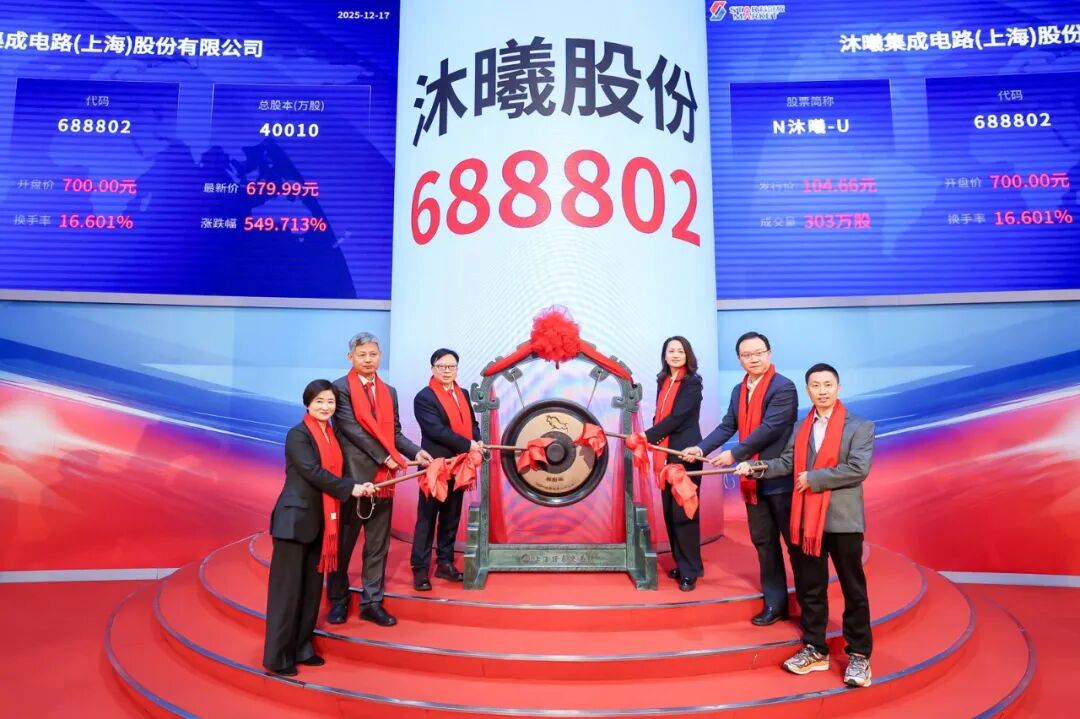
寻找“中国英伟达”:沐曦股份的硬核技术突围
Mei Ri Jing Ji Xin Wen· 2025-12-17 05:37
Core Insights - The global capital market in 2025 is heavily focused on "computing power," with companies like Nvidia leading in AI infrastructure, while China seeks a competitive enterprise in this domain [1] - Muxi Co., Ltd. has initiated its IPO process, positioning itself as a strong competitor in the high-performance general-purpose GPU sector, often referred to as "China's Nvidia" [3] Group 1: Technology and Innovation - Muxi's core technology lies in its full-stack GPU architecture, which is complex and has traditionally been dominated by Western companies [4] - The company has maintained a high R&D investment ratio over the past three years, with over 80% of its workforce being technical personnel, showcasing its commitment to innovation [4] - Muxi's MXMACA software stack addresses the critical issue of "ecological isolation" in domestic chips, enhancing compatibility and minimizing migration costs for users [5] Group 2: Product Offerings - Muxi has developed a comprehensive product matrix covering AI training, inference, and graphics rendering, with products like the "Xiyun" series targeting high-performance AI training [6] - The company’s offerings include the "Xisi" series for high-frequency inference and the "Xicai G" series for graphics processing, indicating a well-rounded technological capability [6] Group 3: Market Dynamics - Recent policy support and market demand have accelerated Muxi's growth, with a government directive emphasizing the importance of computing power in the digital economy [7] - Muxi's customer base is evolving from research institutions to major enterprises, indicating successful market penetration and validation of its products [7] Group 4: Investment Potential - Muxi's rarity as a core asset in the semiconductor sector, combined with its high growth and profit margins, positions it favorably for investors [9] - The company is expected to leverage its IPO proceeds for next-generation GPU development and large-scale industrialization, enhancing investor confidence [10] - Muxi's listing fills a gap in the A-share market for high-end general-purpose GPUs, representing a significant step for China's digital economy [10]
A股暴跌真相曝光!科技股泡沫炸裂,上市企业“瞎搞”成主因
Sou Hu Cai Jing· 2025-12-17 03:36
而本周恰逢全球风险偏好转向:美联储降息预期推迟、美债收益率反弹、日本央行加息引发套息平仓潮,外资加速撤离亚太市场。北向资金单日大幅净流 出,直接抽走A股流动性"氧气"。在此背景下,那些靠故事撑起的高估值科技股首当其冲—— 没有业绩支撑,只有概念堆砌,不跌才怪! 12月16日,A股三大指数全线重挫——上证跌1.11%、深成指跌1.51%、创业板更暴跌2.1%,超4300只个股收绿。表面看是"年末谨慎情绪升温",实则是一场 由 科技股泡沫膨胀、上市公司盲目跟风、资金疯狂出逃共同引爆的系统性回调。 近期市场看似被AI概念推高,实则早已暗流汹涌。大量所谓"AI概念股"根本无核心技术,仅靠改名、蹭热点、发PPT就敢拉涨停。更有企业一边宣称布局大 模型,一边主业亏损、现金流枯竭,甚至靠质押股权维持运营。这种"挂羊头卖狗肉"的操作,让科技板块沦为投机温床,估值严重脱离基本面,泡沫一戳即 破。 加之年末机构集中调仓、私募应对赎回、融资盘恐慌平仓(单日减少超326亿元),多重抛压共振,终致市场雪崩。分析师直言:"在明年初重要政策会议 前,缺乏实质性催化剂,A股只能被动跟随全球情绪波动。" 说到底,这次下跌不是偶然,而是对过去数 ...
光模块CPO大反弹!新易盛涨超4%,高“光”创业板人工智能ETF(159363)涨逾2%
Mei Ri Jing Ji Xin Wen· 2025-12-17 02:24
Group 1 - The core viewpoint of the articles highlights the rebound of optical module CPO and related hardware, with significant gains in stocks such as Guangku Technology and others, indicating a positive market trend for the optical module sector [1] - Huatai Securities projects that Chinese optical module companies may maintain a competitive advantage, particularly in the North American market, with new supplier opportunities emerging by 2026 [1] - The demand for high-speed optical modules (400G, 800G, 1.6T) is expected to expand significantly due to increased AI computing investments by overseas CSPs, providing a window of opportunity for new suppliers [1] Group 2 - The first AI-themed ETF on the ChiNext market (159363) has a significant allocation to optical module leader "Yizhongtian," with over 56% of its holdings in optical modules [2] - The ETF has a current scale exceeding 3.2 billion yuan, with an average daily trading volume of over 600 million yuan in the past month, ranking first among seven ETFs tracking the ChiNext AI index [2]
