全国统一大市场

Search documents
黄凯南:在构建统一大市场中释放增长动力
Jing Ji Ri Bao· 2025-12-10 00:07
习近平总书记指出,"建设全国统一大市场,不仅是构建新发展格局、推动高质量发展的需要,而 且是赢得国际竞争主动权的需要"。党的二十届四中全会对建设强大国内市场作出重要部署。推进全国 统一大市场建设关键要在"纵深"上下功夫。一个高效规范、公平竞争、充分开放的大市场,不仅能够从 需求侧促进消费、投资、出口的结构优化和动能提升,还能够从供给侧加快引领发展新质生产力,更能 够通过统筹供给和需求的良性互动,加快构建新发展格局,从而系统性重塑我国经济增长的内生动力。 把握纵深推进的核心要义 当前,全国统一大市场建设进入纵深推进阶段,这意味着要将统一市场建设向更深层次、更全面的 方向持续深入推进。习近平总书记指出,纵深推进全国统一大市场建设,基本要求是"五统一、一开 放"。这明确了推进全国统一大市场建设的目标方向和任务举措。 统一市场基础制度和基础设施,是优化资源配置、提升市场效率的前提,能系统性降低制度性交易 成本和流通成本,从而更好实现资源配置效率最优化和效益最大化。有效市场所依赖的基础制度,并非 市场自发演进形成的产物,而是需要政府基于经营主体的需求进行有效的制度供给。尤其是涵盖全国的 统一制度,既需要加强顶层设计,也 ...
中国经济长期向好具有坚实支撑
Jing Ji Ri Bao· 2025-12-10 00:07
高效能宏观经济治理,提升了高质量发展的能力。高质量发展是全面建设社会主义现代化国家的首 要任务。不断完善宏观经济治理体系,通过改革发力、政策给力,把发展潜力充分释放出来,把各方面 积极因素转化为发展实绩,打开了高质量发展新天地。今年以来,发放育儿补贴、逐步推行免费学前教 育,注重"投资于人";对个人消费贷款和服务业经营主体贷款进行补贴,实现财政金融政策协同联动; 有效降低全社会物流成本,纵深推进全国统一大市场建设……政策效能不断转化为澎湃发展动能,有力 巩固和增强了我国经济稳中向好态势。 对经济工作的规律性认识不断深化,增强了经济航船行稳致远的定力。新时代以来,我们党团结带 领人民以强大的组织力量、科学的应对策略、恰当的方式方法,化解一系列风险挑战,并及时作出经验 总结,提出理论创新成果,深化对经济工作的规律性认识,充分彰显了我们党在复杂多变的局面下驾驭 发展大局、总揽经济工作的战略智慧。坚持好、运用好理论创新成果,用以指导经济发展实践,将不断 增强战略定力,为我国经济平稳健康可持续发展提供更加坚强的保障。 今年是"十四五"规划收官之年。12月8日召开的中央政治局会议对今年及过去5年的经济社会发展作 出总结— ...
规范招标采购成当务之急
Jing Ji Ri Bao· 2025-12-09 22:09
采购市场是全国统一大市场的重要组成部分,也是推动其建设的重要力量。作为宏观经济治理的重要制 度安排、引导产业发展质量和方向的需求侧政策工具,政府采购一头连着政府、一头连着市场,对于公 共资源的公平高效配置起着风向标作用。 采购招标乱象该休矣 "构建全国统一大市场,一个重要前提和基础,就是加快建设全国统一的政府采购市场。"这是受访专家 学者的共识。 现实中,由于资金密集、权力集中、利益巨大,政府采购领域也成了腐败易发高发的重灾区,诸如最低 价中标、以次充好、利益勾连等问题频频曝出,不仅损害了经营主体合法权益,也扰乱了市场秩序。当 务之急,是要通过完善制度、强化监管等举措整治乱象,让政府采购更加公开公平公正,为纵深推进全 国统一大市场建设提供有力支撑。 我国政府采购虽起步较晚,但发展迅速。财政部数据显示,2024年全国政府采购规模达33750亿元。受 近年来财政收支矛盾加大、党政机关带头过紧日子等因素影响,这一数字较上年下降了约0.5%,但整 体采购规模已连续9年保持在3万亿元以上,凸显了政府采购市场的分量。 中国人民大学公共管理学院教授王丛虎告诉经济日报记者,政府采购制度发端于英国,迄今有200多年 历史,而我 ...
财经老王丨明年我国经济工作怎么干?关注这些重点工作
Yang Shi Xin Wen Ke Hu Duan· 2025-12-09 12:45
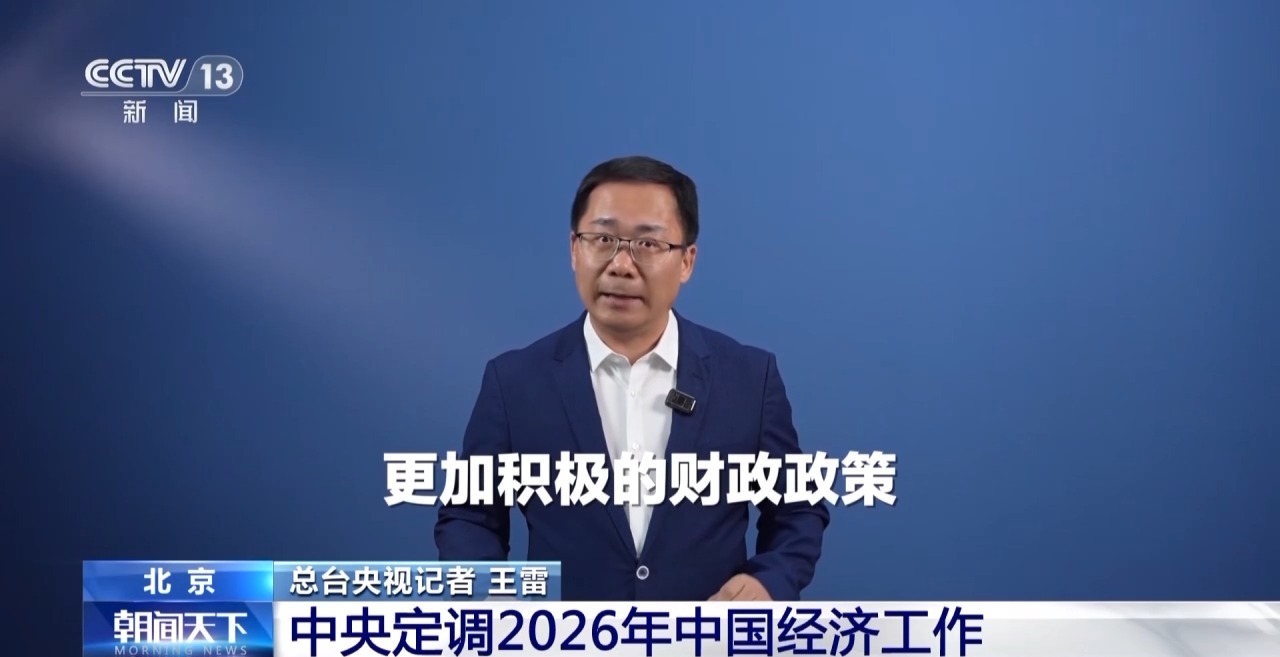
Group 1 - The meeting emphasized a more proactive fiscal policy and moderately loose monetary policy, continuing the approach from the previous year [1] - The policy support for 2026 is expected to remain strong, focusing on both existing policies and new measures to address emerging issues, aiming to stabilize employment, businesses, markets, and expectations [3] - The meeting highlighted the importance of domestic demand and the construction of a strong domestic market, indicating that insufficient effective demand is a key issue to be addressed [5] Group 2 - The meeting called for better coordination between domestic economic work and international trade struggles, emphasizing the need for openness while safeguarding national interests [7] - The potential of the Chinese economy is expected to be further released in the new year, providing new development opportunities for both enterprises and individuals [7]

张占斌:着眼全局做强国内大循环
Zhong Guo Jing Ying Bao· 2025-12-09 12:28
中经记者 慈玉鹏 北京报道 中央党校(国家行政学院)中国式现代化研究中心主任、一级教授张占斌 12月9日,由《中国经营报》主办的"2025中国企业竞争力年会"在北京隆重举行,中央党校(国家行政 学院)中国式现代化研究中心主任、一级教授张占斌在会上发布"着眼全局,做强国内大循环"主题演 讲。 张占斌指出,做强国内大循环成为新历史条件下的重要战略性选择。国内大循环存在部分卡点、堵点, 应采取"破壁垒、通要素,构建全国统一大市场""稳就业、增收入,筑牢消费根基"等措施,助力国内大 循环推进。 我国做强国内大循环具备多重优势 为何要做强国内大循环?张占斌表示,改革开放后,我国曾实施"大进大出、两头在外" 的经济发展战 略,大量产品与服务进入国际市场,在此过程中逐步融入全球化进程,直至加入WTO,实现了从站起 来、富起来到向强起来的迈进。 张占斌指出,2008年美国金融危机后,世界经济格局与政治格局发生深刻变革。危机前,我国经济已保 持近30年的两位数增长,而危机后迅速过渡至个位数增长。对此,社会各界认知存在差异,部分观点仍 主张通过粗放增长、加大资源要素投入维持经济增速,但这种模式长期来看不可持续,使可持续发展面 临 ...

宏观纵览 | 中央定调明年经济工作:宏观政策更加积极有为
Sou Hu Cai Jing· 2025-12-09 09:44
Economic Policy Direction - The Central Political Bureau emphasizes a more proactive fiscal policy and moderately loose monetary policy for 2026 to ensure a good start for the "14th Five-Year Plan" [2][4] - The focus has shifted from "stability while seeking progress" to "stability while seeking progress and improving quality and efficiency," indicating a stronger emphasis on the quality and effectiveness of long-term growth [2][4] Economic Performance and Challenges - China's GDP growth for the first three quarters of 2025 is 5.2%, with a probability of meeting the annual target of around 5.0%, but the growth rate fell to 4.8% in the third quarter, highlighting weakening growth momentum and structural issues [4] - Key economic challenges include limited consumer spending power, insufficient innovation capacity, and pressures on the real economy from rising costs and financing constraints [4][6] Policy Implementation - The meeting calls for a combination of fiscal and monetary policies to stimulate economic growth, with an emphasis on enhancing the effectiveness of macroeconomic governance [5][6] - Experts suggest maintaining a fiscal deficit rate of no less than 4% to signal continued fiscal expansion and stabilize social expectations [6] Monetary Policy Adjustments - The monetary policy will focus on structural tools, with recent adjustments including rate cuts and the introduction of new monetary policy frameworks [8][9] - The emphasis on "cross-cycle adjustment" indicates a shift towards addressing medium- to long-term structural issues rather than solely relying on traditional counter-cyclical measures [9] Domestic Demand and Risk Management - The meeting stresses the importance of domestic demand in driving economic growth and the need for innovative and high-quality development [11] - There is a focus on addressing key risks in the economy, particularly in the real estate sector and local government debt, with proposals for systemic policy measures to stabilize the housing market [14]
最近,越来越多地区忙着“先投后股”
母基金研究中心· 2025-12-09 09:02
Core Viewpoint - The "first investment, then equity" model is emerging as a new tool for attracting investment and promoting the transformation of scientific and technological achievements across various regions [2][3]. Group 1: Model Overview - "First investment, then equity" is an innovative mechanism that adjusts the way fiscal funds support the transformation of scientific achievements and the growth of startup tech companies, focusing on those with technology but lacking funds [2]. - The model consists of two phases: "first investment," where fiscal funds support R&D and transformation through project grants, and "then equity," where funds convert to equity upon successful market financing or stable development [2][3]. Group 2: Efficiency and Management - This model enhances the efficiency of fiscal fund usage compared to traditional subsidies and strengthens the management of enterprises throughout their lifecycle, creating a sustainable mechanism for the circular use of fiscal funds [3]. - Unlike early-stage equity investment tools, "first investment, then equity" does not rigidly assess annual performance but instead tailors monitoring standards to the R&D pace of startups, embodying the concept of "patient capital" [3]. Group 3: Implementation and Impact - As of March 2025, 18 provinces (municipalities) in China are exploring the "first investment, then equity" model to support the transformation of scientific achievements, with a closed-loop management system covering project selection, fund allocation, performance evaluation, equity conversion, and exit [4]. - The model has been recognized as a crucial exploration to address funding shortages at key stages for hard-tech companies transitioning from laboratory to production [4]. Group 4: Project Examples - The first batch of projects supported by this model in Xi'an includes 17 projects with strong hard-tech attributes, covering fields such as artificial intelligence, new energy, and biomedicine [5]. - For instance, Shaanxi Longlin Nanofiber Material Technology Co., Ltd. received 1.4 million yuan in initial funding to expand application scenarios and enhance market recognition [6]. Group 5: Policy Context - Recent high-level meetings and policy documents emphasize the need for a unified approach to investment and the rectification of local investment irregularities, promoting high-quality investment models [7][8]. - The National Development and Reform Commission has called for a standardized list of local investment behaviors to guide and regulate investment practices [8].

重提跨周期——政治局会议通稿要点
Sou Hu Cai Jing· 2025-12-09 05:24
Core Viewpoint - The overall macro policy framework is expected to remain stable, with a focus on the rhythm and direction of economic work for the upcoming year [2]. Group 1: Economic Policy Direction - The Politburo meeting emphasizes the need to better coordinate domestic economic work and international trade struggles, indicating that domestic economic stability will be prioritized during intensified international trade conflicts [2]. - The meeting introduces the concept of developing new productive forces tailored to local conditions and advancing the construction of a unified national market, highlighting the importance of optimizing local government behavior and addressing market competition [2]. - The goal for economic growth is likely to remain around 5%, necessitating the use of existing policies and the introduction of new policies, with a recent announcement of 500 billion yuan in new financial tools aimed at project investment to kickstart economic activity [2][3]. Group 2: Fiscal and Monetary Policy - The meeting reiterates the implementation of a more proactive macro policy, continuing with an active fiscal policy and moderately loose monetary policy, while suggesting a slight increase in fiscal policy space [3]. - The emphasis on cross-cycle regulation and the integration of existing and new policies indicates that the policy rhythm will be crucial to monitor, with a focus on utilizing existing policy space unless external conditions change [3]. Group 3: Domestic Demand and Consumption - Domestic demand is prioritized as the primary focus of economic work, with a strong emphasis on improving people's livelihoods and promoting consumption, aligning with the spirit of the Fourth Plenary Session [3]. - The meeting highlights the construction of a strong domestic market as a foundation for responding to complex external environments, requiring macro policies to invest more in improving livelihoods and enhancing consumer capacity and willingness [3]. Group 4: Key Work Priorities - The meeting outlines eight key priorities for the upcoming year, maintaining the same order for the top four: domestic demand, technology/industry, reform, and openness, while risk prevention has dropped to the eighth position, indicating a reduction in systemic risk challenges [4]. - The real estate sector, which previously faced significant risks, is notably absent from the meeting's discussions, reflecting a structural adjustment that has reduced its contribution to GDP from 17.7% in 2017 to an estimated 9.0% by next year [4].
从“营商”到“赢商”,河南正厚植沃土
Sou Hu Cai Jing· 2025-12-09 03:32
图① 中豫具身智能实验室机器人。本报记者 王铮 摄 从全省实有民营经济主体超过1100万户,到在A股上市的豫企中民营企业占比超64%,再到今年1—10月全省 民间投资增长7.3%……推动高质量发展的快车道上,我省民营经济正展现出蓬勃的生机活力。 而这背后是河南将"营商"环境持续优化为"赢商"沃土的必然结果。 法治护航 让营商环境更有确定性 图② 第十八届中国—拉美企业家高峰会全方位展示了中拉合作的深度与广度。 本报记者 王铮 摄 郑州机场"多式联运",做大做强货运航线"空中丝路",融入服务全国统一大市场建设。 本报记者 聂冬晗 摄 本报财经全媒体中心 出品 图③ 我省高规格开展经贸交流活动,多维度彰显中原地区扩大开放、融通全球的蓬勃活力。本报记者 王铮 摄 □本报记者 石可欣 胡舒彤 陈小平 市场经济犹如"候鸟经济",哪里的营商环境优、服务质量好、办事效率高、投资成本低,企业就会到哪里聚 集,资金就会往哪里涌动。 河南对营商环境建设始终常抓不懈。前不久闭幕的省委十一届十次全会还将营造"便利高效的营商环境"列为 推动高效能治理、营造"六个环境"的重要内容之一,足见我省对营商环境建设的重视程度。 "通过!" 12 ...

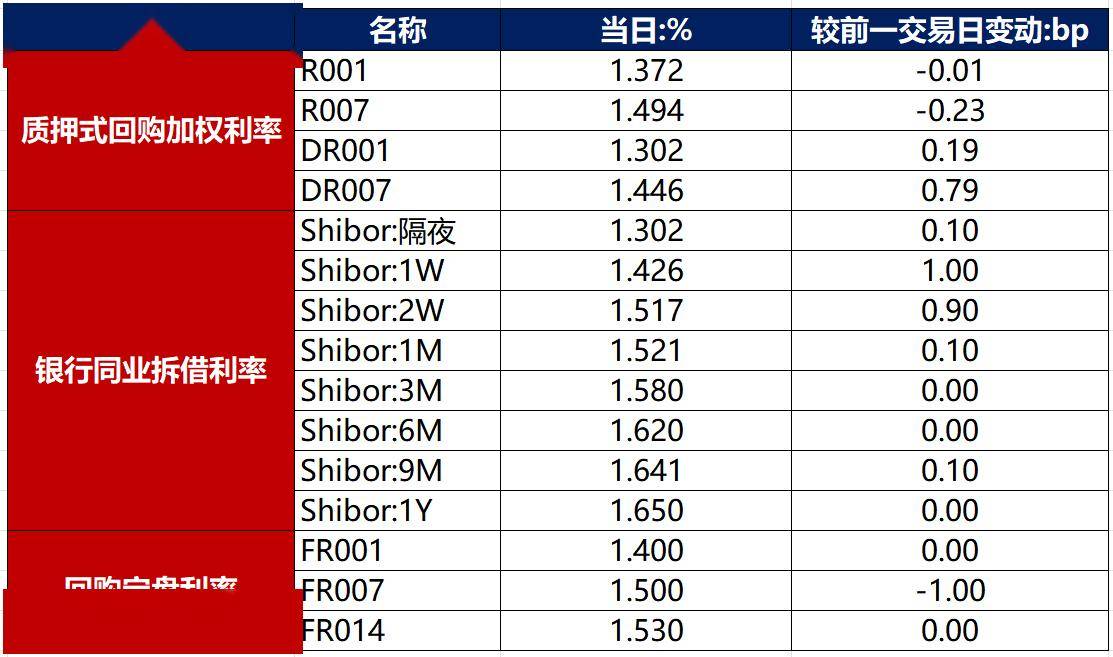
债市早报:中共中央政治局召开会议分析研究2026年经济工作;资金面稳定均衡,主要期限国债收益率窄幅震荡
Sou Hu Cai Jing· 2025-12-09 02:55
Group 1: Domestic Market Updates - The People's Bank of China (PBOC) conducted a small-scale net injection of funds, with the overall liquidity remaining stable, and the main repo rates slightly increased [1][8] - Wanda Commercial Management is seeking a two-year extension on its $400 million bond [1] - Country Garden's overseas debt restructuring plan has been officially recognized by the court [1] - New World Development has completed the final settlement of its exchange offer, resulting in the cancellation of $2.5 billion of existing bonds [1] Group 2: Economic Policy and Trade - The Central Committee of the Communist Party of China held a meeting to analyze and study the economic work for 2026, emphasizing the need for high-quality development and a proactive macro policy [2] - China's goods trade import and export value for the first 11 months of 2025 reached 41.21 trillion yuan, a year-on-year increase of 3.6%, with exports growing by 6.2% and imports by 0.2% [3] Group 3: International Market Updates - Japan's GDP for the third quarter shrank by 2.3%, exceeding initial estimates, marking the first contraction in six quarters [5] - Major European economies saw a rise in 10-year government bond yields, with Germany's yield increasing by 7 basis points to 2.87% [21] Group 4: Bond Market Dynamics - The yield on the 10-year Chinese government bond rose by 0.40 basis points to 1.8325% [11] - In the secondary market, several bonds experienced significant price deviations, with some bonds from Vanke showing increases of over 20% [14] - The convertible bond market saw a collective rise, with the total trading volume reaching 652.92 billion yuan, an increase of 51.39 billion yuan from the previous trading day [17]