
数字经济

Search documents
杭州踩线完成“十四五”2.3万亿GDP目标,未来5年要站上3万亿
Sou Hu Cai Jing· 2026-01-23 09:25
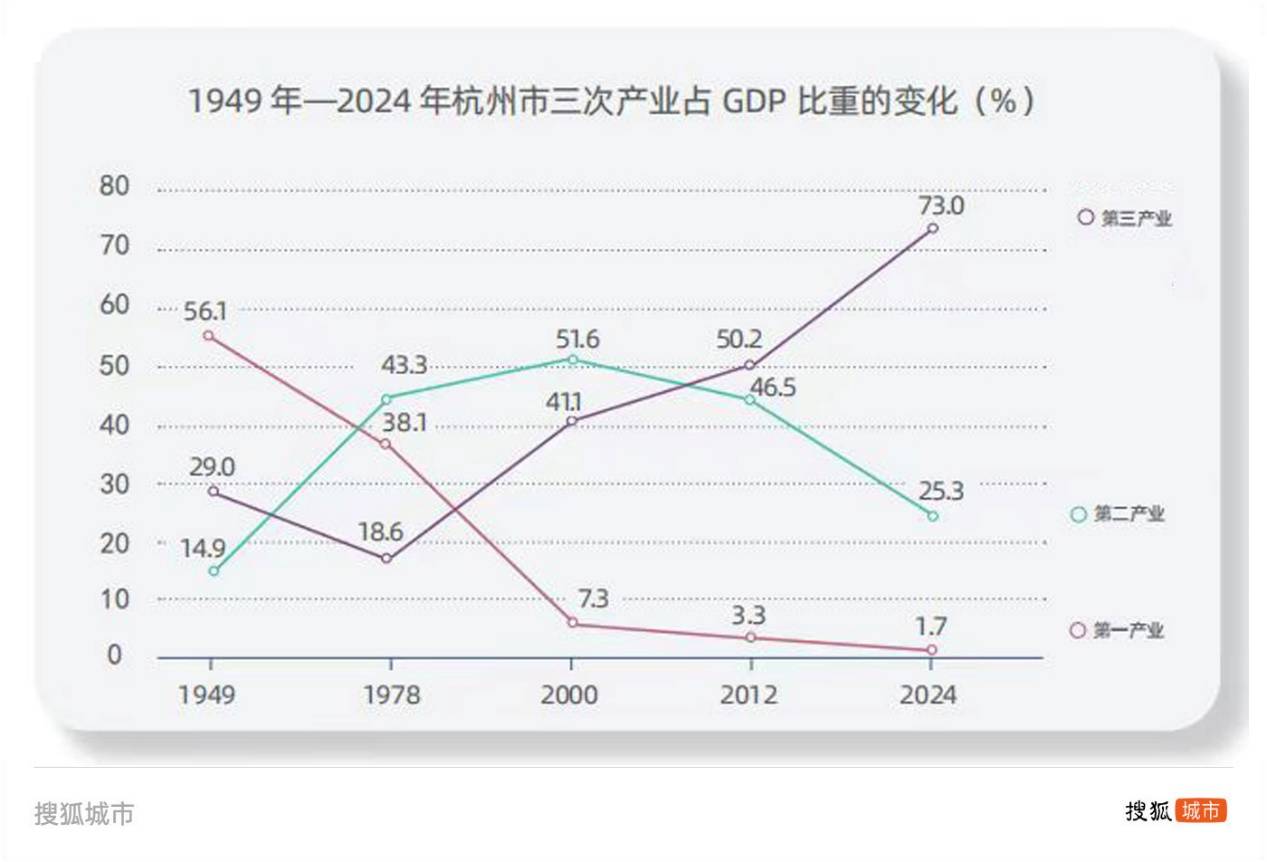
Economic Overview - Hangzhou's GDP is projected to reach 23,011 billion yuan by 2025, aligning with the "14th Five-Year Plan" target of 23,000 billion yuan [1] - The city aims for a GDP of 30,000 billion yuan and a per capita GDP exceeding 30,000 USD by 2030, requiring an average annual growth rate of over 5% in the next five years [1] Economic Structure - The economic growth in Hangzhou is driven by three main sectors: retail, foreign trade, and fixed asset investment, with retail sales expected to reach 9,499 billion yuan, foreign trade at 9,072 billion yuan, and a decline in fixed asset investment growth [1][4] - The service sector contributes significantly to the economy, with a value-added of 16,997 billion yuan and a growth rate of 5.3%, accounting for 73.4% of GDP [4] Sector Performance - The digital economy is a key growth area, with core industries in this sector seeing revenue growth of 13.2% and 12.1% for high-tech services [4] - Industrial output is also on the rise, with a total industrial value added of 4,624 billion yuan, marking a 6% increase, driven by advanced manufacturing clusters [4][10] - The automotive sector, particularly electric vehicles, has shown remarkable growth, with production increasing by 383% [2][4] Investment Trends - Investment in fixed assets is under pressure, with a notable decline in real estate and some infrastructure investments, reflecting a long-term downward trend from 20.3% growth in 2016 to 2.8% in 2023 [5] - Industrial investment has grown by 5.2%, but overall investment growth is expected to be negative in 2024 and 2025 [5] Consumer Market - The retail sales total is projected to reach 10,000 billion yuan by 2026, with a growth rate of around 5% [6] - The retail sales in Hangzhou have been revised upward to 9,151 billion yuan for 2024, reflecting a significant increase from previous estimates [8] - The consumption growth is supported by a stable service economy, with a focus on entertainment and experience-based consumption [10] Challenges and Future Outlook - Hangzhou's service sector, while substantial, still lags behind major cities like Beijing and Shanghai in absolute terms, indicating a need for structural improvements [12] - The manufacturing sector's contribution to GDP has decreased from 47.8% in 2010 to approximately 25% in 2024, highlighting a need for a more robust industrial base [12][14] - The city faces challenges in talent supply and demographic trends, which may impact its ability to achieve its ambitious economic goals [14]

数字经济板块1月23日涨1.21%,中科星图领涨,主力资金净流出34.57亿元
Sou Hu Cai Jing· 2026-01-23 09:25
Group 1 - The digital economy sector increased by 1.21% compared to the previous trading day, with Zhongke Xingtou leading the gains [1] - The Shanghai Composite Index closed at 4136.16, up 0.33%, while the Shenzhen Component Index closed at 14439.66, up 0.79% [1] - The net outflow of main funds in the digital economy sector was 3.457 billion yuan, while retail investors saw a net inflow of 3.723 billion yuan [1] Group 2 - The data regarding the fund flow in the digital economy sector indicates a mixed sentiment, with institutional investors withdrawing funds while retail investors increased their investments [1] - The overall performance of the digital economy stocks reflects a positive trend despite the net outflow from major funds [1]


中国第二个5万亿城市来了,北京多项部署
2 1 Shi Ji Jing Ji Bao Dao· 2026-01-23 06:06
Core Insights - Beijing is projected to achieve a regional GDP of 52,073.4 billion yuan by 2025, marking it as the second "5 trillion city" after Shanghai, indicating a significant shift towards quality growth under strict constraints of "reduction development" [1][3] - The city plans to invest over 1.5 billion yuan in 2026 to support high-precision industries and small and medium-sized enterprises, focusing on over 25 policy support directions across key sectors such as integrated circuits, biomedicine, and digital economy [3][4] Economic Growth and Sector Contributions - In 2025, the information transmission, software, and IT services sectors, along with the financial industry, contributed over 70% to Beijing's economic growth, with the software industry alone achieving a value-added of 12,192.4 billion yuan, growing by 11.0% [2][9] - The manufacturing sector, particularly in computer and electronic equipment, saw a significant increase, with a 20.2% growth in value-added for the computer and communication equipment manufacturing industry [3] Policy Initiatives and Support Measures - The Beijing Municipal Economic and Information Bureau announced a "Create the Future" growth plan for 2026, focusing on six future industries: future information, health, manufacturing, energy, materials, and space [5][6] - The plan includes measures to support innovation in robotics, integrated circuits, and new materials, with specific funding support of up to 50% of project costs for qualifying initiatives [4] Digital Economy and Consumption Trends - The city aims to stimulate digital consumption and support the development of 2-3 leading AIGC digital content companies with revenues exceeding 10 billion yuan [2][10] - There is a strategic focus on integrating ultra-high-definition audio-visual technology with cultural tourism, promoting smart retail, and replicating metaverse business models to enhance service consumption [10][11] Infrastructure and Resource Development - Beijing plans to enhance its computing power resources, targeting a cumulative capacity of approximately 200,000 P by 2027, with initiatives to build super nodes and industry nodes in strategic locations [7][8] - The city has already allocated over 700 million yuan in computing power subsidies in 2023, supporting nearly 100 enterprises to reduce computing costs by over 15% [8]
中国第二个5万亿城市来了,北京多项部署
21世纪经济报道· 2026-01-23 06:04
Core Viewpoint - Beijing is set to achieve a regional GDP of 52,073.4 billion yuan by 2025, marking its transition to a "5 trillion city" alongside Shanghai, under strict constraints of "reduction development" and focusing on innovation-driven growth [1][4]. Group 1: Economic Growth and Industry Contribution - In 2025, the information transmission, software, and IT services industry, along with the financial sector, contributed over 70% to Beijing's economic growth [2][11]. - The GDP growth rate for Beijing in 2025 is projected at 5.4% year-on-year, with the industrial added value for large-scale industries increasing by 6.5% [4]. Group 2: Policy Support and Investment - Beijing plans to invest over 1.5 billion yuan in the first batch of high-precision industry development projects and support for small and medium-sized enterprises, covering over 25 policy support directions [3][4]. - The focus areas for investment include integrated circuits, biomedicine, material energy, information software, and the digital economy [4][5]. Group 3: Future Industry Development - The "Create Winning Future" growth plan will focus on six future industries: future information, future health, future manufacturing, future energy, future materials, and future space [7]. - The plan aims to support innovative products in robotics, integrated circuits, and new materials, addressing challenges in R&D and market validation [5][7]. Group 4: Digital Economy and Consumption - Beijing aims to stimulate digital consumption and cultivate 2-3 leading AIGC digital content companies with revenues exceeding 10 billion yuan [2][12]. - The city will promote the integration of ultra-high-definition audio-visual technology with cultural tourism, expanding smart retail and reverse customization applications [12][13]. Group 5: Computing Power and Infrastructure - By 2027, Beijing plans to build a computing power scale of approximately 200,000 P, enhancing its computing resource supply [8][9]. - The city will optimize the "Galaxy Computing Corridor" project to establish a collaborative computing power supply system, supporting the development of the AI industry [9].

市场中枢抬升,波动可能加大,风格趋向均衡,紧跟政策指引与业绩主线
British Securities· 2026-01-23 04:59
Group 1: Market Overview - The A-share market is expected to continue its upward trend in 2026, characterized by an elevated index center, balanced styles, and increased volatility, aligning with the "slow bull" market phase [4][20][24] - The macroeconomic environment and monetary policy are crucial variables influencing A-share performance, with a focus on the "14th Five-Year Plan" and potential policy resonance with the U.S. midterm elections [3][18][26] - The market is anticipated to see a shift from valuation expansion to profit recovery as the main driver, supported by long-term confidence in China's economic prospects [3][20][19] Group 2: Industry Analysis - Semiconductor industry is highlighted for its trend towards self-sufficiency and independence [4][20] - The robotics sector is expected to benefit from technological leadership and policy support [4][20] - The TMT (Technology, Media, and Telecommunications) sector remains promising in the digital age, with a focus on performance and growth expectations [4][20] - The renewable energy sector is projected to see improved conditions, with a rebound likely to continue [4][20] - Brokerage firms are set to directly benefit from increased market activity [4][20] - The cyclical sectors are expected to gain from anti-involution policies and economic recovery [4][20] - Real estate is viewed as having rebound opportunities under the "survival of the fittest" principle [4][20] - The pharmaceutical sector is anticipated to experience a catch-up demand while providing defensive value [4][20] - Domestic consumption trends, including the "silver economy" for the elderly and "self-indulgent consumption" for the youth, are expected to drive growth [4][20] - High-dividend stocks are still considered valuable for investment [4][20] Group 3: Thematic Investments - Focus on emerging industries and core technological breakthroughs as outlined in the "14th Five-Year Plan" [4][20] - Opportunities in the AI theme, emphasizing the "computing power-application-end" chain [4][20] - Rare earth materials are highlighted for their supply control capabilities [4][20] - The military industry is supported by policy and driven by events, with a focus on military-civilian integration and military trade exports [4][20] - The industrial mother machine sector is expected to see demand growth driven by policy support [4][20] - The low-altitude economy is projected to expand due to policy drivers and diverse application scenarios [4][20] - The digital economy is anticipated to thrive with technology and policy support, focusing on computing power, cybersecurity, data elements, industrial digitization, and digital currency [4][20] - Commercial aerospace is expected to develop driven by policy implementation, focusing on satellite internet construction and the rocket launch and manufacturing supply chain [4][20]
破解价值评估难!粤发布数据知识产权价值评价指南(中国新闻网)
Zhong Guo Xin Wen Wang· 2026-01-23 03:43
Core Viewpoint - The Guangdong Provincial Market Supervision Administration and the National Financial Supervision Administration's Guangdong Regulatory Bureau jointly released the "Guangdong Province Data Intellectual Property Value Evaluation Guidelines (Trial)" to provide a reference standard for data intellectual property transaction operations and pledge financing, aiming to activate data factor potential and promote the standardized and high-quality development of the data intellectual property market [1][2]. Group 1: Evaluation Framework - The guidelines focus on three key aspects: standardizing the evaluation process, clarifying evaluation methods, and constructing an indicator system, forming a comprehensive value evaluation guide [1]. - The evaluation scope includes data intellectual property registered and certified through the Guangdong Provincial Data Intellectual Property Registration Platform and the Shenzhen Data Intellectual Property Registration System, ensuring precision and compliance in the evaluation range [1]. Group 2: Evaluation Principles and Methods - Four core principles are established: legality and compliance, objectivity and fairness, scientific accuracy, and open cooperation, which run through the entire evaluation process to ensure the credibility and authority of the evaluation results [1]. - The guidelines propose four innovative evaluation methods: cost method, income method, market method, and comprehensive method, covering various scenarios of data application. The cost method focuses on the full-process cost accounting of data collection, processing, and management, while the income method emphasizes the assessment of future profit potential. The market method relies on comparative analysis of similar transaction cases, and the comprehensive method integrates the advantages of the three methods to address the shortcomings of a single evaluation [1]. Group 3: Implementation and Standardization - A multi-dimensional evaluation indicator system is constructed, detailing primary indicators related to cost, income, and market, along with corresponding secondary and tertiary indicators, providing quantifiable bases for evaluation work [2]. - The guidelines standardize the entire process from "clarifying evaluation matters to signing a commission contract, conducting value evaluation, and issuing evaluation reports," defining the responsibilities and boundaries of the evaluation client, rights holder, and evaluation institution. The evaluation report must fully disclose essential information about the data intellectual property, evaluation methods, and result analysis, along with reference templates for the evaluation indicator system and commission contracts, further reducing institutional transaction costs and enhancing the standardization of data intellectual property evaluation work [2].
聪明钱涌入细分赛道 嘉实基金ETF前瞻布局把握高质量发展机遇
Zhong Guo Jing Ji Wang· 2026-01-23 03:22
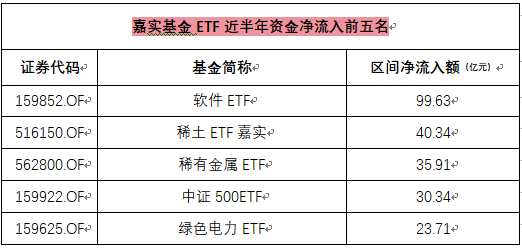
Core Insights - The year 2025 marks a milestone for China's ETF market, with the overall scale surging from 3.73 trillion yuan at the end of 2024 to 6.02 trillion yuan, reflecting a growth rate of 61.4% [1] - The fund flow shows significant characteristics, with industry-themed ETFs and broad-based ETFs leading the way, highlighting a dual strategy of technology innovation and high dividend yields [1] Group 1: ETF Market Growth - By the end of 2025, the ETF market in China is projected to reach 6.02 trillion yuan, a substantial increase from 3.73 trillion yuan in 2024 [1] - The growth is driven by favorable policies and market recognition, indicating a robust future for ETF investments [1] Group 2: Performance of Jiashi Fund - Jiashi Fund's ETF products have diversified, with a total scale exceeding 369.6 billion yuan and 61 ETF products, of which 24 rank first in their respective categories [1] - The flagship product, the CSI 300 ETF, has a scale of 197.12 billion yuan, ranking first among similar products on the Shenzhen Stock Exchange [2] - The Jiashi Fund's innovative bond ETFs, particularly the Sci-Tech Bond ETF, have surpassed 43.67 billion yuan, becoming the largest in its category [2] Group 3: Thematic and Sector ETFs - Jiashi Fund's software ETF has reached a scale of nearly 14.5 billion yuan, becoming the largest in its index category, reflecting the growth potential of the software industry in the digital economy [3] - The rare metals ETF and rare earth ETF have also seen significant growth, with scales of 6.36 billion yuan and 9.26 billion yuan respectively, providing crucial links for investments in new energy and high-end manufacturing [3] - The Sci-Tech Chip ETF has a scale of 46.91 billion yuan, leading in its category and showcasing Jiashi Fund's strategic positioning in the semiconductor industry [3] Group 4: Cross-Border ETF Development - By the end of 2025, Jiashi Fund's cross-border ETF products have expanded, with the NASDAQ ETF reaching 10.07 billion yuan and the Germany ETF exceeding 2 billion yuan [4] - These products facilitate investments in U.S. tech stocks and European core economies, enhancing the fund's global investment matrix [4] Group 5: Future Outlook - Jiashi Fund aims to refine its index investment capabilities and continuously optimize its ETF product line to align with national strategies and technological innovations [5] - The focus is on providing efficient, precise, and high-quality investment tools to help investors seize market opportunities and achieve long-term wealth growth [5]
山东阳信:新农具激活新农活 “数字田野”跑出乡村振兴加速度
Qi Lu Wan Bao· 2026-01-23 02:29
Core Insights - The article highlights the successful integration of digital economy into agriculture in Yanghu Township, Shandong Province, showcasing the promotion of "Golden Cabbage" through innovative e-commerce strategies [1][3]. Group 1: Agricultural Innovation - "Golden Cabbage" is a new variety developed for high-end markets, rich in carotenoids, vitamin C, and dietary fiber, representing a significant achievement in modern agricultural technology [3]. - The successful promotion of this variety is attributed to collaboration between Yanghu Township and the Shandong Academy of Agricultural Sciences, focusing on talent introduction, technical cooperation, and establishing research platforms [3]. - The "院地合作" (institution-local cooperation) model has enabled the introduction of superior varieties and the adaptation of breeding processes to local conditions, enhancing the agricultural output [3]. Group 2: E-commerce Impact - E-commerce live streaming has revitalized the entire agricultural supply chain, with local products like sweet corn being processed and sold nationwide [4]. - The processing factory employs over 140 middle-aged and elderly individuals, providing local job opportunities and increasing monthly income by over 3,000 yuan per person [4]. - The factory's monthly sales can reach 70,000 orders during peak seasons, with an annual processing capacity exceeding 600 tons, exemplifying agricultural industrialization [4]. Group 3: Talent Development - Yanghu Township has implemented the "Rural Talent Program," training over 30 local new farmers in e-commerce marketing and live streaming skills [5]. - Trainees have developed unique storytelling techniques for their agricultural products, enhancing emotional connections with consumers [5]. - The integration of digital tools and professional brand management is driving the growth of local industries, including "Golden Cabbage," sweet corn, and wig production, supported by scientific research and e-commerce channels [5].

民生银行:创新数据质押融资 让数据资产“活”起来
Sou Hu Cai Jing· 2026-01-23 02:11
Core Insights - The article emphasizes the importance of data as a new production factor driving high-quality economic development, highlighting the need for market-oriented reforms in data asset allocation [1] - It discusses the challenges of measuring data asset value and clarifying ownership, which have led to a significant amount of data remaining "asleep" and not being utilized for business growth [1] Group 1: Data Asset Development - Qingdao West Coast Public Utility Group has taken significant steps in data asset exploration by being selected as one of the first digital economy industry innovation centers in Shandong Province [1] - The company has launched 15 diverse data products, including datasets, algorithm models, and analysis reports at the Qingdao Big Data Trading Center, and established mutual recognition with 24 domestic data exchanges [1] Group 2: Collaboration and Financing - The collaboration between Qingdao West Coast Public Utility Group and Minsheng Bank's Qingdao branch has led to a successful case of data asset pledge financing, where a loan of 30 million yuan was issued based on the AI Perception Prediction Model [2] - The AI Perception Prediction Model, a core data asset, utilizes a one-stop AI platform and includes 11 algorithm models for real-time video monitoring and alert generation, demonstrating its high application value in public service [2] Group 3: Impact on Financing and Industry - The successful implementation of data asset pledge financing represents a breakthrough in addressing financing difficulties for small and medium-sized enterprises, transforming dormant data assets into tangible financial resources [3] - The practice of the AI Perception Prediction Model not only helps enterprises realize the strategic value of their data resources but also promotes the overall digital transformation of society [3] - Minsheng Bank aims to continue developing customized financial products in the data finance sector to support enterprises in their digital transformation and foster the integration of the digital economy with the real economy [3]

复旦团队研制出“纤维芯片”,芯片ETF天弘(159310)昨日获净申购200万份,电子ETF(159997)昨日成交额超4000万元
2 1 Shi Ji Jing Ji Bao Dao· 2026-01-23 01:47
Group 1 - The market experienced a rebound on January 22, with all three major indices turning positive, and the ChiNext index showing strong performance [1] - The Chip ETF Tianhong (159310) recorded a trading volume exceeding 27 million yuan, with a net subscription of 2 million shares, driven by leading stocks such as Longxin Technology and Chipone Technology [1] - The Electronic ETF (159997) had a trading volume over 40 million yuan, with stocks like Pengding Holdings and China Great Wall leading the gains [1] Group 2 - The Tianhong Chip ETF tracks the CSI Chip Industry Index, which is expected to see a 37.62% year-on-year growth in net profit attributable to shareholders in the first half of 2025, supported by policy and demand [1] - The Electronic ETF focuses on the semiconductor, consumer electronics, and AI chip sectors, providing exposure to leading companies in the digital economy's "hard technology" investment opportunities [1] - The Ministry of Industry and Information Technology announced plans to accelerate the high-quality development of the AI industry, emphasizing technological innovation and breakthroughs in key technologies such as training chips and heterogeneous computing power [1] Group 3 - A research team from Fudan University has developed "fiber chips," which are expected to provide critical support for future industries like brain-machine interfaces [2] - The global AI industry is shifting from model training to inference, with domestic cloud vendors' AI computing power center construction plans expected to drive demand for high-performance chips [2] - AI is increasingly penetrating traditional consumer electronics such as smartphones, PCs, and wearable devices, along with innovative AI hardware like AI glasses and toys, which will boost both volume and price of core components like SOC chips [2]