
十五五规划

Search documents
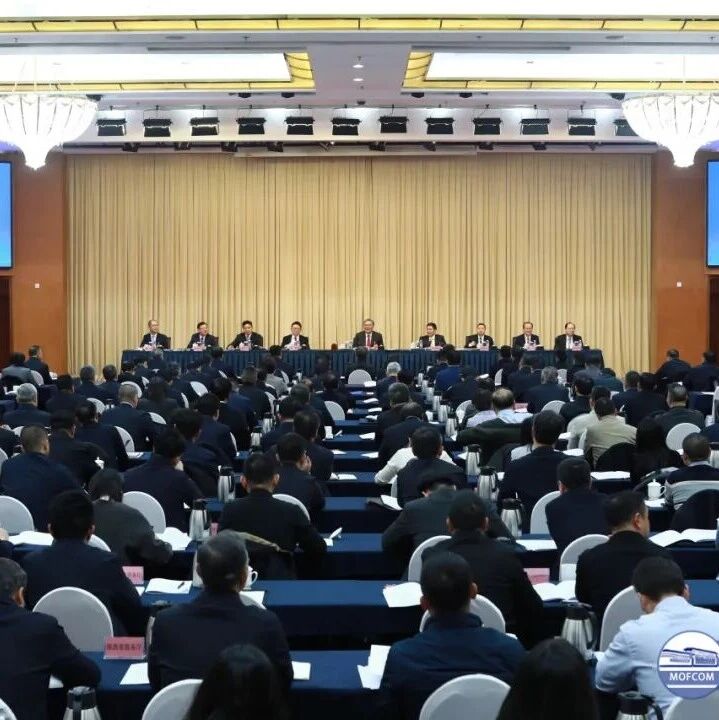
商务部重要会议:2026年优化消费品以旧换新政策实施
证券时报· 2026-01-11 09:34
Core Viewpoint - The article discusses the outcomes of the National Business Work Conference held on January 10-11, emphasizing the importance of implementing key strategies for business development in China, particularly in the context of the 14th Five-Year Plan and the upcoming 15th Five-Year Plan [1][3]. Summary by Sections Business Development Goals - The year 2025 is highlighted as a significant year for business development, with the aim to achieve stable growth in commerce, boost consumption, and optimize foreign trade and investment structures [3][4]. - The conference outlines the necessity of aligning business strategies with the central government's directives to ensure effective implementation of economic policies [4]. Key Areas of Focus for 2026 - Eight key areas of work are identified for the national business system in 2026, which is the starting year for the 15th Five-Year Plan: 1. Implementing special actions to boost consumption and creating the "Buy in China" brand [4][5]. 2. Establishing a modern market and circulation system to promote a unified national market [5]. 3. Innovating trade development and promoting the "Export China" brand [6]. 4. Creating new advantages for attracting foreign investment and enhancing the "Invest in China" brand [7]. 5. Aligning with international high-standard economic and trade rules to enhance open highland construction [7]. 6. Effectively managing foreign investment and guiding cross-border supply chain layouts [7]. 7. Deepening multilateral and bilateral economic cooperation for mutual benefits [7]. 8. Preventing and mitigating risks to ensure a secure and resilient supply chain [8]. Leadership and Governance - The conference emphasizes the importance of strong leadership in business operations, advocating for high-quality governance and adherence to the central government's policies [8]. - It calls for a collective effort within the business system to ensure the successful initiation of the 15th Five-Year Plan, contributing to national modernization and rejuvenation [8].

下周A股,继续“牛”!
Xin Lang Cai Jing· 2026-01-11 07:55
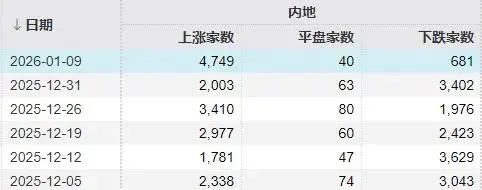
转自:中国商报 本周(1月5日至9日)是2026年的第一个交易周,A股市场量价齐升,收获了实打实的2026年"开门红"。 上证指数延续去年末连阳走势,频创新高。深证成指突破14000点,创业板指、上证50、沪深300等也均创多年新高。超4700家股票周度累计上涨,为近期 表现最好的一周。 (来源:中国商报) 业内人士提醒,对于投资者而言,业绩预告仅为初步核算结果,具体数据需以正式年报为准。随着年报披露季的推进,业绩分化格局或进一步显现,资本 市场的价值发现功能将持续发挥作用。 中国上市公司协会近期发布的《2025年A股上市公司市值表现报告》显示,截至2025年年底,A股上市公司共5469家,总市值123万亿元。其中,2025年新 增上市公司116家,2025年1月1日前上市的存量公司5353家,2025年存量上市公司总市值同比增长22.5%。从总体来看,过去一年,A股上市公司市值持续 修复,资本市场稳健上涨。 | ↓日期 | 内地 | | | | --- | --- | --- | --- | | | 上涨家数 | 亚盘宝数 | Nist 2 3 7 | | 2026-01-09 | 4.749 | 40 | ...
陈茂波:香港新一份财政预算案将于2月25日发表
Zhi Tong Cai Jing· 2026-01-11 07:43
Group 1 - The Hong Kong government is set to release a new budget on February 25, which is expected to show a recovery in operating surplus due to increased overall revenue from a thriving financial market, including stamp duty [1] - The financial sector, which accounts for 26% of Hong Kong's GDP, has shown strong performance, leading to greater market demand and positive expectations for the industry [1] - The trade sector, contributing 15% to Hong Kong's GDP, also supported the economy last year due to strong exports, while major events attracted more tourists, enhancing market sentiment [1] Group 2 - The Hong Kong government plans to increase investment in public works, which will result in a capital account deficit for the current year [2] - The government intends to utilize market forces, including moderate bond issuance, to support infrastructure development [2] - The ratio of the government's outstanding debt to GDP is approximately 12%, which is considered healthy on an international scale [2]
十大机构看后市:大多数产业主线没有明显过热迹象,行情仍有空间,依然可以加仓,科技仍是牛市主线
Xin Lang Cai Jing· 2026-01-11 07:43
Group 1 - The major indices have shown significant increases, with the Shanghai Composite Index rising by 3.82%, the Shenzhen Component by 4.40%, and the ChiNext by 3.89% [1][16] - Most industry main lines are not showing obvious overheating signs and remain in a position where accumulation is possible [2][17] - The A-share ROE is expected to rise for the first time in five years after 14 consecutive quarters of decline, which is a prerequisite for stabilizing valuations [2][17] Group 2 - The spring market is characterized by a lack of major downside risks, with only short-term adjustments expected after sufficient market performance [3][18] - The market is likely to continue its upward trend, with a focus on technology as the main line of the bull market [5][20] - The current market structure shows a significant increase in trading volume, indicating sustained market activity [29] Group 3 - The upcoming policy catalysts, including the review of the 14th Five-Year Plan and potential improvements in Sino-US trade relations, are expected to stabilize market expectations [4][19] - The market is experiencing a "rotation + broad rise" state, with small-cap growth indices performing particularly well [7][22] - Investors are advised to focus on sectors such as AI applications, traditional consumption benefiting from policy support, and undervalued real estate [21][24] Group 4 - The short-term market may continue its upward trend, with significant inflows into sectors like robotics and commercial aerospace [8][24] - The commercial aerospace sector has shown strong capital inflows, although it is currently at a historically high trading density [8][25] - The overall market sentiment is improving, supported by macroeconomic factors and policy measures [28][29]
区七届人大七次会议举行第二次全体会议
Bei Jing Wan Bao· 2026-01-11 06:57
转自:北京城市副中心报 本报讯(记者 陈施君)昨日上午,区七届人大七次会议举行第二次全体会议。 一是要坚持党的全面领导,以更高站位把牢政治方向。毫不动摇坚持党的全面领导这一最高政治原则, 深刻领悟"两个确立"的决定性意义,增强"四个意识"、坚定"四个自信"、做到"两个维护"。 二是要发挥人大职能作用,以更强担当服务副中心发展大局。精准对标"十五五"规划战略任务及年度目 标,明确阶段性监督重点,开展正确监督、有效监督、依法监督,推动规划逐项落地见效,助力"十五 五"规划开好局、起好步。 三是坚持代表主体地位,以更实举措践行全过程人民民主。充分依托人大代表家站,组织代表扎根基 层,深入群众,架起民意沟通"连心桥",让群众切身感受到人大代表就在身边。 四是强化"两支队伍"建设,以更高标准提升人大工作质效。坚持依法履职和队伍建设一体推进,不断加 强人大代表和人大机关干部两支队伍建设,着力打造政治坚定、服务人民、尊崇法治、发扬民主、勤勉 尽责的人大工作队伍。 区人大常委会主任赵玉影受区人大常委会委托向大会报告工作。会议分别听取区人民法院、区人民检察 院工作报告。 主席团常务主席、大会执行主席程卫民主持会议。李俊杰、张德 ...
基金经理备战2026:紧盯AI变现 市场风格望走向均衡
Huan Qiu Wang· 2026-01-11 02:13
Core Insights - The A-share market is expected to shift focus from pure speculation to practical profit realization in 2026, with technology innovation, particularly in AI, becoming the main investment battlefield [1][2][4] Group 1: Economic and Industry Trends - The 2026 "14th Five-Year Plan" emphasizes improving economic development quality, with a focus on integrating technological and industrial innovation [2] - The growth model in China is transitioning from real estate-driven to innovation-driven, with high-tech industries becoming new growth engines [2] - High-quality development will be the main theme for economic work throughout 2026, with significant growth momentum observed in high-tech manufacturing, green energy, and the digital economy [2] Group 2: AI Investment Focus - AI remains a key investment focus, with a shift from infrastructure to application and commercialization in 2026 [4] - Investment strategies will prioritize AI applications, commercial viability, and domestic alternatives, with specific attention on sectors like optical modules, storage, and localized computing power [4] - The market anticipates the emergence of the next blockbuster AI application, driven by efforts from leading global companies and innovative enterprises [4] Group 3: Market Style and Valuation - The market is expected to transition from "valuation-driven" to "profit-driven," leading to a more balanced performance across sectors [5] - High-quality growth companies with substantial earnings support will become the backbone of the market, while some growth sectors may face valuation pressures [5] - There is a growing optimism towards value stocks, which have shown signs of recovery after a period of underperformance [5] Group 4: AI Bubble Discussion - Most fund managers believe it is premature to discuss an "AI bubble," as the infrastructure for AI is still developing and projected to maintain high compound annual growth rates [6] - Concerns about overcrowding in certain popular sectors exist, necessitating in-depth research to identify companies with technological advantages and reasonable valuations [6] - The A-share market in 2026 will seek a balance between "stabilizing growth" and "structural adjustment," with AI applications expected to significantly enhance corporate earnings [6]
当好连心桥服务站人才库
Xin Lang Cai Jing· 2026-01-10 21:36
Group 1 - The meeting highlighted the strategic importance of intellectuals' work in relation to the success of the party and the people's endeavors, emphasizing the role of non-party intellectuals in the united front [1][2] - The Sichuan Knowledge Association has contributed positively to the province's economic and social development since its establishment, leveraging its functions to unite and lead non-party intellectuals [1] - The association aims to strengthen its organizational structure and operational mechanisms to serve as a bridge between the government and non-party individuals, enhancing its role as a talent pool in the united front [2] Group 2 - The meeting called for members to adhere to their original mission and ideals, promoting the study of Xi Jinping's thoughts on socialism with Chinese characteristics for a new era [2] - Members are encouraged to focus on key national and provincial strategies, such as the 14th Five-Year Plan and the development of new productive forces, to provide suggestions and insights [2] - The association emphasizes the importance of members treating it as their "home," fostering a sense of belonging and collaboration to enhance the united front's prosperity [2]
申万宏源策略一周回顾展望(26/01/05-26/01/10):赚钱效应扩散尚不充分
申万宏源研究· 2026-01-10 15:03
Group 1 - The report emphasizes that the spring market has a continuous favorable time window for bullish strategies, with a significant increase in risk appetite. There are no major downside risks, only short-term adjustments after market performance is fully realized. Overall profit-making effects may continue to expand to higher levels, indicating that the short-term market performance is not yet fully realized [4][5]. - The report reaffirms the logic of the spring market, highlighting that there is ample liquidity and favorable conditions for bullish strategies. Key factors include ETF inflows, insurance sector performance, and expectations of foreign capital inflows, which have accelerated the inflow of retail investors and increased trading activity [4][5]. - The report identifies specific time windows in the spring that are conducive to market performance, including potential rebounds before the Lunar New Year in February, policy catalysts from the National People's Congress in March, and the anticipated visit of Trump to China in April, which could stabilize market expectations [4][5]. Group 2 - The report discusses the marginal trading funds and dominant market styles, noting that the net inflow of the CSI A500 ETF has plateaued. The expected incremental inflows are primarily from the insurance sector and foreign capital, while retail investor inflows and increased trading activity are contributing to faster growth in marginal trading funds [8]. - The report maintains that industry themes, such as commercial aerospace, robotics, and nuclear fusion, remain the strongest directions for profit-making effects. The report also highlights the high elasticity of venture capital and pre-IPO technology leaders, which are benefiting from mid-term bull market expectations [12]. - The report predicts that the second quarter of 2026 will still exhibit a volatile pattern, with technology and advanced manufacturing sectors likely to lead the market ahead of a full bull market in the second half of 2026 [12].
中外资机构:2026年中国将是全球投资者瞩目的市场
中国基金报· 2026-01-10 12:30
Core Viewpoint - China is expected to be a focal market for global investors by 2026, driven by advancements in technology and a robust AI ecosystem, which presents significant opportunities for overseas investors [10][11][25]. Group 1: Market Trends and Predictions - Since April 2025, there has been a trend of global investors reallocating assets outside the US, which is likely to continue into 2026, increasing capital allocation towards Chinese assets [12]. - The Chinese stock market is anticipated to experience a valuation reassessment driven by innovation, with future upward momentum expected to shift from valuation recovery to profit improvement [13]. - A "barbell strategy" is recommended, balancing high-dividend assets with technology stocks that are expected to improve profits due to domestic innovation and international expansion [13][14]. Group 2: Economic Policies and Opportunities - The "14th Five-Year Plan" will focus on modernizing the industrial system and expanding domestic demand, with key investment opportunities in traditional industry upgrades, advanced manufacturing, and emerging sectors like renewable energy and aerospace [15]. - The policy environment is expected to support consumption and investment recovery, particularly in real estate and technology sectors, which will be crucial for future returns [16]. - The anticipated policies will likely enhance corporate profit margins and stimulate economic growth, especially in the context of stable RMB exchange rates and increased household asset reallocation [14][15]. Group 3: Global Economic Context - The Federal Reserve is expected to lower interest rates by 50 to 75 basis points in 2026, which will improve financial conditions and potentially boost risk appetite, although actual growth and profit quality will be critical for market recovery [18][19]. - Japan's monetary policy is projected to continue its gradual normalization, with potential implications for global financial markets, particularly in terms of currency fluctuations and risk asset volatility [20][21][22]. Group 4: Investment Strategies - A diversified investment approach is recommended, focusing on technology sectors related to capital expenditure expansion and energy transition, while also considering emerging markets with strong domestic demand [24][25]. - The Asian markets, particularly China, Hong Kong, Singapore, and South Korea, are viewed as core growth engines, with a strategic shift towards these regions while reducing exposure to US equities [25]. - The use of gold and alternative investment strategies is suggested to enhance portfolio resilience, alongside a barbell approach that combines growth-oriented technology investments with defensive sectors like healthcare and utilities [28].

“论策‘十五五’”中国式现代化智库论坛召开
Xin Lang Cai Jing· 2026-01-10 12:16
1月10日,"论策'十五五'"中国式现代化智库论坛在上海财经大学科技园召开。本次论坛由上海财经大 学与解放日报主办,上海财经大学中国式现代化研究院与解放日报·上观智库承办,邀请来自政府、高 校、媒体、研究机构的相关专家,聚焦"十五五"的关键主线、转型发展、城市建设等重大命题,以及不 同类型智库如何"强强联合"、发挥关键作用等问题,共同建言献策。 本次论坛现场,上海财经大学中国式现代化研究院和上海财经大学出版社联合发布《中国式现代化系列 报告·2025》及《中国式现代化实践丛书•科创系列》两大重要项目成果,12本研究著作。 多位专家发表主旨演讲,并举行圆桌论坛,分享深度研究与全局洞察,为理解"十五五"规划、把握"十 五五"方向贡献了全新视角。 开幕式上,上海财经大学党委常委、副校长靳玉英和解放日报社党委副书记、总编辑丁波分别致辞。靳 玉英校长表示,"十五五" 高质量发展需坚持创新驱动与效率提升、深化改革破解结构性矛盾、推进高 水平开放与全球治理参与,上海财经大学将依托学科与智库优势,在相关领域发力并贡献智慧。 论坛上,上海财经大学中国式现代化研究院与解放日报·上观智库签署合作协议,双方将在城市发展、 金融建设、 ...