新零售

Search documents
烟台人的消费能力有多强?盒马烟台首店开业一个月就成全国销冠
Sou Hu Cai Jing· 2025-08-27 11:24
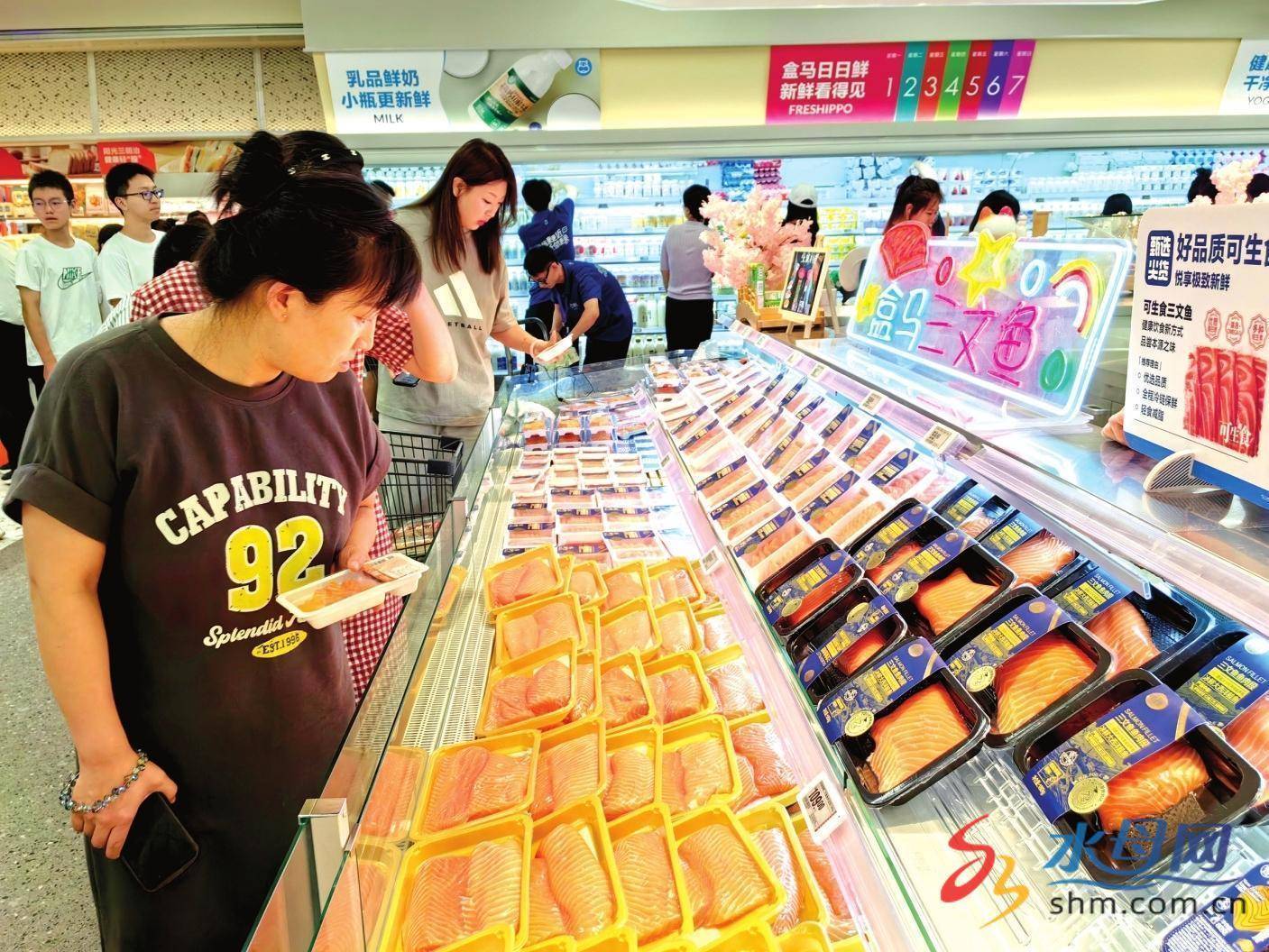
Core Insights - Hema Fresh's first store in Yantai has achieved remarkable sales performance, leading nationwide sales rankings within a month of opening, indicating strong consumer demand for new retail models [1][3][4] Sales Performance - The Yantai store recorded 420,000 transactions in its first month, averaging 13,500 transactions per day, with total sales nearing 40 million yuan [3] - The store's sales are significantly boosted by two separate online delivery warehouses, which contributed over 10 million yuan in sales through 230,000 online services [3] - Key products include imported durians, with sales exceeding 26 tons, and Russian king crabs, averaging over 100 units sold daily [4] Consumer Behavior - The new consumer demographic, particularly younger generations, is increasingly valuing emotional and experiential aspects of shopping, leading to a shift from functional to experiential consumption [4][5] - The store's offerings, such as fresh seafood and unique desserts, cater to this demand, with specific items like durian mille-feuille and Swiss rolls achieving sales of 15,000 and 20,000 units respectively [4] Store Experience - Hema Fresh integrates shopping and dining experiences, featuring live seafood processing and dining areas, which aligns with the fast-paced lifestyle of modern consumers [5] - The store has significantly increased foot traffic in the Yantai Joy City, attracting over 650,000 visitors in the first 20 days, contributing to a 60% increase in overall mall traffic [5] Economic Impact - The success of Hema Fresh's Yantai store exemplifies the "first store economy," enhancing the local commercial landscape and attracting additional brands to the area [6] - The local government has actively supported the store's establishment, facilitating site selection and service provision to boost regional economic vitality [6]

金牌家居: 金牌家居2025年半年度报告
Zheng Quan Zhi Xing· 2025-08-27 10:29
Core Viewpoint - The report indicates that GoldenHome's revenue for the first half of 2025 decreased by 3.37% year-on-year, reflecting challenges in the industry, including price wars and fragmented channels, while the company continues to adapt its strategies to enhance operational efficiency and profitability [4][5][6]. Company Overview and Financial Indicators - GoldenHome achieved a total revenue of approximately 1.47 billion RMB in the first half of 2025, down from 1.52 billion RMB in the same period last year [2][4]. - The total profit for the period was approximately 61.24 million RMB, a decrease of 13.65% compared to the previous year [2][4]. - The net profit attributable to shareholders was approximately 63.65 million RMB, down 8.37% year-on-year [2][4]. - The net cash flow from operating activities was negative at approximately -230.36 million RMB, worsening by 17.74% compared to the previous year [2][4]. Industry and Business Situation - The company operates in the "C21 Furniture Manufacturing" sector, specifically in customized furniture [3][4]. - The overall market environment is under pressure, with intensified competition leading to reduced profit margins and a significant industry reshuffle [4][5]. - Despite the challenges, GoldenHome's new retail strategy has shown positive results, with retail channel revenue increasing by 20.27% to 820 million RMB [5][6]. Key Operational Strategies - The company has implemented a comprehensive new retail strategy, expanding its retail store network to 1,356 locations, which has contributed to revenue growth [5][6]. - GoldenHome is focusing on enhancing its supply chain stability through strategic partnerships and investments, aiming to improve product quality and reduce costs [4][5]. - The company is also leveraging digital transformation initiatives to optimize customer experience and operational efficiency, including the development of an AI-driven design platform [12][13]. Financial Performance Analysis - The company's gross profit margin has improved due to ongoing cost reduction and efficiency enhancement measures, despite a decline in revenue [4][5]. - The financial indicators show a slight increase in net assets, with a total of approximately 2.82 billion RMB at the end of the reporting period, reflecting a 0.31% increase from the previous year [2][4]. - The total assets decreased by 1.73% to approximately 6.26 billion RMB, indicating a need for careful asset management [2][4]. Future Outlook - The company aims to strengthen its market position by enhancing its product offerings and expanding into new markets, particularly in overseas regions [9][10]. - GoldenHome is committed to building a robust digital infrastructure to support its business model transformation and improve customer engagement [10][11]. - The introduction of the AI design platform is expected to drive innovation and improve operational efficiency, positioning the company for future growth [12][13].

老百姓(603883):药品零售业务承压,区域深耕与新零售布局成效显著
HUAXI Securities· 2025-08-27 09:34
Investment Rating - The investment rating for the company is "Buy" [4] Core Insights - The company's revenue for H1 2025 reached 10.77 billion yuan, a year-over-year decrease of 1.5%, with a net profit attributable to shareholders of 400 million yuan, down 20.9% year-over-year [1] - The company has accelerated its store expansion, with a total of 15,385 stores nationwide as of H1 2025, including 9,784 direct-operated and 5,601 franchised stores, marking a net increase of 108 stores [2] - Online sales have shown significant growth, with total online channel sales (including franchises) reaching approximately 1.49 billion yuan, a year-over-year increase of 32% [2] - The company's proprietary brand sales reached 1.76 billion yuan in H1 2025, accounting for about 23% of total sales, reflecting a focus on product quality and consumer experience [3] Financial Performance - For H1 2025, the company's gross margin was 33.1%, down 1.2 percentage points, primarily due to the increased sales proportion of the new retail business [1] - The company expects revenues of 22.43 billion yuan, 23.71 billion yuan, and 25.17 billion yuan for 2025, 2026, and 2027, respectively, with corresponding growth rates of 0.3%, 5.7%, and 6.2% [7] - The projected net profit attributable to shareholders for 2025, 2026, and 2027 is 690 million yuan, 750 million yuan, and 850 million yuan, with growth rates of 33.3%, 9.0%, and 12.5% respectively [7]

香港科技探索发布中期业绩,净亏损2320.5万港元,同比收窄15.6%
Zhi Tong Cai Jing· 2025-08-27 09:18
Core Viewpoint - Hong Kong Technology Exploration (01137) reported a slight decline in revenue but improved net loss, indicating a focus on enhancing customer experience and expanding logistics capabilities [1] Financial Performance - Revenue for the six months ending June 30, 2025, was HKD 1.888 billion, a year-on-year decrease of 0.5% [1] - Net loss narrowed to HKD 23.205 million, a year-on-year improvement of 15.6% [1] - Basic loss per share was HKD 0.03 [1] Business Operations - HKTVmall remains the core business, providing stable income for the group [1] - The company offers an "eight-hour express delivery service," aiming to enhance customer shopping experience [1] - Currently collaborates with over 6,400 merchants and suppliers to provide a wide range of product price options [1] Strategic Initiatives - The company plans to host various workshops to improve digital operations and sales capabilities for retailers [1] - There is an ongoing effort to further shorten delivery times through logistics arrangements [1] - The company is actively developing third-party logistics services and ThePlace independent online store solutions to support e-commerce growth for retailers [1]

香港科技探索(01137)发布中期业绩,净亏损2320.5万港元,同比收窄15.6%
智通财经网· 2025-08-27 09:08
Core Viewpoint - Hong Kong Technology Exploration (01137) reported a slight decline in revenue but a reduction in net loss, indicating a focus on improving operational efficiency and customer experience through its core business, HKTVmall [1] Financial Performance - Revenue for the six months ending June 30, 2025, was HKD 1.888 billion, a decrease of 0.5% year-on-year [1] - Net loss narrowed to HKD 23.205 million, representing a 15.6% improvement compared to the previous year [1] - Basic loss per share was HKD 0.03 [1] Business Operations - HKTVmall remains the core business, providing stable revenue for the group [1] - The company is enhancing customer shopping experience through an "eight-hour express delivery service," promising delivery by the same evening for orders placed before 1 PM [1] - Currently collaborating with over 6,400 merchants and suppliers to offer a wide range of product price options [1] Strategic Initiatives - The company aims to align with new retail trends in Hong Kong by hosting various workshops to enhance digital operations and sales capabilities for retailers [1] - Continued development of third-party logistics services and ThePlace independent online store solutions to support retailers in e-commerce growth [1]
新北洋:智能微超产品在“无人零售、派样”场景中,已实现持续规模化销售
Mei Ri Jing Ji Xin Wen· 2025-08-27 05:54
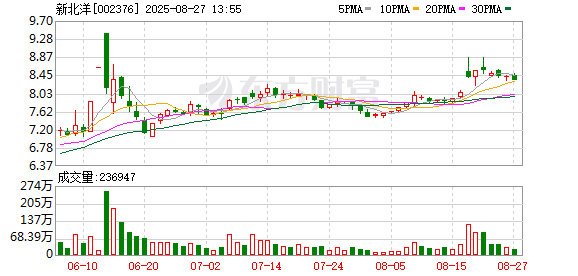
Core Viewpoint - The company, New Beiyang, is actively expanding its smart vending product offerings in various retail scenarios, including "unmanned retail" and "trendy toys," although the current revenue contribution from these segments is minimal [2]. Group 1: Business Model and Product Offerings - New Beiyang's smart vending products have been successfully implemented in multiple applications, particularly in "unmanned retail" and "sampling" scenarios, achieving continuous large-scale sales [2]. - The company has diversified its business model by selling both smart vending hardware and providing software support through its intelligent unmanned retail cloud platform [2]. - The establishment of its holding company, Yingqi Technology, focuses on comprehensive operations in the new retail sector [2]. Group 2: Market Expansion and Revenue Impact - In the "trendy toys" segment, New Beiyang is actively seeking related customers and has made some sales, but the overall scale remains small, contributing little to the company's total revenue [2].

永辉超市跌2.06%,成交额3.83亿元,主力资金净流出2984.53万元
Xin Lang Cai Jing· 2025-08-27 02:13
Core Viewpoint - Yonghui Supermarket's stock has experienced a decline of 17.35% year-to-date, despite a recent uptick in the last five trading days, indicating potential volatility in its market performance [2]. Financial Performance - As of June 30, Yonghui Supermarket reported a revenue of 29.948 billion yuan, reflecting a year-on-year decrease of 20.73%. The net profit attributable to shareholders was -241 million yuan, a significant decline of 187.38% compared to the previous year [2]. - The company has cumulatively distributed 7.101 billion yuan in dividends since its A-share listing, with no dividends paid in the last three years [3]. Stock Market Activity - On August 27, Yonghui Supermarket's stock price fell by 2.06%, trading at 5.24 yuan per share with a total market capitalization of 47.553 billion yuan. The trading volume reached 383 million yuan, with a turnover rate of 0.80% [1]. - The stock has seen a net outflow of 29.8453 million yuan from major funds, with large orders showing a buy of 81.1875 million yuan and a sell of 94.8258 million yuan [1]. Shareholder Information - As of June 30, 2025, the number of shareholders for Yonghui Supermarket was 359,800, a decrease of 6.24% from the previous period. The average circulating shares per person increased by 6.66% to 25,220 shares [2]. - Among the top ten circulating shareholders, Hong Kong Central Clearing Limited holds 104 million shares, an increase of 11.8954 million shares from the previous period, while Southern CSI 500 ETF is a new entrant with 67.3567 million shares [3].

被玩坏的外卖大战
远川研究所· 2025-08-26 13:04
Core Viewpoint - The article discusses the intense competition among major Chinese internet companies in the food delivery and instant retail sectors, highlighting the unsustainable nature of their subsidy-driven strategies and the limited growth potential of the market [3][4][62]. Group 1: Competition Dynamics - The competition among Alibaba, JD.com, and Meituan in the food delivery market is characterized by a focus on order volume rather than profitability, leading to significant financial losses for all players involved [3][4][20]. - Meituan holds a dominant market share in food delivery, with nearly 70% of the market, but its profit margin remains low at around 4% [8][14]. - The food delivery market's growth has plateaued, with a penetration rate exceeding 20% in 2022, necessitating policy-driven stimulation for further growth [11][12]. Group 2: Instant Retail Emergence - Instant retail, defined as delivering a wide range of products quickly, is seen as a new battleground for internet companies, with Meituan capturing nearly 40% of the market share by 2024 [22][47]. - The article notes that instant retail is not a new concept but a derivative of "new retail," which aims to bridge online and offline sales through rapid delivery [26][33]. - Despite the potential for growth, the actual market capacity for instant retail is limited, with estimates suggesting a penetration rate of only 10% [46]. Group 3: Financial Implications - The financial burden of subsidies is significant, with Goldman Sachs estimating that Alibaba and JD.com will incur losses of 41 billion and 26 billion RMB, respectively, while Meituan's EBIT will decrease by 25 billion RMB [20]. - The article emphasizes that the current subsidy wars are unsustainable, as they do not lead to long-term customer loyalty and merely accelerate the market's saturation [56][60]. - The competition is increasingly viewed as a costly war with diminishing returns, reminiscent of historical conflicts where the costs outweighed the benefits [63][64].




好想你涨2.31%,成交额3.26亿元,主力资金净流入537.82万元
Xin Lang Cai Jing· 2025-08-26 06:38
Company Overview - The company "好想你" (Hao Xiang Ni) is primarily engaged in the production, processing, and sales of jujube-related products and nut snacks, with main business revenue composition being 72.66% from jujube products, 16.54% from other categories, and smaller percentages from health preservation products and non-food sectors [1][2] Stock Performance - As of August 26, the stock price increased by 2.31% to 11.06 CNY per share, with a trading volume of 3.26 billion CNY and a turnover rate of 8.72%, resulting in a total market capitalization of 49.52 billion CNY [1] - Year-to-date, the stock has risen by 51.20%, with recent performance showing an 8.97% increase over the last five trading days, a 14.61% increase over the last 20 days, and a 5.13% increase over the last 60 days [1] Financial Performance - For the first half of 2025, the company reported a revenue of 689 million CNY, a year-on-year decrease of 15.64%, while the net profit attributable to shareholders was -19.84 million CNY, showing a year-on-year increase of 45.25% [2] - Cumulative cash dividends since the company's A-share listing amount to 1.638 billion CNY, with 921 million CNY distributed over the last three years [3] Shareholder Structure - As of June 30, 2025, the number of shareholders decreased by 28.76% to 58,600, with an average of 5,875 circulating shares per person, an increase of 40.45% [2] - Notable new institutional shareholders include 兴全商业模式混合(LOF)A, 兴全新视野定期开放混合型发起式, and 招商产业精选股票A, among others, indicating a shift in the shareholder base [3] Industry Context - The company operates within the food and beverage sector, specifically in the snack food category, and is associated with concepts such as e-commerce, new retail, and internet celebrity economy [2]

新乳业涨2.03%,成交额9773.39万元,主力资金净流入26.32万元
Xin Lang Cai Jing· 2025-08-26 06:07
Core Viewpoint - New Hope Dairy has shown a positive stock performance with a year-to-date increase of 31.04% and a recent rise of 5.49% over the past five trading days [1] Financial Performance - For the first quarter of 2025, New Hope Dairy reported a revenue of 2.625 billion yuan, reflecting a year-on-year growth of 0.42%, while the net profit attributable to shareholders was 133 million yuan, marking a significant increase of 48.46% [2] Stock Market Activity - As of August 26, New Hope Dairy's stock price was 18.64 yuan per share, with a total market capitalization of 16.043 billion yuan. The stock experienced a trading volume of 97.734 million yuan and a turnover rate of 0.62% [1] - The company has seen a net inflow of main funds amounting to 263,200 yuan, with significant buying and selling activities recorded [1] Shareholder Information - As of August 20, the number of shareholders for New Hope Dairy was 16,800, a decrease of 3.93% from the previous period, with an average of 50,568 circulating shares per shareholder, which is an increase of 4.10% [2] - The company has distributed a total of 676 million yuan in dividends since its A-share listing, with 448 million yuan distributed over the past three years [3] Institutional Holdings - As of March 31, 2025, notable institutional shareholders include China Europe Value Select Mixed A, which increased its holdings by 1.972 million shares, and Huashan Anxin Consumer Mixed A, which reduced its holdings by 878,900 shares [3]