
粮食安全

Search documents
Valmont(VMI) - 2025 Q2 - Earnings Call Transcript
2025-07-22 14:00
Financial Data and Key Metrics Changes - Net sales for Q2 2025 were $1,050 million, a 1% increase year-over-year [22] - Adjusted operating income was $141.4 million, or 13.5% of net sales, a 70 basis point decrease from the prior year [24] - GAAP diluted loss per share was $1.53, while adjusted EPS declined slightly to $4.88 [23][24] Business Line Data and Key Metrics Changes - Infrastructure sales were $765.5 million, similar to last year, with utility sales increasing by 5.4% [25] - Solar sales declined nearly 50%, reflecting lower volumes [25] - Agriculture sales increased by 2.7% to $289.4 million, driven by strong execution in international markets [26] Market Data and Key Metrics Changes - The infrastructure backlog approached $1.5 billion, with U.S. CapEx expected to exceed $212 billion in 2025, a 22% increase [10][11] - International agriculture sales increased by 22%, led by strength in the EMEA region [26] Company Strategy and Development Direction - The company has completed a realignment strategy, exiting unprofitable solar segments and focusing on infrastructure and international agriculture [7][19] - Future priorities include accelerating growth, driving efficiency, and advancing innovation [8][34] - The company aims to capture the infrastructure wave, with utility representing about 35% of total revenue [31] Management's Comments on Operating Environment and Future Outlook - Management expressed confidence in long-term growth drivers such as energy transition and infrastructure investment [6] - The company expects to see revenue and EPS growth starting in Q4 2025, with a strong outlook for 2026 [53][55] - Management highlighted the importance of customer alignment and market demand in driving future growth [88][90] Other Important Information - The company reported nonrecurring charges totaling $138.3 million due to realignment actions, with expected annualized savings of $22 million in 2026 [21] - Operating cash flows reached $167.6 million, with a strong focus on cash and working capital management [27] Q&A Session Summary Question: Can you discuss the decision to exit the solar business? - Management stated the exit was due to an inability to provide strong returns in a competitive and fragmented market, while maintaining profitable operations in Italy and Brazil [42][44] Question: How does the increased tariff on steel impact your outlook? - Management indicated that steel pricing is stable and they have not seen any impact on demand, with a strong value proposition for their products [47][49] Question: What is the visibility for telecom growth? - Telecom saw over 40% year-over-year growth, driven by increased carrier activity and technology upgrades, with expectations for continued strength into 2026 [67][68] Question: What are the signs of demand in infrastructure? - Management highlighted strong customer alignment and a $1.5 billion backlog as indicators of future demand in the infrastructure sector [90][91] Question: What is the outlook for the lighting and transportation business? - Management acknowledged softer market conditions but expressed confidence in future performance driven by infrastructure needs and execution improvements [94][96]

2025年国际粮食减损大会将在济南举办
Qi Lu Wan Bao Wang· 2025-07-22 11:49
Group 1 - The 2025 International Conference on Food Loss Reduction will be held in Jinan, Shandong from July 24 to 26, focusing on "Technological Innovation Empowering Food Saving and Global Cooperation for Food Security" [1] - The conference aims to create a multi-level dialogue platform involving government officials, international organizations, industry associations, experts, and the public to discuss food security [1][3] - Key sessions include an opening ceremony, a main forum on inclusive food loss governance mechanisms, and three sub-forums focusing on technological cooperation, mechanization in food production, and youth engagement in promoting food-saving practices [3] Group 2 - The conference will feature a special exhibition area for food loss reduction achievements, showcasing China's strategies, Shandong's practices, and Jinan's actions across the entire food supply chain [5] - An intelligent agricultural machinery exhibition will highlight advanced agricultural equipment and digital solutions aimed at increasing production and reducing losses [5] - Attendees will have the opportunity to visit local agricultural demonstration sites, showcasing rural development and digital agriculture solutions in Shandong [5]

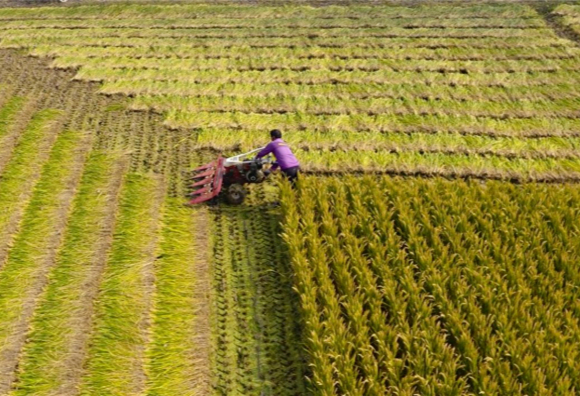
日媒:在日本政坛,稻米是“第三条高压线”
Huan Qiu Shi Bao· 2025-07-21 22:40
Core Viewpoint - The article emphasizes the critical importance of rice in Japan's political landscape, likening it to a "third rail" that politicians must avoid disrupting, as it directly impacts food security and voter sentiment [1][2]. Group 1: Rice Production Challenges - Japan's rice production system faces significant challenges, including an aging farmer population, with many over 65 years old and lacking successors [2][3]. - The fragmentation of farmland limits the ability to invest in automation and AI technologies, making it difficult to modernize the agricultural sector [2][3]. - The government has historically set rice prices to protect farmers, but this has not led to profitability, and past policies have failed to adapt to climate change impacts [2][3]. Group 2: Policy and Market Implications - The reliance on large rice reserves to stabilize market prices is becoming unsustainable due to weak political leadership, resulting in empty supermarket shelves and soaring rice prices [2]. - The rising cost of rice has become a focal point for voters, prompting the Prime Minister to appoint a new minister to reform the rice system, although there are concerns about the potential negative impact on Japan's 2,500-year-old rice culture [2][3]. - The agricultural ministry faces a complex dilemma of maintaining low rice prices while ensuring farmer income and food security, complicating policy decisions [3]. Group 3: Recommendations for Reform - Instead of paying farmers not to cultivate rice, there is a need to encourage the consolidation of small plots into larger, more efficient operations, supported by technology and financial assistance [3]. - Accelerating breeding research to develop high-quality, heat-resistant rice varieties is essential to address climate change challenges and protect premium production areas [3]. - Reforming the rice system requires careful consideration, as any misstep could have severe consequences for Japan's food culture and security [3].
活力中国调研行|“盖被”、科创、延链——探寻“黑土粮仓”的增收密码
Xin Hua She· 2025-07-19 14:33
Core Insights - The article discusses the innovative agricultural practices in Jilin Province, particularly focusing on the "Lishu Model" of conservation tillage, which has significantly improved soil health and increased crop yields while reducing operational costs [1][2][4] - The establishment of modern agricultural technology demonstration zones, such as the Changchun National Agricultural High-tech Industry Demonstration Zone, showcases advancements in seed breeding and deep processing of corn, contributing to the overall enhancement of the agricultural industry [2][3][4] Group 1: Agricultural Practices - The "Lishu Model" of conservation tillage has been developed over 20 years, promoting soil health and stabilizing grain yields across nearly 10 million acres of farmland [1][2] - The model has led to a reduction in operational costs by over 5% while increasing grain production [2] Group 2: Technological Advancements - The Changchun National Agricultural High-tech Industry Demonstration Zone features eight modern agricultural industrial parks, focusing on seed breeding, corn deep processing, and smart agricultural equipment [2][3] - The zone has implemented over 20 construction projects exceeding 50 million yuan, establishing high-level innovation platforms and standards [3] Group 3: Industry Growth - The transformation of scientific innovations into practical applications is extending the agricultural industry chain, resulting in a variety of high-value products [3][4] - Jilin Province's agricultural sector is increasingly becoming a modernized industry, with companies like Jilin Agricultural Food Co., Ltd. producing and exporting fresh corn products to over 20 countries [4]
链博会上的“舌尖革命”:科技重构田间到餐桌价值链
证券时报· 2025-07-19 00:34
Core Viewpoint - The article emphasizes the importance of technological advancements in transforming agriculture into a more sustainable and resilient industry, focusing on the entire agricultural supply chain from production to consumption [1][2]. Group 1: Technological Empowerment - The global agricultural sector faces challenges from resource constraints and environmental pressures, leading to a consensus on the need for green, low-carbon, and sustainable agricultural practices. Biopesticides, derived from natural sources like Norwegian seaweed, are highlighted as a significant market opportunity [3]. - Syngenta Group has developed a series of biopesticides that enhance crop photosynthesis, balance internal hormone levels, and promote flowering and fruiting, resulting in increased crop yield and quality. These products have been promoted on over 12 million acres in China [3]. - The lightweight packaging in the food and beverage industry is crucial for achieving carbon reduction goals. For instance, switching to lightweight beer bottles can reduce CO2 emissions by approximately 54,600 tons annually if fully adopted [3]. Group 2: Supply Chain Resilience - Recent geopolitical conflicts, extreme weather events, and rising protectionism have exposed vulnerabilities in global food supply chains, making it essential to ensure the stability and self-sufficiency of key agricultural product supply chains. The 2025 Central Document No. 1 emphasizes enhancing the supply guarantee capabilities for important agricultural products [5]. - China relies heavily on imports for barley, a key ingredient in beer production, with over 90% of its beer barley sourced from abroad. This dependency poses risks amid global trade disputes [5]. - The Chinese government is implementing policies to strengthen food security, with a focus on technological empowerment in agriculture, including the establishment of smart farms and enhancing domestic grain production capabilities [5][6]. Group 3: Open Cooperation - Agricultural trade is a vital component of China's foreign trade, with the country being the world's largest importer and the fifth-largest exporter of agricultural products. China engages in agricultural trade with over 220 countries and has signed cooperation agreements with 125 nations [8]. - McDonald's China showcased 11 supply chain partners at the expo, highlighting the collaboration between local and international companies to enhance agricultural trade. The integration of local firms into global supply chains is emphasized as a growth opportunity [8]. - The Chinese government is focused on creating a robust framework for food security, which will provide new opportunities for international agricultural trade cooperation. Recommendations include building inclusive trade rules and fostering deep integration of technology and agriculture [8].

链博会上的“舌尖革命”:科技重构田间到餐桌价值链
Zheng Quan Shi Bao· 2025-07-18 17:11
Group 1: Technological Empowerment - Technological advancements are transforming agriculture into a more resilient and greener industry, focusing on the entire agricultural supply chain from "field to table" [1] - The global agricultural sector faces dual challenges of resource constraints and environmental pressures, leading to a consensus on the need for green, low-carbon, and sustainable agriculture [2] - Syngenta Group has developed a series of bio-agents derived from natural active ingredients extracted from Norwegian seaweed, which enhance crop photosynthesis and improve yield and quality [2] - Over 12 million acres of bio-agent products based on Norwegian seaweed have been promoted in China [2] - The introduction of lightweight packaging in the food and beverage industry is a key pathway to achieving carbon reduction goals, with a potential reduction of approximately 54,600 tons of CO2 emissions if all beer bottles are switched to lightweight versions [2] Group 2: Supply Chain Resilience - Recent geopolitical conflicts, extreme weather events, and rising trade protectionism have highlighted the vulnerabilities in global food supply chains, making the security and stability of key agricultural product supply chains crucial [3] - China imports over 90% of its beer barley, making it vulnerable to global trade disputes, emphasizing the need for self-sufficiency in key agricultural inputs [3] - The Chinese government is implementing a series of policies to support stable production and supply of food, enhancing the capacity to guarantee food security [3] - Companies are leveraging technology to strengthen the agricultural supply chain, with examples like China Resources Group collaborating with national barley systems to enhance the entire value chain from breeding to brewing [3] Group 3: Open Cooperation - China is a major player in global agricultural trade, being the world's largest importer and fifth-largest exporter of agricultural products, with trade relations established with over 220 countries [6] - The Chain Expo showcased 11 suppliers from McDonald's supply chain, highlighting the collaboration between local and international companies [6] - The Chinese government is focused on improving food security mechanisms, which will create new opportunities for international agricultural trade cooperation [6]


一喷三防、水肥一体化 科技赋能实现全国夏粮稳产丰收
Yang Shi Wang· 2025-07-17 23:57
Core Viewpoint - The National Bureau of Statistics reported that the summer grain production in 2025 is expected to be stable, with a total output of 299.48 billion jin, marking the second-highest production year in history, despite adverse weather conditions affecting some regions [1] Group 1: Weather Impact and Agricultural Response - Some summer grain-producing areas faced drought and high temperatures, impacting grain production [1] - Farmers in Shanxi's Hongtong County utilized irrigation and government-supported measures to mitigate drought effects, resulting in increased yields compared to the previous year [3][4] - The "One Spray Three Prevention" technique, which combines pest control and nutrient application, has been implemented to enhance crop resilience against drought [5][6] Group 2: Insurance and Financial Support - Local agricultural authorities sought additional funding for the "One Spray Three Prevention" initiative due to ongoing drought conditions [9] - Insurance companies are transitioning from post-disaster compensation to proactive risk management, providing financial support for preventive measures [12][13] - The collaboration between local governments, farmers, and insurance companies has been crucial in addressing the challenges posed by adverse weather [14] Group 3: Technological Advancements in Agriculture - Advanced agricultural technologies, such as water and fertilizer integration through drip irrigation, have been successfully applied in various regions to combat drought effects [17][18] - The promotion of water and fertilizer integration technology has exceeded 17 million acres by the end of 2024, significantly improving crop yields and quality [19] - The collective efforts of local departments and farmers, along with scientific methods, have led to stable and increased summer grain production despite challenging weather conditions [20]
农业“半年报”:夏粮丰收秋粮稳,肉牛扭亏猪连盈
2 1 Shi Ji Jing Ji Bao Dao· 2025-07-17 12:59
Core Viewpoint - The agricultural sector in China is experiencing stable growth, with significant achievements in grain production and livestock profitability, despite some challenges in specific regions and products [1][2][6]. Grain Production - Summer grain production reached 299.48 billion jin, marking the second-highest yield on record, with 20 out of 25 provinces increasing their planting areas [2][4]. - The overall quality of summer grain is reported to be better than last year, with improvements in key quality metrics such as protein content and gluten levels [2]. - The government aims for a total grain production target of approximately 1.4 trillion jin for the year [1]. Livestock Sector - The total meat production in the first half of the year was 48.43 million tons, a year-on-year increase of 2.8%, with pork production at 30.2 million tons, up 1.3% [6]. - The beef sector has turned profitable after a period of losses, with beef production increasing by 4.5% year-on-year [6][7]. - The pig farming sector has maintained profitability for 14 consecutive months, although recent price declines have prompted the Ministry of Agriculture to issue market warnings and adjust production strategies [7][8]. Future Outlook - The Ministry of Agriculture plans to enhance production capacity and stabilize policies to ensure the steady development of the pig farming industry [8]. - A focus on disaster prevention and yield enhancement is underway as the autumn harvest approaches, with measures being implemented to mitigate potential losses from natural disasters [5][6].
牛肉进口量5年近翻番,中国农贸今年将呈“稳总量 调结构”态势
2 1 Shi Ji Jing Ji Bao Dao· 2025-07-17 07:19
Core Viewpoint - Global food security is a critical issue that affects human survival and development, with trade being a key solution to this challenge [1] Group 1: Agricultural Trade Policy Conference - The 16th International Conference on Agricultural Trade Policy was held in Beijing, focusing on the theme "Global Sharing of Food Security through Trade" [1] - Discussions included the coordination of food security and global trade policies, as well as the green and digital transformation of agricultural supply chains [1] Group 2: China's Food Security Strategy - The Chinese government emphasizes a self-reliant food security strategy, ensuring absolute self-sufficiency in staple grains while actively engaging in the global agricultural market [2] - Recent challenges such as trade protectionism, regional conflicts, and climate change have increased uncertainties in global agricultural trade, but new opportunities arise from technological advancements and the rise of developing nations [2] Group 3: Agricultural Production and Trade Data - China's total grain production has remained stable above 1.3 trillion jin for nine consecutive years, with a projected increase to over 1.4 trillion jin in 2024 [3] - China is the world's largest agricultural importer and the fifth-largest exporter, with significant exports of high-quality fruits and vegetables [3] Group 4: International Cooperation and Support - China has engaged in agricultural trade with over 220 countries and signed cooperation agreements with 125 nations, enhancing global agricultural development [4] - The Chinese government has provided training and support to countries like Benin, improving agricultural productivity without expanding land use [4] Group 5: Agricultural Trade Development Report - The 2025 China Agricultural Product Trade Development Report indicates that in 2024, China's agricultural trade volume reached $318.2 billion, with exports of $103 billion (up 4.1%) and imports of $215.2 billion (down 7.9%) [4] - Key products include over 10 million tons of soybean imports, maintaining an 80% dependency rate, while beef imports increased by 5% [4] - Export figures show seafood as the largest export product at $20.7 billion, with vegetable exports reaching a record high of $18.7 billion [4] Group 6: Future Outlook - The agricultural trade environment is expected to become more complex due to geopolitical conflicts and rising protectionism, with a focus on stabilizing total trade volume while adjusting product structure [5]
这张网,稳稳兜住粮食安全
Ren Min Ri Bao· 2025-07-16 08:02
Group 1 - The core viewpoint emphasizes the importance of water resources in ensuring food security and agricultural productivity in China, highlighting the advancements in irrigation infrastructure and technology [1][2][3] - The Ministry of Water Resources reports that the irrigated area of arable land in China has exceeded 10.8 million hectares, significantly improving irrigation conditions and increasing the crop rotation index [1] - Major irrigation projects are underway, such as the modernization of the Guangxi Zuojiang irrigation area and the Ningxia Qingtongxia irrigation area, which are expected to enhance water supply stability and increase grain production [2] Group 2 - The article discusses the shift towards water-saving agricultural practices, including the promotion of precision irrigation and drought-resistant crop varieties, which contribute to sustainable resource utilization [3] - The central government's plan for agricultural modernization includes strict water usage controls and management, aiming for efficient resource use and harmony between human activities and nature [3] - The overall message stresses the necessity of ensuring adequate water supply for agriculture to maintain food security in China, reinforcing the need for comprehensive water management strategies [3]