
公募基金改革

Search documents
北水动向|北水成交净买入10.95亿 内资继续加仓建行(00939) 本周累计净买入超34亿港元
智通财经网· 2025-05-16 10:04
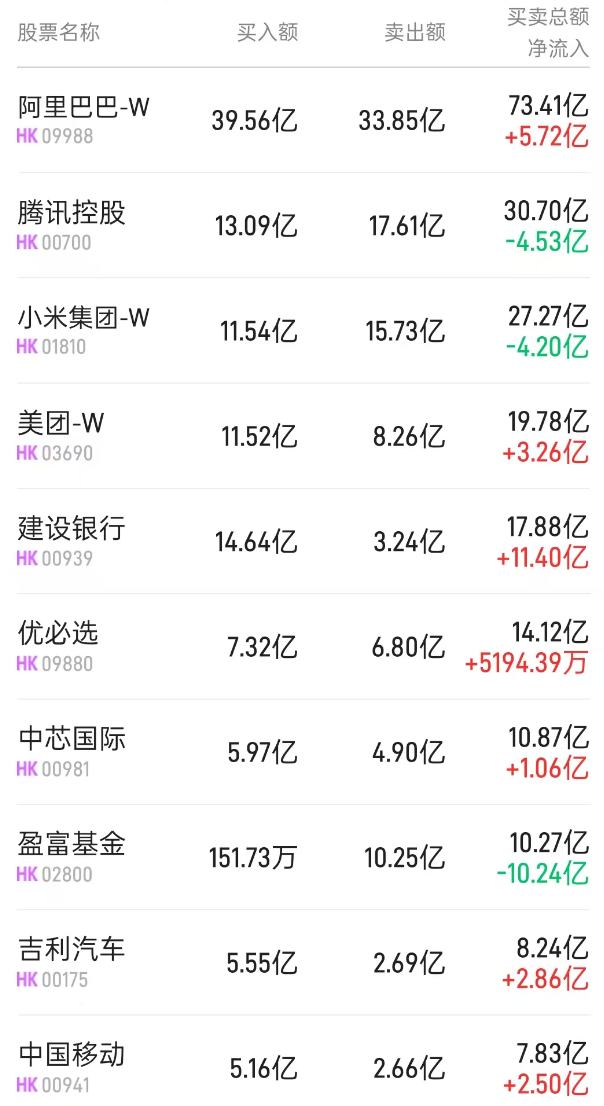
智通财经APP获悉,5月16日港股市场,北水成交净买入10.95亿港元,其中港股通(沪)成交净买入21.2亿 港元,港股通(深)成交净卖出10.25亿港元。 北水净买入最多的个股是建设银行(00939)、吉利汽车(00175)、美团-W(03690)。北水净卖出最多的个股 是盈富基金(02800)、腾讯(00700)、小米集团-W(01810)。 | 股票名称 | 买入额 | 卖出额 | 买卖总额 | | --- | --- | --- | --- | | | | | 净流入 | | 阿里巴巴-W HK 09988 | 39.56亿 | 33.85 乙 | 73.41亿 +5.72 乙 | | 腾讯控股 | 13.09亿 | 17.61 乙 | 30.70亿 | | HK 00700 | | | -4.53 Z | | 小米集团-W | 11.54 乙 | 15.73 乙 | 27.27 亿 | | HK 01810 | | | -4.201Z | | 美团-W | 11.52 乙 | 8.26亿 | 19.78亿 | | HK 03690 | | | +3.26 乙 | | 建设银行 | 14.64 Z | ...




港股概念追踪|公募基金改革方案发布 机构重视基金改革下银行配置新逻辑(附概念股)
智通财经网· 2025-05-16 01:15
近段时间,金融板块整体表现亮眼,成为市场关注的焦点。 Wind 资讯数据显示,截至 5 月 15 日收盘,Wind 银行行业指数报 7072.61 点,创历史新高。 而前一日,银行、保险、券商等板块齐发力,带动上证指数站上 3400 点,提振了市场情绪。在此背景 下,金融板块后续配置价值如何,成为投资者的关注点。 在业内人士看来,中国人民银行降准降息、公募基金改革方案发布、险资权益投资力度持续加大等积极 因素叠加,有望为包括银行板块在内的金融板块带来增配机遇,推动更多资金流入。 华泰证券认为公募改革落地有望驱动银行板块估值。 智通财经APP获悉,证监会最近发布《推动公募基金高质量发展行动方案》,显著强化业绩比较基准约 束力,预计未来基金配置或向业绩基准靠拢。2025 年一季度主动权益深度欠配银行,较沪深 300 偏离 度近 10pct,改革驱动下或有较大增配空间。近期一揽子政策落地,驱动经济修复。华泰证券最新研报 认为,被动基金持续扩容,险资加速入市,增量资金持续流入可期,有望进一步支撑板块行情。个股关 注:1)2025 年一季度公募低配的股份行;2)稳健大行仍有配置价值;3)质优个股。 内银相关港股企业: ...


打破基金公司“旱涝保收”格局迈出重要的第一步
Sou Hu Cai Jing· 2025-05-15 22:48
倍受市场关注的公募基金改革终于拉开序幕。5月7日,中国证监会印发《推动公募基金高质量发展行动方案》(下称《方案》),从优化权益类基金收费模 式、强化与投资者利益绑定、提升行业服务投资者能力等方面提出25条具体改革措施,着力督促基金公司、基金销售机构等行业机构从"重规模"向"重回 报"转变。 从《方案》的内容来看,这次公募基金改革的一个重要亮点,就是优化基金运营模式,建立健全基金公司收入报酬与投资者回报绑定机制。为此,《方案》 提出,建立与基金业绩表现挂钩的浮动管理费收取机制。对新设立的主动管理权益类基金大力推行基于业绩比较基准的浮动管理费收取模式,对符合一定持 有期要求的投资者,根据其持有期间产品业绩表现确定具体适用管理费率水平。如持有期间产品实际业绩表现符合同期业绩比较基准的,适用基准档费率; 明显低于同期业绩比较基准的,适用低档费率;显著超越同期业绩比较基准的,适用升档费率。 依据《方案》作出的上述规定,业绩好的投资基金,在计提管理费的时候,可以适用更高一些的费率(即升档费率);而业绩差的投资基金,在计提管理费 的时候,就只能适用低档费率。如此一来,业绩好的投资基金就可以提取更多的管理费,而业绩差的投资基 ...
A股银行市值首破10万亿,公募调仓、险资加持“故事”能否持续?
Di Yi Cai Jing· 2025-05-15 14:00
Core Viewpoint - The recent surge in bank stocks has made them a prominent feature in the A-share market, driven by high dividends, low valuations, and their safe-haven characteristics amid uncertainty [2][4]. Group 1: Market Performance - The China Securities Bank Index reached a high of 7751.80 points on May 15, 2023, following a nearly 7% increase over the previous six trading days [2]. - The total market capitalization of A-share banks surpassed 10 trillion yuan, increasing by 600 billion yuan from the beginning of the year [3]. - Year-to-date, the bank sector has risen over 8%, ranking fifth among all primary industries, with several banks experiencing gains exceeding 20% [5]. Group 2: Investment Drivers - Recent policy changes, including interest rate cuts and the expansion of financial asset investment companies, have contributed to the positive sentiment towards bank stocks [6][7]. - The new public fund assessment mechanism is expected to increase the allocation of funds to bank stocks, as active equity funds are likely to reduce their deviation from benchmark indices [8]. Group 3: Institutional Buying - Insurance funds have been actively increasing their holdings in bank stocks, with significant purchases noted in several banks this year [9]. - High dividend yields remain a key attraction for insurance investors, with many bank stocks offering yields above 4% [9]. Group 4: Risks and Challenges - Despite the positive outlook, there are concerns regarding the sustainability of bank stock performance, as factors such as narrowing interest margins and asset quality issues in retail lending pose risks [11][12]. - The overall non-performing loan ratio is rising, particularly in personal loans, indicating potential stress in the banking sector [12].






再给公募基金一次机会
远川研究所· 2025-05-15 12:31
当投资世界的注意力几乎被关税所垄断的时候,中国公募基金行业还需要面对更多内生的问题。 在吴清主席履职证监会的一年零三个月之后,讨论多时的《公募基金高质量发展行动方案》 (下称《方 案》) 终于出台。行业内许多从业者对《方案》有一个直击本质的简称: 公募改革 。 相比于2022年4月证监会发布的《关于加快推进公募基金行业高质量发展的意见》 (下称《意见》) 里的十六条表述,如今正式推出的《方案》,总计发布了25条举措。华创证券在一篇研报中总结为," 中国公募基金行业成立近三十年来最深入的一次'体检'及最大范围的一次配套改革 [2]。" 以下文章来源于远川投资评论 ,作者张婕妤 远川投资评论 . 看更好的资管内容 从时间点来看,改革并非没有压力。 外部——许多基金投资者,尤其是主动权益基金的持有人,在过去四年承受着不尽如人意的投资体验, 排山倒海的信任危机压在公募行业声誉之上;内部——积重难返的经营治理、人才建设、规模导向等问 题,在行业下行期里愈发外显。 才走了二十多年发展历程的中国公募基金,过去所面临的核心矛盾是行业体量太小。很大程度上,规模 为王的排名方式和评价体系,是一种高效的解决方式,也最终带来了今天中 ...

关税缓和,A股下一步关注什么?
天天基金网· 2025-05-15 11:21
Core Viewpoint - The article emphasizes the resilience of Chinese assets amidst global economic changes and tariff disputes, highlighting the strong recovery of domestic indices and the positive impact of policy measures on market stability [1][3][16]. Group 1: Tariff Impact and Market Recovery - The recent tariff disputes have significantly affected market expectations, leading to substantial declines in global stock indices, with the Hang Seng Technology Index dropping over 17% and the Shanghai Composite Index falling over 7% on April 7, 2025 [3]. - Following the announcement of supportive measures from regulatory bodies, including large-scale fund injections and stock buybacks, domestic indices have recovered to previous lows by May 12, 2025 [3][4]. - The recent progress in US-China trade talks, including a joint statement on reducing bilateral tariffs, is expected to further enhance the valuation of Chinese assets [3][16]. Group 2: Sector Performance and Technological Advancements - High-growth technology sectors, represented by indices such as DeepSeek and humanoid robots, have shown remarkable performance this year, with significant innovations attracting global attention [8]. - The success of Chinese films and cultural IPs in the global market indicates a growing recognition of Chinese cultural brands, further enhancing the investment landscape [8]. Group 3: Valuation Comparisons - Current valuations of Chinese assets are at historically low levels compared to US markets, with the Hang Seng Technology Index PE at 24.7, while the Nasdaq Index PE is at 41.4 [11][13]. - The divergence in valuations suggests a potential for convergence, as domestic policy expectations improve and technological advancements continue [11][16]. Group 4: Public Fund Reforms - The public fund industry is undergoing significant reforms aimed at enhancing the alignment of interests between funds and investors, transitioning from a focus on scale to value creation [14]. - These reforms are expected to stabilize the capital market and transform the Chinese stock market from a trading market to a more structured allocation market [14][16]. Group 5: Overall Market Outlook - The combination of robust policy support, technological breakthroughs, and public fund reforms is creating a favorable environment for investment opportunities in the Chinese equity market [16].

银行配置策略报告系列一:四维度再看当下银行配置机会-20250515
Huachuang Securities· 2025-05-15 06:11
Core Insights - The report maintains a positive outlook on bank sector investments, emphasizing the stability and dividend attributes of bank stocks, with an average dividend yield exceeding 4.3% [6][16] - The banking sector is expected to benefit from structural changes in the economy, leading to improved return on equity (ROE) and overall performance [7][10] Dimension One: Stability and Dividend Attributes of Bank Stocks - The core revenue growth of banks showed marginal improvement in Q1 2025, with a projected stable annual performance despite a slowdown in revenue and profit growth [10][11] - The average dividend payout ratio for listed banks increased to 26.1%, with an average dividend yield of over 4.3%, indicating strong dividend sustainability [16] - Major banks have received capital injections, enhancing asset quality and stabilizing market expectations, with non-performing loan ratios remaining steady at 1.16% [10][11] Dimension Two: Public Fund Reform and Increased Bank Allocations - The recent public fund reforms are expected to increase allocations to the banking sector, with potential incremental capital of approximately 222.7 billion yuan if funds align with industry benchmarks [10][12] Dimension Three: Influx of Long-term Capital - The acceleration of long-term capital inflows, particularly from insurance funds, is anticipated to provide additional support to bank stocks, with 14 cases of insurance fund acquisitions in 2025 [10][12] Dimension Four: Structural Economic Transformation and ROE Improvement - The banking sector's ROE is projected to stabilize between 8-9%, with potential for upward movement if economic conditions improve and structural transformations accelerate [7][10] Investment Recommendations - Emphasis on bank sector allocation, particularly focusing on state-owned banks and quality regional banks with strong provisioning coverage [7][10] - The report suggests a diversified investment strategy, highlighting the importance of dividend strategies and the potential for valuation improvements in selected banks [7][10]



中石化股东增持12亿元!仅含26只煤炭石油股的能源ETF(159930)冲击四连阳,公募改革落地,长钱或流向哪些板块?
Xin Lang Cai Jing· 2025-05-15 05:29
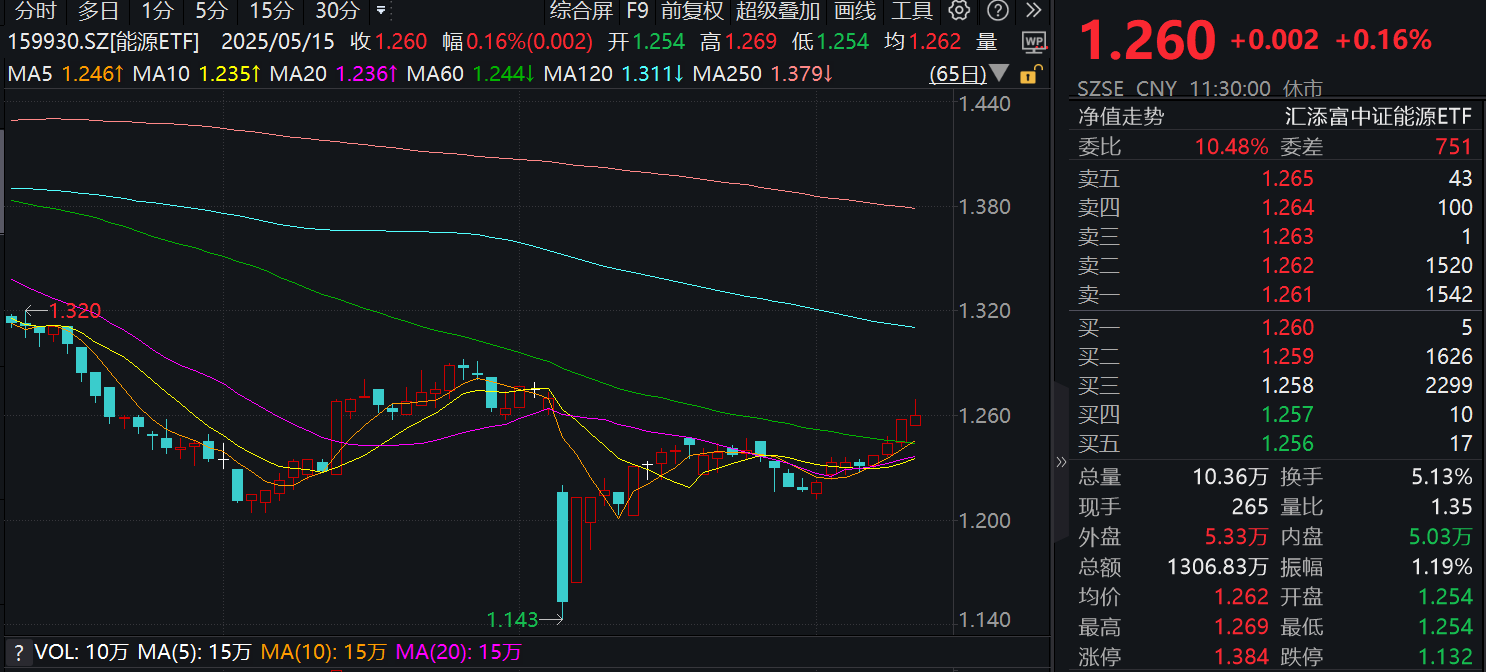
Core Viewpoint - The energy sector is showing strength, with the Energy ETF (159930) experiencing a slight increase of 0.16%, indicating a potential shift towards long-term investment strategies in this sector due to recent regulatory changes [1][3]. Energy Sector Performance - The Energy ETF (159930) consists of 26 component stocks, with 58% in coal and 42% in oil. Major stocks like China Shenhua and China Petroleum account for over 29% of the ETF, while the top five stocks represent over 60% [10]. - Individual stocks within the energy sector have shown mixed performance, with companies like Shaanxi Coal and China Shenhua rising over 1%, while major oil stocks, including the "three barrels of oil," have collectively weakened [3]. Regulatory Impact - The recent "Action Plan for Promoting High-Quality Development of Public Funds" emphasizes long-term investment strategies, with a focus on high dividend yields and stable fundamentals, making the energy sector an attractive option for long-term capital allocation [3][5]. - The plan mandates that at least 80% of the evaluation weight for fund investment returns be based on a three-year or longer period, which may benefit industry leaders in the energy sector [5]. Dividend Yields - The coal sector has a projected cash dividend rate of 61% for listed coal companies in 2024, indicating strong profitability and a favorable outlook for dividends [5]. - The energy sector's dividend yields are notably high, with coal and petrochemical industries ranking first and third in the Shenwan industry classification, respectively [4]. Investment Strategy - The shift towards performance-based management fee structures for public funds may drive institutional capital towards underweighted sectors like coal and petrochemicals, which are expected to receive increased allocation [6]. - The energy sector's long-term stability and high dividend characteristics align well with the evolving investment strategies focused on long-term value [5][6].
重视基金改革下银行配置新逻辑
HTSC· 2025-05-15 02:30
证券研究报告 银行 重视基金改革下银行配置新逻辑 华泰研究 2025 年 5 月 14 日│中国内地 动态点评 我们认为公募改革落地有望驱动银行板块估值。证监会最近发布《推动公募 基金高质量发展行动方案》(简称"方案"),显著强化业绩比较基准约束力, 预计未来基金配置或向业绩基准靠拢。25Q1 主动权益深度欠配银行,较沪 深 300 偏离度近 10pct,改革驱动下或有较大增配空间。近期一揽子政策落 地,驱动经济修复,此外,被动基金持续扩容,险资加速入市,增量资金持 续流入可期,有望进一步支撑板块行情。个股推荐:1)25Q1 公募低配的 股份行:如招行 AH、兴业;2)稳健大行仍有配置价值,如农行 AH、交行 AH;3)质优个股,如成都、上海、渝农 AH、重庆 AH。 明确长期导向,强化基准约束 改革明确长周期业绩考核导向,强化业绩比较基准的约束作用,或驱动基金 产品增配此前低配的权重行业。方案提出,建立与基金业绩表现挂钩的浮动 管理费收取机制,同时强化业绩比较基准的约束作用,避免"风格漂移"等 问题。方案全面强化长周期考核与激励约束机制,在对基金经理的考核方面, 提出构建以 5 年以上长周期业绩为核心的评价 ...



公募基金改革方案深度解读:公募重磅改革,加速生态重塑
2025-05-14 15:19
Summary of Key Points from Conference Call Records Industry Overview - The conference call discusses the public fund reform in China, focusing on the mutual fund industry and its implications for investors and fund companies [1][5][6]. Core Insights and Arguments - **Objective of New Regulations**: The new regulations aim to address residents' investment returns, reduce investor costs, and shift the industry focus from scale to actual returns. The first two phases of fee reductions for active equity funds have been completed [1][5]. - **Performance Assessment**: Emphasis on performance assessment will lead the mutual fund industry to prioritize actual returns over mere scale expansion. This includes incorporating investor gains and losses into evaluation metrics [6][7]. - **Cost Reduction for Investors**: Investor costs are expected to decrease through lower sales fees and management fees. Sales fees are currently in the range of 0% to 1.5%, with a significant portion of products having low sales fees [10][11]. - **Shift Towards Equity Funds**: The policy encourages the development of equity funds, which currently represent a low proportion of the mutual fund market in China (22% compared to 57% globally). There is a need to enhance research quality and performance to attract more funds [14][15]. - **ETF and Index Fund Growth**: The development of index funds and ETFs is crucial for expanding mutual fund assets. The growth rate of ETFs is projected to be 39% from 2018 to 2024 [15]. Additional Important Content - **Impact on Non-Bank Sectors**: The reform has significantly impacted the non-bank sector, with a notable short-term rally in stocks due to low allocation in the sector. The banking sector has seen a 7.3% increase, while non-bank sectors like insurance and brokerage have underperformed [2][4]. - **Long-term Trends in Non-Bank Sector**: The insurance sector is expected to improve, with a stable long-term interest rate environment alleviating margin pressures. Companies like China Ping An and China Pacific Insurance are highlighted as potential investment opportunities [4]. - **Changes in Fund Sales**: The sales process will be standardized, with a focus on maintaining product scale and investor outcomes. The importance of fund advisory services is expected to increase, providing a new revenue stream for fund companies [3][17]. - **Industry Consolidation**: The new regulations are likely to accelerate the survival of the fittest within the industry, favoring larger firms while smaller firms may struggle to maintain profitability [18][19]. - **Performance-Based Fee Structures**: The introduction of performance-based fee structures is anticipated to lead to a more conservative investment approach among fund managers, potentially increasing the attractiveness of fixed-income products [16]. Conclusion The public fund reform in China is set to reshape the mutual fund industry by emphasizing performance, reducing costs for investors, and promoting equity fund growth. The changes are expected to benefit larger, more innovative firms while posing challenges for smaller entities. The focus on ETFs and index funds will also play a critical role in the industry's future development.