
医保目录调整

Search documents
职工医保基金支出近2万亿,全国医保最新“年报”透露哪些信息
Xin Jing Bao· 2025-07-16 10:47
Core Insights - The National Healthcare Security Administration (NHSA) released the "2024 National Medical Security Development Statistical Bulletin," highlighting key figures related to health insurance enrollment and fund operations [1][2]. Group 1: Health Insurance Enrollment and Fund Operations - As of the end of 2024, the total number of basic medical insurance participants reached 1.32662 billion, maintaining a coverage rate of 95% [2]. - The total revenue for the basic medical insurance fund (including maternity insurance) in 2024 was CNY 34,913.37 billion, while total expenditures reached CNY 29,764.03 billion, resulting in a cumulative fund balance of CNY 38,628.52 billion [2]. - The employee medical insurance fund (including maternity insurance) reported a revenue of CNY 23,732.47 billion in 2024, a 3.5% increase from the previous year, with expenditures of CNY 19,102.54 billion, marking a 7.6% increase [2]. Group 2: Medical Treatment and Benefits - In 2024, the number of treatment beneficiaries under employee medical insurance was 5.308 billion, reflecting a 9.9% increase year-on-year [3]. - The total medical expenses for employee medical insurance participants reached CNY 20,587.46 billion, which is a 3.6% increase compared to the previous year [3]. Group 3: Long-term Care and Cross-Region Medical Services - By 2024, 49 pilot cities had a total of 18,786.34 million participants in long-term care insurance, with the number of beneficiaries rising from 835,000 in 2020 to 1,462,500 in 2024 [5]. - The number of cross-region medical service visits reached 397 million in 2024, with associated costs amounting to CNY 7,867.74 billion [5]. Group 4: Drug Procurement and Insurance Directory Adjustments - The NHSA has conducted ten rounds of national drug procurement, covering 435 types of drugs, with the eleventh round focusing on established drugs with strict quality requirements [6][7]. - Since its establishment in 2018, the NHSA has dynamically adjusted the medical insurance drug directory for seven consecutive years, adding a total of 835 drugs, with 91 new drugs included in 2024 [8][9].
【8点见】提起公诉!缅北白家犯罪集团专案细节曝光
Yang Shi Wang· 2025-07-12 00:07
Group 1 - The number of visa-free countries for Chinese travelers has expanded to 55, indicating smoother travel for "Chinese tourism" [1] - The Ministry of Education has launched a hotline for university funding assistance starting July 15 [1] - The construction of 15,899 earthquake early warning observation stations has been completed, enabling second-level earthquake warning capabilities in five key areas nationwide [1] Group 2 - The adjustment of the medical insurance catalog has officially started, with the addition of innovative drugs from commercial insurance [1] - A criminal group involved in extensive telecom fraud in northern Myanmar has seen 21 key members, including Bai Suocheng, prosecuted [1] - The preliminary investigation into the Indian aviation accident is focusing on pilot operations, with a suspected accidental fuel switch activation [1]


深交所修订创业板综合指数编制方案!2025年医保目录调整正式启动!上海迪士尼多名黄牛被抓!美国本财年关税收入首破千亿美元!
新浪财经· 2025-07-11 23:56
Group 1 - The core viewpoint of the article is the optimization of the ChiNext Composite Index, which introduces two key mechanisms: the elimination rule for risk warning companies (ST or *ST) and the ESG negative exclusion mechanism, enhancing index stability and investment value [2][4] - Following the announcement of the index optimization plan, seven fund companies quickly submitted applications for ChiNext Composite Index-related ETFs, indicating strong market interest and potential for increased liquidity in the sector [4] - The ChiNext Composite Index has shown significant performance, with a cumulative increase of 197% since its inception and an annualized return of 8%, demonstrating its role as a leading indicator during bullish market phases [5] Group 2 - As of July 11, the valuation of the ChiNext Composite Index stands at 63.92 times, which is below the historical median and positioned at the 54.31% percentile over the past decade, suggesting potential for future growth [6] - The earnings forecast for 2025 indicates that the ChiNext Composite Index's revenue and net profit are expected to grow by 17% and 64% respectively, reflecting strong underlying business performance and growth potential [7] - The sample stocks within the ChiNext Composite Index show a significant proportion (79%) with a market capitalization of 10 billion yuan or less, indicating a focus on high-growth companies that are likely to benefit from increased R&D investment and market demand [7]
财联社7月11日晚间新闻精选
news flash· 2025-07-11 13:44
Group 1 - The Ministry of Industry and Information Technology has released the 2025 work points for the integration of information technology and industrialization, implementing the "Artificial Intelligence + Manufacturing" initiative to support enterprises in applying general and industry-specific large models and intelligent agents in key scenarios [1] - The adjustment of the medical insurance catalog for 2025 has officially started, with this year's first addition focusing on innovative drugs that are highly innovative, clinically valuable, and significantly beneficial to patients, but cannot be included in the basic catalog due to exceeding the "basic protection" positioning [1] - State-owned insurance companies have fully implemented a long-term assessment mechanism with a three-year cycle, adding indicators for a five-year period [1] Group 2 - The price of polysilicon futures has surged nearly 30% over the past three weeks, with significant recovery in the spot market, leading silicon wafer manufacturers to raise prices. However, institutions indicate that the downstream photovoltaic sector has limited acceptance of price increases, resulting in cautious observation and limited actual transactions [1] - Northern Rare Earth has reported that its production and operations are currently normal, and it is orderly managing its production and operational activities [1] - China Merchants Jinling Securities has stated that its operations are normal and there are no undisclosed significant matters [1] - Wuliangye has announced a profit distribution of 31.69 yuan per 10 shares for the 2024 fiscal year [1] - Great Wisdom has clarified that it has not engaged in businesses related to "stablecoins," "virtual asset trading," or "cross-border payments" [1] - Guotou Zhonglu has indicated that there have been no significant changes in its production and operational situation, although its stock trading has experienced considerable volatility risk [1] - Huamei Holdings has projected a net loss of 46.5 million to 60 million yuan for the first half of the year, marking a year-on-year shift to a loss [1]
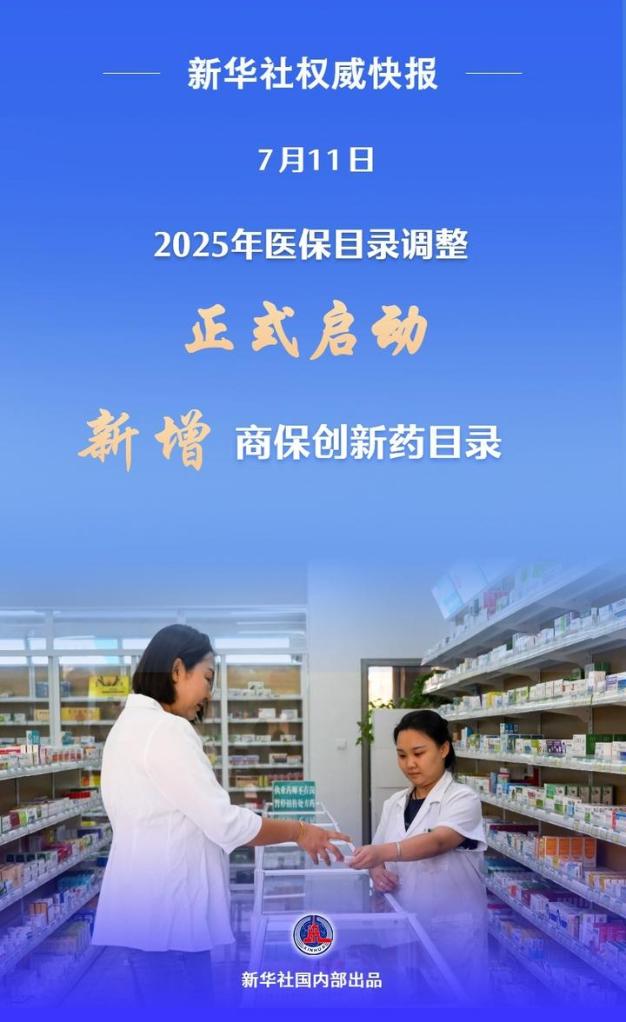
新增商保创新药目录!2025年医保目录调整启动
Xin Hua She· 2025-07-11 11:10
Core Points - The adjustment of the national basic medical insurance drug catalog for 2025 has officially started, with a notable addition of a commercial health insurance innovative drug catalog [1][4] - The focus of the 2025 adjustment will be on areas where basic catalog coverage is insufficient, such as encouraging the development of pediatric and rare disease medications [3][4] - Over the past seven years, the national basic medical insurance catalog has undergone regular and dynamic adjustments, successfully negotiating and including a large number of life-saving drugs at reasonable prices [3][4] Group 1 - The 2025 adjustment aims to fill clinical medication gaps and provide better support for patients [3][4] - A total of 835 new drugs have been added to the national basic medical insurance catalog, covering various fields including cancer, chronic diseases, and rare diseases [3][4] - 438 drugs that are ineffective, prone to abuse, or have been eliminated from clinical use have been removed from the catalog, resulting in a more rational structure [3][4] Group 2 - The newly introduced commercial health insurance innovative drug catalog serves as a supplement to the basic catalog, allowing for the inclusion of innovative drugs that cannot yet be reimbursed by the basic insurance [4][5] - Drugs approved for marketing within the last five years or exclusive drugs for rare diseases can be submitted for the commercial health insurance innovative drug catalog [5][6] - The process for a drug to enter the commercial health insurance innovative drug catalog involves expert review and price negotiations among the national medical insurance bureau, commercial insurance companies, and pharmaceutical enterprises [6]
新增商保创新药目录 2025年医保目录调整正式启动
news flash· 2025-07-11 08:59
Core Viewpoint - The adjustment of the National Basic Medical Insurance, Maternity Insurance, and Work Injury Insurance drug catalog, as well as the new commercial health insurance innovative drug catalog, has officially commenced for 2025, aiming to enhance the multi-tiered medication security system and support the development of innovative drugs [1] Group 1: Policy Changes - The adjustment period for the drug catalogs is set from July 11 to July 20, during which eligible applicants can submit their applications through the National Medical Insurance Service Platform [1] - The newly added commercial health insurance innovative drug catalog focuses on drugs with high innovation, significant clinical value, and substantial patient benefits, which are currently unable to be included in the basic catalog due to exceeding the "basic protection" scope [1] Group 2: Industry Impact - The initiative aims to better meet the diverse medication needs of the public and provide stronger economic support for the development of innovative drugs [1]
大利好!国家医保局,正式发布
21世纪经济报道· 2025-07-10 12:18
Core Viewpoint - The new healthcare policy aims to enhance the accessibility of innovative drugs through the establishment of a commercial insurance innovation drug directory, which is expected to include around 20 to 30 new drugs, thereby improving the overall insurance coverage for patients [6][9]. Group 1: Policy Changes - The National Healthcare Security Administration (NHSA) has released a series of documents outlining the adjustments to the 2025 National Basic Medical Insurance, Maternity Insurance, and Work Injury Insurance drug directories, as well as the commercial health insurance innovation drug directory [2][4]. - The new policy emphasizes a collaborative negotiation mechanism for the commercial insurance innovation drug directory, differing from the basic insurance directory's negotiation process [6][8]. Group 2: Market Impact - The introduction of the commercial insurance innovation drug directory is expected to allow insurance companies to negotiate prices with pharmaceutical companies, leading to lower prices compared to existing market rates [6][8]. - This policy is anticipated to expand the coverage of commercial insurance and reduce operational costs for insurance companies, ultimately benefiting patients by increasing their access to innovative drugs [6][9]. Group 3: Implementation and Future Outlook - The NHSA will begin accepting applications from eligible companies for the new drug directory starting from July 20, 2023, indicating that the preparation for the 2025 adjustments is nearly complete [9]. - The dynamic nature of the directory, which will be updated annually, suggests that more innovative drugs may be included in short-term health insurance plans in the future, providing more options for the public [8][9].

商保创新药怎么谈?解读2025年医保目录调整新政
2 1 Shi Ji Jing Ji Bao Dao· 2025-07-10 11:52
Core Insights - The National Healthcare Security Administration (NHSA) has released a new policy framework for the adjustment of the 2025 National Basic Medical Insurance, Maternity Insurance, and Work Injury Insurance drug catalog, as well as the commercial health insurance innovative drug catalog [1][2] - The new policy signals a shift towards a collaborative pricing mechanism for innovative drugs, allowing commercial insurance companies to negotiate prices with pharmaceutical firms, which is expected to lower costs and expand coverage [2][3] Group 1: Policy Design and Market Impact - The newly introduced commercial insurance innovative drug catalog is expected to include around 20 to 30 drugs, filling gaps in the basic medical insurance catalog and enhancing overall coverage [1] - The commercial insurance innovative drug catalog emphasizes a negotiation mechanism, differing from the basic medical insurance catalog's negotiation process, indicating a more flexible approach to pricing [1][2] - The policy aims to benefit the public by increasing access to new and effective medications, allowing patients to enjoy greater reimbursement for innovative drugs [2] Group 2: Role of Commercial Insurance Companies - Commercial insurance companies will have the opportunity to negotiate prices with pharmaceutical companies, which is a significant shift from previous practices where they had limited bargaining power [2] - Different insurance companies will design various insurance products based on their payment capabilities, leading to a competitive environment and broader coverage options for consumers [2][3] - The NHSA will selectively invite experienced commercial insurance companies to participate in the negotiation process, ensuring that their input is considered in the final decisions [2] Group 3: Future Implications for Innovative Drugs - The dynamic nature of the drug catalog, which will be adjusted annually, suggests that more innovative drugs may be included in short-term health insurance plans, providing consumers with more choices [3] - Pharmaceutical companies can apply for inclusion in the commercial insurance innovative drug catalog independently or alongside the basic catalog, enhancing their market opportunities [3] - The integration of the basic drug catalog with the commercial insurance innovative drug catalog will be strengthened, impacting how drugs are priced, demanded, and reimbursed in the market [3]
【大涨解读】医药:海外制药巨头豪掷百亿美金收购创新药,国内政策力度也在加强,业绩也有望持续改善
Xuan Gu Bao· 2025-07-10 03:14
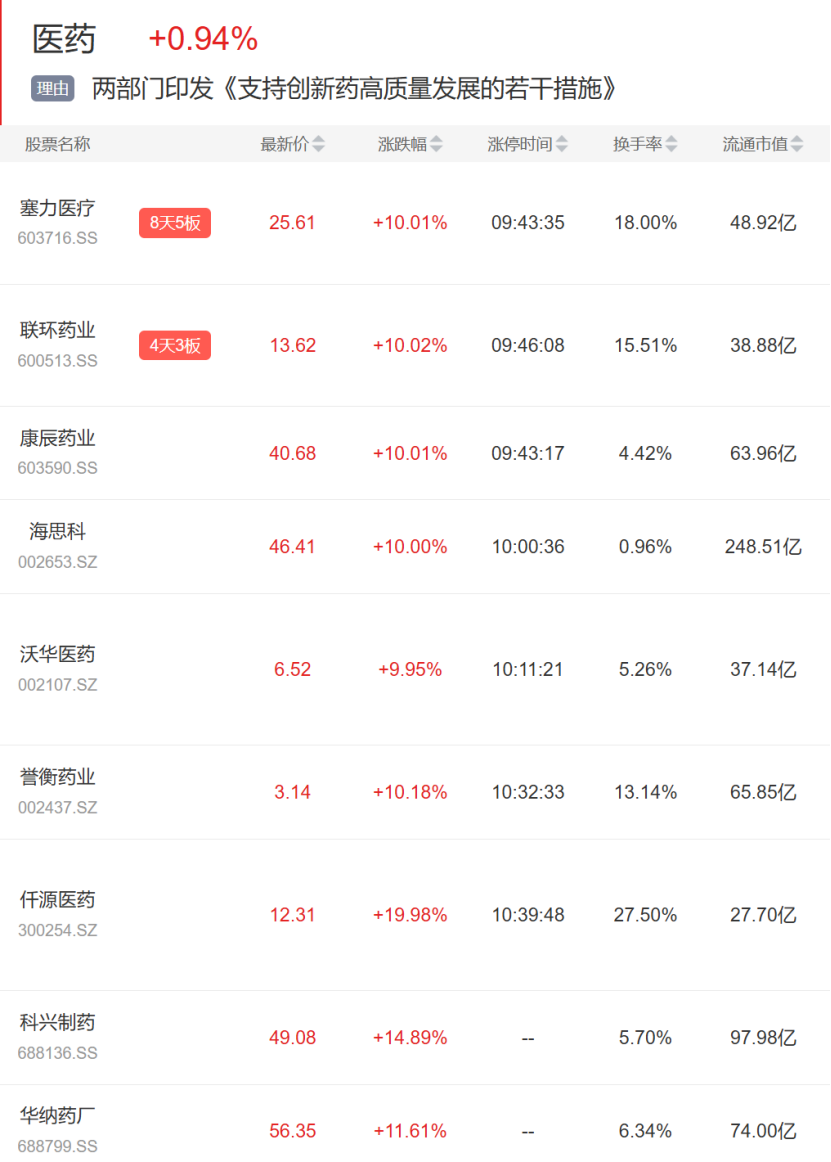
Market Overview - The pharmaceutical sector experienced a significant surge on July 10, with stocks such as Seer Medical, Lianhuan Pharmaceutical, and Kangchen Pharmaceutical hitting the daily limit [1] - Seer Medical recorded a price of 25.61 with a rise of 10.01%, Lianhuan Pharmaceutical reached 13.62 with a 10.02% increase, and Kangchen Pharmaceutical was at 40.68 with a 10.01% gain [2] Key Events - Merck, a major U.S. pharmaceutical company, announced its intention to acquire UK-based Verona Pharma for approximately $10 billion to enhance its product line for chronic obstructive pulmonary disease (COPD) [3] - Former President Trump threatened to impose a 200% tariff on pharmaceuticals, although this may not take effect immediately, allowing pharmaceutical companies a one-year buffer [3] - The National Healthcare Security Administration and the National Health Commission released measures to support the high-quality development of innovative drugs, including 16 initiatives to enhance support for R&D and encourage clinical application [3] Institutional Insights - The trend of Chinese innovative drugs entering international markets is expected to grow over the next 3-5 years, driven by improved innovation capabilities and profitability of Chinese pharmaceutical companies, which will enhance industry valuation levels [4] - The upstream raw material drug sector has seen a valuation adjustment, now positioned at relatively low levels, with the commercialization of GLP-1 products expected to drive growth in upstream peptide raw materials [4] - As the mid-year reporting period approaches, performance metrics will become a focal point for the market, with expectations for continued improvement in innovative drugs and their supply chains [4]





易方达创新药ETF联动港股新指数,2025 年政策红利下的投资新机遇
Xin Lang Cai Jing· 2025-07-04 02:59
Group 1 - The National Healthcare Security Administration has issued guidelines for the adjustment of the basic medical insurance catalog and the commercial health insurance innovative drug catalog for 2025, marking the first inclusion of commercial health insurance innovative drug catalog in the adjustment plan [1] - The Hang Seng Innovative Drug ETF (159316) has shown impressive performance, with a year-to-date increase of 67%, following the completion of a "purity revolution" that removed five CXO companies, focusing entirely on leading innovative drug firms [1][2] - The new index ensures "purity" through a three-tier screening process: excluding CXO companies, scoring based on R&D investment, and semi-annual rebalancing [1] Group 2 - The policy environment is favorable, with accelerated pilot programs for Class B medical insurance catalogs and CAR-T drugs included in "Huibao" for three consecutive years, with a maximum reimbursement of 500,000 yuan; nearly 40 innovative drugs are expected to be approved in the first half of 2025, potentially exceeding 50 for the entire year [2] - In the first five months of 2025, the total amount of license-out transactions by Chinese innovative drug companies reached 45.5 billion USD, surpassing the total for the first half of 2024, indicating a global revaluation of innovative drug value [2] Group 3 - The Hang Seng Innovative Drug ETF (159316) has significant holdings in companies like BeiGene and CanSino Biologics, with recent net inflows exceeding 17 million yuan and a 120% year-on-year increase in overseas sales for its holdings [3] - The EasyGo Innovative Drug ETF (516080) covers leading firms like HengRui Medicine, with a scale exceeding 400 million yuan, while the Medical ETF (512010) has a scale of over 20 billion yuan, with 35% allocated to innovative drugs, suitable for conservative investors [3] Group 4 - The innovative drug development success rate is below 10%, and some individual stocks may experience increased volatility due to speculative trading [4] - A "core + satellite" strategy is recommended, focusing 60%-70% on the Hang Seng Innovative Drug ETF and EasyGo Innovative Drug ETF, complemented by a diversified approach through the Hong Kong Stock Connect Medical ETF [4] - The combination of policy support and industry upgrades presents a historic opportunity for innovative drugs in 2025, with EasyGo providing efficient access for investors to participate in this transformation [4]