
外汇干预

Search documents
日元跌至1美元兑155区间,创9个月来低点
日经中文网· 2025-11-13 02:46
Group 1 - The market generally believes that the downward pressure on the US economy will ease, leading to a stronger demand for the US dollar [2][4] - As of late September, the Japanese yen was trading around 147 yen per dollar, experiencing a significant depreciation of over 7 yen in just a month and a half [4] - On November 12, the yen fell to 155 yen per dollar, marking the first time it reached this level in about nine months since February 4 [2][6] Group 2 - The US Senate passed a temporary budget bill on the 10th to end the longest government shutdown in history, with expectations that the House will vote on it soon [4] - There are views that the new Japanese Prime Minister, Fumio Kishida, will implement expansionary fiscal policies, prompting investors to sell the yen against various currencies [4] - On November 12, the yen fell to 179 yen per euro, setting a record low since the euro's inception in 1999 [4] Group 3 - There is speculation that if the yen depreciates beyond 155 yen per dollar, the Japanese government and the Bank of Japan may intervene by buying yen [6] - Japan maintains the lowest policy interest rates among major economies, lacking factors to support yen buying [6] - Future focus may shift to whether Japanese Finance Minister Shunichi Suzuki will increase verbal interventions to curb yen depreciation [6]


金融机构纷纷下调预期,日元还要再贬?
日经中文网· 2025-11-10 07:30
Core Viewpoint - Japanese financial institutions are revising their forecasts for the yen's exchange rate against the US dollar, expecting it to depreciate to a range of 149 to 156 yen by the end of the year due to fading expectations of early interest rate hikes by the Bank of Japan and concerns over Prime Minister Kishida's expansionary fiscal policies [2][6]. Group 1: Exchange Rate Predictions - Morgan Stanley has significantly lowered its forecast for the yen, predicting it will depreciate to 156 yen by the end of 2025, down from a previous estimate of 142 yen [6][7]. - Other banks, including Mitsubishi UFJ and Sumitomo Mitsui, have also adjusted their predictions, indicating a general consensus on the yen's depreciation [7]. - The yen depreciated over 4% in October, with a notable drop of more than 7 yen, reaching around 154.5 yen per dollar in early November, marking its lowest point since February [4][6]. Group 2: Monetary Policy and Market Reactions - The Bank of Japan maintained its policy interest rate during the monetary policy meeting on October 30, with Governor Ueda expressing caution regarding future rate hikes [6][8]. - Market sentiment reflects a growing awareness of potential currency intervention by the Japanese government and the Bank of Japan, as the nominal effective exchange rate index for the yen hit a low of 71.4 on October 31 [11]. - Analysts express skepticism about the immediate prospects for yen appreciation, citing a lack of clear support for early rate hikes and the potential for further yen selling pressure due to the government's fiscal policies [8][9]. Group 3: Economic and Fiscal Concerns - Concerns over Prime Minister Kishida's "responsible active fiscal" policies are prevalent, with plans for a supplementary budget expected to exceed the previous year's budget, raising fears of increased yen selling pressure [8][9]. - The market is reacting to the government's perceived tolerance for yen depreciation, with some analysts predicting a reversal in the yen's trend as stock market adjustments occur [9][10].



日元跌近155关口,高盛、美银:干预时机未到,红线在160左右!
Hua Er Jie Jian Wen· 2025-11-04 06:53
Core Viewpoint - The Japanese yen is approaching the critical 155 level against the US dollar, raising speculation about potential intervention by Japanese authorities, but major investment banks like Goldman Sachs and Bank of America believe immediate intervention is unlikely as current conditions do not meet the usual criteria for action [1][4]. Group 1: Market Conditions - The yen depreciated approximately 4% against the dollar in October, making it the worst-performing currency among G-10 currencies [1]. - As of Tuesday, the yen fell further to 154.48, driven by market interpretations of Prime Minister Kishida's inclination towards fiscal expansion and dovish monetary policy [1][3]. - Goldman Sachs and Bank of America suggest that the yen's recent weakness is primarily due to the repricing of Japan's fiscal risk premium and adjustments in short-term interest rate expectations [4]. Group 2: Intervention Triggers - Goldman Sachs indicates that intervention likelihood will significantly increase only when the USD/JPY exchange rate reaches the 161-162 range, while Bank of America suggests a meaningful policy response may occur if the rate tests 158 [1][4]. - Historical context shows that the last intervention by the Japanese Ministry of Finance occurred in 2024, with intervention levels around 157.99 to 161.76 [4]. Group 3: Future Predictions - Bank of America maintains a year-end forecast of 155 for the exchange rate but notes an increased risk of the rate overshooting to 160 by Q4 2025 [5]. - Goldman Sachs expects the yen to gradually appreciate as hedging costs decrease and the dollar weakens, with potential acceleration if US labor market data worsens [6]. - However, there are warnings that unexpected fiscal stimulus measures from Japan or stronger-than-expected US economic performance could undermine expectations for yen appreciation [7].
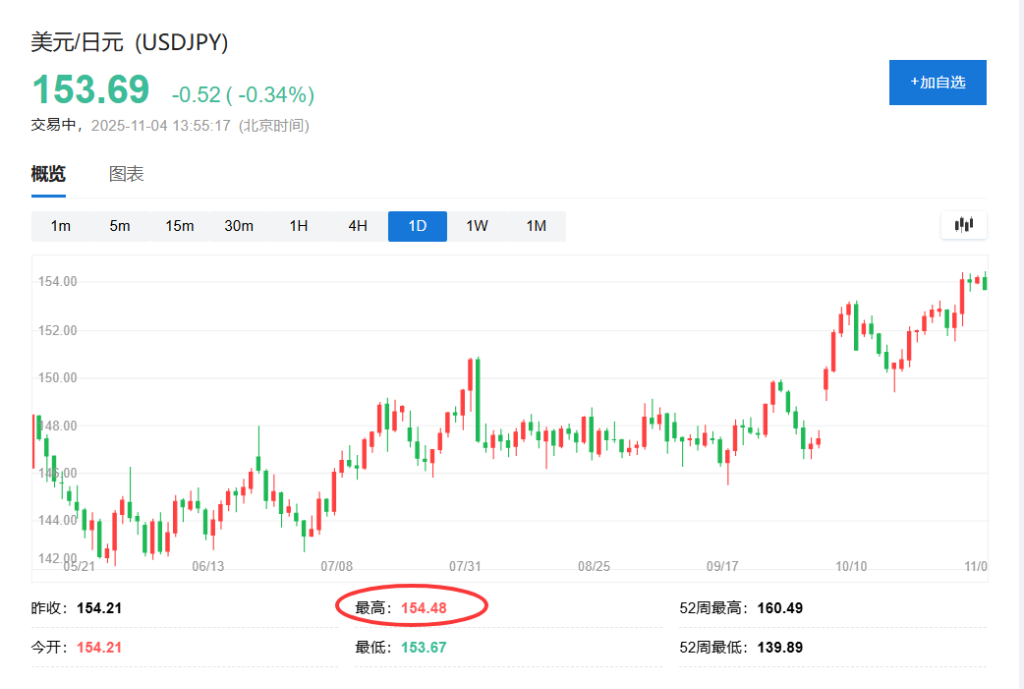
日元逼近155之际,高盛断言:日本当局不会出手干预!
Sou Hu Cai Jing· 2025-11-04 03:37
Core Viewpoint - Goldman Sachs believes that the key conditions for intervention in the foreign exchange market have not yet been met, despite the rising USD/JPY exchange rate approaching 155 [2][4]. Group 1: Market Performance - In October, the USD/JPY increased by approximately 4%, making the yen the worst-performing major currency among G-10 currencies [4]. - The recent poor performance of the yen is primarily driven by Japan's fiscal risk premium and the repricing of short-term interest rate expectations by the Bank of Japan [2][4]. Group 2: Government and Central Bank Actions - Japanese officials have expressed concerns over the rapid and unilateral movements in the foreign exchange market, with Finance Minister Katsunobu Kato stating that they are closely monitoring the situation with a sense of urgency [4]. - The last intervention by the Japanese Ministry of Finance occurred in 2024 at USD/JPY levels of approximately 157.99, 159.45, 160.17, and 161.76 [4]. Group 3: Future Outlook - Goldman Sachs anticipates that the yen will gradually appreciate in the long term as hedging costs decrease and the USD weakens, although this trend could accelerate if U.S. labor market data deteriorates [5]. - Analysts from Bank of America suggest that the USD/JPY may test the 158 level before triggering substantial policy responses, maintaining a year-end forecast of 155 while noting an increased risk of reaching 160 by Q4 2025 [5].



消息称印度央行可能正在出售美元,以帮助卢比避免跌至88.8的历史低点
Sou Hu Cai Jing· 2025-11-03 04:26
Core Viewpoint - The Reserve Bank of India is reportedly selling US dollars to prevent the Indian Rupee from falling to a historical low of 88.8 [1] Group 1 - The Indian central bank's intervention aims to stabilize the currency amid market pressures [1]

日元跌至8个月低点,日本要干预了?新财长警告:正以高度紧迫感密切关注
Hua Er Jie Jian Wen· 2025-11-02 03:46
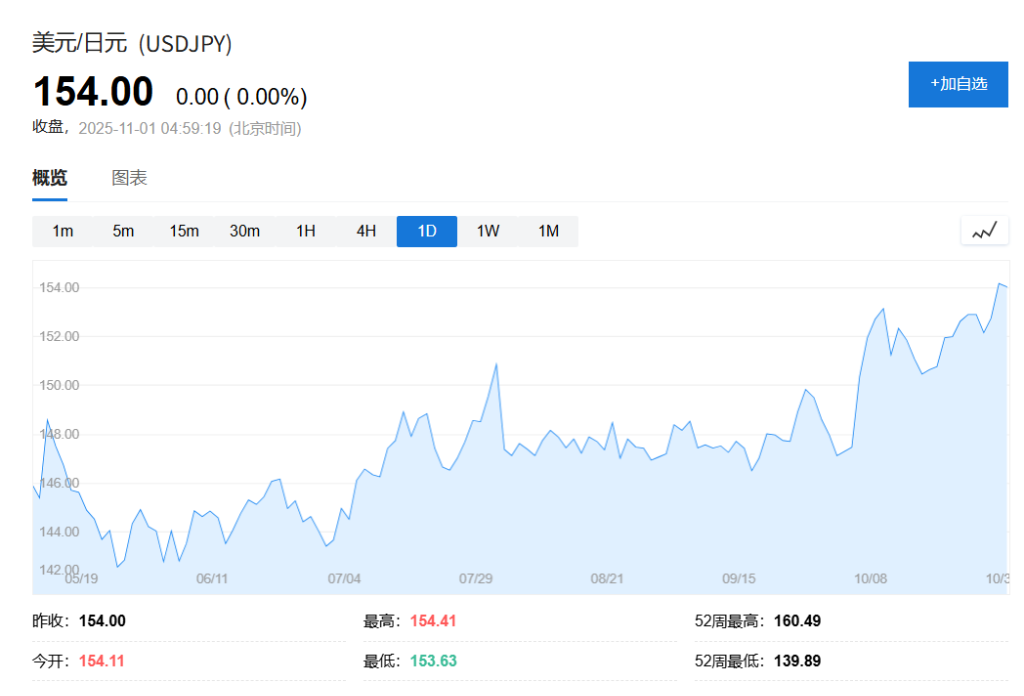
Core Viewpoint - The Japanese government is increasingly concerned about the depreciation of the yen, with the new Finance Minister, Katsuyuki Kitayama, indicating a heightened urgency in monitoring the currency's exchange rate, suggesting a potential for direct intervention in the foreign exchange market [1][4]. Group 1: Government's Stance - Katsuyuki Kitayama expressed that the government is closely watching the foreign exchange market due to "one-sided and rapid currency fluctuations," emphasizing the influence of speculative behavior on excessive volatility [2][4]. - Following a significant drop in the yen's value, which reached a low of 154.17 against the dollar, Kitayama's warning led to a slight recovery of the yen to 153.65 [2][4]. Group 2: Market Reactions and Analysis - The language used by Kitayama is more assertive compared to her predecessor, indicating an increased level of concern from the government regarding the yen's depreciation [4]. - Analysts from Nomura Securities suggest that the market may interpret the government's concerns about exchange rate fluctuations as not particularly strong, given Kitayama's support for the current monetary policy [4][5]. Group 3: Conditions for Intervention - Several indicators suggest that conditions for foreign exchange intervention may be forming, with the speed and level of the yen's depreciation being critical factors [5][8]. - Historical context shows that the Japanese authorities intervened in the market when the yen depreciated approximately 14% to 155 in October 2022 and 8% to over 160 in May 2024, indicating that the current decline of about 5% in the past month is significant enough to raise concerns [8]. Group 4: Historical Context and Limitations - Historical interventions by Japan have shown limited long-term effectiveness, as past actions did not fully halt the yen's depreciation trend, with external financial shocks often driving market behavior [9][12]. - The lessons from history indicate that while intervention may yield short-term results, it is challenging to reverse long-term trends driven by fundamental factors such as interest rate differentials [12].
Argentina After the Vote: Milei's Mandate, Markets' Rally, and the Pain Ahead
Youtube· 2025-11-01 14:00
Economic Context - President MLE's victory in the Argentine elections strengthens his position in Congress, providing an opportunity to implement economic reforms aimed at addressing long-standing issues in the country [1][25] - The country has been grappling with runaway inflation, which has significantly impacted businesses, particularly in sectors like textiles, where companies have had to frequently adjust prices due to high inflation rates [5][26] Market Reactions - Following the election, there was a notable increase in bond values and an improvement in Argentina's debt rating, indicating a positive market reaction to MLE's victory [2][3] - The U.S. Treasury established a $20 billion swap line with Argentina's Central Bank and intervened in currency markets, spending over $1 billion to support the peso, which reflects a strategic move to stabilize the economy [8][10] Inflation and Economic Policies - Inflation in Argentina has been a persistent issue, with rates previously exceeding 200%, but recent reports indicate a decrease to around 40%, which is viewed positively by business owners [20][26] - MLE's administration has implemented aggressive fiscal measures, including significant cuts in spending and a controlled devaluation of the peso, aimed at stabilizing the economy [19][25] Business Sentiment - Business owners express a mix of hope and skepticism regarding the government's ability to sustain economic improvements, emphasizing the need for more comprehensive reforms beyond just inflation control [26][27] - The textile industry, in particular, faces challenges due to high interest rates that exceed inflation, indicating a need for broader economic support measures [26][27]

韩元汇率:韩官方口头干预,跌幅收窄至0.2%
Sou Hu Cai Jing· 2025-10-13 06:49
Core Viewpoint - South Korea's regulatory authorities have made a rare verbal intervention regarding the won's exchange rate, indicating they are closely monitoring its one-sided movements due to domestic and international factors [1] Group 1: Market Response - The won's decline narrowed to approximately 0.2%, trading at 1,427.95 won per dollar, after previously dropping by 0.5% [1] - The Bloomberg Asia Currency Index fell to its lowest level since May, reflecting a broader weakness in Asian currencies [1] Group 2: Official Statements - The joint statement from the South Korean Ministry of Finance and the Bank of Korea is the first since April 2024, highlighting the significance of the current market conditions [1] - Although the tone of the statement was mild, verbal interventions from officials are often interpreted as policy signals, which can lead to expectations of actual market interventions [1]
美元兑日元升破153 日本政坛变局加剧汇市波动
Xin Hua Cai Jing· 2025-10-10 06:55
Core Viewpoint - The Japanese yen has weakened significantly, with the USD/JPY exchange rate rising to 153.27, reflecting a cumulative rebound of over 7.5% since late April, prompting concerns from Japanese officials about potential market volatility and inflationary pressures [1][2]. Group 1: Currency Market Dynamics - The USD/JPY exchange rate has increased by more than 3.6% this week alone, indicating a rapid upward trend [1]. - Japanese Finance Minister Kato Katsunobu expressed concerns over "one-sided rapid fluctuations" in the currency market and emphasized the need for stability that reflects economic fundamentals [1]. - The recent depreciation of the yen is attributed to policy expectation adjustments following the Liberal Democratic Party leadership election, which has led to significant market volatility [1][2]. Group 2: Policy Implications - Newly elected Prime Minister Kishi Sayaka is expected to advocate for aggressive fiscal stimulus and maintain a loose monetary policy, which has diminished market expectations for a near-term interest rate hike by the Bank of Japan [2][3]. - Economic advisor Honda Yoshirou suggested that raising interest rates in October may be challenging, recommending a delay until December [2]. - The joint statement from the Japanese government and the Bank of Japan, which has underpinned over a decade of ultra-loose monetary policy, may be re-evaluated under Kishi's leadership [2]. Group 3: Market Sentiment and Predictions - Following Honda's comments, the probability of a Bank of Japan rate hike in October dropped to below 20%, down from approximately 68% prior to the election [3]. - The options market indicates a shift in sentiment, with a decrease in demand for bullish yen positions, suggesting a cautious outlook for the yen in the short term [3][4]. - Despite short-term bearish sentiment, there remains a cautious optimism for the yen's long-term strength, as traders are still willing to pay higher premiums for put options on USD/JPY [4]. Group 4: Intervention Speculations - Speculation about potential foreign exchange interventions by Japanese authorities has increased, especially if the USD/JPY approaches the psychological level of 160 [4]. - Since 2022, the Japanese Finance Ministry has reportedly utilized approximately 24.5 trillion yen (around 160 billion USD) to support the yen [4]. - Analysts suggest that significant movements in the USD/JPY exchange rate could trigger policy responses from both the Japanese and U.S. governments to prevent excessive appreciation of the dollar against the yen [4].
日元“凉凉”!日本央行加息押注升温
Jin Tou Wang· 2025-10-10 06:03
Core Viewpoint - The Japanese yen has depreciated significantly, leading to increased speculation about potential interest rate hikes by the Bank of Japan, as the yen's weakness raises concerns over rising import prices and inflation [1][2]. Group 1: Currency and Bond Market - The USD/JPY exchange rate reached a new high of 153.2700 since February 13, before slightly declining to 152.7900, reflecting a decrease of 0.18% [1]. - The 10-year Japanese government bond yield rose by 1 basis point to 1.7%, marking the highest level since July 2008 [1]. - The 5-year Japanese government bond yield increased by 0.5 basis points to 1.24%, also the highest since July 2008 [1]. - The 2-year Japanese government bond yield remained unchanged at 0.925%, while the 20-year yield fell by 1 basis point to 2.705% [1]. - The 30-year Japanese government bond yield held steady at 3.175% [1]. Group 2: Market Sentiment and Speculation - The victory of the dovish candidate, Sanae Takaichi, in the ruling party's presidential election has reversed market expectations regarding the Bank of Japan's potential delay in interest rate hikes [1]. - Concerns about the yen's depreciation leading to increased inflation have intensified market speculation about the timing of interest rate increases by the Bank of Japan [1]. Group 3: Intervention Risks - Former Bank of Japan official Atsushi Takeuchi indicated that if the yen were to fall sharply towards 160, intervention by authorities might be necessary to curb excessive depreciation [2]. - Takeuchi noted that while intervention may not change the overall trend, it could temporarily stabilize excessive volatility in the currency market [2]. Group 4: Technical Analysis - The USD/JPY exchange rate closed above the 153.00 mark, having effectively broken through the key resistance level of 151.00, providing technical support for further upward movement [3]. - The daily Relative Strength Index (RSI) indicates a slightly overbought condition, which may suppress bullish sentiment for new positions [3]. - Overall technical patterns suggest that the path of least resistance for the exchange rate remains bullish, with potential buying opportunities if the price retraces to the 152.60-152.55 range [4]. - If the USD/JPY continues to rise, it may face resistance around the 153.70-153.75 area, with a need to break through the psychological level of 154.00 to accelerate upward movement towards 154.70-154.80 [4].