大单品战略

Search documents
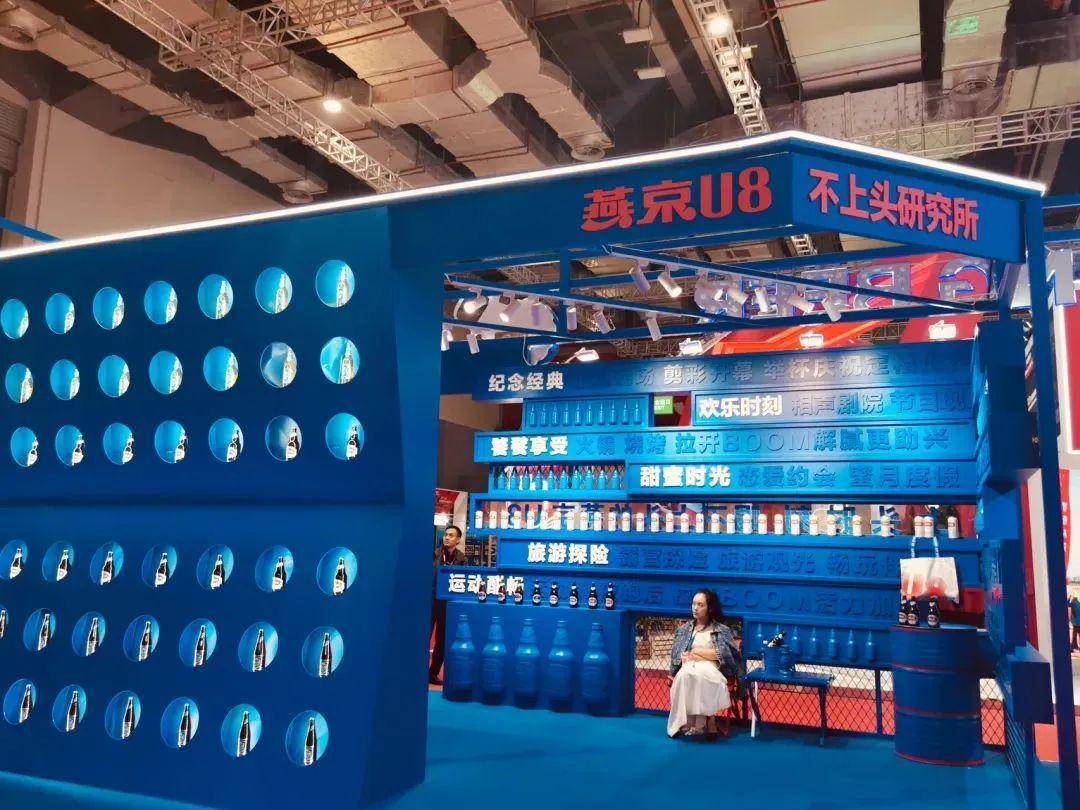
燕京啤酒上半年业绩高增,汽水新业务初露锋芒但占比尚小
Sou Hu Cai Jing· 2025-08-12 04:00
Core Insights - Yanjing Beer reported strong financial performance in the first half of the year, with revenue reaching 8.558 billion yuan, a year-on-year increase of 6.37%, and net profit growing significantly by 45.45% to 1.103 billion yuan, driven by its big product strategy and premiumization approach [1] Financial Performance - The revenue from beer sales was approximately 7.896 billion yuan, accounting for 92.26% of total revenue [1] - Mid-to-high-end beer contributed 5.536 billion yuan in revenue, growing by 9.3% year-on-year and representing 70.1% of beer sales, an increase of 1.6 percentage points compared to the previous year [1] - Regular beer sales amounted to 2.36 billion yuan, with a modest year-on-year growth of 1.6%, and its share decreased to 29.9% [1] - Overall beer sales volume increased by 2.03% to 2.3517 million tons, with an average price per ton rising by 4.75% to 3,357.5 yuan [1] Market Challenges and Strategies - Despite the positive results, the current growth rate may not be sufficient to meet the ambitious targets set in the "14th Five-Year Plan," particularly for the U8 product line, which aims for a sales volume of 1 million kiloliters this year, requiring a growth rate of over 43.7% [2] - To tackle these challenges, the company is enhancing R&D investments in the U8 product line and increasing the promotion of canned products, focusing on retail channels [4] - The company is implementing a refined operational strategy in mature markets like North China, which contributed over 50% of total revenue, achieving 4.85 billion yuan with a year-on-year growth of 5.61% [4] - However, market share in North China slightly declined from 57.08% to 56.67%, indicating subtle shifts in market dynamics [4] Regional Performance - South China experienced the slowest growth at only 0.3%, with revenue of 1.83 billion yuan, reducing its share to 21.39% [4] - The Northwest region saw a year-on-year revenue increase of 3.83%, but its share fell below the previous year's 4.18% [4] - In contrast, Central and East China regions reported over 15% year-on-year revenue growth, showcasing strong performance [4] New Product Initiatives - In March, Yanjing Beer launched the Beiste soft drink line, aiming to create a second growth curve with flavors like orange, lychee, and mixed fruit, adopting a low-price strategy to enhance channel profitability [5] - Despite significant marketing efforts, including celebrity endorsements, the contribution of Beiste to the overall financial results remains minimal [5]


永辉超市为什么重视自有品牌?
Sou Hu Cai Jing· 2025-08-04 13:42
Core Insights - Yonghui Supermarket aims to focus on its private label strategy, targeting the development of 15 major products with annual sales of 1 billion yuan each within five years [3][5]. Group 1: Private Label Strategy - Yonghui has officially announced a renewed focus on its private label products, emphasizing the need for a national brand that resonates with consumers [3][4]. - The company plans to increase the number of private label products from 60 in 2025 to 500 by 2029, with a target of achieving a penetration rate of 40% by 2029 [5][6]. - Yonghui's private label strategy includes the introduction of "Yonghui Preferred," which encompasses various product lines such as snacks, daily groceries, and personal care items [2][8]. Group 2: Major Product Strategy - Yonghui's strategy includes the development of "major products," defined as items that can generate over 10% of total store sales, with a goal of having 15 such products by 2029 [3][4]. - The company aims to learn from successful models like "Pang Donglai" to create products with over 100 million yuan in sales, focusing on high turnover rates and customer value [6][7]. - Yonghui emphasizes the importance of unique value propositions (UVP) and high-quality standards in product development, ensuring that products are both competitively priced and of superior quality [4][6]. Group 3: Supply Chain and Operational Improvements - Yonghui is transitioning its supply chain strategy from a focus on key accounts (KA) to a customer value (CA) approach, fostering long-term, transparent relationships with suppliers [5][9]. - The establishment of Zhejiang Huilian Supply Chain Co., Ltd. aims to enhance the development and operation of Yonghui's private label products, with a commitment to integrity and quality control [5][9]. - The company has already formed partnerships with 101 manufacturers and established 19 self-owned breeding bases to strengthen its supply chain [9].


娃哈哈的当务之急
3 6 Ke· 2025-07-27 06:22
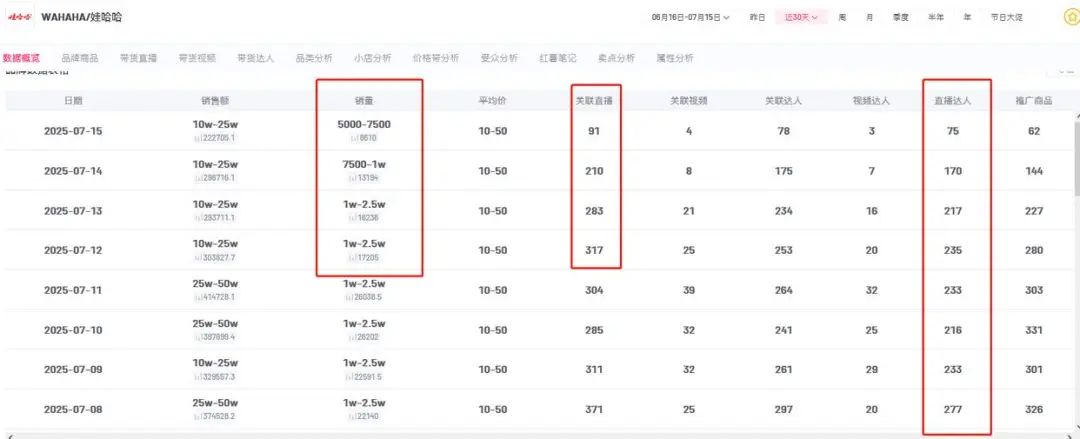
Group 1 - Wahaha is currently facing negative public opinion due to a heritage dispute, which has led to a significant decline in sales and live-streaming activities [1][3] - Sales on an e-commerce platform dropped from a range of 10,000 to 25,000 units to 5,000 to 7,500 units within two days, and the number of associated live streams fell from 371 to 91 in a week [1][2] - In contrast, the death of Wahaha's founder in 2024 previously resulted in a surge in both traffic and sales, with the market share of bottled water increasing from 4.17% to 20.04% in a few months [3] Group 2 - The company has struggled with product innovation for nearly 20 years, with no new major products launched since the Nutritional Fast Line in 2005 [4][5] - Competitors like Nongfu Spring and Uni-President have successfully developed strong single products, while Wahaha has failed to maintain its competitive edge in existing products [4][5] - The lack of new major products and increasing competition in the AD calcium milk segment poses a threat to Wahaha's market position [4][5] Group 3 - The company needs to refocus on normal operations and product innovation to address its long-standing issues [5] - Wahaha's previous successes were closely tied to the popularity of its AD calcium milk and purified water, which contributed to rapid growth in the early 2000s [6][7] - The company has attempted to innovate with new products but has faced challenges due to unclear market positioning and lack of differentiation [20][22][24] Group 4 - Recent internal conflicts and complex ownership structures have hindered Wahaha's ability to focus on core business issues [32] - The company must prioritize product development and innovation to regain its competitive edge in a rapidly evolving market [32]
林清轩冲刺“国货高端护肤第一股”:资本狂欢下,单品依赖症成致命伤?
Jin Rong Jie· 2025-07-14 08:23
Core Viewpoint - The article discusses Lin Qingxuan's upcoming IPO in Hong Kong, highlighting its ambition to become the "first high-end domestic skincare stock" while revealing underlying issues such as product dependency, high marketing costs, and weak R&D capabilities [1][2][6]. Capitalization and Market Dynamics - Lin Qingxuan's valuation has surged due to significant capital influx, with notable investments from various funds and companies, including a recent acquisition by a firm linked to JD.com [1][2]. - The market for facial essence oils is rapidly growing, with a projected increase from 900 million yuan in 2019 to 5.3 billion yuan in 2024, reflecting a compound annual growth rate of 42.8% [2]. Product Dependency and Market Limitations - Lin Qingxuan's revenue heavily relies on its camellia oil product, which accounted for 37% of total revenue by 2024, raising concerns about market saturation as the total market size is only 5.3 billion yuan [3][4]. - The company has attempted to diversify its product line with creams and sunscreens, but these efforts have not significantly impacted overall sales, with sunscreen contributing only 364 million yuan in 2024 [3][4]. Financial Performance and Marketing Strategy - The company boasts a high gross margin of 82.5% in 2024, approaching that of premium brands like Moutai, but its net profit margin has shown volatility, rising from -0.9% to 15.4% [4][5]. - Marketing expenses have been substantial, with over 50% of revenue allocated to sales and distribution costs, leading to concerns about the sustainability of this "burning money" marketing model [4][5]. Brand Trust and Market Perception - The founder's controversial marketing tactics have raised questions about the brand's credibility, with consumers increasingly associating the brand with hype rather than expertise [5][6]. - A McKinsey survey indicates that Chinese consumers have significantly lower trust in domestic high-end beauty brands compared to international counterparts, particularly in key areas like anti-aging and repair [5][6]. Path Forward for Lin Qingxuan - To succeed in the Hong Kong market, Lin Qingxuan must focus on product diversification, increase R&D investment to build technological barriers, and shift marketing strategies from a focus on traffic to brand-driven approaches [6]. - The company's journey reflects broader trends in the domestic beauty industry, where many brands struggle with a "heavy marketing, light R&D" approach, emphasizing the need for sustainable growth through innovation and product quality [6].
抢筹燕京啤酒,甩卖珠江啤酒!业绩同喜,境外资金为何“双标”操作?
Mei Ri Jing Ji Xin Wen· 2025-07-11 07:10
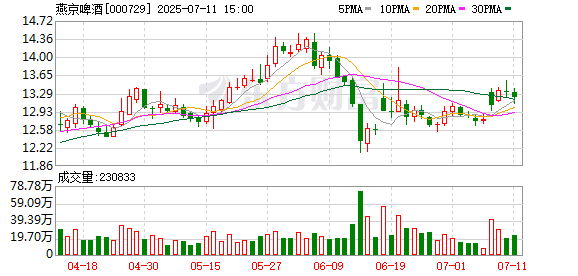
Core Viewpoint - Both Yanjing Beer and Zhujiang Beer reported positive growth in their performance for the first half of 2025, but foreign capital's attitudes towards them differ significantly, indicating varied investment signals [2][3]. Group 1: Performance Overview - Yanjing Beer is expected to see a net profit increase for the first half of 2025, with foreign capital increasing its holdings by 1,794.37 million shares in 2025 [3]. - Zhujiang Beer also reported growth, but foreign capital reduced its holdings by 1,776.49 million shares in the second quarter, a decrease of over 50% [3][4]. - Zhujiang Beer's stock price rose by 13.7% in the second quarter, outperforming Yanjing Beer, raising questions about the significant sell-off by foreign capital [4]. Group 2: Investment Behavior - Foreign capital's operations regarding Zhujiang Beer have been highly flexible, primarily engaging in wave trading, while maintaining stable holdings in Yanjing Beer [6]. - In the second quarter of 2023, after a year of declining stock prices, Zhujiang Beer experienced a rebound, prompting foreign capital to reduce holdings by 534 million shares [6]. - In the first quarter of 2024, foreign capital purchased 2,134 million shares of Zhujiang Beer, but chose to significantly reduce holdings in the second quarter as the stock price increased [8]. Group 3: Market Dynamics - Yanjing Beer's strong performance is driven by a more than 30% year-on-year increase in sales of its core product, U8, while Zhujiang Beer's growth is heavily reliant on the South China market, which accounts for over 90% of its sales [8]. - The overall beer industry has shown a recovery in demand, with domestic beer production increasing by 2.9% year-on-year from April to May 2025 [8]. - The smaller market capitalization of Zhujiang Beer leads to greater stock price volatility, resulting in a more agile investment approach from institutional funds [9]. Group 4: Institutional Interest - Following the release of Yanjing Beer's performance forecast for the first half of 2025, several securities firms and private equity funds showed strong interest, conducting consecutive days of research on the company [10][12]. - Notable institutions involved in the research include Shenwan Hongyuan, Northeast Securities, and various funds such as Huaxia Fund and E Fund [12][14]. Group 5: Strategic Initiatives - Yanjing Beer is implementing a large product strategy centered around U8, focusing on product innovation and brand influence to enhance market share [14]. - The company is also pursuing a "beer + beverage" marketing strategy to cater to younger consumers, leveraging synergies in production and supply chains [14]. - Analysts expect Yanjing Beer to maintain strong profit growth, driven by the expansion of U8 and operational efficiency improvements [15][16].

燕京啤酒2025上半年预盈超10.62亿 聚焦大单品中高档产品收入占超六成
Chang Jiang Shang Bao· 2025-07-09 22:28
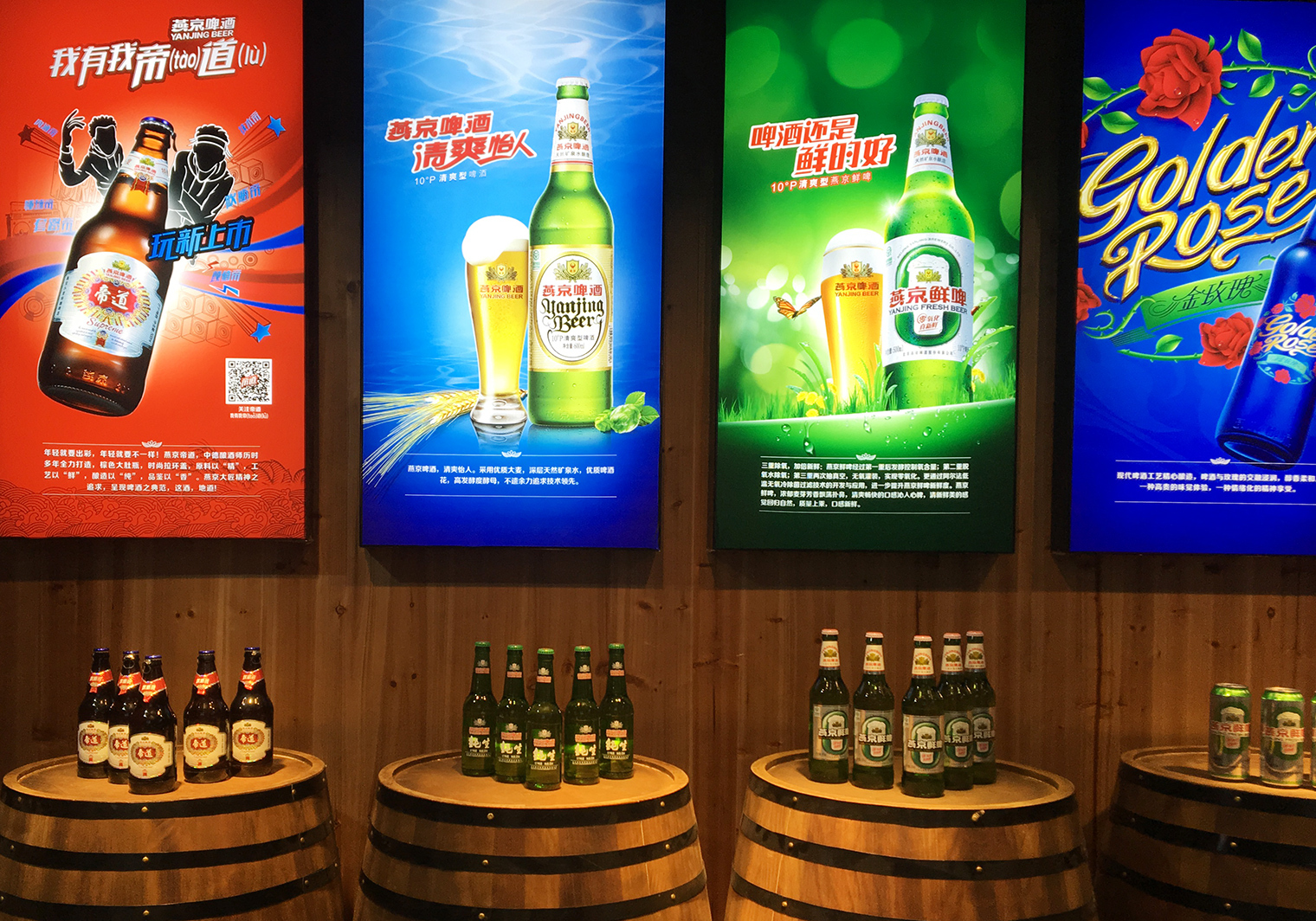
Core Viewpoint - Yanjing Beer has achieved significant revenue and net profit growth due to product structure optimization, cost control, and market expansion [1][2][3] Financial Performance - The company expects a net profit of 1.062 billion to 1.137 billion yuan for the first half of 2025, representing a year-on-year growth of 40% to 50% [1][3] - From 2020 to 2024, Yanjing Beer's revenue increased from 10.928 billion yuan to 14.667 billion yuan, a cumulative growth of 34%, while net profit surged from 197 million yuan to 1.056 billion yuan, an increase of over 400% [2][3] Brand Value - Yanjing Beer was included in the "China's 500 Most Valuable Brands" list with a brand value of 237.9 billion yuan in 2025, up from 180.575 billion yuan in 2023 and 223.695 billion yuan in 2024 [3] Product Strategy - The company has focused on a big product strategy and expansion of mid-to-high-end production capacity, with the revenue share of mid-to-high-end products rising from 59.81% in 2020 to 67.01% in 2024 [1][4] - The Yanjing U8 product has seen an average annual sales growth of over 30% since its launch in 2020, with sales exceeding 5 billion yuan in 2024, accounting for 35% of the company's beer business revenue [4] Market Expansion - Yanjing Beer has entered international markets through Southeast Asian agents, achieving export revenue of 120 million yuan in 2024, a 40% year-on-year increase [4] - The company has diversified its product line by launching beverages like Beistejia soda and health foods, with non-beer business revenue reaching 820 million yuan in 2024, a 22% increase [5]
燕京啤酒(000729) - 000729燕京啤酒投资者关系管理信息20250709(一)
2025-07-09 10:26
Group 1: Company Overview and Performance - Beijing Yanjing Beer Co., Ltd. expects a net profit attributable to shareholders of between 1,061.50 million and 1,137.32 million yuan for the first half of 2025, representing a year-on-year growth of 40% to 50% [1] - The company has implemented systematic reforms to enhance management efficiency and market competitiveness through nine major transformations [1] Group 2: Strategic Outlook for 2025 - In 2025, the company aims to leverage its strengths in party building to enhance operational competitiveness and drive high-quality development [1] - The focus will be on four key areas: production, market, supply chain, and digitalization, to improve operational efficiency and facilitate a transformation in the development model [2] Group 3: Product and Market Strategy - The company will continue to pursue a big product strategy, solidifying the position of core products like Yanjing U8, while expanding its mid-to-high-end product offerings [2] - Emphasis will be placed on innovation and the introduction of high-end and super high-end products to meet diverse consumer demands [2] Group 4: Core Competitiveness - Yanjing Beer has developed core competitiveness through market, product, brand, management, and technological advantages, contributing to the growth of China's national beer industry [2] - The company is committed to enhancing its core competitiveness, innovation capability, and risk management through continuous optimization of product structure and brand image [2]
燕京啤酒(000729):业绩再超预期,旺季表现亮眼
GOLDEN SUN SECURITIES· 2025-07-08 00:31
Investment Rating - The report maintains a "Buy" rating for Yanjing Beer [6] Core Views - The company is expected to achieve a net profit attributable to shareholders of 10.62 to 11.37 billion yuan in the first half of 2025, representing a year-on-year growth of 40% to 50% [1] - The U8 product line is showing strong growth potential, with the company focusing on product innovation and market promotion to enhance brand influence and market share [1][3] - The company is actively expanding its market presence and upgrading its sales channel structure to adapt to changing consumer preferences [2] Financial Performance - The projected net profit for 2025 is expected to be between 14.6 billion yuan and 21.0 billion yuan for the years 2025 to 2027, with year-on-year growth rates of 38.2%, 22.1%, and 17.6% respectively [3] - The company anticipates a revenue increase from 14.213 billion yuan in 2023 to 17.343 billion yuan in 2027, with a compound annual growth rate of approximately 4.8% [5] - The earnings per share (EPS) is projected to rise from 0.23 yuan in 2023 to 0.74 yuan in 2027 [5] Market Strategy - The company is implementing a "big product" strategy centered around the U8 brand, while also launching mid-to-high-end products like Yanjing V10 and Lion King Craft Beer to cater to diverse consumer needs [1][2] - A focus on cost control and efficiency improvement is evident, with the company adopting a "multi-dimensional cost reduction and efficiency enhancement" model [2] - The company is enhancing its talent management system to build a competitive workforce across various functions including R&D, production, marketing, and supply chain management [2]
燕京啤酒上半年净利预增超四成,扣非净利增速却显著放缓
Mei Ri Jing Ji Xin Wen· 2025-07-07 12:51
Core Viewpoint - Yanjing Beer is expected to report a significant increase in net profit for the first half of 2025, driven by systematic reforms and a multi-dimensional value creation system [1][3]. Financial Performance - The company anticipates a net profit of approximately 10.62 billion to 11.37 billion yuan for the first half of 2025, representing a year-on-year growth of 40% to 50% [1]. - For the first quarter of 2025, Yanjing Beer reported a net profit of 1.65 billion yuan, a substantial increase of 61.1% year-on-year [3]. - The projected net profit for the second quarter of 2025 is estimated to be between 8.97 billion and 9.72 billion yuan, reflecting a year-on-year growth of 36.74% to 48.17% [3]. Profitability Trends - Despite the strong growth in profitability, the growth rate of the net profit excluding non-recurring items has shown a noticeable slowdown compared to the same period in 2024 [3]. - In the first half of 2024, the company achieved a net profit of 7.58 billion yuan, with a year-on-year growth of 47.54% [3]. Strategic Initiatives - The company is committed to advancing its "big product" strategy centered around Yanjing U8, focusing on continuous product innovation and market promotion to enhance brand influence and market share [4]. - Yanjing Beer has introduced a range of mid-to-high-end products, including Yanjing V10 and Lion King Craft Beer, to cater to diverse consumer needs [4]. Market Development - The company plans to pursue both meticulous market cultivation and strategic expansion, enhancing its market development system [5]. - Yanjing Beer is actively expanding into new markets and channels, adapting to the shift towards personalized and scenario-based consumption in the beer market [5].
艺康集团:2025年餐饮消费洞察报告
Sou Hu Cai Jing· 2025-07-03 08:19
Group 1 - The report identifies five new consumption logics in the catering industry: cost-performance logic, big product logic, pre-made plus on-site logic, multi-engine logic, and light social logic [1][5][10] - The cost-performance logic highlights that Generation Z consumers prioritize high cost-performance and emotional value, leading to trends like the popularity of "leftover blind boxes" [1][12][13] - The big product logic emphasizes that successful big products rely on cost-performance or unique features, fostering consumer loyalty while balancing innovation and tradition [1][20][22] Group 2 - The report indicates that the chain small store model is emerging as a new trend in the industry, characterized by low costs and high efficiency, suitable for fragmented social interactions [2][6] - Key competitive points for the chain small store model include product iteration innovation, supply chain flexibility, investment in store equipment, deep digitalization, and food safety crisis management [2][6][22] - The report reflects a profound transformation in the catering industry regarding consumer demand and operational models, providing directional guidance for industry development [2][6] Group 3 - The report notes that the catering industry is experiencing a significant industrialization and digitalization revolution, with pre-made industrialization becoming a major trend [27][28] - The pre-made industrialization is driven by breakthroughs in commercial efficiency, rising consumer demands for food safety and convenience, and supportive policy incentives [27][28] - The report predicts that the pre-made food market in China will exceed 500 billion yuan in 2024, with a growth rate of over 20% [37] Group 4 - The report highlights the importance of blending public and private domain operations in catering, with public domain traffic including offline natural traffic and online platforms, while private domain traffic focuses on refined operations to enhance customer loyalty [40][41] - The integration of "dine-in + retail" models is noted as a new trend, effectively improving space efficiency and meeting diverse consumer needs [36][34] - The report emphasizes that the catering industry's revenue structure is evolving from a single dine-in model to a dual-driven model of "dine-in + delivery" [34][36]