
民生福祉

Search documents
六个“新”字看成绩|民生福祉达到新水平
Xin Hua She· 2025-10-18 03:20
Group 1 - The "14th Five-Year Plan" period marks the beginning of a new journey towards building a modern socialist country and advancing towards the second centenary goal [1] - The development approach is centered on the people, focusing on improving living standards and enhancing public welfare as the starting and ending points of development [1] - The aim is to address urgent issues faced by the public, ensuring that development outcomes are more equitable and benefit all people, thereby increasing their sense of gain, happiness, and security [1] Group 2 - The foundation for public service development is becoming more solid [3] - Public services are becoming more balanced and accessible [3] - The social security for key groups is being strengthened [5] Group 3 - The sense of security and quality of life for the people is continuously improving [6] - There is an ongoing commitment to enhancing public welfare, with no endpoint but rather continuous new starting points [6] - The focus will remain on planning and promoting high-quality development in the "15th Five-Year Plan" period to further enhance the people's sense of gain, happiness, and security [6]

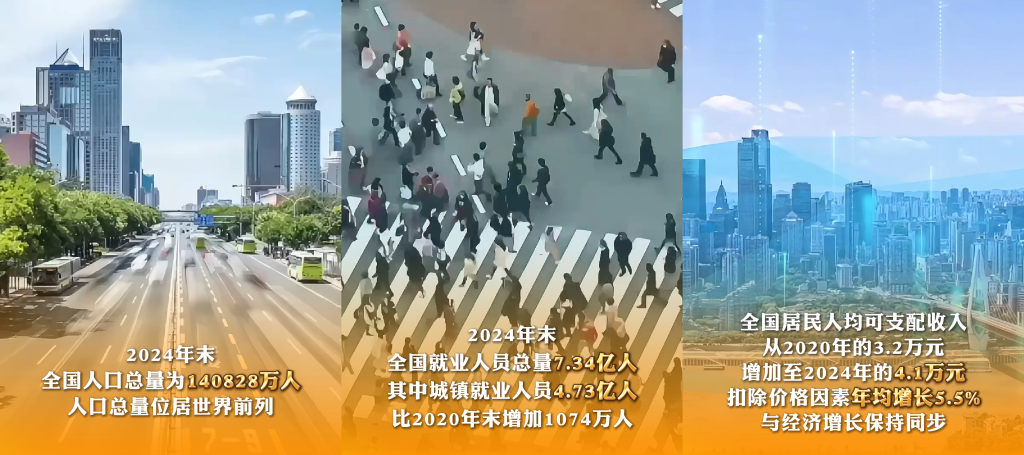
跨越与蝶变:140万亿背后,N组数据透视中国经济这五年
2 1 Shi Ji Jing Ji Bao Dao· 2025-10-17 00:18
Economic Growth and Achievements - China's GDP reached approximately 140 trillion yuan, with per capita GDP surpassing 13,000 USD for the first time, indicating significant economic growth and improved national strength [5][6][7] - Over the past five years, China has crossed multiple 10 trillion yuan milestones in GDP, maintaining its position as the world's second-largest economy [5][6] - The average annual growth rate of China's economy is about 6%, nearly double the global average growth rate of 3.1%, contributing around 30% to global economic growth [7][9] Technological Advancements - China has accelerated its technological transformation, moving from "catching up" to "keeping pace" and now "leading" in various sectors [12][13] - The global innovation index ranking for China improved from 34th in 2012 to 10th in 2025, marking it as one of the fastest-growing economies in terms of innovation [12][14] - R&D investment intensity in China has surpassed the average level of EU countries, with significant increases in high-tech industry investments [10][15] Industrial Development - The contribution of final consumption expenditure to economic growth has increased by 11.1 percentage points compared to the "13th Five-Year Plan" period, with domestic demand accounting for over 80% of economic growth [9][10] - The share of the "three new" economy (new technologies, new industries, and new business models) in GDP is projected to exceed 18% by 2024, indicating a shift towards higher-end industries [9][10] - The number of high-tech enterprises in China has grown significantly, with over 50,000 active high-tech firms expected by 2025 [10][11] Social Welfare and Quality of Life - Key indicators of social welfare, such as income growth and employment rates, have exceeded expectations during the "14th Five-Year Plan" period, enhancing the quality of life for citizens [26][28] - The urban unemployment rate has remained below 5.5%, and the coverage of basic pension insurance has exceeded 95% [28][29] - The focus on improving public services and promoting common prosperity is expected to continue, with a commitment to enhancing employment and social security systems [26][28]

以民生温度标注发展高度 ——高质量完成“十四五”规划目标任务之三
He Nan Ri Bao· 2025-10-16 23:43
Core Viewpoint - The focus on improving people's livelihoods is essential for achieving high-quality development in Henan, emphasizing the importance of social governance and addressing various social issues to enhance the well-being of the population [1][2][3]. Group 1: Economic and Social Development - The economic development in Henan is increasingly linked to the well-being of its citizens, with over 5.6 million new urban jobs created in the past five years, and a synchronization of income growth with economic growth [2]. - The province has implemented a comprehensive public service and social security plan, covering nine major areas and 84 service items to ensure basic public services are more equitable [2]. - The quality of education and healthcare services is being improved, with preschool education coverage reaching 91.3%, and the establishment of 12 national regional medical centers [2][3]. Group 2: Social Governance and Community Services - The development of a large-scale social security system aims to ensure that no one is left behind, contributing to a more stable and prosperous society [3]. - The focus on community services includes the construction of public cultural facilities and the establishment of a "15-minute fitness circle" in urban areas, enhancing access to recreational services [2][3]. - The shift in public expectations from mere availability of services to quality and personalization necessitates a transformation in development strategies and social governance [4]. Group 3: Long-term Growth and Sustainability - Improving people's livelihoods is viewed as a key driver for economic growth, with addressing basic needs seen as a way to cultivate new economic momentum [3]. - The commitment to enhancing the quality of life reflects a broader trend towards prioritizing qualitative improvements in living standards, aligning with the goals of sustainable development [4]. - The ongoing efforts to ensure that development benefits are shared among the population are crucial for fostering a sense of security and happiness within the community [4].
用“带头过紧日子”滋养民生沃土
Ren Min Ri Bao· 2025-10-09 02:17
Core Points - The core message emphasizes the importance of frugality and resource optimization in government operations to enhance public welfare and support high-quality development [1][2][3][4] Group 1: Government Policy and Actions - The revised regulations stress that government agencies must lead by example in frugality, reducing costs associated with public activities to allocate more funds for development and public needs [1][2] - Since the 18th National Congress, the central government has elevated the concept of "living frugally" as a significant governance strategy, focusing on reducing unnecessary expenditures and reallocating saved funds to social welfare projects [2][3] - Government agencies are actively cutting down on non-essential spending, particularly in areas like "three public expenses," to enhance the financial resources available for public welfare [3][4] Group 2: Cultural and Historical Context - The tradition of frugality is deeply rooted in Chinese culture and has been a consistent theme throughout the history of the Communist Party, reflecting a commitment to serving the people [1][2] - The historical perspective shows that the practice of frugality has been a successful strategy for the Party's growth and resilience, reinforcing the connection between governance and public service [4] Group 3: Societal Impact - The initiative to lead by example in frugality is not merely about cutting costs but is aimed at optimizing resource allocation to improve the quality of life for citizens [2][3] - The reduction of unnecessary administrative expenses is intended to expand the welfare benefits available to the public, thereby enhancing overall happiness and satisfaction [3][4]
民生福祉达到新水平(新时代画卷·决战决胜“十四五”)
Ren Min Ri Bao· 2025-10-04 21:50
Core Insights - The implementation of the "14th Five-Year Plan" in China focuses on enhancing public welfare and improving living standards, emphasizing a people-centered development approach [17][18]. Group 1: Social Security System - China is accelerating the construction of a multi-level social security system that covers all citizens, with participation rates for basic pension and medical insurance exceeding 95% [18]. - The social safety net is becoming increasingly comprehensive, with expanded coverage for unemployment and work injury insurance, and more precise and efficient social assistance for vulnerable groups [18]. Group 2: Public Services - The country is advancing public services to ensure equitable access, with ongoing improvements in education, healthcare, and housing, benefiting a wide range of communities [17][18]. - The healthcare network is being strengthened, particularly in rural areas, to enhance grassroots medical services [17][18]. Group 3: Employment Strategy - The employment policy framework has been refined, with over 12 million new urban jobs created annually since the start of the "14th Five-Year Plan," and a total skilled workforce exceeding 200 million [17][18]. - New professions and industries are flourishing, supported by extensive vocational training initiatives aimed at improving employment opportunities for key demographics [17][18]. Group 4: Income Distribution - Efforts are being made to optimize income distribution structures, with local initiatives promoting specialty agricultural industries to increase farmers' incomes [13][15]. - Skills training programs are being enhanced to inject new vitality into various sectors while promoting employment [15].
超燃!“十四五”时期,这些成就续写新传奇
2 1 Shi Ji Jing Ji Bao Dao· 2025-10-01 09:16
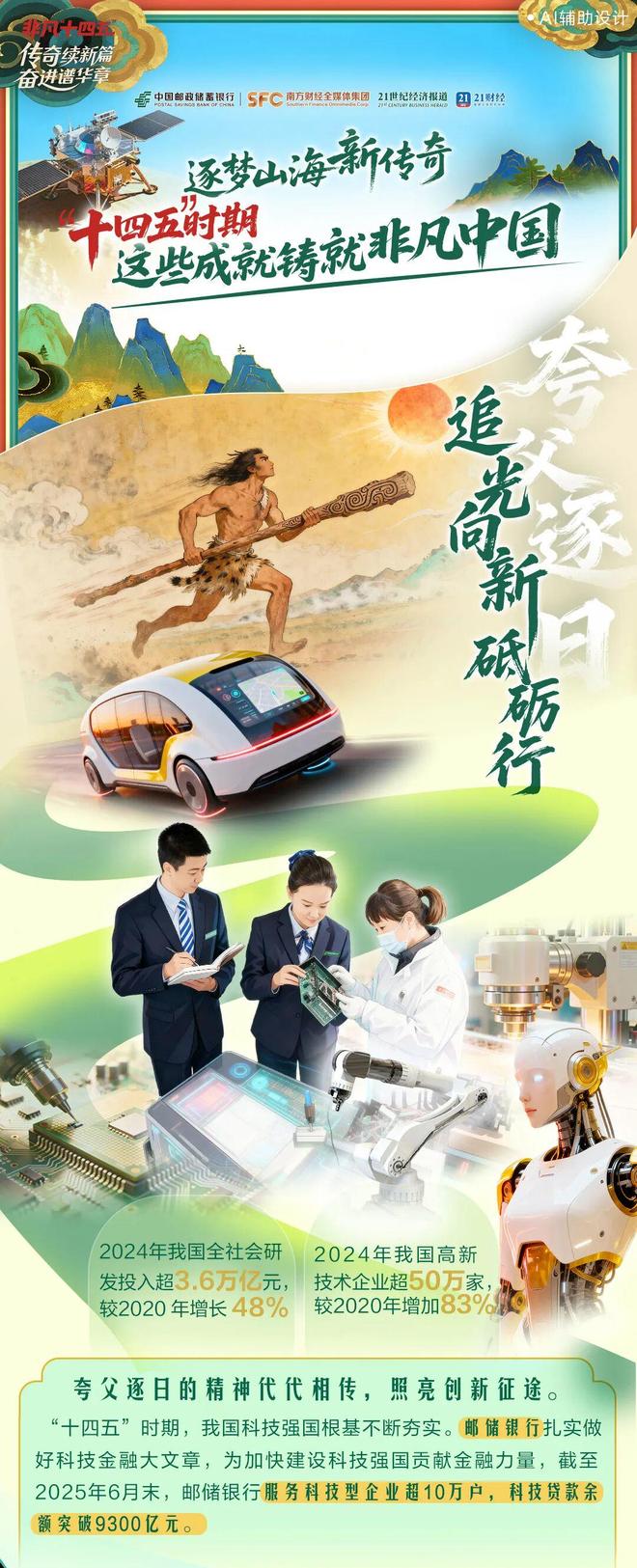
Core Insights - The "14th Five-Year Plan" period has seen significant advancements in China's manufacturing transformation and upgrades, with a focus on strengthening the real economy and achieving notable accomplishments across various sectors [1][3][4]. R&D and Technology - By 2024, China's total R&D investment is expected to exceed 3.6 trillion yuan, representing a 48% increase compared to 2020 [3]. - The number of high-tech enterprises in China is projected to surpass 500,000 by 2024, marking an 83% increase since 2020 [3]. Private Sector Growth - The number of private enterprises in China has grown to over 58 million during the "14th Five-Year Plan" period, with private enterprises accounting for over 40% of national high-tech enterprises, an increase from the end of the "13th Five-Year Plan" [4]. Financial Support for Private Enterprises - Postal Savings Bank has provided diversified financial services to empower the high-quality development of private enterprises, with a loan balance of 2.64 trillion yuan for private enterprises as of June 2025 [5]. Infrastructure Development - By the end of 2024, China's high-speed rail operating mileage is expected to reach 48,000 kilometers, with 5G base stations totaling 4.598 million [7]. - The "14th Five-Year Plan" period has accelerated infrastructure development, with significant support from Postal Savings Bank for major projects [8]. Agricultural Production - In 2024, China's grain production is projected to reach 1.4 trillion yuan, an increase of 740 billion yuan compared to 2020, marking the 21st consecutive year of growth [10]. Rural Development and Financial Inclusion - Postal Savings Bank has actively supported rural revitalization, with an agricultural loan balance of 2.44 trillion yuan as of June 2025 [11]. - The participation rate in basic pension insurance has reached over 95%, benefiting 560 million people [13]. Social Welfare and Financial Services - The "14th Five-Year Plan" period has seen continuous improvement in the well-being of the population, with Postal Savings Bank opening over 10 million personal pension accounts, and the deposit scale increasing by 28.85% compared to the previous year [14]. Financial Services to the Real Economy - The quality and efficiency of financial services to the real economy have significantly improved, with annual growth rates for loans to technology-based SMEs, inclusive microloans, and green loans exceeding 20% [16].

超燃!“十四五”时期,这些成就续写新传奇
21世纪经济报道· 2025-10-01 09:07
Core Viewpoint - The article highlights the significant achievements and advancements made in various sectors during China's "14th Five-Year Plan" period, emphasizing the continuous growth of the real economy and the importance of innovation and infrastructure development. Group 1: Economic Growth and Innovation - In 2024, China's total R&D investment is expected to exceed 3.6 trillion yuan, representing a 48% increase compared to 2020 [3] - The number of high-tech enterprises in China is projected to surpass 50,000, an increase of 83% from 2020 [3] - The private sector has grown to over 58 million enterprises during the "14th Five-Year Plan" period, with private enterprises accounting for over 92% of national high-tech enterprises [4][6] Group 2: Financial Support for Key Sectors - Postal Savings Bank has supported over 100,000 technology-based enterprises, with a technology loan balance exceeding 930 billion yuan by June 2025 [3] - The bank's loans to private enterprises reached 2.64 trillion yuan, representing a significant portion of its total loan portfolio [6] - The bank has also increased its medium- and long-term loans to the manufacturing sector by 8.53% compared to the previous year [8] Group 3: Infrastructure and Agricultural Development - By the end of 2024, China's high-speed rail operating mileage is expected to reach 48,000 kilometers, with 5G base stations totaling 459,377 [7] - Grain production in China has reached 1.4 trillion yuan, marking a significant increase of 740 billion yuan since 2020 [9] - The bank has supported rural revitalization efforts, with agricultural loan balances reaching 2.44 trillion yuan, a leading position among state-owned banks [10] Group 4: Employment and Social Welfare - The annual increase in urban employment has stabilized at 12 million during the "14th Five-Year Plan" period [11] - The national basic pension insurance coverage has reached over 95% [12] - Postal Savings Bank has opened over 10 million personal pension accounts, with a deposit scale growth of 28.85% compared to the previous year [13]
从全球视角看新时代中国经济的跨越与蝶变
Xin Hua Wang· 2025-09-29 23:34
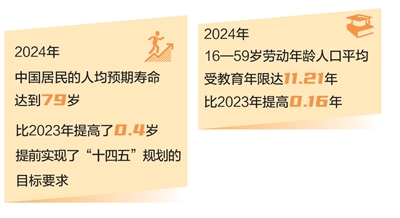
Core Insights - The article emphasizes the significant transformation and resilience of the Chinese economy under Xi Jinping's leadership, highlighting its strategic focus on high-quality development and a new development pattern in contrast to other major economies [2][5]. Economic Growth and Development - Since the 18th National Congress, China's GDP has grown from 54 trillion yuan to nearly 135 trillion yuan from 2012 to 2024, with an average annual growth rate of 6%, nearly double the global average of 3.1% [2]. - The International Monetary Fund (IMF) reports that China's economy is gradually shifting towards a higher quality, more balanced, and sustainable growth model [2]. Innovation and Competitiveness - China's innovation capabilities have significantly improved, with its global innovation index ranking rising from 34th in 2012 to 10th in 2025, marking it as one of the fastest-improving economies in innovation over the past decade [3]. - In 2024, China filed 70,160 patents under the Patent Cooperation Treaty, surpassing the United States and Japan by 30% and 45%, respectively [3]. Regional Development and Coordination - The article discusses the successful implementation of major regional strategies such as the Beijing-Tianjin-Hebei integration and the Yangtze River Economic Belt, which have led to significant improvements in urban-rural development and poverty alleviation [4]. - Nearly 100 million rural residents have been lifted out of poverty, with rural income growth outpacing urban income growth for several consecutive years [4]. Green Transformation - China's commitment to green development is highlighted, with a focus on ecological protection and sustainable growth, leading to a significant rise in its energy transition index ranking by 66 places to 12th by 2025 [4]. International Trade and Influence - China has adopted a proactive opening-up strategy, establishing 22 free trade pilot zones and becoming a major trading partner for over 150 countries, maintaining the world's largest goods trade volume [5]. - The share of China's economy in the global economy increased from 11.3% in 2012 to 17.1% in 2024, providing new opportunities for win-win cooperation with other countries [5]. Social Welfare and Quality of Life - The article notes improvements in the quality of life for Chinese citizens, with life expectancy reaching 79 years and safety indices surpassing those of several developed countries [6]. - Continuous efforts in public welfare have enhanced the sense of gain, happiness, and security among the population [6].
“十四五”重大项目复盘与“十五五”展望|宏观经济
清华金融评论· 2025-09-26 09:14
Core Viewpoint - The upcoming 14th National Congress will discuss the "14th Five-Year Plan" and its major projects, which will reflect the strategic intentions and medium-to-long-term goals of the country, guiding future policies and resource allocations [4][5][6]. Summary by Sections Major Project Positioning and Classification - Major projects in the Five-Year Plans are essential for reflecting national strategic intentions and medium-to-long-term goals, serving as the core direction for policy resources and funding [6][8]. - There is no unified standard for defining major projects, but they generally need to align with high-quality development and national industrial policies [6][7]. - Major projects are categorized into infrastructure, industrial, livelihood, and ecological projects, with local adaptations based on regional development plans [6][7]. Historical Review of Major Projects - Since the first Five-Year Plan in 1953, major projects have evolved from focusing on heavy industry to encompassing infrastructure, technology, and ecological initiatives [11][12]. - The "14th Five-Year Plan" emphasizes high-quality development, green low-carbon initiatives, and technological innovation, reflecting a shift in national strategic focus [12][15]. Implementation Mechanisms - The implementation of major projects is supported by a series of policies to ensure smooth execution, including streamlined approval processes and enhanced funding mechanisms [8][9][10]. - The "13th Five-Year Plan" introduced a systematic approach to major projects, emphasizing a "list-style" method for effective implementation [15]. Upcoming "15th Five-Year Plan" Major Projects - The "15th Five-Year Plan" is expected to continue the focus on livelihood, technology, infrastructure, ecological construction, and security projects, building on the previous plan's objectives [20][21]. - Local governments are actively planning major projects that align with national strategies while addressing regional needs, particularly in infrastructure and technology innovation [21][23]. Specific Project Examples - Significant projects under the "14th Five-Year Plan" include major water conservancy projects, transportation infrastructure, and initiatives in artificial intelligence and green energy [16][19][22]. - Local plans for the "15th Five-Year Plan" include substantial investments in waterway construction and technology-driven projects, with some regions planning over 500 major projects with total investments exceeding 180 billion [22][24].

准确把握“十五五”的阶段性要求
Zhong Guo Fa Zhan Wang· 2025-09-21 13:04
Core Viewpoint - The article emphasizes the importance of accurately grasping the "stage requirements" for the "15th Five-Year Plan" period, which is a critical phase for achieving socialist modernization in China by 2035 [2][4]. Economic Growth - The economic growth rate is closely related to the development stage, with a focus on maintaining reasonable growth while expanding the economy steadily. The target is to achieve a per capita GDP level comparable to that of moderately developed countries by 2035 [2][3]. Population Changes - The "15th Five-Year Plan" will focus on improving the overall quality of the population, maintaining an appropriate birth rate, and optimizing the structure and distribution of human resources to transition from a demographic dividend to a talent dividend [3][4]. New Development Concepts - The new development concepts introduced during the "13th Five-Year Plan" will continue to be emphasized, with a focus on innovation, coordination, green development, openness, and shared benefits [3][4]. Reform and Opening Up - The "15th Five-Year Plan" will prioritize institutional construction and the completion of over 300 major reform tasks by 2029, coinciding with the 50th anniversary of reform and opening up in 2028 [4]. Development and Security - The plan will also address the need to balance development and security, considering both internal and external risks, and enhancing the national security system to support high-quality development [4].