第四次工业革命

Search documents
Wedbush分析师:科技股暴跌创造买入时机,市场处在“牛市起点”而非“互联网泡沫前夕”
Ge Long Hui A P P· 2025-10-11 05:24
Core Viewpoint - The recent sell-off in technology stocks has caused panic among investors, but Wedbush analyst Dan Ives maintains a bullish stance, suggesting that the market's reaction may be more severe than the actual damage, and rationality will eventually return, presenting a buying opportunity in semiconductor, software, and large tech companies [1] Group 1 - Ives identifies several companies that will lead the "Fourth Industrial Revolution," including Nvidia, Microsoft, Palantir, Meta, and Amazon [1] - He predicts that technology stocks have at least 7% upside potential before the end of the year [1] - Ives characterizes the current market situation as a "1996 moment" (the beginning of a bull market), rather than a "1999 moment" (the eve of the internet bubble) [1]




华为鸿蒙+人形机器人:最正宗的8家公司(名单)
Sou Hu Cai Jing· 2025-10-09 01:39
Core Insights - The humanoid robot market in China is projected to reach 5.3 billion yuan by 2025 and exceed 38.7 billion yuan by 2028, with a compound annual growth rate (CAGR) of over 60% [1] - Huawei's HarmonyOS has become the third-largest mobile operating system globally, with over 1.19 billion devices and 7.2 million developers, facilitating the integration of robotics technology [1] Company Summaries - **Junsun Electronics**: Positioned as a "Tier 1" supplier in automotive and robotics, Junsun is transferring its sensor and AI technology to humanoid robots. It has secured over 1 billion yuan in smart driving orders for the first half of 2025 [4] - **Midea Group**: Entered the industrial robot sector through the acquisition of KUKA and focuses on home service robots integrated with HarmonyOS for multi-device collaboration [5][6] - **Zhiwei Intelligent**: Specializes in edge computing for robots, achieving a 35% revenue growth in edge computing devices, with 20% of orders related to robotics [8] - **Tuobang Co., Ltd.**: Holds over 30% market share in service robot motion control modules, with a 42% revenue increase in robot controllers in the first half of 2025 [9] - **Shengtong Co., Ltd.**: Launched a programming teaching robot compatible with HarmonyOS, expanding into 3,000 schools and achieving a gross margin of 35% in its tech education business [10][12] - **Zhongke Chuangda**: Developed the ROS2.0 system for multi-robot collaboration, with a 51% revenue increase in its robotics business in the first half of 2025 [11][12] - **Pingzhi Information**: Innovates with a "vehicle-road collaboration + robot" solution, with a 67% increase in 5G robot orders projected for 2025 [13][15] - **Softcom Power**: Acts as a core software supplier for the Harmony ecosystem, with a 45% revenue growth in software services and 15% of orders related to robotics [16][18]



年内涌现53只“翻倍基”,2025年前三季度基金业绩放榜
Zheng Quan Shi Bao· 2025-10-02 11:11
Core Insights - The public fund industry has experienced a fruitful year in the structural bull market leading up to Q3 2025, with active equity funds making a significant comeback [1] - A total of 53 funds have achieved over 100% returns year-to-date, with active equity funds accounting for 42 of these, highlighting the effective strategies of fund managers in high-growth sectors like technology and innovation [2][4] - Gold ETFs have emerged as the standout performers in the commodity fund sector, with all 14 gold ETFs showing gains exceeding 40% year-to-date [5] Fund Performance - The top-performing fund, managed by Ren Jie, is the Yongying Technology Smart Selection A, with a return of 194.49%, heavily invested in the overseas computing power industry [2] - The second-best performer is the Huatai-PineBridge Hong Kong Advantage Selection A, achieving a return of 155.09%, focusing on Hong Kong's innovative pharmaceutical stocks [2] - Other notable funds include the China Europe Digital Economy A with a return of 140.86%, and two additional funds with returns of over 128% [3] Gold ETF Highlights - Gold ETFs have shown remarkable performance, with the top two funds achieving returns of 41.48% and 41.47% respectively [5] - Over the past three years, these gold ETFs have accumulated returns exceeding 110%, indicating strong long-term investment potential [6] - The recent surge in international gold prices, reaching a high of $3922.7 per ounce, is expected to further enhance the investment value of gold [6] Asset Allocation Outlook - Looking ahead to Q4, market sentiment remains high, with structural opportunities continuing to emerge, although some signs of overvaluation are noted [7] - Investment strategies may shift from growth to cyclical and consumer sectors, with a focus on underperforming cyclical stocks that may benefit from policy changes [8] - The ongoing AI technology revolution is expected to provide a premium for related assets, despite current high valuations [8][9] - The bull market trend is anticipated to continue, with a focus on emerging technologies and cyclical financials, particularly in the Hong Kong market [9]
年内涌现53只“翻倍基”!2025年前三季度基金业绩放榜
证券时报· 2025-10-02 10:55
Core Viewpoint - The public fund industry has experienced a fruitful year in the structural bull market, with active equity funds achieving remarkable performance, particularly in the AI computing and innovative pharmaceutical sectors, leading to a significant number of funds doubling their returns [1][3]. Group 1: Performance of Active Equity Funds - A total of 53 funds have seen their returns exceed 100% year-to-date as of September 30, with 42 of these being active equity funds, highlighting the fund managers' effective strategies in popular sectors like technology growth [3][4]. - The top-performing fund, managed by Ren Jie, achieved a return of 194.49%, heavily investing in the overseas computing industry chain, with significant contributions from stocks like Shenghong Technology, which surged 581% this year [3]. - Other notable funds include Zhang Wei's fund with a 155.09% return, focusing on Hong Kong innovative pharmaceuticals, and Feng Ludan's fund with a 140.86% return, both demonstrating strong performance in their respective sectors [3]. Group 2: Gold ETFs Performance - Gold ETFs have emerged as the standout performers in the commodity fund sector, with all 14 gold ETFs showing year-to-date gains exceeding 40% as of September 30 [6]. - The top gold ETFs, managed by Zhao Xu and Rong Ying, reported returns of 41.48% and 41.47%, respectively, reflecting the strong investment value of gold amid rising international gold prices [6][7]. - Over the past three years, these gold ETFs have accumulated returns exceeding 110%, indicating their robust long-term investment potential [7]. Group 3: Asset Allocation Outlook for Q4 - Looking ahead to Q4, several fund companies have provided asset allocation recommendations, suggesting a focus on growth sectors initially, followed by cyclical and consumer stocks, and finally stable dividend-paying stocks [9][10]. - The ongoing structural opportunities in the market are expected to continue, with a particular emphasis on technology, innovative pharmaceuticals, and sectors benefiting from supply-side improvements, such as new energy and chemicals [10][12]. - Companies like Guotai Fund maintain a bullish outlook on the market, emphasizing the continued importance of emerging technologies and the potential for recovery in sectors like renewable energy due to policy changes [11][12].

林毅夫:香港凭人才科研与金融优势 深度融入国家发展大局
Zhong Guo Xin Wen Wang· 2025-09-30 12:28
Core Insights - Hong Kong can leverage its talent and financial advantages to deeply integrate into the national development framework of China [1][3] Group 1: China's Advantages in the Fourth Industrial Revolution - China possesses three core advantages for leading the Fourth Industrial Revolution: a strong talent pool, a vast market capable of scaling technologies, and the most comprehensive industrial sectors globally [3] - Key fields such as artificial intelligence, chip manufacturing, and biopharmaceuticals are areas where China is expected to achieve significant advancements [3] Group 2: Hong Kong's Role in National Development - Hong Kong's new productive forces are centered around talent and research, supported by five world-class universities and numerous top scientists [3] - The integration of Hong Kong's research capabilities with the industrial ecosystem of the Guangdong-Hong Kong-Macao Greater Bay Area can effectively translate into actual industrial value [3] Group 3: Financial Capital and Economic Foundation - As an international financial center, Hong Kong has significant advantages in financial capital, with a per capita GDP exceeding $50,000, the highest among all Chinese cities [3][4] - This economic foundation supports Hong Kong in maximizing its talent and research value while providing effective pathways for developing new productive forces [3] Group 4: Collaborative Economic Growth - Economic growth requires a synergy between an "effective market" and a "proactive government," where the market stimulates initiative and the government addresses business development challenges [4] - If Hong Kong continues to leverage its capital market functions and demonstrate proactive governance, it can become one of the most competitive cities globally with the highest income levels [4]

傅成玉:要在第四次工业革命中占先,中国亟待一个关键改变
财富FORTUNE· 2025-09-29 13:05
Core Viewpoint - The article emphasizes the divergence in energy policies between China and the United States, highlighting China's advantages in the clean energy sector amidst the U.S. retreat from global climate agreements [1][6]. Group 1: Trends and Transformations - The future is characterized by two major trends: green low-carbon transformation and intelligentization, which are expected to dominate the coming decades [4]. - China is positioned to lead in these trends due to its advanced status in renewable energy and smart technologies, as well as its comprehensive industrial application scenarios [5]. Group 2: U.S. Policy Impact - The U.S. withdrawal from the Paris Agreement is viewed as a temporary and localized impact on global climate efforts, with the expectation that the U.S. will eventually need to re-engage in green and low-carbon economies [6][7]. - The article critiques the U.S. approach under Trump's administration as regressive, suggesting that the country has missed opportunities for industrial revitalization and sustainable development [7]. Group 3: Challenges in China's Energy Sector - Despite the clear path towards green transformation, China's renewable energy sector faces challenges such as price competition and overcapacity [7]. - The article identifies "opportunism" among Chinese enterprises as a root cause of overcapacity, where companies seize fleeting opportunities without long-term strategy [8]. - It also highlights the need for a shift from low-price competition to a focus on high quality and cost-effectiveness to avoid self-destructive practices in the industry [9]. Group 4: Infrastructure and Industrial Adjustment - The current industrial and infrastructure systems in China are based on the previous three industrial revolutions, which are inadequate for the demands of the fourth industrial revolution [9]. - The article argues for a change in mindset regarding energy infrastructure, advocating for distributed energy systems that align with modern energy consumption patterns rather than large centralized power plants [9].

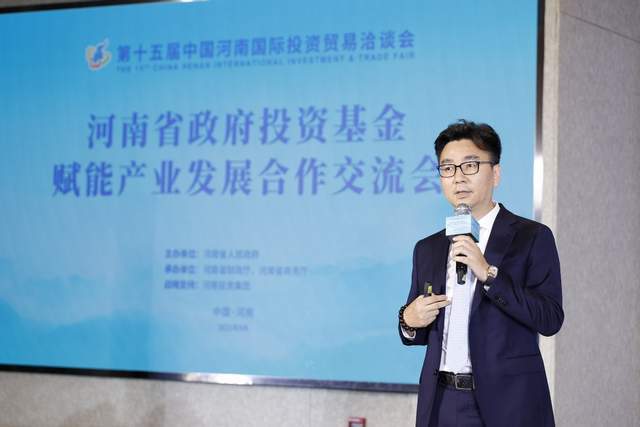
产业智能体引领AI破局丨云知声CEO黄伟博士在第十五届河南投洽会发表精彩演讲
Sou Hu Cai Jing· 2025-09-28 03:11
Core Insights - The 15th China Henan International Investment and Trade Fair opened in Zhengzhou, highlighting its significance as the largest and most influential international economic and trade event in Henan Province [1] - Dr. Huang Wei, CEO of Cloud Wisdom Intelligent Technology Co., Ltd., delivered a keynote speech on the path for China's AI industry, emphasizing the ongoing transformation driven by AI technology [3] Industry Development - AI is driving the Fourth Industrial Revolution, transitioning from a phase of anticipation to one of active implementation, with diverse development paths emerging globally based on regional policies and resources [3] - China is rapidly building its advantages in AI due to its complete industrial system and rich application scenarios, despite existing gaps in foundational technologies [3] Policy Support - Policy frameworks are crucial for the development of China's AI industry, with the "Artificial Intelligence +" action plan released by the State Council providing a clear strategic direction [4] - Henan Province has demonstrated proactive policy implementation by releasing its own "AI +" action plan ahead of the national guidelines, showcasing its quick and precise response capabilities [4] Technological Advancements - The transition from general large models to specialized large models and industrial intelligent bodies is seen as a key breakthrough for the industry, enabling exponential growth in new productive forces [5] - Specialized large models must meet three criteria: high capability, high reliability, and low cost, while industrial intelligent bodies should achieve a closed-loop effect of application scenarios, industry data feedback, and core technology iteration [7] Evolution of Industrial Intelligent Bodies - The evolution of industrial intelligent bodies is categorized into four stages: Assistant, Colleague, Expert, and Mentor, with Cloud Wisdom currently transitioning from Colleague to Expert [8] - The company aims to develop an industrial intelligent body comparable to a "million-dollar expert," supported by four core capabilities: advanced infrastructure, top-tier general large models, industry experience from specialized large models, and chip-level optimization to reduce implementation costs [8] Industry Outlook - The speech by Dr. Huang received positive feedback, indicating that the insights provided are valuable for industry practices [8] - With the dual drivers of policy and industry, China's AI sector is entering a golden period of development, with industrial intelligent bodies poised to become a significant engine for high-quality economic growth [8]
研究报告显示:中国工程教育实现跨越式发展
Xin Hua She· 2025-09-22 06:21
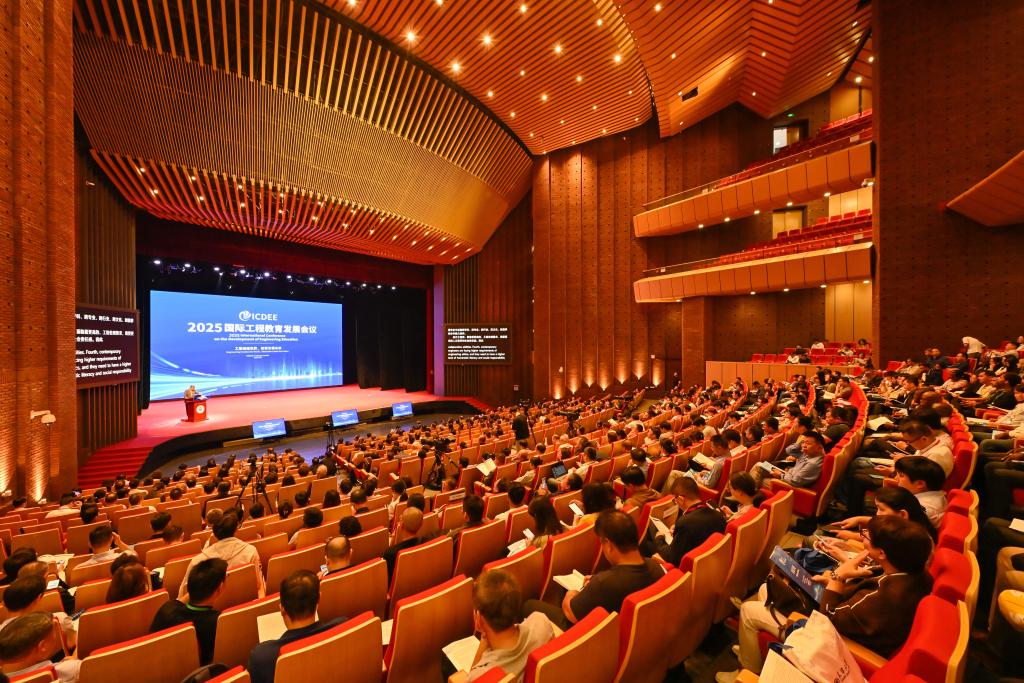
Core Insights - The latest research report indicates that China's engineering education has achieved leapfrog development in the Fourth Industrial Revolution, transitioning from scale expansion to quality enhancement, with its scale ranking among the world's top and overall strength positioned in the leading group globally [2][3] Summary by Sections Engineering Education Development - The 2025 International Engineering Education Development Conference was held at Tianjin University, attended by approximately 720 representatives from domestic and international universities, enterprises, and industry associations [2] - The report titled "Engineering Creates the World, Education Leads the Future" was published, co-authored by the National New Engineering Education Innovation Center and Tianjin University, with guidance from the Ministry of Education's Higher Education Department [2] Growth in Engineering Graduates - From 2012 to 2022, the number of engineering undergraduate graduates in China increased by 31.6%, while the number of engineering doctoral graduates rose by 23.2% [3] - The number of R&D personnel per million employed population increased from 1014.3 to 1584.9, marking a growth of 56.2% [3] Quality and Innovation in Engineering Education - China is focusing on enhancing the quality and connotation of engineering education, establishing a "project-college-base" three-tier innovation system, and setting up future technology colleges aimed at cultivating leaders in future technological innovation [3] - Collaboration with technology enterprises to build modern industry colleges has created a comprehensive training ecosystem covering traditional engineering and emerging interdisciplinary fields [3] Global Positioning and Future Directions - Chinese engineering education is recognized for its leadership on a global scale, with a focus on responding to industry demands and major national projects to promote future industrial development [3] - The International Engineering Alliance Chair, Elizabeth Taylor, highlighted China's active role in the alliance, showcasing its potential in engineering education and industrial development, and positioning China as a significant driving force in international engineering cooperation [3]
全球激光雷达行业规模最大IPO!禾赛科技港股上市!
Sou Hu Cai Jing· 2025-09-17 16:00
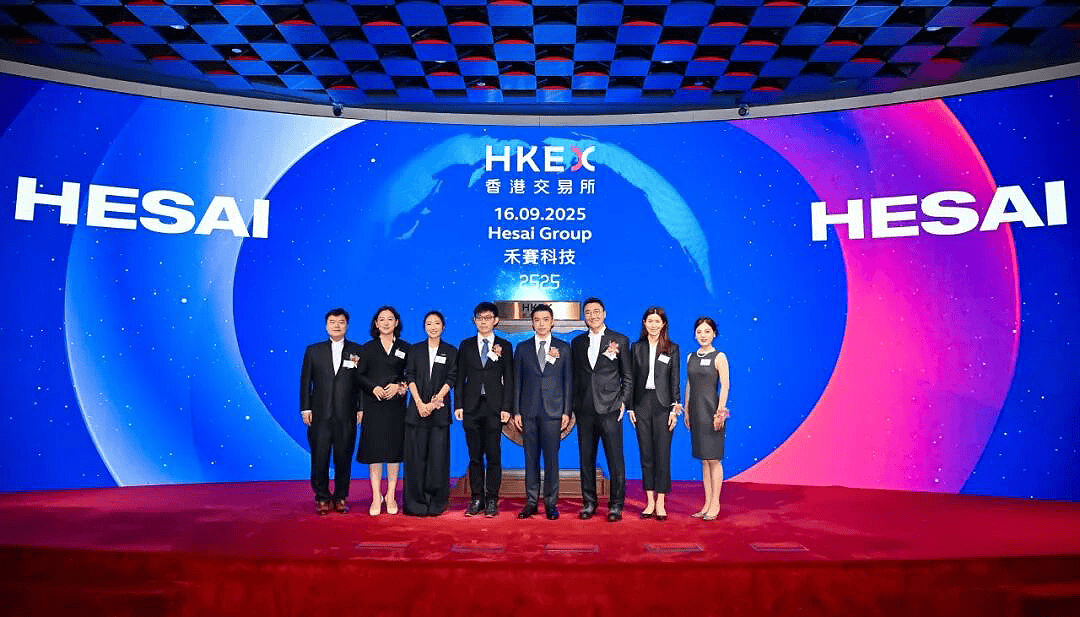
Core Viewpoint - Hesai Technology has officially listed on the Hong Kong Stock Exchange, becoming the first lidar company to achieve a dual primary listing in both the US and Hong Kong, marking a significant milestone in the global lidar industry [1][10]. Group 1: IPO Details - The IPO is the largest in the global lidar industry to date and the largest financing scale for a Chinese concept stock returning to Hong Kong in nearly four years, with a total financing amount exceeding HKD 41.6 billion (USD 5.33 billion) [3]. - The company received enthusiastic subscriptions from global investors, including top sovereign and long-term funds, showcasing strong market consensus on the lidar sector and recognition of Hesai's commercialization capabilities and technological value [3]. - Upon opening, Hesai's stock reached HKD 244.0 per share, with a market capitalization exceeding HKD 36 billion [3]. Group 2: Company Achievements - Founded in 2014, Hesai Technology is a leading developer and manufacturer of lidar, with products widely used in advanced driver-assistance systems (ADAS), autonomous vehicles, and various intelligent robotic applications [7]. - The company holds three global market share leaderships: in the overall lidar market, ADAS lidar market, and L4 autonomous driving lidar market, and is the only company to have achieved multiple global firsts for four consecutive years [7]. - In 2024, the company achieved revenue of CNY 2.08 billion, with annual delivery volumes doubling for four consecutive years, making it the first and only publicly listed lidar company to achieve full-year profitability and positive operating and net cash flow [7]. Group 3: Product and Market Position - Hesai's lidar has become a standard safety feature in ADAS, with over 120 models from 24 major manufacturers set for mass production between 2025 and 2027, including leading global and domestic automotive brands [8]. - In the robotics sector, Hesai is the preferred lidar supplier for nine of the top ten Robotaxi companies globally, with significant partnerships in the autonomous driving space [8]. - Since 2017, the company has focused on developing lidar-specific chips (ASIC), significantly enhancing performance, quality, and cost-effectiveness, establishing a strong competitive advantage in the market [9]. Group 4: Future Outlook - The listing on the Hong Kong Stock Exchange marks a new milestone for Hesai, reflecting international capital market recognition of Chinese lidar technology and initiating a new chapter in the company's global strategic layout [9]. - Looking ahead, the company aims to leverage chip innovation and global expansion to position its lidar technology as a standard for safe intelligent mobility and to empower robotics, leading the future of global intelligence [9].

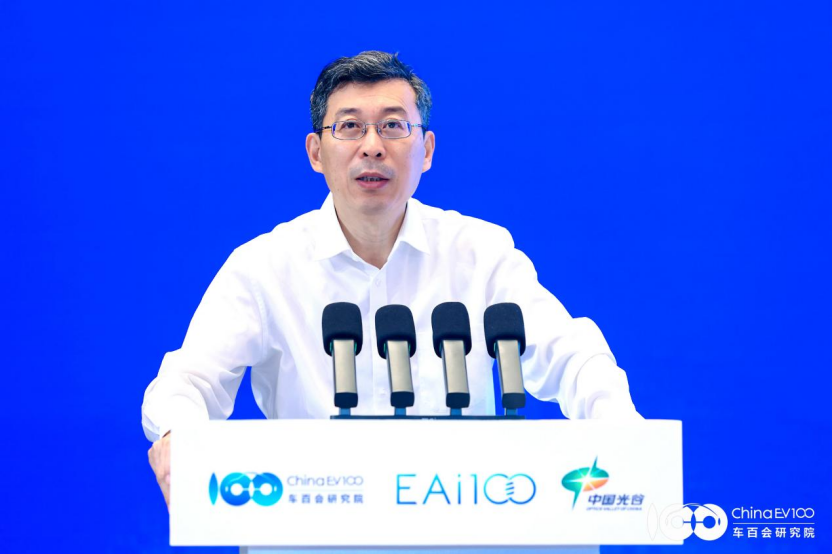
车百会理事长张永伟:以 “聚合思维” 推动智能产业迈入 “三大件” 时代
Zheng Quan Ri Bao Wang· 2025-09-17 08:28
Core Insights - The speech by Zhang Yongwei at the first Aggregated Intelligent Industry Development Conference emphasizes that "aggregated thinking" will be the core driving force for industrial breakthroughs, with collaborative and shared industrial chains as key pillars for achieving synergistic development [1][6] - The "three major components" (smart cars, embodied robots, and low-altitude economy) are highlighted as new engines for economic growth and overseas market expansion, succeeding the "new three samples" (electric vehicles, power batteries, and photovoltaics) [3][6] Summary by Sections Aggregated Thinking and Industrial Revolution - Aggregated thinking is identified as a hallmark of the Fourth Industrial Revolution, contrasting with the single-core dynamics of previous revolutions. Technologies like new energy and artificial intelligence are accelerating integration, necessitating a shift from single-industry thinking to cross-industry aggregated thinking [2][4] Synergy in the Three Major Components - The three major components exhibit deep coupling in three aspects: 1. Shared technology base, with AI as the core technology for smart cars, robots, and low-altitude vehicles [2] 2. Over 60% supply chain overlap among the three fields, indicating a shared industrial chain [3] 3. Emerging integrated applications and infrastructure, with interwoven application scenarios [2][3] Market Potential and Economic Impact - The global market for core components of smart vehicles (excluding complete vehicles) is projected to exceed $100 billion by 2025, with China accounting for over 50%, approximately $50 billion. By the end of the 14th Five-Year Plan, the market for smart driving components and systems is expected to double to over $200 billion, with China potentially reaching $100 billion [3][6] Development Paths for the Industry - Four development paths are proposed to deepen the synergy among the three major components: 1. Strengthening manufacturing advantages to accelerate cost reduction, aiming to lower robot prices from millions to between 100,000 and 200,000 yuan within five years [5] 2. Encouraging cross-industry expansion and supply chain collaboration, exemplified by Tesla's robot supply chain [5] 3. Expanding into international markets to seize blue ocean opportunities, particularly in the robot sector where trade barriers are minimal [5][6] 4. Innovating governance mechanisms to break down silos and promote integrated planning and policy adaptation across the three fields [6] Conclusion - The integration of smart cars, embodied robots, and low-altitude economy represents a significant opportunity for China to seize a competitive edge in the Fourth Industrial Revolution. By leveraging aggregated thinking and focusing on shared industrial chains, the country aims to create unique advantages in the aggregated intelligent industry, driving high-quality economic development [6]