红利指数

Search documents
螺丝钉精华文章汇总|2025年6月
银行螺丝钉· 2025-06-30 15:51
Core Viewpoint - The article emphasizes the importance of continuous learning and investment awareness, particularly for young adults transitioning from high school to university, and highlights various investment opportunities and strategies in the current market environment [4][6][12]. Group 1: Investment Strategies and Market Insights - The article discusses the recognition of Dongfang Securities as a leading investment advisory institution, receiving the "Golden Bull Award" for three consecutive years, indicating strong performance in the investment sector [4]. - It highlights the current market conditions, suggesting that the market remains undervalued, making it a suitable time for active selection and index-enhanced investment strategies [9]. - The article introduces the "Screw Nail Gold Star Rating" and "Screw Nail Gold Bull and Bear Signal Board," which provide insights into gold pricing, historical ratings, and the relationship between gold and real interest rates [10]. Group 2: Personal Finance and Investment Education - The article provides advice for university students, emphasizing the importance of developing investment awareness and good financial habits during their college years [6][8]. - It outlines four essential habits for financial management: limiting the amount of living expenses given at once, maintaining a budget, keeping track of expenses, and trying out investment opportunities [8]. - The article discusses the significance of financial education for children, suggesting a structured approach to teaching financial literacy based on developmental stages [22]. Group 3: Economic Trends and Financial Products - The article notes that the decline in bank deposit rates may lead to a shift in investment towards bonds, high-dividend index funds, and REITs, as investors seek better returns [15]. - It mentions the performance of Hong Kong-listed companies, with a reported year-on-year profit growth of 16.32% in Q1 2025, indicating a positive trend in corporate earnings [14]. - The article explains the concept of "stablecoins," their advantages for retail giants in reducing supply chain costs, and the current regulatory landscape regarding their issuance in mainland China [31].


股指窄幅震荡,红利指数领涨
Nan Hua Qi Huo· 2025-06-17 09:56
Report Summary 1. Report Industry Investment Rating No information provided. 2. Core Views - Today's news was relatively quiet, with stock indices fluctuating within a narrow range and the dividend index leading the gains. Market sentiment was cautious. The domestic economic fundamentals were in a weak recovery state, while there were still uncertainties overseas and the external situation was volatile. Under the influence of both domestic and international factors, the stock indices lacked strong drivers, resulting in a strong wait - and - see sentiment and low trading activity in the market. The upcoming Lujiazui Forum tomorrow morning will release several financial policies. If there are policies exceeding expectations, it is expected to drive the stock indices to enter a phase - up trend [4]. 3. Summaries by Relevant Catalogs Market Review - Today, the stock indices fluctuated weakly. Taking the CSI 300 index as an example, it closed down 0.09%. In terms of capital flow, the trading volume of the two markets decreased by 7.863 billion yuan. In the futures index market, IF and IC declined on heavy volume, IH rose on light volume, and IM rose on heavy volume [2]. Important Information - The two - day 2025 Lujiazui Forum will open tomorrow morning with the theme of "Financial Opening - up, Cooperation and High - quality Development in the Changing Global Economic Landscape". - The Bank of Japan kept the policy benchmark interest rate unchanged at 0.50%, in line with market expectations, and remained on hold for the third consecutive meeting [3]. Strategy Recommendation - Hold positions and wait and see [5]. Futures Index Market Observation | | IF | IH | IC | IM | | --- | --- | --- | --- | --- | | Main contract intraday change (%) | -0.01 | 0.10 | -0.20 | 0.02 | | Trading volume (10,000 lots) | 9.563 | 5.0679 | 8.6313 | 17.9958 | | Trading volume MoM (10,000 lots) | -0.6555 | 0.2873 | -0.011 | 0.713 | | Open interest (10,000 lots) | 23.7778 | 8.2576 | 21.8236 | 32.9756 | | Open interest MoM (10,000 lots) | 0.1165 | -0.0433 | 0.0333 | 0.5515 | [5] Spot Market Observation | Name | Value | | --- | --- | | Shanghai Composite Index change (%) | -0.04 | | Shenzhen Component Index change (%) | -0.12 | | Ratio of rising to falling stocks | 0.77 | | Trading volume of the two markets (billion yuan) | 1207.213 | | Trading volume MoM (billion yuan) | -78.63 | [6]
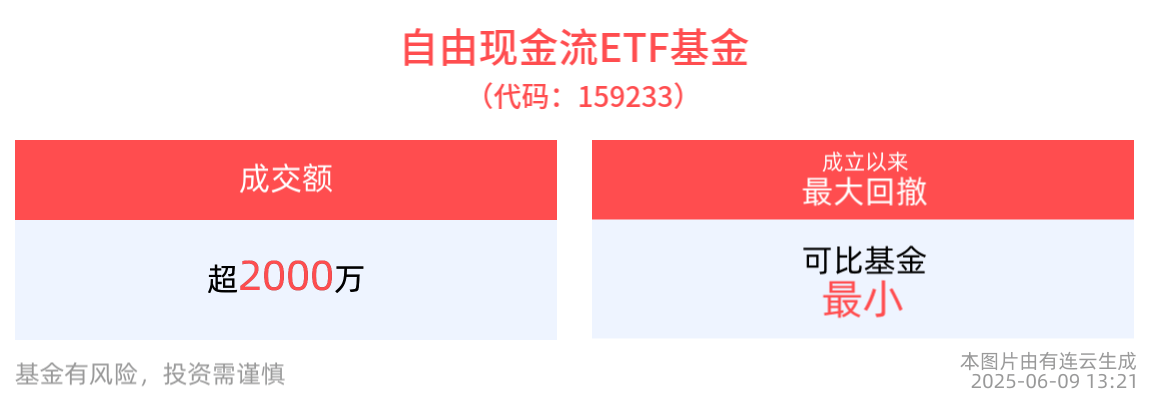
自由现金流ETF基金(159233)震荡上扬,机构看多红利指数,红利与绩优风格配置机遇备受关注
Sou Hu Cai Jing· 2025-06-09 05:48
Group 1 - The core viewpoint of the news highlights the performance of the CSI All Share Free Cash Flow Index, which increased by 0.22% as of June 9, 2025, with notable gains from stocks such as Yiming Pharmaceutical (up 9.99%) and Morning Light Co. (up 9.32%) [1] - The Free Cash Flow ETF Fund closely tracks the CSI All Share Free Cash Flow Index, which includes 100 listed companies with high free cash flow rates, reflecting the overall performance of companies with strong cash flow generation capabilities [6] - The top ten weighted stocks in the CSI All Share Free Cash Flow Index account for 65.68% of the index, with major companies including Midea Group and China Shenhua [6] Group 2 - The macroeconomic environment is characterized by low inflation, rising inventory levels, and declining credit, which positively influences dividend indices and high-performance styles, leading to a recommendation to be bullish on dividend indices [1] - The analysis incorporates a high-dimensional macro variable system to enhance predictive capabilities regarding broad-based, style, and industry returns, focusing on the stability of cycle identification and the significant impact of inflation and inventory on dividend indices [1]
上证原材料红利指数上涨0.49%,前十大权重包含杭钢股份等
Jin Rong Jie· 2025-06-06 16:33
金融界6月6日消息,A股三大指数收盘涨跌不一,上证原材料红利指数 (沪材料红,H50022)上涨 0.49%,报6464.61点,成交额64.81亿元。 从上证原材料红利指数持仓样本的行业来看,原材料占比100.00%。 数据统计显示,上证原材料红利指数近一个月上涨0.17%,近三个月下跌4.67%,年至今下跌0.89%。 资料显示,指数样本每年调整一次,样本调整实施时间为每年12月的第二个星期五的下一交易日。对样 本空间分红条件设置缓冲区,即当原样本满足过去一年现金股息率大于0.5%的条件时,对其豁免关于 过去三年连续现金分红以及过去一年股利支付率大于0且小于1的要求。同时,设置调整比例限制,即每 次样本调整比例一般不超过20%,除非因行业属性发生变化或过去一年现金股息率小于0.5%而被剔除 的原样本超过20%。权重因子随样本定期调整而调整,调整时间与指数样本定期调整实施时间相同。在 下一个定期调整日前,权重因子一般固定不变。特殊情况下将对指数进行临时调整。当样本退市时,将 其从指数样本中剔除。样本公司发生收购、合并、分拆等情形的处理,参照计算与维护细则处理。 据了解,上证行业红利指数系列包括十一条一级行业 ...

全市场最大的中证全指自由现金流ETF——自由现金流ETF基金(159233)有望成为价值风格下的优质选择
Sou Hu Cai Jing· 2025-06-05 04:03
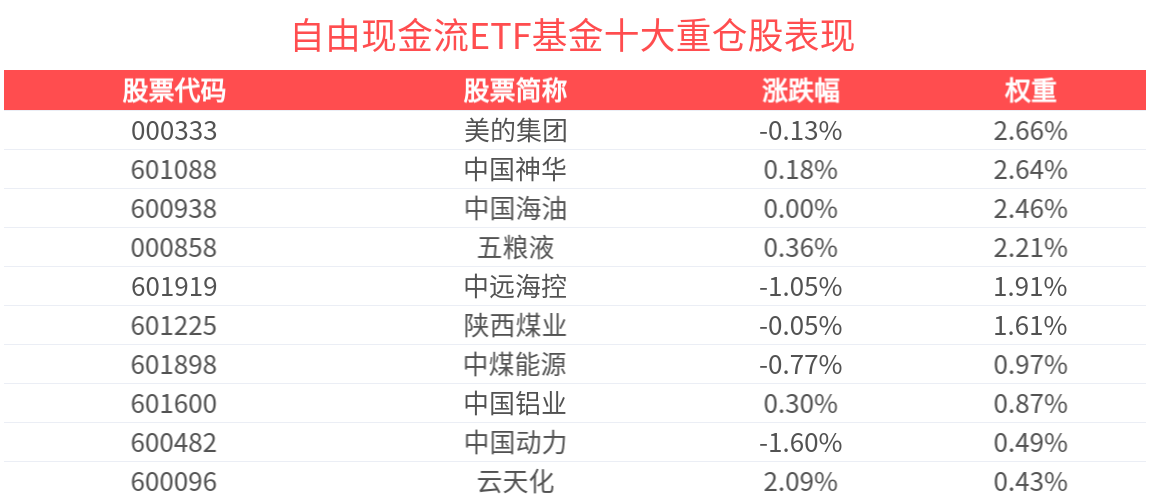
Core Viewpoint - The performance of the CSI All Share Free Cash Flow Index (932365) has shown a slight decline, with a focus on companies with strong cash flow generation capabilities, reflecting a trend towards stability in uncertain market conditions [1][2]. Group 1: Index Performance - As of June 5, 2025, the CSI All Share Free Cash Flow Index (932365) decreased by 0.18%, with mixed performance among constituent stocks [1]. - Leading gainers included Yiming Pharmaceutical (002826) up 10.00%, and Jin Hong Group (603518) up 9.99%, while Debon Logistics (603056) led the declines at 9.84% [1]. Group 2: ETF Fund Insights - The Free Cash Flow ETF Fund (159233) is closely tracking the CSI All Share Free Cash Flow Index, which selects 100 companies with high free cash flow rates to reflect the overall performance of companies with strong cash flow generation [2]. - The Free Cash Flow ETF Fund had a trading volume of 2.27% and a turnover of 16.18 million yuan, with an average daily turnover of 83.39 million yuan over the past week [1]. Group 3: Investment Rationale - Analysts highlight several reasons for investing in the Free Cash Flow Index: focusing on "stable cash cows" in uncertain markets, avoiding financial statement embellishments, and seeking quality in a low-interest-rate environment [1]. - The index shows a more balanced industry distribution, with significant representation from sectors such as home appliances, oil and petrochemicals, transportation, food and beverage, and coal [1]. Group 4: Top Holdings - As of May 30, 2025, the top ten weighted stocks in the CSI All Share Free Cash Flow Index accounted for 65.68% of the index, including Midea Group (000333) and China Shenhua (601088) [2][4]. - The weightings of the top stocks vary, with Midea Group at 2.66% and China Shenhua at 2.64%, indicating a concentration in a few key players [4].
红利指数上涨的底层逻辑是什么,还能持续吗?|第386期精品课程
银行螺丝钉· 2025-06-04 08:56
Core Viewpoint - The article discusses the strong performance of the dividend index in recent years, its driving factors, and the potential for continued growth in the future [1][5][47]. Performance Overview - The dividend index has shown strong performance in recent years, with some dividend funds increasing in value by 50%-80% [8][47]. - From 2018 to 2021, the growth style bull market saw the growth style index rise over 150%, while the dividend index lagged behind [6]. - However, from 2022 to 2024, the dividend index has performed well, showing overall growth [7]. Sources of Returns - The four main sources of returns for dividend index funds are: 1. **Undervalued Buy-in and Valuation Improvement**: The dividend index has seen a significant increase in price-to-earnings (P/E) ratio from around 7-8 times in 2018 to approximately 9-10 times by May 2025 [18][19][22]. 2. **Profit Growth**: The underlying companies of the dividend index have shown stable profit growth, particularly from 2022 to 2024, which supports the index's performance [27]. 3. **Dividend Yield**: The current dividend yield has increased significantly compared to 5-10 years ago, with many stocks now yielding 5%-6% [30][34]. 4. **Rule Optimization**: The optimization of index rules has improved returns, with newer indices incorporating additional criteria for stock selection [39][44]. Historical Performance Metrics - The annualized return of the dividend index since the end of 2004 is 8.73%, which increases to 12.52% when accounting for dividends [13][14]. - The long-term growth rate of the dividend index is estimated at 8%-9%, with an additional annual dividend yield of 3%-4% [14]. Policy Impact - Recent policies have encouraged companies to increase dividend payouts, resulting in a rise in the number and amount of cash dividends distributed by A-share companies, reaching approximately 2.4 trillion in 2024 [33]. - The proportion of profits distributed as dividends has increased from 30%-40% to 40%-50% for some companies [34]. Conclusion - The combination of undervalued buy-in, profit growth, increased dividend yields, and optimized rules are expected to continue driving the long-term growth of the dividend index [47].

[5月28日]指数估值数据(指数百分位,使用的时候要注意这四点;免费领取3周年奖章)
银行螺丝钉· 2025-05-28 13:53
Core Viewpoint - The article discusses the current market conditions, emphasizing the importance of understanding index valuation percentiles and the associated risks when making investment decisions. Market Overview - The major indices, such as the Shanghai and Shenzhen 300, have shown little fluctuation, while small-cap stocks have slightly declined [2][4]. - Value and dividend styles have seen minor increases, whereas growth styles have experienced slight declines [3][4]. - After a significant drop in early April, global markets have rebounded over the following weeks, but have recently entered a period of sideways movement [5][6]. Index Valuation Percentiles - The article highlights that percentile rankings can be a useful reference for current valuations in historical contexts [7][8]. - A 30% percentile indicates that 30% of historical valuations were lower than the current one [9]. Risks Associated with Percentile Valuation 1. **Short Historical Data**: Relying on a short time frame for index data can lead to misleading conclusions. Historical data should ideally encompass multiple market cycles [12][13]. - Solution: Use longer historical indices of similar styles for reference [14][15][16]. 2. **Changes in Index Rules**: Modifications in index selection criteria can alter valuation metrics, making historical comparisons less relevant [18][19][20]. - Solution: Recalculate historical valuations based on new rules [21]. 3. **Different Valuation Weighting Methods**: Variations in how indices calculate valuations can lead to discrepancies in percentiles. For example, the dividend index's valuation can differ significantly based on whether it is market-cap weighted or dividend-yield weighted [22][23][24][28]. - Solution: Calculate valuations based on the actual stocks held in the index [29]. 4. **Economic Downturns**: During economic slowdowns, declining earnings can artificially inflate price-to-earnings ratios, skewing percentile rankings [5][30]. - Solution: Use stable financial metrics for valuation when earnings are volatile [30][31]. New Features and Tools - A new feature in the "Today Stars" mini-program has been launched, allowing users to access ETF valuation tables and identify undervalued ETFs [32][35]. - The program provides real-time data on ETF valuations, including premium/discount rates and historical valuation data [35]. Investor Engagement - The article encourages investors to share their experiences and thoughts, particularly regarding the three-year anniversary of the investment strategy, highlighting the importance of perseverance during market downturns [40][41].

红利指数上涨的底层逻辑是什么,还能持续吗?|第386期直播回放
银行螺丝钉· 2025-05-25 20:08
Core Viewpoint - The article discusses the performance of the dividend index over the years, highlighting its strong performance in recent years and exploring the factors driving this growth, as well as the sustainability of this trend in the future [1][6]. Group 1: Recent Performance of the Dividend Index - The dividend index has shown strong performance in recent years, particularly from 2022 to 2024, with overall growth observed [6]. - In contrast, during the growth style bull market from 2019 to 2021, the dividend index lagged behind the broader market, with the growth style index rising over 150% and the A-share CSI All Share Index increasing over 80% [5][6]. - Some dividend funds have seen net asset values increase by 50% to 80% in recent years [7]. Group 2: Sources of Returns for Dividend Index Funds - The returns from dividend index funds can be summarized by the formula: Index Fund Net Value = Valuation × Earnings + Dividends, where valuation has a significant impact during bull and bear markets [9]. - The long-term growth rate of the dividend index is estimated at 8%-9%, with an annual dividend yield of 3%-4%, leading to an annualized return of 8.73% and 12.52% when including dividends [11][13]. - The four main sources of returns for dividend index funds are: undervalued buying with valuation improvement, earnings growth, dividend yield, and rule optimization [15][30]. Group 3: Valuation and Earnings Growth - Since the end of 2018, the price-to-earnings (P/E) ratio of the dividend index has increased from around 7-8 times to approximately 9-10 times by May 2025 [14]. - Stable earnings growth has been a fundamental driver of the dividend index's rise, with net profit growth stabilizing in recent years [16]. - The dividend yield has increased significantly, with many stocks now offering yields of 5%-6%, compared to 4%-5% during previous high-performance periods [18][20]. Group 4: Policy Impact on Dividend Distribution - Recent policies have encouraged companies to increase dividend payouts, with cash dividends from A-share companies reaching approximately 2.4 trillion in 2024 [25]. - The proportion of profits distributed as dividends has risen, with some companies increasing their payout ratios from 30%-40% to 40%-50% [25]. - These changes have led to a significant increase in dividend yields, although the growth rate of underlying earnings has slowed [27][28]. Group 5: Evolution of Dividend Index Rules - The initial dividend index was based solely on dividend yield, but newer indices have optimized selection rules to include company quality and market volatility [31][32]. - The evolution of dividend indices has resulted in improved returns, as seen in the comparison between the Hong Kong-Shanghai Dividend Growth Low Volatility Index and the CSI Dividend Index [33].

[5月22日]指数估值数据(固收+创新高,收益来自于哪里;红利专题估值表更新;百分位估值表更新)
银行螺丝钉· 2025-05-22 13:56
Core Viewpoint - The article discusses the recent performance of the stock market, particularly focusing on the rise of "fixed income plus" (固收+) investment products in response to low interest rates in the Chinese economy. Group 1: Market Performance - The overall market experienced a slight decline, remaining at a 5-star rating [1] - Major indices like the CSI 300 saw minor drops, while small-cap stocks that had previously risen significantly faced larger declines [2][3] - Value and dividend indices showed relative strength, with slight increases in the Hong Kong and Shenzhen dividend low volatility and value indices [4] - Growth style stocks experienced a downturn [5] Group 2: Fixed Income Plus (固收+) - The development of fixed income plus products has accelerated over the past two years due to the ultra-low interest rate environment for RMB assets [6][9] - Fixed income plus combines traditional bonds with equities and convertible bonds to enhance long-term returns [8] - The 10-year government bond yield is currently around 1.6-1.7%, with larger deposits yielding even lower returns [10][11] - Traditional fixed income investments are providing diminishing returns, prompting investors to seek higher-yielding assets [13][15] Group 3: Risk and Return Characteristics - The volatility of fixed income plus products varies based on the proportion of equity held; for example, the 365-day product has 15% equity and 85% bonds, while the monthly salary product has 40% equity and 60% bonds [16][17] - Higher equity proportions lead to greater volatility; during a recent bear market, the monthly salary product experienced a maximum drawdown of approximately 9%, while the 365-day product saw about 4% [18] - Despite the inclusion of equities, fixed income plus products tend to recover from drawdowns faster than pure equity funds due to the stability of bonds [21] Group 4: Sources of Returns for Fixed Income Plus - Returns from fixed income plus products come from three main sources: equities, bonds, and rebalancing strategies [25] - The equity portion typically focuses on value stocks, which tend to have lower volatility during bear markets and provide stable dividend yields of around 4-5% annually [26][30] - The bond portion primarily consists of short to medium-term bonds, which offer lower volatility and interest yields of about 1.6-1.7% [31] - Rebalancing strategies allow for buying low and selling high, enhancing returns during market fluctuations [32][36] Group 5: Investment Timing for Fixed Income Plus - Understanding the sources of returns helps determine suitable investment times; if underlying assets are deemed expensive, investment in fixed income plus products may not be advisable [44] - Currently, short-term bonds and value stocks are still considered viable investment options [45][46] Group 6: Valuation Insights - The article includes a valuation table for various dividend indices, providing insights into their earnings yield, price-to-earnings ratio, and other financial metrics [48][49]

[5月19日]指数估值数据(价值策略指数有哪些;月薪宝发薪日;黄金星级更新)
银行螺丝钉· 2025-05-19 13:45
Core Viewpoint - The article discusses the performance and characteristics of value and growth investment styles in the stock market, highlighting the increasing popularity of value strategies, particularly dividend indices, in the current economic environment. Group 1: Market Overview - The market showed minor fluctuations today, with the Shanghai and Shenzhen 300 indices slightly down while small-cap stocks experienced slight gains [2][6]. - Value style stocks tend to exhibit lower volatility during market fluctuations, making them more resilient [3]. - Growth style stocks have seen a slight decline in performance [5]. Group 2: Value and Growth Investment Styles - Value style stocks are characterized by lower price-to-earnings (P/E) and price-to-book (P/B) ratios, along with higher dividend yields, often found in sectors like finance, energy, and consumer goods [8]. - Growth style stocks are associated with higher revenue and earnings growth rates, leading to higher average valuations [8]. - The dividend index, a prominent value index, has gained traction due to declining interest rates, attracting institutional investors seeking better cash flow assets [8][10]. Group 3: Performance of Value Indices - The Shanghai and Shenzhen 300 index rose from 1000 points to 5601 points, while the 300 value index increased from 1000 points to 9189 points [11]. - The 300 value index reached a historical high in Q4 2024, indicating strong performance during the recent bear market [12]. - The value strategy indices, including 优选300 and 中证价值, have also shown promising results by selecting low-valuation stocks with certain growth criteria [18][22]. Group 4: Investment Strategies and Trends - Despite the positive performance of value investing, the overall scale of value-focused funds remains small, accounting for less than 1% of total A-share stock funds [29][30]. - The article emphasizes the importance of understanding investment cycles and maintaining a long-term perspective in value investing [46][47]. - Upcoming live sessions will address the characteristics of various value strategy indices and current investment opportunities [31].