美国就业市场

Search documents
锌:供应减产,价格偏强
Guo Tai Jun An Qi Huo· 2025-12-05 02:26
2025 年 12 月 05 日 锌:供应减产,价格偏强 2. 美国就业进入"不裁不招"模式:上周首次申请救济人数不增反降创逾三年新低,招聘计划大幅下 降。包含感恩节假期的上周,首次申请失业救济人数减少 2.7 万至 19.1 万,为 2022 年 9 月以来最低水平, 而经济学家预期增至 22 万。上上周持续申领失业救济金人数回落至 193.9 万人,但仍接近 2021 年以来的最 请务必阅读正文之后的免责条款部分 1 季先飞 投资咨询从业资格号:Z0012691 jixianfei@gtht.com 王宗源(联系人) 期货从业资格号:F03142619 wangzongyuan@gtht.com 【基本面跟踪】 | | 昨日值 | 较前日变动/涨跌幅 | | 昨日值 | 较前日变动/涨跌幅 | | --- | --- | --- | --- | --- | --- | | 沪锌主力收盘价 | 22865 | 0.48% | 伦锌 3M 电子盘收 | 3062 | 0.21% | | (元/吨) | | | 盘(美元/吨) | | | | 沪锌主力成交量 | 164347 | 57931 | 伦锌成交量(手 ...
高盛展望2026:美联储或降息2次,但就业市场或比表象更糟糕
Feng Huang Wang· 2025-12-04 05:50
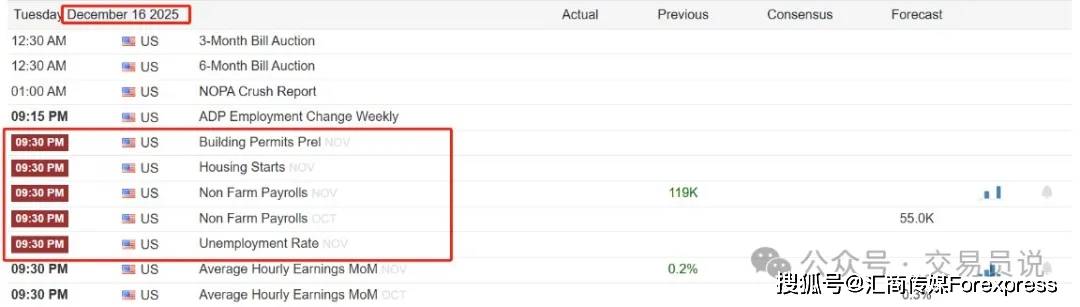
12月4日,美东时间周三,高盛研究公司首席经济学家哈祖斯(Jan Hatzius)在其最新的"全球观点"报 告中写到,他们认为虽然美联储在今年12月很可能会降息,但2026年的货币政策前景则较为难以预测。 他们目前的假设是,美联储将在明年上半年放缓宽松步伐,同时美国的经济增长将重新加速且通胀将降 温。 哈祖斯提到,近期延迟发布的9月非农就业报告显示出,美国劳动力市场明显出现了降温迹象,这可能 意味着在美联储12降息25基点已经基本板上钉钉。 他补充道,下一次非农就业报告定于12月16日发布,下一次消费者价格通胀(CPI)数据将于12月18日 公布,而美联储宣布利率决议的时间是12月10日——这意味着12月降息的可能性基本不大会受到更多数 据因素的影响。 2026 年美联储预计会降息几次? 相比于12月,美联储明年的降息前景就显得迷雾重重。高盛研究公司预测,由于关税对经济的影响减 轻、减税以及金融环境宽松等因素,美国经济在2026年将有望加速增长,增速或达到2%至2.5%。 "我们的经济学家预计,这些因素将促进就业增长,并将失业率稳定在略高于今年9月4.4%这一水平的 适度高位。" 哈祖斯预计,美联储将在明年1 ...
高盛解密2026年美联储利率路径:节奏放缓,但一大隐忧可能迫使更多行动
Jin Shi Shu Ju· 2025-12-04 03:19
哈祖斯预计,美联储将在1月暂停降息周期,随后在3月和6月实施降息,从而将联邦基金利率推低 至3%-3.25%的最终水平(目前为3.75%-4%)。 通胀将如何影响美联储政策? SHMET 网讯:尽管美联储很可能在12月降息,但2026年的货币政策前景则更难预测。高盛研究团 队的基本"工作假设"是,随着经济增长重新加速且通胀降温,政策制定者将在明年上半年放缓宽松步 伐。 高盛研究团队首席经济学家扬·哈祖斯(Jan Hatzius)在团队最新的《全球展望》报告中写道,大幅 延迟发布的9月就业报告显示出劳动力市场降温的迹象,这可能已为联邦公开市场委员会(FOMC)在 12月会议上降息25个基点一锤定音。 他补充道,考虑到下一份就业报告定于12月16日发布,而下一份消费者价格通胀数据将于12月18日 公布,"日程表上几乎没有什么能阻碍12月10日的降息决定。" 2026年预计会有多少次美联储降息? 明年的降息前景则不那么明朗。高盛研究团队预测,由于关税影响减弱,加之减税措施和更为宽松 的金融环境,美国经济增长将在2026年加速至2%-2.5%。 高盛的经济学家预计,这些因素将促进就业创造,并将失业率稳定在仅略高于今年 ...

爆冷!美联储降息大消息
天天基金网· 2025-12-04 01:26
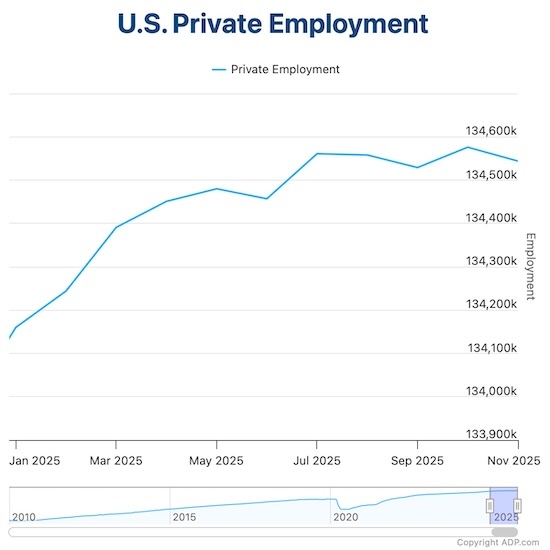
Group 1 - The core point of the article highlights a significant decline in U.S. private sector employment in November, with a decrease of 32,000 jobs, particularly affecting small businesses [2][3] - The report indicates a stark contrast to the upwardly revised addition of 47,000 jobs in October and falls short of economists' expectations of a 40,000 increase [2] - Large enterprises (with 50 or more employees) added 90,000 jobs, while small businesses (with fewer than 50 employees) lost 120,000 jobs, marking the largest monthly decline since March 2023 [2] Group 2 - Employment in the education and healthcare sectors increased by 33,000 and 13,000 jobs respectively, while several industries, including professional and business services, saw declines [2] - The largest job losses were in professional and business services (26,000 jobs), information services (20,000 jobs), and manufacturing (18,000 jobs) [2] - Wage growth also slowed, with a year-over-year increase of 4.4% in November, down 0.1 percentage points from October [2] Group 3 - ADP's Chief Economist, Nela Richardson, noted that the hiring pace has been inconsistent due to cautious consumers and an uncertain macro environment, with small businesses being the most affected [3] - The upcoming Federal Reserve meeting on December 9-10 will consider this employment data, with a nearly 90% probability of a 25 basis point rate cut, despite some officials expressing concerns about inflation [3] - Recent layoffs from major companies like Apple and Verizon may lead to an increase in the unemployment rate, challenging the previously perceived balance in the labor market [3]


“小非农”意外利空,美联储鹰派是否会让步
Di Yi Cai Jing Zi Xun· 2025-12-03 23:46
Core Insights - The U.S. private sector experienced its largest job loss in nearly two and a half years in November, primarily driven by small businesses, indicating a general slowdown in hiring activity [2][3] - This marks the third instance of job losses in the private sector within four months, raising concerns about a potential increase in the unemployment rate and adverse economic impacts [2][3] - The upcoming Federal Reserve meeting may see the end of interest rate cut speculation due to these employment trends [2] Employment Market Analysis - According to the ADP report, 32,000 jobs were cut in November, the largest decline since March 2023, with small businesses losing 120,000 jobs [3] - Medium-sized businesses added 51,000 jobs, while large businesses increased their workforce by 39,000 [3] - The ADP report's significance has risen due to the recent government shutdown, which delayed the release of the official employment report [6][9] Economic Indicators - The ISM reported a further decline in overall manufacturing sentiment, with employment indicators contracting for ten consecutive months [7] - 67% of survey participants indicated that managing headcount is the norm rather than hiring new employees [7] - The ISM services index rose to 52.6, marking six months of growth, but hiring and investment remain cautious due to ongoing tariff uncertainties [7] Federal Reserve Policy Outlook - The Federal Reserve is expected to announce its final interest rate decision of the year next week, with labor market weakness being a primary concern [9][11] - Market expectations for a rate cut have increased significantly, with a nearly 90% probability priced in following the ADP report [9][11] - Some Federal Reserve officials express concerns about inflation, suggesting a divergence in views regarding future monetary policy [11]

两年半最差,“小非农”意外利空,美联储鹰派是否会让步
Di Yi Cai Jing· 2025-12-03 23:46
Core Insights - The U.S. private sector experienced its largest job loss in nearly two and a half years in November, primarily driven by small businesses, indicating a general slowdown in hiring activity [1][2] - This marks the third instance of job losses in the private sector within four months, raising concerns about a potential increase in the unemployment rate and adverse economic impacts [1][2] - The upcoming Federal Reserve meeting may see the end of speculation regarding interest rate cuts due to the current employment trends [1] Employment Market Trends - According to ADP, U.S. businesses cut 32,000 jobs in November, the largest decline since March 2023, with small businesses losing 120,000 jobs [2] - Medium-sized businesses added 51,000 jobs, while large businesses increased their workforce by 39,000 [2] - The ADP report highlights ongoing recruitment freezes as employers navigate consumer caution and economic uncertainty [5][6] Economic Indicators - The ISM reported a continued decline in manufacturing sector activity, with employment indicators contracting for ten consecutive months [6] - Despite a rise in the services sector index to 52.6, hiring and investment remain cautious due to ongoing tariff uncertainties [6] - The overall labor market is perceived to be cooling, with expectations that significant improvements in hiring will not occur until trade tensions ease and economic growth accelerates [6] Federal Reserve Policy Outlook - The Federal Reserve is set to announce its final interest rate decision of the year, with labor market weakness being a primary concern [7] - Market expectations for a rate cut have risen significantly, with probabilities nearing 90% following the ADP report [7][9] - Some Federal Reserve officials express concerns about inflation, advocating for maintaining current interest rates, although this view is in the minority [7] Inflation and Cost Pressures - Inflation remains a focal point for future policy discussions, with import tariffs contributing to cost pressures that may keep inflation above the Fed's 2% target for some time [10] - Recent data indicates that while import prices remained stable, consumer goods prices have risen, suggesting that tariff costs are being passed on to consumers [10]

爆冷!美联储,降息大消息
Xin Lang Cai Jing· 2025-12-03 15:25
Core Insights - The U.S. labor market showed unexpected weakness in November, with ADP reporting a decrease of 32,000 jobs, marking the largest decline since March 2023 [1][5][6] - The decline in employment contrasts sharply with the upwardly revised addition of 47,000 jobs in October and falls significantly short of economists' expectations for a 40,000 increase [1][6] Employment Trends - Large enterprises (50 or more employees) added a net of 90,000 jobs, while small businesses (fewer than 50 employees) lost 120,000 jobs, with firms employing 20-49 employees losing 74,000 jobs [1][6] - The overall decline in employment is the largest single-month drop since March 2023 [1][6] Industry Performance - The education and healthcare sectors added 33,000 jobs, and the leisure and hospitality sector increased by 13,000 jobs [2] - The most significant job losses occurred in professional and business services, which saw a decrease of 26,000 jobs, followed by information services with a loss of 20,000 jobs, manufacturing with a loss of 18,000 jobs, and both financial activities and construction losing 9,000 jobs each [2] Wage Growth - Wage growth also slowed, with wages for employees remaining in their positions rising by 4.4% year-over-year in November, a decrease of 0.1 percentage points from October [3][7] - ADP's Chief Economist noted that the hiring pace has been inconsistent due to cautious consumer behavior and an uncertain macroeconomic environment, with small businesses being the hardest hit [3][7] Federal Reserve Implications - The ADP report is critical as it is the last employment data available before the Federal Reserve's meeting on December 9-10, where there is a nearly 90% probability of a 25 basis point rate cut, despite some officials expressing concerns about the necessity of further easing [3][7] - Recent trends indicate a divergence among policymakers regarding the need for rate cuts to prevent further labor market issues versus concerns about exacerbating inflation, which remains above the Fed's 2% target [3][7] Future Employment Data - The Bureau of Labor Statistics (BLS) has postponed the release of the November non-farm payroll report, originally scheduled for December 5, to December 16 due to a government shutdown affecting data collection [3][7] - There are indications that the labor market, previously viewed as balanced with low hiring and low layoffs, may be shifting as several large companies, including Apple and Verizon, have begun announcing layoffs [3][7]
ATFX汇市前瞻:本周五非农延期至16日,11月小非农ADP引关注
Sou Hu Cai Jing· 2025-12-01 09:41
Group 1 - The U.S. non-farm payroll report, originally scheduled for release this Friday, has been postponed to December 16 due to the government shutdown, complicating predictions for the Federal Reserve's interest rate decision on December 11 [3] - The upcoming ADP data for November, set to be released on Wednesday, is seen as a critical indicator in the absence of the non-farm payroll data, with a previous value of 42,000 and a pessimistic forecast of 20,000 [4] - The Eurozone's harmonized CPI year-on-year for November is expected to rise slightly to 2.2%, while the core CPI is projected to increase to 2.5%, indicating a stable inflation outlook above 2% [6][8] Group 2 - The labor market in the U.S. faces significant challenges, including the impact of immigration policies and AI replacing basic jobs, which could hinder recovery in the short term [4] - The stability of Eurozone inflation data supports expectations that the European Central Bank will maintain interest rates, with the next decision on December 18 anticipated to be unchanged [8] - The potential for a higher likelihood of a rate cut by the Federal Reserve could lead to an appreciation of the Euro against the Dollar [8]
11月27日白银早评:俄已收到最新版和平计划 银价登上53美元高位
Jin Tou Wang· 2025-11-27 02:11
Market Overview - The US dollar index is trading around 99.466, while spot silver opened at $53.31/oz and is currently around $53.16/oz. Silver T+D is trading at approximately 12,396 CNY/kg, and the main Shanghai silver contract is around 12,430 CNY/kg [1] - On November 26, the US dollar index fell by 0.24% to close at 99.569. Spot silver rose by 3.60% to $53.31/oz, driven by increased market expectations for a Federal Reserve rate cut in the upcoming meeting. Spot gold also reached a one-week high, rising by 0.79% to $4,162.35/oz, while platinum and palladium prices increased by 2.18% and 2.59%, respectively [1] Silver Market Data - The SLV silver ETF holdings remain unchanged at 15,582.33 tons compared to the previous trading day [2] - On November 26, the direction of the deferred compensation payment for Ag (T+D) was from short to long [2] Economic Indicators - The US initial jobless claims for the week ending November 22 were recorded at 216,000, lower than the expected 225,000 and the revised previous value of 222,000, marking the lowest level since April 12, 2025 [3] - The Federal Reserve's Beige Book indicates that US economic activity has remained stable in recent weeks, with overall consumer spending declining further, except for high-end consumers. The employment market has shown slight weakness, while price levels continue to rise moderately [3] Silver Price Analysis - The silver market opened at 51.422, experienced a pullback to 51.264, and then saw a strong upward trend, reaching a daily high of 53.385 before closing at 53.33. This bullish pattern suggests continued demand for upward movement, with support levels at 37.8 and 38.8, and targets set at 53.3, 53.7, and 54-54.2 [4]
外汇商品 | 就业市场触发预警,利好美债前景——美国国债月报2025年第十二期
Sou Hu Cai Jing· 2025-11-27 00:30
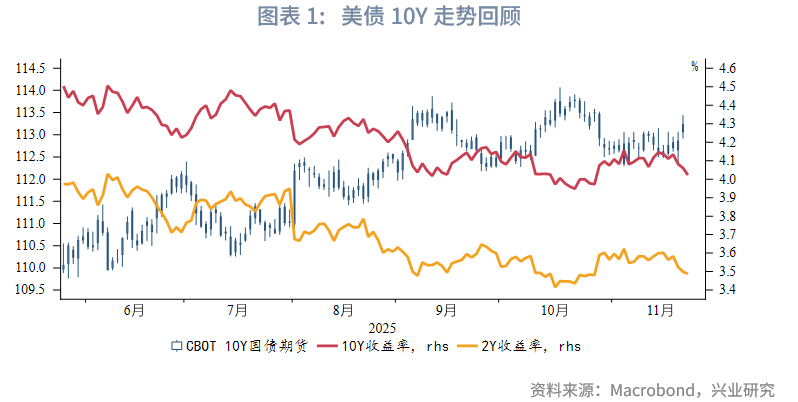
Group 1: Economic Indicators and Federal Reserve Actions - The unemployment rate and layoff numbers in the U.S. have triggered early warning signals, indicating potential further pressure on the job market as the inventory cycle approaches its bottom [1][5][7] - The Federal Reserve is likely to continue its rate-cutting cycle, with a high probability of a 25 basis point cut in December, although the market has already priced in this expectation [2][28] - The 10-year Treasury yield is expected to experience low volatility, with support levels at 3.9% and 3.8%, and resistance levels at 4.1% and 4.2% [2][28] Group 2: Employment Market Analysis - The unemployment rate exhibits strong cyclical and nonlinear characteristics, with sharp increases during economic downturns and gradual decreases during recoveries [5][6] - The Challenger job-cut report shows a significant increase in layoffs, particularly in government sectors, which raises concerns about the employment market's deterioration [6][7] - The cumulative month-on-month change in the unemployment rate reached 0.4% in October, signaling a potential economic slowdown [6][7] Group 3: MBS Market Monitoring - In November, agency MBS yields declined alongside Treasury yields, with Fannie Mae MBS experiencing a slightly larger decrease than Freddie Mac MBS [1][38] - The credit spread of agency MBS relative to Treasuries remains stable near historical median levels, indicating a neutral valuation [38] - The duration of agency MBS is stable at around 5.5 to 6 years, with no significant overvaluation or undervaluation detected [38]