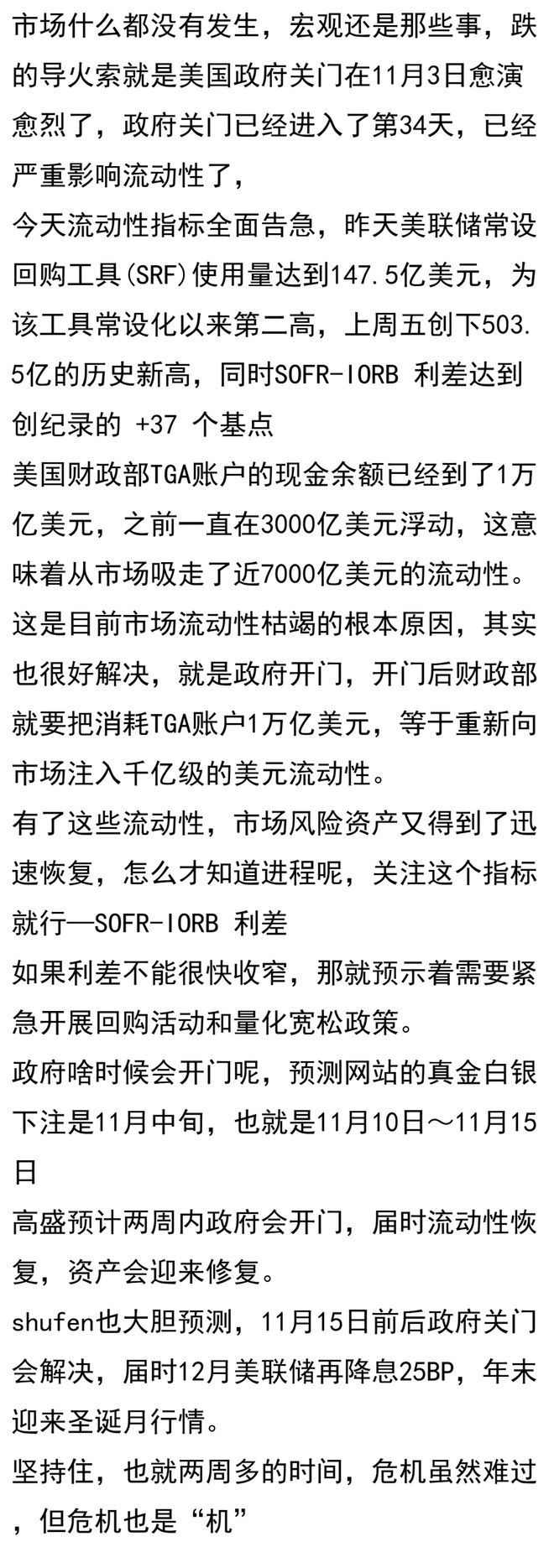
量化宽松政策

Search documents
美联储降息,但对未来指引释放出混合信号
Sou Hu Cai Jing· 2025-12-15 03:14
美国总统唐纳德·特朗普正在权衡鲍威尔的接替人选,国家经济委员会主任Kevin Hassett被广泛报道为该职位的热门人选。Hassett也曾担任Coinbase学术和监 管咨询委员会的顾问。 鲍威尔表示,消费支出和商业投资仍然"稳健",并补充说裁员和招聘保持在低水平。然而,通胀仍"略高于"美联储2%的通胀目标,而住房行业仍被视为"疲 软"。 "近期通胀风险偏向上行,就业风险偏向下行,这构成了一个充满挑战的局面。政策没有无风险的实施路径,"鲍威尔在周三的美联储公开市场委员会 (FOMC)会议上如此表示。 这些言论并不如部分分析师预期的那样"鹰派",但市场分析师、Coinbureau创始人Nic Puckrin表示,在鲍威尔领导下,美联储预计在2026年仅会实施一次降 息。他进一步指出:"2026年初,市场关注点将转向流动性和美联储的资产负债表政策。然而,尽管今天宣布了国库券购买计划,但量化宽松政策不会出 台,除非市场开始崩溃,而这总是意味着更多的波动性和潜在的痛苦。" 低利率环境有利于风险资产,如BTC的上涨,但根据CME Group的数据显示,仅有24.4%的交易者预期在2026年1月的下一次FOMC会议上会 ...


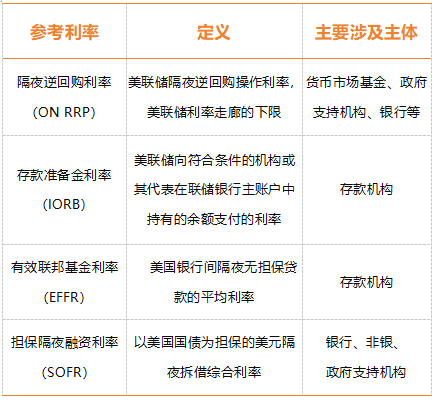
美元流动性紧张局面的成因与展望
Xin Lang Cai Jing· 2025-12-10 05:56
Core Viewpoint - Since 2025, the liquidity in the US money market has shifted from relative abundance to a phase of tightness, influenced by the Federal Reserve's quantitative tightening (QT) policy and US fiscal factors. However, factors causing dollar liquidity tightness are showing signs of improvement moving forward [1][18]. Group 1: Current State of Dollar Liquidity - The US money market liquidity has been tightening since 2025, primarily reflected in increased volatility and marginally higher financing costs in the repurchase (repo) market [2][20]. - The secured overnight financing rate (SOFR) has consistently exceeded the effective federal funds rate (EFFR) since September, indicating liquidity pressure in the repo market [2][21]. - The SOFR-EFFR spread reached 36 basis points (BP) on October 31, the highest since October 1, 2019, and has shown signs of remaining elevated, with an average of 9 BP as of November 21, compared to just 1 BP in August [2][20]. Group 2: Causes of Liquidity Tightness - The ongoing impact of the Federal Reserve's QT since June 2022 has transitioned from a quantitative to a qualitative effect, leading to a significant reduction in liquidity [6][27]. - The US Treasury General Account (TGA) balance has fluctuated significantly, with a notable decrease from $818 billion in February to around $3 billion, contributing to liquidity withdrawal from the market [8][26]. - The usage of the Standing Repo Facility (SRF) has surged, with daily averages of $11.5 billion and $6.5 billion during two periods of heightened market tension in 2025, indicating increased reliance on this tool amid tightening conditions [4][22]. Group 3: Implications and Future Outlook - The tightening of dollar liquidity is expected to impact financial markets, with potential adjustments in asset prices across equities, bonds, and cryptocurrencies due to rising financing costs [12][31]. - The Federal Reserve's recent decision to halt QT and the resumption of normal fiscal spending are expected to alleviate liquidity pressures in the near term [15][33]. - Future measures may include enhancing the effectiveness of the SRF and potentially resuming asset purchases to stabilize liquidity conditions, with indications that the Fed is closely monitoring the evolving liquidity landscape [16][34].
美联储“换帅时刻”将至 特朗普仍不忘炮轰鲍威尔 且放话“降息乃新任主席试金石”
智通财经网· 2025-12-09 13:42
智通财经APP获悉,美国总统唐纳德·特朗普表示,他将根据新任美联储主席是否会立即采取降息行动 来评判其领导力表现以及"是否真的称职"。据了解,特朗普本人在接受媒体采访时,当被问及迅速下调 借贷成本是否会成为他亲自挑选的美联储主席的一项"试金石"时,特朗普毫不犹豫地回答说:"是的。" "是的。嗯,这个家伙也是……他也应该这样做。"特朗普在周二发布的这篇接受《Politico》采访的媒体 报道中表示,他指的是现任美联储主席杰罗姆·鲍威尔(Jerome Powell)。"我认为他既不聪明,又不喜欢 特朗普政府。"特朗普在采访中强调。 特朗普的最新言论无疑向潜在的新任美联储主席发出了一个至关重要的信号:如果他被提名领导这家在 全球范围最具影响力的央行,美国总统会对其有何期待。 白宫国家经济委员会主任凯文·哈塞特(Kevin Hassett)被多家美国媒体报道为美联储主席竞选中的绝对领 跑者,他上个月表示,各项数据显示美联储应该"现在立刻"降息。 市场也在真金白银押注"鸽到极致"的哈塞特即将上位。多家付费型预测市场在最近几日一路"狂奔",给 立场极度鸽派的哈塞特入主美联储的机会赋予了较高概率。截至周一下午,付费型的押注 ...
贝森特拒任美联储主席!特朗普内阁曝人选博弈,美国经济要变天?
Sou Hu Cai Jing· 2025-12-06 07:35
Core Viewpoint - The article discusses the political maneuvering within the Trump administration regarding the selection of the next Federal Reserve Chair, highlighting the tensions between Treasury Secretary Mnuchin and current Chair Powell, as well as the implications for monetary policy and economic stability [4][13][24]. Group 1: Federal Reserve Criticism - Treasury Secretary Mnuchin expressed a desire to reform the Federal Reserve, criticizing it for being too broad in its responsibilities and losing public trust [6][20]. - Mnuchin's proposal suggests that the Federal Reserve should focus solely on monetary policy, specifically stabilizing inflation and maintaining low unemployment, while relinquishing its regulatory role over banks [8][22]. - He argues that the Federal Reserve's quantitative easing policies have disproportionately benefited large corporations, exacerbating wealth inequality [9][24]. Group 2: Political Dynamics - The article indicates that Mnuchin's criticisms align with Trump's dissatisfaction with Powell, particularly regarding interest rate policies, creating a political backdrop for potential leadership changes at the Federal Reserve [13][15]. - The potential successor to Powell, Kevin Hassett, is noted for his close ties to Trump and advocacy for lower interest rates, which could further align the Federal Reserve with the administration's economic agenda [18][24]. - The article warns that if the Federal Reserve loses its independence and becomes a tool of the Trump administration, it could undermine the credibility of the dollar and U.S. monetary policy [18][26]. Group 3: Economic Implications - The article emphasizes that the ongoing power struggle over the Federal Reserve Chair position is not just about policy differences but also about the broader implications for economic stability and the potential risks to ordinary Americans [22][24]. - It suggests that if the Federal Reserve were to abandon its regulatory functions, it could lead to a repeat of past financial crises, highlighting the importance of maintaining regulatory oversight to prevent economic disasters [22][24]. - The overall message conveys that the independence of the central bank is crucial for economic stability, and any short-term political gains could have long-lasting negative effects on the economy [26].

中邮证券黄付生:美国经济转向科技驱动,宽松政策护航软着陆
Xin Lang Cai Jing· 2025-12-03 12:14
Core Viewpoint - The report highlights the structural transformation of the U.S. economy, with the technology sector becoming the main growth engine, particularly driven by advancements in artificial intelligence and digital technology, supported by gradual monetary easing policies [1][4]. Economic Structure - There is a stark contrast between the shrinking manufacturing sector and the rise of technology. In the early 1950s, manufacturing profits accounted for 60% of all industry profits, but this dropped to 17% from 2010 to 2020 due to factors like the decline of the "Rust Belt" and globalization [1][4]. - U.S. technology companies are significantly investing in artificial intelligence and computing infrastructure, leading to a digital technology arms race aimed at regaining a global technological edge. The total value of data centers under construction in the U.S. is approximately $40 billion, with a growth rate exceeding 400% since 2022, expected to surpass office buildings as a core driver of economic growth [1][4]. Technology Stock Valuation - The current bubble risk in U.S. tech stocks is considered manageable. The price-to-earnings ratio of the seven major U.S. tech companies is 36.8, lower than 47.3 in 2020 and significantly below the 80 times peak ratio of the "Four Horsemen" (Microsoft, Cisco, Oracle, Intel) before the 2000 internet bubble burst [2][5]. - The competitive landscape in AI and computing chips is diversifying, with multiple companies like Google, Microsoft, and Alibaba launching their own AI models, and Nvidia facing competition from AMD, Broadcom, Huawei, and others [5][6]. Monetary Policy Outlook - The Federal Reserve's anticipated interest rate cuts include three in 2025 and three to four in 2026, stabilizing around 3%, with a gradual decline to 2.5% by 2027, avoiding a return to zero interest rates. This strategy aims to maintain domestic liquidity, prevent large-scale capital outflows, alleviate pressure on small businesses, and support the stock market and the strength of the dollar [2][6]. - A new round of quantitative easing is expected to be initiated in early 2026, which could further boost market confidence and assist the U.S. economy in achieving a smooth landing [2][6].
聂庆平:全球资本市场面临的挑战与前景展望|资本市场
清华金融评论· 2025-11-28 10:22
Group 1 - The article discusses the significant impact of US-China geopolitical competition on global capital markets, highlighting the contrasting roles of the US as a mature stock market and China as an emerging market [3][7]. - The US initiated a trade war and tariff battle, which has led to substantial declines in the US stock market, particularly affecting major technology stocks [5][6]. - The TACO trading strategy emerged as a response to the cyclical nature of Trump's tariff threats, allowing investors to buy during market panic and sell when policies soften [5]. Group 2 - China has implemented strong countermeasures in response to the US's trade actions, including a series of measures to stabilize its capital market, such as providing sufficient re-lending support from the central bank [6]. - The article outlines the historical context of financial crises triggered by US trade wars in other countries, emphasizing that only China has effectively countered the US's trade aggression [6]. - The US financial market faces severe challenges, including extensive money printing by the Federal Reserve, which has led to a balance sheet of $9 trillion due to quantitative easing [9]. Group 3 - The US has experienced a significant increase in fiscal deficits and national debt since 2008, with the national debt reaching approximately $37 trillion by September 2025 [10]. - The article notes that the US capital market is overvalued, with the overall market P/E ratio exceeding 20, and specific indices like the S&P 500 and Nasdaq showing even higher ratios, indicating potential risks for a market correction [11]. Group 4 - China's stock market is evolving towards long-term and value investing, with a series of measures introduced to boost market confidence and stabilize valuations [12]. - The article categorizes China's initiatives into three phases: initial measures to boost market activity, quantitative support for high-quality economic development, and encouraging state-owned enterprises to invest in blue-chip stocks [13].

“三重困境”难以摆脱,经济压力下,高市早苗淡化日本政府承诺
Huan Qiu Shi Bao· 2025-11-10 22:51
Core Viewpoint - Japan's new Prime Minister, Sanna Takashi, is set to establish a multi-year fiscal target to allow for more flexible spending, signaling a shift away from strict fiscal consolidation commitments amid ongoing economic challenges such as aging population, rising prices, and high government debt [1][2]. Fiscal Policy Changes - Takashi has abandoned the idea of using annual basic fiscal surplus as a target for fiscal consolidation, opting instead for a multi-year approach, which some market participants interpret as paving the way for increased fiscal spending [2]. - The current government aims to achieve a basic fiscal surplus by the end of the fiscal year 2026, but previous administrations have repeatedly postponed this goal due to extensive spending plans [2][3]. - Takashi has not ruled out the possibility of reducing Japan's consumption tax, reinforcing expectations that her government will prioritize economic stimulus over improving deteriorating public finances [2]. Economic Stimulus Plans - The Japanese government is drafting an economic strategy focused on three pillars: addressing living costs and inflation, crisis management investment, and strengthening defense and diplomatic capabilities [4]. - The proposed economic measures may include tax incentives for 17 key industries, including artificial intelligence and semiconductors, to stimulate investment, although there are concerns about the broad scope of these sectors [4][5]. - The scale of the economic stimulus plan is under scrutiny, with expectations that it may exceed the approximately 13.9 trillion yen (about 641.72 billion RMB) budget for the fiscal year 2024 [4]. Structural Economic Challenges - Japan faces significant structural economic issues, including an aging population, which accounts for over 29% of the population aged 65 and older, leading to decreased consumption capacity and market demand [7]. - Rising prices have created financial strain on urban residents, impacting public trust in the government and presenting a political challenge for Takashi's administration [7]. - Japanese companies have struggled with innovation, particularly in technology sectors like the internet and artificial intelligence, falling behind competitors from the US and China [7].
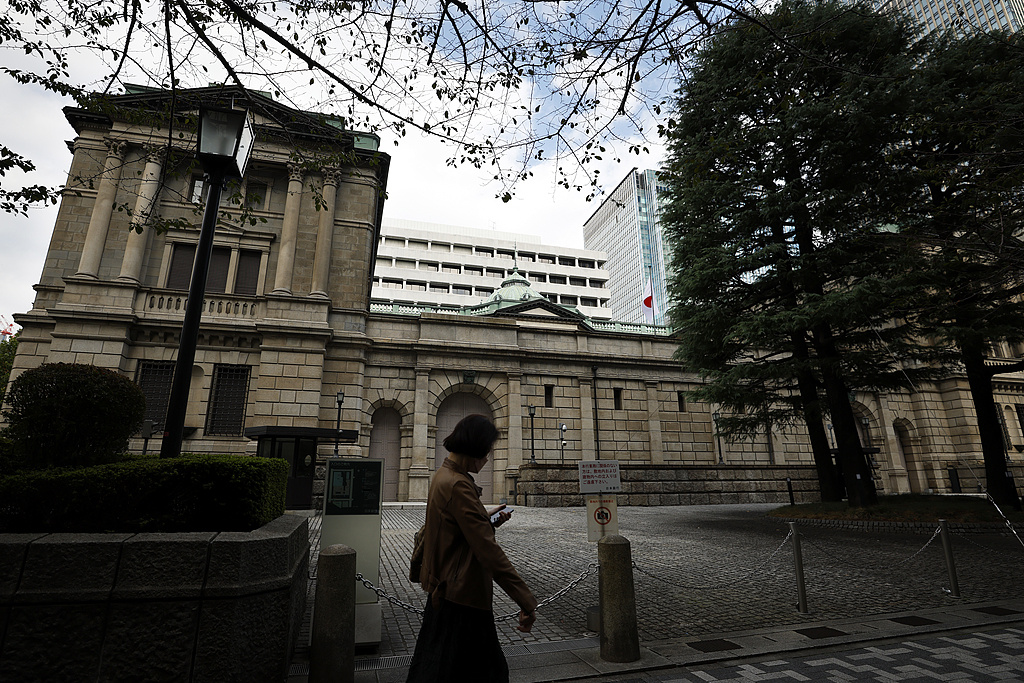
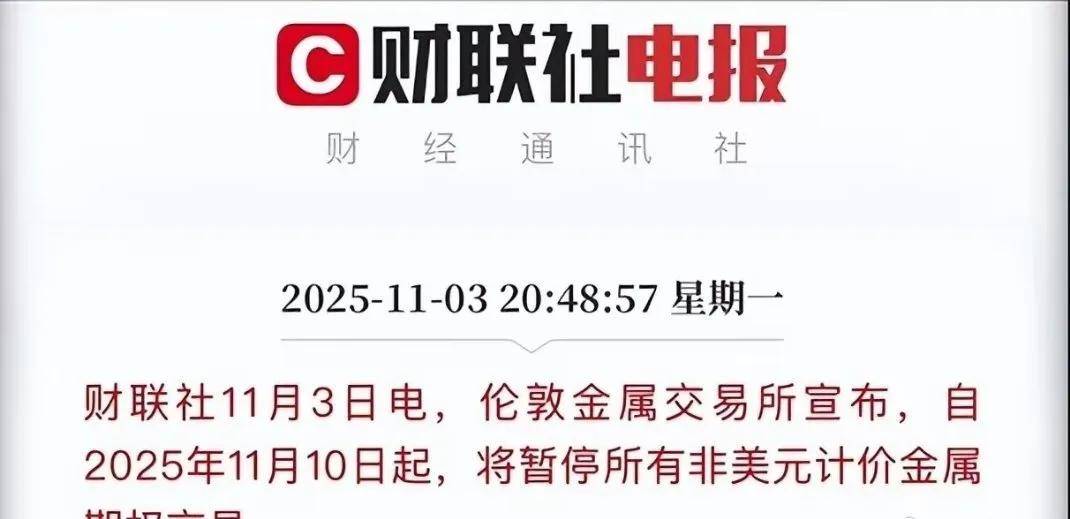
突发!周一,人民币将正式退出伦敦金属交易所的期货合约交易
Sou Hu Cai Jing· 2025-11-10 05:11
Group 1 - The core viewpoint is that the suspension of RMB futures trading on the London Metal Exchange is part of a strategic move to undermine the RMB's pricing power, coinciding with the U.S. government's upcoming quantitative easing policy and the formation of a key minerals alliance among ten countries [1][3][7] Group 2 - The U.S. economy is facing significant challenges, including government shutdowns affecting over 30 million people, large-scale layoffs in Wall Street and Silicon Valley, and liquidity issues in bank margin accounts, making quantitative easing a potential solution to reverse the situation [3][5] - The London Metal Exchange's sudden announcement to halt RMB and other non-USD currency futures trading cites "insufficient liquidity and low trading activity," despite data showing that RMB-denominated copper futures had an average daily trading volume of 357,000 contracts in 2024, increasing to 482,000 contracts in the first half of 2025, indicating that the liquidity claim is questionable [5][7] Group 3 - The U.S. aims to leverage quantitative easing to raise global metal prices and eliminate the RMB pricing system from the market, thereby reinforcing the dollar's dominance in key mineral pricing [7] - To counter this situation, it is crucial for major global buyers to reduce reliance on a single currency and actively promote a diversified currency settlement system, enhancing cooperation with other economies in key mineral sectors and exploring new pricing mechanisms [7]
市场发生了什么?加密、黄金、美股、AH股怎么都在跌?
Xin Lang Cai Jing· 2025-11-05 13:00
Group 1 - The market is experiencing declines in various asset classes including cryptocurrencies, gold, and both US and AH stocks [1] - The SOFR-IORB spread is highlighted as a key indicator for assessing market recovery; a failure to narrow quickly may necessitate urgent repurchase activities and quantitative easing policies [2] - Predictions suggest that the government shutdown will be resolved around mid-November, specifically between November 10 and November 15, which could restore liquidity and lead to asset recovery [2] Group 2 - Goldman Sachs anticipates that the government will reopen within two weeks, which would restore liquidity and facilitate asset recovery [2] - A bold prediction indicates that the government shutdown will be resolved by November 15, with a subsequent 25 basis point rate cut by the Federal Reserve in December, potentially leading to a favorable market environment during the holiday season [2]