AI电商

Search documents
16年后,天猫再造一个双11
Sou Hu Cai Jing· 2025-10-16 15:15
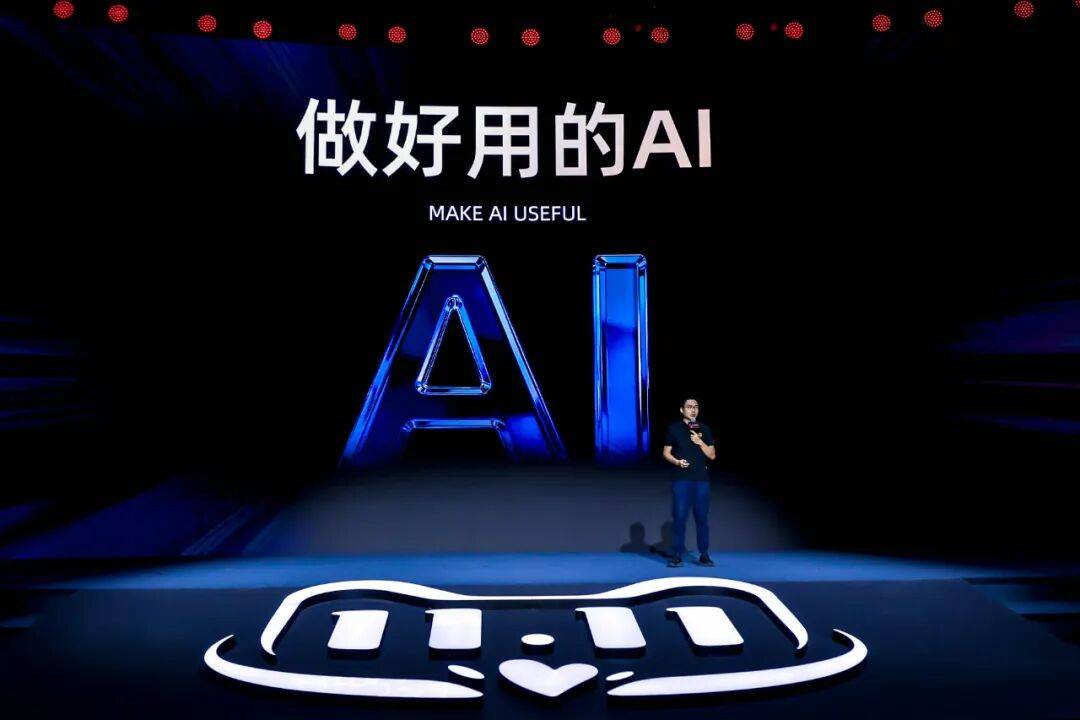
Core Insights - Tmall's Double 11 has entered its 17th year, shifting from traditional promotional logic to a comprehensive consumption festival powered by AI, aiming to cover all aspects of consumer life [2][3] - The enthusiasm for participation in Double 11 has declined in recent years, necessitating Tmall to create new narratives and variables to rejuvenate the event [2][3] AI Integration - This year's Double 11 marks the first fully AI-integrated event, with Tmall planning to distribute 50 billion yuan in consumer vouchers, some of which will be allocated by an AI "Smart Benefit Engine" [3][4] - The AI "Smart Benefit Engine" has shown a 15% increase in voucher conversion rates compared to previous methods, enhancing the precision of consumer subsidies [6] User Experience Enhancement - Tmall is introducing six AI shopping applications to improve user experience, including features like "AI Universal Search" and "AI Dressing," which cater to various shopping scenarios [6][7] - The focus has shifted from merely assisting merchants to enhancing the user experience, particularly for loyal consumers [6][7] Strategic Shifts - Tmall's strategy aligns with Alibaba's broader goal of creating a large consumption platform, with the introduction of Taobao Flash Purchase as a key component of this year's Double 11 [3][8] - Taobao Flash Purchase is expected to drive significant growth, with peak daily orders reaching 120 million and contributing to a 20% year-on-year increase in daily active users [12][13] Market Positioning - Tmall is redefining its narrative by moving away from low-price competition to focus on core user retention and engagement, positioning itself as a leader in the evolving e-commerce landscape [13][14] - The success of this new approach will depend on how well merchants and consumers respond to the revamped Double 11 narrative [14]


当豆包成为售货员,商家“一脸懵”消费者分两派,AI电商会成为新热点吗?
Sou Hu Cai Jing· 2025-10-16 10:30
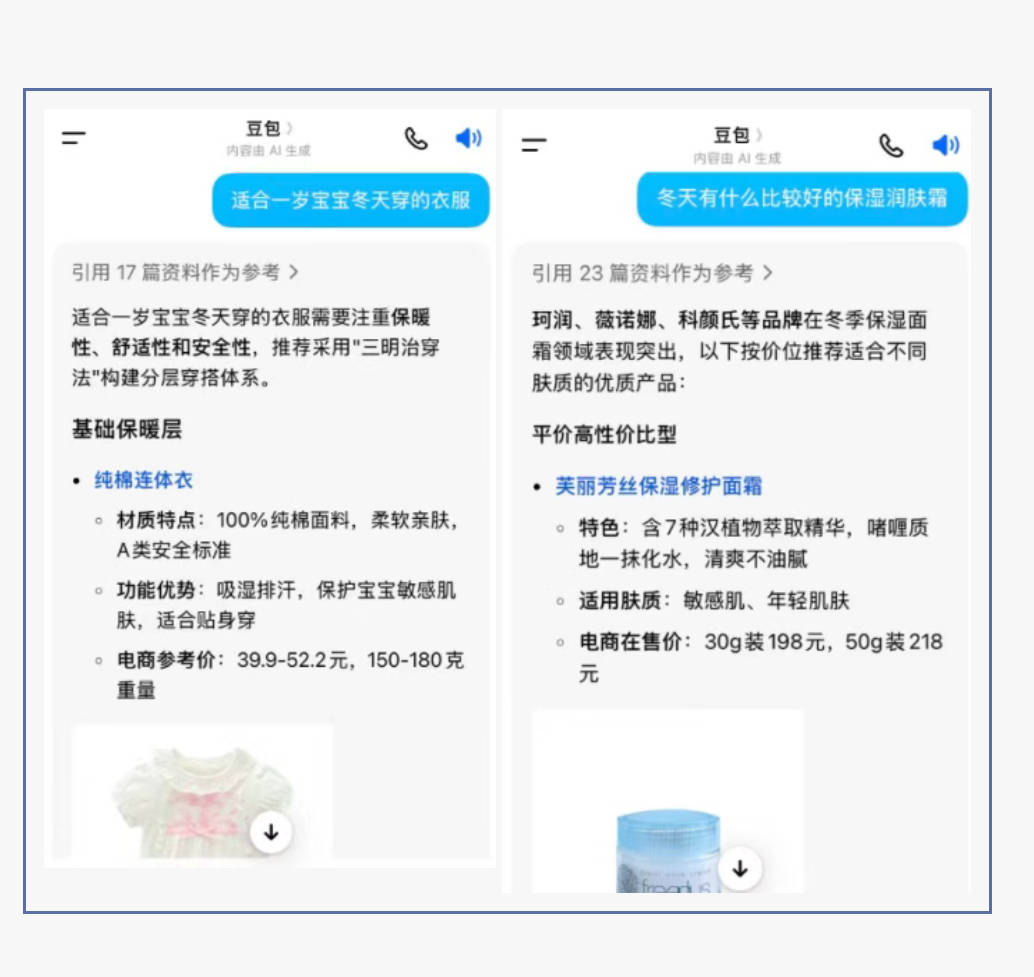
Core Viewpoint - The collaboration between OpenAI and Walmart to launch conversational shopping features on the ChatGPT platform highlights a significant trend in AI and e-commerce, while China's AI e-commerce initiatives, such as Doubao, are still in a cautious testing phase [1][11][17] Group 1: Doubao's AI E-commerce Initiative - Doubao has introduced a feature allowing users to browse and purchase products through natural language conversations, similar to the ChatGPT and Walmart collaboration [1] - Merchants on Douyin have expressed uncertainty regarding Doubao's product recommendation mechanism, viewing it primarily as an advertising tool [2][4] - Some merchants have not noticed significant changes in traffic or sales linked to Doubao's new feature, indicating a need for further observation [6] Group 2: Consumer Reactions - Consumer responses are divided into two main groups: those who firmly reject AI recommendations due to distrust and habitual shopping methods, and those who are hesitant but open to considering AI recommendations if they offer good value [9][10] - A small sample of consumers showed a lack of trust in AI recommendations, with concerns about accountability if prices change after recommendations [10] Group 3: Market Context and Challenges - The Chinese e-commerce landscape is characterized by highly integrated platforms like Taobao and Douyin, which already provide seamless shopping experiences, making the introduction of standalone conversational shopping features less appealing [13][14] - Experts suggest that the cautious approach of Chinese platforms towards conversational shopping stems from concerns about model reliability and the potential negative impact on user trust and conversion rates [15][16] - The current low acceptance of AI e-commerce among consumers and merchants indicates that further refinement and adaptation to user habits are necessary for successful implementation [17]

“双十一”接档“黄金周”,有哪些新看点
Zhong Guo Qing Nian Bao· 2025-10-14 06:14
Core Insights - The upcoming "Double Eleven" shopping festival is characterized by an early start and extended duration, with major platforms like JD and Douyin launching their promotions ahead of schedule to capitalize on consumer interest from the recent holiday season [3][4]. Group 1: Event Overview - The "Double Eleven" shopping festival has been initiated earlier this year, with JD and Douyin starting their campaigns on October 9, following Su Ning's announcement on September 30 [2][3]. - This year's event is expected to last for 37 days, making it potentially the longest "Double Eleven" in history, concluding on November 14 [3][4]. Group 2: Promotional Strategies - Major platforms are simplifying promotional rules, moving away from complex discount structures to more straightforward offers like "direct discounts" and "instant reductions" [5][6]. - The focus on user experience is evident, with platforms like Douyin emphasizing "simple discounts" and JD showcasing "official direct price reductions" [6][8]. Group 3: New Growth Areas - AI e-commerce, instant retail, and cross-border e-commerce are identified as key areas for growth during this year's "Double Eleven," as traditional traffic sources reach saturation [1][9]. - Platforms are leveraging AI technologies to enhance efficiency and precision in transactions, with JD and Alibaba both introducing AI tools to support merchants during the festival [9][10]. Group 4: Market Expansion - Instant retail is emerging as a significant battleground, with platforms like Meituan and Taobao reporting substantial growth in transaction volumes during recent promotional events [10][11]. - Cross-border e-commerce is also a focus, with Taobao planning to launch its "Double Eleven" campaign in 20 countries, supported by a marketing budget of 1 billion yuan [11].
【大涨解读】大消费:年度消费顶级催化,电商双十一大促正式开启,新一轮国补也在下发
Xuan Gu Bao· 2025-10-10 03:43
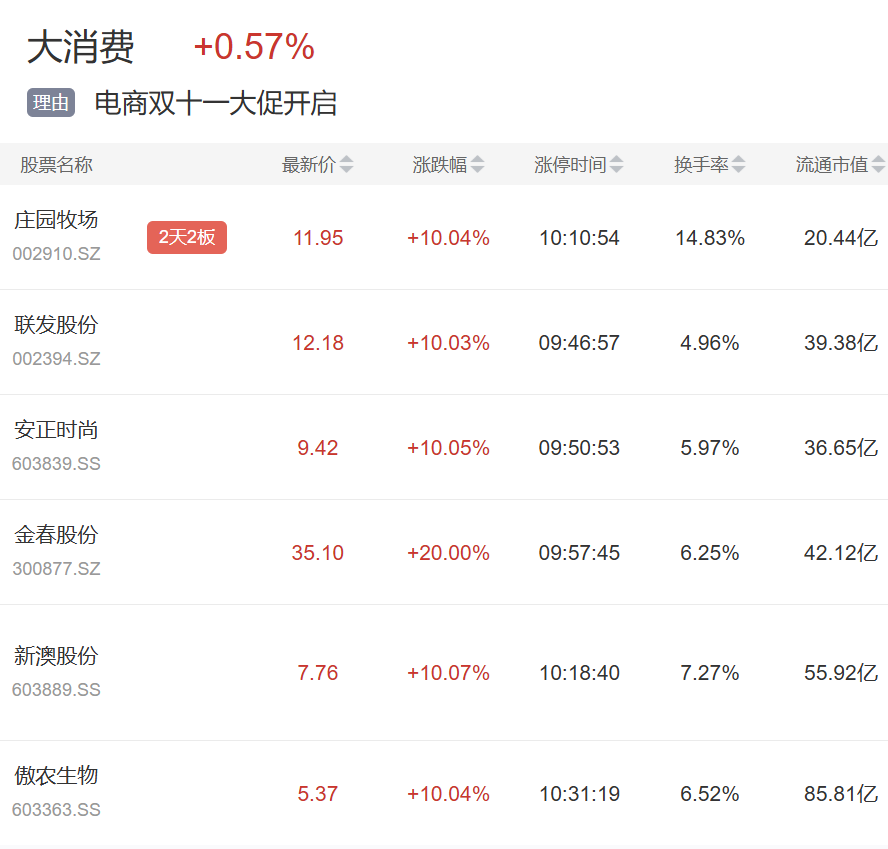
Market Overview - On October 10, the consumer sector experienced a significant rise, with stocks such as Zhuangyuan Pasture and Lianfa Shares hitting the daily limit [1] - The consumer sector index increased by 0.57%, driven by the commencement of the e-commerce "Double 11" promotional event [2] Event: "Double 11" E-commerce Festival - The annual "Double 11" e-commerce festival began, with JD.com starting sales on October 9, five days earlier than last year, creating a 37-day promotional period [3] - During the National Day and Mid-Autumn Festival holiday, key retail and catering enterprises saw a 2.7% year-on-year increase in sales [3] - The Australian wool auction market has seen record highs, with the Eastern Market Indicator rising by 112 Australian cents per kilogram, marking a 7.7% increase month-on-month and a 41.8% increase year-on-year [3] Institutional Insights - The fourth batch of national subsidy funds totaling 69 billion yuan has been allocated, stimulating consumer demand during the holiday and positively impacting sales in home appliances and consumer electronics [4] - In the cosmetics sector, brands are ramping up promotional activities ahead of "Double 11," with significant investments in subsidies and marketing campaigns expected to boost online sales [4] - Major e-commerce platforms are increasingly integrating AI technologies to enhance shopping experiences and operational efficiencies [5] AI in E-commerce - AI is expected to improve buyer shopping experiences in areas such as product recommendations and price comparisons, while also helping sellers reduce costs and improve management [5] - The tourism sector is anticipated to see sustained demand, with potential government support for service consumption, particularly in travel [5] - The price of Australian wool is in the early stages of an upward trend, presenting strategic opportunities similar to previous high points in 2011 and 2018 [5]



微盟集团与值得买达成战略合作 共建AI电商购物与交易生态
Zheng Quan Shi Bao Wang· 2025-10-09 13:16
Group 1 - The core viewpoint of the articles is that Weimob Group and Zhidema Technology have formed a strategic partnership to explore a new path for "AI e-commerce" in China, enabling consumers to receive AI shopping recommendations and complete purchases without switching platforms [1][2] - Weimob's President, You Fengchun, emphasized that AI is reshaping digital commerce, and the collaboration aims to create an innovative model that integrates professional consumer content, AI recommendations, and transaction conversion [1][2] - Zhidema's CEO, Sui Guodong, stated that AI is becoming a new entry point for consumer decision-making, fundamentally reconstructing consumption logic and enhancing the commercial value of AI e-commerce [1][2] Group 2 - The partnership will establish an AI e-commerce shopping and transaction ecosystem, leveraging Zhidema's "Haina MCP Server" for consumer data services and Weimob's extensive product information and SaaS technology [2][3] - A practical AI e-commerce shopping case will be developed on Zhidema's "Zhang Dama" app, allowing users to experience a seamless shopping process from discovery to payment through AI-driven recommendations [2][3] - This collaboration aims to eliminate the traditional "search-compare-jump" model, enabling a "discovery-to-purchase" experience through conversational interactions with AI agents [2][3] Group 3 - Zhidema's "Haina MCP Server" is a standardized consumer data service platform that enhances AI capabilities and has seen a 54% increase in output volume, reaching 20 million by August 2025 [3] - Weimob has a strong digital commerce technology foundation and extensive resources, having provided numerous applications and services to merchants across various industries for over a decade [3] - The strategic cooperation agreement outlines future collaboration opportunities in the AI e-commerce sector, focusing on leveraging each company's strengths and exploring additional cooperative dimensions [3][4] Group 4 - A recent trend in the industry includes a strategic partnership between OpenAI and Shopify, aiming to create a similar "discovery-to-purchase" AI e-commerce shopping loop [4]

ChatGPT做电商,攻入亚马逊的腹地
3 6 Ke· 2025-10-09 13:03
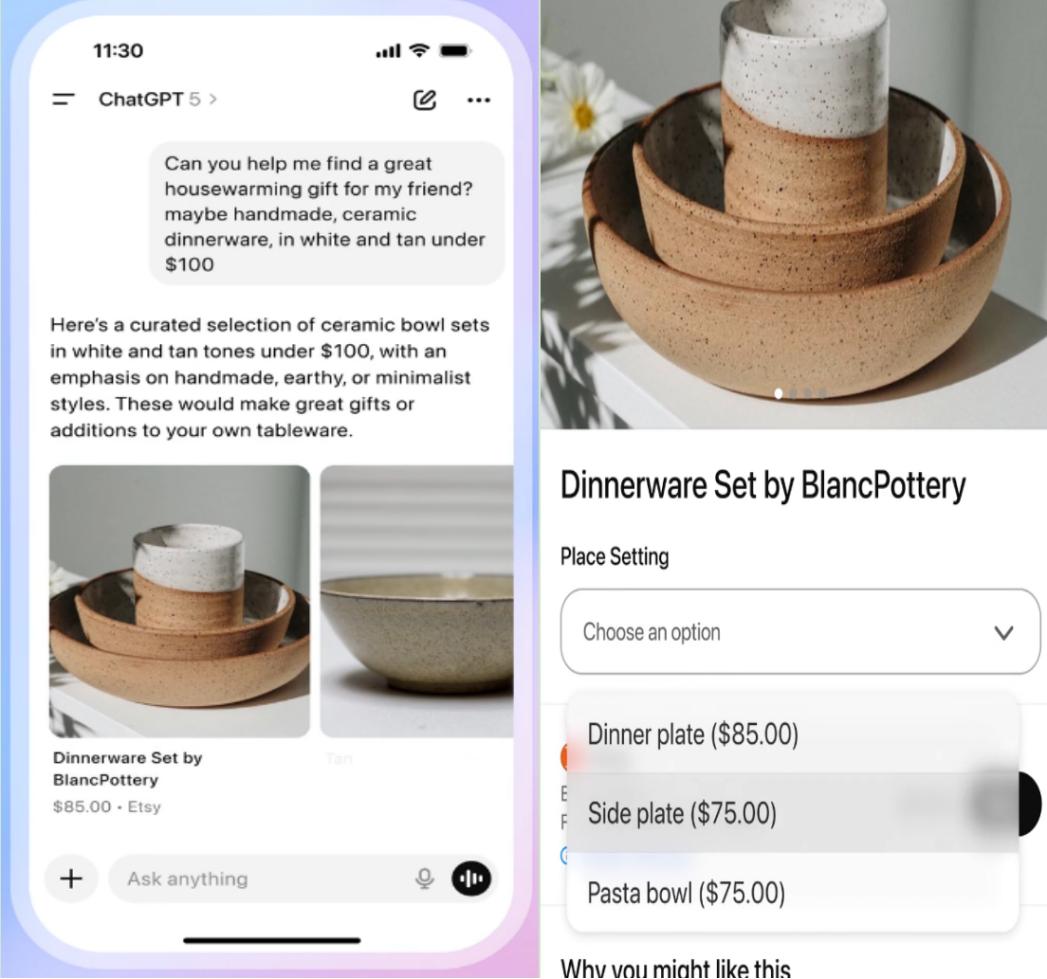
Group 1 - ChatGPT has integrated with multiple e-commerce platforms, allowing users to shop directly within its interface, marking a significant shift in its role from an information source to an e-commerce entry point [1][2] - The launch of Instant Checkout on September 29 enables personalized shopping experiences by allowing users to request specific products, which ChatGPT then finds and recommends from platforms like Etsy and Shopify [2][4] - ChatGPT acts as a "digital shopping assistant," providing product recommendations based on user queries without interference in product ranking or pricing, which is determined by relevance to user needs rather than advertising spend [4][6] Group 2 - The introduction of Instant Checkout creates a closed-loop shopping experience, challenging traditional e-commerce platforms like Amazon and eBay by altering the flow of e-commerce traffic and user engagement [6][9] - ChatGPT's approach to product recommendations, which prioritizes user needs over advertising, poses a threat to Amazon's advertising revenue model, which heavily relies on paid placements [7][9] - E-commerce sellers will need to adapt their strategies, focusing on product quality and AI-driven SEO to gain visibility in ChatGPT's recommendations, moving away from traditional advertising-heavy approaches [11][12] Group 3 - The impact of ChatGPT on e-commerce will be gradual, as it cannot quickly displace established players like Amazon, which has a robust logistics and data infrastructure [12][13] - Shopify's integration with ChatGPT is expected to enhance its e-commerce capabilities, providing a decentralized platform that benefits from ChatGPT's user base [13][14] - OpenAI's need for diversified revenue streams, given its current reliance on subscription fees and API calls, drives its push into e-commerce, which could significantly influence the market landscape [14]

ChatGPT做电商,攻入亚马逊的腹地
美股研究社· 2025-10-09 11:28
Core Insights - ChatGPT has integrated e-commerce capabilities, allowing users to shop directly within its platform, marking a significant shift in the e-commerce landscape [5][6][12] - The introduction of Instant Checkout enables personalized shopping experiences, where users can request specific products, and ChatGPT will recommend suitable items from platforms like Etsy and Shopify [7][9] - ChatGPT positions itself as a "digital shopping assistant," providing unbiased product recommendations based on user needs rather than advertising spend [11][14] E-commerce Impact - The integration of ChatGPT into e-commerce changes the flow of traffic and product visibility, challenging traditional platforms like Amazon and eBay, which have relied heavily on advertising for product ranking [14][15] - Amazon's advertising revenue is projected to reach $56.2 billion in 2024, highlighting its reliance on ad spend for product visibility, which contrasts with ChatGPT's approach of prioritizing user needs [15] - ChatGPT's model may disrupt the traditional e-commerce operational logic, where sellers typically invest in ads to gain visibility, as AI-driven recommendations focus on product quality and user feedback [18][19] Market Dynamics - The shift towards AI-driven shopping experiences may favor niche and long-tail products, as users increasingly seek specific items through detailed queries [20][21] - As ChatGPT connects with more e-commerce platforms, particularly Shopify, it will enhance its product offerings and potentially reshape the competitive landscape [24] - OpenAI's entry into e-commerce is driven by the need for diversified revenue streams, with projected revenues of $12.7 billion by 2025, indicating a strategic pivot to enhance profitability [25]
刘强东亲自挂帅,要跟马云正面“开战”
商业洞察· 2025-10-08 09:25
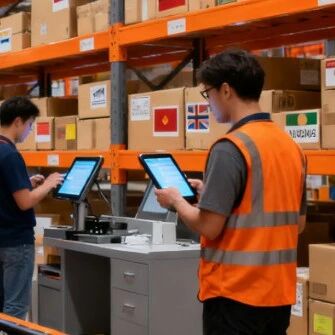
Core Viewpoint - The article discusses the strategic shift of major e-commerce players, particularly JD.com, towards AI-driven solutions to enhance operational efficiency and competitiveness in the evolving e-commerce landscape. It highlights the urgency for platforms to adopt AI technologies to maintain their market positions amidst increasing competition from rivals like Pinduoduo and Douyin [4][6][25]. Group 1: JD.com's AI Strategy - JD.com has announced a significant commitment to AI, with plans to invest heavily in the sector over the next three years, aiming to reshape its supply chain and retail logic [4][6]. - The company is adopting a "vertical industry AI" approach, focusing on tailored solutions that enhance operational efficiency rather than following the conventional path of developing general-purpose AI models [7][10]. - JD.com's value formula emphasizes the importance of "industry thickness," suggesting that companies with deeper industry knowledge and capabilities will gain a competitive edge [10][11]. Group 2: Operational Enhancements through AI - JD.com is leveraging AI to improve internal operations, product monetization, and fulfillment processes, showcasing a systematic restructuring of its e-commerce value chain [12][16]. - The introduction of digital personas in live streaming has significantly reduced costs, with digital hosts costing only a fraction of human hosts while achieving superior sales performance [16]. - AI-driven tools like "京点点" are streamlining the product monetization process, drastically reducing the time and resources needed to bring products to market [16][17]. Group 3: Ecosystem Ambitions - JD.com aims to transform from a retail platform into a provider of intelligent commercial infrastructure, offering tools and capabilities to other businesses [21][23]. - The strategic intent is to create a robust ecosystem where merchants rely on JD.com's tools and data standards, thereby solidifying its market position [23][24]. - The shift towards an AI-driven ecosystem signifies a broader industry trend where competition will focus on efficiency and technology rather than just traffic and pricing [24][25].


淘宝搜索改了
Sou Hu Cai Jing· 2025-10-03 07:56
Core Viewpoint - Taobao has launched the "AI Find Low Price" feature, which allows users to upload or take a picture of a product and receive price comparisons within three seconds, addressing consumer issues of information overload and choice anxiety [2][12][13]. Summary by Sections Feature Overview - The "AI Find Low Price" feature utilizes AI technology to compare over 2,000 similar products, providing users with low-price options, official product recommendations, and high-cost performance alternatives [2][7][12]. - The process is simplified to two steps: taking a photo and clicking a button, significantly reducing user effort compared to traditional manual searching [12][13]. User Experience - The feature has shown significant advantages in terms of ease of use, response speed, and practical results, with a test showing a total time of four seconds from taking a photo to receiving price comparison results [12][13]. - The AI system not only provides price data but also explains the reasons behind price differences, enhancing user understanding of product value [12][13]. Category Performance - Different product categories exhibit varying levels of effectiveness with the AI feature: - **Apparel**: The experience is mixed, with significant price variation and quality concerns in women's clothing, while men's clothing shows smoother performance with clear recommendations [16][25][30]. - **Digital Products**: The feature performs well, offering reliable recommendations from official stores and highlighting price advantages [40][41]. - **Personal Care**: This category excels, quickly directing users to low-priced, high-volume products, although caution is advised regarding non-official store recommendations [50][58]. - **Daily Goods**: The feature effectively categorizes products by material and price, enhancing shopping efficiency [62][63]. Market Implications - The launch of "AI Find Low Price" marks a significant advancement in Taobao's AI capabilities, establishing a foundation for future AI-driven shopping features [13][67]. - The competitive landscape in e-commerce is intensifying, with global platforms exploring AI integration, but Taobao's focus on price transparency sets it apart [68].
OpenAI开启AI购物,电商平台会沦为AI“打工人”吗?
第一财经· 2025-09-30 10:19
Core Viewpoint - The integration of AI and e-commerce is evolving, with OpenAI introducing an instant checkout feature in ChatGPT, supported by Stripe, allowing users to purchase items directly from sellers within the chat interface [3][4]. Group 1: AI and E-commerce Integration - OpenAI's new feature enables direct purchases from Etsy sellers through ChatGPT, initially supporting single-item purchases, with plans to expand to multiple items and more merchants [3]. - The checkout process is embedded within the chat interface, allowing for a seamless transaction experience where orders are sent directly to the seller's backend system [3][4]. Group 2: Competitive Landscape - The rise of AI in e-commerce raises questions about whether AI applications will become competitors to established platforms like Taobao and JD.com, which are also integrating AI features [5]. - OpenAI's approach emphasizes a "no advertising" model for product recommendations, focusing on relevance and context, which contrasts with traditional e-commerce advertising strategies [5][6]. Group 3: Future of E-commerce Revenue Models - The integration of AI poses challenges to traditional revenue streams in e-commerce, particularly in search and marketing advertising, which may face increased pressure [6]. - E-commerce platforms are exploring new business models to enhance user experience and potentially shift towards user-paid services rather than relying on advertising [5][6]. Group 4: Entry Point Competition - There is a potential "entry point" competition between AI applications and e-commerce platforms, as AI agents evolve to connect personalized data with consumer needs [7]. - Domestic e-commerce players are also developing AI-driven solutions to create a unified entry point for users, with companies like Alibaba and JD.com investing in AI technologies [7][8]. Group 5: Strategic Positioning - E-commerce platforms must adapt to become competitive entry points in the AI era, positioning themselves effectively within the evolving landscape of AI applications [8].