高端化

Search documents
小米,最新财报出炉!第二季度小米汽车亏损收窄至3亿元
Zheng Quan Shi Bao· 2025-08-19 12:24
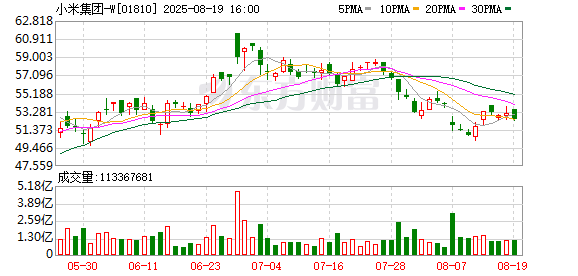
Core Insights - Xiaomi Group reported record high core metrics in Q2, with revenue reaching 116 billion yuan, a year-on-year increase of 30.5%, marking the third consecutive quarter of exceeding 100 billion yuan [2] - Adjusted net profit for the quarter was 10.8 billion yuan, a significant year-on-year increase of 75.4%, continuing a trend of surpassing 10 billion yuan for two consecutive quarters [2] - The revenue from innovative business segments, including smart electric vehicles and AI, exceeded 20 billion yuan, indicating a shift towards scalable growth [2] Financial Performance - Xiaomi's Q2 revenue was 116 billion yuan, up 30.5% year-on-year, with adjusted net profit at 10.8 billion yuan, up 75.4% [2] - The smartphone and AIoT segment generated 94.7 billion yuan, a 14.8% increase, with smartphone revenue at 45.5 billion yuan and IoT revenue at 38.7 billion yuan, up 44.7% [2][3] - Internet services revenue reached 9.1 billion yuan, a 10.1% increase year-on-year [2] Automotive Business - Xiaomi's automotive deliveries reached 81,302 units in Q2, with cumulative deliveries exceeding 300,000 units by July 10 [2] - The automotive business incurred a reduced operating loss of 300 million yuan in Q2, with expectations of profitability in the second half of the year [2] - The YU7 SUV model launched with significant demand, achieving over 200,000 pre-orders shortly after its release [5] Market Position - In the domestic market, Xiaomi regained the top position in smartphone shipments with a market share of 16.8% in Q2 [3] - Xiaomi's high-end smartphone sales accounted for 27.6% of total sales in mainland China, a year-on-year increase of 5.5 percentage points [4] - The company maintained a strong presence in the international market, ranking in the top three in 60 countries and regions [3] Product Innovation and R&D - Xiaomi's R&D investment reached 7.8 billion yuan in Q2, a 41.2% increase, with an expected total investment of 30 billion yuan for the year [5] - The company launched its first self-developed 3nm flagship chip, becoming the fourth globally and the first in mainland China to achieve this milestone [5] - The newly released AI glasses exceeded sales expectations, with a high approval rating on e-commerce platforms [6]


小米,最新财报出炉!第二季度小米汽车亏损收窄至3亿元
证券时报· 2025-08-19 12:13
Core Viewpoint - Xiaomi Group reported record high core indicators in Q2, with revenue reaching 116 billion yuan, a year-on-year increase of 30.5%, and adjusted net profit of 10.8 billion yuan, up 75.4% year-on-year [1] Group 1: Financial Performance - Revenue for Q2 was 116 billion yuan, marking a 30.5% year-on-year growth, continuing a trend of exceeding 100 billion yuan for three consecutive quarters [1] - Adjusted net profit reached 10.8 billion yuan, a significant increase of 75.4% year-on-year, with two consecutive quarters surpassing 10 billion yuan [1] Group 2: Automotive and AI Innovations - Revenue from the smart electric vehicle and AI innovation segment exceeded 20 billion yuan, indicating a shift towards scalable growth [2] - In Q2, Xiaomi delivered 81,302 vehicles, with total deliveries surpassing 300,000 by July 10, and over 15.7 million vehicles delivered in the first half of the year [2] - The operating loss for the automotive business narrowed significantly to 300 million yuan, with expectations of profitability in the second half of the year [2] Group 3: Smartphone and IoT Performance - Xiaomi's smartphone revenue reached 45.5 billion yuan, with a continuous positive growth in shipments for eight consecutive quarters, maintaining a top-three global position for 20 quarters [2][3] - IoT and lifestyle product revenue hit 38.7 billion yuan, a year-on-year increase of 44.7%, with smart home appliances seeing a 66.2% increase [2][4] - Internet service revenue grew to 9.1 billion yuan, reflecting a 10.1% year-on-year increase [2] Group 4: Market Position and User Engagement - Despite a challenging global smartphone market, Xiaomi achieved a market share of 16.8% in China, ranking first domestically with 11.5 million new device activations in Q2 [3] - Xiaomi's global monthly active users reached 731 million, with 185 million in mainland China, and the number of connected IoT devices reached 989 million [5] Group 5: High-End Strategy and R&D Investment - Xiaomi's high-end smartphone market share increased to 27.6%, with significant growth in the 4,000-5,000 yuan and 5,000-6,000 yuan price segments [6] - R&D investment reached 7.8 billion yuan in Q2, a 41.2% year-on-year increase, with an expected total investment of 30 billion yuan for the year [7] - The launch of the self-developed 3nm flagship chip and AI glasses indicates Xiaomi's commitment to innovation and technology advancement [7]

小米,重磅发布!
Zheng Quan Shi Bao Wang· 2025-08-19 11:47
Core Insights - Xiaomi Group reported record high core indicators in Q2, with revenue reaching 116 billion yuan, a year-on-year increase of 30.5%, marking the third consecutive quarter of exceeding 100 billion yuan [1] - Adjusted net profit for the quarter was 10.8 billion yuan, a significant year-on-year increase of 75.4%, continuing the trend of surpassing 10 billion yuan for two consecutive quarters [1] Revenue Breakdown - Revenue from the smart electric vehicle and AI innovation business exceeded 20 billion yuan, indicating a shift towards scalable growth [2] - Xiaomi's automotive deliveries reached 81,302 units in Q2, with cumulative deliveries surpassing 300,000 units by July 10, and a monthly delivery of over 30,000 units for the first time in July [2] - The smartphone and AIoT segment generated revenue of 94.7 billion yuan, a year-on-year increase of 14.8%, with smartphone revenue at 45.5 billion yuan and IoT and consumer products revenue at 38.7 billion yuan, up 44.7% [2] Market Position - Despite a challenging global smartphone market, Xiaomi's smartphone business achieved growth, with 11.5 million new device activations in Q2, maintaining a 16.8% market share in China, ranking first domestically [3] - Internationally, Xiaomi's smartphone shipments have seen year-on-year growth for eight consecutive quarters, ranking in the top three in 60 countries and regions [3] IoT and Home Appliances - The IoT and consumer products segment continued to grow, with smart home appliance revenue increasing by 66.2% [4] - In Q2, Xiaomi's air conditioning product shipments exceeded 5.4 million units, with a growth rate of over 60%, while refrigerator and washing machine shipments also saw significant increases [4] Strategic Developments - Xiaomi's internet service revenue grew steadily, with global monthly active users reaching 731 million and IoT devices connected to the AIoT platform reaching 989 million [5] - The company is focusing on high-end market positioning, with high-end smartphone sales accounting for 27.6% of total sales in China, a year-on-year increase of 5.5 percentage points [5] - The launch of the YU7 SUV, priced from 253,500 yuan, saw significant initial demand, with over 240,000 orders within 18 hours [5] R&D and Innovation - Xiaomi's R&D investment reached 7.8 billion yuan in Q2, a year-on-year increase of 41.2%, with an expected total investment of 30 billion yuan for the year [6] - The company launched its self-developed 3nm flagship chip, becoming the first in mainland China to do so, with new high-end devices featuring this chip released in Q2 [7] - The launch of AI glasses exceeded expectations, with a high approval rating on e-commerce platforms and ongoing efforts to ramp up production [7]
华润啤酒上半年营收239.42亿元:啤酒业务占比97%,白酒营收8亿元
Sou Hu Cai Jing· 2025-08-19 11:23
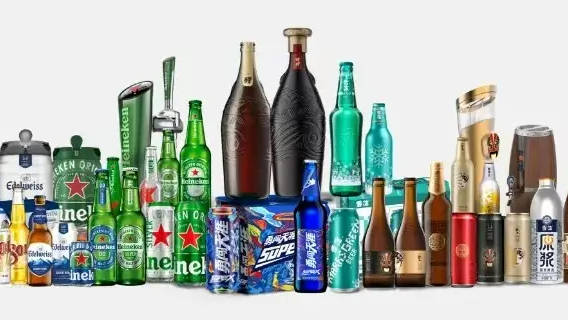
Core Viewpoint - China Resources Beer reported a revenue of 23.942 billion yuan for the first half of 2025, a year-on-year increase of 0.8%, with a net profit of 5.789 billion yuan, up 23.0% [3] Group 1: Beer Business Performance - The beer segment generated revenue of 23.161 billion yuan, reflecting a 2.6% year-on-year growth, driven by high-end product development which increased average selling prices by 0.4% [3][5] - The total beer sales volume reached approximately 6.487 million kiloliters, a 2.2% increase year-on-year, with high-end beer sales growing over 10% [5] - The gross margin for the beer business improved by 2.5 percentage points to 48.3%, supported by cost savings in raw material procurement [5] Group 2: White Wine Business Performance - The white wine segment reported revenue of 0.781 billion yuan, a decline of 33.7% year-on-year, with the core product "Abstract" contributing nearly 80% of the revenue [4][6] - Despite the revenue drop, the white wine gross margin remained stable at over 65% [6] - The company is observing a market trend where the prices of white wine are stabilizing, influenced by recent policy changes [6] Group 3: Strategic Developments - The "Beer and White Wine Dual Empowerment" strategy has entered its second phase, focusing on understanding distributor needs and launching suitable products [4][9] - The company plans to introduce new products in the 100 to 200 yuan price range to adapt to changing consumer habits and market conditions [10] - The company aims to continue expanding its high-end product offerings, indicating that the high-end market in the Chinese beer industry has not yet reached its peak [9]

小米营收连续3个季度超千亿元 汽车业务预计下半年盈利
Zheng Quan Shi Bao Wang· 2025-08-19 10:57
Core Insights - Xiaomi Group reported record-high financial results for Q2 2025, with revenue reaching 116 billion yuan, a year-on-year increase of 30.5%, marking the third consecutive quarter of over 100 billion yuan in revenue [1] - Adjusted net profit for the same period was 10.8 billion yuan, a significant year-on-year increase of 75.4%, continuing a trend of exceeding 10 billion yuan for two consecutive quarters [1] - The innovative business segment, including smart electric vehicles and AI, generated over 20 billion yuan in revenue, indicating a shift towards scalable growth [1] Financial Performance - Xiaomi's Q2 revenue was 116 billion yuan, up 30.5% year-on-year, with adjusted net profit at 10.8 billion yuan, up 75.4% [1] - The smartphone and AIoT segment generated 94.7 billion yuan in revenue, a 14.8% increase, with smartphone revenue at 45.5 billion yuan and IoT revenue at 38.7 billion yuan, up 44.7% [1][2] - Internet services revenue reached 9.1 billion yuan, reflecting a 10.1% year-on-year growth [1] Market Position - Xiaomi regained the top position in the domestic smartphone market with a market share of 16.8% and 11.5 million new device activations in Q2 [2] - The company maintained a strong international presence, ranking in the top three in 60 countries and regions, with continuous year-on-year growth in smartphone shipments [2] Product Performance - The smart home appliance segment saw significant growth, with smart air conditioning sales exceeding 5.4 million units, a year-on-year increase of over 60% [2] - The company’s high-end smartphone market share increased to 27.6%, with notable growth in the 4000-5000 yuan and 5000-6000 yuan price segments [3] Innovation and R&D - Xiaomi's R&D investment reached 7.8 billion yuan in Q2, a 41.2% increase, with an expected total investment of 30 billion yuan for the year [4] - The company launched its self-developed 3nm flagship chip, becoming the first in mainland China to do so, and introduced several high-end devices featuring this chip [5]
华菱钢铁(000932):业绩弹性初步兑现 向上空间或依然显著
Xin Lang Cai Jing· 2025-08-19 08:35
Core Viewpoint - Hualing Steel reported a mixed performance in its 2024 interim results, with a significant decline in revenue but an increase in net profit, indicating resilience in profitability despite challenging market conditions [1][2]. Financial Performance - In the first half of 2024, the company achieved revenue of 62.794 billion yuan, a year-on-year decrease of 17.02%, while net profit attributable to shareholders was 1.748 billion yuan, up 31% [1]. - For Q2 2025, the company reported a quarterly revenue of 32.863 billion yuan, down 15.52% year-on-year but up 8.71% quarter-on-quarter, with net profit attributable to shareholders at 1.186 billion yuan, reflecting a year-on-year increase of 26.22% and a quarter-on-quarter increase of 111.05% [1][2]. Profitability and Cost Management - The total profit, net profit, and net profit attributable to shareholders for the first half of 2025 were 2.984 billion yuan, 2.310 billion yuan, and 1.748 billion yuan, respectively, showing year-on-year growth of 23.29%, 17.29%, and 31.31% [2]. - The company’s financial expenses decreased significantly, with interest-bearing debt down from 32.8 billion yuan to 30.9 billion yuan, leading to a reduction in financial costs from 100 million yuan to -16.1 million yuan [2]. Product Development and Market Position - The company focused on product iteration and optimization, with key product sales accounting for 68.5% of total sales, an increase of 3.9 percentage points year-on-year [3]. - In the silicon steel sector, the company successfully developed 12 high-grade non-oriented silicon steels and 5 oriented silicon steels, achieving a market share of over 60% in oriented silicon steel base materials [3]. Shareholder Returns and Market Strategy - The company has paid cash dividends of 687 million yuan for 2024, with a projected cash dividend and buyback ratio of 44%-54% [4]. - As of June 30, 2025, the company repurchased 42.06 million shares for a total of 201 million yuan, with plans for further buybacks [4]. Future Outlook - The company is expected to benefit from production growth and enhanced profitability due to high-end product offerings, with projected net profits for 2025-2027 at 3.314 billion, 4.138 billion, and 4.510 billion yuan, respectively [5]. - The current market conditions and company strategies suggest a positive investment outlook, with a maintained "buy" rating [5].

大摩:华润啤酒中期销售与经常性EBIT符预期 毛利率高预期
Zhi Tong Cai Jing· 2025-08-19 08:11
该行指,华润啤酒的普高档及以上啤酒销量同比升10%(预期升9%),占总量约25%。喜力同比升20%, 中期股息派息率为26%,与去年同期相同。大摩指华润啤酒毛利率上升2个百分点至48.9%,高于预期的 48.1%。受益于高端化与原材料成本下降,啤酒业务毛利率提升2.5个百分点至48.3%。 摩根士丹利发布研报称,华润啤酒(00291)中午公布今年中期业绩,销售与经常性EBIT符合预期,总销 售额同比增长1%,符合该行与市场共识预期,啤酒销售同比增长3%,白酒销售同比下降34%。啤酒经 常性EBIT同比增长14%。经常性EBIT为71亿元人民币同比升11%符合预期,一次性项目包括出售土地 予合资公司获利约8.27亿元人民币,以及产能优化成本2.41亿元人民币。公司期内净利润为57.9亿元;经 常性净利润为53.5亿元同比升13%。 ...
工业生产平稳增长 发展质量持续提升
Guo Jia Tong Ji Ju· 2025-08-19 01:11
Group 1 - In July, the industrial production in China maintained steady growth, with the industrial added value increasing by 5.7% year-on-year, and a month-on-month increase of 0.38% after seasonal adjustment [1] - From January to July, the industrial added value grew by 6.3%, which is 0.4 percentage points higher than the same period last year [1] - Among the three major sectors, the manufacturing sector's added value increased by 6.2%, surpassing the overall industrial growth by 0.5 percentage points [1] Group 2 - The equipment manufacturing industry showed robust performance, with a year-on-year increase of 8.4% in added value, consistently outperforming the overall industrial growth for 24 consecutive months [2] - All eight sub-sectors within equipment manufacturing experienced growth, with electronics, electrical machinery, and automotive sectors each growing by 10.2%, 10.2%, and 8.5% respectively [2] - High-end equipment products saw rapid production growth, with steam turbines for power plants, mobile communication base station equipment, and generator sets increasing by 52.0%, 43.2%, and 34.6% respectively [2] Group 3 - The high-end, intelligent, and green transformation of the manufacturing sector is advancing, with high-tech manufacturing added value increasing by 9.3% year-on-year in July [3] - Key industries such as integrated circuit manufacturing and biopharmaceuticals saw significant growth, with increases of 26.9% and 12.1% respectively [3] - The digital product manufacturing sector also grew by 8.4%, with intelligent equipment manufacturing increasing by 13.4% [3] Group 4 - The "Two New" policies are yielding positive results, with industries like boiler and prime mover manufacturing seeing added value growth of 20.0% and 15.9% respectively [4] - The production of new energy vehicles increased by 17.1% due to vehicle replacement subsidy policies, along with significant growth in related products like lithium-ion batteries [4] - Overall, industrial production in July showed rapid growth, but challenges such as weak effective demand and low corporate profitability remain [4]
上半年我国纺织行业运行态势基本平稳
Zhong Guo Chan Ye Jing Ji Xin Xi Wang· 2025-08-18 00:48
Core Viewpoint - The textile industry in China is experiencing stable growth in the first half of the year, supported by a robust domestic demand market, despite facing challenges in exports and profitability [1][5]. Group 1: Industry Performance - The textile and chemical fiber industries' capacity utilization rates are 77.8% and 86%, respectively, higher than the national industrial average [1]. - The industrial added value of large-scale textile enterprises grew by 3.1% year-on-year, although the growth rate slowed by 1.5 percentage points compared to the previous year [1]. - Nine out of fifteen major textile product categories reported year-on-year production growth [1]. Group 2: Domestic Sales - The per capita clothing consumption expenditure of residents increased by 2.1% year-on-year, with a growth acceleration of 0.9 percentage points compared to the first quarter [2]. - Retail sales of clothing, shoes, and textile products in large retail enterprises grew by 3.1% year-on-year, an increase of 1.8 percentage points from the previous year [2]. - Online sales of clothing-related products rose by 1.4% year-on-year, surpassing the first quarter's growth rate of 1.5% [2]. Group 3: Export Performance - The total export value of textiles and clothing reached $143.98 billion, a year-on-year increase of 0.8% [3]. - Exports of intermediate products like chemical fiber and textile yarns grew by 1.8%, while clothing exports decreased by 0.2% to $73.46 billion due to weak overseas demand and tariff policies [3]. - Exports to the U.S. saw a decline of 5.3% year-on-year, while exports to markets like the EU, UK, South Korea, Canada, Pakistan, Chile, and Nigeria showed good growth [3]. Group 4: Investment and Profitability - Fixed asset investment in the textile, clothing, and chemical fiber industries grew by 14.5%, 27%, and 10.6% year-on-year, respectively, with acceleration in growth rates compared to the previous year [4]. - Revenue for large-scale textile enterprises decreased by 3% year-on-year, and total profits fell by 9.4% [4]. - The profit margin for large textile enterprises was 3%, down by 0.2 percentage points from the previous year, with asset turnover rates slowing due to inventory fluctuations [4]. Group 5: Future Outlook - The textile industry faces numerous uncertainties in the second half of the year, but the expanding domestic market is expected to drive high-quality development [5]. - The integration of cultural, health, and green consumption trends with the textile industry is anticipated to enhance the supply system's upgrade [5].
对标日本可乐丽,高分子龙头官宣100亿大项目,H1净利增长107%!
Sou Hu Cai Jing· 2025-08-17 19:38
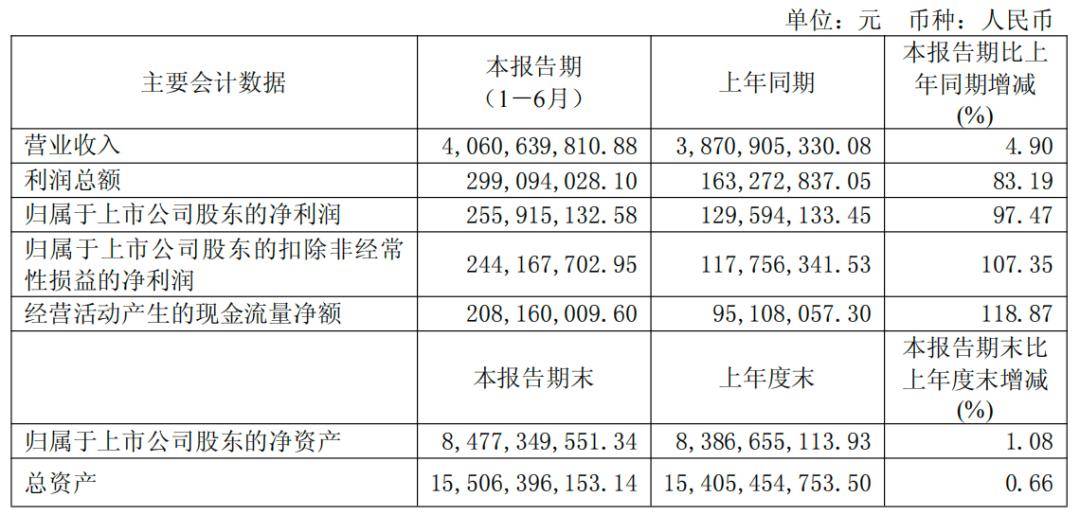
Core Viewpoint - Wanhui High-tech has signed an investment agreement for a functional polyvinyl alcohol (PVA) resin project, with a total planned investment of approximately 10 billion yuan, aiming to establish a production base with an annual output of 400,000 tons of ethylene-based functional PVA resin and downstream projects [1][2]. Investment Project Summary - The project will be constructed in two phases, with the first phase involving an investment of about 3.6 billion yuan to produce 200,000 tons/year of ethylene-based functional PVA resin, along with supporting facilities for 360,000 tons/year of vinyl acetate and 300,000 tons of methyl acetate [1]. - The second phase will require an investment of approximately 6.4 billion yuan, targeting the production of 400,000 tons/year of vinyl acetate and 200,000 tons/year of ethylene-based functional PVA resin, as well as downstream products [1]. - A new company, Jiangsu Wanhui New Materials Co., Ltd., will be established with a registered capital of 1 billion yuan, where Wanhui High-tech will hold 80% equity [1]. Industry Context - PVA is primarily used in coatings, adhesives, and films, with its biodegradable properties making it suitable for packaging and biomedical applications [2]. - China is the largest producer of PVA globally, with a production capacity of approximately 1.1 million tons, and is also the largest exporter, with exports expected to reach 210,200 tons in 2024, a year-on-year increase of about 14.3% [2][3]. Company Performance - For the first half of 2025, Wanhui High-tech reported a revenue of approximately 4.06 billion yuan, a year-on-year increase of 4.9%, and a net profit attributable to shareholders of approximately 256 million yuan, up 97.47% [5][6]. - The total production of PVA series products reached 152,710 tons, a year-on-year increase of 33.17%, while the sales volume of PVA was 125,486 tons, up 24.51% [6][8]. - The company has successfully developed a wide-width PVA optical film, with a production capacity of 7 million square meters per year, and plans to launch a new project for 20 million square meters of TFT polarizer PVA optical film [3][7].