两新两重政策

Search documents
同比增长5.5%!四川2025年GDP6.77万亿元 汽车产量突破100万辆
Zheng Quan Shi Bao Wang· 2026-01-21 12:22
Economic Overview - In 2025, Sichuan's GDP is projected to reach 67,665.34 billion yuan, reflecting a 5.5% increase from the previous year [1] - The primary industry is expected to contribute 5,751.35 billion yuan, growing by 3.7%; the secondary industry is projected at 23,260.22 billion yuan, with a growth of 4.9%; and the tertiary industry is anticipated to reach 38,653.77 billion yuan, growing by 6.1% [1] Agricultural Production - Sichuan's total grain output for 2025 is estimated at 36,625 million tons, a 0.8% increase year-on-year [2] - The province expects to see 62.48 million pigs and 3.01 million cattle slaughtered, with increases of 1.6% and 1.1% respectively; however, sheep output is projected to decline by 15.2% [2] Industrial Performance - The industrial output value for Sichuan is expected to grow by 6.5% in 2025, with a product sales rate of 96.1% among large-scale industrial enterprises [2] - Notable growth in specific sectors includes automotive manufacturing (16.7%), electrical machinery (13.2%), and computer and electronic equipment (12.9%) [2] High-Tech Industry Growth - The added value of high-tech manufacturing is projected to increase by 12.3%, with significant contributions from electronics and communication equipment (20.2%) and aerospace manufacturing (19%) [3] - Large-scale industrial enterprises are expected to achieve revenues of 44,275.2 billion yuan, a 2.6% increase, and total profits of 3,005 billion yuan, growing by 3.1% [3] Consumer Market Trends - The total retail sales of consumer goods are projected to reach 29,135.4 billion yuan, reflecting a 5.1% increase [3] - The restaurant sector is expected to generate 4,026.7 billion yuan, growing by 3.7%, while retail sales of goods are anticipated to increase by 5.4% [3] Policy Impact - Sichuan has implemented various policies to stimulate economic recovery, including the "21 measures" and "18 measures" aimed at enhancing economic momentum [3] - The "trade-in" policy has significantly boosted sales in related sectors, with communication equipment retail sales increasing by 50.8% and new energy vehicle sales rising by 42.9% [3] Investment Trends - Fixed asset investment (excluding rural households) is projected to decline by 2.4%, with the primary industry seeing a 6.8% increase, while the tertiary sector is expected to decrease by 6.8% [4] - Real estate development investment is anticipated to drop by 8.5%, with a significant decline in new housing sales and construction area [4] Private Investment Dynamics - Private investment in Sichuan has shown resilience, growing by 2.1% in 2025, reversing a two-year decline [5] - The growth rate of private project investment is expected to reach 9%, indicating a narrowing decline in real estate development investment [5]
2025年11月工业企业盈利数据点评:盈利承压,分化加剧
EBSCN· 2025-12-27 12:07
Profit Trends - In November 2025, industrial enterprise profits fell by 13.1% year-on-year, worsening from a decline of 5.5% in October 2025[4] - Cumulative profit growth for industrial enterprises from January to November 2025 was 0.1%, down from 1.9% for the first ten months[2] - Cumulative revenue growth for industrial enterprises from January to November 2025 was 1.6%, slightly down from 1.8% for the first ten months[2] Structural Analysis - Only the midstream equipment manufacturing sector showed stable profit growth, while upstream and downstream sectors experienced varying degrees of decline[3] - Cumulative profit growth for the mining sector from January to November 2025 was -27.2%, while manufacturing sector profit growth dropped to 5.0%[13] - The cumulative profit margin for the manufacturing sector was 4.62%, an increase of 0.08 percentage points compared to the previous year[13] Market Dynamics - The profit margin for industrial enterprises in November 2025 was 5.65%, a decrease of 0.73 percentage points year-on-year[5] - The cost per 100 yuan of revenue for large industrial enterprises increased by 0.18 yuan from January to November 2025[5] - The PPI (Producer Price Index) year-on-year growth rate in November 2025 was -2.2%, slightly down from -2.1% in October 2025[5] Future Outlook - Industrial profits are expected to remain under pressure in December 2025 due to high year-on-year comparisons[3] - The implementation of new policies in 2026 is anticipated to stimulate demand and support profit recovery for enterprises[29] - The midstream sector is projected to continue its positive profit trend, benefiting from "anti-involution" policies[3]
解码中央经济工作会议丨持续聚焦重点领域 财政政策“更加积极”
Xin Hua Wang· 2025-12-17 01:21
Core Viewpoint - The recent Central Economic Work Conference emphasizes a more proactive fiscal policy for the upcoming year, focusing on quality and efficiency while maintaining necessary fiscal deficits and optimizing expenditure structures to support stable economic operation [1][2][8]. Fiscal Policy Direction - The fiscal policy will be more active, with a focus on key areas and critical links, including appropriate deficit arrangements, optimized use of special bonds, and further adjustments to tax policies [1][2]. - The emphasis on "quality and efficiency" indicates a shift towards the effectiveness of policies rather than just total expansion [2]. Expenditure Structure Optimization - The structure of fiscal expenditure has been continuously optimized, with nearly 40% of general public budget allocated to healthcare, education, elderly care, and housing security, indicating a growing investment in human capital [3]. - Future fiscal funding is expected to shift from focusing solely on investment to a balanced approach between investment and consumption, as well as between supply and demand [3]. Implementation of "Two New" and "Two Heavy" Policies - The implementation of "Two New" and "Two Heavy" policies has contributed to the resilience of the economy amid internal and external challenges, with significant sales growth in sectors supported by these policies [4]. - The Ministry of Finance aims to effectively utilize various government bond funds and support the implementation of consumption-boosting actions [4][5]. Local Fiscal Challenges - The conference highlighted the importance of addressing local fiscal difficulties and ensuring the basic "three guarantees" [7]. - Long-term solutions include deepening fiscal and tax system reforms to alleviate local fiscal pressures and enhance spending capabilities [7]. - The need to manage hidden debts and the risks associated with local government financing platforms was also emphasized [7]. Policy Implementation and Coordination - The Ministry of Finance will ensure that the more proactive fiscal policy is implemented effectively, maintaining policy continuity and aligning fiscal and monetary policies [8].
视频丨继续实施更加积极的财政政策,明年具体怎么干?专家最新解读来了
Yang Shi Xin Wen Ke Hu Duan· 2025-12-13 05:39
Core Viewpoint - The Central Economic Work Conference emphasizes the continuation of a more proactive fiscal policy in the coming year, maintaining necessary fiscal deficits, total debt scale, and overall expenditure levels, aligning with the goals set for 2025 [4]. Group 1: Fiscal Policy Direction - The fiscal policy direction for next year is consistent with the goals for 2025, focusing on ensuring necessary fiscal deficits and new debt scales, as well as maintaining fiscal expenditure intensity [4]. - The proactive fiscal policy aims to expand social demand through government spending, such as procurement and infrastructure projects, which will generate income for households and businesses, thus promoting economic circulation [6]. Group 2: Structural Optimization - The policy emphasizes the combination of investment in physical assets and human capital, improving healthcare, education, and elderly care, which alleviates residents' concerns and releases potential consumer demand [6]. - The continuation of a proactive fiscal policy is a strategic choice based on assessments of domestic and international economic conditions, supporting the achievement of economic targets [7]. Group 3: Efficiency of Fiscal Fund Utilization - The conference highlights the need to strengthen fiscal management, optimize expenditure structures, and standardize tax incentives and fiscal subsidy policies to enhance the efficiency of fiscal fund utilization [11]. - Optimizing expenditure structures will free up financial resources that can be directed towards improving public welfare, including healthcare, education, and elderly care [13]. Group 4: Market Integration - Standardizing tax incentives and fiscal subsidies is crucial for promoting the modernization of fiscal and tax systems and facilitating the construction of a unified national market [15]. - The optimization of "two new" and "two heavy" policies aims to enhance consumer experience and ensure that major projects deliver greater benefits, ultimately driving a rebound in consumption and investment [17].

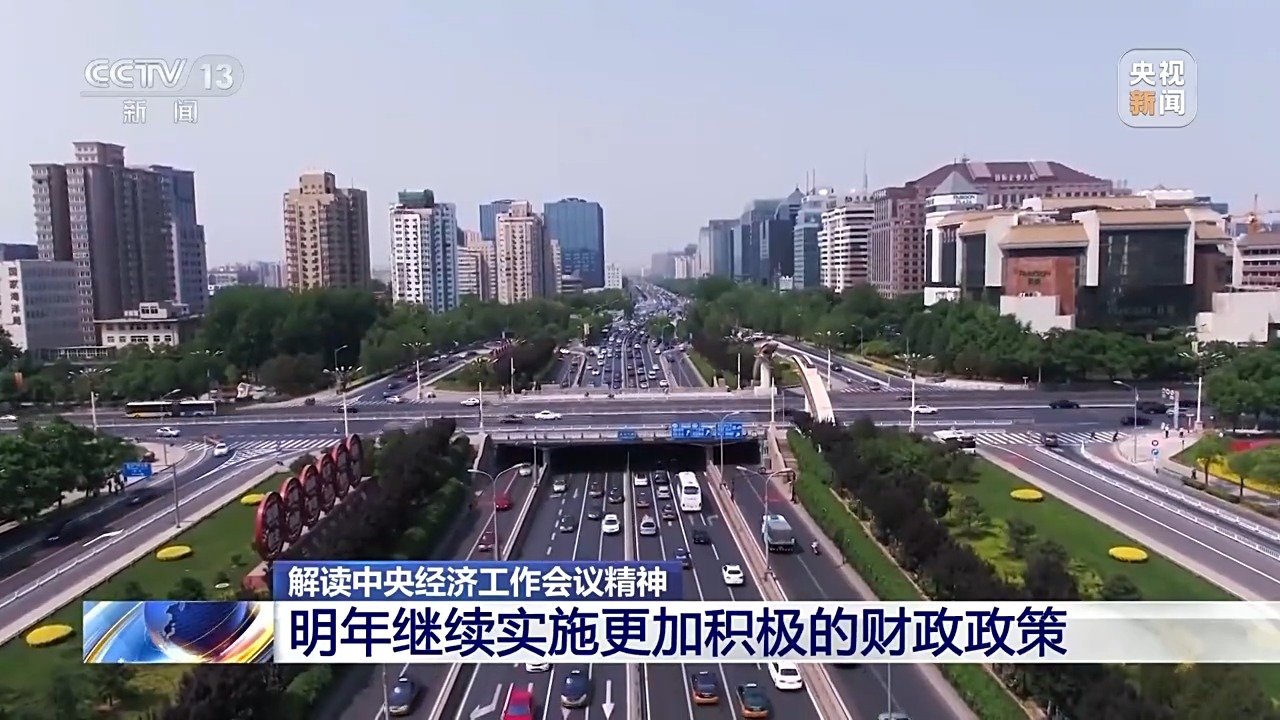
详解中央经济工作会议:推动投资止跌回稳 灵活高效降准降息
2 1 Shi Ji Jing Ji Bao Dao· 2025-12-11 14:33
Core Viewpoint - The Central Economic Work Conference emphasizes the need for proactive macroeconomic policies to enhance economic stability and growth, focusing on expanding domestic demand and optimizing supply [1][2][3]. Economic Growth and Challenges - China's economy is projected to achieve a growth target of around 5% for the year, despite facing challenges such as weak domestic demand and external pressures [2][3]. - In the first 11 months, exports increased by 6.2% year-on-year, supported by a robust industrial and supply chain [2]. - Industrial output grew by 6.1%, while service sector production rose by 5.7%, indicating strong supply-side performance [2]. Policy Measures - The conference outlines eight key tasks for 2026, including prioritizing domestic demand and fostering innovation-driven growth [1][3]. - Fiscal policy will see an increase in the deficit rate from 3% in 2024 to 4% in 2025, with enhanced funding for local special bonds and long-term treasury bonds [5][6]. - Monetary policy will remain accommodative, focusing on stabilizing growth and ensuring reasonable price recovery [6][8]. Investment and Consumption - The government plans to boost investment by increasing central budget investments and optimizing the use of local government bonds [9][10]. - The "Two New" policies, aimed at upgrading equipment and promoting consumption, will continue to be implemented, with significant funding allocated to support these initiatives [9][10]. - Despite strong growth in certain consumer goods, overall consumption growth remains low, necessitating further measures to unlock consumer potential [10]. Real Estate Market - The conference stresses the importance of stabilizing the real estate market, with policies aimed at controlling inventory and encouraging the purchase of existing homes for affordable housing [15][16]. - Measures will include easing purchase restrictions and providing financial support to boost housing demand [16]. Debt Management - Addressing local government debt remains a priority, with a focus on proactive debt resolution strategies and optimizing debt restructuring methods [17][18]. - The government has allocated significant resources to clear overdue payments to enterprises, enhancing cash flow and financial stability [13][17].
每天超3万人申请换新车!今年全国汽车以旧换新申请量突破830万
Sou Hu Cai Jing· 2025-10-20 03:01
Core Viewpoint - The macroeconomic policies implemented in China have effectively supported economic stability and growth, with significant contributions from consumer spending and industrial upgrades [1][2][3][4] Group 1: Consumer Spending - In 2023, the contribution rate of final consumption expenditure to economic growth reached 53.5%, an increase of 9.0 percentage points compared to the previous year [2] - The government allocated 300 billion yuan in special bonds to support the replacement of old consumer goods, leading to a significant increase in retail sales of household appliances and other consumer goods [2] - The number of applications for vehicle replacements exceeded 8.3 million by September 10, indicating strong consumer demand for new vehicles [2] Group 2: Industrial Upgrades - Investment in equipment and tools increased by 14.0% year-on-year in the first three quarters, contributing 2.0 percentage points to overall investment growth [2] - Key manufacturing sectors such as general equipment and aerospace saw investment growth rates of 11.8% and 22.3%, respectively [2] Group 3: New Growth Drivers - The production value of industries related to lithium-ion batteries, shipbuilding, and electric motors grew by 29.8%, 22.9%, and 17.1% year-on-year, respectively [3] - The output of new energy vehicles and electric bicycles increased by 29.7% and 27.1%, respectively, reflecting a shift towards high-quality products [3] Group 4: Economic Circulation - The focus on expanding domestic demand has improved market competition and accelerated the flow of goods, personnel, and capital [4] - The Producer Price Index (PPI) showed a narrowing decline for two consecutive months, indicating improved market conditions [4] - The trading volume of stocks in the Shanghai and Shenzhen markets increased by 106.8% year-on-year in the first three quarters, boosting social confidence [4]
如何理解8月经济数据:周度经济观察-20250916
Guotou Securities· 2025-09-16 08:33
Economic Overview - August economic data continues to reflect insufficient total demand, with investment, consumption, and exports all slowing down, indicating increasing downward pressure on the economy[2] - Industrial added value in August year-on-year was 5.2%, down 0.5 percentage points from July, showing a cooling in industrial production[4] - Fixed asset investment in August saw a year-on-year decline of 7.1%, a record low, with infrastructure, manufacturing, and real estate investments continuing to decline[6] - Real estate investment in August decreased by 19.5% year-on-year, with new construction area down 20.3%[10] Financial Market Insights - Social financing growth in August was 8.8%, down 0.2 percentage points from the previous month, indicating a potential peak in social financing for the year[14] - The average interest rate for new corporate loans in August was approximately 3.1%, slightly down by 0.1 percentage points from the previous month, remaining at historical lows[14] - Market expectations for the Federal Reserve to cut interest rates three times in 2025, with a high probability of a 25 basis point cut in September[28] Inflation and Policy Outlook - The U.S. CPI in August rose to 2.9%, with a month-on-month increase of 0.4%, reflecting a controlled inflationary environment[23] - The core CPI remained stable at 3.1%, indicating limited upward pressure on core service prices[24] - The anticipated fiscal and monetary policy support in the U.S. is expected to bolster the stock market, which may continue to perform strongly[28]
制造业PMI季节性回落至49.3%,下阶段走势如何
第一财经· 2025-07-31 06:06
Economic Overview - The manufacturing PMI for July is reported at 49.3%, a decrease of 0.4 percentage points from the previous month, indicating a slight contraction in manufacturing activity [1] - The non-manufacturing business activity index stands at 50.1%, also down by 0.4 percentage points, but still indicates expansion [1] - The comprehensive PMI output index is at 50.2%, down 0.5 percentage points, remaining above the critical point, suggesting overall expansion in business activities [1] Manufacturing Sector Analysis - The new orders index for manufacturing is at 49.4%, down 0.8 percentage points, indicating a contraction in market demand [6] - The new export orders index is at 47.1%, a decrease of 0.6 percentage points, reflecting weakened demand [6] - Despite the decline in demand, the production index is at 50.5%, indicating continued expansion in manufacturing activities for the third consecutive month [6] Price Trends - The raw materials purchase price index for manufacturing is at 51.5%, up 3.1 percentage points, indicating a recovery in raw material prices [7] - The ex-factory price index is at 48.3%, an increase of 2.1 percentage points, marking the second-highest point this year [7] - Price stability in the manufacturing sector is primarily driven by the basic raw materials industry, with significant increases in both purchase and ex-factory price indices [7] Business Expectations - The production and business activity expectation index is at 52.6%, up 0.6 percentage points, indicating increased confidence among manufacturing enterprises [8] - Large enterprises maintain a PMI of 50.3%, while medium and small enterprises show PMIs of 49.5% and 46.4%, respectively, indicating varying levels of economic health across different enterprise sizes [8] Non-Manufacturing Sector Insights - The non-manufacturing business activity index is at 50.1%, down 0.4 percentage points, but still indicates expansion [13] - The construction sector's business activity index is at 50.6%, down 2.2 percentage points, reflecting a slowdown due to seasonal weather impacts [13] - Summer consumption shows positive trends, with retail and postal service indices rising above 50%, indicating strong consumer spending [15] Future Outlook - The construction sector is expected to rebound post-rainy season, with infrastructure activities projected to grow steadily [14] - Continued implementation of macroeconomic policies aimed at boosting demand is anticipated to support economic recovery in the second half of the year [9][16]

反内卷改善企业预期!7月份PMI数据出炉
券商中国· 2025-07-31 05:59
Core Viewpoint - The manufacturing PMI for July is 49.3%, a decrease of 0.4 percentage points from the previous month, primarily influenced by seasonal production slowdowns and adverse weather conditions [1][3]. Group 1: Economic Recovery and Manufacturing Performance - The foundation for economic recovery remains solid, with the equipment manufacturing and high-tech manufacturing PMIs continuing to expand, indicating ongoing structural optimization [2][3]. - Large enterprises are maintaining stable expansion, acting as a "ballast" for the economy [2][3]. - The rebound in the major raw material purchasing price index, which rose above the critical point for the first time since March, reflects improved market conditions in certain industries [4]. Group 2: Impact of Anti-Competition Measures - The anti-competition measures have positively influenced corporate expectations, as indicated by rising indices for purchasing prices, output prices, employment, supplier delivery times, and production activity expectations [4][5]. - The purchasing price index for major raw materials increased to 51.5%, while the output price index rose to 48.3%, showing significant recovery in specific sectors like petroleum and black metal processing [4]. Group 3: Consumer Activity and Seasonal Trends - The non-manufacturing business activity index for July is 50.1%, reflecting a slight decline but showing initial signs of summer consumption boosting economic activity [6][7]. - Retail activity is on the rise, with the retail business activity index surpassing the critical point, and new order indices showing significant increases [7]. - Travel and leisure activities are also gaining momentum, with indices for railway and air transport exceeding 60%, indicating strong consumer willingness to travel [7][8]. Group 4: Future Outlook - The summer consumption boost is expected to continue into August, supported by ongoing macroeconomic policies aimed at expanding domestic demand [8].
反内卷改善企业预期!短期因素造成制造业PMI环比微降
证券时报· 2025-07-31 05:47
Core Viewpoint - The manufacturing PMI for July is reported at 49.3%, a decrease of 0.4 percentage points from the previous month, primarily influenced by seasonal production slowdowns and adverse weather conditions [1][5][6]. Group 1: Manufacturing Sector Analysis - The manufacturing PMI reflects a contraction, but the underlying economic recovery remains solid, with equipment manufacturing and high-tech manufacturing PMIs continuing to expand [3][7]. - Large enterprises are maintaining stable expansion, acting as a stabilizing force in the economy [3][7]. - The rebound in the major raw material purchasing price index indicates a positive shift in business expectations due to anti-involution measures [10][12]. Group 2: Non-Manufacturing Sector Insights - The non-manufacturing business activity index stands at 50.1%, showing a slight decline but remaining above the critical point, indicating ongoing activity in the sector [2][14]. - Summer consumption is beginning to show positive effects, with significant increases in retail and travel activities, although the accommodation and catering sectors remain below the critical point [14][15][16]. Group 3: Future Economic Outlook - The implementation of policies aimed at expanding domestic demand is expected to support stable economic growth and quality improvement in the second half of the year [8][17]. - Analysts predict that the positive impact of summer consumption will continue into August, contributing to a gradual increase in investment and consumption activities [16][17].