绿色金融

Search documents
国泰君安期货商品研究晨报:绿色金融与新能源-20251219
Guo Tai Jun An Qi Huo· 2025-12-19 01:32
2025年12月19日 国泰君安期货商品研究晨报-绿色金融与新能源 观点与策略 | 镍:过剩结构性转向,关注印尼政策风险 | 2 | | --- | --- | | 不锈钢:供需双弱运行,钢价低位震荡 | 2 | | 碳酸锂:去库不及预期,关注高位回落风险 | 4 | | 工业硅:逢高做空为主 | 6 | | 多晶硅:关注消息面的影响 | 6 | 国 泰 君 安 期 货 研 究 所 请务必阅读正文之后的免责条款部分 1 期货研究 商 品 研 究 2025 年 12 月 19 日 镍:过剩结构性转向,关注印尼政策风险 不锈钢:供需双弱运行,钢价低位震荡 张再宇 投资咨询从业资格号:Z0021479 zhangzaiyu@gtht.com 【基本面跟踪】 镍基本面数据 | | | 指标名称 | T | T-1 | T-5 | T-10 | T-22 | T-66 | | --- | --- | --- | --- | --- | --- | --- | --- | --- | | | | 沪镍主力(收盘价) | 113,940 | 140 | -1,930 | -3,820 | -900 | -7,850 | | ...
“新的重点期货品种”前瞻:锚定国家战略 填补关键空白
Qi Huo Ri Bao· 2025-12-19 01:17
Group 1 - The China Securities Regulatory Commission (CSRC) is planning to introduce new key futures products, indicating a strategic direction for the Chinese futures market as it transitions from the 14th Five-Year Plan to the 15th [1] - The carbon emissions trading market is expanding, with the national carbon market's coverage increasing from 5 billion tons to 8 billion tons, and the number of regulated enterprises rising from over 2,200 to 3,700, marking a 60% increase in market scale [2] - The introduction of carbon emissions futures is seen as a crucial step in managing price volatility and enhancing the carbon financial product offerings in response to the growing demand from newly included industries [2] Group 2 - Hydrogen energy is recognized as a vital component of future energy systems, with China's hydrogen production and consumption expected to exceed 36.5 million tons in 2024, making it the largest globally [3] - The Shanghai Futures Exchange is developing a "China Hydrogen Price Index" to improve market price guidance and establish a trading framework for hydrogen energy [3] - The potential launch of scrap steel futures is anticipated to address pricing transparency and risk management needs in the steel industry, promoting a circular economy [3] Group 3 - The Guangzhou Futures Exchange is actively working on the development and listing of lithium hydroxide futures, which are essential for the lithium battery industry and will provide real-time pricing to market participants [4] - The introduction of sunflower seed oil futures is expected to help domestic enterprises hedge risks and enhance China's bargaining power in global sunflower oil trade [5] - The future launch of potato futures aims to support the national strategy for potato as a staple food, providing price signals to processing and logistics companies [5] Group 4 - The development of chicken futures is underway to expand the range of futures tools available for agricultural services, addressing price volatility issues in the poultry industry [5] - The People's Bank of China and other departments are working on the introduction of RMB foreign exchange futures, which will lower hedging barriers for small and medium enterprises and support the internationalization of the RMB [7] - The Chinese futures market is transitioning from scale expansion to quality enhancement, aiming to integrate with national strategies and better serve the high-quality development of the real economy [7]
安徽“十五五”规划建议:推动企业上市“迎客松行动”计划和“科创100”上市专项行动扩围提质
Sou Hu Cai Jing· 2025-12-19 00:32
中共安徽省委关于制定国民经济和社会发展第十五个五年规划的建议发布,其中提出,健全现代地方财 税金融管理体制。推进财政科学管理试点,加强财政资源和预算统筹,持续深化零基预算改革。完善国 有资本经营预算和绩效评价制度。加强财会监督。健全政府债务管理制度,加强专项债券"借用管还"全 生命周期管理。全面落实税收法定原则,规范税收优惠政策,完善对重点领域和关键环节支持机制。扎 实推进金融体制改革,发挥全国融资信用服务平台作用,积极发展科技金融、绿色金融、普惠金融、养 老金融、数字金融。壮大多层次资本市场安徽板块,推动企业上市"迎客松行动"计划和"科创100"上市 专项行动扩围提质。全面加强金融监管,促进各类金融机构专注主业、完善治理、错位发展,丰富风险 处置资源和手段,构建风险防范化解体系,保障金融稳健运行。 ...
安徽“十五五”规划建议:壮大多层次资本市场安徽板块 推动企业上市“迎客松行动”计划和“科创100”上市专项行动扩围提质
Zheng Quan Shi Bao Wang· 2025-12-19 00:25
人民财讯12月19日电,中共安徽省委关于制定国民经济和社会发展第十五个五年规划的建议发布,其中 提出,健全现代地方财税金融管理体制。推进财政科学管理试点,加强财政资源和预算统筹,持续深化 零基预算改革。完善国有资本经营预算和绩效评价制度。加强财会监督。健全政府债务管理制度,加强 专项债券"借用管还"全生命周期管理。全面落实税收法定原则,规范税收优惠政策,完善对重点领域和 关键环节支持机制。扎实推进金融体制改革,发挥全国融资信用服务平台作用,积极发展科技金融、绿 色金融、普惠金融、养老金融、数字金融。壮大多层次资本市场安徽板块,推动企业上市"迎客松行 动"计划和"科创100"上市专项行动扩围提质。全面加强金融监管,促进各类金融机构专注主业、完善治 理、错位发展,丰富风险处置资源和手段,构建风险防范化解体系,保障金融稳健运行。 ...
深耕五篇大文章 赋能南粤新发展
Nan Fang Du Shi Bao· 2025-12-18 23:09
Group 1 - The company is actively aligning with national strategies and focusing on product innovation, technology empowerment, and ecological collaboration to enhance its development and contribute to high-quality economic growth in Guangdong [2] - The company has launched a comprehensive risk protection system targeting strategic emerging industries and specialized enterprises, successfully implementing innovative insurance products for the biotechnology sector [3] - The company has developed a digital platform for agricultural insurance, utilizing advanced technologies like satellite remote sensing and AI algorithms to achieve precise management of underwriting and claims [3] Group 2 - The company is committed to green finance, creating insurance products tailored for renewable energy sectors such as wind and solar power, and has provided over 162.1 billion yuan in risk protection to more than 630 enterprises [4] - The company has introduced the first carbon sink insurance for oysters in Yangjiang, expanding its services to support carbon neutrality goals and marine ranching initiatives [4] - The company emphasizes a multi-layered inclusive insurance system, providing health insurance services to over 40 million people and launching innovative products like "Sui Xin Bao" for convenient health services [5] Group 3 - The company is exploring new service models by integrating insurance with technology, launching initiatives like "Tai Ai Kan" and "Risk Radar" to enhance risk management and community safety [7] - The company is leveraging digital tools to shift customer service from reactive to proactive, establishing a comprehensive risk reduction service ecosystem [7] - The company aims to continue supporting the development of the real economy and enhancing public welfare through precise product offerings and technological empowerment [7]



京韵承初心 金融赴新途
Bei Jing Ri Bao Ke Hu Duan· 2025-12-18 22:48
Core Viewpoint - The Beijing Branch of Postal Savings Bank is actively integrating into the development of the Beijing Urban Sub-center, focusing on three main lines: regional construction, service for real economy development, and building a new ecosystem, thereby contributing to high-quality urban development [1][4]. Group 1: Strategic Positioning - The bank has completed its strategic relocation to the Beijing Urban Sub-center, becoming the first state-owned bank to establish a presence in the area, aligning with the national strategy of coordinated development in the Beijing-Tianjin-Hebei region [4]. - The bank benefits from the "one-stop service" provided by the management committee of the Canal Business District, which facilitates efficient business operations and resource connections [4]. Group 2: Financial Services and Innovations - The bank emphasizes "serving the sub-center and empowering new development," engaging in various practices in policy support, industrial collaboration, and green finance [5]. - It has established a financial ecosystem centered around the Beijing Postal Building, collaborating with organizations like the G20 Young Entrepreneurs Alliance and the Beijing Green Exchange [5]. - The bank has introduced innovative financial products, such as the "U Yi Calculation" platform, which uses computing power as collateral to support projects in the zero-carbon computing park [8]. Group 3: Green Finance Initiatives - The bank has developed a comprehensive green finance service system, with products like the "Carbon Reduction Loan," which links loan rates to carbon account ratings, incentivizing emissions reduction [9]. - It has allocated 1.01 billion yuan to support the renovation of green venues in the robotics industry park, achieving significant energy savings [9]. Group 4: Inclusive Finance - The bank has launched the "Xiao Wei Yi Loan" series, which streamlines the loan application process for small and micro enterprises, significantly reducing approval times [10]. - It has also implemented a "one town, one product" model to address funding issues for farmers, exemplified by the "Cherry Loan" [10]. Group 5: Digital Finance Development - The bank is leveraging digital finance to enhance service efficiency, having established the first Harmony ecosystem bank in the Beijing Urban Sub-center, which integrates smart devices for seamless operations [11][12]. - It has promoted cloud cabinet services, covering 99% of high-frequency transactions, facilitating convenient access for residents [12]. Group 6: Collaborative Ecosystem Building - The bank is focused on collaborative efforts to support major regional projects, such as the Beijing-Tianjin-Hebei Xinchuang Town project, which aims to enhance the functional capabilities of the urban sub-center [15][16]. - It has provided financing support for over 80 projects related to the coordinated development of Beijing-Tianjin-Hebei, with a loan balance exceeding 57 billion yuan [16]. Group 7: Future Outlook - The bank aims to deepen its integration into the Beijing Urban Sub-center, focusing on innovative sectors like hydrogen energy, biomedicine, and integrated circuits, to foster financial innovation and urban development [17].


福建、江西、重庆深化集体林权制度改革——林海“淘金” 绿富同兴
Jing Ji Ri Bao· 2025-12-18 22:09
Core Viewpoint - The reform of the collective forest rights system is a significant practice for improving the basic management system in rural areas, playing an important role in promoting high-quality forestry development and invigorating rural revitalization [1] Group 1: Reform Initiatives - The State Council issued a plan to deepen the collective forest rights system reform, supporting Fujian, Jiangxi, and Chongqing to build pilot areas for this reform [1] - Fujian Province is implementing a "three-multiple" reform pilot focusing on "multiple benefits, multiple operations, and multiple services" to enhance the collective forest rights system [2] - Jiangxi has initiated a pilot for early extension of collective forest land contracts, signing contracts for 873.74 million mu, which is 74.4% of the area eligible for extension [3] Group 2: Economic Impact - The total output value of the forestry industry in Fujian reached 812.1 billion yuan, growing by 6.1% [3] - In Jiangxi, the total forestry output value exceeded 713 billion yuan, with per capita disposable income for forest farmers reaching 3,031 yuan, a year-on-year increase of 5.6% [7] - In Chongqing's Qianjiang District, the average output value per mu of forest land reached 2,490 yuan, with per capita disposable income from forestry for farmers at 1,700 yuan [4] Group 3: Financial Innovations - Jiangxi has developed green financial products such as forestry economic revenue rights pledge loans, with a total of 393.72 billion yuan in forestry rights mortgage loans issued [5][6] - Qianjiang District has established a "Qianjiang Forestry Branch" to enhance green financial products, effectively addressing funding issues for forestry development [6] Group 4: Industry Linkages - Fujian has established high-standard demonstration bases for under-forest economy, generating 1.26 billion yuan in output value and involving 12,000 forest farmers [7] - Jiangxi's Fuzhou City has created 683 modern forestry industrial bases, leading to the establishment of 10 characteristic industrial clusters [7] - Chongqing's Chengkou County has actively promoted the orderly transfer of forest land management rights, revitalizing over 800,000 mu of collective forest land [8]
绿色科技领域投资存在“供需失衡” 拥有“慧眼”识别早期技术潜力的专业资本不足
Mei Ri Jing Ji Xin Wen· 2025-12-18 13:10
Core Viewpoint - The green technology industry in China is experiencing rapid growth driven by the "dual carbon" goals, with a current market value of approximately 11 trillion yuan, but faces challenges such as funding imbalances and technological development issues [1][9]. Group 1: Industry Growth and Challenges - China's green low-carbon industry has achieved significant breakthroughs in clean energy generation, with installed capacity for wind and solar power exceeding 1.67 billion kilowatts, accounting for about 45.8% of total power generation capacity by June 2025 [1]. - There is a notable "supply-demand imbalance" in the green technology sector, where policy-driven funds tend to favor state-owned enterprises and large projects, leaving private and small-scale innovative companies underfunded [1][9]. - The investment landscape is characterized by a concentration of funds in the primary market, with limited total capital available for green technology, leading to a mismatch between investment supply and demand [9]. Group 2: Technological Support for Green Finance - Advances in artificial intelligence, big data, and blockchain technology are improving the accuracy of data collection and measurement in green finance, helping to track carbon footprints and monitor emissions [4]. - Blockchain technology enhances data integrity, reducing the occurrence of "greenwashing" by ensuring that data and indicators are immutable and verifiable [5]. - The integration of green finance and technology can drive innovation in environmental technologies, helping companies reduce carbon emissions and pollution [4]. Group 3: Corporate Dynamics in Green Transition - Companies exhibit uneven motivation and resources in pursuing green finance and transformation, with some viewing it as a cost burden rather than a value-creating opportunity [6]. - Delaying transformation may lead to higher costs in the future, and companies can achieve energy efficiency improvements through technology upgrades rather than complete equipment replacement [7]. - The perception of sustainability as either proactive or reactive influences corporate decisions on green transformation, affecting their long-term value focus versus short-term cash flow [7]. Group 4: Role of Institutions in Green Technology Development - The collaboration between academia, financial institutions, and technology companies is crucial for advancing green technology [10]. - Universities focus on foundational technology research, while companies drive practical applications, creating a feedback loop that fosters innovation [11][12]. - Financial institutions, particularly venture capital and private equity funds, play a key role in early-stage investments in green technology, but face challenges in understanding business models and lack of successful case studies [13].
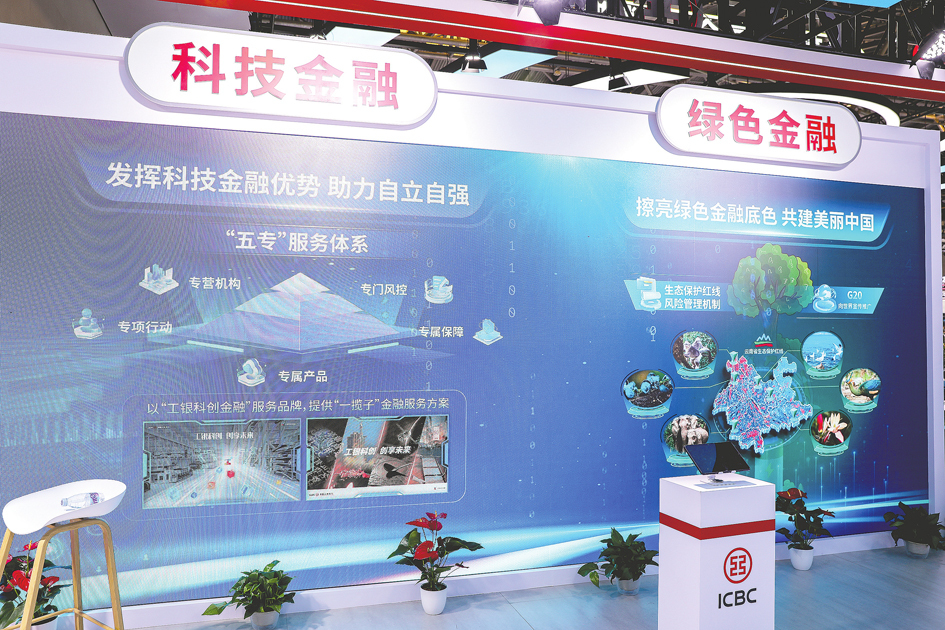
工商银行聊城振兴路支行助力绿色金融
Qi Lu Wan Bao· 2025-12-18 10:02
Core Viewpoint - The Industrial and Commercial Bank of China (ICBC) Liaocheng Branch is actively aligning with the national "dual carbon" strategy and regional green development opportunities, positioning green finance as a core engine for optimizing investment and financing structures and driving business transformation. Group 1: Green Finance Development - As of October 2025, the bank's green credit balance has surpassed 850 million yuan, an increase of 240 million yuan from the beginning of the year, representing a growth rate of 39.34%, with both the increment and growth rate ranking among the top in the industry [1] - The bank has elevated the development of green finance to a strategic level, holding multiple special meetings to analyze market trends and address business challenges, incorporating green credit issuance and customer expansion metrics into the assessment system to motivate all employees [1] - The bank closely tracks green industry plans and project lists released by various departments, proactively aligning with key regional green development tasks, ensuring that green loans are accurately integrated into the local real economy's transformation [1] Group 2: Focus on Green Loan Issuance - The bank firmly establishes a green development philosophy, actively connecting with enterprises on green manufacturing and green factory lists, conducting in-depth research on enterprises, and extending services from core green enterprises to upstream and downstream supporting enterprises [1] - The bank aims to explore potential green credit demand, accurately matching financing needs, and continuously enhancing the "green content" of loans, focusing on key areas such as resource recycling, green transportation, energy-efficient buildings, and green construction [1] Group 3: Post-loan Management for Quality Development - To ensure the safe and efficient operation of credit funds, the bank assigns dedicated personnel to manage the comprehensive oversight of loan issuance, fund monitoring, collateral supervision, and loan recovery for each loan disbursed [2] - The bank ensures that funds are strictly used for agreed purposes, proactively assessing the impact of policy and market changes on financing safety, and requires enterprises to improve the return rate of sales funds to the bank, ensuring the stability and sufficiency of the primary repayment source [2] - This approach aims to achieve a high-quality development trend in green credit business characterized by "precise issuance, controllable risks, and sustainable growth" [2]

持续发力,前三季度新增贷款超四成流向这个领域
和讯· 2025-12-18 09:00
Core Insights - China's green finance is transitioning from "scale expansion" to a new phase characterized by "structural differentiation and functional deepening" across multiple sectors [2][20]. Group 1: Green Credit - Green loans have become the main engine of credit growth, with a total balance of 43.51 trillion yuan as of Q3 2025, reflecting a 17.5% increase from the beginning of the year, and accounting for 43.9% of all loan increments during the same period [3][44]. - Major state-owned banks, including ICBC, CCB, ABC, and BOC, maintain green loan balances between 4 trillion and 6 trillion yuan, with growth rates between 14% and 20% [3][5]. - Regional banks like Beijing Bank and Qilu Bank have shown remarkable growth rates of 26.2% and 35%, respectively, indicating a shift towards supporting local green manufacturing and clean energy projects [3][5]. Group 2: Green Bonds - In November, the green bond market saw a significant rebound, with 94 new bonds issued, totaling 137.39 billion yuan, marking a 51.6% increase in the number of bonds and a 157.8% increase in total issuance compared to October [6][44]. - Financial bonds dominated the market, accounting for nearly 60% of the total issuance in November, highlighting the pivotal role of financial institutions in the green financing ecosystem [6][46]. Group 3: Carbon Market - The national carbon market experienced a "volume and price increase" in November, with an average carbon price of 57.73 yuan per ton, up 20.7% month-on-month, and a transaction volume of 47.75 million tons, totaling 2.757 billion yuan [7][51]. - The cumulative transaction volume for the year has surpassed 187 million tons, indicating a significant increase in market activity and the establishment of the carbon market as a crucial component of China's green finance system [8][51]. Group 4: Green Electricity and Certificates - In October, the issuance of renewable energy green power certificates (green certificates) reached 370 million, a substantial increase, although the number of tradable certificates did not rise correspondingly, leading to a decrease in their market share [9][52]. - The average price of green certificates for 2025 production year saw a significant drop of 19.14%, indicating market volatility influenced by supply-demand dynamics [9][56]. Group 5: Secondary Market - The secondary market for green financial assets displayed a clear divergence, with the Green Finance 100 Index declining by 3.52%, while the China Green Bond Index only slightly adjusted by 0.12%, reflecting a shift towards fundamental valuation and risk aversion among investors [10][41].