
碳达峰碳中和

Search documents
新职业发布!从 AI 到低碳、康养,110 个职业如何影响你的就业与发展?
Xin Hua Wang· 2025-07-23 07:00
Group 1 - The establishment of a new occupational information release system is essential for promoting the rapid development of new productive forces and facilitating the transformation and upgrading of industrial structures [2][6] - The release of new occupations helps alleviate structural employment contradictions and promotes high-quality employment by identifying urgently needed new positions in the market [2][3] - New occupations provide clear career development pathways and skill enhancement directions for workers, ensuring their rights and interests are protected [3][4] Group 2 - New occupations are defined as those with a certain scale of practitioners and independent professional and skill requirements that are not yet included in the national occupational classification [4][5] - The process of establishing new occupations involves expert evaluation, public consultation, and final approval by relevant government departments [5][6] - Since 2019, a total of 110 new occupations have been published, reflecting the development of new technologies and market demands [6][7] Group 3 - The emergence of new occupations is driven by technological advancements such as artificial intelligence, big data, and cloud computing, as well as the demand for green jobs due to carbon neutrality initiatives [7][8] - New occupations play a crucial role in increasing employment capacity and driving industrial upgrades, particularly in green and digital sectors [8][9] - The government plans to enhance the cultivation of new occupations and accelerate the development of national occupational standards to better align with industry needs [9][10] Group 4 - A comprehensive training initiative will be implemented to support new occupations, focusing on skills training, evaluation, and employment services [10] - The establishment of a cooperative mechanism for monitoring new occupations will leverage regional advantages to analyze labor market trends and support the development of a dynamic occupational classification system [10]
职业工种批量“上新”!求学就业瞄准这些“新赛道”
Yang Shi Xin Wen· 2025-07-23 06:11
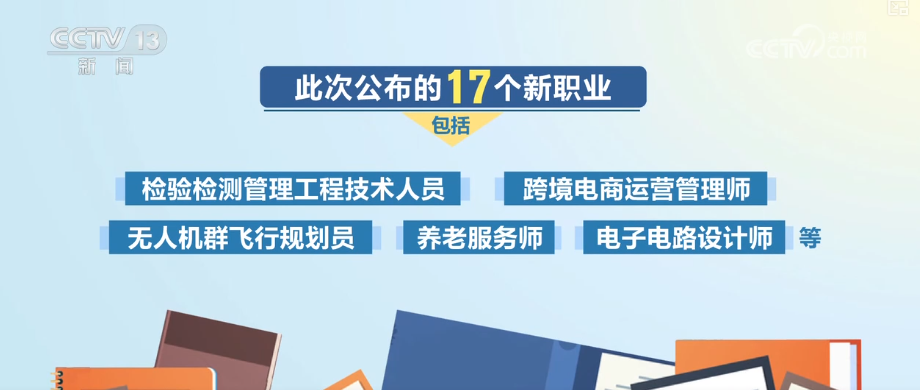
Group 1 - The Ministry of Human Resources and Social Security announced the seventh batch of new occupations, including 17 new professions and 42 new job types, with adjustments made to 9 existing occupations [1][2] - The new professions include roles such as inspection and testing management engineers, cross-border e-commerce operation managers, and drone swarm flight planners, while the new job types include generative AI system testers and service dog trainers [2][3] - The increase in new job types indicates a deepening phase in the release of new occupations, reflecting the evolving demands of industry and society [2][4] Group 2 - The new occupations are closely aligned with public needs, showcasing a trend towards enhancing quality of life, as seen with roles like sleep health managers and smart scenic area managers [3][4] - The introduction of new professions, particularly in public service and social needs, is expected to create more job opportunities [4] - Since 2019, a total of 110 new occupations have been introduced, driven by advancements in digital technologies and the push for carbon neutrality, leading to the emergence of green and digital jobs [5] Group 3 - The Ministry plans to establish national occupational standards for the newly announced professions and will actively promote training programs [6] - A project-based training model will be implemented, focusing on job demand, skills training, skills evaluation, and employment services to support the new occupations [6] - The Ministry will explore regional cooperation mechanisms to analyze and respond to labor market trends in key economic areas [6]
新职业等你来!17个新职业、42个新工种 紧跟民生需求凸显新特点
Yang Shi Wang· 2025-07-23 03:42
Core Viewpoint - The release of the 7th batch of new occupations and jobs by the Ministry of Human Resources and Social Security reflects the evolving labor market, with a focus on emerging technologies and public service needs [1][11]. Group 1: New Occupations and Jobs - The 7th batch includes 17 new occupations such as inspection and testing management engineers, cross-border e-commerce operation managers, and drone swarm flight planners, along with 42 new job types like generative AI system testers and sleep health managers [3][10]. - Compared to previous batches, the number of new occupations remains stable, but there is a significant increase in new job types, indicating a trend towards greater specialization [5][7]. Group 2: Societal and Economic Implications - The introduction of new occupations is closely tied to public service and societal needs, such as the addition of sleep health managers and elderly care service providers, which aim to enhance quality of life [8][10]. - Since 2019, a total of 110 new occupations have been introduced, reflecting the demand for talent in new technologies and the transformation of traditional industries [11][13]. Group 3: Future Directions and Training - The rapid development of digital technologies like AI, big data, and blockchain has led to the emergence of new digital occupations, while the push for carbon neutrality has created demand for green jobs [13][15]. - The Ministry plans to enhance the cultivation of new occupations and will develop national occupational standards and training programs to support these new roles [16][17].

工业硅:市场情绪高涨,关注涨停风险,多晶硅:政策预期愈发强烈,盘面亦难跌
Guo Tai Jun An Qi Huo· 2025-07-23 01:36
Report Summary 1. Industry Investment Rating - No industry investment rating information is provided in the report. 2. Core Viewpoints - The market sentiment of industrial silicon is high, and attention should be paid to the limit - up risk. For polysilicon, the policy expectation is becoming stronger, and the futures market is also difficult to decline [1]. 3. Summary by Related Catalogs 3.1 Fundamental Tracking - **Futures Market Data**: - Industrial silicon Si2509: The closing price is 9,655 yuan/ton, with a change of 395 yuan compared to T - 1, 870 yuan compared to T - 5, and 2,265 yuan compared to T - 22. The trading volume is 1,234,403 lots, a decrease of 26,527 lots compared to T - 1, 182,495 lots compared to T - 5, and an increase of 655,909 lots compared to T - 22. The open interest is 380,961 lots, a decrease of 2,335 lots compared to T - 1, 15,692 lots compared to T - 5, and an increase of 75,405 lots compared to T - 22 [1]. - Polysilicon PS2509: The closing price is 49,105 yuan/ton, with an increase of 3,445 yuan compared to T - 1 and 6,635 yuan compared to T - 5. The trading volume is 757,482 lots, an increase of 136,168 lots compared to T - 1 and 191,736 lots compared to T - 5. The open interest is 192,179 lots, an increase of 20,122 lots compared to T - 1 and 122,358 lots compared to T - 5 [1]. - **Basis and Spread Data**: - Industrial silicon: The spread between the near - month contract and the continuous first contract is - 25 yuan/ton, and the cost of the near - month long and continuous first short inter - period arbitrage is 51.8 yuan/ton. The spot premium or discount varies depending on different benchmarks [1]. - Polysilicon: The spread between the near - month contract and the continuous first contract is 260.0 yuan/ton, and the spot premium or discount for N - type recycled materials is - 3365 yuan/ton [1]. - **Price and Profit Data**: - Industrial silicon: The price of East China oxygen - passing Si5530 is 9700 yuan/ton, and the profit of silicon plants in Xinjiang and Yunnan for new standard 553 is - 1451 yuan/ton and - 3363 yuan/ton respectively [1]. - Polysilicon: The price of N - type recycled materials is 46000 yuan/ton, and the profit of polysilicon enterprises is - 17.8 yuan/kg [1]. - Organic silicon: The price of DMC is 12050 yuan/ton, and the profit of DMC enterprises is - 231 yuan/ton [1]. - Aluminum alloy: The price of ADC12 is 20250 yuan/ton, and the profit of recycled aluminum enterprises is - 690 yuan/ton [1]. - **Inventory Data**: - Industrial silicon: The social inventory (including warehouse receipt inventory) is 54.7 million tons, the enterprise inventory is 17.3 million tons, the industry inventory (social + enterprise) is 72.0 million tons, and the futures warehouse receipt inventory is 25.0 million tons [1]. - Polysilicon: The manufacturer's inventory is 24.9 million tons [1]. - **Raw Material Cost Data**: - For industrial silicon raw materials, the prices of silicon ore, washed coal, petroleum coke, electrodes, etc. vary in different regions and have different price changes compared to different time points [1]. - For polysilicon - related products, the prices of trichlorosilane, silicon powder, silicon wafers, battery cells, components, photovoltaic glass, and photovoltaic - grade EVA also have different price changes [1]. 3.2 Macro and Industry News - The National Energy Administration will continue to deepen the innovation of the power distribution mechanism, expand the new models of new energy local consumption, improve the green energy consumption system, strengthen the formulation and revision of new energy - related standards, and support key technology research and development to promote the high - end, intelligent, green, and integrated development of the industry [1]. 3.3 Trend Intensity - The trend intensity of industrial silicon is 2, indicating a strong bullish view, and the trend intensity of polysilicon is 1, indicating a moderately bullish view. The range of trend intensity is an integer in the [-2, 2] interval [3].
立新能源: 新疆立新能源股份有限公司2023年度向特定对象发行股票并在主板上市募集说明书(修订稿)
Zheng Quan Zhi Xing· 2025-07-18 11:28
Core Viewpoint - Xinjiang Lixin Energy Co., LTD. is preparing for a public offering, highlighting the potential risks and opportunities associated with the renewable energy sector in China, particularly in the context of market reforms and subsidy changes [1][2][3]. Company Overview - The company is located in Urumqi, Xinjiang, and is focused on renewable energy projects, including wind and solar power [1]. - The company has a significant number of projects that are eligible for renewable energy subsidies, with 15 projects currently under review for compliance [5][6]. Financial Performance - The company's revenue for the reporting period was 881.78 million yuan, 989.77 million yuan, 970.68 million yuan, and 216.79 million yuan, with net profits showing a declining trend [7][8]. - The net profit attributable to shareholders decreased significantly, with a drop of 62.89% year-on-year in the latest quarter [7][8]. Market Environment - The renewable energy sector is undergoing significant policy changes, with a shift towards market-based pricing for electricity, which may lead to lower selling prices for the company's electricity [2][3]. - The company’s participation in market transactions has increased, with the proportion of market-based trading rising from 22.27% to 41.55% over the reporting periods [3][4]. Risks and Challenges - The company faces risks related to policy changes that could affect electricity pricing, particularly as subsidies are reduced and market competition increases [2][3]. - The average selling price of electricity is expected to decline, impacting overall revenue if the company does not adapt its sales strategies effectively [3][4]. - The company has experienced longer collection periods for subsidy payments, which could strain cash flow and increase accounts receivable [5][6]. Investment and Funding - The company plans to raise approximately 1.83 billion yuan through a public offering, with funds allocated primarily for new renewable energy projects [18]. - The funding will support the development of a 200,000 kW/800,000 kWh energy storage project and an 80,000 kW wind power project [18]. Regulatory Approvals - The offering has received necessary approvals from various regulatory bodies, including the Xinjiang State-owned Assets Supervision and Administration Commission [13][14]. - The company is required to adhere to specific regulations regarding the issuance of new shares and the management of investor relations [14][16].
聚焦四大技术 实施四项工程 | 大家谈 如何当好“碳路先锋”
Zhong Guo Hua Gong Bao· 2025-07-18 02:11
Core Viewpoint - Energy conservation and carbon reduction are crucial measures for achieving carbon peak and carbon neutrality, as well as for promoting the construction of a beautiful China. Guangdong Petrochemical focuses on four major technologies and implements four projects to advance its green transformation [1]. Group 1: Green Technology Initiatives - The company emphasizes green electricity substitution technology and is implementing a renewable energy utilization project, aiming to maximize green electricity consumption and reduce carbon emissions by leveraging the complementary advantages of green petrochemicals and offshore wind power [1]. - Guangdong Petrochemical is focusing on green hydrogen refining technology, developing a hydrogen utilization industry chain, and is actively advancing the construction of a 1,500-ton high-purity blue hydrogen project annually [2]. - The company is establishing a regional hydrogen supply center to cultivate a comprehensive hydrogen industry chain, integrating high-purity hydrogen, hydrogen refueling stations, hydrogen-powered heavy trucks, and logistics transportation [2]. Group 2: Energy Efficiency and Carbon Reduction - The company is implementing energy-saving and efficiency-enhancing projects by closely tracking the latest technological advancements in energy conservation and carbon reduction within the petrochemical industry [2]. - Guangdong Petrochemical is optimizing operational energy efficiency to ensure that its ethylene and aromatics units become industry benchmarks for energy efficiency [2]. - The company is utilizing digital technology to establish a smart carbon management platform, which includes data collection, monitoring, and accounting to help the company manage its carbon footprint effectively [2].
年发电近800万度!实探零碳园区的“中国样本”
Zhong Guo Chan Ye Jing Ji Xin Xi Wang· 2025-07-17 07:06
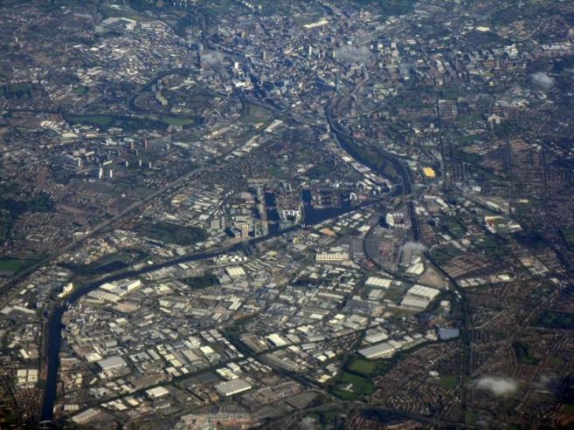
Core Concept - The article discusses the evolution of industrial parks towards "zero carbon parks," highlighting the significance of photovoltaic (PV) technology in achieving this goal [4][6][16]. Group 1: Historical Context - The first water-powered spinning mill was established in Manchester in 1771, marking the beginning of modern factories, with over a century until the first power station was built [1]. - The first industrial park in the world was established in the UK in 1896, showcasing the historical development of industrial facilities [3]. Group 2: Zero Carbon Parks - "Zero carbon parks" are defined as industrial parks that achieve net-zero greenhouse gas emissions through various technological means within a specified timeframe [4]. - The concept of zero carbon parks was first introduced at the Central Economic Work Conference in December 2024, with a commitment to promote carbon peak and carbon neutrality [4]. Group 3: Policy and Market Dynamics - Recent government initiatives, including a joint notice from the National Development and Reform Commission, Ministry of Industry and Information Technology, and National Energy Administration, support the establishment of zero carbon parks in qualified regions [6]. - The Yangtze River Delta has emerged as a significant market for distributed PV development, benefiting from a robust industrial base and high energy consumption [6]. Group 4: Photovoltaic Installation Data - In the first quarter of 2025, a total of 59.71 GW of new PV installations were added, with the commercial sector leading by contributing 31.26 GW [6][9]. - Jiangsu, Anhui, and Zhejiang provinces accounted for 13.83 GW of new PV installations, representing 23% of the national total for that quarter [9]. Group 5: Technological Innovations - The Chuangwei PV "zero carbon smart park" features innovative designs such as PV carports and a solar rainbow corridor, optimizing energy generation through strategic angles and structural designs [10][12]. - The park includes an integrated energy storage system with a capacity of 1840 kW/2870 kWh, enhancing energy efficiency and stability [12]. - Advanced maintenance technologies, including drones and smart cleaning robots, are employed to ensure the operational efficiency of PV installations [14]. Group 6: Environmental Impact and Future Outlook - The total installed capacity of the Chuangwei zero carbon park is 6.54 MW, generating approximately 8000 MWh annually, which equates to a reduction of 7332 tons of CO2 emissions [16]. - The park serves as a model for future PV development, demonstrating that zero carbon initiatives can enhance competitiveness and drive new growth opportunities [16].
煤化工产业趋势展望
2025-07-16 06:13
Summary of Conference Call on Coal Chemical Industry Industry Overview - The conference focused on the coal chemical industry, particularly in Xinjiang, China, discussing regulatory frameworks, project approvals, and development strategies for modern coal chemical projects [1][2][3][4][5][6][7][8][9][10][11][12][13][14][15][16][17][18][19][20][21][22][23][24][25][26][27][28][29][30][31][32][33][34][35][36][37][38][39][40][41]. Key Points and Arguments 1. **Regulatory Framework**: The approval process for coal chemical projects includes project approval, environmental impact assessments, and carbon emission standards. The latest guidelines emphasize the need for projects to comply with ecological and environmental regulations [1][2][3][4]. 2. **Project Location Requirements**: New coal chemical projects must be located in legally established industrial parks and avoid sensitive ecological areas, such as within 1 kilometer of certain riverbanks [2][3]. 3. **Carbon Emission Management**: The government has set stringent carbon emission standards for coal chemical projects, requiring the establishment of carbon management systems and regular reporting [4][5]. 4. **Energy Efficiency and Clean Utilization**: There is a strong push for improving energy efficiency and reducing carbon emissions in coal chemical processes, with specific methodologies outlined for different products [4][5][6]. 5. **Development of Xinjiang's Coal Chemical Industry**: Xinjiang is highlighted as a key area for coal chemical development due to its abundant coal resources. Several projects have been established, focusing on clean and efficient utilization of coal [7][8][9][10]. 6. **Investment Trends**: The conference noted a significant interest in coal chemical projects, particularly in coal-to-gas and coal-to-liquid technologies, with various companies planning to invest in these areas [11][12][13][14]. 7. **Challenges in Water Resources**: The coal chemical industry faces challenges related to water scarcity, particularly in Xinjiang, where water-intensive processes are required [19][20]. 8. **Technological Innovations**: There is ongoing exploration of new technologies for low-carbon transitions in coal chemical processes, although many companies are still in the experimental phase [20][21]. 9. **Market Dynamics**: The market for coal chemical products is influenced by international prices and domestic supply-demand dynamics, with a focus on maintaining economic viability amid regulatory pressures [28][29][30]. 10. **Strategic Importance**: The coal chemical industry is viewed as strategically important for national energy security, with projects being prioritized based on their potential to enhance energy independence [28][29][30]. Other Important but Overlooked Content - The conference discussed the need for a balanced approach to resource management, considering environmental impacts alongside economic benefits [36][37]. - There is a recognition of the competitive landscape among coal chemical projects, with varying levels of progress and approval timelines across different regions [24][25][26]. - The importance of integrating coal chemical projects with existing coal mining operations was emphasized, highlighting the need for collaboration between coal and chemical sectors [31][32][33]. This summary encapsulates the critical insights and discussions from the conference call regarding the coal chemical industry, particularly focusing on regulatory frameworks, project developments, and market dynamics in Xinjiang.
央行、证监会重磅发布!
证券时报· 2025-07-14 12:25
Core Viewpoint - The article discusses the issuance of the "Green Finance Support Project Directory (2025 Edition)" by the People's Bank of China, the Financial Regulatory Administration, and the China Securities Regulatory Commission, aimed at enhancing the liquidity of the green finance market and improving the efficiency of green asset management [1][2]. Summary by Sections Introduction - The issuance aligns with the spirit of the 20th National Congress of the Communist Party of China and aims to support the comprehensive green transformation of the economy and society [2]. Objectives - The directory is designed to unify various green financial products, thereby enhancing market liquidity, asset management efficiency, and reducing identification costs [1][2]. Implementation Guidelines - Relevant units are encouraged to develop and implement supportive policies based on the directory, focusing on environmental improvement, climate change response, and efficient resource utilization [3][4]. Historical Standards - The directory will ensure continuity with historical standards for green loans and bonds, allowing existing projects to adhere to previous criteria if they were approved before the new directory's release [3][4]. Future Adjustments - The People's Bank of China and other regulatory bodies will adjust the directory as needed based on ecological civilization tasks, carbon neutrality goals, and the development of the domestic green finance market [4]. Effective Date - The "Green Finance Support Project Directory (2025 Edition)" will take effect on October 1, 2025 [5].
学习习近平生态文明思想,可以有这四个维度,快来记笔记!
Zhong Guo Huan Jing Bao· 2025-07-13 23:21
Theoretical Sources - Xi Jinping's Ecological Civilization Thought is an important component of Xi Jinping's Thought on Socialism with Chinese Characteristics for a New Era, representing a theoretical elevation and practical crystallization of the Party's exploration of ecological civilization construction [2] - The thought integrates Marxist ecological theory with China's ecological civilization practices and traditional ecological culture, such as the concepts of "harmony between man and nature" and "natural law" [2] - The great practice of ecological civilization construction in China, especially since the new era, has contributed significantly to the development of Xi Jinping's Ecological Civilization Thought, with China becoming one of the fastest countries in reducing energy consumption intensity and improving air quality [3] Development Process - The formation of Xi Jinping's Ecological Civilization Thought is a result of deep theoretical reflection and long-term practical exploration by contemporary Chinese Communists, with a historical emphasis on ecological civilization construction [4] - The development can be traced through two main lines: the Party's continuous deepening understanding of ecological protection and the practical experiences of Xi Jinping during his governance in various regions [5] Systematic Implications - The core essence of Xi Jinping's Ecological Civilization Thought is encapsulated in "Ten Persistences," which address fundamental guarantees, historical bases, basic principles, core concepts, and strategic paths for ecological civilization construction [7] - The "Ten Persistences" can be further broken down into three parts: the reasons for building ecological civilization, the type of ecological civilization to be built, and the methods for its construction [8] Practical Significance - Xi Jinping's Ecological Civilization Thought has become a vital part of the overall layout of socialism with Chinese characteristics, emphasizing the harmonious coexistence of humans and nature [11] - The thought has gained a more complete system and broader dissemination as ecological civilization practices deepen, demonstrating its strong vitality and alignment with economic and social development [11]