
AI大模型

Search documents
国产GPU上市潮涌:沐曦股份接棒申购,行业进入资本化深水区
2 1 Shi Ji Jing Ji Bao Dao· 2025-11-27 13:07
Core Viewpoint - Muxi Integrated Circuit (Shanghai) Co., Ltd. is set to launch its IPO on the STAR Market, aiming to raise 3.904 billion yuan for the development of high-performance GPUs and AI inference technologies [1][4]. Company Overview - Muxi was established in September 2020, focusing on the independent development of high-performance GPU chips and computing platforms. The core team has extensive experience in GPU development, with key figures previously working at AMD [3]. - The CEO, Chen Weiliang, holds a 22.94% stake, and the company has attracted significant investments from notable entities, including the National Team and Sequoia Capital [3]. Financial Performance - Muxi's revenue has seen exponential growth, with projected revenues of 42.64 million yuan in 2022, 530.21 million yuan in 2023, and 743 million yuan in 2024, reflecting a compound annual growth rate of 4074.52% [4][5]. - Despite the revenue growth, Muxi is currently operating at a loss, with net profits of -777 million yuan in 2022, -871 million yuan in 2023, and -1.409 billion yuan in 2024 [5]. Market Position and Competition - Muxi's product line includes AI training and inference GPUs, with the C500 being the main product. The company has sold over 25,000 GPU units to date [6]. - The global GPU market is dominated by NVIDIA and AMD, with Muxi holding approximately 1% market share in China's AI chip market as of 2024 [6]. Industry Context - Muxi is part of a competitive landscape with several other domestic GPU companies also pursuing IPOs, including Moer Thread and Suiruan Technology, indicating a rush in the domestic GPU sector [7][8]. - Other notable companies like Birran Technology and Glanfi are also in the process of seeking listings, highlighting the growing interest and investment in the domestic GPU market [8][9].


刷新感官体验 “中国屏”跃迁无止境
2 1 Shi Ji Jing Ji Bao Dao· 2025-11-27 09:32
Core Insights - The Chinese display industry has transitioned from being a follower to a leader, achieving a 55% global market share in panel production, surpassing traditional leaders from Japan, South Korea, and Taiwan [1] - The industry is shifting focus from traditional parameters to user experience and innovative technology routes, driven by the rise of AI and new interaction forms [1][2] - Major Chinese companies like Tianma Microelectronics, BOE, TCL Huaxing, and Visionox are redefining standards and competing on a higher level by emphasizing user experience and technological innovation [1][2] Company Developments - Tianma Microelectronics showcased 11 new display technologies at the TIC 2025 conference, integrating features like fingerprint recognition and lifespan monitoring into screens [3] - BOE is focusing on small to medium-sized displays, holding nearly 80% of the domestic foldable screen market, and has invested 630 billion RMB in an 8.6-generation AMOLED production line [4][3] - Visionox is pursuing a new technology path with its ViP lithography technology, aiming for ultra-high resolution displays, while TCL Huaxing is commercializing inkjet-printed OLED technology to address cost and efficiency issues [5][6] Market Trends - The OLED market is maturing, with competition shifting towards user-centric innovations and cost-effective manufacturing processes [2] - Mini-LED technology is rapidly gaining traction, projected to reach a 35.6% penetration rate in the domestic market by 2025, becoming a key growth driver [9] - Micro-LED technology is anticipated to reach a critical industrialization phase by 2025, overcoming challenges related to cost and production efficiency [7][8] Future Outlook - The display industry is expected to continue evolving, with companies like Tianma, BOE, Visionox, and TCL Huaxing pushing towards becoming a display powerhouse, integrating sensing, computing, and interaction technologies [9]
第十二届成都国际管网展览会开幕
Zhong Guo Jing Ji Wang· 2025-11-27 08:39
Group 1 - The 12th Chengdu International Pipeline Exhibition opened on November 26, 2025, focusing on urban lifeline safety engineering construction and promoting innovation and collaboration in the pipeline sector [1] - The exhibition covers an area of 40,000 square meters and gathers hundreds of industry and upstream/downstream enterprises to showcase new technologies, materials, and solutions in the municipal pipeline field [1] - The event aims to transform the industry from "passive maintenance" to "active warning," injecting technological momentum into urban lifeline safety [1] Group 2 - Chengdu Urban Investment Smart Group showcased innovations in intelligent operation and maintenance of urban pipelines, including a city-level perception system connected to 23.5 million IoT terminals and 590,000 road videos [2] - The company introduced the nationally pioneering city-level pipeline corridor "1+1+N" control model and robotic dog inspections, attracting numerous partners [2] - The focus is on promoting and upgrading smart inspection technologies, enhancing urban perception capabilities, and transforming governance models from "humans finding risks" to "risks finding humans" [2]
星汉大模型落地提速,大华股份以场景化大模型重构增长逻辑
Di Yi Cai Jing· 2025-11-27 06:37
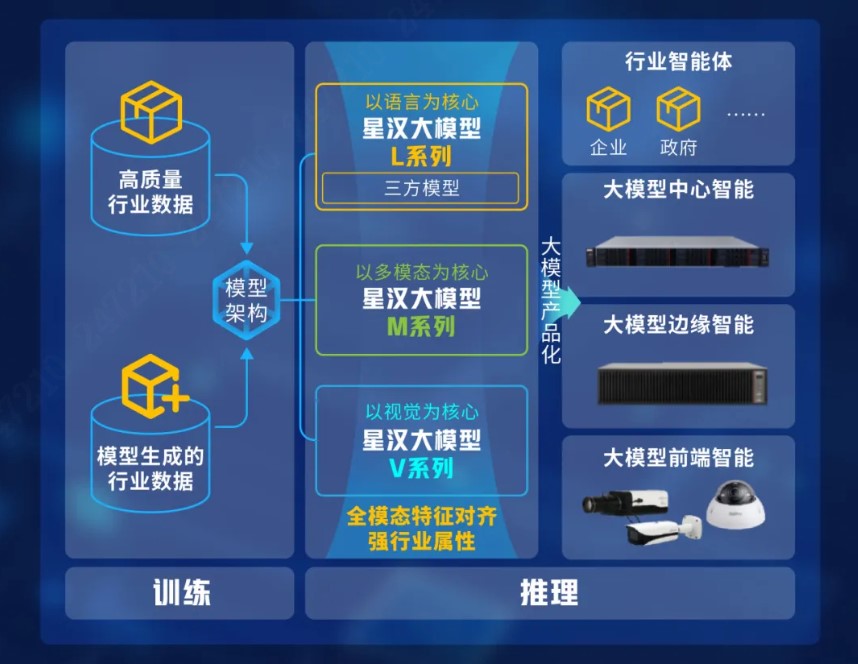
Core Viewpoint - Dahua Technology (002236.SZ) has successfully transformed AI technology into industrial productivity through its self-developed Xinghan Model 2.0, establishing itself as an industry benchmark in the wave of AI large models in 2025 [1] Financial Performance - In Q3 2025, Dahua reported a revenue of 7.731 billion yuan, a year-on-year increase of 1.95%, and a net profit of 1.06 billion yuan, which surged by 44.12% compared to the same period in 2024 [1] AI Model Development - Dahua has made significant advancements in AI, particularly with the Xinghan Model, which integrates multi-modal capabilities and has evolved through the introduction of the "Transformer" technology since 2019 [2][4] - The Xinghan Model 2.0 features five key advantages, including enhanced accuracy, new functionalities for image and text prompts, and the ability to autonomously parse various scenarios [2][4] Industry Applications - Dahua's AI solutions have been successfully implemented across various sectors, including smart tourism, urban governance, transportation, and energy, demonstrating significant efficiency and safety improvements [5][8] - The collaboration with the Wanfenglin Scenic Area exemplifies the application of smart IoT technology, resulting in an 18% reduction in annual operational costs and a 40% increase in vehicle turnover rates during peak seasons [7] Global Expansion - Dahua has expanded its reach to 180 countries and regions, with overseas business contributing over 50% to its profits, highlighting its strategic focus on international markets [10][13] - The company is leveraging domestic solutions in smart cities and transportation to replicate success in overseas markets, indicating a broad market potential [13] Future Growth Strategy - The integration of AI large model capabilities into hardware terminals has created a unified intelligent collaboration system, enhancing real-time analysis and decision-making [9] - Dahua aims to continue its growth by focusing on the iterative development of AI large models and expanding into more segmented industry applications, such as healthcare and education [14]

“先锋・工业制造大模型”发布 让盾构机更加“耳聪目明”
Ke Ji Ri Bao· 2025-11-27 04:44
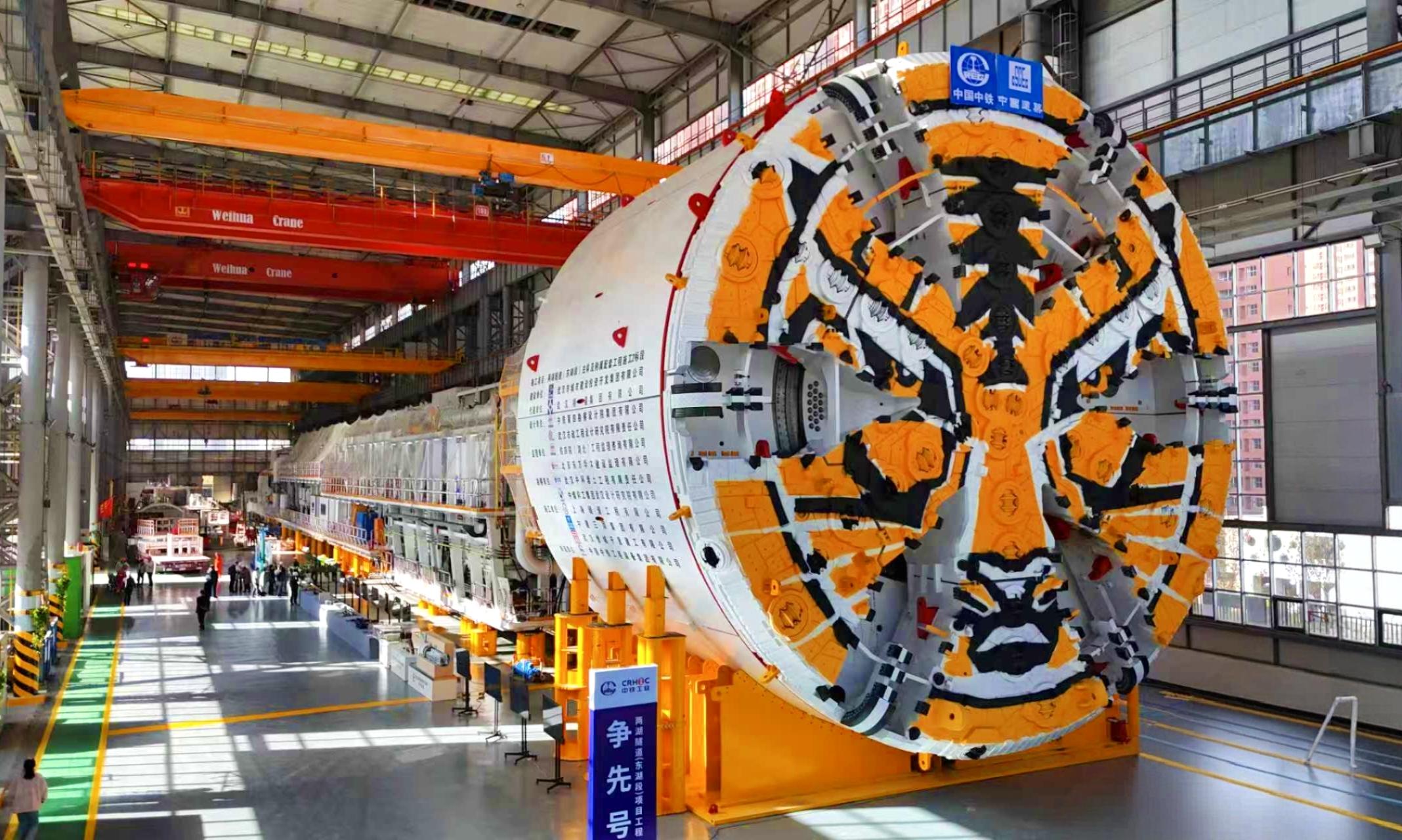
Core Insights - The domestically produced ultra-large diameter mud-water shield machine "Zhengxian" was launched in Zhengzhou, marking a significant advancement in high-end manufacturing technology [1][3] - The "Pioneer Industrial Manufacturing Big Model" was officially released, enhancing the operational intelligence of the shield machine [1][3] Group 1 - The "Zhengxian" will be utilized in the Wuhan Lianghu Tunnel East Lake section, which is the longest urban underwater tunnel in China and the largest in the world, with a drilling diameter of 15.09 meters and a total length of 115 meters [3] - The machine incorporates advanced technologies such as a constant pressure cutter head, a geological forecasting system, and an automated mud cake removal system, enabling safe and efficient operations in complex environments [3][6] Group 2 - The "Pioneer Big Model" is designed for industrial manufacturing, establishing a comprehensive intelligent system that includes computing power, algorithms, data, platforms, and applications [3][6] - The model facilitates rapid fault analysis and the generation of multiple optimized design solutions, driving the transition of high-end manufacturing from experience-driven to model-driven approaches [6] - A collaborative platform named the "High-end Intelligent Manufacturing Innovation Alliance" was established, involving 12 organizations, including China Railway and Zhejiang University, to foster innovation and resource sharing across industries [6]

狂飙,新“AI链”全面引爆
Ge Long Hui· 2025-11-26 11:23
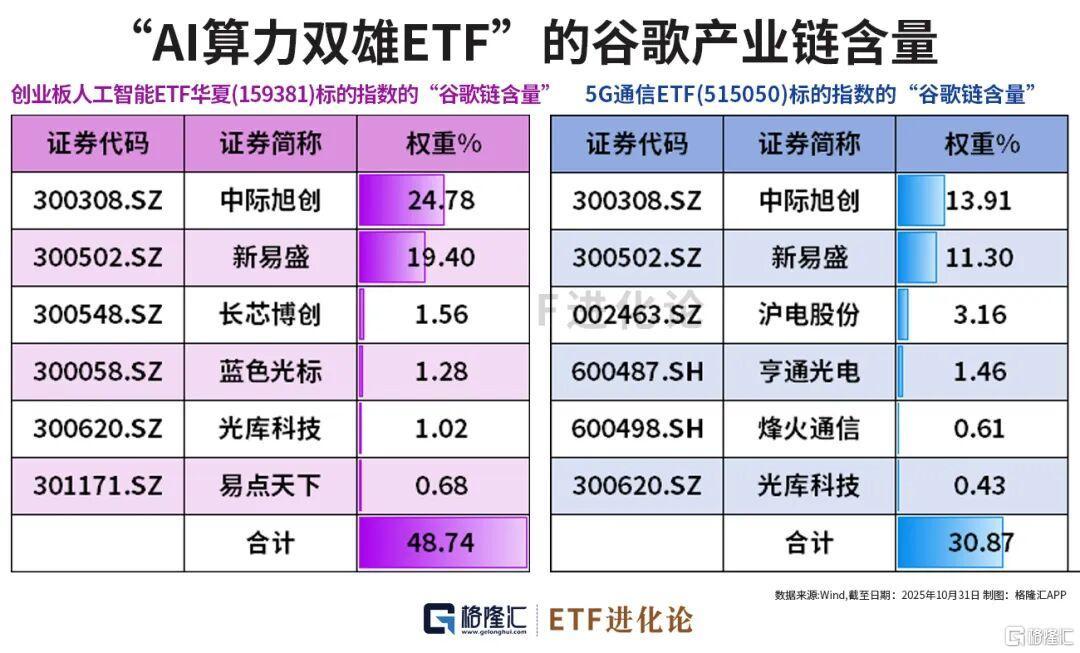
Core Insights - The article discusses the significant impact of Google's TPU on the AI computing market, highlighting a shift in investment logic within the capital markets [1][3] - The performance of AI-related ETFs, particularly the 5G Communication ETF and the Huaxia AI ETF, has surged due to the increasing relevance of Google's TPU in the AI hardware narrative [1][4] Group 1: Market Performance - The 5G Communication ETF (515050) surged by 5.08%, with a year-to-date increase of 77.65%, while the Huaxia AI ETF (159381) rose by 5.05%, marking a 71.09% increase since its launch on March 24 this year [1] - The "Google chain content" in the Huaxia AI ETF and the 5G Communication ETF reached 48% and 30.87%, respectively, indicating strong exposure to Google's TPU ecosystem [4] Group 2: Competitive Landscape - Google's Gemini 3 model has been well-received, surpassing ChatGPT, while the TPU chip release has garnered significant attention, with Meta reportedly considering its use [3] - Analysts from Nomura Securities believe that Google's latest model has reset the AI landscape, marking a new "DeepSeek moment" [3] Group 3: Nvidia's Position - Nvidia's stock experienced a sharp decline, dropping nearly 7% amid concerns over its growth logic in light of Google's advancements [7] - Despite the challenges, Nvidia reported a revenue of $57.006 billion for the third quarter of fiscal 2025, a 62% year-over-year increase, driven primarily by its data center business [10][11] - Nvidia's CEO emphasized that their GPUs remain a generation ahead in the industry, capable of running all AI models across various computing scenarios [7] Group 4: Alibaba's Performance - Alibaba's cloud intelligence group reported a revenue of 39.82 billion yuan, a 34% year-over-year increase, driven by public cloud services and AI-related products [12] - The AI-related product revenue has seen triple-digit year-over-year growth for nine consecutive quarters, indicating strong adoption among enterprise clients [13] Group 5: Investment Opportunities - The article suggests that the AI computing demand is real and global, encompassing both Nvidia's GPUs and Google's TPUs, with a focus on high-performance architectures [24] - Chinese companies are positioned strongly within the global supply chain for critical components like optical modules (CPO), PCB, and servers, which are essential for AI computing infrastructure [25]


狂飙!新“AI链”全面引爆
Sou Hu Cai Jing· 2025-11-26 10:31
Group 1: Core Insights - The article highlights a significant shift in the AI computing market driven by Google's TPU and Gemini 3, which has led to a surge in related ETFs, particularly the 5G Communication ETF and the Huaxia AI ETF [1][2] - The TPU chip release and its integration with OCS and CPO architectures have revitalized the AI hardware narrative, indicating a robust demand for AI computing power [2][20] - The performance of the AI computing sector is reflected in the substantial gains of ETFs, with the 5G Communication ETF rising 77.65% year-to-date and the Huaxia AI ETF increasing 71.09% since its launch [1][2] Group 2: Market Dynamics - The competitive landscape for AI chips has been altered, with Google posing a challenge to Nvidia, leading to a notable drop in Nvidia's stock price, which fell nearly 7% before recovering to a 2.59% decline [5][6] - Despite the challenges, Nvidia reported strong financial results, with revenues of $57.006 billion, a 62% year-over-year increase, and a net profit of $31.91 billion, reflecting robust demand for its data center business [6][7] - Alibaba's cloud division also showed impressive growth, with revenues of 39.82 billion yuan, a 34% increase year-over-year, driven by AI-related products [10][11] Group 3: Investment Opportunities - The article emphasizes the ongoing demand for AI computing power, supported by substantial investments from companies like Alibaba, which has committed approximately 120 billion yuan to AI and cloud infrastructure over the past four quarters [11][20] - The integration of high-speed optical interconnects (CPO) is crucial for both Google's and Nvidia's architectures, positioning Chinese companies favorably within the global supply chain [21] - The article suggests that the AI computing sector is experiencing a positive feedback loop, where model upgrades drive demand for computing power, which in turn fosters further innovation [16][20]

看图:小米集团二季度营收673.5亿元 研发人员占总员工52%
Xin Lang Ke Ji· 2025-11-26 08:33
Core Insights - Xiaomi's Q2 2023 revenue reached 673.5 billion yuan, a year-on-year decline of 4%, while adjusted net profit increased by 147% to 51.4 billion yuan [12] - The average selling price (ASP) of Xiaomi's products rose to 1112 yuan, reflecting a year-on-year growth of 2.8% [12] Financial Performance - Q2 revenue breakdown: smartphones accounted for 366 billion yuan, IoT and lifestyle products for 223 billion yuan, internet services for 74 billion yuan, and other income for 10.6 billion yuan [12] - R&D expenditure in Q2 was 46 billion yuan, a year-on-year increase of 21% [11][12] - The gross margin for IoT and lifestyle products reached a record high of 17.6%, up 3.3 percentage points year-on-year [11] IoT and User Engagement - As of June 30, 2023, Xiaomi's IoT platform connected 655 million devices, marking a year-on-year growth of 24.2% [6] - The number of active users for Xiaomi's smart TVs exceeded 62 million in June 2023, representing an increase of over 18% year-on-year [11] Research and Development - The number of R&D personnel reached 16,834, constituting 52% of the total workforce [11][12] - Xiaomi has over 3,000 personnel focused on AI, with significant progress in developing lightweight, locally deployed AI models [11]


港股异动 | BOSS直聘-W(02076)涨近4% 第三季度招聘市场稳步回暖 付费企业侧客户数同比增长13.3%
智通财经网· 2025-11-26 07:43
Core Insights - BOSS Zhipin-W (02076) shares increased nearly 4%, with a current price of 84.35 HKD and a trading volume of 29.148 million HKD [1] Financial Performance - For Q3 2025, BOSS Zhipin reported a revenue of 2.16 billion HKD, representing a year-on-year increase of 13.17% [1] - The GAAP net profit attributable to shareholders was 806 million HKD, up 72.22% year-on-year [1] - Adjusted net profit reached 991 million HKD, reflecting a 34.23% increase compared to the previous year [1] Market Trends - The recruitment market is showing steady recovery, with increased penetration in blue-collar and lower-tier cities [1] - The average daily active users on the recruiter side increased more than the job seeker side for the first time in three years during July to September 2025 [1] - The number of paid enterprise clients grew by 13.3% year-on-year, reaching 6.8 million as of September 30, 2025 [1] User Engagement - The payment rate for paid users has increased both year-on-year and quarter-on-quarter [1] - The revenue growth of 13.3% in this quarter indicates a significant acceleration compared to previous periods [1]
小米高管解读财报:在内存方面一直有储备,考虑通过投资拥抱大模型
Xin Lang Ke Ji· 2025-11-26 07:22
Core Insights - Xiaomi reported a total revenue of 59.5 billion yuan for Q1 2023, a decline of 18.9% year-over-year, while adjusted net profit increased by 13.1% to 3.2 billion yuan, including 1.1 billion yuan in expenses for innovative businesses like electric vehicles [1] - The company aims to improve its inventory management and maintain healthy operations, with a focus on activating market share rather than just shipment volume [3][4] - Xiaomi's promotional strategies, such as the "618" sales event, are designed to boost sales without negatively impacting profit margins, as they are aligned with the company's product lifecycle management [2][3] Financial Performance - Q1 total revenue was 59.5 billion yuan, down 18.9% from the previous year [1] - Adjusted net profit reached 3.2 billion yuan, up 13.1% year-over-year [1] - Inventory levels have significantly decreased, with finished goods inventory dropping to 22 billion yuan, a reduction of 10 billion yuan over the past four quarters [5] Market Strategy - Xiaomi's "618" promotional event includes a 1.6 billion yuan giveaway, with popular models like the Xiaomi 13 and Redmi K60 series offered at discounts [1][2] - The company is optimistic about its overseas market performance, particularly with the Redmi Note series, which has shown strong sales after its recent launch [3] - Xiaomi's new retail strategy has successfully synchronized online and offline promotions, enhancing sales during major events [9][10] AI and Technology Development - Xiaomi has established a large AI model team and is focusing on integrating AI capabilities into its products and services, particularly in enhancing user experience [6][7] - The company emphasizes the importance of its chip development strategy, viewing it as essential for its core business and long-term growth [18][19] Internet Business - The internet services segment achieved a record high in overseas revenue, driven by effective advertising and partnerships with local apps [12][13] - The gross margin for internet services remains healthy at over 72%, with significant contributions from gaming and high-margin advertising [13] Challenges and Outlook - The company acknowledges the impact of the growing second-hand phone market on new phone sales, but believes it can mitigate this through trade-in programs and maintaining customer relationships [14][15] - Xiaomi's market share in India is around 17%, and while there are no specific targets for market share or profit, the focus remains on maintaining a healthy business state [16]