
去美元化

Search documents
金价历史性巨震长期配置逻辑仍受部分机构认可
Zhong Guo Zheng Quan Bao· 2026-02-01 20:53
Market Overview - On January 30, gold prices experienced a significant reversal, marking the largest single-day decline in nearly 40 years after reaching a historical high of $5,500 per ounce [1][2] - The sharp volatility in gold prices has stirred investor sentiment, leading to a focus on the future market direction [1] Investor Sentiment - Investor sentiment has become polarized following the price drop, with early holders remaining calm while those who did not enter the market feel relieved [1] - Discussions among investors on trading platforms reflect anxiety, with topics such as whether to sell or hold being widely debated [1] - Some investors are taking a contrarian approach, gradually increasing their positions, indicating a complex emotional landscape among market participants [1] Factors Behind Price Decline - The rapid increase in gold prices since the beginning of 2026, with a rise of approximately 30%, has led to profit-taking pressure as prices reached new highs [2] - Increased margin requirements for gold futures trading have exacerbated the downward volatility, with both domestic and international exchanges raising margin ratios [3] - Changes in monetary policy expectations, particularly with the nomination of a hawkish Federal Reserve chair, have strengthened the US dollar, negatively impacting gold prices [3] Institutional Perspectives - Various gold-themed ETFs have seen significant declines, with an average drop of over 7% on January 30, and several gold stock ETFs hitting their daily limits [4] - Despite the recent volatility, there was a notable inflow of funds into related ETFs prior to the drop, indicating ongoing optimism in the market [4] - Some institutions maintain a long-term bullish outlook on gold, with UBS raising its price targets for gold in 2026 due to expected strong demand [4] - The CEO of Tether announced plans to allocate 10% to 15% of their investment portfolio to gold, reflecting sustained interest from long-term capital in gold assets [5]
史诗级暴跌引发流动性踩踏,金银后市怎么走?
第一财经· 2026-02-01 14:45
Core Viewpoint - The article discusses a significant market crash in gold and silver prices, triggered by the nomination of Kevin Warsh as the new Federal Reserve Chairman, leading to a liquidity crunch and forced selling across various asset classes [3][4][5]. Market Reaction - On the last trading day of January, gold prices fell by over 12%, dropping below $5000 per ounce, while silver experienced a maximum drop of over 35%, marking its largest single-day decline in nearly 40 years [3][4]. - The sell-off was exacerbated by increased margin requirements from exchanges, leading to a vicious cycle of forced liquidations [7][8]. Federal Reserve Nomination Impact - Kevin Warsh's nomination is perceived as a hawkish shift, altering market expectations regarding the Federal Reserve's independence and monetary policy, which previously supported rising gold prices [5][6]. - Warsh's stance on reducing the Fed's balance sheet and being cautious about inflation has led to a significant rebound in the dollar index and a sharp correction in commodity markets [6]. Technical Indicators and Market Conditions - Prior to the crash, gold and silver markets showed extreme overbought signals, with gold's Relative Strength Index (RSI) reaching 90 and silver's RSI exceeding 93, indicating a high likelihood of a technical correction [10][11]. - The volatility in the market was further amplified by algorithmic trading and forced liquidation, which triggered additional selling pressure [11]. Retail Market Response - Retail investors faced challenges in responding to the price drop, with many unable to intercept orders for gold jewelry purchased at higher prices, as retailers often do not accept returns for precious metals [12][13]. Future Outlook - Short-term market sentiment remains cautious, with expectations of continued forced selling and volatility, while long-term views suggest a potential shift towards a de-dollarization trend, which may support gold prices in the future [14][16]. - Despite the recent crash, gold and silver still recorded significant gains for January, with COMEX gold and silver futures up 13% and 20% respectively [15].


金价急跌之下:银行密集提示风险,部分实物金全线售罄
Di Yi Cai Jing· 2026-02-01 13:37
Core Viewpoint - The recent volatility in gold prices has led to confusion among investors, with some considering stop-loss strategies while others see it as an opportunity to buy on dips [1] Group 1: Market Reaction - On January 30, international gold prices experienced a significant drop, with spot gold falling below $4,700 per ounce, and silver prices also plummeting, marking one of the largest daily fluctuations in history [1][2] - Major banks, including ICBC, CCB, BOC, and ABC, issued risk warnings and adjusted their precious metals business rules in response to the volatility [1][3] Group 2: Investor Sentiment - Investor sentiment has become polarized, with some opting to wait and see due to fears of increased volatility, while others view the price drop as a buying opportunity [7] - A notable increase in inquiries for physical gold has been observed, particularly after the price correction, as many investors consider it a "buying window" for long-term holding [5] Group 3: Institutional Responses - Banks have been adjusting their gold accumulation business rules, including raising minimum investment amounts and tightening risk assessment requirements for gold accumulation products [3] - Several banks have reduced interest rates on gold accumulation accounts to near zero, indicating a shift in the attractiveness of account-based gold products [6] Group 4: Future Outlook - Analysts suggest that the gold market may have entered a phase of high volatility, influenced by rapid price increases, high concentration of funds, and uncertainties surrounding U.S. monetary policy and geopolitical factors [7][8] - Despite short-term fluctuations, the long-term fundamentals supporting gold prices, such as central bank purchases and geopolitical risks, remain intact, with expectations that gold prices could reach $6,000 per ounce in the future [8]
白银的“史诗级”暴跌,普通投资者如何避坑?|0201
Hu Xiu· 2026-02-01 13:16
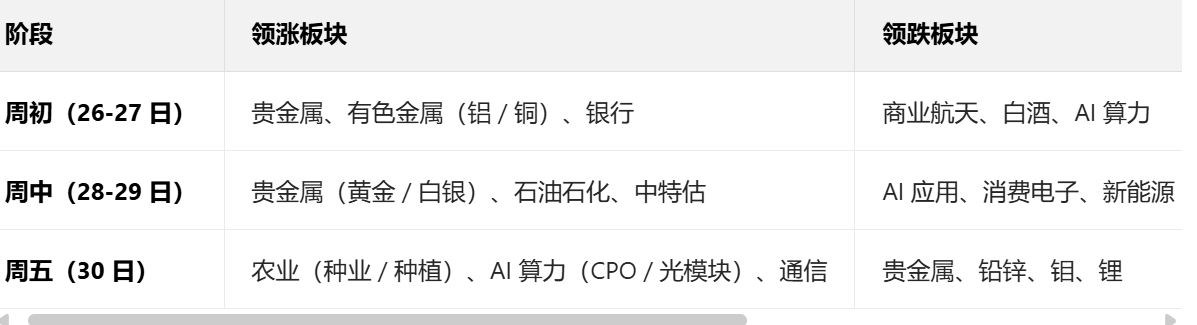
Market Overview - The A-share market experienced a mixed adjustment from January 26 to 30, with high trading volume (average daily turnover exceeding 3 trillion) and significant style rotation, as resource stocks (precious and non-ferrous metals) weakened while funds shifted towards growth and defensive sectors like AI computing, agriculture, and telecommunications [1][3]. January Market Review - The market in January can be divided into three phases: - Early January (1-14): Strong upward momentum with the Shanghai Composite Index hitting a ten-year high of 4190 points on January 14, driven by technology growth and blue-chip stocks [3]. - Mid-January (15-23): Regulatory cooling and reduced leverage led to high volatility, with funds moving towards undervalued defensive sectors [3]. - Late January (24-30): Increased divergence with a significant drop in resource stocks, particularly on January 30, while sectors like agriculture and AI computing remained active [3]. Active Directions in January - The technology sector, particularly AI (computing and applications), commercial aerospace, and domestic semiconductor replacement, showed repeated activity, although with rapid internal rotation [4]. - The "price increase" theme was driven by soaring international commodity prices and industry prosperity, with non-ferrous metals (especially gold), oil and petrochemicals, and basic chemicals performing strongly [5]. Financing Balance - The financing balance remained high, reaching a new peak of 27,252.60 billion on January 28, indicating sustained investor interest [6]. SpaceX Satellite Deployment - SpaceX is applying to deploy up to 1 million satellites to support advanced AI applications, aiming to provide unprecedented computing power for global users [11]. Metal Market Volatility - On January 30-31, the global precious and non-ferrous metal markets experienced unprecedented volatility, with gold prices plummeting nearly $670 in 30 hours, marking the largest single-day drop in 40 years, while silver saw a historic 36% decline [12]. - The drop was linked to the nomination of hawkish Kevin Walsh as the next Federal Reserve Chair, which reversed market expectations for monetary easing and triggered fears of prolonged high interest rates [13][14]. CME Margin Adjustments - The CME raised trading margins for gold and silver futures multiple times within 50 days, reflecting heightened risk management measures in response to market volatility [23][24]. Company Insights - Hangjin Technology's computing power business has become a key strategic segment, generating 7.62 billion in revenue in the first half of 2025, accounting for 34.41% of total revenue, with a gross margin of 39.13% [27]. - Lito Electronics is transitioning from traditional manufacturing to AI computing services, with its computing business growing by 247.91% year-on-year in the first half of 2025, significantly contributing to overall revenue growth [31].
黄金价格大跳水,创下近40年最大单日跌幅
Xin Lang Cai Jing· 2026-02-01 13:07
Core Viewpoint - The recent sharp decline in precious metals, particularly gold, has raised concerns in the market, with gold experiencing its largest single-day drop in nearly 40 years, leading to a significant impact on trading behavior and market sentiment [1][9]. Group 1: Market Reaction - As of January 31, gold prices fell to $4,865.35 per ounce, a decrease of 9.45%, marking the largest single-day drop in 40 years [1]. - Silver also saw a significant decline, dropping 26.77% to $84.7 per ounce, the largest single-day drop since early 1980 [1]. - Platinum and palladium prices fell approximately 18% and 15%, respectively, reflecting a broader trend of declining precious metal prices [1]. Group 2: Trading Behavior - Many traders in the Shenzhen market are choosing to hold onto their inventory rather than sell, citing the sharp price drop and an inability to secure favorable prices from suppliers [2][3]. - A seller in the market noted that the price of gold bars has decreased by over 50 yuan per gram since January 29, indicating a significant market shift [2]. - Some traders are experiencing difficulties in sourcing gold bars, leading to a "first come, first served" situation for buyers [5]. Group 3: Investor Sentiment - Investors are expressing confusion and frustration over the rapid price fluctuations, with some reporting significant losses after being caught in the volatility [7][8]. - Discussions in trading groups reveal a mix of strategies, with some investors considering "bottom fishing" for gold while others are contemplating exiting their positions [7][8]. - The volatility has led to increased risk perception among traders, with many opting to refrain from trading until market conditions stabilize [4][10]. Group 4: Future Outlook - Analysts suggest that the recent volatility may lead to a period of adjustment lasting 3 to 6 months, as the market recalibrates after the sharp price movements [11]. - Despite the short-term fluctuations, there is a consensus that the long-term outlook for gold remains positive, supported by factors such as central bank purchases and geopolitical uncertainties [13]. - The market is expected to transition from a phase of rapid price increases to a period of wider fluctuations and consolidation [13].
金价急跌之下,银行密集提示风险,部分实物金全线售罄
第一财经· 2026-02-01 13:06
Core Viewpoint - The article discusses the recent volatility in gold prices, highlighting the significant drop in prices and the mixed reactions from investors, with some viewing it as a buying opportunity while others remain cautious [3][12]. Market Reaction - On January 30, international gold prices fell sharply, with spot gold dropping below $4,700 per ounce, and silver prices also experiencing significant declines, marking the largest single-day drop in nearly 40 years for gold and over 25% for silver [5][6]. - Major banks, including Industrial and Commercial Bank of China and China Construction Bank, issued risk warnings and adjusted their gold business rules in response to the volatility [6][8]. Investor Behavior - Despite the price drop, demand for physical gold remains high, with many investment gold bars sold out at various banks, indicating a strong interest in accumulating gold during the price correction [9][10]. - A notable increase in inquiries about gold bars was reported, with many investors viewing the price drop as a "buying window" for long-term holding [10]. Future Price Outlook - Market sentiment is divided, with some investors choosing to wait and others looking to buy on dips. Analysts suggest that the gold market may have entered a high volatility phase due to rapid price increases and external factors such as U.S. Federal Reserve policies and geopolitical uncertainties [12][13]. - Analysts predict that while short-term fluctuations may occur, the long-term fundamentals supporting gold prices remain intact, with expectations of gold potentially reaching $6,000 per ounce [14]. Investment Strategy - Investment strategies are shifting towards a more cautious approach, with recommendations for investors to reduce short-term trading impulses and consider gold as part of a diversified asset allocation rather than speculative investments [14]. - Physical gold and gold ETFs are suggested for long-term holdings, while account-based gold products are recommended for flexible allocation [14].

金价急跌之下,银行密集提示风险,部分实物金全线售罄
Di Yi Cai Jing· 2026-02-01 12:36
Group 1 - The market has mixed sentiments regarding the recent volatility in gold prices, with some investors considering it a buying opportunity while others are cautious about potential further declines [1][6] - On January 30, gold prices experienced a significant drop, with spot gold falling below $4,700 per ounce and silver prices dropping over 25%, marking one of the largest single-day declines in history [2][3] - Major banks, including Industrial and Commercial Bank of China and Agricultural Bank of China, issued risk warnings and adjusted their precious metals business rules in response to the volatility [2][4] Group 2 - Despite the price drop, demand for physical gold remains high, with many investment gold bars sold out at various banks, indicating a strong interest in long-term holdings [4][5] - The interest rate on account-based gold products has been reduced to near zero by several banks, reflecting a weakening of their "interest-bearing" appeal [5] - Analysts suggest that the gold market may have entered a phase of high volatility, influenced by rapid price increases, high market concentration, and uncertainties surrounding U.S. monetary policy and geopolitical factors [6][7] Group 3 - Long-term factors supporting gold prices, such as central bank purchases, de-dollarization trends, geopolitical risks, and global debt pressures, remain intact, suggesting continued demand for gold as a strategic asset [7][8] - Investment strategies recommend that investors reduce short-term trading impulses and consider gold as part of a diversified asset allocation rather than speculative investments [8]
金银暴跌只是开始?单日暴跌10%!警惕5000美元下的暗涌:去美元化与AI争矿时代的财富重构危机
Sou Hu Cai Jing· 2026-02-01 12:06
Core Viewpoint - The global precious metals market experienced a historic crash on January 30, 2026, with gold prices plummeting over 10% in a single day, marking the largest daily drop since 1983 [1][3]. Group 1: Market Reaction - Gold prices fell from a high of $5,450 to a low of $4,686 per ounce within half an hour, a drop of $380 [1][3]. - Silver prices saw an even more severe decline, with intraday losses reaching 35%, falling below $80 [1][3]. - The market's panic spread globally, affecting various financial instruments and leading to significant losses in related sectors [1][6]. Group 2: Causes of the Crash - The catalyst for the crash was the appointment of hawkish former Fed governor Kevin Walsh as the new Fed Chair, which was interpreted as a signal for a shift in monetary policy [3][8]. - Prior expectations of three interest rate cuts in the first half of 2026 were quickly abandoned, leading to a surge in the dollar index by 0.93% to 97.03 and a spike in 10-year Treasury yields by 18 basis points [3][8]. - The rapid sell-off was exacerbated by a buildup of speculative positions and a technical correction, as gold had previously surged over 23% in January 2026, reaching a peak of $5,626.80 [3][5]. Group 3: Impact on Trading and Investment - The Chicago Mercantile Exchange raised the margin requirement for gold futures from 5% to 6%, reducing leverage from 23 times to 16.7 times, which forced many high-leverage accounts to liquidate positions [5][6]. - Algorithmic trading triggered stop-loss orders, creating a feedback loop of selling that further drove down prices [5][6]. - The crash led to a significant decline in domestic gold contracts, with the Shanghai gold futures dropping 12% and A-share gold stocks collectively losing over 100 billion yuan in market value [6][8]. Group 4: Broader Economic Context - The crash reflects deeper issues within the U.S. dollar credit system and the competition for AI resources, as the U.S. national debt surpassed $38 trillion and the dollar's share of global reserves fell to a historic low of 56.3% [8]. - Central banks, particularly in emerging markets like China, India, and Russia, have been increasing their gold reserves, indicating a shift towards gold as a non-sovereign asset [8]. - Historical patterns show that shifts in Fed monetary policy are core variables affecting gold price volatility, with high leverage and market bubbles amplifying declines [8].
金银暴跌,是倒车接人还是行情结束?三大逻辑定方向 !
格隆汇APP· 2026-02-01 12:00
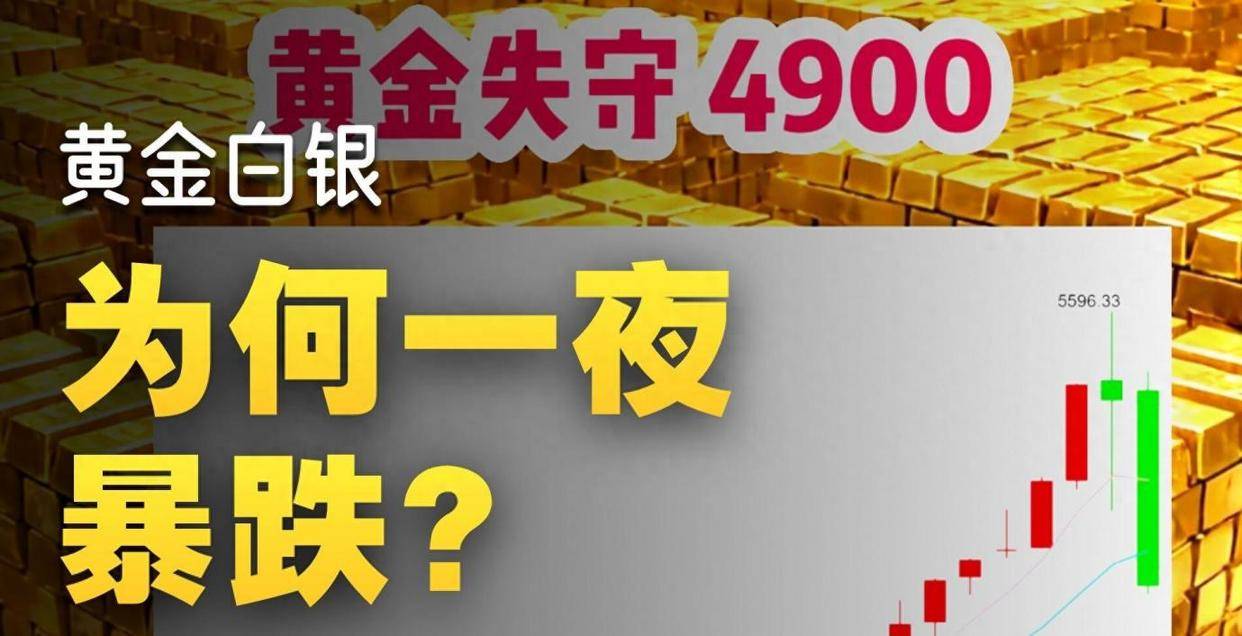
以下文章来源于格隆汇交易学苑 ,作者格隆汇小编 格隆汇交易学苑 . 以基本面为基础,专注于趋势交易 1月31日凌晨,现货白银价格一度暴跌36%,创出历史最大日内跌幅;现货黄金价格一度下跌超过12%,盘中跌穿每盎司4700美元,遭遇40 年来单日最大跌幅。 此次暴跌 由美联储政策预期转向、美元走强、高位获利盘集中兑现及高杠杆资金踩 踏共振引 发 ,短短两日金银价格从历史高位大幅回撤,全 球投资者遭遇重创,市场恐慌情绪蔓延。 不少投资者疑惑,本轮金价上涨是否只是短期炒作?其实黄金上涨并非偶然,而是长期趋势的加速体现。面对近期金银史诗级暴跌,市场更关 心这是倒车接人还是行情终结,普通投资者又该如何应对后市? 01 美元信用"松动",黄金成"硬通货"首选 要理解黄金上涨,首先得看美元的情况——毕竟国际黄金主要以美元计价,美元信用弱了,黄金的价值自然就凸显出来。 现在美国的债务问题已经到了不容忽视的地步,联邦债务突破38万亿美元,每年光利息支出就超1万亿美元,甚至超过了国防预算。更关键的 是,特朗普政府还在推行大规模减税和增加国防开支的政策,这无疑会让财政赤字进一步扩大,美元的购买力长期面临贬值压力。 更让投资者不安的 ...

史诗级暴跌引发流动性踩踏,金银后市怎么走?
Di Yi Cai Jing· 2026-02-01 11:38
Core Viewpoint - The article discusses a significant market crash in gold and silver prices driven by a sudden shift in policy expectations following the nomination of Kevin Warsh as the new Federal Reserve Chairman, leading to a liquidity crunch and forced liquidations across various asset classes [1][2][3]. Group 1: Market Reaction - On the last trading day of January, gold prices experienced a historic drop, with spot gold falling over 12% and silver plunging more than 35%, marking the largest single-day declines in nearly 40 years [1][2]. - Gold prices fell from a peak of 5598.75 USD/oz to a low of 4682 USD/oz, closing at 4880.03 USD/oz, while COMEX gold futures dropped 8.35% [2]. - Silver saw an even steeper decline, with prices hitting a high of 121.65 USD/oz before plummeting to 74.28 USD/oz, closing down 26.42% [2]. Group 2: Policy Implications - Warsh's nomination is perceived as a shift towards a more hawkish stance for the Federal Reserve, which could undermine the previously supportive narrative for gold prices, leading to a significant sell-off [3][4]. - Analysts suggest that Warsh's approach may disrupt the narrative of central bank independence that had previously supported rising gold prices, resulting in a sharp increase in the dollar index [3]. Group 3: Margin Calls and Liquidation - The article highlights a vicious cycle of forced liquidations triggered by increased margin requirements from exchanges, leading to a downward spiral of selling pressure [4][5]. - The Chicago Mercantile Exchange and domestic exchanges raised margin requirements, exacerbating the liquidity crunch and forcing leveraged positions to liquidate [4][5]. Group 4: Technical Indicators - Prior to the crash, the gold and silver markets showed extreme overbought signals, with gold's RSI reaching 90 and silver's RSI exceeding 93, indicating a high likelihood of a correction [6]. - The implied volatility for gold ETFs surged to 39.67, reflecting a market with low tolerance for error and a need for significant price adjustments to absorb profit-taking and emotional premiums [6]. Group 5: Consumer Behavior - The article notes that retail investors faced challenges in responding to the price drop, with many unable to intercept orders for gold jewelry purchased at much higher prices [7]. - Retail policies regarding returns on gold products vary, with many retailers not accepting returns once the items are out of their possession, complicating consumer reactions to the price crash [7]. Group 6: Future Outlook - Despite the sharp decline, gold and silver recorded substantial gains for January, with COMEX gold and silver futures up 13% and 20% respectively [8]. - Analysts express divided views on the future of gold and silver, with short-term volatility expected due to ongoing forced liquidations, while long-term trends may favor a shift away from the dollar and increased central bank gold purchases [8][9].