鹰派货币政策

Search documents
黄金暴跌后大幅上涨,这次是上车机会吗?这可不一定!
Sou Hu Cai Jing· 2026-02-12 17:24
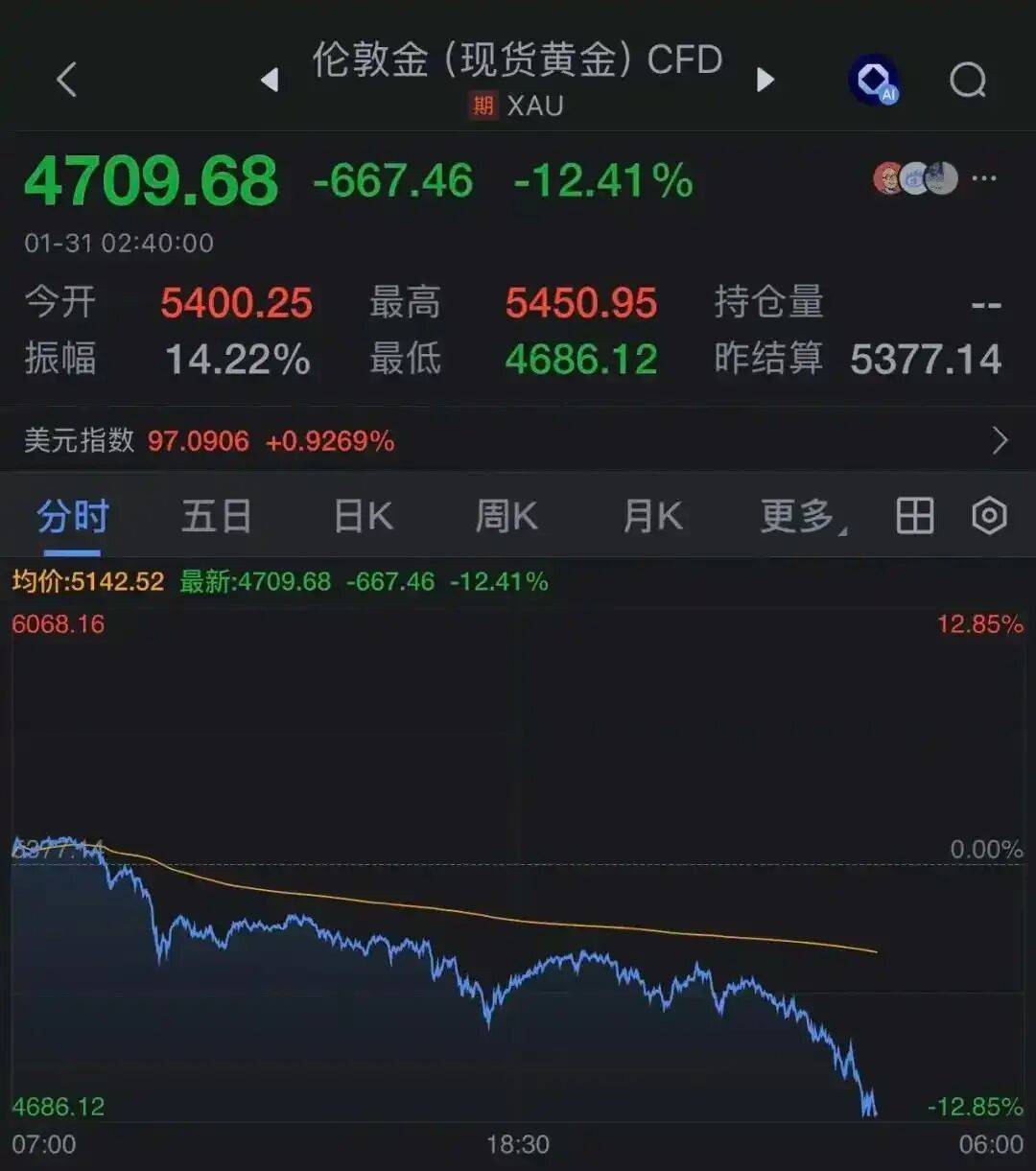
Core Viewpoint - The gold market experienced a dramatic crash following a brief surge to a historical high, driven by changes in U.S. Federal Reserve leadership and market vulnerabilities [1][4][6]. Group 1: Market Reaction - On January 29, 2026, international gold prices surpassed $5,500 per ounce, marking a historical peak, but within 48 hours, prices plummeted nearly 7% in just 28 minutes [1][3]. - Following the price drop, domestic gold retailers adjusted their prices, with some gold jewelry dropping from 1,700 yuan per gram to around 1,600 yuan per gram [3]. - Reports indicated long queues at gold recycling points, with some individuals attempting to liquidate significant amounts of gold, including one case of 2.12 million yuan worth of gold [3]. Group 2: Causes of the Crash - The primary trigger for the gold price crash was the nomination of Kevin Walsh as the next Federal Reserve Chairman, which led to expectations of a more hawkish monetary policy [4][6]. - Analysts noted that the market was already in a fragile state, and the announcement prompted profit-taking by speculative investors who had benefited from previous price increases [6]. - The increase in margin requirements for gold futures trading by institutions like the Chicago Mercantile Exchange exacerbated the volatility, forcing high-leverage investors to liquidate positions [6]. Group 3: Price Movements - On January 30, 2026, London gold experienced its largest single-day drop in 40 years, with a decline of 9.25%, while silver saw a staggering drop of over 35% on January 31 [6]. - By February 2, 2026, gold prices had fallen nearly $700 from the January 29 high, representing a 12.81% decline over three days [6]. - On February 2, gold prices continued to decline, briefly falling below $4,700, $4,600, and $4,500, with a maximum single-day drop of approximately 10% [7]. Group 4: Future Outlook - There is a notable divergence in market opinions regarding future gold price trends, with warnings about extreme valuations and a significant increase in global gold expenditure as a percentage of GDP, reaching 0.7%, the highest in 55 years [9].

美元反弹,贵金属重挫……高盛:市场可能再次误判了新美联储主席的实际立场
Sou Hu Cai Jing· 2026-02-03 05:23
Core Viewpoint - Goldman Sachs believes that Kevin Warsh will not genuinely push for a restart of quantitative tightening due to its destructive impact on risk assets [1] Group 1: Market Reactions - Following the announcement of Trump's nomination of Warsh for the next Federal Reserve Chair, the dollar rebounded while precious metals plummeted, indicating that the market is pricing in his "hawkish" views on the balance sheet [1] - Market trading based on Warsh's historical "hawkish" stance has some rationale, but actual implementation will require more time [2] Group 2: Warsh's Background and Influence - Warsh, who was appointed to the Federal Reserve by President Bush in 2006, held a hawkish monetary policy stance and was a critic of the Fed's quantitative easing measures post-financial crisis [1] - Goldman Sachs' trading and research team suggests that the market may be misjudging Warsh's actual position as the new Fed Chair [1] - The decision-making process of the Federal Reserve is one vote per member, and the current personnel changes are less significant compared to the large-scale turnover during Powell's tenure, meaning the new Chair will need time to establish influence [2] Group 3: Historical Context and Future Implications - Historical interpretations of Fed candidates often differ significantly from subsequent assessments, as illustrated by past comments from Powell, Yellen, and Bernanke [2] - Analysts emphasize that willingness to lower interest rates is a prerequisite for obtaining the Fed Chair position [1]

亚太股市,经历“黑色星期一”
Shang Hai Zheng Quan Bao· 2026-02-02 15:19
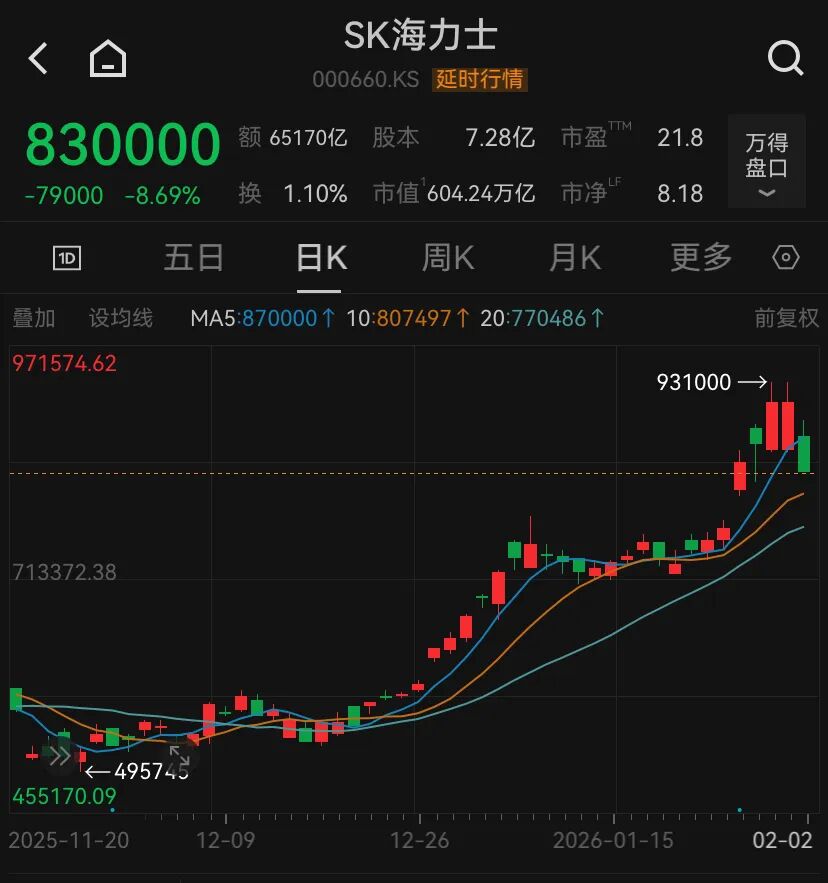
Market Overview - Major stock indices in the Asia-Pacific region closed lower, with the Nikkei 225 down 1.25% at 52,655.18 points and the Korean Composite Index down 5.26% at 4,949.67 points, marking the largest single-day drop since April 7, 2025 [1] - The Korean Composite Index experienced a significant intraday drop exceeding 5%, triggering a trading halt for 5 minutes [1] - Semiconductor and AI sectors were the primary declining sectors, with Samsung Electronics falling over 6% and SK Hynix dropping over 8% [1] Indonesia Market - Following last week's turmoil, the Indonesian market saw a further decline, with the Jakarta Composite Index dropping nearly 5% at the close [2] - MSCI issued a warning regarding the investability of the Indonesian stock market, despite regulatory reforms being implemented in response [4] - The Indonesian market is particularly sensitive to commodity prices, which adds complexity to the market pressures it faces [4] Global Market Influences - The S&P/ASX 200 index in Australia closed down 1.02% at 8,778.6 points, while the S&P/NZX 50 index in New Zealand fell 0.08% to 13,412.44 points [4] - Volatility in precious metal prices is considered a direct factor leading to the global stock market adjustment, with increased volatility in gold and silver impacting liquidity and margin calls among institutional investors [4] - The overall high valuation of global risk assets has intensified profit-taking sentiment [4] Federal Reserve Nomination Impact - The nomination of Kevin Warsh as the next Federal Reserve Chair has catalyzed a cooling of crowded trades from precious metals to tech stocks, with initial market reactions interpreting the nomination as hawkish [5] - Following the announcement, U.S. Treasury yields rose, the dollar strengthened, and gold prices significantly dropped [5] - Long-term perspectives suggest that Warsh's experience may help stabilize inflation expectations and U.S. borrowing costs, while potentially easing regulatory pressures on the banking sector [5]
金价暴跌!原因找到了!
Sou Hu Cai Jing· 2026-02-02 14:42
Core Viewpoint - A significant sell-off in the global precious metals market has led to a sharp decline in gold and silver prices, with gold dropping below $5000 per ounce and silver experiencing a dramatic fall of 36% at one point [1][4]. Group 1: Market Reactions - Spot gold prices fell by 9.52% to $4865 per ounce, with intraday losses exceeding 12% [1]. - Spot silver saw a decline of 26.9%, closing at $84.7 per ounce, while platinum and palladium dropped by 17.59% and 14.89%, respectively [1]. - Domestic gold jewelry prices also fell significantly, with brands like Chow Sang Sang and Lao Feng Xiang reporting daily declines of over 100 yuan per gram [4]. Group 2: Influencing Factors - The potential nomination of Kevin Warsh as the next Federal Reserve Chairman has raised concerns about a more hawkish monetary policy, which could suppress market expectations for further interest rate cuts [5][6]. - Market analysts suggest that the sell-off may be driven by forced liquidation due to high leverage among traders, particularly in the silver market [6]. - The market is reacting to the prospect of a stronger dollar and a reassessment of concentrated risks, contributing to the decline in precious metal prices [6]. Group 3: Future Outlook - According to China International Capital Corporation (CICC), the gold bull market may not be over, as the Federal Reserve's policies and the U.S. economy have not yet reached a turning point [10]. - CICC anticipates that inflation in the U.S. will continue to rise, potentially leading to a slowdown in the Fed's easing measures, which could exert temporary pressure on gold prices [10]. - The outlook for silver is expected to be more volatile than gold due to its smaller market size and lower liquidity [10].
特朗普提名鹰派美联储主席触发贵金属跳水 A股三十余只有色股跌停
Sou Hu Cai Jing· 2026-02-02 04:24
Group 1 - The international gold and silver prices experienced a significant correction, erasing previous gains due to the hawkish monetary policy stance of Kevin Walsh, nominated by President Trump as the next Federal Reserve Chair [1] - The A-share market saw a broad decline in the non-ferrous sector, with over thirty stocks in the precious metals sector hitting the daily limit down, and multiple gold ETF stocks also facing similar declines [1] - Domestic trading institutions have increased risk control measures, raising margin ratios and price fluctuation limits for precious metal contracts to mitigate market volatility risks [1] Group 2 - The physical gold market showed a polarized trend, with increased buying and selling activity in Shenzhen's Shui Bei trading market following the price correction, as some investors sold holdings to lock in profits while others took the opportunity to buy physical gold [1] - Goldman Sachs' trading department indicated that the market adjustment is primarily a technical position clean-up, with no substantial changes in the core driving factors since the beginning of the year [2] - UBS raised its gold price targets for March, June, and September 2026 to $6,200 per ounce, while cautioning that a hawkish shift in Federal Reserve policy could suppress gold prices [2]
早盘速递-20260202
Guan Tong Qi Huo· 2026-02-02 01:54
Report Summary 1. Hot News - Trump nominates Kevin Warsh as the next Fed Chair, but some senators oppose the nomination unless the investigation against Powell is dropped. Warsh's policy stance may combine rate cuts and balance - sheet reduction [2] - In 2025, China's national fiscal revenue was 21.6 trillion yuan, down 1.7% year - on - year, with securities transaction stamp duty revenue up 57.8% to 203.5 billion yuan. Fiscal expenditure was 28.74 trillion yuan, up 1% year - on - year, and about 10 billion yuan in child - rearing subsidies were issued [2] - China's official manufacturing PMI in January was 49.3%, down 0.8 percentage points month - on - month; non - manufacturing PMI was 49.4%, down 0.8 percentage points; and the composite PMI output index was 49.8%, down 0.9 percentage points [3] - Trump declares a national emergency, threatening to impose ad - valorem tariffs on countries supplying oil to Cuba, and warns of potential 50% tariffs on Canadian planes [3] - The Shanghai Futures Exchange will adjust the daily price limit of silver futures contracts from 2605 to 2701 to 17% and the margin ratios for hedging and general positions to 18% and 19% respectively from the close of February 3 [3] 2. Sector Performance - Key sectors to watch: urea, lithium carbonate, coking coal, silver, PVC [4] - Night session performance: Non - metallic building materials rose 1.85%, precious metals rose 38.07%, oilseeds rose 7.90%, soft commodities rose 2.17%, non - ferrous metals rose 26.49%, coal - coking - steel - ore rose 8.22%, energy rose 2.59%, chemicals rose 9.23%, grains rose 1.00%, and agricultural and sideline products rose 2.48% [4] 3. Sector Positions - The chart shows the changes in commodity futures sector positions in the past five days from January 26 to January 30, 2026 [5] 4. Performance of Major Asset Classes - Equity: Shanghai Composite Index fell 0.96% daily, 0% monthly, and rose 3.76% year - to - date; S&P 500 fell 0.43% daily, 0% monthly, and rose 1.37% year - to - date; Hang Seng Index fell 2.08% daily, 0% monthly, and rose 6.85% year - to - date, etc. [6] - Fixed - income: 10 - year Treasury bond futures rose 0.06%, 5 - year Treasury bond futures rose 0.01%, and 2 - year Treasury bond futures were flat [6] - Commodities: CRB commodity index fell 1.12% daily, 0% monthly, and rose 7.13% year - to - date; WTI crude oil rose 0.37% daily, 0% monthly, and rose 14.19% year - to - date; London spot gold fell 9.25% daily, 0% monthly, and rose 13.01% year - to - date [6] - Others: US dollar index rose 0.99% daily, 0% monthly, and fell 1.17% year - to - date; CBOE volatility index rose 3.32% daily, 0% monthly, and rose 16.66% year - to - date [6] 5. Stock Market Risk Appetite and Commodity Trends - The report presents the trends of major commodities such as the Baltic Dry Index, CRB spot index, WTI crude oil, London spot gold and silver, LME copper, etc., as well as the risk premium of the stock market [7]
金价历史性巨震 长期配置逻辑仍受部分机构认可
Zhong Guo Zheng Quan Bao· 2026-02-01 21:02
Core Viewpoint - On January 30, gold prices experienced a significant reversal, marking the largest single-day decline in nearly 40 years after reaching a historical high the previous trading day [1] Investor Sentiment - Investor sentiment has become polarized following the sharp decline in gold prices, with some early investors remaining calm due to unrealized gains, while others who did not enter the market feel relieved [2] - Discussions on investment platforms reflect anxiety, with topics such as whether to hold or sell amid the price drop gaining traction [2] - Some investors are taking a contrarian approach by gradually increasing their positions, indicating a complex emotional landscape among market participants [2] Factors Behind Price Decline - The sharp drop in gold prices is attributed to multiple factors, including profit-taking after a rapid increase of approximately 30% since the beginning of 2026 [3] - Increased margin requirements for gold futures trading have exacerbated the volatility, with exchanges raising margin ratios, leading to a chain reaction of selling [3] - The expectation of changes in monetary policy, particularly with the nomination of Kevin Walsh as the next Federal Reserve Chair, has added pressure on gold prices, as a stronger dollar negatively impacts gold [4] Institutional Perspectives - Various gold-themed ETFs have seen significant declines, with an average drop of over 7% on January 30, and some gold stock ETFs hitting their daily limit down [5] - Despite the recent volatility, there was a notable inflow of funds into related ETFs prior to the drop, indicating lingering optimism in the market [5] - Some institutions maintain a long-term bullish outlook on gold, citing factors such as ongoing de-dollarization, central bank purchases, geopolitical tensions, and inflation expectations as supportive for gold prices [6] - UBS has raised its gold price targets for March, June, and September 2026 from $5,000 to $6,200 per ounce, driven by stronger-than-expected demand [6]
金价历史性巨震长期配置逻辑仍受部分机构认可
Zhong Guo Zheng Quan Bao· 2026-02-01 20:53
Market Overview - On January 30, gold prices experienced a significant reversal, marking the largest single-day decline in nearly 40 years after reaching a historical high of $5,500 per ounce [1][2] - The sharp volatility in gold prices has stirred investor sentiment, leading to a focus on the future market direction [1] Investor Sentiment - Investor sentiment has become polarized following the price drop, with early holders remaining calm while those who did not enter the market feel relieved [1] - Discussions among investors on trading platforms reflect anxiety, with topics such as whether to sell or hold being widely debated [1] - Some investors are taking a contrarian approach, gradually increasing their positions, indicating a complex emotional landscape among market participants [1] Factors Behind Price Decline - The rapid increase in gold prices since the beginning of 2026, with a rise of approximately 30%, has led to profit-taking pressure as prices reached new highs [2] - Increased margin requirements for gold futures trading have exacerbated the downward volatility, with both domestic and international exchanges raising margin ratios [3] - Changes in monetary policy expectations, particularly with the nomination of a hawkish Federal Reserve chair, have strengthened the US dollar, negatively impacting gold prices [3] Institutional Perspectives - Various gold-themed ETFs have seen significant declines, with an average drop of over 7% on January 30, and several gold stock ETFs hitting their daily limits [4] - Despite the recent volatility, there was a notable inflow of funds into related ETFs prior to the drop, indicating ongoing optimism in the market [4] - Some institutions maintain a long-term bullish outlook on gold, with UBS raising its price targets for gold in 2026 due to expected strong demand [4] - The CEO of Tether announced plans to allocate 10% to 15% of their investment portfolio to gold, reflecting sustained interest from long-term capital in gold assets [5]
特朗普提名沃什为美联储主席引发鹰派预期 比特币24小时最大跌8.32%,以太币跌12.84%
Sou Hu Cai Jing· 2026-02-01 07:29
Core Viewpoint - The significant decline in major cryptocurrencies, including Bitcoin and Ethereum, is attributed to rising expectations of a hawkish shift in the Federal Reserve's monetary policy following the nomination of Kevin Walsh as the next Fed Chair [1] Group 1: Cryptocurrency Price Movements - On January 31, Bitcoin's price dropped to $77,082.48, with a maximum decline of 8.32% in the past 24 hours [1] - Ethereum's price fell to $2,354.67, experiencing a maximum decline of 12.84% in the same timeframe [1] - Other cryptocurrencies such as Solana, Dogecoin, and Binance Coin also saw significant price drops [1] Group 2: Market Sentiment and Influences - The market's anticipation of a hawkish monetary policy under Walsh has strengthened the US dollar and led to a substantial pullback in precious metals [1] - High-risk and high-volatility cryptocurrencies are facing concentrated sell-offs as they are no longer viewed as a hedge against currency depreciation but rather as speculative excess assets [1] - Marcus Tilen, founder of 10x Research, indicated that once the loose monetary policy ends, the speculative trend in cryptocurrencies is likely to recede [1]
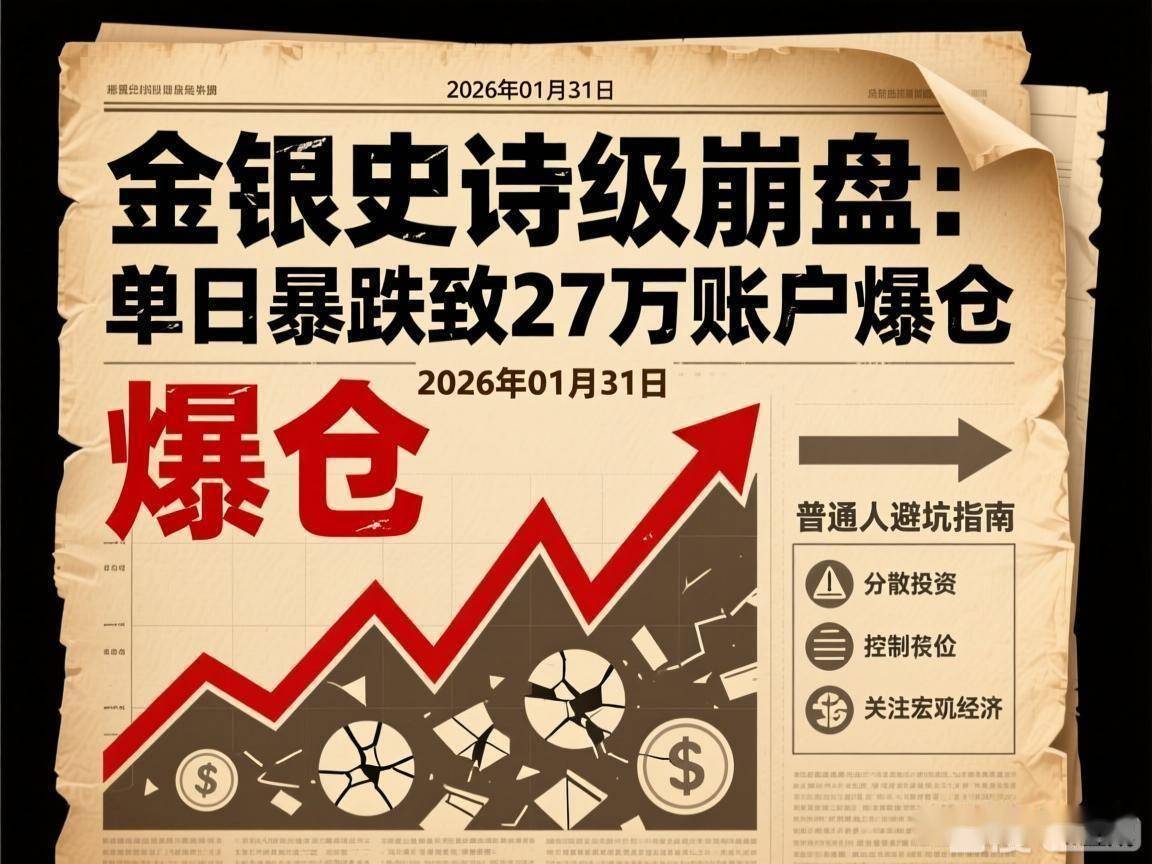
史诗级崩盘!金银创40年最大单日暴跌,27万账户爆仓,普通人避坑指南藏不住了
Sou Hu Cai Jing· 2026-01-31 22:14
Core Viewpoint - The recent unprecedented crash in gold and silver prices marks the largest single-day decline in 40 years, with gold dropping by 12.92% and silver by 35.89%, leading to over 270,000 accounts being liquidated [1][7]. Market Reaction - The crash was triggered by the nomination of Kevin Warsh as the Federal Reserve Chairman, which raised concerns about potential tightening of monetary policy, leading to panic selling among investors [3][4]. - Prior to the crash, gold and silver had reached record highs, with gold at $5,598.75 per ounce and silver at $121.65 per ounce, prompting many investors to enter the market at peak prices [3][4]. Technical Indicators - Technical indicators showed that both gold and silver were in a severely overbought state, with gold's RSI reaching 90 and silver's exceeding 93.8, indicating a correction was overdue [5]. - The market's reaction was exacerbated by profit-taking from investors who had seen significant gains over the past six months, further intensifying the sell-off [5]. Geopolitical and Economic Factors - A decrease in geopolitical tensions, such as signals of negotiations with Iran and a temporary ceasefire in Ukraine, contributed to the decline in safe-haven demand for gold and silver [5]. - Economic data released by the U.S. Labor Department indicated rising inflation, which could lead to a prolonged neutral monetary policy by the Fed, negatively impacting non-yielding assets like gold [5]. Impact on Investors - The crash resulted in significant losses for both retail and institutional investors, with many facing substantial financial distress due to leveraged positions [7]. - The gold mining sector also suffered, with major companies experiencing declines of over 10%, and the A-share market reflecting similar trends with significant market value losses [7]. Industry Chain Reactions - The gold recycling market reacted by increasing buyback fees and halting operations, while domestic gold jewelry prices saw a sharp decline [7]. - The solar industry faced unexpected losses due to the drop in silver prices, which constitute a significant portion of solar panel production costs [8]. Diverging Opinions on Market Outlook - Analysts are divided on whether the bull market for gold and silver has ended, with some arguing that underlying factors for long-term growth remain intact, while others believe the recent price action indicates a bubble has burst [9][10]. - The debate continues on whether now is a good time to buy, with some suggesting potential opportunities while others caution against further declines [11][12]. Recommendations for Investors - For those holding physical gold and silver, it is advised to maintain positions for long-term value, while those with leveraged positions should consider reducing exposure to mitigate risks [14][15]. - New investors are cautioned against using leverage and are encouraged to adopt a conservative approach, focusing on long-term asset allocation rather than speculative trading [16][17].