
服务消费

Search documents
大盘冲高回落,日成交额超3万亿
Dongguan Securities· 2025-08-27 23:33
Market Overview - The market experienced a pullback after an initial rise, with daily trading volume exceeding 3 trillion yuan [4] - Major indices closed in the red, with the Shanghai Composite Index leading the decline at -1.76% [2] Sector Performance - The top-performing sectors included Communication (+1.66%), Electronics (-0.40%), and Non-ferrous Metals (-1.10%) [3] - The worst-performing sectors were Beauty Care (-3.86%), Real Estate (-3.51%), and Comprehensive (-3.14%) [3] Concept Index Performance - Strong performances were noted in the F5G concept (+0.46%), Co-packaged Optical (CPO) (+0.18%), and Rare Earth Permanent Magnet (+0.10%) [3] - Underperforming concepts included Titanium Dioxide (-3.88%), Military Restructuring (-3.63%), and Tianjin Free Trade Zone (-3.49%) [3] Future Outlook - The market is expected to continue facing challenges due to insufficient effective demand, despite showing resilience against external shocks [6] - The report suggests that the technology growth style will remain dominant in September, with strategic investment opportunities in AI, defense, and innovative pharmaceuticals [6] Policy Developments - The State Council has issued opinions on the deep integration of artificial intelligence with six key sectors, aiming for over 70% application penetration by 2027 [5] - The Ministry of Industry and Information Technology has released guidelines to support the satellite communication industry, promoting direct satellite connections for mobile communication users [5]
2025年服贸会各项筹备工作基本就绪(权威发布)
Ren Min Ri Bao· 2025-08-27 22:19
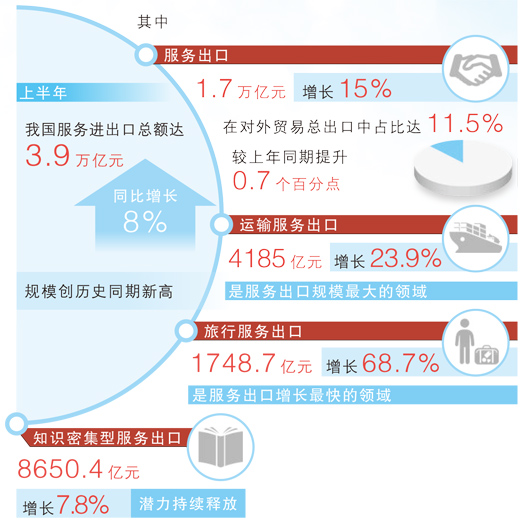
Core Insights - The 2025 China International Service Trade Fair will be held in Beijing from September 10 to 14, with preparations nearly complete [2] - In the first half of this year, China's service import and export total reached 3.9 trillion yuan, a year-on-year increase of 8%, marking a historical high for the same period [2] Group 1: Event Overview - The fair will feature over 70 countries and international organizations, with Australia as the first guest country, showcasing the largest exhibition group to date [3] - Nearly 2,000 enterprises are expected to participate, including around 500 Fortune Global 500 companies, covering 27 of the top 30 countries and regions in service trade [3] - The theme for this year's fair is "Digital Intelligence Leading, Service Trade Renewed," focusing on technology and intelligent applications [3] Group 2: Innovations and Highlights - More than 190 new products and achievements will be launched, including the world's first 3D-printed polymer fatigue-resistant absorbable vascular stent and the first domestic professional optical quantum computer exceeding one thousand bits [4] - The fair will also showcase service demonstration cases in artificial intelligence and green innovation, promoting high commercial value and replicable applications [4] Group 3: Economic Impact - In the first seven months of this year, China's service retail sales increased by 5.2%, with service consumption continuing to rise [4] - The Ministry of Commerce plans to introduce policies to expand service consumption, utilizing fiscal and financial measures to enhance service supply capabilities [4][5] Group 4: Policy Support - The Ministry of Commerce will strengthen policy support for service trade, including financial and tax measures to promote service exports [5][6] - Regulatory facilitation will be improved, including enhancing customs supervision and promoting cross-border data flow [6]

促进服务出口若干政策措施近期将出台
Zhong Guo Zheng Quan Bao· 2025-08-27 20:17
Group 1 - The Ministry of Commerce will introduce several policy measures next month to expand service consumption, utilizing fiscal and financial tools to enhance service supply capacity and stimulate new service consumption growth [1][2] - In the first half of the year, China's travel service import and export scale exceeded 1 trillion yuan, with a growth rate of 12.3%, and is expected to maintain rapid growth for the entire year [1][3] - The Ministry of Commerce is working on policies to promote service exports, which will be issued soon, focusing on fiscal, financial, regulatory facilitation, and international market expansion [1][2] Group 2 - The new policies will enhance support for key areas and projects in service exports, optimize tax refund procedures, and improve the efficiency of export tax refund applications [2][3] - The policies aim to fill the gap in service trade export-specific policies and enhance the international competitiveness of China's service industry [3][4] - The service retail sector has seen a year-on-year growth of 5.2% from January to July, indicating a shift towards a balanced consumption pattern between goods and services [3][4] Group 3 - The upcoming service trade fair will feature over 70 countries and international organizations, with Australia as the first guest country, and nearly 2000 enterprises expected to participate [4][5] - The 2025 service trade fair will focus on the theme "Digital Intelligence Leading, Service Trade Renewing," featuring various activities including global service trade summits and exhibitions [5][6] - Over 190 new products and achievements will be launched at the fair, showcasing advancements in technology and innovative services [6]
商务部下月将出政策激发服务消费新增量
Sou Hu Cai Jing· 2025-08-27 17:07
Group 1 - The Ministry of Commerce will introduce several policy measures next month to expand service consumption, coordinating with relevant departments [1] - The measures will utilize fiscal and financial tools to optimize and enhance service supply capacity, aiming to stimulate new service consumption growth [1] - The "Su Super" league's first six rounds generated a total service revenue of 37.96 billion yuan, representing a year-on-year increase of 42.7% [1]
城市24小时 | 这个都市圈,又画了个“圈”?
Mei Ri Jing Ji Xin Wen· 2025-08-27 13:21
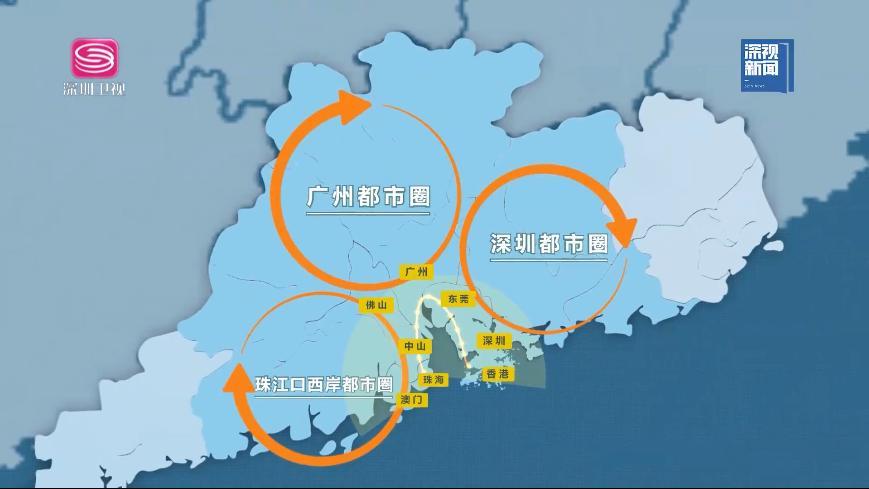
Group 1 - The core viewpoint emphasizes the construction of a high-quality development pilot area for urban-rural integration in the Zhuxi metropolitan area, with a focus on collaboration among Zhuhai, Zhongshan, and Jiangmen to enhance regional integration and development [1][2] - The meeting highlighted the need for improved connectivity through cross-city road construction and the enhancement of internal transportation networks to elevate regional accessibility [1] - The plan aims to leverage cultural and tourism integration, promoting local historical resources and creating distinctive cultural tourism brands to enrich tourism product offerings [1][2] Group 2 - The development plan for the Zhuxi metropolitan area identifies existing challenges such as weak core city driving force and insufficient industrial collaboration and innovation resources [3] - The initiative to establish a high-quality development demonstration area for urban-rural integration was first proposed in September last year, aiming for regional project collaboration and institutional innovation [3] - Recent discussions among Zhuhai, Zhongshan, and Jiangmen have focused on building a pilot area for urban-rural integration, emphasizing infrastructure connectivity, industrial collaboration, and shared public services [3] Group 3 - The Guangdong Provincial Department of Culture and Tourism plans to launch a "Golden Autumn Cultural Tourism Consumption Season" starting September 12, with a budget of 20 million yuan for issuing cultural tourism consumption vouchers [6] - The initiative aims to stimulate local and national tourism, benefiting residents and visitors alike [6]
【财闻联播】美团二季度净利同比骤降89%!吉林省将实施境外旅客离境退税政策
券商中国· 2025-08-27 11:34
★ 宏观动态 ★ 外交部回应李在明涉华言论 8月27日,外交部发言人郭嘉昆主持例行记者会。韩国《中央日报》记者提问,韩国与中美两国保持着亲密的合作,同时 也保持着一定的距离。在这种情况下,韩国总统李在明表示,韩国不能继续走"安全靠美国,经济靠中国"的路线,这样 的逻辑不可能再维持下去了。他的这一表态引发广泛关注。请问中方对此有何评论? 上海发布关于加快推进本市城中村改造工作的实施意见 郭嘉昆表示,一个健康、稳定、持续深化的中韩关系,符合两国人民的根本利益,也有利于地区乃至世界的和平稳定与 发展繁荣,这是中韩双方的共识。"中韩关系发展源于双方共同利益,不针对第三方,也不应受第三方因素的影响。"郭 嘉昆指出,中方对韩政策保持连续性、稳定性。希望韩方同中方相向而行,共同努力推动中韩战略合作伙伴关系持续、 健康、稳定地发展。 商务部:将于9月出台扩大服务消费的若干政策措施 8月27日,商务部副部长盛秋平在国新办新闻发布会上指出,我国消费形态已经逐步转向以商品消费和服务消费并重的阶 段,下一步,商务部将加强政策促进,形成工作合力。盛秋平指出,今年以来,商务部发挥促进服务消费发展工作协调 机制作用,围绕银发旅游开出了银发 ...

若干政策措施9月将出台 我国服务消费新增量已在路上
Bei Jing Shang Bao· 2025-08-27 11:29
Core Insights - The Chinese consumption pattern is shifting towards a balanced focus on both goods and services consumption, with the Ministry of Commerce planning to introduce policies to expand service consumption in September [2][3][4] - Service retail sales increased by 5.2% year-on-year from January to July, indicating a growing importance of service and experience consumption in the economy [3][4] - By 2024, per capita service consumption expenditure is expected to account for 46.1% of total per capita consumption expenditure, contributing 63% to the growth of resident consumption expenditure [3][4] Service Consumption Growth - The service sector is identified as a key area for boosting consumption, with potential to enhance both life services and productive services, thereby optimizing industrial structure and increasing the value added by services [4][5] - Service consumption is directly linked to improving people's livelihoods, particularly in sectors like elderly care, healthcare, and childcare, which enhances overall happiness [4][5] - The service sector is projected to account for 48.8% of total employment in China by 2024, with significant growth in employment in hospitality, residential services, and cultural entertainment sectors [4][5] Policy Measures and Openings - The Ministry of Commerce aims to address the issue of insufficient high-quality service supply by increasing openness and reducing restrictions, particularly in telecommunications, healthcare, and education [5][6] - The introduction of more service sectors into the "Encouraging Foreign Investment Industry Directory" is expected to enhance the quality of service supply and stimulate market vitality [5][6] - Financial and fiscal incentives will be utilized to boost service consumption demand, alongside reducing restrictive policies to invigorate the service industry [6][7] Innovation and New Consumption Scenarios - High-quality, diversified, and composite innovative scenarios are crucial for enhancing service consumption [7] - The Ministry of Commerce will support the development of new consumption formats and scenarios, promoting integration across various sectors such as tourism, culture, and sports [7][8] - The upcoming China International Fair for Trade in Services (CIFTIS) in 2025 will showcase over 190 new service trade achievements and is expected to further promote the import of high-quality services [8]

“城市骑士”查收新制服 新就业群体收获新前景
Mei Ri Jing Ji Xin Wen· 2025-08-27 11:27
Core Insights - The article discusses the transformation of delivery riders into "city knights" in China, emphasizing the need for innovative designs to ensure the welfare of 287 million flexible workers in the context of urbanization and economic development [1][2][4]. Group 1: Transformation of Delivery Workers - Alibaba is initiating a significant transformation for delivery riders, rebranding them as "city knights" to redefine their professional identity and enhance their career development [2][3]. - The new uniforms for riders, featuring advanced materials and practical designs, symbolize this transformation and aim to improve the riders' working conditions and professional dignity [3][4]. Group 2: Welfare and Growth Initiatives - Taobao and Ele.me are launching various measures to enhance rider welfare, including pension and medical insurance options, and career development programs through the "Orange Initiative" [4][8]. - The shift from "rider" to "knight" represents a major upgrade in job security and growth opportunities, encouraging workers to view their roles as long-term careers [4][8]. Group 3: Urban Integration and Social Responsibility - The rapid urbanization in China has led to a significant population of "new citizens," highlighting the importance of integrating flexible workers into urban life for better governance and citizen welfare [5][6]. - Delivery riders are increasingly seen as essential contributors to urban safety and community well-being, with initiatives recognizing and rewarding their positive actions [7][8]. Group 4: Economic Impact and Service Consumption - The article emphasizes the role of service consumption in driving economic growth, with platforms like Taobao Flash Purchase creating millions of new jobs and stabilizing income for workers [8][9]. - The multiplier effect of subsidies, such as the 50 billion yuan consumption vouchers, demonstrates how platforms can stimulate additional consumer spending and benefit all stakeholders involved [9].

2025年服贸会筹备就绪 将首发91项创新成果
Zhong Guo Qing Nian Bao· 2025-08-27 11:19
Group 1 - The 2025 China International Service Trade Fair (CIFT) is set to open on September 10, showcasing innovative developments from over 70 countries and international organizations, with 190 key service trade achievements displayed, including 91 global and national premieres [1][3] - The event aims to enhance the "Beijing Service" brand, transitioning from promoting "Beijing Service" to "China Service," creating an atmosphere where the CIFT is the go-to for Beijing services [1][3] - Over 100 "Beijing Service" cases have been cataloged, including various innovative platforms and services, with ongoing updates planned to enhance the offerings [1] Group 2 - The CIFT serves as a significant platform for service trade openness, innovation, and cooperation, while also playing a crucial role in expanding service consumption [3][4] - The event will feature over 40 supporting activities, including cultural markets, gourmet food, performances, and classic sports exhibitions, aimed at fostering new growth points in service consumption [3][4] - Immersive activities will be organized at unique venues like Shougang Park, combining camping, art performances, and markets to showcase innovative cultural and tourism services [3][4]
2025年服贸会将启 激发服务贸易投资与消费新活力
Xin Hua She· 2025-08-27 10:42
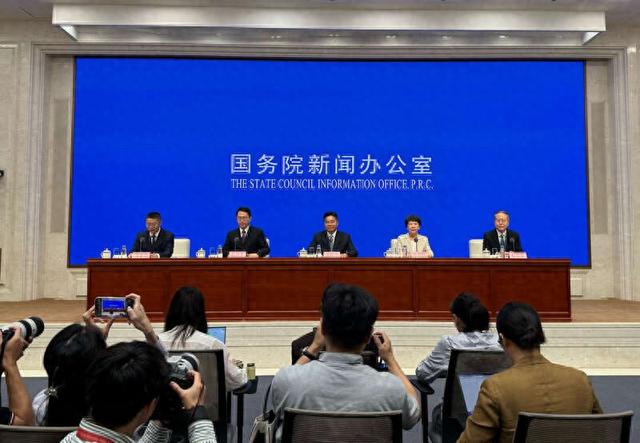
Core Viewpoint - The 2025 China International Service Trade Fair will be held in Beijing from September 10 to 14, focusing on enhancing service trade investment and consumption vitality through a platform for global cooperation and innovation [1][2]. Group 1: Event Highlights - The fair will feature participation from over 70 countries and international organizations, with Australia as the guest country and Anhui province as the guest province [2]. - Nearly 2,000 enterprises are expected to participate, including around 500 Fortune 500 companies, covering 27 of the top 30 service trade countries and regions [2]. - The event will include six types of activities: global service trade summit, exhibitions, forums, negotiations, result releases, and supporting activities, emphasizing international participation and technological empowerment [2][3]. Group 2: Industry Development - China's service trade import and export volume reached a historical high in the first half of the year, with expectations for continued growth and structural optimization throughout the year [4]. - The World Trade Organization forecasts a 4.0% growth in global service exports by 2025, with major economies showing rapid growth in service trade [4]. - In the first half of the year, China's travel service import and export volume exceeded 1 trillion yuan, with a growth rate of 12.3%, and knowledge-intensive service imports and exports are expected to maintain this growth rate [4]. Group 3: Policy Support - The Chinese government plans to enhance policy support for service trade, focusing on high-level openness and quality development, with upcoming measures to promote service exports through fiscal, financial, and facilitation aspects [5][6]. - The fair will serve as a significant platform for expanding service consumption, with over 10 inspection routes designed to showcase new digital and intelligent consumption scenarios [6]. - Policies aimed at enhancing service consumption in areas such as home services, health consumption, and green consumption will be implemented, with further measures to be announced next month [6].