
双碳目标

Search documents
投资绿色未来 南京银行全力支持零碳园区建设
Jing Ji Guan Cha Wang· 2026-01-06 04:22
Core Viewpoint - The development of zero-carbon parks is becoming a crucial driver for high-quality economic growth, with Nanjing Bank actively supporting this trend through innovative green financial products and deepening cooperation with government and enterprises [1]. Group 1: Support for Zero-Carbon Parks - Nanjing Bank has made significant progress in supporting zero-carbon parks by offering innovative financial products such as the "near-zero carbon factory" linked loan, which provides interest rate exemptions for companies achieving near-zero emissions [2]. - The bank has established a green low-carbon development co-creation center in the Jiangning Economic and Technological Development Zone, aiming to support the creation of Jiangsu's first "near-zero" demonstration factories and the first "zero-carbon outlet" in Nanjing [2]. - Nanjing Bank has provided over 1.3 billion yuan in green credit to support multiple zero-carbon industrial park pilot projects in Yancheng, focusing on sectors like green food, green infrastructure, and green energy [2]. Group 2: Innovative Financial Products - Nanjing Bank launched the "Park Support Plan" in 2021, offering tailored financial services to meet the diverse needs of zero-carbon park development [3]. - The bank provides comprehensive financing services for energy projects, contract energy management services to alleviate initial investment pressures, and financing leasing for green transportation upgrades [3]. - Nanjing Bank has introduced innovative financing options such as pollution rights and virtual power plant revenue rights, along with professional consulting services for carbon asset management [3]. Group 3: Strategic Partnerships and Future Outlook - Nanjing Bank has signed green low-carbon strategic cooperation agreements with nearly 30 parks, aiming for a win-win collaboration through specialized financial services and preferential policies [4]. - The bank has increased its green loan issuance, with an annual growth rate exceeding 30%, supporting the sustainable development of the regional economy [5]. - Nanjing Bank aims to deepen green financial product innovation and collaborate with various stakeholders to build a multi-win zero-carbon financial ecosystem, contributing to the national "dual carbon" goals [6].

金融与生态同频共振
Jin Rong Shi Bao· 2026-01-06 03:34
Core Viewpoint - The People's Bank of China Suqian Branch is focusing on integrating green finance with rural revitalization, aiming to enhance ecological and industrial development in rural areas by optimizing financial support mechanisms [1][2]. Group 1: Financial Support for Rural Revitalization - As of October 2025, the agricultural loan balance in Suqian reached 287.92 billion yuan, accounting for 38% of total loans, the highest in the province [1]. - The green loan balance in Suqian reached 139.01 billion yuan by September 2025, showing a year-on-year growth of 44%, surpassing the overall loan growth rate by 34 percentage points [1]. - The Suqian Branch has issued a plan to enhance financial support for green and rural revitalization, promoting actions that guide financial institutions to increase funding in key areas [1][2]. Group 2: Innovative Financial Products - The branch has allocated 4.7 billion yuan for specialized re-loan quotas to support rural and green development, introducing products like "Re-loan + Flower Loan" and "Re-loan + Green Enterprise Loan" [3]. - Since 2025, financial institutions have utilized "Re-loan +" products to issue 17.76 billion yuan in loans for key rural revitalization areas, with 2.7 billion yuan directed towards green ecological projects [3]. - The introduction of "Water Rights Loans" has resulted in 2.26 billion yuan in financing, effectively meeting the needs of water-related enterprises [3]. Group 3: Policy and Incentives for Green Financing - The Suqian Branch is enhancing the promotion of transformation financial policies to encourage enterprises to apply for green financing recognition, establishing a green channel for financial institutions [4]. - Financial incentives include a subsidy for green financing guarantee services, aiming to reduce costs for eligible projects and improve access to financing [4]. - Collaborative efforts with various sectors have led to the launch of "Environmental Protection Loans," providing favorable rates for projects related to pollution control and ecological restoration [4]. Group 4: Green Finance Innovation and Development - The Suqian Branch is actively promoting the establishment of a provincial-level green finance innovation reform pilot zone, focusing on the integration of green finance with rural revitalization [5]. - Four local rural commercial banks have completed annual environmental information disclosure, with one institution exploring climate stress testing, contributing to low-carbon transformation [5].
我国氢能领域首个CCER方法学发布
Zhong Guo Hua Gong Bao· 2026-01-06 03:11
Core Insights - The article discusses the release of the first voluntary greenhouse gas emission reduction (CCER) project methodology for renewable energy electrolysis hydrogen production in China, which aims to convert emission reductions into tradable carbon assets [1][2] - Hydrogen is recognized as a clean and efficient energy source, with global hydrogen consumption projected to reach 105 million tons by 2024, while China's hydrogen production exceeds 36.5 million tons, accounting for 24% of global output [1] - The methodology is expected to significantly contribute to achieving carbon neutrality goals by promoting the use of clean hydrogen in industries such as steel, chemicals, and transportation [2] Group 1 - The methodology allows for the conversion of emission reductions from clean hydrogen production into tradable carbon assets, thereby enhancing the economic viability of renewable hydrogen projects [2] - Currently, fossil fuel-based hydrogen production accounts for 98% of China's hydrogen output, with renewable energy electrolysis hydrogen making up only about 1%, indicating a high carbon intensity in hydrogen production [1] - The cost of renewable hydrogen projects is currently 2-3 times higher than fossil fuel-based hydrogen, with 26 existing projects operating at a loss [1] Group 2 - The methodology specifies that eligible projects must be newly established renewable energy electrolysis hydrogen projects powered primarily by self-owned wind or solar power plants [2] - It is estimated that existing eligible projects could achieve annual emission reductions of approximately 1.57 million tons of CO2 equivalent, with potential increases to about 6 million tons by 2030 as renewable hydrogen production rises to around 5 million tons [2] - The methodology is expected to benefit a wide range of stakeholders, particularly green hydrogen project owners in resource-rich regions, and will stimulate the release of green hydrogen capacity for industrial users [2]
能源强国建设“大家谈”︱读懂建设能源强国的发展逻辑、思想力量和制度优势
国家能源局· 2026-01-06 01:49
Core Viewpoint - The article emphasizes the importance of building a strong energy nation in China, highlighting the strategic direction, historical context, and institutional advantages that support this goal [4][10][23]. Group 1: Energy Development and Achievements - Energy is a crucial material foundation and driving force for economic and social development [3]. - China has transformed from a small energy country in 1949, with a primary energy production of 0.2 billion tons of standard coal, to a major energy power with a projected production of 4.98 billion tons by 2024, marking a 249-fold increase [6]. - The total electricity generation in China is expected to exceed 10 trillion kilowatt-hours by 2024, setting a new record for a single country [7]. - Since the 18th National Congress, China's energy consumption per unit of GDP has decreased by 27.2%, making it one of the fastest countries in the world to reduce energy intensity [7]. Group 2: Strategic Framework and Policy Initiatives - The construction of a new energy system and the goal of becoming an energy powerhouse are included in the "14th Five-Year Plan" and emphasized in various central economic meetings [4][13]. - The strategic framework for energy security was proposed in 2014, with the goal of building an energy powerhouse first introduced in 2021 [12][13]. - The energy strategy is characterized by a clear blueprint and a closed-loop approach from strategic proposal to execution [14]. Group 3: Energy Structure and Security - China faces challenges with its energy structure, characterized by an abundance of coal but a lack of oil and gas, leading to a focus on developing renewable energy [18]. - The energy self-sufficiency rate in China has reached over 84%, establishing a diversified supply structure that includes coal, oil, gas, nuclear, and renewable energy [18]. - The country has built a comprehensive energy infrastructure network to ensure energy delivery and usage across regions [18]. Group 4: Green Energy Transition and Innovation - By the end of last year, non-fossil energy consumption in China was expected to exceed the 20% target set for the "14th Five-Year Plan" [19]. - China has established the world's largest and most complete renewable energy industry chain, with over 80% of global production capacity in key solar manufacturing segments [19]. - The country is actively pursuing energy technology innovation, with significant advancements in nuclear power and renewable energy technologies [20]. Group 5: International Cooperation and Energy Diplomacy - China is enhancing energy cooperation with various regions, including Central Asia, the Middle East, and Africa, while promoting sustainable energy initiatives [22]. - The country is committed to sharing opportunities and addressing challenges in global energy governance, adhering to the concept of a community with a shared future for mankind [22]. Group 6: Institutional Advantages and Governance - The article highlights the advantages of China's centralized leadership and top-level design in energy development, ensuring stability and predictability in policies [26][27]. - The integration of effective market mechanisms with proactive government involvement is emphasized as a key feature of China's energy system [29]. - The article underscores the importance of a coordinated approach to energy resource allocation and emergency response capabilities [28].

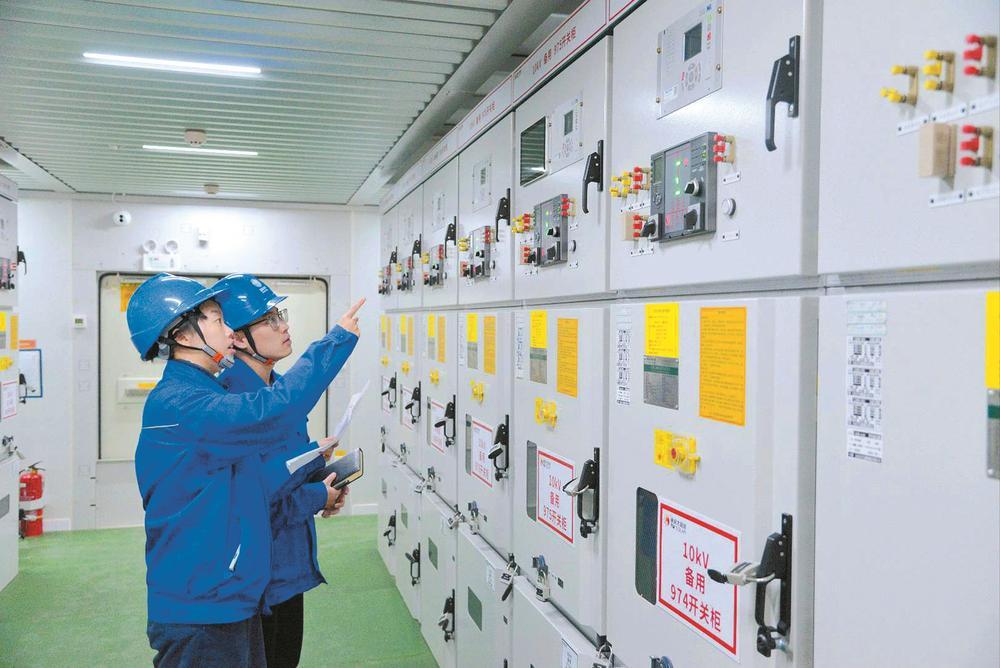
金观平:绿电发得出更要用得好
Jing Ji Ri Bao· 2026-01-06 00:12
Core Viewpoint - The article emphasizes the urgency of expanding green electricity (green power) applications in China to achieve carbon neutrality goals and enhance global competitiveness in manufacturing [1][2]. Group 1: Importance of Green Electricity - China has established the world's largest renewable energy system, but the challenge lies in effectively utilizing green electricity [1]. - The European Union's carbon border adjustment mechanism, effective from January 1, 2026, will require Chinese companies to provide clear proof of green production for products like steel and cement to avoid high tariffs [1]. - The reliance on green electricity is becoming a new standard in international trade, impacting China's manufacturing competitiveness [1]. Group 2: Challenges in Green Electricity Application - The intermittent nature of wind and solar energy creates significant challenges for the power grid, leading to wasted green electricity due to insufficient grid capacity [2]. - Despite the reduction in costs for solar panels and wind turbines, the overall system costs for green electricity remain high, necessitating substantial investments in storage facilities and flexible coal power modifications [2]. - The current market mechanisms for green electricity are underdeveloped, with complexities in certification and trading, leading to difficulties for companies in purchasing and verifying green electricity [2]. Group 3: Solutions for Expanding Green Electricity Use - To expand green electricity applications, there is a need for technological innovation and improved market mechanisms, including the development of energy storage technologies and smart grids [3]. - Establishing a unified national electricity market and simplifying green electricity trading processes are essential for making green electricity more accessible [3]. - Implementing policies that incentivize the use of green electricity for companies can create a win-win situation, benefiting both consumers and producers [3].
增油与降碳一举两得
Xin Lang Cai Jing· 2026-01-05 22:49
Core Viewpoint - The largest carbon capture, utilization, and storage (CCUS) project in the Beijing-Tianjin-Hebei region has injected a total of 300,000 tons of carbon dioxide since its initiation, contributing to both oil production and carbon reduction efforts, equivalent to planting approximately 2.48 million trees [1] Group 1: Project Overview - The CCUS pilot project at the Bailing West potential mountain oil reservoir aims to enhance oil recovery while achieving carbon reduction [1] - The project has been operational since the end of 2022 and is expected to continue until December 27, 2025 [1] - The oil reservoir has a high water cut of 90%, making traditional recovery methods less effective [1] Group 2: Technical Innovations - The project utilizes supercritical carbon dioxide to improve oil recovery by accessing oil trapped in small fractures and low-permeability rocks, potentially increasing oil recovery rates by 27% [2] - A new injection and extraction model has been developed, focusing on injecting gas at the top and extracting oil from lower sections, enhancing recovery efficiency [2] - A digital dynamic model has been created to accurately track fluid movements underground, improving extraction outcomes [2] Group 3: Environmental Impact and Future Plans - The project has optimized a system to recover and reinject carbon dioxide that escapes during oil extraction, aiming for a nearly 100% storage rate [3] - The daily oil production capacity in the CCUS application area has increased from 15 tons to 112 tons [3] - The project plans to sequester 8.47 million tons of carbon dioxide and increase oil production by over 3 million tons, with a carbon reduction effect equivalent to 70 million trees or 5 million compact cars being off the road for a year [3] - The success of the Bailing West CCUS pilot project provides a replicable model for other aging oil fields in China [3]
绿电发得出更要用得好
Jing Ji Ri Bao· 2026-01-05 22:39
Core Viewpoint - The article emphasizes the urgency of expanding green electricity (green power) applications in China to achieve carbon neutrality goals and enhance global competitiveness in manufacturing [1][2]. Group 1: Importance of Green Electricity - China has established the world's largest renewable energy system, but the challenge lies in effectively utilizing green electricity [1]. - The European Union's carbon border adjustment mechanism, effective from January 1, 2026, will require Chinese companies to provide clear proof of green production for products like steel and cement to avoid high tariffs [1]. - The reliance on fossil fuels and high dependence on foreign oil and gas highlight the need for energy security and a shift towards renewable energy to support national security and economic stability [1]. Group 2: Challenges in Green Electricity Application - The intermittent nature of wind and solar energy creates significant challenges for the power grid, leading to wasted green electricity due to insufficient grid capacity [2]. - Despite the reduction in costs for solar panels and wind turbines, the overall system costs for green electricity remain high, necessitating substantial investments in storage facilities and flexible coal power modifications [2]. - The current market mechanisms for green electricity are underdeveloped, with complexities in certification and trading, leading to difficulties for companies in purchasing and verifying green electricity [2]. Group 3: Solutions for Expanding Green Electricity Use - To expand green electricity applications, there is a need for technological innovation, such as the development of energy storage technologies and smart grids to enhance the flow of green electricity [3]. - Establishing a unified national electricity market and simplifying green electricity trading processes will make it easier for companies to engage in green electricity transactions [3]. - Implementing policies that provide financial incentives for companies using and producing green electricity can create a win-win situation, promoting broader adoption of green energy [3].
为智能化工厂提供一个“超级充电宝”
Xin Lang Cai Jing· 2026-01-05 20:49
Core Viewpoint - The largest customer-side energy storage project in Chengdu has officially commenced trial operations, providing a significant boost to the local manufacturing sector by ensuring stable power supply and supporting the "dual carbon" goals [3][5]. Group 1: Project Overview - The energy storage system, located in the Sichuan Jintang Economic Development Zone, has a total power capacity of 25 megawatts and a battery capacity of 50 megawatt-hours, capable of storing up to 50,000 kilowatt-hours of electricity, which can meet the company's power needs for 0.2 days [4]. - The project utilizes lithium iron phosphate battery storage technology, known for its high charge and discharge efficiency and stable operation [4]. Group 2: Economic Impact - The energy storage system is expected to achieve an annual charging capacity of up to 30 million kilowatt-hours, potentially saving the company nearly 10 million yuan in electricity costs each year [4]. - The project adopts an intelligent operation strategy of "two charges and two discharges," charging during off-peak hours and discharging during peak hours, thus optimizing energy costs [4]. Group 3: Industry Development - The successful implementation of this energy storage project expands the application scenarios for user-side energy storage in Chengdu and injects new momentum into the exploration of the "source-network-load-storage" collaborative development model [5]. - The Jintang Economic Development Zone has already seen three energy storage projects operational, with plans for a 100MW/200MWh shared energy storage project to further support local enterprises [7].
院士报告:面向2035的新材料研发与应用重点任务
材料汇· 2026-01-05 16:02
Core Viewpoint - The article emphasizes the critical need for new materials in various strategic sectors such as information technology, energy, advanced manufacturing, and healthcare to support China's goal of becoming a technology and manufacturing powerhouse by 2035 [2][4]. Group 1: New Generation Information Technology - The rapid development of AI, supercomputing, and cloud computing necessitates new information materials, particularly in advanced computing and storage [4]. - Traditional silicon-based materials are nearing their performance limits, prompting the exploration of two-dimensional semiconductor materials like graphene and transition metal dichalcogenides for next-generation chips [4][5]. - Quantum computing materials, including superconductors and topological materials, are emerging as pivotal technologies in the computing sector [5]. Group 2: Communication and Networking - The next decade will see the evolution of communication networks, requiring new devices and materials such as wide bandgap semiconductors and high-performance optical components [6]. - The development of high-performance laser and electro-optic modulators is essential for F6G optical communication systems [6][7]. - Chip output and all-optical interconnect technologies are crucial for enhancing computing power and energy efficiency in data centers [7]. Group 3: New Energy Materials - The photovoltaic industry is a competitive sector for China, with N-type monocrystalline silicon battery technologies becoming mainstream [9]. - There is a need for advancements in thin-film solar cells and new stacked solar cell materials to maintain global leadership in solar energy [9][10]. - The development of high-performance energy storage materials, including solid-state and sodium-ion batteries, is critical for the electrification of transportation and energy sustainability [10]. Group 4: Advanced Manufacturing and Equipment - High-performance materials are essential for aerospace, robotics, and marine engineering, with a focus on lightweight and durable materials [17][19]. - The development of advanced structural materials for high-speed trains and aerospace applications is necessary to meet stringent performance requirements [21][19]. - The military sector requires lightweight materials that can withstand extreme conditions, with a focus on new composite materials and wide bandgap semiconductors [23][22]. Group 5: Healthcare and Biomanufacturing - There is a growing demand for regenerative biomaterials that can facilitate tissue and organ repair, addressing clinical needs [25]. - Minimally invasive repair materials and devices are becoming a significant focus in high-end medical equipment development [26]. - The push for biomanufacturing materials, including bioplastics and bio-based chemicals, is crucial for reducing reliance on fossil resources and achieving sustainability goals [27].
136号文破局之后 多省新能源电价机制出炉
2 1 Shi Ji Jing Ji Bao Dao· 2026-01-05 15:31
Core Viewpoint - The introduction of the "136 Document" marks a significant shift in China's renewable energy development model from a fixed price system to a market-driven pricing mechanism, aimed at promoting high-quality development in the renewable sector [1][3][5]. Group 1: Impact of the 136 Document - The 136 Document has led to a decline in photovoltaic (PV) installations in the second half of the year due to market adjustments [1][2]. - Different regions have implemented varying mechanisms for pricing, resulting in significant disparities in electricity prices across provinces, with some like Shanghai and Guangdong nearing their bidding caps, while others like Shandong are closer to their bidding floors [1][7][9]. Group 2: Market Dynamics and Investment Shifts - The differences in mechanism pricing are influencing investment directions, with lower prices in regions like Shandong potentially driving capital towards wind energy instead of solar [2][9]. - Companies in the renewable sector are urged to enhance their financial analysis models and establish electricity trading teams to adapt to the new market conditions [2][11]. Group 3: Transition Challenges - The transition from a policy-driven to a market-driven approach has caused short-term disruptions in the renewable energy sector, leading to a "rush to install" projects before the policy changes take full effect [4][11]. - The 136 Document aims to create a sustainable pricing mechanism that compensates for price differences, fostering a stable environment for industry growth [3][4]. Group 4: Regional Pricing Strategies - Regional pricing strategies reflect local supply and demand conditions, with provinces like Hebei setting competitive prices to attract renewable projects, while others like Shandong limit solar allocations due to oversupply [8][9][11]. - The pricing for renewable energy projects is often aligned with local coal-fired power benchmarks, indicating a strategic approach to encourage investment while managing competition [12][13]. Group 5: Future Outlook - The market-driven approach is expected to enhance the overall efficiency of the renewable energy sector, with the potential for prices to better reflect the true value of renewable energy, including its environmental benefits [5][13]. - As the renewable energy market matures, the integration of storage solutions and improved management capabilities will be crucial for achieving a balanced energy system [10][13].