
避险资产

Search documents
近30年来全球央行黄金持有量首超美债
Ge Long Hui· 2025-11-10 03:11
格隆汇11月10日|据央视,观察黄金市场变化时,注意到一个现象:美元在各国央行储备中的占比出现 下滑趋势,而黄金则被越来越多国家重新配置。最新统计显示,自1996年以来,黄金首次在各国央行储 备中的占比超过了美债。黄金价格从年初到现在整体上涨近50%,相较十年前上涨约300%。各国央行 增持黄金,是出于对全球储备安全共识的打破,黄金成为降低美元储备风险的必然选择。同时,新兴经 济体的央行已成为购金的主要力量,黄金成为更可依赖的储备选项。2025年第二季度,全球央行黄金储 备总值首次超过其持有的美债规模。黄金正在替代美债,成为各国眼中的优势避险资产。 ...
金价突破4040美元,费率成本最低的黄金股ETF涨近2%,黄金ETF华夏7连“吸金”
Ge Long Hui· 2025-11-10 02:35
Group 1 - The core viewpoint of the articles highlights a significant rise in the precious metals sector, with spot gold surpassing $4040 per ounce and a notable increase in gold and silver ETFs [1][2] - The People's Bank of China increased its gold reserves by 30,000 ounces at the end of October, marking the 12th consecutive month of gold accumulation [2] - Weak economic indicators from the U.S., including a surge in layoffs and declining consumer confidence, have heightened the appeal of precious metals as safe-haven assets, leading to increased expectations for a Federal Reserve rate cut in December [2] Group 2 - Domestic gold ETF holdings in China saw an increase of 79.02 tons in the first three quarters of 2025, representing a year-on-year growth of 164.03% [2] - State Street Global Advisors raised its most optimistic gold price forecast to $4100-$4500 per ounce, suggesting that despite potential overbought conditions, gold remains underrepresented in investment portfolios [2] - The gold stock ETF (159562) rose by 1.92%, while the Huaxia Gold ETF (518850) increased by 0.87%, with the latter attracting a net inflow of 2.3 billion yuan over the past 20 days [3]
黄金的三轮牛熊市|投资小知识
银行螺丝钉· 2025-11-09 13:55
Group 1 - The core viewpoint of the article discusses the historical price movements of gold, highlighting significant bull and bear markets over the decades [2][3][4]. - The first major bull market occurred from 1971 to 1980, where gold prices surged from $37 per ounce to a peak of $850 per ounce, representing a 21-fold increase [2]. - Following this peak, gold entered a bear market lasting 20 years, with prices dropping to a low of $251 per ounce, a decline of nearly 70% [2]. Group 2 - The second bull market began in 2001, with gold prices gradually increasing, particularly during the financial crisis and European debt crisis from 2008 to 2011, culminating in a price of $1921 per ounce in 2011 [3][4]. - After reaching this peak, gold experienced a bear market from 2011 to 2016, with a maximum drawdown of approximately 44% [5]. - The third cycle of bull and bear markets started in 2017, with gold prices rising again due to various global events, reaching a high of $4251.448 per ounce, marking a maximum increase of 262.73% [5][6].


金晟富:11.9黄金震荡拉锯何时休?下周黄金蓄势突破在即?
Sou Hu Cai Jing· 2025-11-09 03:56
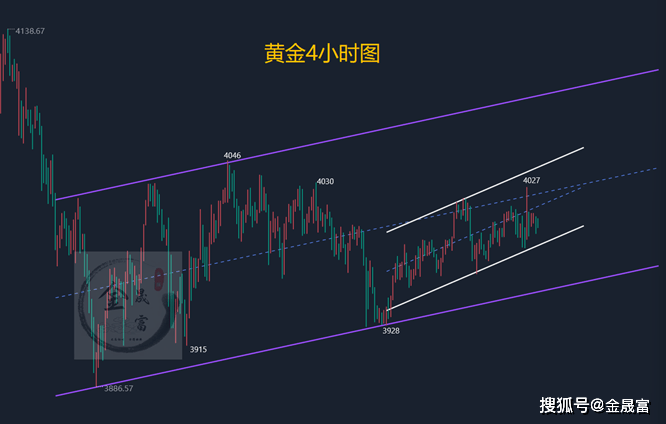
换资前言: 各位投资朋友,周末愉快,一周交易结束了,今天你是轻轻松松在家享受着周末时光,还是焦灼不已到 处翻阅文章,为自己满手亏损的单子着急,天气越来越寒冷了,但是离冬季也越来越近不是吗,我们都 想在市场中分一杯羹,回家过个肥年,但是你却亏损越来越严重,资金不断缩水,如果你正处在这种状 态,金晟富建议你先停下来,停止这种错误的交易,找到一位良师,至少能帮你改变局面挽回亏损,操 作上谁都能经历过牛市熊市。有时候感觉难熬并不要觉得没有了盼头,在亏损的时候不断积累经验,吸 取教训,中间做一些总结,金晟富可以带你走出困境,一次选择,终生受益。 近期有哪些消息面影响黄金原油走势?后市黄金多空该如何研判? 现货黄金本周在4000美元附近维持窄幅震荡,缺乏明确方向。地缘政治风险暂时退居次位,而美国政府 关门导致关键经济数据推迟发布,使市场陷入"信息真空"。在此背景下,投资者正转向美联储官员讲 话、美元走势与美国股市波动,以寻找下一步线索。随着美国政府停摆创下历史纪录,经济学家们越来 越难以判断经济健康状况,而这种不确定性正逐渐传导至黄金市场。分析师表示,他们正在从股市和美 元走势等其他领域寻找方向。多数分析师认为,黄金的长 ...
美股若现抛售潮 黄金期货避险买盘或将激增
Jin Tou Wang· 2025-11-09 00:23
Group 1 - The World Gold Council reports that India's gold exchange-traded funds (ETFs) are experiencing record inflows, with nearly $3 billion in purchases this year, equivalent to approximately 26 tons of precious metals, indicating strong demand for gold ETFs [3] - China's exports saw their first decline in eight months, dropping by 1.1% year-on-year, with exports to the U.S. falling over 25%, while exports to other countries grew by 3.1%, highlighting the need for China to strengthen domestic demand to support economic growth [3] - The ongoing U.S. federal government shutdown has entered its 34th day, leading to significant disruptions in the aviation industry, including flight reductions affecting over 40 airports across more than 20 states, creating challenges and uncertainties for the U.S. airline sector [4] Group 2 - December gold futures are showing bullish momentum, with the next target for bulls being a closing price above the strong resistance level of $4,100, while bears aim to push prices below the strong support level of $3,800 [5] - The first resistance level is noted at Thursday's high of $4,028.70, followed by $4,059.90, while the first support level is at Thursday's low of $3,973.20, with subsequent support at this week's low of $3,935.70 [5]
【UNforex财经事件】美国停摆与信心下滑交织 黄金稳固高位 道指再度回落
Sou Hu Cai Jing· 2025-11-08 03:47
Group 1 - Gold prices reached $4002 per ounce, supported by rising risk aversion and a 68% probability of a Federal Reserve rate cut in December [1] - The U.S. consumer confidence index fell to its lowest level since June 2022, indicating widespread pessimism about the economic outlook [1] - October saw the highest number of layoffs in nearly 20 years, amplifying concerns about economic slowdown [1] Group 2 - Global gold ETFs recorded a net inflow of 54.9 tons in October, indicating a return of institutional funds to safe-haven assets [1] - The euro gained slight support against the dollar, with the euro/USD rising to approximately 1.1560, despite a narrowing German trade surplus [1] - The ongoing U.S. government shutdown has led to delays in key economic data releases, increasing market uncertainty [1][2] Group 3 - The U.S. stock market continued its downward trend, with the Dow Jones index dropping over 200 points, marking a three-week low [2] - Consumer confidence decline and rising inflation pressures have made investors more cautious, with expectations of a significant slowdown in U.S. economic growth this quarter [2] - The interplay of political deadlock and economic weakness has heightened market uncertainty, with a focus on government operations and upcoming CPI data [2][3]
昨夜 美股突变
Shang Hai Zheng Quan Bao· 2025-11-08 01:29
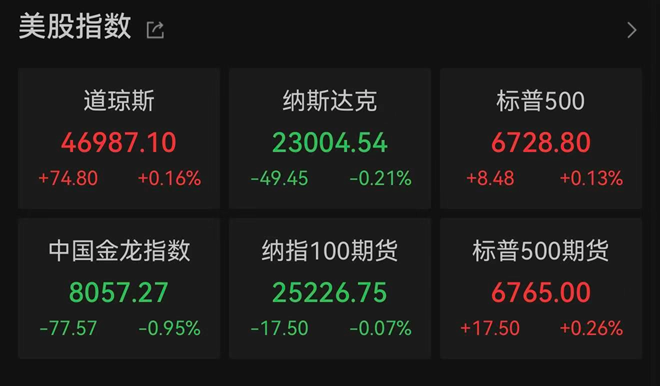
Group 1: Consumer Confidence and Economic Outlook - The University of Michigan's consumer confidence index for November dropped to 50.3, the lowest level in over three years, down from 53.6 in October [6][7] - Concerns over government shutdown and high prices have led to increased pessimism regarding personal financial situations among consumers [6][7] - The current economic conditions index fell by 6.3 points to a record low of 52.3, indicating growing worries about the impact of the government shutdown [7] Group 2: Stock Market Performance - U.S. stock markets experienced a "V-shaped" recovery after initial declines, with the Dow Jones Industrial Average rising by 74.80 points (0.16%) to 46,987.10, while the Nasdaq Composite fell by 49.46 points (0.21%) to 23,004.54 [4] - Major technology stocks mostly declined, with the index of the seven largest U.S. tech companies dropping by 0.56%, and Tesla falling nearly 4% [4] - All three major U.S. stock indices closed lower for the week, with the Dow down 1.21%, Nasdaq down 3.04%, and S&P 500 down 1.63% [4] Group 3: Impact of Government Shutdown - The ongoing government shutdown has led to significant disruptions, including the cancellation of approximately 1,000 flights and delays for over 3,500 flights across the U.S. [9] - The shutdown has also affected the release of key economic data, including the non-farm payroll report, which has been absent for two consecutive months [7][9] - Concerns about the economic impact of the shutdown have prompted investors to seek safe-haven assets, with gold potentially benefiting from this trend [7] Group 4: Corporate Investments - Meta announced plans to invest $600 billion in the U.S. by 2028 for building AI data centers and recruiting talent, while also collaborating with utility companies for necessary resources [4]
央行连续12个月增持黄金,全球央行购金热潮持续
Di Yi Cai Jing· 2025-11-07 10:33
Group 1 - As of the end of October, China's gold reserves reached 74.09 million ounces (approximately 2304.457 tons), marking a month-on-month increase of 30,000 ounces (about 0.93 tons) and continuing a 12-month streak of accumulation [1] - The People's Bank of China is adopting a "low and frequent" strategy for gold purchases, which helps to smooth market volatility, manage costs, and mitigate the impact of large-scale purchases on gold prices, while also serving as a hedge against global macro risks [1] - In October, gold prices hit a historical high of $4,294 per ounce, marking the 50th new high of the year, and despite a subsequent pullback to around $4,000 per ounce by the end of the month, the price still rose by 4.9% for the month, marking the fifth consecutive month of gains [1] Group 2 - The World Gold Council reported that global central banks accelerated gold purchases in the third quarter, with a net purchase of 220 tons, a 28% increase from the second quarter and a 10% year-on-year increase [2] - The total net gold purchases by global central banks for the first three quarters reached 634 tons, which, while lower than the exceptionally high levels of the past three years, remains significantly above the average levels prior to 2022 [2] - Factors such as escalating geopolitical tensions, persistent inflation pressures, and uncertainties in global trade policies are driving investors to seek safe-haven assets, thereby increasing demand for gold [2]
中国央行连续12个月增持黄金,全球央行购金热潮持续
第一财经· 2025-11-07 10:15
Core Viewpoint - The article highlights China's continuous increase in gold reserves, reflecting a strategic move to diversify international reserves and hedge against global macroeconomic risks [3][4]. Group 1: China's Gold Reserves - As of the end of October, China's gold reserves reached 74.09 million ounces (approximately 2304.457 tons), marking a month-on-month increase of 30,000 ounces (about 0.93 tons) and the 12th consecutive month of accumulation [3][4]. - The increase in gold reserves is part of a "low volume, multiple times" strategy by the People's Bank of China, aimed at smoothing market volatility and reducing the impact of large purchases on gold prices [3]. Group 2: Global Gold Market Trends - In October, gold prices hit a historical peak of $4,294 per ounce, marking the 50th new high of the year, before retreating to around $4,000 per ounce by the end of the month, with a cumulative increase of 4.9% for the month [3]. - The World Gold Council reported that global central banks accelerated gold purchases in Q3, with a net purchase of 220 tons, a 28% increase from Q2 and a 10% increase year-on-year [5]. - The demand for gold is driven by geopolitical tensions, persistent inflation, and uncertainties in global trade policies, leading to a sustained interest in gold as a safe-haven asset [5]. Group 3: Future Outlook - Analysts predict that the ongoing geopolitical uncertainties and weakening confidence in the dollar system will lead central banks and investors to continue increasing their gold holdings, supporting gold prices [5].

冲高回落后又冲高,金价后市到底怎么走?
Xin Lang Cai Jing· 2025-11-07 09:17
Core Viewpoint - The current rise in gold prices is influenced by various factors, including the prolonged U.S. government shutdown, potential Supreme Court rulings on tariffs, a weakening dollar, and expectations of a Federal Reserve rate cut in December [1][2]. Group 1: Economic Factors Influencing Gold Prices - The U.S. government shutdown has reached its 37th day, potentially causing irreversible damage to the economy and increasing market panic, which supports gold as a traditional safe-haven asset [1]. - The uncertainty surrounding the Supreme Court's decision on tariffs could lead to significant financial implications, including a potential refund wave that may weaken government finances and boost gold prices [1]. - A significant increase in U.S. layoffs, with 153,074 announced in October, has caused the dollar to drop from a four-month high, making gold more attractive to international investors [2]. Group 2: Market Expectations - There is a 70% probability of a 25 basis point rate cut by the Federal Reserve in December, up from 62% the previous day, which could further support gold prices [2]. - Many of the influencing factors are still based on expectations rather than confirmed events, contributing to a lack of momentum in gold price increases [2]. Group 3: Trading Methods for Gold - Three primary methods for trading gold include physical gold transactions, paper gold trading, and gold derivatives trading [3][4][5][6]. - Physical gold trading is suitable for conservative investors but involves higher holding costs and lower liquidity [4]. - Paper gold trading offers flexibility and lower costs, making it suitable for short-term operations, but lacks the physical ownership aspect [5]. - Gold derivatives trading, such as futures and options, allows for leveraged trading but carries high risks and is suited for aggressive investors [7].