智能家居

Search documents
年入6亿、日本细分赛道第一,国产AI 硬件如何拿下日本智能家居市场?
Founder Park· 2025-06-12 12:13
Core Insights - SwitchBot, a smart home product from Shenzhen-based company Woan Technology, has achieved a 28% market share in Japan's smart home market, making it the leading brand in this sector [7][21][48] - The company has successfully penetrated the challenging Japanese market by offering low-cost, non-invasive smart home solutions that cater to local consumer needs [9][12][35] - SwitchBot's product strategy focuses on "upgrade instead of replacing," allowing users to enhance their existing home setups without significant renovations [47][48] Market Performance - SwitchBot's revenue from Japan accounts for approximately 60% of its total income, with projections indicating continued growth [7][8] - The company launched its first product, the SwitchBot Smart Switch, on Kickstarter in 2016, raising $70,000 from 667 backers, validating its product-market fit [3][11] - The global smart home market has seen substantial growth, increasing from $39.8 billion in 2017 to $115.7 billion in 2022, with a compound annual growth rate of 23.8% [30] Product Development - SwitchBot has introduced various products since its inception, including the SwitchBot Curtain and the K10+ robot vacuum, which cater to specific consumer pain points in Japan [15][35] - The K10+ robot vacuum raised approximately 345 million yen (about 17 million RMB) in crowdfunding, highlighting its appeal in the Japanese market [35] - The company is expanding its product line to include higher-priced items, such as the S10 robot vacuum, which features modular design and advanced functionalities [41][43] Strategic Positioning - SwitchBot's approach emphasizes flexibility and ease of installation, appealing to Japanese consumers who face challenges with home renovations and product replacements [23][26] - The company has established a strong ecosystem by integrating its products with IFTTT services and promoting interconnectivity among devices [12][21] - SwitchBot's focus on user experience and minimizing replacement costs has positioned it favorably against competitors in the smart home industry [34][48]

李泽湘又投出了AI家庭具身机器人第一股?
机器人大讲堂· 2025-06-12 07:04
Core Viewpoint - The article discusses the upcoming IPO of Woan Robotics, a company specializing in AI embodied home robots, which aims to redefine the smart home landscape and potentially become the first publicly listed company in this sector [1][2]. Group 1: Company Overview - Woan Robotics was founded in 2015 by alumni from Harbin Institute of Technology and is backed by influential investor Li Zexiang [1]. - The company has achieved a remarkable 49% compound annual growth rate (CAGR) in revenue over three years [2]. Group 2: Market Position - Woan Robotics holds a leading position in the global AI embodied home robot market with an 11.9% market share, according to a Frost & Sullivan report [3]. - The company is the only player in the industry with a comprehensive product lineup covering all categories of home living scenarios [3]. Group 3: Product and Technology - The company's AI embodied home robots can autonomously learn and make complex decisions, enhancing their functionality beyond simple task execution [4]. - Woan Robotics has a diverse product matrix, including enhanced execution robots and enhanced mobile robots, with a high frequency of product launches [6][9]. - The company has invested significantly in R&D, with expenditures increasing from 61.76 million to 112 million yuan from 2022 to 2024, representing an average annual growth rate of 34.7% [16]. Group 4: Financial Performance - Revenue is projected to grow from 275 million yuan in 2022 to 610 million yuan in 2024, with a CAGR of 49.04% [13]. - Gross profit increased from 94.14 million yuan to 316 million yuan, with gross margin rising from 34.3% to 51.7% during the same period [13]. - The company has reduced its annual losses from 86.98 million yuan in 2022 to 3.07 million yuan in 2024 [14]. Group 5: Market Expansion - The largest market for Woan Robotics is Japan, accounting for 57.7% of revenue in 2024, followed by Europe and North America [11]. - The European market has shown a remarkable revenue CAGR of 68%, with single product gross margins exceeding 50% [12]. Group 6: Future Outlook - The global AI embodied home robot market is expected to grow from 2.2 billion yuan in 2022 to 5.9 billion yuan in 2024, with a CAGR of 63.7% [30]. - Woan Robotics predicts that the market could exceed 50 billion yuan by 2028 with the introduction of humanoid and mobile robots [31]. Group 7: Challenges and Risks - The company faces customer concentration risk, with 47.4% of revenue coming from its top five clients [34]. - There are concerns regarding the patent structure, as the proportion of invention patents is lower than that of industry leaders [35]. - Global operational challenges may arise due to reliance on a single distribution channel in Japan and cultural differences in Europe and North America [36].
豪江智能(301320):公司动态研究报告:智能驱动多领域覆盖,全球布局助推发展
Huaxin Securities· 2025-06-10 13:20
Investment Rating - The report assigns a "Buy" rating for the company, marking its first coverage [2][10]. Core Insights - The company has achieved revenue growth in multiple application scenarios, with a focus on smart home and smart medical care sectors, which together accounted for 83.59% of total revenue in 2024 [6][8]. - The company is recognized for its expertise in smart linear drive products, which are essential components in various applications including smart homes, medical devices, and industrial automation [5][9]. - The company is expanding its global footprint by investing in a production base in Thailand, which is expected to enhance its competitive advantage in the global market [9]. Summary by Sections Company Overview - The company specializes in the research and production of smart linear drive products, with applications in smart homes, smart medical care, smart offices, and industrial transmission [5]. Financial Performance - In 2024, the company reported total revenue of 828 million yuan, a year-on-year increase of 15.74%, while net profit slightly decreased by 0.58% to 47 million yuan [6]. - For Q1 2025, revenue reached 211 million yuan, reflecting a 6.7% year-on-year growth, and net profit increased by 28.98% to 16 million yuan [6]. Market Position - The company has established strong technical advantages in the smart home sector, integrating its products with various smart home systems to enhance user experience and product stickiness [7]. - In the smart medical care sector, the company's products are crucial for the automation and intelligence of medical devices, improving the quality of life for patients and efficiency for healthcare workers [8]. Future Projections - Revenue forecasts for 2025-2027 are projected at 1.006 billion yuan, 1.190 billion yuan, and 1.369 billion yuan respectively, with corresponding EPS estimates of 0.60 yuan, 0.73 yuan, and 0.86 yuan [10][12]. - The company is expected to maintain a strong growth trajectory, particularly in the smart home and industrial transmission sectors [10].
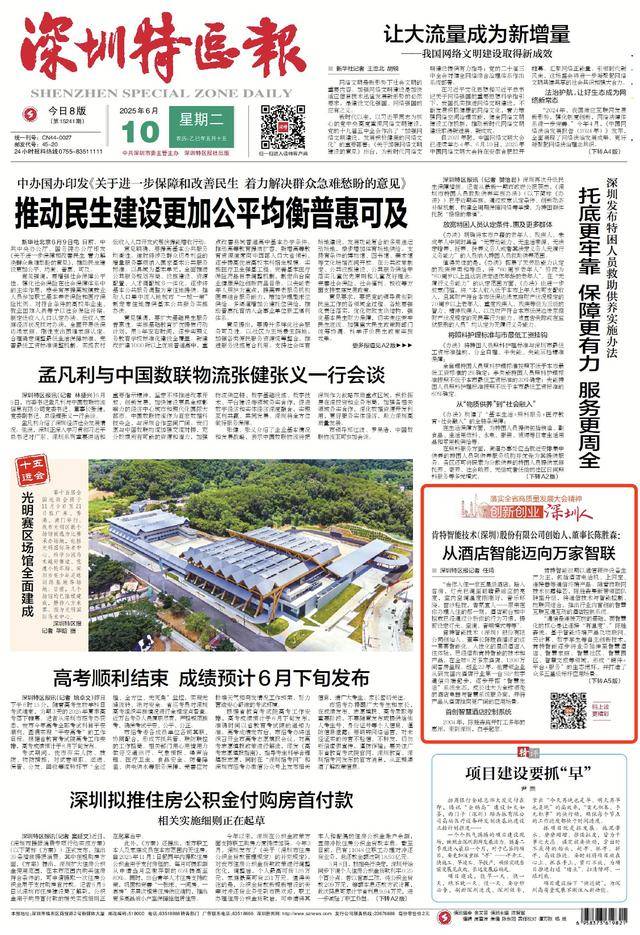
【深圳特区报】肯特智能技术(深圳)股份有限公司创始人、董事长陈胜森:从酒店智能迈向万家智联
Sou Hu Cai Jing· 2025-06-10 01:31
Group 1: Smart Hotel Experience - The smart hotel experience includes personalized settings for lighting, temperature, and music based on guest behavior analysis at check-in [1] - Kent Intelligent Technology has implemented its technology in over 60,000 hotels and 12 million guest rooms globally, enhancing the guest experience [8] Group 2: Company Development and Innovation - Kent Intelligent started as a communication hardware manufacturer and evolved into a leading provider of smart hotel and home solutions by integrating IoT and smart control technologies [9] - The company has developed a comprehensive ecosystem combining hardware, platforms, and services, catering to various sectors including smart hotels, homes, and communities [9] Group 3: AI Integration and Smart Living - The essence of smart living is to make technology invisible while enhancing user experience, with AI algorithms enabling proactive service capabilities [10] - Implemented solutions have significantly improved operational efficiency, reducing equipment repair response time from an average of 8 hours to 15 minutes and cutting energy costs by 25% [10] Group 4: Shenzhen's Role in Business Success - Shenzhen is recognized as a brand that supports innovation and entrepreneurship, providing a conducive environment for companies like Kent Intelligent to thrive [11] - The city's efficient government services and support for industry-academia collaboration have been crucial in overcoming technological challenges [11]
最会理财的家居企业?
3 6 Ke· 2025-06-09 07:39
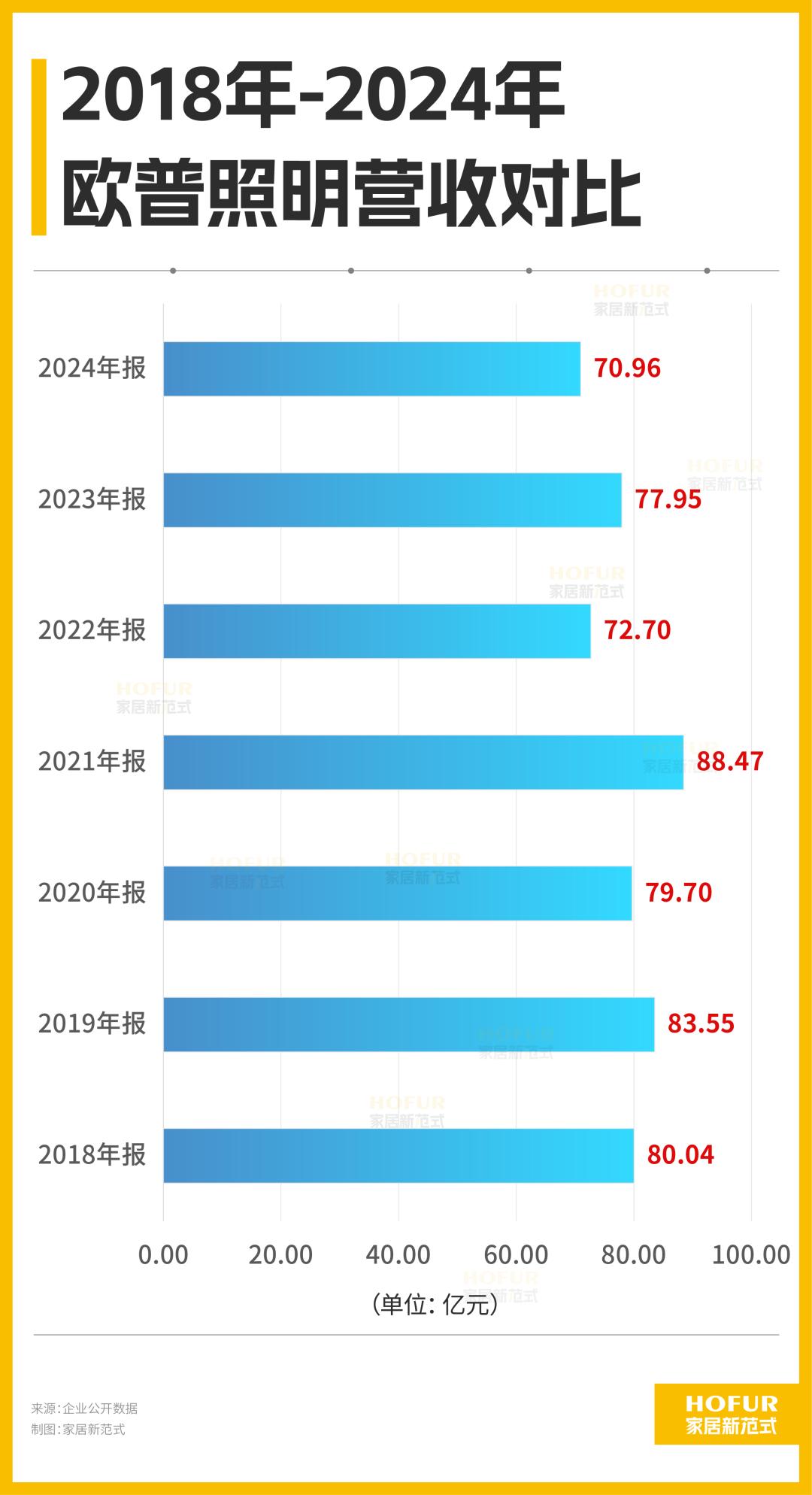
Core Viewpoint - The article highlights how Opple Lighting has managed to maintain and even increase its net profit margin despite a decline in revenue, emphasizing the importance of investment and financial management in the home furnishing industry. Revenue and Profit Analysis - In 2024, Opple Lighting reported revenue of 7.096 billion and net profit of 903 million, representing a year-on-year decrease of 8.96% and 2.28% respectively [1] - Despite the revenue decline, net profit has remained relatively stable, with a slight increase of 3.8 million compared to 2018 [4] - The net profit margin for 2024 was 12.75%, an increase of 2.43 percentage points from 2021 and 1.51 percentage points from 2018 [4] Cost Management - Opple Lighting's operating cost ratio in 2024 was 60.71%, a reduction of 6.28 percentage points from 2021 and 2.83 percentage points from 2018, indicating improved cost efficiency [7] - The company has focused on enhancing operational and production efficiency through digital transformation and automation, which has contributed to cost reduction [10] Product Value Enhancement - Opple Lighting has successfully increased its gross margin, which reached 39.29% in 2024, up by 6.29 percentage points from 2021 [11] - The company has invested in technology and innovation, particularly in the smart lighting sector, to enhance product competitiveness and value [14] Investment Strategy - Opple Lighting has accumulated significant surplus funds over the years, leading to substantial interest income, with 2023 and 2024 interest income reported at 111.1 million and 70.93 million respectively [15] - The company has shifted its focus towards investment management, with trading financial assets increasing to 4.081 billion in 2024 after a significant reduction in 2023 [18] - Despite a decrease in net asset return rate from 22.67% in 2018 to 13.51% in 2024, the company has maintained a strong cash dividend policy, distributing 666.7 million in 2024 with a payout ratio of 73.8% [18][19] Industry Insights - The article suggests that in a challenging market environment, companies like Opple Lighting can enhance profitability through cost control, efficiency improvements, and investment strategies [19] - The shift towards smart home products and digital solutions is seen as a critical strategy for maintaining competitiveness in a saturated market [19]

智能家居行业双周报:多地首轮国补已用完,带动超万亿销售额
Guoyuan Securities· 2025-06-09 04:30
Investment Rating - The report maintains a "Recommended" rating for the smart home industry [6][29]. Core Insights - The smart home industry is expected to benefit from government policies aimed at stimulating consumption through appliance replacement and recycling initiatives, with the number of subsidized appliance categories increasing from 8 to 12 [4][29]. - Technological advancements in IoT, AI, machine learning, and big data are expanding the application boundaries of smart home devices, leading to the creation of high-value innovative products and services [4][29]. - The easing of the US-China tariff conflict is likely to favor Chinese home appliance companies in international markets, while domestic demand is expected to grow due to rising living standards and an aging population [4][29]. Summary by Sections Market Review - In the past two weeks (May 24 - June 6, 2025), the Shanghai Composite Index rose by 1.10%, the Shenzhen Component Index by 0.51%, and the ChiNext Index by 0.89%. The smart home index (399996.SZ) increased by 2.58%, outperforming the Shanghai Composite by 1.48 percentage points [11][12]. - Year-to-date, the smart home index has risen by 2.76%, again outperforming the Shanghai Composite by 1.75 percentage points [11][12]. - Among the smart home index components, the top five stocks by growth in the past two weeks were Shenghong Technology (+32.38%), Cambridge Technology (+23.29%), Xiechuang Data (+19.62%), Craft Home (+16.01%), and Zhongke Lanyun (+11.84%) [14][15]. Industry Policy Tracking - The Ministry of Commerce supports large-scale equipment updates in national economic development zones and encourages the inclusion of foreign trade quality products in the "old-for-new" consumption policy [16][17]. - A draft opinion from the Zhejiang Economic and Information Technology Department proposes to promote foreign trade quality products under the "old-for-new" policy [17]. - The Ministry of Commerce has released an action plan to accelerate the development of smart supply chains, emphasizing the integration of digital technologies [18][19]. Industry News Tracking - In the first five months of 2025, the sales volume of the "old-for-new" consumption policy exceeded 1 trillion yuan, with significant participation in various categories [26][27]. - The first round of subsidy funds for the "old-for-new" program has been exhausted in some regions, indicating strong demand [26][27]. - Aishida plans to invest up to 150 million yuan in Vietnam for the construction of cookware, small appliances, and industrial robot projects [28]. Investment Recommendations - The report suggests that the smart home industry will benefit from supportive policies, technological advancements, and increasing domestic demand, maintaining a "Recommended" rating for the industry [4][29].
智能家居行业双周报:多地首轮国补已用完,带动超万亿销售额-20250609
Guoyuan Securities· 2025-06-09 03:41
Investment Rating - The report maintains a "Recommended" rating for the smart home industry [6][29]. Core Insights - The smart home industry is benefiting from government policies aimed at stimulating consumption through the expansion of appliance subsidy categories and the promotion of old-for-new programs, which are expected to drive sales in the home appliance and home sectors [4][29]. - Technological advancements in IoT, AI, machine learning, and big data are expanding the application boundaries and interaction depth of smart home devices, creating high-value innovative products and services to meet diverse consumer needs [4][29]. - The easing of the US-China tariff conflict is expected to favor Chinese home appliance companies' overseas expansion, while domestic demand is driven by rising living standards and the increasing need for home care solutions due to an aging population [4][29]. Summary by Sections Market Review - In the past two weeks (May 24 - June 6, 2025), the Shanghai Composite Index rose by 1.10%, the Shenzhen Component Index by 0.51%, and the ChiNext Index by 0.89%. The smart home index (399996.SZ) increased by 2.58%, outperforming the Shanghai Composite by 1.48 percentage points [11][12]. - Year-to-date, the smart home index has risen by 2.76%, again outperforming the Shanghai Composite by 1.75 percentage points [11][12]. - Among the smart home index components, the top five stocks by increase over the past two weeks were Shenghong Technology (+32.38%), Cambridge Technology (+23.29%), Xiechuang Data (+19.62%), Craft Home (+16.01%), and Zhongke Lanyun (+11.84%) [14][15]. Industry Policy Tracking - The Ministry of Commerce supports national economic development zones in large-scale equipment updates and encourages the inclusion of foreign trade quality products in the old-for-new consumption policy [16][17]. - A draft opinion from the Zhejiang Economic and Information Technology Department proposes to promote foreign trade quality products under the old-for-new policy [17]. Industry News Tracking - In the first five months of 2025, the sales volume of old-for-new consumer goods exceeded 1 trillion yuan, with significant participation in various categories [26][27]. - The first round of subsidy funds for the old-for-new program has been exhausted in some regions, indicating strong demand [26][27]. - Aishida plans to invest up to 150 million yuan in Vietnam for the construction of cookware, small appliances, and industrial robot projects [28]. Investment Recommendations - The report emphasizes that the smart home industry is expected to benefit from both upstream and downstream sectors due to supportive policies, technological advancements, and increasing consumer demand [4][29].
每周股票复盘:海鸥住工(002084)越南工厂发展及中美贸易战应对
Sou Hu Cai Jing· 2025-06-07 03:33
截至2025年6月6日收盘,海鸥住工(002084)报收于3.54元,较上周的3.48元上涨1.72%。本周,海鸥 住工6月5日盘中最高价报3.59元。6月3日盘中最低价报3.43元。海鸥住工当前最新总市值22.87亿元,在 家居用品板块市值排名57/70,在两市A股市值排名4756/5148。 问:中美贸易战对公司的影响答:公司主营业务聚焦在卫浴及厨房产品整组龙头及部品部件的制造服务 与销售,其中出口美国业务占整体营收约为 30%。为应对 2018 年以来中美贸易摩擦带来的持续影响, 公司已于2019 年着手在越南建立水龙头生产基地,并于 2022 年开始出货,该布局有助于公司更好地应 对中美贸易摩擦带来的潜在风险。 公司公告汇总 关于回购公司股份的进展公告 广州海鸥住宅工业股份有限公司于2025年2月13日召开第八届董事会第二次临时会议审议通过了《关于 回购公司股份的方案》,同意公司拟以不低于人民币2000万元(含)且不超过人民币4000万元(含)的 自有资金及股票回购专项贷款,以不超过4.34元/股的价格回购公司已发行的人民币普通股(A股)股 票,回购实施期限为自公司董事会审议通过回购股份方案之日起十二 ...

雷军凶猛,兵临董明珠城下
商业洞察· 2025-06-06 09:33
Core Viewpoint - Xiaomi's major appliance business has seen explosive growth, with revenue surpassing 100 billion yuan for the first time, driven by strong sales in televisions and air conditioners [1][17]. Group 1: Television Business - Xiaomi's entry into the television market began in 2013, positioning it as a strategic product alongside smartphones [2]. - The first-generation Xiaomi TV faced challenges, including supply chain issues and competition from LeEco, which had a significant content advantage [4][6]. - By 2015, Xiaomi had addressed its content shortcomings and launched the third-generation TV, achieving significant sales and establishing itself as a market leader [8][9]. Group 2: Air Conditioning Business - Xiaomi initially struggled to penetrate the air conditioning market, facing setbacks with its early products in collaboration with Midea and later with Changhong [11][15]. - The breakthrough came in 2018 with the launch of the Mi Air Conditioner, which offered competitive pricing and features, leading to a rapid increase in market share from 2.8% in 2020 to 11.8% [17][20]. - Xiaomi's success in air conditioning is attributed to its focus on e-commerce and smart home integration, leveraging its existing user base and marketing strategies [21]. Group 3: Competitive Landscape - Xiaomi's aggressive expansion has prompted responses from major competitors like Midea and Gree, who have lowered prices and intensified marketing efforts [24][25]. - The gap in revenue between Xiaomi and Gree has narrowed to within 500 billion yuan, indicating a fierce competition for market share in the home appliance sector [26].


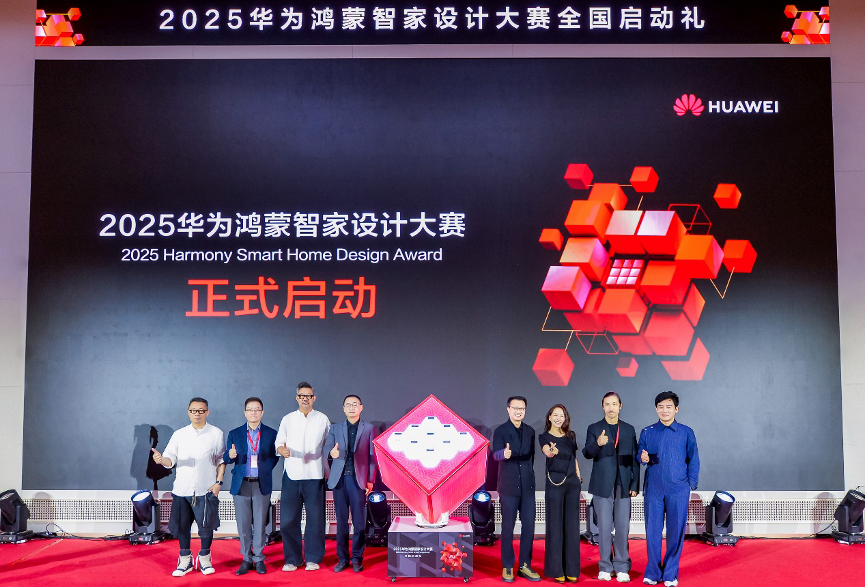
“中国智造”碰撞“中国设计”,华为鸿蒙智家的“好房子”密码
Jing Ji Wang· 2025-06-06 08:39
Group 1 - The Huawei HarmonyOS Smart Home Design Competition aims to integrate space intelligence and aesthetic design, promoting the application of smart home technology in real-life scenarios to enhance consumer experiences [1][4] - The smart home market in China is experiencing rapid growth, with projections indicating a market size of approximately 8 trillion yuan by 2025, driven by favorable policies and strong consumer demand [3] - Huawei's HarmonyOS Smart Home offers a comprehensive solution with a core architecture of "1+2+N," compatible with over 2,900 HarmonyOS ecosystem partners and more than 7,800 smart products [3] Group 2 - The competition reflects Huawei's insight into the increasing consumer demand for both intelligent and aesthetic home environments, aiming to merge "smart decoration" and "beautiful decoration" [4][6] - Technological innovations are significantly advancing the space design industry, enabling designers to create more interactive and intelligent environments, thus bridging the gap between creative concepts and commercial implementation [6] - Huawei's solutions provide new pathways for the real estate industry, enhancing the value of spaces and supporting the implementation of "good housing" policies [6][9] Group 3 - The HarmonyOS Smart Home's technological investments in PLC connection, smart voice, and AI sensing enhance the efficiency and convenience of home automation [7] - The increasing consumer demand for personalized home experiences is driving a shift towards aesthetic upgrades in home living, with Huawei's solutions covering the entire process from design to smart implementation [9] - The competition is seen as a catalyst for a new wave of consumer trends that integrate intelligent aesthetics in space design and smart home solutions, showcasing the innovative power of Chinese brands [9]