
电动化

Search documents
【私募调研记录】盘京投资调研德福科技、新坐标等3只个股(附名单)
Zheng Quan Zhi Xing· 2025-08-01 00:06
Group 1: 德福科技 (Defu Technology) - Defu Technology has acquired Luxembourg Copper Foil, positioning itself among the global leaders in high-end IT copper foil production [1] - Luxembourg Copper Foil, established in 1960, is the only non-Japanese high-end IT copper foil manufacturer globally, with an annual capacity of 16,800 tons [1] - Projected revenue for Luxembourg Copper Foil in 2024 is €134 million, with a net profit of -€370,000; however, it is expected to achieve a quarterly profit of €1.67 million in Q1 2025 [1] - Defu Technology's total production capacity for electrolytic copper foil has increased to 191,000 tons per year, making it the largest globally [1] - The company plans to invest ¥183 million in R&D in 2024, aiming to deepen its technology strategy with 17 new invention patents [1] Group 2: 新坐标 (New Coordinates) - In 2024, overseas revenue is expected to account for 43.17% of New Coordinates' total revenue, driven by the expansion of domestic self-owned brand customers [2] - Over 90% of the company's clients are automotive manufacturers, covering both domestic and international passenger and commercial vehicle markets [2] - The company is recognized as a high-tech enterprise with comprehensive R&D capabilities across the entire industry chain [2] - New Coordinates is actively enhancing market share and communication with overseas clients while addressing operational challenges through improved internal controls [2] Group 3: 恒帅股份 (Hengshuai Co., Ltd.) - Hengshuai Co., Ltd. highlighted the advantages of its harmonic magnetic field motor technology, including lightweight design and cost optimization [3] - The company provides customized solutions in the humanoid robot sector, which is anticipated to be a significant growth area [3] - While traditional cleaning services do not face disruptive innovation, the technology has been successfully applied in advanced autonomous driving scenarios [3] - The company has sufficient land and factory space, with intelligent production lines that can shorten capacity expansion cycles [3]

为何跨国车企集体暂缓电动化?
Zhong Guo Jing Ying Bao· 2025-07-30 18:10
Core Viewpoint - The global automotive industry is experiencing a significant shift in its electrification strategy, with major brands like Mercedes-Benz, BMW, and Audi postponing their electric vehicle (EV) plans, contrasting sharply with previous targets set for around 2030 [1] Group 1: Market Demand and Consumer Acceptance - The demand growth for electric vehicles is slower than expected, with consumer acceptance facing multiple challenges [2] - In North America, consumer acceptance of electric vehicles is lower than anticipated, while Europe shows slightly better conditions [2] - Key reasons for consumer reluctance include high prices, limited range, and concerns over future battery replacement costs [2][3] Group 2: Pricing and Infrastructure Challenges - The average price of electric vehicles remains higher than that of gasoline vehicles, limiting market access for many consumers [3] - European manufacturers have refrained from launching affordable models priced between €20,000 and €25,000 to protect profit margins, which has excluded a significant number of consumers [3] - The need for improved charging infrastructure and consumer confidence in technology is critical for increasing EV adoption [4] Group 3: Industry Adjustments and Future Trends - The initial electrification targets set by automakers may have been overly ambitious, leading to factory closures due to lower-than-expected demand [4] - To drive EV adoption, significant changes are needed, including substantial price reductions, improved charging times, and enhanced consumer confidence in battery technology [4] - The future may see a coexistence of multiple energy forms, with traditional hybrid vehicles gaining traction due to their lower prices and reduced range anxiety [5] - The profitability of internal combustion engine vehicles remains higher than that of pure electric vehicles, potentially slowing the urgency of the electrification transition [5]
领导班子首次集体亮相 “新长安”将投2000亿元锁定全球前十
Bei Jing Shang Bao· 2025-07-30 13:56
新央企中国长安汽车集团有限公司(以下简称"中国长安汽车")挂牌成立后,7月30日,中国长安汽车 集团有限公司党委书记、董事长朱华荣等八位高管组成的领导班子首次对外集体亮相。 中国长安汽车是一家经国务院批准、由国务院国资委直接履行出资人职责的汽车央企,其基于长安汽 车、辰致集团等117家分子公司组建。据了解,中国长安汽车注册资本为200亿元,资产总额达3087亿 元,从业人数约11万人,主要经营业务包括汽车整车及零部件、汽车销售、金融及物流服务、摩托车 等。 前沿领域。朱华荣称,企业将建立从底层研发、平台架构、核心零部件,到终端产品、商业模式的完整 创新体系。 在建设新生态方面,中国长安汽车将充分发挥集团优势,加强产业生态垂直整合与整零协同。同时,中 国长安汽车将推进科技生态横向拓展,以SDA平台为核心,拓展无人驾驶商业运营、飞行汽车、人形机 器人、泛出行等新兴业务。朱华荣表示:"'新长安'成立后诸多的ICT以及其他大集团均表示了对'新长 安'的关注,未来'新长安'将以更加开放合作的态度推进产业协同。"据悉,中国长安汽车方面与海尔集 团董事局主席周云杰已进行战略性合作和交流,并找到众多合作方向,迅速签署战略合作 ...

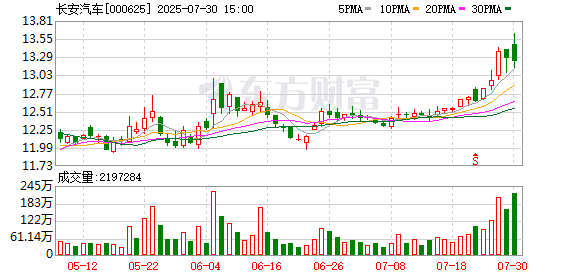
中国长安汽车集团正式成立 其商用车品牌长安凯程将加速转型
Cai Jing Wang· 2025-07-30 08:17
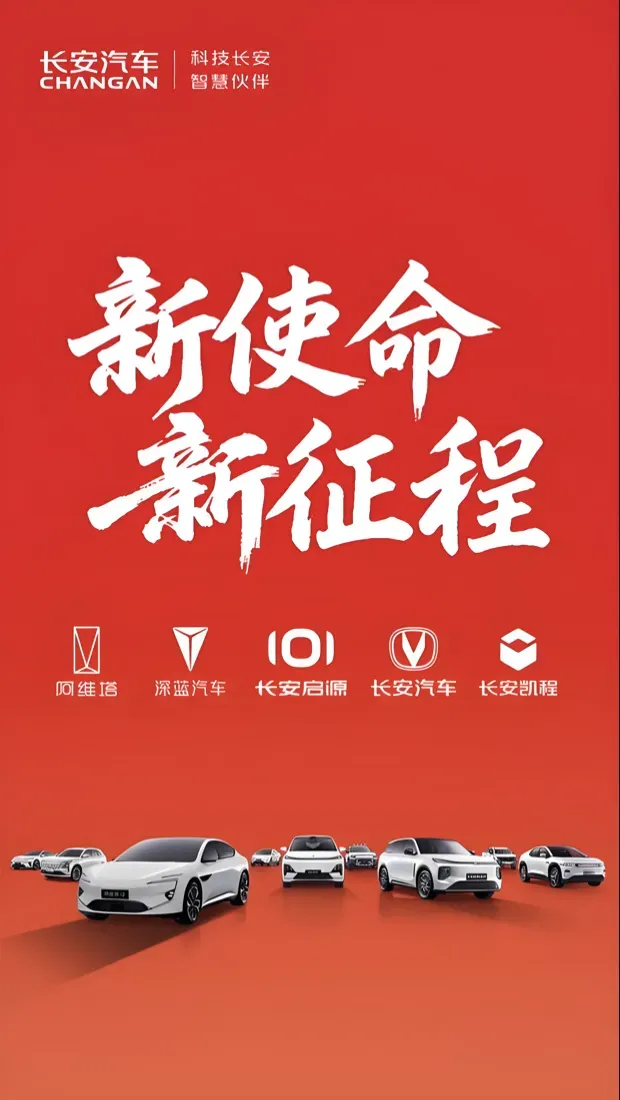
Group 1 - The establishment of Changan Automobile Group on July 29 marks a strategic shift for the company, with its commercial vehicle brand, Changan Kaicheng, focusing on "electrification, intelligence, pickup, and globalization" to accelerate transformation and resource integration [1] - In the first half of the year, Changan Kaicheng launched multiple strategic products, achieving sales of 140,300 units, a year-on-year increase of 10.1% [1] - Changan Kaicheng aims to leverage the advantages of being a state-owned enterprise to integrate various resources and utilize passenger vehicle technology to capture future logistics development trends [1] Group 2 - The global light commercial vehicle market is projected to reach a scale of 14 million units by 2030, with Changan Kaicheng rapidly advancing its international expansion through establishing overseas KD factories, production bases, and expanding channel networks in Southeast Asia, Central and South America, Europe, the CIS, and the Middle East and Africa [4] - In 2024, Changan Kaicheng is expected to export a cumulative total of 66,700 units, with export sales in the first half of the year reaching 43,200 units, reflecting a year-on-year growth of 7.9% [4] - Changan Kaicheng has successfully completed over 2 billion yuan in Series A financing and is now initiating Series B financing, with the establishment of the group enhancing its brand image and accelerating the process for independent listing [4]

最新世界500强企业,大湾区这些企业上榜!
Sou Hu Cai Jing· 2025-07-30 05:33
7月29日,《财富》杂志发布2025年世界500强排行榜,130家中国企业进入榜单,按照上榜企业总部所 在城市统计,粤港澳大湾区共有23家企业上榜,相较2024年增加一家企业,其中排名最高的是中国平 安,位列第47名。 从城市分布来看,入围企业主要集中在深圳、广州、香港三地,其中最多的深圳共有9家,广州有6家, 香港有5家。除广深港三地外,佛山有2家企业、东莞有1家企业进入榜单。 《财富》世界500强榜单不仅揭示了全球大型企业的最新发展趋势,更通过国家和地区的对比,展现了 不同经济体的竞争力差异。 聚焦中国上榜企业,一个明显的趋势浮现:互联网和汽车领域的大公司整体呈现依然强势。 榜单显示,京东、阿里巴巴、腾讯、拼多多和美团五家企业排名均实现提升,其中拼多多以176位的跃 升幅度成为榜单黑马(第266位),美团排名上升57位至第327位,京东集团位居第44位,仍是排名最高 的中国大陆民营企业。华为依然是科技领域中国公司的龙头。 如果说互联网企业展现了数字经济的活力,那么汽车行业则呈现出电动化浪潮下的激烈竞逐。全球35家 整车及零部件企业上榜,中国8家整车企业强势入围,比亚迪以第91位首次跻身全球百强,成为榜单中 ...





更好赋能汽车产业“加速跑”
Jin Rong Shi Bao· 2025-07-30 03:53
Group 1: Automotive Industry Growth - In the first half of 2023, China's automotive production and sales reached 15.62 million and 15.65 million units, respectively, marking year-on-year growth of 12.5% and 11.4% [1] - China's automotive sales share in the global market has increased to 36%, up by 4 percentage points from the previous year [1] - The "Two New" policy has positively impacted the automotive consumption market, with significant growth in vehicle trade-in subsidies and consumer incentives [1] Group 2: Export Trends - China's automotive export value is projected to rise from $34.5 billion in 2021 to $117.4 billion in 2024, indicating explosive growth [2] - In the first half of 2023, China exported 3.083 million vehicles, a year-on-year increase of 10.4%, with 1.06 million of those being new energy vehicles, up 75.2% [2] - The Chinese automotive supply chain is developing multi-level cooperation with leading global automotive nations, enhancing its influence in the global market [2] Group 3: Automotive Finance Support - The People's Bank of China and six other departments have issued guidelines to encourage financial institutions to develop consumer-oriented financial products [3] - Automotive finance companies are addressing high financing thresholds by offering products like "0 down payment" and extending interest-free periods to ease consumer financial burdens [3] - The automotive finance sector faces increased competition from banks and other financial institutions, which are entering the market with lower costs and aggressive marketing strategies [3] Group 4: Regulatory Measures - Regulatory bodies are implementing measures to standardize market practices, including prohibiting unfair competition tactics such as high commissions [5] - Local banking associations are promoting healthy development in automotive finance by discouraging practices that force consumers into high-commission products [5] - As high-interest policies phase out, the automotive finance industry is expected to experience a return to healthy competition, allowing companies to explore diversified business models [5]
N7小胜指引方向,东风日产转型大捷可期
Zhong Guo Qi Che Bao Wang· 2025-07-30 00:59
50天大定破2万辆,6月总销量6189台,7月连续多周获得10-15万中大型纯电轿车冠军,东风日产N7自上市以来销量始终保持稳步快增的态势,一举成 为行业大定破万最快的合资纯电车型,更是位列合资新能源销量总榜榜首。在自主品牌风头正盛的当下,一辆合资品牌新能源产品能取得如此成绩实属不 易。可以说,N7的强势表现,向行业上下展现了节节败退的合资品牌绝地反击的决心与希望。近日,东风日产高管在接受媒体采访时,将N7的表现评价 为"阶段性小胜"。谦虚的话语背后,实则是对东风日产向头部合资新能源车企转型的强大信心。 3年,36个月,往往只是一辆传统汽车的研发周期,而在中国汽车市场,3年意味着翻天覆地的变化。2021年底~2024年底,我国新能源汽车保有量从 784万辆跃升至3140万辆,搭载组合驾驶辅助功能的汽车市场渗透率从23.5%增长至57.3%。电动化、智能化已然成为中国汽车市场的全新标志。这三年间, 各大合资品牌也在加速变革步伐,试图追上中国汽车市场转型的脚步。然而,决策犹豫、行动迟缓让一众合资品牌错失先机,合资新能源始终一蹶不振。 作为合资品牌中的佼佼者,东风日产早早便认识到电动化、智能化转型的必要性与迫切性, ...

Republic Services(RSG) - 2025 Q2 - Earnings Call Transcript
2025-07-29 22:00
Financial Data and Key Metrics Changes - Revenue growth of 4.6% was achieved, with adjusted EBITDA growth of 8% and adjusted EBITDA margin expanding by 100 basis points [6][22] - Adjusted earnings per share reached 1.77, and adjusted free cash flow for the year to date was $1,420,000,000 [6][23] - The company updated its full year 2025 financial guidance, expecting revenue in the range of $16,675,000,000 to $16,750,000, adjusted EBITDA between $5,275,000,000 and $5,325,000, and adjusted earnings per share between $6.82 and $6.90 [15][16] Business Line Data and Key Metrics Changes - Organic revenue growth was driven by strong pricing, with average yield on total revenue at 4.1% and related revenue at 5% [7][18] - Environmental Solutions revenue decreased by $11,000,000 compared to the prior year, impacted by lower event volumes and sluggish manufacturing activity [22] - Adjusted EBITDA margin in the Environmental Solutions business remained flat at 23.7% compared to the prior year [22] Market Data and Key Metrics Changes - The average commodity price for recycling was $149 per ton during the second quarter, down from $173 per ton in the prior year [20] - Current commodity prices are approximately $130 per ton, with an expected full year average of around $140 per ton [21] - The company experienced a 47% increase in landfill C and D volume driven by hurricane cleanup activity and a 22% increase in landfill special waste revenue due to wildfire remediation efforts [20] Company Strategy and Development Direction - The company is focused on sustainability, with ongoing investments in employee training, plastic circularity, and decarbonization [10] - The development of polymer centers and renewable natural gas projects is advancing, with commercial production expected to begin in the fourth quarter [11][12] - The company plans to continue strategic acquisitions, with a pipeline supportive of continued activity in recycling and waste [14] Management's Comments on Operating Environment and Future Outlook - Management noted that the current demand environment is challenging, particularly in construction and manufacturing end markets, but remains optimistic about future recovery [31][47] - The company is committed to maintaining competitive wages and benefits for employees while managing labor disruptions effectively [40][42] - Management expressed confidence in the long-term growth potential of the business, particularly as manufacturing activity resumes [78] Other Important Information - The company returned $407,000,000 to shareholders through dividends and share repurchases, marking the 22nd consecutive year of dividend increases [14][15] - Total debt stood at $13,100,000,000, with total liquidity of $3,000,000,000 and a leverage ratio of approximately 2.5 times [23] Q&A Session Summary Question: Can you parse out the $200,000,000 reduction in the revenue guide? - The reduction is primarily due to lower volume expectations in recycling and waste, driven by weakness in construction and manufacturing end markets, accounting for about $65,000,000 of the reduction [29] Question: What is the estimated impact from labor disruption? - The impact includes additional labor costs to service customers and credits issued to customers in affected markets [38] Question: How does the company mitigate the impact of higher wages? - The company focuses on competitive wages to retain talent while ensuring that wage levels do not impair competitiveness [40][42] Question: What is the outlook for pricing discussions for next year? - The company is working to pass through cost increases to customers and expects to maintain a margin spread of 30 to 50 basis points per year [60] Question: How is the M&A pipeline looking? - The M&A pipeline remains strong, with a focus on regional deals and small tuck-ins, although no transformational deals are expected in the immediate term [82] Question: What is the current status of labor agreements? - The company has recovered from most sympathy strikes and is negotiating agreements in a few remaining markets [117]

戴姆勒卡车拟退出中国
第一商用车网· 2025-07-29 07:44
Group 1 - Daimler Truck Holding CEO Karin Radstrom indicated the company is considering divesting from its underperforming joint venture in China, specifically Beijing Foton Daimler Automotive Co., Ltd (BFDA) [1] - BFDA, established in 2012, has seen disappointing sales in the Chinese market, with Mercedes-Benz truck sales dropping to 4,007 units in 2023 and plummeting to 1,699 units in the first 11 months of 2024, a year-on-year decline of 60% [1] - BFDA reported an annual loss exceeding 2.7 billion yuan, significantly impacting Foton's net profit, which fell by 91% [1] - Reasons for Daimler's potential exit include drastic changes in the heavy truck market in China, global strategic contraction, geopolitical risks, a shift towards electrification resources, and idle production capacity [1] - A final decision regarding Daimler's manufacturing operations in China is expected by the end of 2025 [1] Group 2 - The establishment of the new central enterprise, China Changan Automobile Group Co., Ltd, with a registered capital of 20 billion yuan [3] - Chery Commercial Vehicle's new electric light truck, the Zero Meter Light Truck, is noted for its numerous highlights targeting the 4.2-meter high-end market [3] - The heavy truck and export sectors are leading the industry in the first half of the year, with a remarkable 151% increase in new energy vehicles [3] - Weichai Power continues to dominate, while Dongfeng's market share surged by 207%, and Yuchai's share is also growing rapidly in the gas heavy truck power market [5] - The landscape for new energy light trucks is changing, with SAIC's Leap Motor and Double Star entering the market, aiming for comprehensive urban distribution scenarios [5]


共话中国经济新机遇|专访:中国市场助力跨国企业提升全球竞争力——访德国采埃孚集团董事彼得·霍得曼
Xin Hua Wang· 2025-07-29 05:37
Core Viewpoint - The Chinese market significantly enhances the global competitiveness of multinational companies, as highlighted by the insights from ZF Group's board member Peter Hoedeman [1] Group 1: Investment and Market Strategy - ZF Group has been increasing its investment in China, establishing a new R&D center and expanding or building 10 factories in recent years [1] - Approximately 50 production facilities of ZF Group are located in China, accounting for about one-third of its global total [1] - The company anticipates global sales exceeding €40 billion in 2024, with a notable contribution from the Chinese market [1] Group 2: Technological Innovation and Collaboration - The rapid growth of the Chinese automotive market and its technological advancements are driving ZF Group to collaborate closely with several Chinese companies in areas such as chassis systems, electric drive, and autonomous driving [1][2] - ZF Group's partnership with NIO represents a model of local collaborative innovation, showcasing the importance of trust between suppliers and manufacturers [2] - The line control steering technology developed in collaboration with NIO is expected to become a key technology direction for smart connected vehicles [2] Group 3: Future Outlook - ZF Group expresses confidence in the Chinese market, believing that the growth rate in China will continue to outpace that of other global regions in the coming years [3] - The company is committed to a localization strategy of "In China, for China," aiming to deepen collaborative innovation with Chinese partners [3]