
绿色转型

Search documents
稳健前行,做不确定世界中最大的确定性
Ren Min Ri Bao· 2025-12-15 05:42
中央经济工作会议日前举行,总结分析今年经济工作,对明年经济工作作出一系列重要部署,为中国经 济把脉定向,也为世界经济提供稳定预期、创新动能和增长机遇。坚定信心、用好优势、应对挑战,中 国将不断巩固拓展经济稳中向好势头,确保"十五五"开好局、起好步。 不久前,世界第一大港宁波舟山港年集装箱吞吐量首次突破4000万标准箱,成为全球第三个达成这一里 程碑的港口。港口的繁忙景象,折射出中国经济的稳健与活力。面对国内外深刻复杂变化,中国经济顶 压前行、向新向优发展,前三季度国内生产总值同比增长5.2%,全年经济总量有望达到140万亿元,经 济社会发展主要目标将顺利完成。今年前11个月,中国货物贸易进出口总值达到41.21万亿元,同比增 长3.6%,创历史同期新高。近日世界银行、国际货币基金组织、经济合作与发展组织等多家国际机构 密集上调2025年中国经济增速预期,认为尽管面临挑战,中国经济展现了显著韧性。今年以来,多家外 资企业持续加码投资中国市场,"看好中国"成为共识,"看多中国"愈加成势。中国经济"稳"的格局持续 巩固,"进"的势头不断增强,"韧"的特性日益凸显,为世界经济增添宝贵信心。 新质生产力蓬勃发展,推动中 ...
高基数扰动11月经济数据,新兴产业、服务零售增长较快
2 1 Shi Ji Jing Ji Bao Dao· 2025-12-15 05:05
Core Viewpoint - The overall economic operation in November remained stable, but faced challenges due to external uncertainties and insufficient domestic demand, prompting the need for more proactive macro policies to boost domestic demand and stabilize the economy [1][11]. Economic Data Summary - In November, the industrial added value increased by 4.8% year-on-year, a slight decline of 0.1 percentage points from the previous month. For the first eleven months, the growth was 6.0%, maintaining stability [2]. - The service industry production index grew by 4.2% year-on-year in November, down 0.4 percentage points from the previous month, with a cumulative growth of 5.6% for the first eleven months [2][3]. - The total retail sales of consumer goods increased by 1.3% year-on-year in November, a decline of 1.6 percentage points from the previous month, with a cumulative growth of 4.0% for the first eleven months [5]. - The total import and export value increased by 4.1% year-on-year in November, with exports growing by 5.7% and imports by 1.7%. For the first eleven months, the total value grew by 3.6% [6]. Sector Performance - The manufacturing sector showed stability, with significant growth in specific industries such as biobased materials (29% increase), electronic materials (22.9%), and integrated circuits (24.6%) [2]. - The service sector demonstrated resilience, particularly in modern services, with notable growth in information technology services (12.9%) and leasing services (8.4%) [3]. - Retail sales in cultural and office supplies and communication equipment saw substantial growth, with increases of 11.7% and 20.6% respectively in November [5]. Investment Trends - Fixed asset investment (excluding rural households) decreased by 2.6% year-on-year, with infrastructure investment down by 1.1% and real estate investment down by 15.9%. However, manufacturing investment grew by 1.9% [6][7]. - Equipment and tool purchases increased by 12.2%, indicating ongoing investment in modernization [7]. Policy Implications - The government plans to implement more proactive macroeconomic policies to enhance domestic demand and stabilize the economy, focusing on employment, enterprises, and market expectations [1][11]. - The positive signals in pricing and improvements in corporate profitability suggest a gradual recovery, with industrial profits increasing by 1.9% year-on-year for the first ten months [8][9].

新疆天业在上交所成功发行5年期科创债+高成长产业债
Zheng Quan Shi Bao Wang· 2025-12-15 04:42
Core Viewpoint - Xinjiang Tianye successfully issued a 5-year technology innovation corporate bond and high-growth industry bond with a total scale of 343 million yuan and a coupon rate of 2.55%, marking the first dual-label bond issuance by a state-owned enterprise in the region and the lowest interest rate for similar bonds since 2025 [1] Group 1: Company Overview - Xinjiang Tianye is an A-share listed company and the first industrial enterprise listed under the Xinjiang Production and Construction Corps, recognized as a leading enterprise in its industry [1] - The bond issuance is the company's first corporate credit bond, underwritten solely by Hu Long Securities Co., Ltd., and utilized online roadshows to attract various online investment institutions [1] Group 2: Impact and Significance - The successful issuance of the bond will help Xinjiang Tianye meet its funding needs for technological innovation, effectively promoting high-quality development and expanding financing channels for listed companies in the region [1] - The bond issuance is expected to accelerate the transformation and industrial application of technological achievements, optimize industrial layout, and enhance core competitiveness [1] - This bond serves as a positive demonstration effect for bond issuance in the region, contributing significantly to the "dual-line green transformation" strategic tasks of the Xinjiang Production and Construction Corps [1] Group 3: Bond Features - The bond includes special insurance clauses and optimized information disclosure mechanisms, effectively supporting industrial enterprises in obtaining new financing through the bond market [1]

白银涨疯了,年内超120%,国投瑞银有基金溢价率达21%,每天仅能申购100元
3 6 Ke· 2025-12-15 04:09
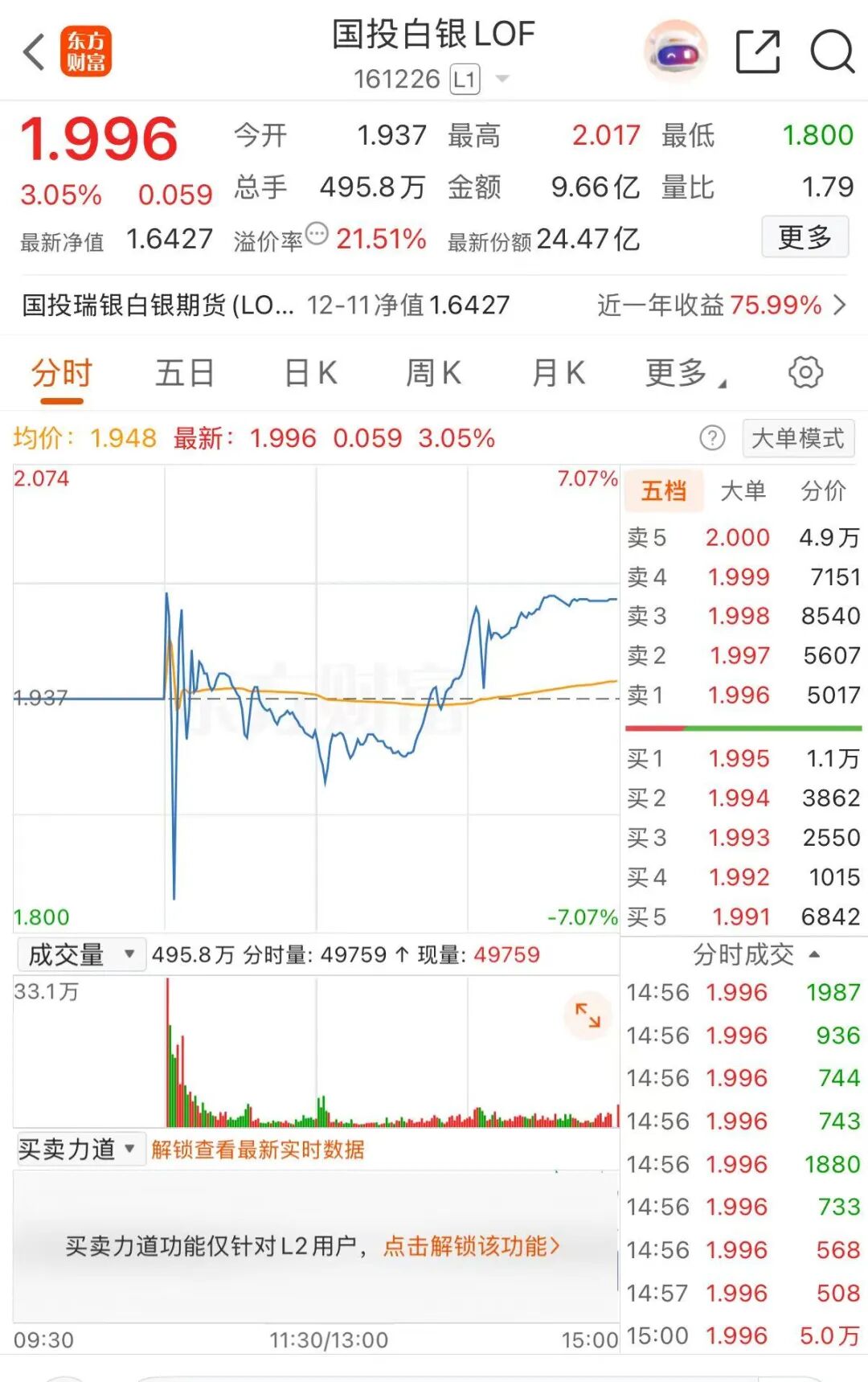
白银"涨疯了"! 12月12日,现货白银再次创下历史新高,截至发稿,伦敦银现报64.25美元/盎司,盘中一度涨超2%,年内累计涨幅已超过120%,甚至超过黄金,成为近 期市场热议的投资品种。 受益于白银的表现,国投瑞银基金旗下的国投瑞银白银期货(LOF)A(场内简称:国投白银LOF;交易代码:161226)今年以来收益率高达86.73%。时 代周报记者注意到,该基金也是目前市面上唯一一只跟踪上期所白银期货主力合约的商品型基金。 但12月初以来,该基金罕见地连发四次二级市场交易价格溢价风险提示公告。 12月12日,国投瑞银基金发布公告称,近期旗下国投瑞银白银期货证券投资基金(LOF)A类基金份额二级市场交易价格波动较大。12月10日,该基金基 金份额单位净值为1.6077元,截至12月11日,该基金二级市场的收盘价为1.937 元,明显高于基金份额净值。国投瑞银基金称,投资者如果盲目投资于高 溢价率的基金份额,可能面临较大损失。 事实上,这已经是国投白银LOF 12月以来发布的第四份二级市场交易价格溢价风险提示。12月12日上午,国投白银LOF停牌1小时后复牌,波动明显加 大,复牌后一度跌超7%,但随后迅速走高 ...
11月份规模以上电子专用材料制造、集成电路制造增加值分别增长30.9%、32.4%
Bei Jing Shang Bao· 2025-12-15 04:07
Core Insights - In November, the manufacturing value added of electronic special materials and integrated circuits increased by 30.9% and 32.4% respectively, indicating strong growth in the electronics sector [1] - The production of smart products saw rapid growth, with the manufacturing value added of smart vehicle-mounted equipment and smart unmanned aerial vehicles increasing by 30% and 49.3% respectively, along with a 20.6% increase in industrial robot output [1] - The new energy industry is developing well under the green transition, with production of new energy vehicles and lithium-ion batteries for vehicles increasing by 17% and 32.7% respectively [1] - The production of green materials is also growing rapidly, with high-performance chemical fibers and bio-based chemical fibers seeing production increases of 41.3% and 27.7% respectively [1]
河北省委书记倪岳峰赴唐山督导督察整改工作 用市场化法治化手段倒逼企业节能降耗转型升级
Zhong Guo Huan Jing Bao· 2025-12-15 03:36
Core Viewpoint - The article emphasizes the importance of ecological environment protection in Tangshan, highlighting the need for strict compliance with environmental regulations and the implementation of corrective measures to address violations in the steel industry [1][2]. Group 1: Ecological Environment Protection - The Central Ecological Environment Protection Supervision Team reported violations in Tangshan, including the illegal establishment of steel projects and significant air pollution issues [1]. - The provincial leadership stresses the need for a robust mechanism to ensure long-term ecological protection and to promote a comprehensive green transformation of economic and social development [1]. Group 2: Accountability and Enforcement - There is a call for strict accountability measures against those responsible for environmental violations, including legal actions against illegal steel production and pollution [1]. - The article highlights the necessity of establishing a mechanism for discovering environmental violations and conducting regular monitoring to prevent air pollution [1]. Group 3: Strategic Initiatives - The provincial government aims to enhance political awareness regarding the seriousness of ecological supervision and to implement detailed rectification plans with clear timelines [2]. - There is a focus on optimizing industrial layout and maintaining ecological protection boundaries while promoting pollution prevention and ecological system optimization [2].
国家统计局:新质生产力助力经济高质量发展取得积极成效
Zhong Guo Xin Wen Wang· 2025-12-15 03:27
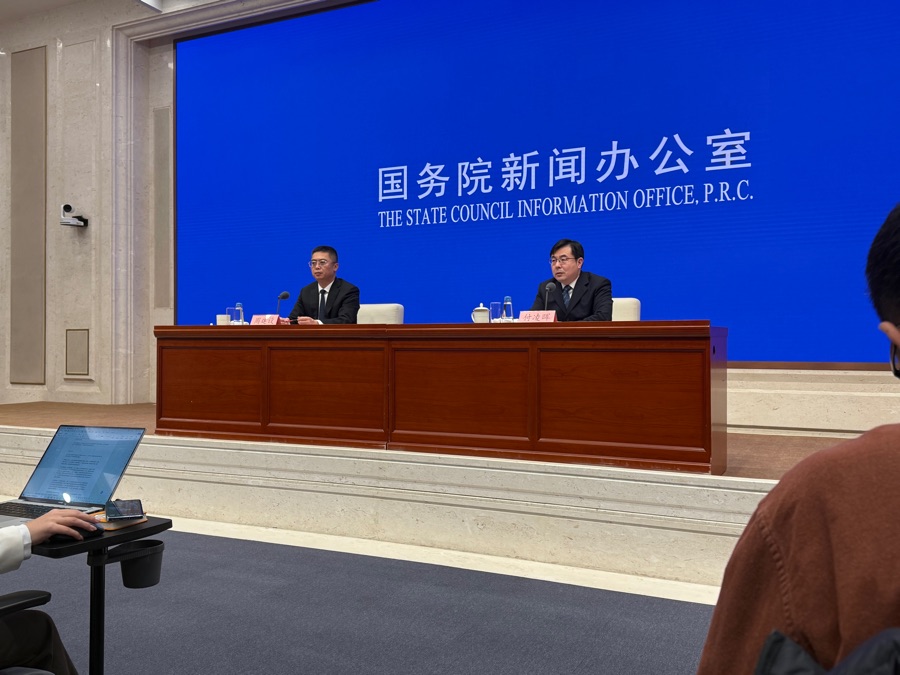
Core Viewpoint - The article emphasizes that the development of new productivity is crucial for promoting high-quality economic growth in China, with significant progress observed in various sectors throughout the year [1]. Group 1: Emerging Industries - Emerging industries are growing robustly, with a 9.2% year-on-year increase in the value added of high-tech manufacturing from January to November. The smart consumer equipment manufacturing sector saw a 7.6% increase [1]. - Specific industries such as electronic materials and integrated circuits experienced substantial growth, with value added increasing by 22.9% and 24.6%, respectively [1]. - Breakthroughs in cutting-edge fields like artificial intelligence are accelerating industrial upgrades, with industrial robot production increasing by 29.2% and industrial control computers by 87.6% [1]. Group 2: Traditional Industry Transformation - The country is actively promoting technological upgrades and equipment renewal in traditional industries, leading to significant growth in new materials and processing [2]. - The biomass fuel processing industry saw a 15.6% increase in value added, contributing 1.6 percentage points more to the growth of the petroleum processing industry [2]. - The chemical fiber industry benefited from a 29% increase in bio-based materials manufacturing, contributing 18.4 percentage points to its growth [2]. - The coal and chemical industries also showed positive trends, with value added increasing by 6.3% and 7.8%, respectively [2]. Group 3: Digital Economy Growth - The digital economy is expanding, with a 9.3% year-on-year increase in the value added of digital product manufacturing from January to November. The information transmission, software, and IT services sector saw an 11.3% growth in production index [2]. - Specific products like servers and integrated circuits experienced production increases of 15.1% and 10.6%, respectively [2]. - Online retail sales grew by 9.1%, driven by the expansion of digital consumption and new business models [2]. Group 4: Green Transition - The green and low-carbon development is advancing, significantly impacting the energy sector and driving rapid growth in the new energy industry [3]. - The clean energy sector saw an 8.8% increase in electricity generation from hydropower, nuclear, wind, and solar sources [3]. - Production of hydropower and wind turbine generators increased by 25.8% and 58.9%, respectively [3]. - The production of new energy vehicles and lithium-ion batteries for vehicles grew by 26.5% and 42.2%, respectively [3]. - The recycling industry also benefited, with a 14.2% increase in the value added of comprehensive waste resource utilization [3].
“八个坚持”拓开2026年中国经济大视野
Guo Ji Jin Rong Bao· 2025-12-15 03:12
Group 1: Macroeconomic Policy and Domestic Market - The core macroeconomic policy emphasizes a more proactive approach, focusing on quality and efficiency as key development themes, with the "Eight Persistences" as critical directives for economic work in the first year of the 14th Five-Year Plan [1] - Domestic demand has become the main driver of economic growth, contributing an average of 93.1% to economic growth from 2013 to 2024, highlighting the importance of a strong domestic market as a long-term strategy [2][3] Group 2: Innovation and New Growth Drivers - The necessity of innovation-driven growth is underscored, as new momentum is essential for future development and competitive positioning, requiring a systemic reshaping of production factors and business models [4][5] - The development of new momentum must support both high-end industries and traditional industry upgrades, creating high-quality employment and meeting the needs of the populace [5] Group 3: Reform and High-Quality Development - Continuous reform is essential to inject vitality into high-quality development, addressing deep-seated issues that have emerged due to changing development stages [6][7] - Emphasis on technological innovation as a key driver for high-quality development, necessitating a deep integration of innovation systems and breaking down institutional barriers [7] Group 4: Open Economy and International Cooperation - China aims for a higher level of openness, promoting multi-faceted cooperation to adapt to global economic changes and challenges, emphasizing the importance of collaborative networks in various fields [8][9] - The need for innovative cooperation mechanisms to address challenges posed by protectionism and geopolitical tensions is highlighted, focusing on quality and resilience in partnerships [9] Group 5: Coordinated Development and Urban-Rural Integration - The strategy of promoting coordinated development aims to address the growing disparities between urban and rural areas, emphasizing the need for a balanced and inclusive development approach [10][11] - Regional integration strategies like the Beijing-Tianjin-Hebei collaboration and the Yangtze River Economic Belt are examples of efforts to optimize resource allocation and promote high-quality regional economic layouts [11] Group 6: Green Transformation and Carbon Neutrality - The commitment to achieving carbon peak by 2030 and carbon neutrality by 2060 reflects China's responsibility in global climate governance and the need for a comprehensive green transformation [12][13] - Innovation is identified as the core engine for achieving carbon goals, requiring advancements in renewable energy, energy efficiency, and the establishment of supportive institutional frameworks [14] Group 7: Focus on People's Livelihood - The emphasis on prioritizing people's livelihoods reflects the increasing complexity of public demands, necessitating a responsive governance approach that addresses specific community needs [15][16] - Establishing long-term mechanisms to ensure sustainable improvements in public welfare is crucial, with a focus on resource allocation and social governance [16] Group 8: Risk Management - The need to manage risks in key areas such as real estate and local debt is highlighted, with a focus on maintaining stability while actively addressing potential threats [17][18] - A balanced approach to risk management is essential, combining immediate responses with long-term structural improvements to foster sustainable development [18]
全球化工市场并购活跃
Zhong Guo Hua Gong Bao· 2025-12-15 03:01
Group 1 - The global chemical market is experiencing a significant increase in merger and acquisition (M&A) activity, particularly in high-value sectors such as specialty chemicals and green renewable energy materials [2] - A notable acquisition involves a leading North American electronic-grade polymer materials company being acquired by a European chemical giant, focusing on semiconductor packaging materials and electronic adhesives for electric vehicles [2] - The European giant plans to expand its production capacity in Munich to meet the surging demand from the global chip and high-end automotive electronics industries [2] Group 2 - A major Asian chemical group has signed an agreement to fully acquire a European company with advanced bio-based polyester technology, which has a production capacity of 30,000 tons of biodegradable plastics [3] - This acquisition aligns with global decarbonization strategies and aims to enhance the group's green materials supply chain in Southeast Asia and Europe [3] - A North American mid-sized petrochemical company has completed the acquisition of a small refining plant to optimize logistics and procurement, expecting to reduce overall costs by approximately 8% [3] Group 3 - Three core drivers of the observed trends include strong structural growth in end markets, with demand in the global electric vehicle and high-end chip manufacturing sectors increasing by 15% to 20% year-on-year [4] - Continuous tightening of global green policies and regulations is pushing companies to acquire low-carbon technologies and green product portfolios to remain competitive [4] - Companies in key regions like North America and Asia are increasingly pursuing horizontal mergers to strengthen local supply capabilities and enhance supply chain autonomy amid geopolitical and supply chain security concerns [4]
外媒关注中央经济工作会议:中国着眼未来,多举措优化经济发展
Zhong Guo Xin Wen Wang· 2025-12-15 02:42
法新社指出,中央经济工作会议备受外界关注,人们可以从中了解中国未来经济政策走向。报道称,此 次会议确定了2026年中国经济工作要抓好的八项重点任务,其中,"坚持内需主导,建设强大国内市 场"居于首位。 法新社还关注到,中国的出口持续蓬勃发展。国际货币基金组织(IMF)12月10日预计2025年中国经济增 速将达5%,较10月发布的《世界经济展望报告》上调0.2个百分点。 阿塞拜疆国家新闻社指出中国此次中央经济工作会议分析了当前经济形势,并对2026年经济工作进行了 部署。报道称,会议指出,必须充分挖掘经济潜能,必须坚持政策支持和改革创新并举,必须做到 既"放得活"又"管得好",必须坚持投资于物和投资于人紧密结合,必须以苦练内功来应对外部挑战。 新加坡亚洲新闻台(CNA)报道称,中国此次中央经济工作会议上,"坚持创新驱动,加紧培育壮大新动 能"被列为2026年经济工作的一大重点任务。 外媒关注中央经济工作会议:中国着眼未来,多举措优化经济发展 中新网12月15日电 中央经济工作会议12月10日至11日在北京举行,国际媒体持续关注。多家外媒指 出,此次会议意义重大,明确了2026年中国经济工作政策取向,相信中国将 ...