
低碳发展

Search documents
印日共推清洁氢/氨发展
Zhong Guo Hua Gong Bao· 2025-09-12 03:08
Core Insights - The joint statement between India's Ministry of New and Renewable Energy and Japan's Ministry of Economy, Trade and Industry aims to promote the development of low-carbon and renewable hydrogen/ammonia ecosystems in both countries and beyond [1][2] - The collaboration is based on the "Japan-India Clean Energy Partnership" established in 2022, focusing on enhancing cooperation in hydrogen and ammonia technology research and application [1][2] Group 1 - The core objectives of the joint statement include promoting research, investment, and project implementation related to hydrogen and ammonia, covering transportation and specific applications [1] - Japan is recognized for its leading position in hydrogen/ammonia production, transportation, and application technologies, while India aims to leverage its renewable energy potential for large-scale production of low-cost clean hydrogen/ammonia [2] - India has set a target to achieve an annual production of 5 million tons of renewable hydrogen by 2030 and aims to capture 10% of the global hydrogen trade [2] Group 2 - A "Hydrogen/Ammonia Special Working Group" will be established under the "New Energy and Renewable Energy Working Group" within the framework of the "Japan-India Energy Dialogue" [2] - Progress on the joint statement will be reported annually to the ministers of both countries, with the working group responsible for the implementation of specific tasks [2]
碳减排工具激活绿色动能 中国人民银行宜春市分行推动绿色金融与低碳发展深度融合
Jin Rong Shi Bao· 2025-09-11 06:34
Core Insights - The implementation of carbon reduction support tools in Yichun City has significantly boosted local green development and created new demands for low-carbon transformation among enterprises [2][4]. Group 1: Financial Support and Impact - A local environmental company received an 8 million yuan loan for its rooftop distributed photovoltaic project, with a loan interest rate reduced by 109 basis points, which alleviated financial burdens and enabled project execution [1]. - As of June 2025, Yichun City has issued loans totaling 3.483 billion yuan under the carbon reduction support tool, ranking second in the province, with a green loan balance of 91.691 billion yuan, reflecting a year-on-year growth of 22.96%, surpassing the overall loan growth rate by 17.57 percentage points [1]. Group 2: New Demand for Low-Carbon Transformation - The introduction of carbon reduction support tools has led to an increased willingness among enterprises to pursue carbon reduction projects, overcoming previous financial constraints [2]. - The nature of carbon reduction projects, such as pumped storage power stations and photovoltaic power generation, often requires significant investment and longer construction periods, leading to a greater demand for financing compared to traditional projects [2]. Group 3: Financial Institutions' Response - Financial institutions in Yichun have optimized credit approval processes, reducing the average time from project initiation to loan disbursement from 40 working days to under 20 [3]. - New long-term credit products with repayment terms of up to 30 years have been introduced to accommodate the unique needs of carbon reduction projects, easing repayment pressures for enterprises [3]. - Financial institutions are actively promoting loan applications to ensure that eligible carbon reduction loans are fully reported, allowing enterprises to benefit from policy incentives [3]. Group 4: Central Bank Initiatives - The People's Bank of China in Yichun has established a project database focusing on key areas such as clean energy and carbon reduction technologies, facilitating better project identification and support [4][5]. - A communication mechanism has been set up to promote the use of carbon reduction support tools, including policy outreach and direct engagement between financial institutions and enterprises [5].
中国人民银行宜春市分行推动绿色金融与低碳发展深度融合
Jin Rong Shi Bao· 2025-09-11 06:13
Core Viewpoint - The implementation of carbon reduction support tools in Yichun City has significantly boosted local green development and created new demands for enterprises in their low-carbon transformation process [2]. Group 1: Financial Support and Impact - A local environmental company received an 8 million yuan loan for its rooftop distributed photovoltaic project, with a loan interest rate reduced by 109 basis points, alleviating financial burdens and enabling project execution [1]. - As of June 2025, Yichun City has issued loans totaling 3.483 billion yuan under the carbon reduction support tool, ranking second in the province, with a green loan balance of 91.691 billion yuan, reflecting a year-on-year growth of 22.96% [1]. Group 2: New Demand for Low-Carbon Transformation - The introduction of carbon reduction support tools has led to increased willingness among enterprises to pursue carbon reduction projects, overcoming previous financial constraints [2]. - The financing needs for carbon reduction projects have grown significantly, requiring financial institutions to provide substantial credit support for long-term projects like pumped storage power stations and photovoltaic power generation [2]. Group 3: Financial Institutions' Response - Financial institutions in Yichun have optimized credit approval processes, reducing the average time from 40 working days to under 20 days for carbon reduction project loans [3]. - New long-term credit products with repayment terms of up to 30 years have been introduced to accommodate the unique financing needs of carbon reduction projects [3]. - Financial institutions are actively promoting loan applications to ensure that eligible carbon reduction loans are reported and utilized effectively [3]. Group 4: Central Bank Initiatives - The People's Bank of China in Yichun has established a project database focusing on key areas for carbon reduction, collaborating with local government departments to identify significant projects [4]. - A communication mechanism has been set up to facilitate the use of carbon reduction support tools, including policy promotion and direct engagement between financial institutions and enterprises [5].


活力中国调研行 | 低碳赋能 造就新韵重庆新动能
Zhong Guo Qing Nian Bao· 2025-09-05 05:13
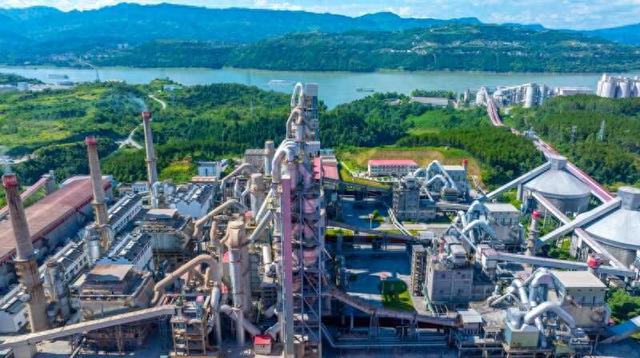
Core Viewpoint - Chongqing's low-carbon development is seen as a new engine for high-quality economic growth, with significant achievements in energy consumption reduction and economic growth rates [1][4]. Group 1: Low-Carbon Initiatives - Chongqing's energy consumption growth rate is 2.4% annually, supporting an economic growth rate of 5.6%, with GDP energy consumption dropping to 0.310 tons of standard coal per ten thousand yuan, outperforming the national average by approximately 30% [1]. - The Chongqing Conch Cement plant utilizes urban waste for energy generation, achieving a zero-emission goal through resource recovery and full utilization of residual ash as cement raw material [1][4]. - The waste incineration project at Chongqing Conch Cement has processed over 570,000 tons of municipal waste since its operation, significantly reducing landfill usage and environmental risks [5][6]. Group 2: Environmental Impact and Achievements - The Chongqing Conch Cement plant has achieved a reduction of 11,500 tons of CO2 emissions annually and over 90% reduction in methane emissions, with dioxin concentrations far below national standards [6]. - The plant has been recognized as a national-level green factory and a model for ecological protection along the Yangtze River Economic Belt [6]. - The waste management system in Chongqing has reached a 100% harmless treatment rate, with a goal of zero landfill by 2025 [4][5]. Group 3: Industry Cluster and Technological Innovation - The Dadu River area hosts several national-level green factories, including Chongqing International Composite Materials Co., which has achieved top-tier emissions standards in its glass fiber production [7][8]. - The Chongqing Smart Industry Park has transformed into a near-zero carbon park, focusing on smart economy and green manufacturing, with significant reductions in carbon emissions and waste [11][12]. - The introduction of low-carbon technologies in various sectors, such as the production of microbial protein and hydrogen fuel cells, showcases the region's commitment to sustainable development [12][13][14].

四个聚焦”深化节能降耗减污 | 大家谈 如何当好“碳路先锋
Zhong Guo Hua Gong Bao· 2025-09-02 03:35
Group 1 - The chemical industry must enhance its position under the low-carbon development strategy, integrating Xi Jinping's ecological civilization thought into all aspects of operations to improve competitiveness and fulfill social responsibilities [1][2] - Companies should focus on energy conservation and emission reduction through technological innovation and management optimization, including the recovery of effective gases and the treatment of volatile organic compounds (VOCs) [1][2] - The industry is encouraged to actively participate in ecological protection and restoration, establishing a clean, efficient, and sustainable production system [1][2] Group 2 - Chemical enterprises need to conduct in-depth research on their product systems and production processes to achieve energy savings and emissions reductions through technological innovation [2] - There is a need to adjust energy structures by reducing reliance on traditional fossil fuels and increasing the use of clean energy, while also improving the efficiency of existing fossil fuel utilization [2] - The industry is preparing for carbon emissions trading, necessitating the establishment of monitoring, reporting, and verification systems for carbon emissions [2]
“四个聚焦”深化节能降耗减污 | 大家谈 如何当好“碳路先锋”
Zhong Guo Hua Gong Bao· 2025-09-02 02:27
Group 1 - The core viewpoint emphasizes the need for the chemical industry to enhance its position under the low-carbon development strategy, integrating Xi Jinping's ecological civilization thought into all aspects of operations to improve competitiveness and fulfill social responsibilities [1][2] - The industry should focus on energy conservation and emission reduction through technological innovation and management optimization, including the recovery of effective gases and the treatment of volatile organic compounds (VOCs) [1][2] - Companies are encouraged to conduct detailed studies on their product systems and production processes to achieve energy savings and emissions reductions, thereby reinforcing their competitive advantages [2] Group 2 - The chemical industry must adjust its energy structure by reducing reliance on traditional fossil fuels and increasing the use of clean energy, while also improving the efficiency of existing fossil fuel utilization [2] - A scientific roadmap for energy transition should be developed, with phased and step-by-step implementation to facilitate energy structure adjustments [2] - The industry is preparing for the inclusion of carbon emissions in trading, necessitating the establishment of robust carbon emission monitoring, reporting, and verification systems [2]
罗曼股份: 罗曼股份:2025年半年度报告
Zheng Quan Zhi Xing· 2025-08-29 16:52
Core Viewpoint - Shanghai Luoman Technologies Inc. reported significant growth in revenue and net profit for the first half of 2025, driven by an expanded consolidation scope and improved collection of accounts receivable, indicating a strong operational performance and market positioning in the landscape lighting and digital entertainment sectors [1][2][3]. Company Overview and Financial Indicators - The company achieved operating revenue of CNY 432.37 million, a year-on-year increase of 72.92% [2][3]. - Total profit reached CNY 20.79 million, up 320.73% from the previous year [2][3]. - Net profit attributable to shareholders was CNY 13.23 million, reflecting a 158.02% increase [2][3]. - The net asset attributable to shareholders at the end of the reporting period was CNY 1.27 billion, a 1.32% increase from the end of the previous year [2][3]. Industry and Main Business Situation - The industry is experiencing stable growth, supported by national policies promoting low-carbon development and consumption [3][4]. - The company focuses on landscape lighting planning, design, and construction, while also capitalizing on opportunities in energy conservation and cultural tourism [4][5]. - The company has established three main business segments: urban lighting, digital energy, and digital entertainment, enhancing its market recognition and brand influence [5][6]. Business Performance Analysis - The urban lighting segment has successfully implemented night scene projects, enhancing the appeal of tourist destinations and contributing to the night economy [7][8]. - The digital energy segment is expanding its "energy+" model, focusing on photovoltaic projects and energy storage solutions [8][9]. - The digital entertainment segment leverages international creative and technological capabilities to provide immersive experiences for theme parks and commercial complexes [9][10]. Competitive Advantages - The company has a strong design and brand advantage, holding a "special grade" qualification in lighting engineering design and receiving multiple industry awards [11][12]. - The multi-business synergy enhances customer satisfaction and market competitiveness, with innovative service models addressing market pain points [12][13]. - The company is actively pursuing global market integration through its subsidiary Holovis, establishing a robust client network and local service teams [13][14]. Technological Advancements - The company is recognized as a high-tech enterprise, leading in smart lighting control and digital energy fields, and is involved in setting industry standards [14][15]. - Recent technological innovations include AI-driven maintenance solutions and advanced control devices, improving operational efficiency and risk management [15][16]. Talent Development - The company has built a high-quality R&D team with expertise in various technical fields, ensuring a strong foundation for future growth and innovation [17].

联美控股上半年实现净利润5.24亿元 智慧供热纵深推进
Zheng Quan Ri Bao Zhi Sheng· 2025-08-29 11:08
Core Insights - The company reported a steady growth in profit levels despite a complex market environment, with a net profit of 524 million yuan, an increase of 9.87% year-on-year, while operating revenue decreased by 2.65% to 1.898 billion yuan [1] Group 1: Business Performance - The company optimized its heating service area layout through acquisitions and collaborations to expand market share [1] - Customer satisfaction significantly improved due to enhanced quality control in heating services, utilizing multiple channels for user feedback [1] Group 2: Technological Advancements - The company is advancing smart heating initiatives, achieving breakthroughs in energy saving and efficiency through AI, with a pilot project for dynamic heat load distribution set to be implemented in the 2024-2025 heating season [1] - The company developed the "Lianmei Smart Operation Platform" to create a closed-loop system for data collection, analysis, and control, enhancing both energy conservation and service quality [1] Group 3: Future Strategies - In 2025, the company plans to scale up the application of smart technologies, focusing on optimizing energy efficiency across the entire supply chain [2] - The company aims to integrate smart heating renovations with urban renewal projects, upgrading old pipeline networks to intelligent heating systems with self-sensing and self-optimizing capabilities [2] - The company will continue to deepen its dual strategy of "clean energy + smart operation," exploring zero-carbon technologies and innovative service models [2]

中国天然气发展报告(2025)
国家能源局· 2025-08-29 09:30
Core Viewpoint - The article emphasizes the growth and transformation of China's natural gas industry, highlighting its role in the global energy transition and the importance of policy reforms to enhance market efficiency and security [8][36]. Group 1: Global Natural Gas Development Trends - In 2024, global natural gas consumption is projected to reach 4.13 trillion cubic meters, with a year-on-year growth rate of 2.5%, driven by lower international gas prices and moderate economic recovery [11]. - Asia-Pacific leads global growth with a consumption increase of 4.5%, particularly in China and India, which see growth rates of 7.3% and 13.0%, respectively [11]. - Global natural gas production is expected to grow by 1.5% to 4.12 trillion cubic meters, with significant contributions from the Middle East and Russia [13]. - The global natural gas trade volume is anticipated to increase by 1.9%, with pipeline gas trade growing by 2.2% and LNG trade by 1.4% [13][14]. Group 2: China's Natural Gas Development - In 2024, China's natural gas consumption is expected to grow by 7.3%, with its share in total primary energy consumption rising to 8.8% [18]. - The industrial fuel consumption of natural gas is projected to increase by 6.1%, driven by equipment upgrades and the expansion of strategic emerging industries [19]. - Domestic natural gas production is forecasted to reach 246.5 billion cubic meters, marking a 6.0% increase, with unconventional gas production surpassing 100 billion cubic meters for the first time [20]. - Natural gas imports are expected to grow by 9.9% to 1.817 trillion cubic meters, with pipeline gas imports increasing by 13.1% [20]. Group 3: Market System Reforms - The implementation of the Energy Law aims to enhance the legal framework for the natural gas sector, promoting exploration and development while ensuring supply security [27]. - The establishment of the National Pipeline Network Group has facilitated the separation of transportation and sales, increasing the number of shippers from 5 to 765 [29]. - The marketization of natural gas pricing has progressed significantly, with the share of market-based pricing for various gas sources increasing [31]. Group 4: Future Outlook for Natural Gas Development - In the first half of 2025, China's natural gas consumption is expected to grow by 2% to 3%, with production continuing to increase for the ninth consecutive year [34]. - The completion of the China-Russia East Line is anticipated to enhance gas imports, while LNG imports will be adjusted based on international price fluctuations [34]. - The article highlights the importance of achieving a balance between supply and demand amid geopolitical uncertainties and climate change challenges [34].

招商轮船: 招商轮船2025年半年度报告
Zheng Quan Zhi Xing· 2025-08-27 16:40
Core Viewpoint - The report highlights the financial performance and operational challenges faced by China Merchants Energy Shipping Co., Ltd. in the first half of 2025, emphasizing a decline in revenue and profits due to geopolitical risks and market volatility [1][3][4]. Financial Performance - The company's operating revenue for the first half of 2025 was approximately CNY 12.58 billion, a decrease of 4.91% compared to the same period last year [3]. - Total profit for the period was CNY 2.48 billion, down 16.40% year-on-year [3]. - Net profit attributable to shareholders was CNY 2.12 billion, reflecting a 14.91% decline from the previous year [3]. - The company declared a cash dividend of CNY 0.7 per share, totaling CNY 565.22 million, which represents 41.22% of the net profit for the period [1]. Industry Overview - The international shipping market faced significant challenges due to geopolitical tensions, including the US tariff policy adjustments and conflicts in the Middle East and Ukraine, leading to increased complexity in global trade [4][5]. - The Clarkson shipping index fell by 5% year-on-year, with a more substantial decline of 31% when excluding the container shipping market [4]. - The global economic growth forecast for 2025 is only 2.8%, with the International Energy Agency (IEA) predicting a slowdown in global oil demand growth to 0.8% [4][5]. Shipping Market Dynamics - The average daily earnings for VLCC, Suezmax, and Aframax tankers decreased by 9.99%, 18.32%, and 31.00% respectively, indicating a challenging market environment [5]. - The global LNG trade volume is expected to grow by 6% in 2025, driven by increased exports from the US and rising imports in Europe [6]. - The global fleet of LNG carriers has grown to 829 vessels, with a high order backlog, although new orders have significantly declined [6]. Company Operations - The company operates a fleet of 52 VLCCs, maintaining its position as the world's largest operator in this segment [8]. - The dry bulk fleet consists of 37 VLOCs, also ranking first globally, with a focus on enhancing operational efficiency and safety [9]. - The company is actively pursuing long-term contracts with major oil companies and expanding its market presence in LNG transportation [10]. Strategic Focus - The company aims to enhance its core competitiveness by optimizing fleet structure and focusing on strategic partnerships with key clients [9][11]. - Efforts are being made to improve operational capabilities in the automotive and container shipping sectors, with a focus on customer-centric services [12].
