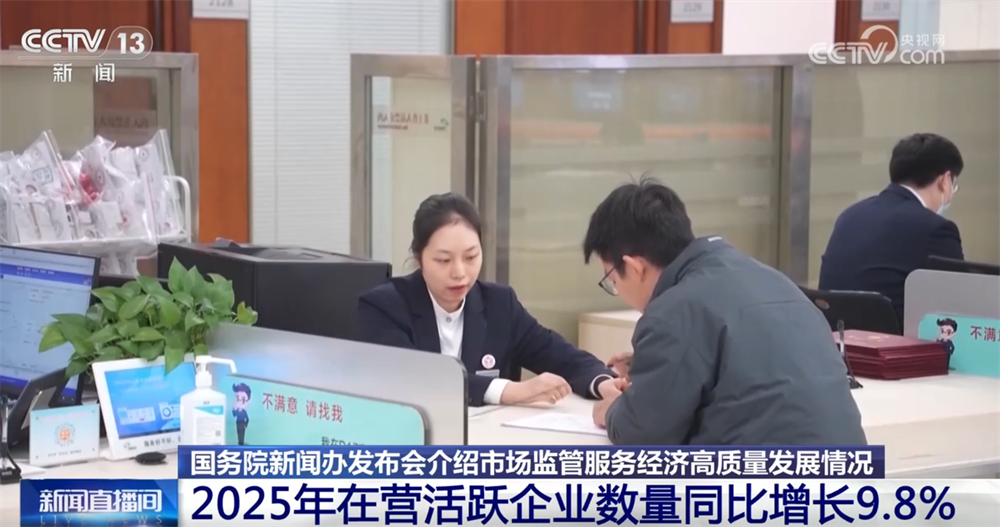
全国统一大市场建设

Search documents
2025年在营活跃企业数量同比增长9.8% 破除地方保护和行政性垄断 今年从三方面发力(权威发布)
Ren Min Ri Bao· 2026-02-05 22:11
Core Insights - The State Administration for Market Regulation (SAMR) is focusing on enhancing the quality of business entities as a foundation for economic recovery, with a projected establishment of 25.745 million new business entities by 2025, and a 9.8% year-on-year increase in active enterprises [1] - The SAMR is committed to improving market access and exit mechanisms, promoting reforms, and addressing unfair competition, with 14,600 cases of unfair competition investigated [2][3] - The central economic work conference emphasizes the importance of domestic demand and a strong domestic market, with the SAMR recovering economic losses of 4.35 billion yuan for consumers in 2025 [4] Group 1: Business Development and Market Regulation - The number of active enterprises has increased, with a 4.7 percentage point rise in their share of total enterprises [1] - The SAMR is implementing reforms to streamline business processes, including the transformation of individual businesses into enterprises and optimizing the cancellation and credit repair processes [2] - A total of 14,600 cases of unfair competition were investigated, with a focus on rectifying policies that hinder fair competition [2] Group 2: Consumer Protection and Market Environment - The SAMR received 26.46 million complaints in 2025, leading to the recovery of 4.35 billion yuan in economic losses for consumers [4] - The agency initiated a three-year action plan to optimize the consumer environment, resulting in the recall of 8.236 million consumer goods and the destruction of 3,683 tons of counterfeit products [4] - The SAMR is enhancing consumer experience through initiatives like the "no-reason return" policy and increasing the public disclosure rate of complaints to 98.4% [5][6] Group 3: Quality and Safety Oversight - The SAMR has made significant progress in quality control, with 21 key technology bottlenecks overcome and 71 urgent quality technology gaps filled by 2025 [7] - Food safety supervision showed a non-compliance rate of 2.74%, with a 57% year-on-year decrease in the number of non-compliant enterprises [7] - The SAMR is focusing on the platform economy, addressing issues in platform rules and irrational competition, while promoting the sector's role in high-quality development [8]
市场监管总局:纵深推进全国统一大市场建设
Zhong Guo Zheng Quan Bao· 2026-02-05 20:27
Core Viewpoint - The National Market Regulation Administration aims to enhance market supervision to support high-quality economic development and ensure a strong domestic market by 2025 [1] Group 1: Development of Business Entities - The quality of business entities is improving, with 25.745 million new entities established in 2025, and the number of active enterprises increasing by 9.8% year-on-year, raising their share of all enterprises by 4.7 percentage points [2] Group 2: Consumer Rights Protection - Consumer rights protection has strengthened, with 26.46 million complaints received, recovering economic losses of 4.35 billion yuan for consumers, and recalling 8.236 million consumer goods in 2025 [3] Group 3: Fair Competition Environment - The fair competition environment is being optimized, with 14,600 cases of unfair competition addressed, and significant actions taken against monopolistic practices in the pharmaceutical sector, leading to substantial price reductions [3] Group 4: Quality Infrastructure Development - Quality infrastructure is being aligned with industry needs, with 21 key technology bottlenecks overcome and 71 urgent quality technology gaps filled by 2025, alongside the establishment of 14 national measurement standards [4] Group 5: Safety in Market Regulation - The overall safety situation in market regulation remains stable, with a food safety inspection failure rate of 2.74% in 2025, a 57% year-on-year decrease in the number of non-compliant enterprises, and a drug inspection pass rate above 99% [5]
国家发展改革委、市场监管总局明确 着力加强价格调控 促进物价合理运行
Zhong Guo Zheng Quan Bao· 2026-02-05 20:25
Group 1 - The National Development and Reform Commission (NDRC) emphasizes the importance of price work in 2026, marking the beginning of the 14th Five-Year Plan, and aims to strengthen price regulation and promote reasonable price operations [1] - The NDRC plans to implement structural adjustments and work with relevant departments to create a policy "combination punch" to support reasonable price recovery [1][2] - The NDRC highlights the need for comprehensive price reforms to guide resource optimization and ensure the stable supply of essential goods, thereby enhancing public welfare [1][2] Group 2 - The government intends to adopt a more proactive fiscal policy and moderately loose monetary policy, with a focus on promoting reasonable price recovery as a key consideration in monetary policy [2] - Structural policies will include actions to boost consumption, implement income increase plans for urban and rural residents, and promote balanced supply and demand [2] - The government aims to streamline price relationships and ensure efficient resource allocation while maintaining stable prices for essential goods [2]
市场监管总局:更大力度破除地方保护和行政性垄断 大力激发各类经营主体活力 建设放心消费集聚区
Shang Hai Zheng Quan Bao· 2026-02-05 17:52
Core Insights - The report highlights the significant growth in the number of new business entities and the improvement in the overall credit index of Chinese enterprises, indicating a robust economic recovery and enhanced business environment [1][2]. Group 1: Business Growth and Credit Improvement - In 2025, a total of 25.745 million new business entities were established, with active enterprises increasing by 9.8% year-on-year [1][2]. - The Chinese enterprise credit index reached 162.66 in 2025, an increase of 3.89 from 2024, reflecting an overall improvement in the creditworthiness of businesses [2]. Group 2: Regulatory Actions and Market Oversight - The State Administration for Market Regulation (SAMR) investigated 5,918 cases of illegal charges against enterprises, resulting in fines totaling 347 million yuan and refunds of 1.35 billion yuan to businesses [2]. - SAMR implemented a risk classification management system for over 64 million enterprises, achieving an issue detection rate of over 85% for high-risk companies [2]. Group 3: Market Competition and Fairness - SAMR is committed to promoting fair competition and addressing local protectionism and administrative monopolies through strict enforcement and compliance measures [4]. - The agency plans to enhance the review process for business mergers and acquisitions to stimulate market vitality while ensuring a competitive environment [4]. Group 4: Platform Economy Regulation - In 2025, SAMR, in collaboration with the National Internet Information Office, introduced regulations to improve the fairness and transparency of online trading platforms [5]. - The agency is addressing issues in the food delivery sector and live-streaming e-commerce by implementing standards and conducting regular oversight [6]. Group 5: Consumer Environment and Standards - SAMR initiated a three-year action plan to optimize the consumer environment, releasing over 210 national standards for various consumer goods and services [6]. - The agency aims to foster consumer confidence through the establishment of "reassuring consumption" zones and related policies [6]. Group 6: Standardization Initiatives - SAMR plans to launch new initiatives to enhance the standard system supporting high-quality development, focusing on updating standards in traditional industries and consumer goods [7].
2026年市场监管聚焦民生 开展“你点我检”活动
Xin Lang Cai Jing· 2026-02-05 17:13
Core Viewpoint - The Chongqing Municipal Market Supervision Administration is focusing on enhancing market regulation and consumer protection to support high-quality economic development during the "14th Five-Year Plan" and the upcoming "15th Five-Year Plan" period [1][2]. Group 1: Market Regulation Initiatives - The administration will emphasize the integration into the national unified market and deepen the construction of a "quality strong city, standard strong city, and intellectual property strong city" [1]. - A series of practical measures will be implemented to optimize the business environment and safeguard public safety [1]. Group 2: Food Safety Measures - Initiatives include promoting "sunshine regulation," strict inspections of key food categories, and establishing a comprehensive traceability mechanism [1]. - Upgrades to campus canteen management will involve "Internet + Bright Kitchen" and "live management" for online dining, alongside the iteration of "Sunshine Kitchen 2.0" [1]. - Activities such as "You Order, I Inspect" and the promotion of "cloud monitoring" for rural banquets will be introduced, along with free testing for small workshops [1]. Group 3: Consumer Rights Protection - The administration plans to revise the 12315 complaint handling rules and promote the ODR mechanism and advance payment compensation system to create a "one-stop" consumer rights protection station [1]. - Efforts will be made to address irregular charges in the livelihood sector and strengthen antitrust enforcement and credit system construction [1]. Group 4: Market Entity Cultivation - The administration will deepen the reform of the registration system, simplify the processes for starting and terminating businesses, and promote the exit of long-term inactive entities [2]. - The "no disturbance unless necessary + non-on-site inspection" approach will be continued, along with optimizing the credit repair process and promoting "Yugedai" and "Yugebao" [2]. - High-standard construction of intellectual property protection centers and the implementation of the "Yuqin Going Abroad" support action will be prioritized [2].
市场监管部门今年将严查地方保护与行政性垄断行为
Xin Lang Cai Jing· 2026-02-05 17:12
Core Viewpoint - The market regulatory authority is intensifying efforts to eliminate local protectionism and administrative monopolies, focusing on strict law enforcement, source governance, and compliance construction to promote a unified national market [1][2]. Group 1: Law Enforcement and Competition - In the past year, the market regulatory authority conducted special actions against the abuse of power to eliminate and restrict competition, with the number of cases investigated and concluded increasing by 34% and 32% year-on-year, respectively [1]. - The authority aims to enhance the effectiveness of antitrust enforcement by identifying and rectifying prominent issues, maintaining a high-pressure stance against serious violations, and improving the precision and effectiveness of law enforcement [1][2]. Group 2: Source Governance - The implementation of the Fair Competition Review Regulations will be deepened, with a focus on revising supporting measures and establishing a review mechanism for important policy measures to prevent the introduction of policies that exclude or restrict competition [2]. - Continuous training and digital technology empowerment will be emphasized to enhance the standardization and normalization of review processes [2]. Group 3: Compliance Construction - The State Council's Anti-Monopoly and Anti-Unfair Competition Committee will play a crucial role in enhancing cross-departmental risk consultation and information sharing, focusing on compliance guidance in key areas [2]. - The authority will increase the transparency of antitrust enforcement cases and clarify red lines and bottom lines to promote compliance [2]. Group 4: Consumer Protection and Market Environment - In 2025, the market regulatory authority helped consumers recover economic losses of 4.35 billion yuan and recalled 8.236 million consumer goods [3]. - The number of newly established business entities reached 25.745 million, with active enterprises increasing by 9.8% year-on-year, indicating a growing and dynamic market environment [3]. Group 5: Credit Supervision - By the end of 2025, a total of 15.46 billion pieces of credit information were collected, with over 12.27 billion pieces shared across departments, enhancing the credit profile of enterprises [5]. - The implementation of credit risk classification supervision has led to a discovery rate of over 85% for high-risk enterprises, while low-risk enterprises are subjected to minimal interference [5]. Group 6: Consumer Environment Optimization - The market regulatory authority is launching a three-year action plan to optimize the consumer environment, focusing on establishing standards for safe consumption and cultivating trustworthy markets [7]. - Efforts to address consumer pain points include strict enforcement against quality safety violations in children's toys and other consumer goods, with 72,000 related cases handled [8]. Group 7: Platform Economy Regulation - The market regulatory authority is addressing issues in the platform economy, including the misuse of rules such as "lowest price" guarantees and forced fees, to protect the rights of small businesses and consumers [11]. - A series of regulations and guidelines have been introduced to enhance the compliance management of online trading platforms and curb unfair practices in live-streaming e-commerce [12].
河南省非公有制经济人士优秀中国特色社会主义事业建设者表彰大会召开 刘宁王凯会见受表彰代表
He Nan Ri Bao· 2026-02-05 11:54
2月5日,河南省非公有制经济人士优秀中国特色社会主义事业建设者表彰大会在郑州召开。会前,省委 书记刘宁、省长王凯会见受表彰代表,并同大家合影留念。 会上,100名非公有制经济人士获得"优秀中国特色社会主义事业建设者"称号,优秀建设者代表进行大 会发言并宣读倡议书。 省领导陈星、刘南昌、李涛、朱焕然参加有关活动。(记者 石可欣) 责任编辑: 秦臻 省委常委、统战部部长张雷明出席并讲话。他指出,长期以来,全省广大非公有制经济人士积极投身经 济建设主战场,主动融入服务全国统一大市场建设,加快培育新质生产力,服务保障民生改善,为推进 高质量发展、高效能治理作出了重要贡献。希望获得表彰的非公有制经济人士珍惜荣誉、再接再厉,在 厚植家国情怀上作表率,坚持用习近平新时代中国特色社会主义思想凝心铸魂,传承弘扬新时代豫商精 神,锚定"1+2+4+N"目标任务体系,在河南现代化建设中找准定位、主动作为,坚定做中国特色社会主 义的建设者、中国式现代化的促进者;在坚守主业实业上作表率,聚焦制造业高质量发展,坚持科技创 新与产业创新深度融合,主动拥抱数字化、智能化、绿色化转型,不断提升企业核心竞争力,力争在细 分领域做到行业领先,争当 ...
国家市场监管总局:加强对重点企业成本调查、价格检查和约谈指导
2 1 Shi Ji Jing Ji Bao Dao· 2026-02-05 10:21
Group 1 - The core viewpoint emphasizes the need to strengthen antitrust enforcement and eliminate regulations that hinder a unified national market and fair competition [1][2] - The National Market Supervision Administration aims to conduct a fair competition review by 2025, addressing policies that obstruct market unity and competition [1] - A total of 14,600 cases of unfair competition were handled, with a focus on curbing "involution" competition and regulating price wars and subsidy battles [1] Group 2 - In 2026, the focus will be on three areas: strict law enforcement, source governance, and compliance construction to enhance antitrust effectiveness [2] - The implementation of the Fair Competition Review Regulations will be deepened, with an emphasis on revising supporting measures and preventing policies that restrict competition [2] - The establishment of a new media platform for antitrust activities will facilitate regular updates on important events, policy interpretations, and case information [3]
国新看台丨市场监管总局:拆掉了“篱笆墙”,才好修“快车道”
Sou Hu Cai Jing· 2026-02-05 08:19
Core Insights - The State Administration for Market Regulation (SAMR) reported significant growth in the number of active enterprises, with a projected 25.745 million new business entities by 2025, reflecting a 9.8% year-on-year increase and a 4.7 percentage point rise in their share of total enterprises [2] Group 1: Optimizing Consumer Environment - The SAMR has prioritized optimizing the consumer environment as a key strategy to boost consumption, with over 210 national standards for major consumer goods and services established since the launch of the three-year action plan in 2025 [3] - Infrastructure improvements include the establishment of 19.325 million charging stations and 30,000 rural commercial logistics distribution points, enhancing consumer accessibility [3] - The "Iron Fist" action has led to the investigation of 72,000 cases related to consumer safety and quality issues, including the recall of 8.236 million consumer products [3][4] Group 2: Enhancing Consumer Experience - Initiatives such as the "Inter-city Return and Exchange" proposal have been launched, with 214,000 offline units now publicly listed for no-reason returns, improving consumer rights protection [4] - The public complaint platform's disclosure rate has reached 98.4%, with efforts to reduce consumer disputes through enhanced transparency [4] Group 3: Addressing Economic Circulation Barriers - The SAMR is focused on dismantling local protectionism and administrative monopolies to facilitate market integration, with a 34% increase in investigations and a 32% rise in case resolutions over the past year [5] - Over 12,000 local government policy measures have been reviewed to ensure compliance with national market standards and fair competition [5] Group 4: Strengthening Compliance and Fair Competition - The SAMR plans to enhance compliance through the implementation of the Fair Competition Review Regulations, focusing on preventing policies that restrict competition [6] - There will be increased training and digital technology integration to improve the standardization and regulation of policy reviews [6]

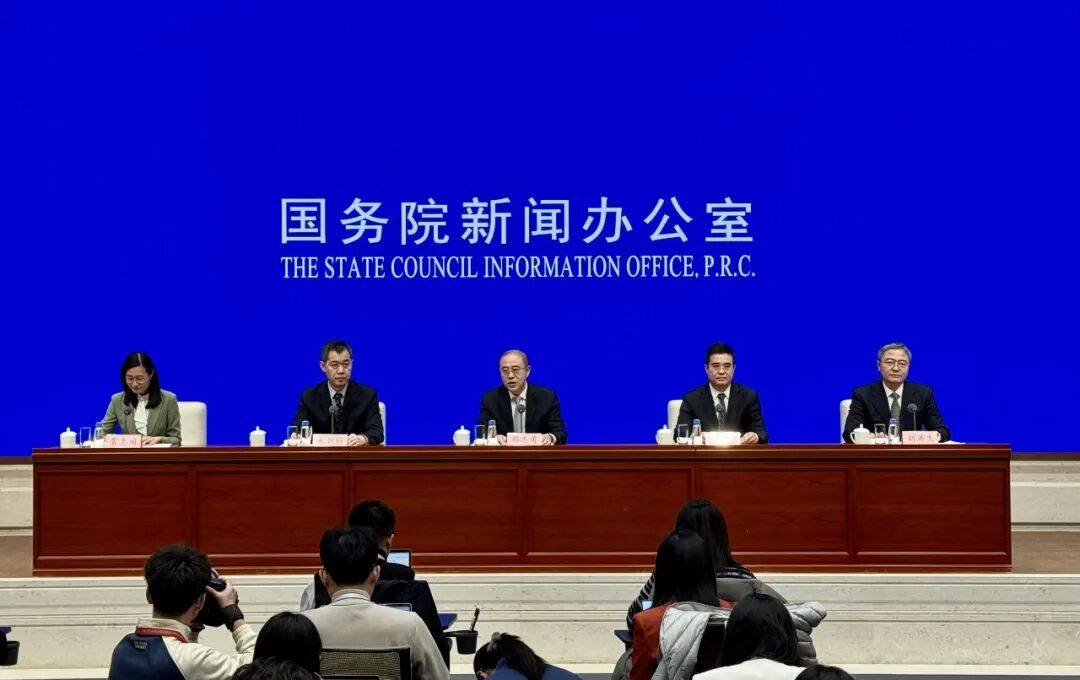
多维数据“透视”市场监管服务经济高质量发展成效 微观经济基础持续巩固
Yang Shi Wang· 2026-02-05 04:32
Core Viewpoint - The press conference highlighted the achievements of the State Administration for Market Regulation (SAMR) in optimizing the consumption environment, promoting fair competition, and protecting consumer rights, indicating a significant step towards high-quality economic development in China [1][16]. Group 1: Economic Recovery and Consumer Protection - In 2025, the number of newly established business entities reached 25.745 million, with active enterprises increasing by 9.8% year-on-year, reflecting a gradual economic recovery and strengthening of the microeconomic foundation [2]. - The SAMR received 26.46 million consumer complaints in 2025, recovering economic losses of 4.35 billion yuan and recalling 8.236 million unsafe consumer products, demonstrating effective market order maintenance and consumer rights protection [2]. Group 2: Improvement of Consumption Environment - The "Three-Year Action Plan for Optimizing the Consumption Environment," initiated in 2025, has shown initial success, with national standards released for various consumer goods and services, enhancing service quality [4][5]. - The construction of charging facilities and commercial distribution points has significantly improved the consumption environment and diversified consumption scenarios [5]. Group 3: Fair Competition Promotion - In 2025, the SAMR cracked down on "involution" competition, handling 14,600 cases of unfair competition, effectively curbing "price wars" and "subsidy wars" [8]. - The SAMR took decisive actions in key sectors like pharmaceuticals and platform economy to rectify abuses of rules, protecting the legitimate rights of small businesses and consumers [8]. Group 4: Credit Building and Data Sharing - Credit building is emphasized as a foundational tool for high-quality economic development, with 15.46 billion credit information records collected and 12.27 billion records shared across departments by the end of 2025 [10]. - Over 64 million enterprises underwent credit risk classification management, enhancing compliance and promoting credit improvement [10]. Group 5: Quality Improvement Initiatives - The SAMR has made significant progress in quality enhancement through initiatives targeting key industrial chains, investing 220 million yuan to tackle 289 tasks, particularly in critical areas like new energy vehicles and automotive chips [12]. - In 2025, 21 key technological bottlenecks were overcome, and 71 urgent quality technology gaps were filled, with 4,929 national standards published, a 56% increase year-on-year [17]. Group 6: National Unified Market Construction - The SAMR plans to further advance the construction of a national unified market, aiming to eliminate local protectionism and administrative monopolies, with special actions to address key cases and enhance antitrust enforcement [14]. Group 7: Safety Regulation Enhancements - Continuous efforts are being made to strengthen safety regulations for food, pharmaceuticals, industrial products, and special equipment, with the national food safety supervision sampling failure rate at 2.74% in 2025, a 57% year-on-year decrease in the number of non-compliant enterprises [21].