
关税

Search documents
美国和印度达成临时贸易协议
Xin Lang Cai Jing· 2026-02-07 07:46
美国与印度宣布,双方已就临时贸易协定达成框架协议,为纳伦德拉・莫迪政府与唐纳德・特朗普政府 之间持续数月的贸易僵局画上句号。 就在数日之前,特朗普与莫迪通话并表示,印度已同意停止购买俄罗斯石油,而印度此前的购油行为, 正是特朗普政府对印度进口商品征收50%关税的缘由。此次通话后,双方正式确认了这份协定。 印度新德里方面于周六凌晨发布联合声明,披露了该协定的更多细节:印度将为美国大部分工业品及部 分食品的进口开放市场,而印度出口至美国的商品,将面临18%的"互惠关税"。 印度方面还表示,其"有意"扩大自美进口规模,计划在未来五年内,从美国采购价值5000亿美元的能 源、飞机及飞机零部件、金属制品、科技产品和炼焦煤。这一采购目标约为印度目前自美进口额的两 倍。 双方还同意着手解决影响双边贸易的非关税壁垒问题,印度承诺取消"限制性进口许可程序",这一问题 长期以来一直是两国经贸关系中的症结。 去年,莫迪访问华盛顿期间,美印两国曾达成共识,致力于推进双边贸易协定的谈判,但后续谈判陷入 停滞,双方立场均趋于强硬,其中就包括印度拒绝开放其庞大的农产品市场这一争议点。 此后,特朗普政府对印度征收50%的关税,其中25%的关 ...
美国强行卖资源给全球南方
日经中文网· 2026-02-07 00:33
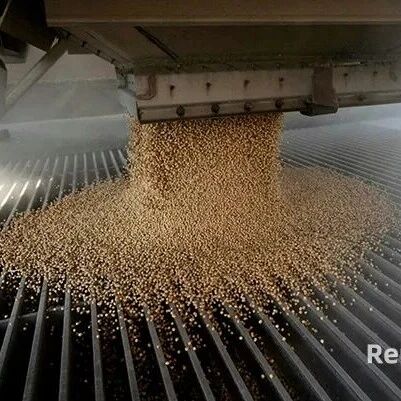
将被运往美国俄亥俄州仓储设施的美国产大豆(Reuters) 2025年美国对全球南方的原油出口量增长58%,谷物出口增长3成。特朗普政府以降低关税为"回报", 强迫全球南方扩大采购美国产品。但全球南方本来更想买便宜谷物…… 美国的资源和谷物正在流入全球南方(新兴和发展中国家)。其原因是特朗普政府以降低关税为"回 报",强迫全球南方扩大采购美国产品。美国发往全球南方的海上运输量比上年增长2成,弥补了对中国 出口的减少。 美国联邦最高法院仍在继续审理关税是否符合宪法的相关诉讼。如果特朗普政府败诉,混乱在所难免, 但美国政府被认为将依据其他不构成违宪的法律,寻求继续征收关税。 分析一下美国对巴西、印度、非洲各国等20个主要全球南方国家的出口量就会发现,2025年美国的出口 总量约为2.23亿吨,比上年增长17%。 这一数字超过了美国对日本(10%)和对欧洲(7%)的出口量增长率。与提出巨额对美投资计划的日 本和欧盟相比,全球南方的资金实力较弱,这些国家在谈判中不得不依赖增加购买美国产品这一有限的 筹码。 对交易起到拉动作用的是化石燃料。欧洲调查公司Kpler的数据显示,2025年美国对全球南方的原油出 口量增长58 ...

美联储杰斐逊:一旦关税对商品的影响传导完毕,整体通胀应会回落。
Sou Hu Cai Jing· 2026-02-06 17:43
美联储杰斐逊:一旦关税对商品的影响传导完毕,整体通胀应会回落。 来源:滚动播报 ...
美联储杰斐逊:关税是2025年通胀的关键驱动因素,2026年物价压力应会缓解。
Sou Hu Cai Jing· 2026-02-06 17:08
Core Insights - Tariffs are identified as a key driver of inflation in 2025, according to Federal Reserve's Jefferson [1] - Price pressures are expected to ease in 2026, indicating a potential stabilization in the economy [1] Group 1 - The Federal Reserve highlights the significant impact of tariffs on inflation rates for the year 2025 [1] - There is an expectation of reduced price pressures in 2026, suggesting a potential recovery in economic conditions [1]
KKR(KKR) - 2025 Q4 - Earnings Call Transcript
2026-02-05 15:02
Financial Data and Key Metrics Changes - The company reported fee-related earnings per share of $1.08, total operating earnings per share of $1.42, and adjusted net income per share of $1.12, with the adjusted net income excluding carried interest repayment obligation being $1.30 for Q4 [4] - Management fees for the quarter were $1.1 billion, up 24% year-over-year, driven by fundraising initiatives and deployment across the firm [4] - Total transaction and monitoring fees were $269 million in the quarter, while fee-related earnings were $972 million, reflecting a 15% year-over-year increase [5] Business Line Data and Key Metrics Changes - The Insurance segment reported operating earnings of $268 million in Q4, with potential earnings being approximately $320 million if investment marks were included [6][7] - Strategic Holdings operating earnings were $44 million in Q4, more than doubling compared to 2024 [8] - Realized performance income within the asset management segment was $528 million, with total monetization activity exceeding $550 million [9] Market Data and Key Metrics Changes - The company raised $28 billion of new capital in Q4, bringing the full-year total to $129 billion, marking the highest fundraising year in its history [11] - The North America Private Equity Fund has over $19 billion of committed capital, while the Global Infrastructure Fund is nearing $16 billion in commitments [12][13] - The K-Series suite of products raised $4.5 billion in Q4 and over $16 billion for the full year, nearly doubling the amount raised in 2024 [15] Company Strategy and Development Direction - The company aims to leverage its three growth engines: asset management, Insurance, and Strategic Holdings, to position itself well for long-term growth [18] - The acquisition of Arctos, valued at $1.4 billion, is expected to enhance the company's position in the sports investment sector and create a new investing vertical called KKR Solutions [24][27] - The company is focused on building a $100 billion AUM solutions franchise through strategic acquisitions and partnerships [32] Management's Comments on Operating Environment and Future Outlook - Management expressed confidence in exceeding fundraising and fee-related earnings targets for 2026, with a focus on maintaining a strong pipeline of monetization opportunities [29] - The company is well-positioned with $118 billion of dry powder, allowing it to capitalize on investment opportunities despite market volatility [21][46] - Management noted that the current economic environment presents both challenges and opportunities, emphasizing the importance of disciplined portfolio construction [33][36] Other Important Information - The company plans to increase its annual dividend from $0.74 to $0.78 per share, marking the seventh consecutive year of dividend increases since its C-Corp conversion [16] - Total embedded gains reached a record $19 billion, up 19% year-over-year, indicating strong performance across asset classes [10] Q&A Session Summary Question: How has the company reunderwritten its private portfolios in light of tariffs and AI? - Management indicated that they have minimal exposure to tariffs and have been proactive in addressing AI-related risks through careful portfolio construction and asset sales [41][44] Question: Is the strong 2025 result a level to build off of, given the linear deployment model? - Management confirmed that they expect to deploy more this year, citing broad-based deployment across strategies and geographies [51][58] Question: What are the expectations for management fee growth in 2026? - Management expressed confidence in exceeding the $450 million FRE target for 2026, supported by record capital raising and strong momentum in management fees [61][65] Question: What is the potential for realized investment income moving forward? - Management anticipates an increase in realized investment income, although it may decrease relative to recurring earnings as capital is reinvested for growth [69] Question: What are the recent trends at Global Atlantic? - Management expects to maintain a quarterly target of $250 million for Global Atlantic, with potential for growth in accrued income over the next few years [72][76]

STERIS(STE) - 2026 Q3 - Earnings Call Transcript
2026-02-05 15:02
Financial Data and Key Metrics Changes - Total as-reported revenue grew by 9% in Q3 2026, with constant currency organic revenue growth of 8% driven by volume and a 200 basis points price increase [4] - Gross margin declined by 70 basis points to 43.9%, primarily due to increased tariffs and inflation, despite positive pricing and productivity [4] - EBIT margin decreased by 40 basis points to 22.9% of revenue, mainly due to the decline in gross margin [4] - Adjusted net income from continuing operations was $249.4 million, with earnings per diluted share increasing by 9% to $2.53 [5] - Free cash flow for the first nine months of fiscal 2026 was $736.6 million, showing year-over-year improvement [6] Business Line Data and Key Metrics Changes - Healthcare segment saw constant currency organic revenue growth of 8%, with service growth at 11% and consumables at 8% [7] - Healthcare capital equipment revenue increased by 7%, with backlog remaining over $400 million [7] - AST segment reported constant currency organic revenue growth of 8%, with services growing by 9% and capital equipment revenue increasing by 103% [8] - Life sciences segment experienced a 5% increase in constant currency organic revenue, driven by 11% growth in consumables [8] Market Data and Key Metrics Changes - Orders in the healthcare segment were down 1% year-to-date, facing tough comparisons to the previous year [7] - The backlog in life sciences is showing strong growth, attributed to a recovery in the market compared to a year ago [16] Company Strategy and Development Direction - The company is maintaining its fiscal 2026 outlook, expecting 8%-9% as-reported revenue growth and constant currency organic revenue growth of 7%-8% [9] - The company is focused on mitigating tariff impacts through various strategies, including supplier negotiations and cost reductions [24] - There is a commitment to a more integrated commercial approach in the EMEA region, with structural changes being made to enhance market presence [34] Management's Comments on Operating Environment and Future Outlook - Management expressed caution regarding Q4 growth due to a slowdown in the second half and tough comparisons to last year's strong performance [12][14] - The macro environment appears positive, with no significant downside anticipated for fiscal 2027 [50] Other Important Information - The adjusted effective tax rate for the quarter was 24.2%, a slight decline from the previous year [5] - Capital expenditures for the first nine months totaled $278.8 million, with depreciation and amortization at $363.1 million [6] Q&A Session Summary Question: Insights on Q4 constant currency growth - Management noted a slowdown in the second half and maintained a cautious outlook for Q4, particularly due to tough comparisons from the previous year [12][13] Question: Capital equipment backlog activity - Management indicated stability in healthcare backlog and strong growth in life sciences backlog, attributed to improved market conditions [16] Question: Update on tariff mitigation efforts - Management discussed various mitigation strategies, including shifting product movement and seeking cost reductions [24] Question: Impact of regulatory proposals on supply chain - Management stated that the ASC shift is generally positive, creating new capacity demands, but noted no significant impact from recent regulatory proposals yet [31] Question: Future acquisition plans - Management confirmed ongoing interest in smaller acquisitions but emphasized a disciplined approach to larger transformative deals [44] Question: Cash flow guidance and fluctuations - Management expressed confidence in cash flow guidance but noted potential timing issues in Q4 that could affect collections [48] Question: AST Services growth and market conditions - Management acknowledged a weak start to the quarter but noted improvement by December, attributing some fluctuations to customer inventory adjustments [57][58]

欧元走强与关税阴影下,欧洲央行连续第五次按兵不动
Sou Hu Cai Jing· 2026-02-05 13:50
欧洲央行在声明中未就下一步政策行动提供指引,重申将依据未来数据作出判断。央行表示,尽管全球 环境充满挑战,欧元区经济仍展现出一定韧性,但前景依然高度不确定,尤其受到贸易政策不明朗和地 缘政治紧张局势的影响。 官员们正密切关注欧元升值对出口竞争力和通胀前景的影响。随着关税风险再度浮现,外部环境的不确 定性正在加大,可能对经济增长和物价形成双重压力。 欧洲央行周四决定将存款利率维持在2%不变,这是自去年6月以来连续第五次暂停降息。货币政策制定 者正在评估欧元大幅升值和特朗普关税威胁重现所带来的经济影响。 根据声明,欧元区欧洲央行存款便利利率现为2%,边际贷款利率2.4%,主要再融资利率2.15%,均符合 预期和前值。 欧元区1月通胀率降至1.7%,低于欧洲央行2%的目标。据欧盟统计局周三公布的数据,这一降幅主要得 益于能源成本下降和欧元走强。核心通胀率从去年12月的2.3%降至2.2%,创2021年10月以来最低水 平。 欧洲央行预计2026年通胀率平均为1.9%,而2025年为2.1%。尽管通胀暂时低于目标,但该行认为这一 现象只是暂时的。 野村分析师Andrzej Szczepaniak表示,他预计欧洲央行下 ...
美联储理事库克称当前政策利率仅略具限制性
Xin Lang Cai Jing· 2026-02-05 01:15
Core Viewpoint - Federal Reserve Governor Lisa Cook believes that the current policy interest rate is only slightly restrictive and suggests waiting for a period before further rate cuts [1] Group 1: Economic Policy - Cook stated that a significant amount of easing policy was introduced at the end of last year, indicating that the current economic conditions warrant a wait-and-see approach [1] - She emphasized the importance of observing the labor market and inflation situation before making further policy adjustments [1] Group 2: Inflation and Price Levels - Cook mentioned that the impact of tariffs suggests that the rise in price levels should be temporary [1] - The goal is to return to a path of anti-inflation, and she characterized the current policy stance as a very mild restriction [1]