多资产配置

Search documents
发挥券商资管优势 构建适配市场的能力体系
Zheng Quan Shi Bao· 2025-12-02 18:08
Core Viewpoint - The ongoing decline in interest rates and increased market volatility have prompted securities firms to adjust their asset management product strategies and optimize their research and investment systems [1] Group 1: Product Strategy Adjustments - Companies are focusing on "fixed income plus" and equity products to navigate market fluctuations, with a proactive approach to product layout rather than reactive adjustments [2][3] - Northeast Securities has successfully capitalized on market opportunities since the "9·24" event by integrating stock-linked options, gold, commodities, and volatility strategies into their "fixed income plus" products [2] - Huayuan Securities has restructured its asset management business post-acquisition, maintaining a solid foundation in fixed income while launching equity FOF and pure equity products, receiving positive market feedback [2] Group 2: Risk Management and Research Systems - Effective risk control and clear identification of market trends are crucial for asset management institutions to respond to market volatility [3] - Companies are enhancing their research capabilities by integrating internal and external research resources, focusing on active management systems, and leveraging AI and big data for investment strategies [4] - National Securities has restructured its research framework to better meet cross-asset and cross-strategy business needs, emphasizing the development of multi-strategy talent and integrating AI technology [4] Group 3: Long-term Market Outlook - Industry experts maintain a positive long-term outlook for the Chinese economy and capital markets, with equities expected to outperform fixed income in the next 6-12 months [8] - The low interest rate environment is anticipated to persist, leading to challenges in the fixed income market due to a scarcity of quality assets that meet client return expectations [9] - Companies believe that a systematic research and investment framework will help them seize opportunities and deliver good returns for clients [9]
诺德基金徐娟:低利率环境下的债券投资价值
Xin Lang Ji Jin· 2025-12-01 02:27
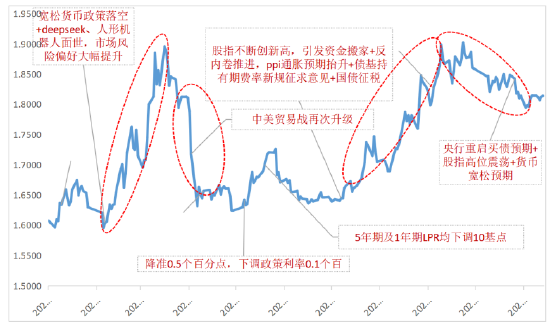
自2025年初以来,市场风险偏好系统性上升,受益于科技投资热潮及企业资本开支扩张,股票市场整体 表现较强劲。相较之下,债券市场则面临一定压力,在基本面相对疲弱与风险偏好回升之间博弈,整体 表现主要受风险情绪主导,投资体验相对欠佳。核心原因或在于,当前低利率环境下债券票息收益有 限,难以有效对冲净值波动,导致防御属性有所弱化。 一、2025年以来债券市场回顾 图1:截至2025年11月14日十年国债走势 数据来源:wind,诺德基金整理;统计区间:2025.01.01-2025.11.14。指数行情走势不预示其未来 表现,也不代表具体基金产品表现。以上信息仅供参考,不代表任何投资建议,基金有风险,投资需谨 慎。 截至2025年11月14日,10年期国债收益率运行于1.81%附近,较年初上行约13个基点,全年走势呈现窄 幅震荡,区间大致维持在1.6%至1.9%之间。全年债市走势与经济基本面脱钩,调整主要由宏观叙事驱 动。2024年四季度市场对货币政策空间预期偏高,收益率提前定价,透支了一定上行空间。 全年债券市场大致呈现"两轮调整+两轮修复"的震荡格局,利率中枢整体有所抬升: 诺德基金债券投资部副总监徐娟 第一轮 ...

这类理财,业绩亮眼
中国基金报· 2025-11-30 13:54
Core Insights - The performance of mixed financial products has been outstanding this year, with the highest unit net value growth rate approaching 36% [2][4] - The recovery of the equity market and the increase in structural opportunities in specific sectors have contributed to the explosive performance of mixed financial products [2][4] - There is significant growth potential for mixed financial products, especially in the context of declining deposit rates, prompting financial institutions to enhance their equity research capabilities and innovate product offerings to meet diverse market demands [2][4] Performance Highlights - As of November 27, over 90% of mixed financial products have shown positive unit net value growth this year, with 11 products exceeding a 20% growth rate, the highest being 35.97% [4] - The average annualized returns for mixed financial products over the past week and month were 13.21% and 6.62%, respectively, marking increases of 112.44 percentage points and 35.32 percentage points from the previous quarter [4] - Key drivers for the strong performance include the recovery of the equity market, refined operational strategies, and diversified asset allocation [4] Market Position - Despite the impressive performance, the scale of mixed financial products remains relatively low within the banking wealth management sector, with a total market size of 749.19 billion yuan, accounting for only 2.37% of bank wealth management [5] - The market size has increased by nearly 160 billion yuan since the end of January, with a 0.39 percentage point rise in market share [5] Strategic Recommendations - Financial institutions are encouraged to focus on diversified asset allocation and product innovation to meet the varied investment needs of clients [7] - There is a need to enhance intelligent advisory and dynamic asset allocation technologies to improve management efficiency and customer experience [7] - Institutions should explore opportunities in technology growth sectors, cross-border asset allocation, and alternative fixed-income assets while strengthening research capabilities in equity investment and new stock pricing [7]

FOF持续密集发行!偏债策略成配置主线
证券时报· 2025-11-29 07:09
Core Viewpoint - The FOF (Fund of Funds) market is experiencing a significant surge in issuance, with a focus on bond-oriented strategies, reflecting a strong demand for stable returns and diversified asset allocation [1][5][8]. Group 1: FOF Issuance Trends - Four FOFs were established on November 25, continuing a trend of high issuance throughout the month, with many new products achieving impressive initial fundraising results [2][3]. - The number of FOFs with a scale exceeding 1 billion yuan has reached approximately 50 this year, with 23 of them exceeding 10 billion yuan and 4 surpassing 50 billion yuan [6]. - The total fundraising scale of newly issued FOFs has exceeded 70 billion yuan this year, significantly surpassing the total for the previous year [6]. Group 2: Characteristics of Recent FOFs - The recent FOFs are primarily bond-mixed types, with notable fundraising achievements in a short period, such as the Tianhong Yingyue Stable Allocation FOF raising 11.34 billion yuan in just 5 days [3][4]. - Several products ended their fundraising early due to high demand, indicating strong investor interest in stable allocation FOFs [4]. Group 3: Market Dynamics and Investor Behavior - The public fund industry is entering a "stable allocation" era, with FOFs being perceived as more suitable for current market sentiments due to their risk diversification and professional management [8]. - FOFs are characterized by their high standardization and ease of understanding, making them suitable for individual investors looking to allocate assets [8]. - Institutional demand for long-duration, balanced allocation strategies is driving the popularity of FOFs, as they naturally align with the need for diversified and professionally managed investments [8].

招银理财洪晓峰:银行理财宜充分发挥多资产配置优势提升产品布局
2 1 Shi Ji Jing Ji Bao Dao· 2025-11-26 06:48
Core Insights - The long-term allocation value of gold is considered "relatively certain" due to multiple positive factors in the current gold cycle [1] - The "gold+" asset combination of simple bonds and gold may face pressure in a moderately recovering economy with gradually rising interest rates, suggesting the need for diversified asset allocation [1] Market Performance - The overall performance of the gold market in 2025 has been characterized by unexpected price increases, drawing global investor attention [2] - The price movements in 2025 show similarities to 2024, with both years exhibiting clear phase characteristics and significant price increases [2] - The first wave of price increases typically starts at the beginning of the year and lasts until mid-April, followed by a correction phase, while the second wave often begins around September, driven by macro policies or unexpected international relations [2] Product Innovation - 招银理财 has proactively integrated gold into its multi-asset allocation system and launched innovative "gold+" product categories [2] - The "稳金" and "衡金" series of products highlight the strategic role of gold in asset allocation, moving beyond a simple bond and gold combination [3] - The "稳金" series includes alternative assets like commodity CTA and quantitative neutral strategies to enhance stability and diversity of returns, while the "衡金" series incorporates an "all-weather" allocation concept with stocks for comprehensive long-term market risk exposure [3] Future Considerations - The potential impact of AI-driven industrial revolutions on gold assets should be monitored, as it may challenge the pricing logic of gold [4] - A balanced allocation strategy focusing on both gold and equity assets is recommended for the current stage [4] - Historical data indicates that the annualized return rate of gold driven by monetary cycles since the 21st century ranges from 15% to 25% [4] Overall Outlook - The 2025 gold market not only exceeded expectations in terms of price increases but also provided richer allocation tools and participation methods for investors [5]
在浅流动性里寻找真趋势——迈向2026年的多资产思维
Sou Hu Cai Jing· 2025-11-25 10:44
Core Viewpoint - The article discusses the current state of global liquidity, characterized as "shallow liquidity," and its impact on various asset classes, highlighting the volatility and the need for strategic asset allocation in a complex macroeconomic environment [2][7]. Market Trends - In 2025, significant asset price movements were observed, with silver and gold prices increasing by 70% and over 50% respectively, while major stock indices showed mixed performance [3]. - The market is experiencing a "shallow liquidity" scenario where minor adjustments in positions can lead to substantial fluctuations across stocks, bonds, currencies, and commodities [3][7]. Investment Strategies - Goldman Sachs Asset Management predicts that complexity will dominate the market, driven by AI innovations, central bank policy divergence, and geopolitical restructuring, suggesting a need for diversified asset allocation [5][15]. - The report emphasizes the importance of multi-asset, multi-region, and multi-strategy configurations to navigate the evolving investment landscape [15]. Sector Analysis - The A-share market has seen a shift from high-volatility AI hardware and industrial stocks to defensive sectors, indicating a reallocation of funds in response to global deleveraging and interest rate adjustments [4][16]. - The outlook for gold and precious metals remains strong as they serve as a hedge against economic uncertainties and geopolitical risks, suggesting their role in long-term asset allocation [17]. Fixed Income Insights - The fixed income market is transitioning from a uniform duration strategy to a more nuanced approach, focusing on credit differentiation and duration management in response to global inflation and growth disparities [13]. - Analysts recommend a focus on high-grade bonds and emerging market debt to enhance portfolio resilience and yield stability [18].

多维策略收获稳健收益
Qi Huo Ri Bao Wang· 2025-11-24 05:16
Core Insights - The article highlights the success of a participant, Shi Zhihao, in the 19th National Futures (Options) Trading Competition, attributing his achievement to a multi-dimensional and systematic execution of quantitative strategies [1] Group 1: Strategy and Execution - Shi Zhihao emphasizes the importance of stable execution and risk control in his trading strategy, stating that there were no "brilliant" trades, but rather a consistent performance from the strategy combination [2] - The strategy involves diversified allocation across different products, cycles, and strategies to mitigate extreme risks associated with single strategies, especially in a volatile market [2] - The trading framework covers approximately 70 products without subjective selection, relying on a quantitative system for opportunity identification [2] Group 2: Experience and Adaptation - Shi Zhihao's journey into quantitative trading began in 2016, initially motivated by arbitrage opportunities in graded funds, leading to a discovery of the appeal of quantitative trading through backtesting [3] - He faced significant challenges from mid-2022 to early 2023, experiencing a prolonged drawdown that led him to question the effectiveness of quantitative strategies [3] - The crisis prompted him to develop a multi-strategy hedging system, focusing on risk budgeting and absolute risk value assessment, shifting his focus from maximizing returns to ensuring survival [3] Group 3: Philosophy and Future Plans - The trading philosophy centers on engaging in activities with positive expected value, emphasizing the importance of a solid logical foundation rather than predicting short-term market fluctuations [3] - Future plans include optimizing risk control and multi-asset allocation, such as reallocating futures profits into stocks and bonds to reduce market risk [4] - Shi Zhihao advises new traders to adopt a quantitative framework to counteract emotional weaknesses, starting with small positions and focusing on the robustness of strategy logic [4]
打卡一家冠军私募!实力雄厚,严选基金,多元配置,穿越周期
私募排排网· 2025-11-24 00:00
Core Insights - The article highlights the significant presence of small and medium-sized private fund managers in the industry, with nearly 7,200 managers managing under 2 billion yuan, representing over 90% of the total [3] - The focus is on "Rongzhi Investment," which has achieved outstanding performance with its "Rongzhi Baiche Quantitative FOF No. 2," leading the small and beautiful private FOF funds with a remarkable return for the first three quarters [3][4] Company Overview - Shenzhen Rongzhi Private Securities Investment Fund Management Co., Ltd. is a private fund manager focusing on securities investment, emphasizing the growth value of excellent Chinese enterprises [5] - The company has issued over 40 private securities investment fund products since its establishment, managing a cumulative scale exceeding 1.2 billion yuan [9] Investment Philosophy & Strategies - Rongzhi Investment centers its investment philosophy around multi-asset allocation, balanced strategies, and diversified management, aiming to achieve long-term risk-return characteristics [21] - The investment strategy involves dynamic adjustments based on macroeconomic conditions, market valuation levels, and emotional cycles, focusing on selecting managers and strategies with differentiated competitive advantages [22] Core Advantages & Highlights - The company benefits from strong platform support from its parent company, providing extensive financial technology, a vast database, and a professional sales platform [25] - The investment research team consists of experienced professionals with deep market insights and robust risk control capabilities [26] - Rongzhi Investment offers flexible, customized FOF strategies tailored to clients' risk tolerance and needs, emphasizing diversified asset allocation [27] Market Context - The article notes a significant shift in Chinese residents' wealth from real estate and deposits to capital markets, highlighting the growing complexity of investment strategies required in this new landscape [28]

券商自营业务高歌猛进 “主观+量化”融合成新范式
Shang Hai Zheng Quan Bao· 2025-11-23 18:02
Core Viewpoint - The self-operated business of securities firms has shown significant growth in the first three quarters of this year, driven by a stable bond market and a recovering stock market, with a shift towards a "subjective + quantitative" integration model [2][3][6] Group 1: Performance Overview - The self-operated business of securities firms includes four main segments: fixed income, equity investment, alternative investment, and capital intermediary business, with fixed income being the largest and most stable [3] - In the first three quarters, 37 out of 42 securities firms reported positive growth in self-operated business net income, with a notable performance from leading firms like CITIC Securities, which achieved a net income of 31.603 billion yuan, a year-on-year increase of 45.88% [3][4] - Smaller firms also performed well, with Changjiang Securities reporting a net income of 3.044 billion yuan, a staggering year-on-year growth of 289.68% [4] Group 2: Strategic Shifts - The integration of subjective and quantitative strategies is becoming a core competitive advantage for securities firms, moving from a focus on scale to a focus on quality [8][10] - The trend of increasing equity investment and multi-asset allocation is expected to continue, with firms adapting to market conditions through dynamic hedging and diversified asset strategies [6][7] - The introduction of quantitative tools and a unified risk framework is seen as essential for enhancing the sustainability of self-operated businesses [8][9] Group 3: Market Dynamics - The Shanghai Composite Index rose by 15.84% in the first three quarters, with sectors like high-dividend, energy, and electronics performing particularly well, benefiting firms that strategically invested in related ETFs and stocks [6] - The ability to short government bond futures has also contributed significantly to the revenue of securities firms, allowing them to hedge against market fluctuations effectively [6][7] Group 4: Future Outlook - As the capital market continues to deepen reforms, securities firms are expected to enter a new growth phase, with equity investment remaining a primary focus [6][7] - The shift from a "racehorse" model to a collaborative approach in managing self-operated teams is anticipated to enhance overall performance and risk management [10]

银行理财规模32万亿创新高,达标率超七成
Wind万得· 2025-11-21 01:00
Group 1: Market Overview - The total scale of bank wealth management products reached 32.13 trillion yuan as of September 30, 2025, reflecting a quarter-on-quarter growth of 4.76% from 30.67 trillion yuan as of June 30, 2025, indicating a continued recovery trend since 2025 [3][4] - The "asset migration" effect has enhanced the attractiveness of the wealth management market, with significant rebounds in product scales observed in the second and third quarters of 2025 [3][4] Group 2: Investment Type Changes - The structure of bank wealth management products has undergone adjustments, with fixed-income products continuing to dominate, growing from 15.30 trillion yuan in July to 16.13 trillion yuan in October 2025, a 5.4% increase [5] - Cash management products saw a significant increase, with a month-on-month growth of 8.8% in September, reaching 6.11 trillion yuan, and further increasing to 6.19 trillion yuan in October [5] - Mixed products showed differentiation, with bond-mixed and flexible allocation products growing by 18.9% and 16.2% respectively in September, although flexible allocation saw a slight decline in October [5] Group 3: Institutional Scale - As of June 30, 2025, the top ten wealth management institutions had a combined scale of 17.57 trillion yuan, with significant head effects, as the top three institutions (Zhaoyin Wealth Management, Xingyin Wealth Management, and Xinyin Wealth Management) each exceeded 2 trillion yuan [8] - The product type distribution among the top institutions shows a preference for fixed-income and cash management products, with Zhaoyin and Xingyin having over 50% in fixed-income allocations [9] Group 4: New Issuance Market Overview - In October 2025, the new issuance scale of bank wealth management products was 506.11 billion yuan, reflecting a quarter-on-quarter growth of 4.5% [15] - The majority of new issuances were medium-term products (3-6 months and 1-3 years), accounting for 88.44% of the total, indicating a preference for liquidity [15][16] Group 5: Performance Tracking - The average performance benchmark for all newly issued products in October 2025 was 2.50%, with a slight decrease of 0.03 percentage points, maintaining stability [17] - Fixed-income and pure debt products accounted for 92.29% of new issuances, reflecting a conservative investment approach amid an "asset shortage" environment [21] Group 6: Yield Tracking - The median annualized yield for pure debt products increased with the holding period, with 3-year yields reaching 3.56%, significantly higher than daily open products at 1.65% [31] - Equity products exhibited high volatility, with daily open yields reaching 26.32%, but short-term yields showed negative returns, indicating market fluctuations [31] Group 7: Overall Market Trends - The bank wealth management market in October 2025 displayed characteristics of "steady growth, structural optimization, and concentration among leading institutions," with expectations for further diversification and innovation in product offerings [11][26] - The industry is moving towards a more regulated and diversified development, with a focus on long-term asset management and multi-asset allocation strategies [39]