流量经济

Search documents
高度同质化!这个片区或存隐忧
Sou Hu Cai Jing· 2025-08-03 09:10
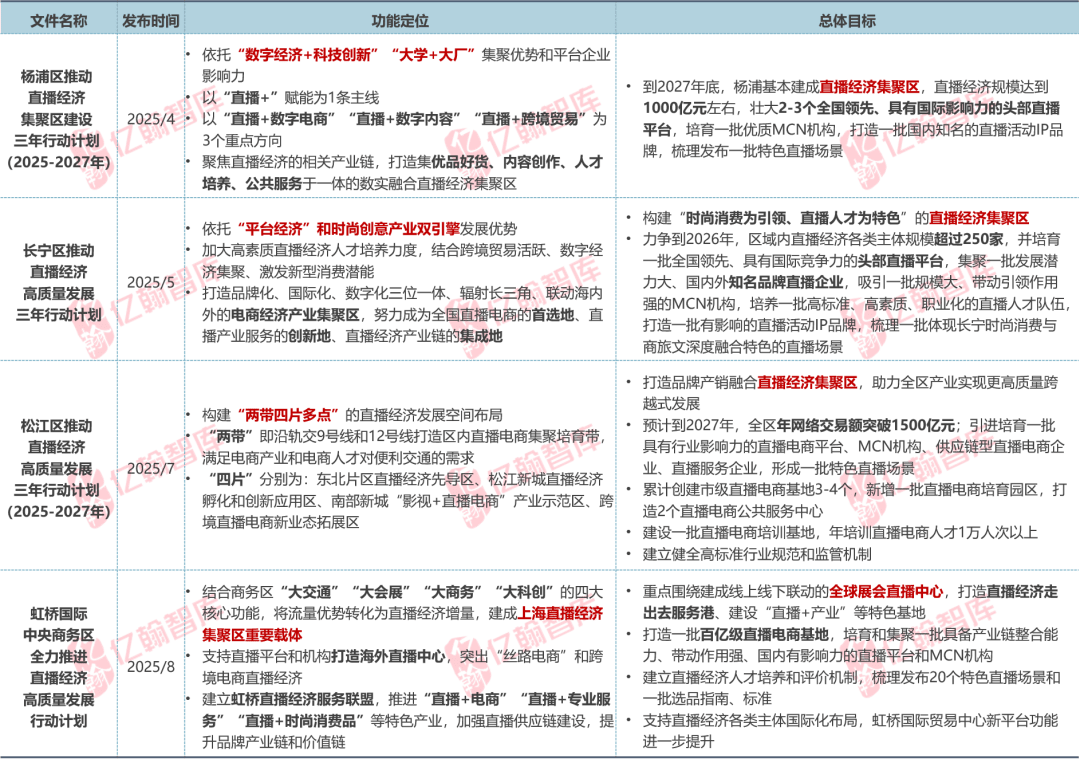
Core Insights - Shanghai is experiencing a significant push in the live-streaming economy, with a focus on high-quality development and cautious optimism regarding the "wealth creation" effect [1][2][4] - The city aims to achieve a live-streaming e-commerce retail sales of 600 billion yuan by 2026, with a comprehensive strategy that includes the establishment of major platforms and unique live-streaming scenarios [2][5] Group 1: Industry Development - Shanghai's live-streaming e-commerce retail sales are projected to exceed 493.7 billion yuan in 2024, accounting for 10.5% of the national total, maintaining its position as the leading city for three consecutive years [2] - The live-streaming industry in Shanghai has formed a complete closed-loop chain involving platforms, service providers, brands, and consumers, showcasing significant professional division and collaborative effects [2][3] Group 2: Competitive Landscape - A competitive landscape characterized by "head-led, multi-polar competition" is emerging in Shanghai, with platforms like Douyin and Xiaohongshu establishing strong local presences [3][8] - Douyin's local life business is expected to achieve a GMV of over 120 billion yuan in 2024, while Xiaohongshu's live-streaming user repurchase rate is projected to reach 58% by 2025, significantly above the industry average [3] Group 3: Regional Strategies - Various districts in Shanghai are accelerating the implementation of action plans to capture niche market opportunities, with specific goals set for live-streaming economic development [4][5] - The Yangpu district aims to establish a live-streaming economic cluster with a scale of approximately 100 billion yuan by 2027, while Changning focuses on creating a brand and internationalized digital economy hub [6][7] Group 4: Challenges and Considerations - Rising customer acquisition costs in live-streaming are a concern, with costs expected to exceed 60 yuan per person by 2025, nearly doubling from 2023, which may squeeze profit margins for small businesses [3][10] - Content homogenization is a significant issue, with 85% of live-streaming rooms in popular categories like fashion and beauty exhibiting similar scenes and scripts [3][10]

GDP增长5.1%,深圳上半年成绩单背后有哪些关键内核?
Nan Fang Du Shi Bao· 2025-07-31 05:56
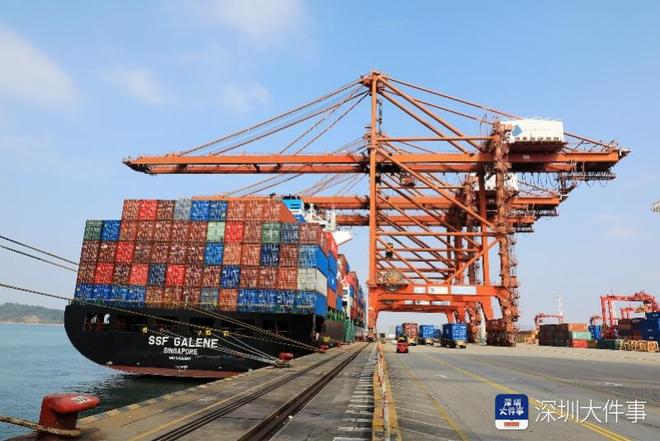
Economic Performance - Shenzhen's GDP for the first half of 2025 reached 1.832226 trillion yuan, with a year-on-year growth of 5.1%, indicating overall economic stability and progress despite external uncertainties such as the "tariff war" [1][3][12] - The city's import and export total for the first half of 2025 was 2.17 trillion yuan, accounting for 9.9% of the national total, with exports at 1.31 trillion yuan and imports at 858.86 billion yuan, reflecting a 9.5% year-on-year growth [5][12] Cross-Border E-commerce - Shenzhen's cross-border e-commerce overseas warehouse exports saw a remarkable increase of 19.5 times year-on-year, supported by customs facilitation measures and targeted assistance for major e-commerce platforms [3][5] High-Tech Manufacturing - The production of high-tech products in Shenzhen experienced significant growth, with civil drones, industrial robots, and 3D printing equipment seeing increases of 59.0%, 38.0%, and 35.8% respectively [8][12] - The robot industry in Shenzhen is projected to exceed 200 billion yuan in total output value by 2024, showcasing the city's strength in high-tech manufacturing [6][8] Service Sector Growth - The service sector's added value reached 1.180637 trillion yuan in the first half of 2025, with a year-on-year growth of 6.1%, driven by financial services, transportation, and information technology services [9][12] - Retail sales of consumer goods totaled 494.868 billion yuan, with a growth rate of 3.5%, indicating a positive trend in consumer spending [11][12] Innovation and Economic Strategy - Shenzhen's economic resilience is attributed to its focus on innovation and strategic emerging industries, which are expected to play a crucial role in achieving high-quality economic development [6][12] - The city is encouraged to further open up sectors such as real estate and healthcare to attract consumption, particularly from Hong Kong residents [11][12]
突然暴涨!“周杰伦”,突发
Zheng Quan Shi Bao Wang· 2025-07-30 05:11
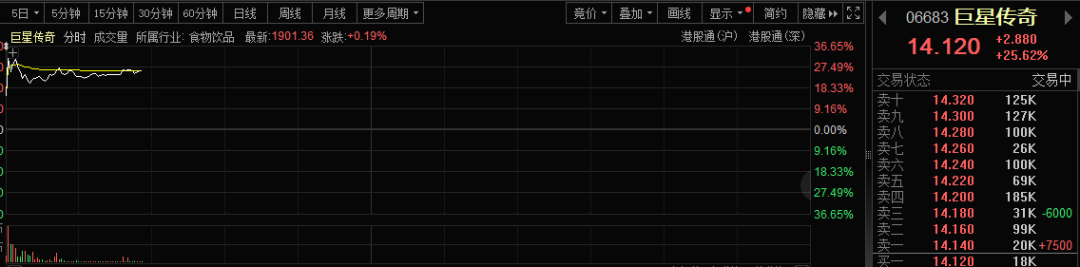
Group 1 - The core point of the news is the significant stock price surge of Giant Legend, driven by strategic partnerships and celebrity influence, particularly involving Jay Chou [1][2][5] - Giant Legend's stock price increased over 36% in a single trading session, with a total increase of nearly 200% since July [1][3] - The company announced a strategic partnership with Hangzhou Yushu Technology to develop consumer-grade robots, enhancing its IP and marketing capabilities [2][4] Group 2 - Giant Legend's revenue for 2024 reached 584 million yuan, a year-on-year increase of 35.75%, with a net profit of 56.05 million yuan, up 62.4% [4] - The company focuses on IP creation and operation, with its IP business contributing over 50% of total revenue [4] - The collaboration with Yushu Technology and the existing partnership with Pop Mart highlight the company's strategy of leveraging celebrity IP for market growth [5][6]
新兴产业聚势蓄能“加速跑”
Guang Zhou Ri Bao· 2025-07-30 02:49
Core Viewpoint - Guangzhou's economy showed signs of stability and improvement in the first half of 2025, with a GDP of 15,080.99 billion yuan, reflecting a year-on-year growth of 3.8% [3][4]. Economic Performance - The total retail sales of consumer goods reached 5,611.22 billion yuan, with a year-on-year increase of 5.9%, marking a 2.4 percentage point rise from the first quarter [6][7]. - The city's foreign trade import and export totaled 6,050.5 billion yuan, a 15.5% increase year-on-year, with exports reaching 3,969.1 billion yuan, up 25.2% [4][6]. Consumer Market Recovery - The consumer market showed a significant recovery, with monthly growth rates approaching 10% in May and June [4]. - The passenger throughput at Baiyun Airport reached 40.04 million, a 9.2% increase, with international passenger traffic surging by 23.9% [7]. Industrial Growth - Industrial value added for large-scale enterprises turned positive, contributing significantly to GDP growth, with the manufacturing sector showing resilience [4][8]. - Industrial investment grew by 12%, with technological transformation investments increasing by 15.5% [9]. Emerging Industries - The digital economy and new emerging industries are demonstrating strong aggregation effects, with the core value added of the digital economy increasing by 7.0% [9]. - The automotive industry, particularly in the new energy vehicle sector, saw production growth of 9.5%, indicating a shift towards new energy [9]. Policy and Investment - A series of supportive policies have been implemented, focusing on modern industrial systems and significant financial support for enterprises [9]. - The "old for new" consumption policy led to sales of 482.7 billion yuan, the highest in the province [7]. Future Outlook - Guangzhou aims to enhance economic development by addressing key challenges, optimizing the business environment, and promoting high-quality growth [10][11]. - The third quarter is seen as critical for achieving annual targets, with efforts to sustain economic recovery and contribute to broader provincial and national development [11].
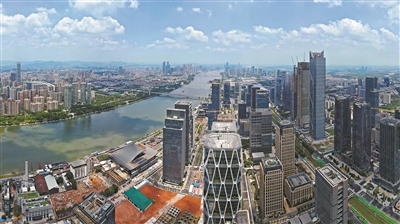
3.8%↑!广州经济半年报出炉
Zheng Quan Shi Bao· 2025-07-29 10:26
Economic Performance - In the first half of 2025, Guangzhou's GDP reached 1,508.099 billion yuan, with a year-on-year growth of 3.8% [1] - The primary industry added value was 11.234 billion yuan, growing by 4.2%; the secondary industry added value was 370.587 billion yuan, growing by 2.1%; and the tertiary industry added value was 1,126.278 billion yuan, growing by 4.3% [1] Industrial Growth - The industrial added value in Guangzhou increased by 0.7% year-on-year, with the automotive manufacturing sector facing challenges, showing a decline of 5.7% [2] - New energy vehicle production accelerated, with cumulative output growing by 9.5%, an increase of 8.8 percentage points compared to the first quarter [2] - The integrated circuit manufacturing sector saw a significant increase in added value by 30.0%, while production of LCD modules, analog chips, and industrial robots grew by 150%, 19.5%, and 19.0% respectively [2] - Fixed asset investment in Guangzhou grew by 0.8% year-on-year, with infrastructure investment increasing by 4.2% and real estate development investment recovering with a growth of 4.1% [2] Consumer Market Recovery - The total retail sales of consumer goods in Guangzhou reached 561.122 billion yuan, with a year-on-year growth of 5.9%, improving by 2.4 percentage points from the first quarter [3] - Retail sales of new energy vehicles, communication equipment, home appliances, and furniture showed strong demand, with significant increases in sales [3] - Online retail sales of physical goods grew by 16.4%, and restaurant revenues through online platforms increased by 10.9% [3] - By the end of June, the balance of deposits and loans in Guangzhou's financial institutions reached 17.69 trillion yuan, with deposits growing by 4.7% and loans by 5.0% [3]

3.8%↑!广州经济半年报出炉
证券时报· 2025-07-29 10:21
Economic Overview - In the first half of 2025, Guangzhou's GDP reached 1,508.099 billion yuan, showing a year-on-year growth of 3.8% at constant prices [1] - The primary industry added value was 11.234 billion yuan, growing by 4.2%; the secondary industry added value was 370.587 billion yuan, growing by 2.1%; and the tertiary industry added value was 1,126.278 billion yuan, growing by 4.3% [1] Industrial Performance - Guangzhou's industrial output above designated size increased by 0.7% year-on-year in the first half of the year [3] - The automotive manufacturing sector faced challenges, with added value declining by 5.7%, although the decline narrowed by 0.7 percentage points compared to the first quarter due to product transformation and new model sales [3] - New energy vehicle production accelerated, with cumulative output increasing by 9.5%, up 8.8 percentage points from the first quarter [3] - The integrated circuit manufacturing sector saw a significant increase in added value by 30.0%, with production of LCD modules, analog chips, and industrial robots growing by 150%, 19.5%, and 19.0% respectively [3] - The aerospace and aviation equipment manufacturing sector's added value grew by 17.1%, with civil drone production surging by 37.7% [3] Investment Trends - Fixed asset investment in Guangzhou increased by 0.8% year-on-year, with infrastructure investment growing by 4.2% and real estate development investment recovering with a growth of 4.1% [3] - Investment in the automotive manufacturing sector increased by 19.3%, while investment in computer communication and other electronic equipment manufacturing grew steadily by 6.0% [3] Consumer Market Dynamics - The retail sales of consumer goods in Guangzhou reached 561.122 billion yuan in the first half of the year, reflecting a year-on-year growth of 5.9%, which is an increase of 2.4 percentage points from the first quarter [5] - Demand for goods in sectors such as new energy vehicles, communication equipment, home appliances, and furniture saw significant growth due to subsidy coverage [5] - Online shopping and booking trends increased, with online retail sales of physical goods growing by 16.4% and restaurant revenues through public networks increasing by 10.9% [5] Financial Sector Insights - As of the end of June, the balance of deposits and loans in Guangzhou's financial institutions reached 17.69 trillion yuan, a year-on-year increase of 4.8% [5] - The deposit balance was 9.23 trillion yuan, growing by 4.7%, with household deposits increasing by 10.5% [5] - The loan balance was 8.46 trillion yuan, up by 5.0%, with significant growth in household medium- and long-term loans and loans to enterprises [5]
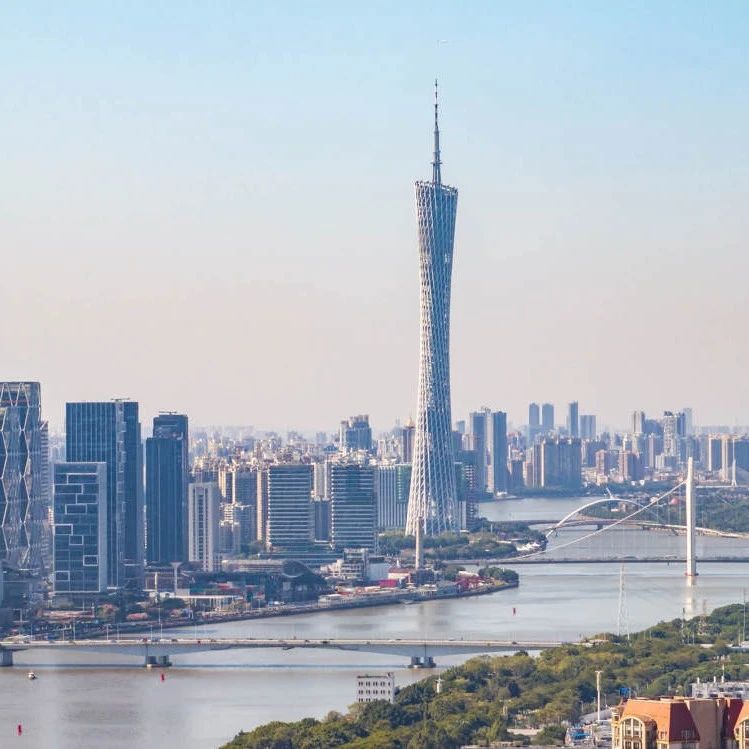
广州刚刚官宣:1.5万亿元,同比增长3.8%
21世纪经济报道· 2025-07-29 09:56
Economic Overview - Guangzhou's GDP for the first half of 2025 reached 15,080.99 billion yuan, a year-on-year increase of 3.8% [1] - The primary industry added value was 112.34 billion yuan, growing by 4.2%; the secondary industry added value was 3,705.87 billion yuan, increasing by 2.1%; the tertiary industry added value was 11,262.78 billion yuan, rising by 4.3% [1] Agriculture - The total output value of agriculture, forestry, animal husbandry, and fishery reached 236.01 billion yuan, with a year-on-year growth of 4.4% [3] - Key agricultural products saw significant increases, with fruit production rising by 8.3% and fishery output increasing by 2.7% [3] Industry - The industrial added value for large-scale enterprises grew by 0.7% year-on-year [5] - The automotive manufacturing sector faced challenges, with a decrease of 5.7%, but new energy vehicle production increased by 9.5% [5] - The electronics manufacturing sector saw a 1.6% increase, while the petrochemical sector grew by 6.3% [5] - The integrated circuit manufacturing sector experienced a remarkable growth of 30.0% [5] Services - The profit-making service sector's revenue grew by 9.2% year-on-year from January to May [7] - The internet, software, and information technology services sector increased by 8.7%, with internet platforms growing by 13.3% [7] - The sports industry saw a revenue increase of 16.7%, driven by the upcoming 15th Sports Games [7] Consumption - The total retail sales of consumer goods reached 5,611.22 billion yuan, a year-on-year increase of 5.9% [9] - Significant growth was observed in categories such as home appliances (27.6%) and sports and entertainment goods (33.0%) [9] Investment - Fixed asset investment grew by 0.8% year-on-year, with infrastructure investment increasing by 4.2% [11] - Industrial investment rose by 12.0%, with a notable 15.5% increase in industrial technological transformation investment [11] Transportation - The transportation sector showed positive growth, with passenger volume reaching 163 million, a 0.9% increase [13] - The cargo transport volume was 450 million tons, growing by 2.4% [13] Financial Market - By the end of June, the total balance of deposits and loans in financial institutions was 17.69 trillion yuan, a year-on-year increase of 4.8% [15] - The loan balance for the manufacturing sector grew by 4.7%, while loans for scientific research and technology services increased by 22.9% [15] Income and Social Welfare - The per capita disposable income for urban residents was 46,310 yuan, a 3.4% increase, while rural residents saw a 5.6% increase to 23,568 yuan [17] - Significant growth in social welfare spending was noted, with education spending increasing by 14.3% [17]
少林寺商业化:一场持续近三十年的文化博弈
Hu Xiu· 2025-07-29 09:29
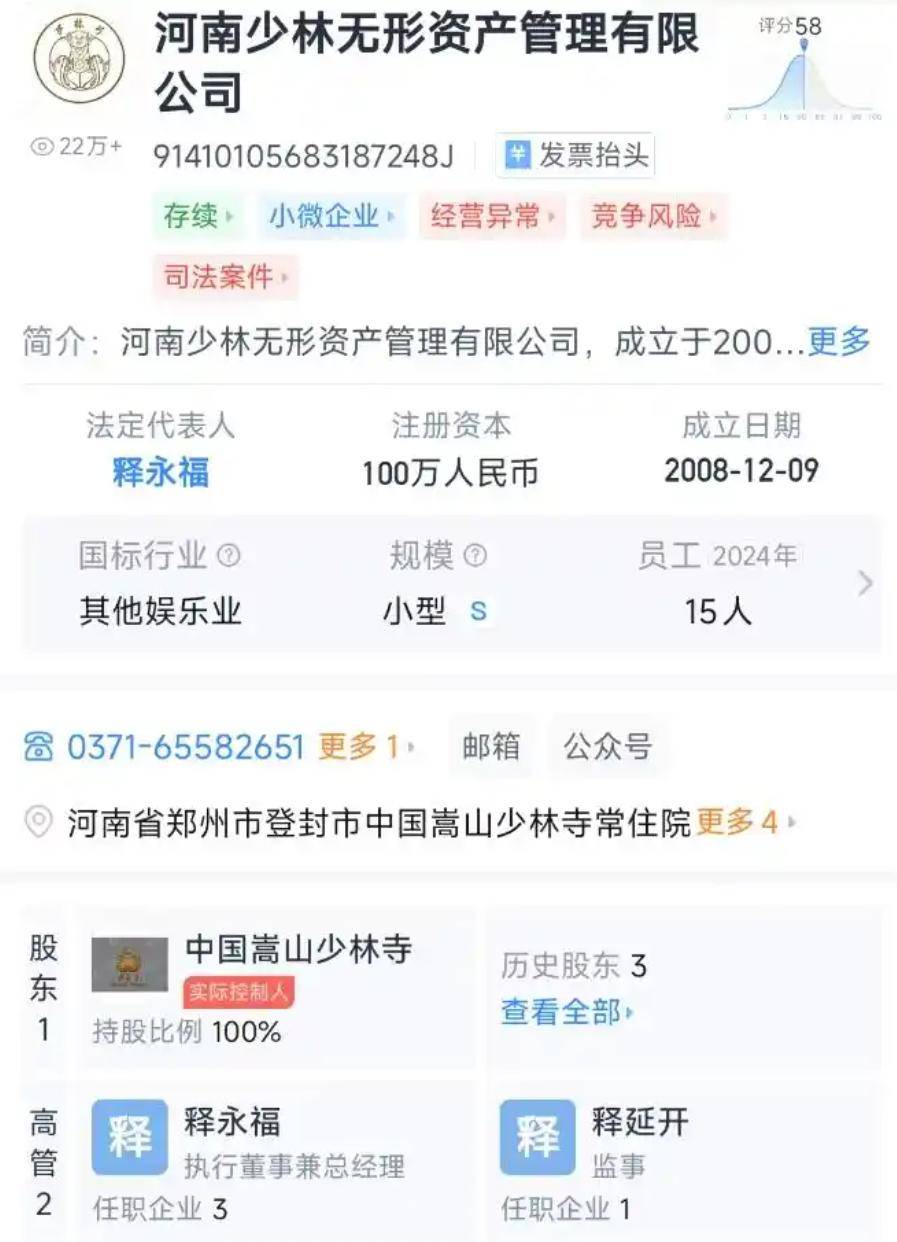
Group 1 - The article discusses the transformation of Shaolin Temple from a dilapidated site to a commercial empire under the leadership of Shi Yongxin, highlighting the tension between faith and profit [7][8][33] - Shi Yongxin's initiatives included establishing a website to attract global martial arts enthusiasts and launching a commercial entity, marking the beginning of Shaolin's commercialization [10][11] - The revenue model evolved from ticket sales to a combination of "Zen experience + martial arts" offerings, with ticket income reaching 350 million yuan in 2017 and additional project income exceeding 120 million yuan [20][23] Group 2 - The establishment of Henan Shaolin Intangible Asset Management Co., Ltd. in 2008 was pivotal for Shaolin's commercial strategy, with investments spanning 16 sectors [18][19] - Controversies surrounding Shi Yongxin's management, including allegations of financial misconduct and the commercialization of religious practices, have sparked public debate [26][30][31] - Despite criticisms, Shaolin Temple allocates 30% of its annual income to cultural preservation and charity, indicating a commitment to balancing commercial success with cultural heritage [32] Group 3 - Shi Yongxin's tenure is characterized by the dual role of promoting cultural heritage while engaging in aggressive capital expansion, raising questions about the integrity of religious practices [33][36] - The article emphasizes the need for a balance between commercial interests and the preservation of cultural identity, as excessive commercialization risks transforming Shaolin from a spiritual site into a mere tourist attraction [38][40] - The ongoing debate reflects broader challenges faced by traditional religious institutions in adapting to modern economic realities while maintaining their core values [39]
广州刚刚官宣:1.5万亿元,同比增长3.8%
Sou Hu Cai Jing· 2025-07-29 08:49
Economic Overview - Guangzhou's GDP for the first half of 2025 reached 15,080.99 billion yuan, a year-on-year increase of 3.8% [1] - The primary industry increased by 4.2%, the secondary industry by 2.1%, and the tertiary industry by 4.3% [1] Agriculture - The total output value of agriculture, forestry, animal husbandry, and fishery reached 236.01 billion yuan, growing by 4.4% [1] - Key agricultural products saw significant increases, with fruit production rising by 8.3% and fishery production by 2.7% [1] Industry - The industrial added value for large-scale enterprises grew by 0.7% year-on-year [2] - The automotive manufacturing sector faced challenges, with a decrease of 5.7%, but new energy vehicle production increased by 9.5% [2] - The electronics and petrochemical manufacturing sectors showed stable growth, with increases of 1.6% and 6.3% respectively [2] - The new generation information technology industry thrived, with integrated circuit manufacturing increasing by 30.0% [2] Services - The profit-making service sector's revenue grew by 9.2% from January to May [3] - The internet, software, and information technology services saw an increase of 8.7%, with internet platforms growing by 13.3% [3] - The rental and business services sector experienced a revenue increase of 13.0% [3] Consumption - The total retail sales of consumer goods reached 5,611.22 billion yuan, a year-on-year increase of 5.9% [4] - Significant growth was observed in various categories, including home appliances (27.6%) and sports and entertainment goods (33.0%) [4] Fixed Asset Investment - Fixed asset investment grew by 0.8%, with infrastructure investment increasing by 4.2% [5] - Industrial investment rose by 12.0%, supported by a 15.5% increase in industrial technological transformation investment [5] Transportation - The transportation sector showed positive growth, with passenger volume reaching 163 million, a 0.9% increase [6] - The cargo transport volume was 450 million tons, growing by 2.4% [6] Financial Market - By the end of June, the total balance of deposits and loans in financial institutions reached 17.69 trillion yuan, a 4.8% increase [7] - The loan balance for manufacturing and technology services grew significantly, with increases of 4.7% and 22.9% respectively [7] Resident Income - The per capita disposable income for urban residents was 46,310 yuan, a 3.4% increase, while rural residents saw a 5.6% increase to 23,568 yuan [8] - Significant growth in fiscal spending for social security and education was noted, with increases of 12.0% and 3.0% respectively [8]
为什么商业化部门成了大厂贪腐的重灾区?
3 6 Ke· 2025-07-25 00:04
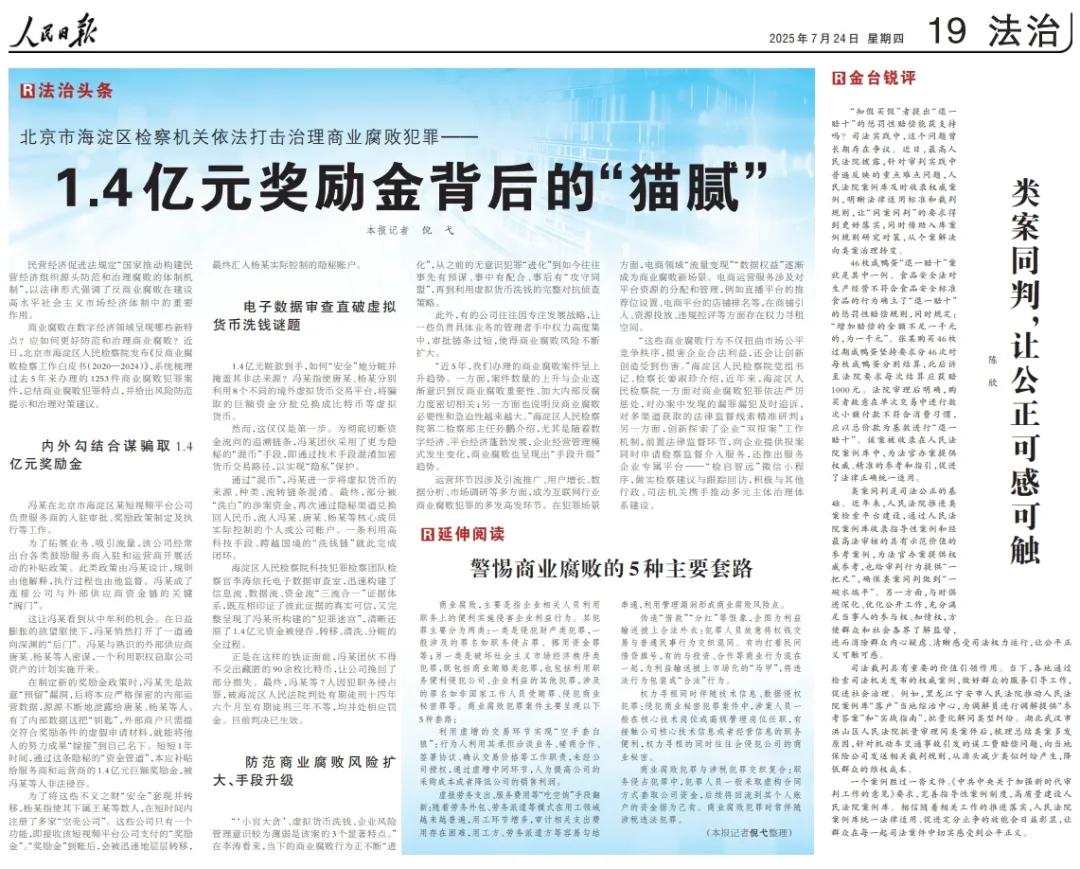
Core Viewpoint - The article discusses a significant corruption case involving a short video platform service provider, highlighting systemic issues within the industry that allow for such misconduct to occur. The case reveals how concentrated power and lack of oversight can lead to corruption, particularly in the context of incentive systems and resource allocation. Group 1: Corruption Case Details - A service provider's leader, Feng, embezzled 140 million yuan in rewards over a year by exploiting loopholes in the incentive system [1][11] - Seven individuals, including Feng, were sentenced to prison terms ranging from three to fourteen and a half years for their roles in the embezzlement [1] - The case exemplifies the risks associated with a lack of regulatory oversight in the short video platform's commercial operations [10] Group 2: Industry Dynamics - The short video industry is characterized by a high-pressure environment where platforms prioritize rapid growth and user acquisition, often at the expense of regulatory frameworks [7][24] - The governance structure within these platforms tends to centralize power among a few operational roles, creating a "black box" of decision-making that lacks transparency [3][5] - The operational managers in these platforms wield significant power, often greater than that of executives in traditional companies, allowing them to control substantial financial resources without rigorous oversight [4][9] Group 3: Incentive Systems and Risks - The incentive systems designed to drive growth can inadvertently create opportunities for corruption, as individuals exploit their knowledge of the rules to siphon off funds [2][12] - The complexity of the rules and the opaque nature of resource allocation contribute to a fertile ground for corrupt practices [20][22] - The article highlights the transition of corruption methods from cash-based to more sophisticated techniques involving cryptocurrencies and digital transactions, complicating detection and enforcement [15][12] Group 4: Channel Management Issues - Channel management within the commercial ecosystem is identified as a high-risk area for corruption, with agents and service providers often benefiting from opaque rebate systems [16][20] - The shift towards self-service advertising systems has reduced the power of traditional channels, increasing pressure on agents and potentially leading to more gray market activities [24] - The rebate system, while providing value in terms of reaching clients, inherently contains risks due to its lack of standardization and transparency [26][21]