
生成式人工智能

Search documents
香港特区政府就网约车规管提交立法建议
智通财经网· 2025-07-15 07:18
此外,全日制副学位课程、应用教育文凭,以及职业训练局(职训局)的基础课程文凭及职专文凭,总 共提供37000个学额;应届考生还可以选择职训局酒店及旅游学院、中华厨艺学院、国际厨艺学院、香 港建造学院、劳工处"展翅青年就业计划"等其他课程。想在中国内地或海外升学,DSE资历亦获得全球 超过1000间的院校认可。DSE考生可以按志向和个人所长,选择最适合自己的升学途径。 李家超要求香港运输及物流局按以下原则,制定立法方案。第一,规管网约车平台运作制定标准和责 任,并说明营运要求;第二,制定有关车辆的规管要求,以确保网约车服务的质量与安全;第三,制定 司机驾驶资格要求,以确保网约车司机的驾驶服务安全可靠;第四,制定适当的保险要求,以保障乘客 安全与利益。第五,为的士服务制定网约营运环境,以提升的士营运效能和营业空间;第六,营造网约 车与的士共存的环境;第七,可先处理社会较有共识的问题,确立框架后再聚焦处理存在较多分歧的其 他技术细节问题。 另外,李家超还提到,7月16日是DSE文凭试(香港中学文凭考试)放榜的日子。香港政府为DSE考生 提供了优质多元的升学出路,当中,由香港教资会(香港大学教育资助委员会)资助大学和 ...
Cell综述:生成式AI,开启医学新时代
生物世界· 2025-07-13 08:16
Core Viewpoint - The article discusses the transformative potential of artificial intelligence (AI) in the biomedical field, emphasizing advancements in large language models (LLMs) and multimodal AI that can enhance diagnostics, patient interactions, and medical predictions [2][6][11]. Group 1: Technological Innovations - Recent advancements in AI, particularly in LLMs and multimodal AI, are set to revolutionize the medical field by improving diagnostics and patient interactions [6]. - Key architectural innovations such as Transformer architecture, generative adversarial networks, and diffusion models have contributed to the development of complex generative AI systems [2][4]. Group 2: Medical Practice Transformation - AI-enabled medical practices are shifting clinical care from sporadic interactions to continuous monitoring and regular follow-ups, allowing for proactive healthcare in familiar environments [8]. - New medical knowledge can be more easily integrated into care models, and AI technologies are facilitating the development of new drugs [8]. Group 3: Multiscale Medical Predictions - AI algorithms can predict future medical events based on various dynamic inputs, applicable at multiple levels from molecular to population [10]. - The future of medicine will involve tools capable of processing vast amounts of information, significantly improving diagnostic accuracy and patient outcomes [11]. Group 4: Challenges and Implementation - Despite the promising advancements, the widespread clinical adoption of AI tools faces significant challenges, including bias, privacy concerns, regulatory hurdles, and integration with existing healthcare systems [6][11]. - Most AI tools are still in development, with few demonstrating clear benefits across all users or situations, which remains a major barrier to broader usage by healthcare professionals [11]. Group 5: Roadmap for AI Implementation - The roadmap for implementing medical AI involves transitioning from basic scientific research to concept validation models, leading to larger models and early clinical applications that pave the way for final clinical deployment and optimization [14].


金城银行“企业智脑”荣获中国最佳生成式人工智能应用项目奖
清华金融评论· 2025-07-12 10:18
Core Viewpoint - The "Enterprise Brain" model application project by Jincheng Bank has been awarded the "Best Generative AI Application Project in China" at the 2025 China Awards by The Asian Banker, recognized for its revolutionary impact on bank back-office operations and deep integration of AI technology with financial scenarios [1][3]. Group 1 - The Asian Banker China Awards program, established for over 10 years, is considered the "Oscar" of the Asia-Pacific financial industry, with nearly 600 submissions evaluated through a multi-dimensional assessment process [3]. - Jincheng Bank's project improved traditional inefficient processes, such as compliance management and document handling, by creating an enterprise knowledge base, intelligent customer service assistant, intelligent coding support plugin, and intelligent compliance cockpit [3]. - The call center quality inspection process has achieved up to 100% automation from an initial 5% manual review, and AI-assisted coding has increased development efficiency by 40%, significantly enhancing operational efficiency while reducing costs and controlling risks [3][4]. Group 2 - The "Enterprise Brain" model, as a large language model, excels in natural language processing and conversational tasks, with future potential for larger parameter scales, multi-modal capabilities, and enhanced reasoning model logic [4]. - Jincheng Bank has accumulated rich experience and technological achievements in the field of digital transformation, contributing to the digital transformation of the financial industry with its "Jincheng Wisdom" [4]. - The bank plans to continue deepening AI technology applications and exploring the extensive use of large models in the financial sector to drive continuous innovation and development [4].

新晋4万亿美元“股王”,英伟达带飞国内56只基金!最高赚了近120%
Hua Xia Shi Bao· 2025-07-11 13:36
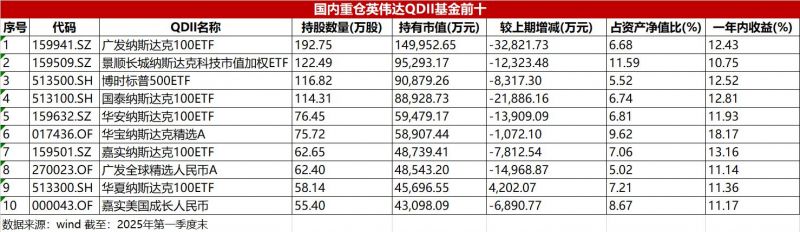
Core Insights - Nvidia's stock price reached $164.10, with a market capitalization of $4 trillion, making it the first company to surpass this milestone [2][3] - The rapid growth of Nvidia has significantly impacted the global tech industry and financial markets, with many QDII funds benefiting from heavy investments in Nvidia [2][3] QDII Fund Performance - As of the end of Q1 2025, 56 QDII funds held Nvidia shares, totaling 14.77 million shares with a market value of approximately 11.49 billion yuan [4] - The average return for these funds over the past year was 12.73%, with the highest performer, 华夏港股前沿经济A, achieving a return of 41% [4][6] - Over a three-year period, 26 of these funds reported an average return of 70%, with 8 funds exceeding 100% [6][7] Individual Fund Holdings - The top QDII fund by Nvidia holdings is 广发纳斯达克100ETF, with 1.93 million shares valued at approximately 1.5 billion yuan [4][5] - Other notable funds include 景顺长城纳斯达克科技市值加权ETF and 博时标普500ETF, holding 1.22 million and 1.17 million shares respectively [4][5] Market Dynamics - Nvidia's success is largely attributed to the rise of generative AI, with strong demand for its advanced AI chips from major clients like Microsoft and Google [9] - Analysts predict further growth potential for Nvidia, with target prices set as high as $250, which would elevate its market cap to $6 trillion [9][10] Investment Considerations - Investors are advised to be cautious when investing in Nvidia through QDII funds, considering market dynamics, company performance, and personal risk tolerance [10] - It is important to monitor fund premium situations and avoid high premium purchases [10]

网信办:截至2025年6月30日,累计有439款生成式人工智能服务完成备案
news flash· 2025-07-11 12:29
Core Insights - As of June 30, 2025, a total of 439 generative artificial intelligence services have completed registration with the National Internet Information Office [1] - From April to June, 93 new generative AI services were registered, with 74 additional applications or functions registered through local internet offices [1] - A total of 233 generative AI applications or functions have completed registration [1]
河南实施五大行动助力制造业加"数"跑
Zhong Guo Chan Ye Jing Ji Xin Xi Wang· 2025-07-11 01:28
Core Viewpoint - The Henan Province is accelerating digital transformation to promote high-quality development in its manufacturing sector, leveraging its comprehensive industrial system and aiming to enhance its modern industrial framework's support capacity for quality growth [1][2]. Group 1: Digital Transformation Actions - The first action focuses on comprehensive digital transformation, providing tailored solutions for companies that have not yet implemented digital upgrades and promoting the establishment of smart workshops and factories for those that have [1]. - The initiative aims to harness opportunities from generative artificial intelligence, driving the construction of industrial large models and establishing centers for AI industry empowerment and hardware-software adaptation [1]. Group 2: Traditional Industry Upgrading - The second action targets quality enhancement in traditional industries such as steel, non-ferrous metals, chemicals, building materials, and food, aiming to improve the competitive advantage across the entire industry chain [2]. - Support will be provided for traditional manufacturing sectors to delve into niche markets, incubate new technologies, explore new avenues, and cultivate new industries [2]. Group 3: Advanced Manufacturing Clusters - The third action is focused on cultivating advanced manufacturing clusters, specifically enhancing the scale and technological level of national clusters in superhard materials and modern agricultural machinery [2]. - There is a strong emphasis on supporting the creation of national advanced manufacturing clusters in new power equipment, modern food, and smart terminals [2]. Group 4: Development Zone Enhancement - The fourth action aims to elevate the capabilities of development zones by attracting upstream and downstream enterprises and supporting service institutions to build clear leading industries and complete industrial chains [2]. - Efforts will be made to improve management service efficiency in development zones, deepen reforms, and optimize operational models to enhance public services and market-oriented operations [2]. Group 5: Quality Enterprise Cultivation - The fifth action focuses on nurturing quality enterprises, strengthening leading companies, and enhancing their resource allocation capabilities [2]. - Support will be provided for cross-regional mergers and acquisitions, accelerating vertical integration across the entire chain, and aiming to create a batch of national chain-leading and pioneering enterprises [2].
明确应用边界 完善规则指南
Ke Ji Ri Bao· 2025-07-10 23:51
Core Viewpoint - The integration of artificial intelligence (AI) in academic publishing presents both opportunities for efficiency and risks related to academic integrity and innovation [1][2][3] Group 1: AI's Role in Academic Publishing - AI technology, particularly generative AI, is significantly enhancing the efficiency of academic publishing, with over 90% of document processing tasks at CNKI being completed by machines [1] - The rapid development of AI models is deeply embedding itself in the writing and publishing of scientific journals, which raises concerns about potential risks, such as data leaks during the peer review process [1] Group 2: Challenges and Risks - Over-reliance on AI may challenge academic innovation, as it primarily depends on historical data and may introduce algorithmic biases, potentially harming research originality and raising issues of academic integrity [2] - There is currently no consensus in the industry regarding the boundaries of generative AI's application in academic publishing, highlighting the need for clear regulations [2] Group 3: Regulatory Measures and Tools - The implementation of specific rules for AI usage in academic publishing requires effective technical supervision, with CNKI actively exploring academic achievement detection and developing a generative AI detection tool for educational institutions [3] - Existing guidelines, such as the "Guidelines for the Use of AIGC in Academic Publishing 2.0," have been established, but further refinement is needed to clarify the scenarios and extent of AI usage [2]

图书编辑要趁早转行吗?
Hu Xiu· 2025-07-10 07:47
Core Viewpoint - The publishing industry is undergoing an unprecedented paradigm shift due to the impact of generative artificial intelligence, leading to a decline in traditional reading and publishing practices [2][3][5]. Group 1: Industry Transformation - The traditional role of book editors and readers is diminishing as AI tools become more prevalent in content creation and consumption [4][5][8]. - The emergence of large language models has transformed knowledge access, making it easier for individuals to obtain information without traditional reading [6][7]. - The publishing industry's performance decline is attributed not only to economic cycles but also to a fundamental loss of its habitat, as many individuals no longer purchase books [8][9]. Group 2: Changes in Consumer Behavior - Readers are increasingly relying on AI for information, leading to a decline in the traditional book-reading culture [4][8]. - The shift in consumer behavior is evident as students and readers prefer quick AI-generated summaries and analyses over in-depth reading [4][6][7]. Group 3: Internal Industry Dynamics - Within publishing offices, there is a growing reliance on AI tools for content creation, editing, and marketing, leading to a sense of self-dissolution among professionals [9][10][11]. - The fear of being replaced by AI is prevalent among publishing professionals, as their core skills become less relevant in the face of advanced AI capabilities [12][13]. Group 4: Market Challenges - The traditional methods of promoting and selling books are becoming ineffective as the market shifts towards short-form content and AI-generated materials [16][17][18]. - The publishing industry is now competing for attention in an environment where AI can produce content at an unprecedented speed, leading to a fundamental change in content marketing dynamics [18][19]. Group 5: Future Outlook - The industry faces a critical juncture where professionals must adapt to the new reality of AI integration, requiring a reevaluation of their skills and roles [21][22][23]. - There is a pressing need for industry professionals to identify unique qualities that AI cannot replicate, such as deep insights and personal connections with authors [23][24]. - The overall sentiment suggests that the publishing industry may be heading towards a niche existence, akin to a cultural symbol rather than a mass-market force [14][15].
模式识别与人工智能前沿探讨专题论坛召开
Huan Qiu Wang Zi Xun· 2025-07-09 08:43
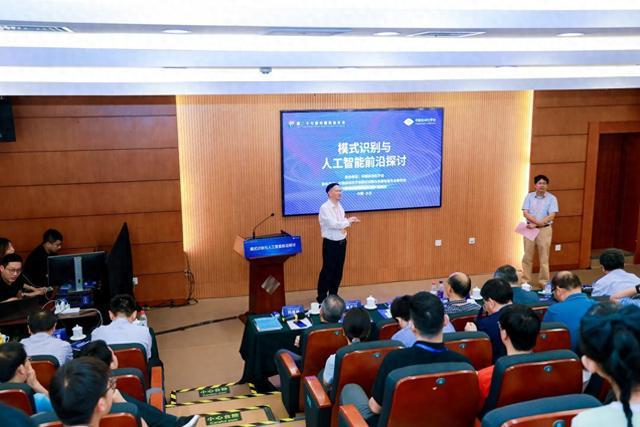
Group 1 - The forum focused on national strategic needs and technological frontiers in the fields of pattern recognition and artificial intelligence, gathering nearly 20 experts and representatives from renowned universities, research institutes, and leading enterprises in China [1][3] - The event aimed to foster the cultivation of new productive forces and interdisciplinary integration, injecting new momentum into scientific research innovation and the collaborative development of academic journals [1] Group 2 - Various professors presented specialized reports, including topics such as "3D/4D content creation for arbitrary sparse data," "embodied intelligent robots with emotional intelligence," and "visual perception in unmanned systems" [5][7][11] - A roundtable discussion was held, focusing on new trends and challenges in multimodal large models and generative artificial intelligence, addressing the transformation of research paradigms and talent cultivation in the era of large models [15]
历下经开区获批复过半年,新进展透露哪些新信号
Qi Lu Wan Bao Wang· 2025-07-09 02:15
Core Insights - The Lixia Economic Development Zone has been identified as a key driver for the "Industrial Strong City" strategy in Jinan, with significant progress made since its approval six months ago [1][2] - The zone focuses on modern medicine and electronic information as its main industries, with a forward-looking approach to future industries such as brain-computer interfaces and artificial intelligence [2][3] Development Progress - The Lixia Economic Development Zone was officially approved as a provincial-level economic development zone on November 25, 2024, becoming the 14th such zone in Jinan [1] - Key breakthroughs include spatial layout optimization and the establishment of dual industrial chains centered around electronic information and modern medicine [2] Industry Focus - The zone aims to create a high-quality industrial park that integrates production and urban development, emphasizing green and low-carbon initiatives [2] - The development strategy includes building a modern medical industry demonstration park and a software industry cluster, leveraging partnerships with leading companies like Huawei and ZTE [3][4] Investment Strategy - A targeted investment strategy has been implemented, with a focus on attracting leading enterprises and high-value projects in key industries [4] - The zone has identified 21 chain-leading enterprises and 33 target enterprises for supply chain enhancement, aiming for concentrated industrial development [4] Future Outlook - The Lixia Economic Development Zone is positioned as a central hub for industrialization in the Lixia District, with ongoing projects aimed at enhancing industrial capacity and resource aggregation [5] - Plans include the establishment of a software industry cluster and collaboration with national think tanks for comprehensive research and development [5]