
科技自立自强

Search documents
商务部原副部长魏建国:“十五五”是中国式现代化冲刺的关键五年
Xin Jing Bao· 2025-11-05 13:57
Core Insights - The article emphasizes the significant achievements of China during the "14th Five-Year Plan" and outlines the expectations for the upcoming "15th Five-Year Plan," focusing on high-quality development and China's evolving role in global economic governance [1][11]. Summary of Key Points Achievements during the "14th Five-Year Plan" - Six keywords summarize the achievements: "high-quality development," "high-level opening up," "technological self-reliance," "green transformation," "common prosperity," and "coordinating security and development" [5][6]. - China has made remarkable progress in the renewable energy sector, establishing a global leadership position, particularly in solar, wind, and energy storage industries [7][8]. - The shift from high-speed growth to quality improvement has laid a foundation for sustainable development, supported by comprehensive opening up in various sectors [5][6]. Expectations for the "15th Five-Year Plan" - The "15th Five-Year Plan" is viewed as a critical period for achieving the second centenary goal, with its success directly impacting the realization of modernization by 2035 [8][9]. - The economic growth drivers for the "15th Five-Year Plan" are identified as three engines: new productive forces, release of domestic demand potential, and higher-level opening up [9][10]. - New productive forces are likened to an "engine," representing breakthroughs in technology and deep industrial transformation, while domestic demand acts as the "chassis" providing stability [10]. Role in Global Economic Governance - China's role in global economic governance is transitioning from a participant to a leader, with expectations to take a more active role in WTO reforms and the Belt and Road Initiative [11][12]. - The focus will shift from project-driven approaches to establishing rules and standards, promoting Chinese standards globally [12][13]. - China aims to advocate for a multipolar and inclusive global economic order, contributing to global governance with its unique perspectives and strengths [13].


“十五五”规划建议锚定未来产业 海外机构按图索骥加快调研
Zheng Quan Ri Bao Zhi Sheng· 2025-11-05 12:44
Group 1 - The "Suggestions" document emphasizes the importance of technology and innovation in driving economic growth, mentioning "technology" 46 times and "innovation" 61 times [1] - Overseas institutions have accelerated their research on A-share listed companies, with 233 companies being investigated since the release of the "Suggestions" [1] - Notable companies such as United Imaging Healthcare and Luxshare Precision have attracted significant attention, with over 20 overseas institutions conducting research on them [1] Group 2 - United Imaging Healthcare reported a research and development investment of 1.855 billion yuan in the first three quarters of the year, reflecting a year-on-year increase of 13.48% [2] - The company is focused on an innovation-driven strategy, enhancing its core resources in forward-looking research and continuously launching differentiated high-end medical equipment [2] - Goldman Sachs has raised its GDP growth forecast for China to 5.0% for 2025, indicating a positive outlook for the advanced manufacturing sector and exports [2] Group 3 - The dual catalysts of policy dividends and market vitality are expected to accelerate the technological iteration and maturity of future industries in China, enhancing its position in the global innovation landscape [3]

九方智投侯文涛:四季度慢牛未改、风格切换,AI应用与创新药成新焦点
第一财经· 2025-11-05 12:38
随着三季报尘埃落定、"十五五"规划启幕, 10 月 A 股市场短暂震荡后再度走强,连破 3900 点、 4000 点两大整数位关口,资本市场迎来历史性时刻。 10 月 31 日,第一财经邀请九方智投控股( 9636.HK )旗下九方智投九方金融研究所联席所长侯文涛做客高端财经直播栏目《首席策略荟》, 围绕第四季度市场行情发表观点,重点分享了 AI 、黄金、小金属及创新药等板块机会。 九方智投侯文涛《首席策略荟》观点 侯文涛表示:"整个 10 月,市场内在的动力是中枢突破向上的,只是受中美贸易激化而向后延迟两 周。往后看, 年末至跨年阶段继续看好整个市场行情,但市场风格会有所变化,这一阶段往往是题 材股比较活跃的时候。" 围绕今年以来持续火热的半导体、 AI 方向,侯文涛表示, AI 浪潮下半导体行业的大逻辑与景气度 均未有大的变化,市场寻找更具性价比的投资机会,进而带来了板块内的"高低切换"。以大科技为 例,市场短期风险主要集中在 AI 偏硬件的方向,而像计算机软件、传媒等 AI 软件与应用方向,年 初以来几乎缺席了这轮 AI 上涨行情,因此这些方向后续可能会有补涨机会。 九方金融研究所联席所长侯文涛《首席策 ...
“十五五”规划明确政策方向 未来资产:聚焦科技、工业与内需布局中国主题ETF
Zhi Tong Cai Jing· 2025-11-05 12:23
Group 1: Economic and Policy Insights - The Fourth Plenary Session approved the "15th Five-Year Plan," emphasizing high-quality development and technological self-reliance as primary goals [1] - The shift in industrial policy from scale pursuit to productivity enhancement is highlighted, focusing on technology, industry, and domestic demand [1] Group 2: Investment Opportunities in Technology - Global X China Core Technology ETF (03448) invests in 30 leading domestic high-tech companies across various sectors, including biotech, semiconductors, and electric vehicles, with a robust investment strategy [2] - Chinese tech companies are gaining significant market share domestically and are expected to become global leaders, providing good stock returns for investors [2] - The ETF has a low allocation to internet stocks, offering diversification benefits for investors heavily invested in U.S. tech stocks [2] Group 3: Semiconductor Industry Growth - Global X China Semiconductor ETF (03191) targets the entire semiconductor industry value chain in China, focusing on companies involved in IC design, manufacturing, and testing [3] - The domestic semiconductor sector is experiencing strong performance driven by the acceleration of domestic substitution and AI demand [3] - Predictions indicate that AI spending will significantly boost cloud capital expenditures in China, enhancing the entire AI hardware supply chain [3] Group 4: Robotics and AI Development - Global X China Robotics and AI ETF (02807) invests in leading Chinese robotics and AI companies, including humanoid robots and autonomous driving [4] - The commercialization of humanoid robots is accelerating, with major orders being announced, indicating growing applications in commercial and industrial sectors [4] - The favorable financing and policy environment supports further development of humanoid robots in China [4] Group 5: Role of "Little Giants" in High-End Manufacturing - Global X China Little Giants ETF (02815) invests in 50 high-quality small and medium-sized companies recognized by the government as "little giants" in strategic tech industries [5][6] - These companies are industry leaders in niche markets and play a crucial role in China's high-end manufacturing supply chain [6] Group 6: AI Development in Internet Giants - Global X China Cloud Computing ETF (02826) covers the entire AI value chain, with major holdings in leading internet companies that benefit from AI advancements [7] - The cloud business revenues of Alibaba and Baidu have seen significant growth due to strong AI demand [7] - The existing large user base of these internet giants provides a significant advantage for the widespread adoption of AI applications [7] Group 7: Consumer Sector Outlook - Global X China Consumer Leaders ETF (02806) invests in a wide range of consumer goods, with expectations of a rebound in the consumer sector driven by supportive policies [8] - Recent trends show a divergence in consumer performance, with some brands achieving strong growth despite a generally subdued market [8] - Successful brands are characterized by strong competitive advantages and operational excellence [8]
专家:京津冀人才流动网络以京、津为核心,衡水、廊坊成关键节点
Zhong Guo Jing Ying Bao· 2025-11-05 08:17
Group 1 - The talent circulation network in the Beijing-Tianjin-Hebei region exhibits a 'core-periphery' characteristic, with Beijing and Tianjin as dual cores, while cities like Hengshui and Langfang serve as nodes for talent flow, and Baoding and Shijiazhuang are gradually enhancing their talent attraction [1] - The "Blue Book on Coordinated Development of Beijing-Tianjin-Hebei" indicates that the number of R&D personnel in the region has increased by 1.5 times from 2014 to 2023, with Beijing's share rising from 53% to 58% [1] - Despite the growth in R&D personnel, Beijing and Tianjin together account for nearly half of the total R&D personnel in the region, while Hebei's cities collectively represent less than half of that, indicating that a multi-center collaborative pattern has yet to form [1] Group 2 - The coordinated development of Beijing, Tianjin, and Hebei has shown significant results in areas such as rail transit network construction, Xiong'an New Area development, and ecological environment improvement, marking a transition to a new stage of deep integration and quality enhancement [2] - The strategy emphasizes the coordination of transportation, industry, ecology, urban construction, and social policies, effectively promoting high-quality regional development and providing a practical example for Chinese-style modernization [2] Group 3 - The "Blue Book" also reveals that in 2023, the Beijing-Tianjin-Hebei region granted 136,400 new authorized invention patents, with Beijing dominating at 107,900, but still lagging behind the Yangtze River Delta's 247,700 patents, indicating a need for improvement in core technology capabilities [3] - In terms of capital investment, R&D funding in the region has significantly increased, accounting for 13% of the national total, slightly higher than the Yangtze River Delta, with Beijing maintaining the highest R&D funding intensity at 6.37%, while Hebei's intensity has not yet reached the national average [3] - Recommendations include accelerating the construction of a unified national market, promoting integrated development of industrial and supply chains, and addressing regional development imbalances by eliminating institutional barriers and enhancing regional collaboration [3]
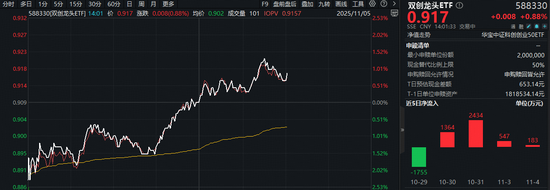
抄底科技资金稳步加仓!光伏龙头阿特斯20CM涨停,双创龙头ETF(588330)盘中拉升1%,近4日吸金4526万元
Xin Lang Ji Jin· 2025-11-05 06:21
Core Viewpoint - The technology sector, particularly in the context of the ChiNext board, is experiencing a significant rally, with the Double Innovation Leader ETF (588330) attracting substantial investment, indicating a growing interest in hard technology and new productivity sectors [1][5]. Group 1: Market Performance - The ChiNext index is leading the major indices, with the Double Innovation Leader ETF (588330) seeing a price increase of over 1.2% during intraday trading, currently up by 0.88% [1]. - The ETF has attracted a total of 45.26 million yuan in the last four days, reflecting a steady accumulation of capital in the technology sector [1]. - In the power equipment sector, notable stocks include: - Canadian Solar (阿特斯) hitting the daily limit with a 20% increase - Trina Solar (天合光能) rising over 11% - Other significant gains from companies like Sungrow Power Supply (阳光电源) and JinkoSolar (晶科能源) [3][4]. Group 2: Industry Insights - The photovoltaic industry is entering a critical bottom phase, with expectations that leading companies will drive supply chain concentration and enhance global competitiveness through technological advancements [5]. - The development of new productivity is identified as a key task for the upcoming five-year planning period, emphasizing the urgency for China to achieve technological self-reliance [5]. - Investment in technology is increasingly viewed as a strategic move for national security, with companies possessing genuine technological barriers likely to become focal points for investment in the A-share market [5]. Group 3: Investment Strategy - Investing in a broad-based index like the Double Innovation Leader ETF allows for risk diversification across various technology sectors, mitigating the volatility associated with individual stocks [6]. - The ETF provides exposure to multiple technology sub-sectors, helping investors capture overall trends and avoid missing out on market movements [6]. - The current technology growth trend is driven by policy shifts and expectations of economic improvement, suggesting that investing in broad-based indices could yield significant returns [6][7]. Group 4: ETF Characteristics - The Double Innovation Leader ETF (588330) features a diversified portfolio of 50 large-cap strategic emerging companies from the STAR Market and ChiNext, covering sectors like renewable energy, photovoltaic, semiconductors, and medical devices [7]. - The ETF is designed for high elasticity, allowing investors to quickly capitalize on market rebounds, with a relatively low investment threshold [7].

第二届体育用品产业创新联合体大会在京举行 两大科技攻坚成果发布
Zheng Quan Ri Bao· 2025-11-05 05:12
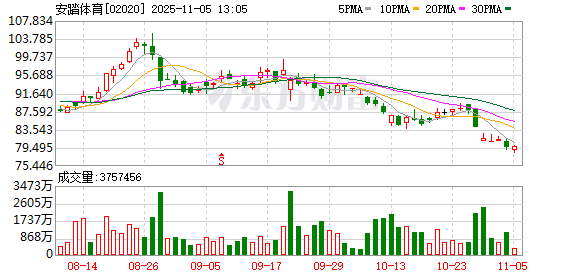
Core Insights - The second Sports Goods Industry Innovation Consortium conference was held in Beijing, where significant technological advancements were announced, including the "Fluorine-Free Anta Membrane Technology" and "Six-Degree Core Warmth Technology" [4][5] - Anta Group's "AI365 Strategy" was introduced, aiming to enhance efficiency, drive growth, and improve user experience through AI applications across various business areas [6][7] Group 1: Technological Innovations - The "Fluorine-Free Anta Membrane Technology" is a core technology developed in collaboration with Donghua University, achieving international leadership in static water pressure and moisture permeability [5] - The "Six-Degree Core Warmth Technology," developed by Anta's collaboration with academic institutions, utilizes basalt fiber technology to create high-performance composite materials suitable for extreme temperatures [5][6] - The consortium also launched the Tianji High-Performance Materials Initiative, focusing on breaking the technological monopoly of international giants in high-end materials [5][6] Group 2: AI and Digital Transformation - Anta Group's "AI365 Strategy" outlines three main directions for digital transformation: cost reduction and efficiency enhancement, growth driving, and user experience improvement [6] - The "Linglong Design Model," the first AI design model in the sports goods industry, leverages over 30 years of data to enhance design efficiency across multiple dimensions [6][7] - An AI innovation platform was established, integrating resources from major tech companies and universities to drive technological innovation across the entire supply chain of the sports goods industry [7] Group 3: Consortium Growth and Vision - The Sports Goods Industry Innovation Consortium, led by Anta Group, aims to foster collaborative innovation and establish an open innovation ecosystem, growing from 13 to 34 member units in just one year [7] - The consortium emphasizes the importance of technological self-reliance and collaboration to strengthen the industry's foundation and expand innovation boundaries [6][7]

592颗星,1.1万亿活水:科创板激活中国创新伟力
Zhong Guo Ji Jin Bao· 2025-11-05 05:02
Core Insights - The Sci-Tech Innovation Board (STAR Market) has significantly contributed to China's innovation-driven economic development, with 592 listed companies and over 1.1 trillion yuan raised since its inception [1][2] - The board has established a unique ecosystem that supports various stages of technology companies, allowing unprofitable firms to go public and facilitating substantial R&D investments [2][4] Group 1: Institutional Framework - The STAR Market's inclusive listing system has enabled 57 unprofitable companies to go public, with 22 of them turning profitable [2] - The introduction of the fifth set of listing standards has particularly benefited the biopharmaceutical sector, with 21 out of 22 companies successfully launching self-developed drugs [3] Group 2: R&D Investment - In 2024, total R&D investment by STAR Market companies reached 168 billion yuan, more than three times the net profit of the sector [4] - By the third quarter of 2025, R&D investment further increased to 113.35 billion yuan, marking a 9.01% year-on-year growth [4] Group 3: Industry Clusters - The STAR Market has fostered significant industry clusters, particularly in integrated circuits, with 121 listed companies covering the entire supply chain [5][6] - The semiconductor sector has seen record IPO fundraising, which has stimulated growth in related upstream and downstream companies [6] Group 4: Capital Ecosystem - Approximately 90% of STAR Market companies received venture capital before going public, promoting a culture of early and small investments in hard technology [7] - The market has developed a comprehensive index system with 33 indices and over 100 ETFs, with total assets exceeding 330 billion yuan [7] Group 5: Policy Developments - The introduction of the "1+6" policy measures aims to enhance support for technology companies with significant breakthroughs and ongoing R&D investments [8] - These reforms signify a transition from a testing ground to a demonstration platform, further aligning with national innovation strategies [8]
592颗星,1.1万亿活水:科创板激活中国创新伟力
中国基金报· 2025-11-05 04:48
Core Viewpoint - The Sci-Tech Innovation Board (STAR Market) has significantly enhanced China's innovation capabilities, with 592 listed companies and over 1.1 trillion yuan raised since its inception, marking a pivotal shift in the country's technological landscape [2][4]. Group 1: Institutional Flexibility - The STAR Market was established to address the "bottleneck" issues faced by tech companies, allowing firms with varying stages of development and governance structures to access capital markets [4]. - Notably, 57 companies listed without profitability, with 22 of them successfully turning profitable, demonstrating the board's inclusive approach [4]. Group 2: R&D Investment - In 2024, total R&D investment by STAR Market companies reached 168 billion yuan, more than three times the net profit of the sector, with a median R&D intensity of 12.44% [7]. - By the third quarter of 2025, R&D investment further increased to 113.35 billion yuan, reflecting a year-on-year growth of 9.01% [7]. - STAR Market companies have generated over 130,000 invention patents, averaging 230 patents per company, leading to significant technological advancements [7]. Group 3: Industry Cluster Development - The STAR Market has fostered a notable cluster effect, particularly in the integrated circuit sector, with 121 listed companies covering the entire industry chain [9]. - In the biopharmaceutical sector, 115 companies are actively involved in treating major diseases, with significant progress in drug approvals and international collaborations [9]. Group 4: Capital Market Dynamics - The STAR Market serves as a comprehensive ecosystem integrating technology, industry, capital, and talent, with over 60% of founding teams comprising scientists or industry experts [11]. - Approximately 90% of STAR Market companies received venture capital before listing, promoting a culture of early and substantial investment in hard tech [12]. Group 5: Policy Enhancements - The introduction of the "1+6" policy measures aims to further deepen reforms on the STAR Market, enhancing support for tech companies with significant breakthroughs and commercial potential [14]. - This policy marks a transition from a "testing ground" to a "demonstration field," facilitating growth for more hard tech enterprises [14].

新征程·新蓝图|着眼取得决定性突破 加强重点领域关键核心技术攻关
Xin Hua She· 2025-11-05 01:44
Core Insights - The document emphasizes the need to strengthen original innovation and tackle key core technologies, proposing extraordinary measures to achieve decisive breakthroughs in critical areas such as integrated circuits, industrial mother machines, high-end instruments, basic software, advanced materials, and biomanufacturing [2] Group 1 - The proposal aims to promote deep integration of technological and industrial innovation [2] - It highlights the importance of advancing education, technology, and talent development in a coordinated manner [2] - The initiative seeks to accelerate high-level technological self-reliance and lead the development of new productive forces [2]