卫星互联网

Search documents
影响市场重大事件:我国成功发射卫星互联网低轨14组卫星;证监会:适度拓宽券商资本空间与杠杆上限,从价格竞争转向价值竞争
Mei Ri Jing Ji Xin Wen· 2025-12-07 22:17
NO.3 证监会:适度拓宽券商资本空间与杠杆上限,从价格竞争转向价值竞争 12月6日,在中国证券业协会第八次会员大会上,证监会负责人提到,行业机构需立足自身资源禀赋, 从价格竞争转向价值竞争。头部机构应增强资源整合能力,力争形成若干家具有国际影响力的标杆机 构;中小机构需聚焦细分领域、特色业务与重点区域,深耕细作打造 "小而美" 的精品服务商。证券公 司、投资机构在权益投资、价格发现、风险管理等方面要顺应时代发展。 每经记者|杨建 每经编辑|彭水萍 |2025年12月8日 星期一| NO.1 我国成功发射卫星互联网低轨14组卫星 12月6日15时53分,我国在海南商业航天发射场使用长征八号甲运载火箭,成功将卫星互联网低轨14组 卫星发射升空,卫星顺利进入预定轨道,发射任务获得圆满成功。另外,在2025年12月5日17时00分, 垣信卫星在酒泉卫星发射中心使用快舟一号甲运载火箭,成功将交通VDES° A星、B星发射升空,卫星 顺利进入预定轨道,发射任务获得圆满成功。 NO.2 SpaceX告知投资者其计划于2026年进行IPO 12月6日,据两位熟悉相关讨论的人士透露,埃隆·马斯克旗下的SpaceX已告知投资者 ...

北交所策略周报(20251201-20251207):八只北证主题公募基金进入开放期-20251207
Shenwan Hongyuan Securities· 2025-12-07 13:16
Group 1 - The North Exchange 50 index increased by 1.49%, indicating a market that is oscillating above the annual line, with trading volume increasing by 4.23% [7][17]. - The North Exchange market has shown increased activity in sectors such as satellite internet, edge AI, and humanoid robots, with notable stocks including Star Map Control, Haoshen Electronics, and Sanxie Electric [7][8]. - Eight North Exchange thematic public funds are entering their second open period, with a total estimated scale of 4.58 billion yuan, and there is speculation about a potential market rebound after December 20 [8][10]. Group 2 - This week, one new stock, Jingchuang Electric, was listed on the North Exchange, with a first-day price increase of 330.74% and a turnover rate of 93.84% [28][29]. - The North Exchange had 109 stocks rise and 173 stocks fall, resulting in a rise-fall ratio of 0.63, with Haoshen Electronics and Youji Co. leading the gains [35][39]. - The average PE ratio for the North Exchange is 81.73 times, with a median of 39.47 times, while the trading volume reached 3.069 billion shares, reflecting a 1.09% increase [21][22]. Group 3 - The new third board saw six new listings and ten delistings this week, with planned financing of 49 million yuan and completed financing of 38 million yuan [46][48]. - The North Exchange's financing balance increased to 7.510 billion yuan, up by 0.38 billion yuan from the previous week [24][22]. - The thematic public funds have reported a weak performance in their heavy-weight stocks, with an average decline of 8.29% since the National Day [9][8].
未来智造局|“千帆星座”牵手航空巨头 上海卫星互联网产业生态加快构建
Xin Hua Cai Jing· 2025-12-07 12:37
Core Viewpoint - The global satellite internet industry has transitioned from technology validation to large-scale application over the past decade, with China making significant strides in this field, particularly through its low Earth orbit satellite networks [1][2]. Group 1: Industry Development - China's satellite internet industry is experiencing robust growth, with a projected launch of 276 satellites in 2024, an increase of 11 times compared to 2014, and a compound annual growth rate exceeding 27% [2]. - The "千帆星座" (Thousand Sails Constellation) has completed the launch of 108 satellites, marking a significant milestone in its global operational capabilities [6]. - Shanghai aims to cultivate a commercial aerospace industry worth approximately 100 billion yuan by 2027, focusing on satellite manufacturing and application [3]. Group 2: Technological Advancements - China has made breakthroughs in key technologies, such as inter-satellite laser communication, achieving data transmission rates of 10 Gbps, which is 100 times faster than traditional radio frequency communication [2]. - The country has submitted over 300 technical documents to the International Telecommunication Union (ITU) and has established international standards in satellite technology [2]. Group 3: Ecosystem and Collaboration - The establishment of the Shanghai satellite internet innovation carriers, which includes seven organizations, aims to enhance technological innovation and application capabilities in the satellite internet sector [4]. - A new industrial ecosystem alliance has been formed to optimize the satellite internet industry, addressing challenges such as high investment and long development cycles [5]. Group 4: Application Scenarios - The integration of satellite internet with 5G, AI, and IoT is creating a comprehensive network that supports various applications, including smart cities, autonomous driving, and remote medical services [7]. - The satellite internet is particularly valuable in areas where ground networks are difficult to deploy, such as remote regions and during emergencies, showcasing its potential in disaster response and agricultural monitoring [6][7].


北交所策略周报:八只北证主题公募基金进入开放期-20251207
Shenwan Hongyuan Securities· 2025-12-07 11:45
Group 1 - The North Exchange 50 index increased by 1.49%, remaining above the annual line, with trading volume increasing by 4.23% week-on-week [9][20][25] - Eight North Exchange thematic public funds entered their second open period, with a total estimated scale of 45.8 billion yuan, indicating potential market recovery after December 20 [10][12][14] - The thematic public funds have reported a weak performance in their heavy holdings, with an average decline of 8.29% since the National Day, suggesting a need to monitor net subscription data post-open period [11][10][14] Group 2 - The North Exchange saw 109 stocks rise and 173 fall, with a decline ratio of 0.63, indicating a significant number of stocks are underperforming [37] - The trading volume for the North Exchange was 30.69 billion shares, with a total transaction value of 693.83 billion yuan, reflecting a week-on-week increase [25][20] - The average PE (TTM) for the North Exchange is 81.73 times, with a median of 39.47 times, indicating a relatively high valuation compared to other exchanges [24][20] Group 3 - This week, one new stock, Jingchuang Electric, was listed on the North Exchange, with a first-day increase of 330.74% and a turnover rate of 93.84% [30][31] - The new three-board market saw six new listings and ten delistings, with a total of 5991 companies currently listed [49][51] - The new three-board market raised 0.38 billion yuan this week, with no companies raising over 1 billion yuan [51][55]
商业航天东风起 盟升电子加快推进卫星通信业务发展
Zheng Quan Ri Bao· 2025-12-07 11:41
Core Insights - The commercial aerospace market in China is experiencing significant growth, particularly in satellite communication, driven by favorable policies and market demand [1][2] - Chengdu Mingsheng Electronic Technology Co., Ltd. (Mingsheng Electronics) is positioning itself as a key player in the domestic satellite communication sector through technological innovation and product development [1][3] Policy Developments - Multiple favorable policy signals have been released, including the issuance of regulations for direct satellite services and guidelines to promote the satellite communication industry [2] - The establishment of a dedicated Commercial Space Administration by the National Space Administration marks a new opportunity for the industry [2] Market Trends - The demand for satellite communication is shifting from niche applications to mainstream needs, with significant growth expected in sectors such as maritime, aviation, and emergency services [3] - Major telecommunications companies in China have received licenses for satellite mobile communication services, indicating a rapid expansion of market applications [2] Company Positioning - Mingsheng Electronics has established a strong foothold in the maritime and aviation markets, achieving significant certifications for its satellite communication products [4] - The company is recognized for its cost-effective and responsive products, leading to a dominant position in the domestic market [4] Future Outlook - Mingsheng Electronics plans to continue its focus on satellite communication, with ongoing product development and partnerships with domestic operators and airlines [5] - The company aims to enhance its product matrix and explore new opportunities in overseas markets while maintaining its technological leadership in the industry [5]

中国成功发射卫星互联网低轨14组卫星;领益智造全资子公司赛尔康与宝安区政府签署合作框架协议丨智能制造日报
创业邦· 2025-12-07 03:58
Group 1 - Blue Arrow Aerospace released a video documenting the first flight of the reusable Zhuque-3 rocket, which successfully completed its orbital mission and validated vertical recovery technology during the flight [2] - The rocket's first stage successfully endured the challenging "supersonic re-entry aerodynamic gliding phase," demonstrating stability in thermal protection, aerodynamic layout, and attitude control systems under extreme conditions [2] - The rocket achieved high-precision guidance control for landing, validating the effectiveness of the cold gas reaction control system and the combined control strategy [2] Group 2 - Linyi Intelligent Manufacturing's subsidiary, Saierkang, signed a cooperation framework agreement with the Bao'an District government to enhance investment and expand production in Shenzhen [4] - The Bao'an District government will prioritize Saierkang's investment projects, providing an international business environment to support stable development [4] - Saierkang plans to integrate resources to increase investment in smart factories and establish a high-value AI hardware innovation R&D center, focusing on manufacturing lines for mobile phones, headphones, and smart wearables [5] Group 3 - In November 2025, excavator sales in China increased by 13.9% year-on-year, with total sales reaching 20,027 units [5] - Domestic sales accounted for 9,842 units, reflecting a 9.11% year-on-year growth, while exports reached 10,185 units, marking an 18.8% increase [5] - From January to November 2025, a total of 212,162 excavators were sold, representing a 16.7% year-on-year growth, with domestic sales of 108,187 units and exports of 103,975 units [5] Group 4 - China successfully launched 14 low-orbit satellites for internet connectivity using the Long March 8 rocket, with the satellites entering their designated orbits successfully [6]

通信行业周报:“AI+卫星”的共振-20251207
KAIYUAN SECURITIES· 2025-12-07 03:13
Investment Rating - The industry investment rating is "Positive" (maintained) [1] Core Views - The communication industry continues to show high prosperity, driven by advancements in AI and satellite technology, as well as significant developments in domestic computing power [10][19] - Amazon's AWS introduced several AI products, including the Trainium3 chip and the Nova 2 model series, showcasing impressive performance improvements [13][15] - The successful launch of the Zhuque-3 rocket marks a significant step in China's private aerospace sector, focusing on reusable rocket technology [17] - The listing of Moer Technology as the first domestic GPU company injects new momentum into the domestic computing power sector, with a market capitalization of 282.3 billion [18] Summary by Sections 1. Weekly Investment Insights - Amazon's AWS launched new AI products, including advanced chips and models [13] - Marvell's acquisition of Celestial AI aims to enhance optical connectivity in data centers [16] - The Zhuque-3 rocket successfully completed its mission, validating key technologies [17] - Moer Technology's IPO represents a milestone for domestic GPU development [18] - Investment recommendations focus on "light, liquid cooling, and domestic computing power" as core themes [19] 2. Communication Data Tracking - As of October 2025, China has 4.758 million 5G base stations, with a net increase of 507,000 from the end of 2024 [28] - The number of 5G mobile phone users reached 1.184 billion, a year-on-year increase of 18.99% [28] - 5G mobile phone shipments in September 2025 were 24.106 million units, accounting for 86.3% of total shipments, with a year-on-year growth of 8.02% [28] 3. Operator Performance - In the first half of 2025, China Mobile's cloud revenue reached 56.1 billion, up 11.3% year-on-year [47] - China Telecom's Tianyi Cloud revenue for the same period was 57.3 billion, a 3.8% increase [47] - The ARPU values for the three major operators remained stable, with slight decreases noted for China Unicom [47][52]
1月至11月全国期货市场累计成交量81.17亿手 | 财经早餐
Xin Lang Cai Jing· 2025-12-07 01:09
(来源:经济日报) 转自:经济日报 ■ 国家林草局消息,"十四五"以来,通过统筹推进就地保护与迁地保护,全国65%的高等植物群落、 80%的国家重点保护野生植物得到有效保护,德保苏铁、杏黄兜兰等300多种濒危植物实现了野外回 归。 ■ 中国期货业协会最新数据显示,1月至11月全国期货市场累计成交量81.17亿手,累计成交额675.45万 亿元,同比分别增长14.74%和20.19%。 ■ 中国物流与采购联合会近日消息,"十四五"期间我国食材产业规模稳步扩容,整体呈现稳健增长态 势。2025年食材消费市场规模有望突破10万亿元大关。 ■ 6日,国家互联网信息办公室起草了《网络数据安全风险评估办法(征求意见稿)》,现向社会公开 征求意见。 我国成功发射卫星互联网低轨14组卫星。郭程摄(新华社) ■ 6日,我国在海南商业航天发射场使用长征八号甲运载火箭,成功将卫星互联网低轨14组卫星发射升 空,卫星顺利进入预定轨道,发射任务获得圆满成功。 ■ 中国人民银行与澳门金融管理局5日公布续签双边货币互换协议并升级为常备互换安排,协议长期有 效。互换规模由原来的300亿元人民币/340亿澳门元扩大至500亿元人民币/570亿 ...
热度第一!002353,接连拿下超亿美元订单,股价频创历史新高
Zheng Quan Shi Bao· 2025-12-07 00:25
Group 1 - The core point of the article highlights that Jerry Holdings (杰瑞股份) has attracted significant institutional interest, with 193 institutions conducting research on the company, including 57 fund companies and 48 securities firms [1][9] - Jerry Holdings has secured major contracts recently, including a sales contract for generator sets worth over $100 million with a global AI industry giant and another similar contract with a North American client [1] - The company attributes its rapid entry into the data center power generation business to the reliability, responsiveness, and flexibility of its power generation equipment, which meets high standards in various sectors [1][2] Group 2 - The company has built a global supply chain system and established stable partnerships with gas turbine manufacturers like Siemens and Baker Hughes, ensuring reliable product delivery [2] - Following the positive news, Jerry Holdings' stock price has reached historical highs, with a weekly increase of over 26% [4] - Other companies such as Yihua (怡合达), Yingstone Network (萤石网络), and Hotgen Biotech (热景生物) have also attracted significant institutional research interest, with over 100 institutions each [5][6]


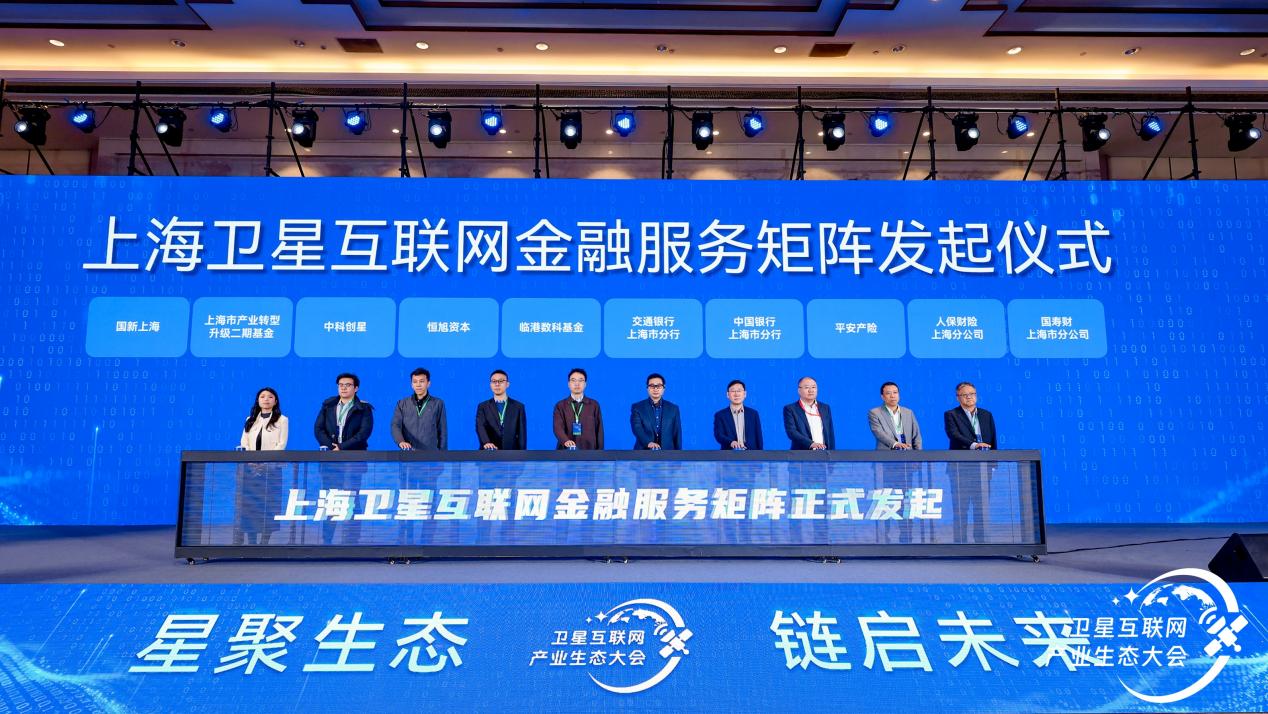
共筑产业新高地!2025卫星互联网产业生态大会在上海举办
Guo Ji Jin Rong Bao· 2025-12-06 15:12
Core Viewpoint - The 2025 Satellite Internet Industry Ecosystem Conference held in Shanghai showcased the strategic development and innovation in the satellite internet sector, emphasizing collaboration among government, academia, and industry leaders to enhance technological capabilities and market applications [1][3][11]. Group 1: Policy and Strategic Framework - The Ministry of Industry and Information Technology has introduced several policy documents to boost the satellite internet industry, providing a clear institutional framework for development [3]. - Shanghai's strategic role in the satellite internet sector is highlighted, focusing on multi-track integration, application innovation, and ecosystem construction to create a stable development environment [3]. - The need for strengthening core technology breakthroughs and expanding application scenarios was emphasized by industry leaders, aiming for high-quality development in global competition [3]. Group 2: Innovation and Technology Development - Seven major innovation carriers in Shanghai were showcased, focusing on key technology areas such as network architecture and spatial perception, which will support technological breakthroughs [4]. - The conference featured demonstrations of the full industry chain capabilities in Shanghai, including satellite models and communication terminals from major telecom operators [4]. Group 3: Industry Collaboration and Ecosystem - The establishment of the Shanghai Satellite Internet Industry Cluster was announced, marking a new phase of collective development in the sector [6]. - A signing ceremony for the Shanghai Satellite Internet Industry Chain Ecological Partners was held, indicating the formation of an industry alliance led by key enterprises [6]. Group 4: Financial Support and Investment - A multi-layered financial support system was launched to address the high investment and long cycle characteristics of the satellite internet sector, involving major investment and financial institutions [9]. - A project demand list covering 17 key projects with a total financing requirement exceeding 7 billion was released, aiming to facilitate deep integration of capital and industry [9]. Group 5: Application Scenarios and Commercialization - Real-world demonstrations of satellite internet applications in emergency rescue, smart agriculture, and logistics were showcased, highlighting its strategic value for national security and economic development [11]. - A market cooperation agreement was signed between Shanghai Yuanxin Satellite Technology Co., Ltd. and Airbus, marking a significant step in global operations for the "Qianfan Constellation" aviation connectivity system [13].