地缘政治

Search documents
中加发表联合声明,卡尼表示中国比美国更可靠,加拿大弃美投华?
Sou Hu Cai Jing· 2026-01-18 21:14
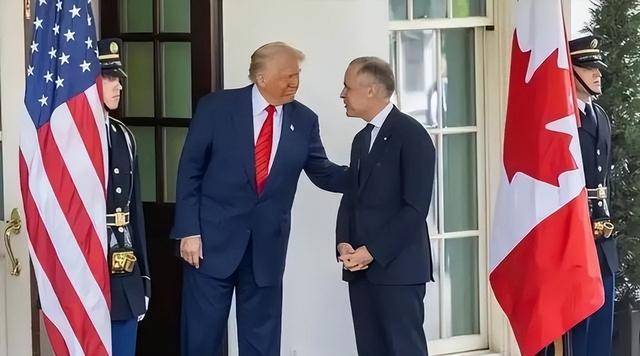
Group 1 - The core point of the article is that Canada's recent decision to eliminate the 100% tariff on Chinese electric vehicles marks a significant shift in its geopolitical stance, indicating a move towards China amidst pressures from the U.S. [1][4] - The trade relationship between Canada and the U.S. has become increasingly strained, with Canada heavily reliant on the U.S. for trade, accounting for 75% of its total foreign trade, which poses a risk to its economic stability [4][6] - The U.S. has imposed significant tariffs on Canadian goods, leading to a dire economic situation for Canada, prompting the need for Canada to seek new trade partnerships, particularly with China [6][10] Group 2 - Canada's perception of China as a more reliable partner stems from frustrations with U.S. unpredictability in trade policies, which has created a sense of urgency for Canada to diversify its economic relationships [7][8] - The removal of tariffs on Chinese electric vehicles is expected to benefit Canadian consumers by providing access to more affordable and advanced electric vehicle options, while also helping Canada meet its environmental goals [11][13] - The trade potential between China and Canada is significant, with projections indicating that bilateral trade could reach $120 billion by 2025, highlighting the mutual economic benefits of this relationship [17][21] Group 3 - The article draws parallels between Canada's current situation and Australia's past relationship with China, suggesting that economic realities can lead to a shift away from U.S. influence [15][17] - The geopolitical landscape is changing, with Canada's shift signaling cracks in the U.S.-led alliance system, as allies begin to question the reliability of U.S. leadership [20][21] - The invitation for Chinese leaders to visit Canada indicates that this is just the beginning of a new phase in Canada-China relations, suggesting further developments in trade and cooperation [24]

马克龙回应美国关税威胁 欧盟最强硬贸易反制工具或将启动
Sou Hu Cai Jing· 2026-01-18 13:38
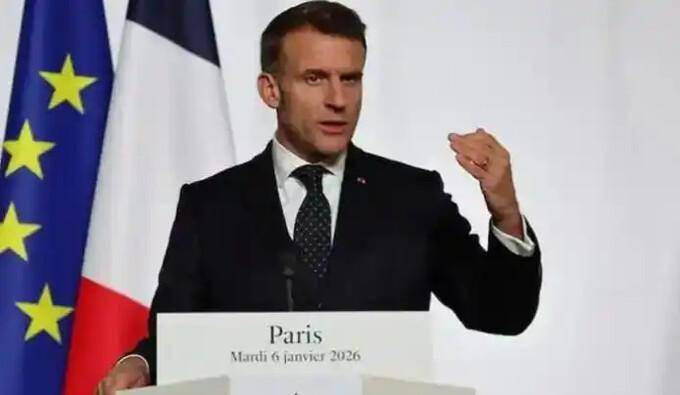
Core Viewpoint - The recent decision by the U.S. to impose tariffs on goods from several European countries, including France and Germany, has escalated tensions between the U.S. and Europe, highlighting underlying geopolitical and economic frictions [1][3]. Group 1: U.S. Tariff Decision - The U.S. plans to impose tariffs starting next month on imports from multiple European nations, interpreted as a pressure tactic aimed at influencing Europe's stance on the Greenland issue [1]. - This tariff decision is seen as part of a broader strategy by the U.S. to exert economic pressure on its allies [1]. Group 2: European Response - French President Macron's response on January 18 indicates a strong opposition to the U.S. tariffs, suggesting the potential use of EU-level tools for retaliation [3]. - Macron's invocation of the EU's anti-coercion mechanism signals a readiness to initiate formal investigations and countermeasures against the U.S. [3][5]. - The response reflects a growing sentiment of distrust towards the U.S. within Europe, as well as a desire for a more independent European stance in international relations [3]. Group 3: EU Anti-Coercion Tool - The anti-coercion tool, established by the EU in 2023, provides a legal framework for member states to respond to economic coercion from third countries, including measures like tariffs and investment restrictions [5]. - This tool is a direct response to previous instances of U.S. tariffs imposed on the EU, indicating a shift in Europe's approach to economic pressures from the U.S. [5]. Group 4: Long-term Implications - The current tariff dispute reveals deepening rifts in transatlantic relations, with long-standing differences in trade and industrial policies coming to the forefront [5]. - The friction in economic relations is eroding mutual trust, prompting discussions within Europe about reducing dependency on the U.S. [5]. - The outcome of this dispute will significantly influence the future dynamics of U.S.-EU relations, moving from a "dominant-following" model to one characterized by "competition-balance" [7].
特朗普敲打印度,不听话就收拾你,印反对党:难不成也要抓莫迪?
Sou Hu Cai Jing· 2026-01-18 07:37
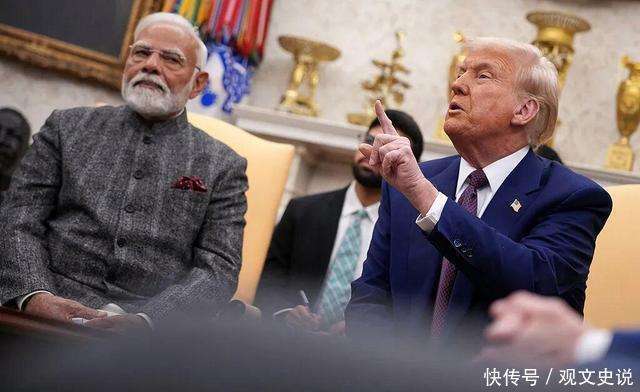
Group 1: U.S.-India Relations and Tariff Threats - The U.S. has threatened India with tariffs if it continues to import oil from Russia, indicating a strong pressure on India's energy decisions [5][6][8] - Trump's comments reflect a unique understanding of international relations, prioritizing compliance with U.S. demands over equal cooperation [5][6] - The U.S. has previously imposed punitive tariffs on Indian goods, raising the overall tariff rate to 50%, significantly impacting India's export competitiveness [6][12] Group 2: India's Energy Dependence and Response - India heavily relies on oil imports, with 36.4% of its oil coming from Russia, making it the largest buyer of Russian oil globally [6][19] - Despite U.S. pressure, India has not ceased its oil imports from Russia, with state-owned refineries filling the gap left by private companies [16][18] - To balance relations with the U.S., India has increased its oil imports from the U.S. while maintaining transparency in procurement [18][19] Group 3: Domestic Political Implications in India - Trump's threats have sparked significant political debate in India, with opposition parties questioning the government's foreign policy [3][12][14] - The upcoming elections have intensified the political struggle, with the ruling party defending its stance against U.S. pressure [14][19] - India's foreign minister has criticized the U.S. tariffs, asserting that India's oil imports align with national and global interests [19] Group 4: Broader Geopolitical Context - The U.S. aims to weaken Russia's energy revenue while promoting its own energy exports, complicating India's geopolitical balancing act [8][19] - Trump's hardline approach is seen as a strategy to bolster his domestic political standing ahead of upcoming elections [19] - The evolving U.S.-India relationship reflects broader geopolitical shifts, with India's dual reliance on both Russian oil and the U.S. market becoming increasingly challenging [19]
主席接替者“是谁”引争议 白银长期看涨100美元
Jin Tou Wang· 2026-01-18 03:03
Group 1 - The core viewpoint of the article highlights that geopolitical events have made silver a temporary safe-haven choice for investors, with prices rising from "80+" to "90+" this week, although there is potential for a price correction due to easing geopolitical tensions [1] - The investigation into Federal Reserve Chairman Jerome Powell poses a risk to his position, with speculation that if Waller is chosen as his successor, Powell may vacate his board seat [1] - Some Republican senators have expressed their reluctance to support any nominee until the investigation is resolved, indicating political uncertainty surrounding the Federal Reserve leadership [1] Group 2 - Trump has indicated that a decision regarding Powell's successor may be announced in the coming weeks, with the White House confirming that the President is in the decision-making phase [2] - If silver prices continue to rise and break through $94.00, the next target levels are $94.50, $95.00, and eventually $100.00 [2] - Conversely, if silver prices fall below the January 15 low of $86.19, they may drop to the January 13 low of $83.62 [3]
原油周报:逢低做多-20260117
Wu Kuang Qi Huo· 2026-01-17 15:04
Report Industry Investment Rating - The report recommends "Buy on Dips" for crude oil [17] Core Viewpoints of the Report - The heavy oil crack spread can be taken as a profit, while crude oil can be bought on dips within the shale oil break - even cost range [15][17] - In 2025, the oil price center will move down, with a bottom margin, and it's difficult to predict a trend. The extremely pessimistic bottom range is expected to be between $45/barrel and $55/barrel. It is recommended to short on rallies [22] - In 2026, the oil price center will reach the bottom, and the price is expected to rise steadily during the peak season, but the increase is still limited. The center is expected to be between $60/barrel and $65/barrel. It is recommended to buy on dips and focus on crack spread opportunities [22] Summary by Directory 1. Weekly Assessment & Strategy Recommendation - **Market Review**: Crude oil rebounded this week. The geopolitical situation in Venezuela did not expand, but there were potential geopolitical expectations between Iran and Israel, causing oil prices to fluctuate with the geopolitical situation [15] - **Supply - Demand Changes**: US commercial crude oil inventories increased, while in the Middle East, production in Venezuela and Iran declined, leading to a marginal decrease. The CPC pipeline export is expected to resume, and overall supply in January is expected to decline slightly [15] - **Macro - Political Situation**: In December, the US CPI was 2.7% year - on - year and + 0.3% month - on - month, and the core CPI was 2.6% year - on - year, slightly lower than the expected 2.7%. Politically, President Trump imposed sanctions on countries trading with Iran, and the geopolitical friction between the US and Iran intensified, but the probability of military strikes is considered low [15] - **Viewpoint Summary**: The heavy oil crack spread can be taken as a profit, and crude oil can be bought on dips within the shale oil break - even cost range [15][17] 2. Macro & Geopolitical - **Macro Short - Term High - Frequency Indicators**: Include the US ISM manufacturing PMI, Citigroup G10 economic surprise index, US 10 - year inflation expectation, and US long - short - term spread, which are correlated with WTI oil prices [46] - **Macro Medium - Term Forecast Indicators**: Such as the eurozone investment confidence index, eurozone PMI, US investment confidence index, and US PMI, which are used to predict the macro - economic situation [49] - **Geopolitical Indicators**: The Middle East geopolitical risk index and the high - frequency export statistics of sensitive oil countries (Iran, Libya, Venezuela, and Russia) are related to WTI oil prices [56] 3. Oil Product Spreads - **Forward Curve**: Analyzes the WTI crude oil forward curve, including the M1/M4 month - spread and the M1 price, as well as the forward curves of other crude oils such as Brent, Dubai, and INE [60] - **Inter - Regional Spreads**: Compares the spreads between Brent/WTI, Brent/Dubai, INE/WTI, and MRBN/WTI [63] - **Product Spreads**: Studies the spreads between different oil products such as LGO diesel, gasoline, and diesel, including the RB/HO and LGO/RB spreads [70] - **Crack Spreads**: Analyzes the crack spreads of gasoline, diesel, high - sulfur fuel oil, and low - sulfur fuel oil in Singapore, Europe, and the US [74][77][80] 4. Crude Oil Supply - **OPEC & OPEC+ Supply**: OPEC and OPEC+ have implemented a series of production - cut and production - increase measures. The production and export of OPEC 12 countries and OPEC+ main member countries are analyzed, including Saudi Arabia, Iraq, Iran, etc. [86][91][112] - **US Supply**: The US has implemented a series of policies, such as reducing SPR funds, imposing sanctions on Iran and Russia, and planning to purchase SPR. The number of oil wells, rigs, production, and export in the US are also analyzed [117][118] - **Other Supply**: The production of other countries such as Canada, Norway, and Brazil is analyzed [126] 5. Crude Oil Demand - **US Demand**: Includes the US crude oil input, refinery capacity utilization, direct import and export demand, and the demand for refined oil products such as gasoline, diesel, fuel oil, and aviation kerosene [132][134][137] - **Chinese Demand**: Analyzes China's crude oil input, import, refinery profit, and the production and demand of refined oil products such as gasoline and diesel. Micro - demand indicators such as new - energy vehicle penetration and population migration are also considered [154][159][167] - **European Demand**: Focuses on the refinery start - up rate, crude oil input, and the production of refined oil products in 16 European countries [173][178] - **Indian Demand**: Analyzes India's crude oil input, refinery start - up rate, import, and demand [183] - **Other Demand**: Considers the average daily speed of oil tankers and the oil - transportation quality model [187][190] 6. Crude Oil Inventory - **US Inventory**: Includes US commercial crude oil inventory, Cushing inventory, and the inventory of refined oil products such as gasoline, diesel, fuel oil, and aviation kerosene [197][199][201] - **Chinese Inventory**: Analyzes China's crude oil port inventory, gasoline and diesel inventory, and the inventory of refined oil products [206][209][212] - **European Inventory**: Focuses on the ARA inventory and the inventory of 16 European countries, including gasoline, diesel, fuel oil, and total refined oil products [217][222][225] - **Singapore Inventory**: Analyzes Singapore's gasoline, diesel, fuel oil, and total refined oil product inventory [229] - **Fujairah Inventory**: Focuses on the gasoline, diesel, fuel oil, and total refined oil product inventory in Fujairah [234] - **Marine Inventory**: Analyzes the floating storage of gasoline, diesel, fuel oil, kerosene, heavy oil, light oil, and crude oil at sea [239][245][249] 7. Meteorological Disasters - **Crude Oil Supply Area Meteorological Disasters**: Include the US Gulf of Mexico storm model, the Middle East strait storm model, the Canadian wildfire probability model, and the US Gulf of Mexico rainstorm and thunderstorm [255][261] 8. Alternative Data - **Crude Oil Alternative Data**: Such as the in - transit supply of crude oil by sea, the oil - transportation demand model, the shipping freight in the Arabian Sea, and the media - voted probability of the Hormuz Strait blockade, which are related to WTI oil prices [267]
关税大砍 94%!4.9万辆配额背后:加拿大在中美之间走出了第三条路
Sou Hu Cai Jing· 2026-01-17 13:43
Core Viewpoint - Canada is shifting its trade strategy by reducing tariffs on Chinese electric vehicles (EVs) to 6.1% and allowing the import of 49,000 units annually, marking a significant move towards a more independent trade policy amidst US-China tensions [1][3]. Group 1: Trade Policy Changes - The Canadian government, under Prime Minister Carney, has announced a reduction in punitive tariffs on Chinese EVs, which previously reached 100%, allowing for a more favorable trade environment [3]. - The new policy allows for the import of 49,000 Chinese EVs annually, which constitutes less than 3% of Canada's new car market, while simultaneously negotiating lower tariffs on Canadian agricultural products exported to China [3][5]. Group 2: Economic Implications - The agreement is seen as a win-win for Canada, providing consumers access to EVs that are 20%-30% cheaper than North American models, while also securing a vital market for Canadian agricultural products like canola and lobster [3][5]. - The reduction of tariffs on canola to 15% and the elimination of tariffs on lobster and peas starting March 2026 are significant concessions from China, enhancing the economic relationship between the two countries [3]. Group 3: Strategic Balance - Canada’s approach illustrates a strategic balancing act, allowing it to maintain relations with the US while also engaging with China, thus avoiding a binary choice in international relations [5][8]. - The Canadian government aims to learn from China’s advancements in EV technology, suggesting that collaboration may be more beneficial than isolation for the development of its domestic EV industry [5]. Group 4: Challenges Ahead - Despite the positive outlook, there are concerns domestically regarding the potential impact on local workers and industries, with some provincial leaders expressing dissatisfaction with the perceived inequality of the trade deal [5]. - Internationally, the US has warned Canada about the potential repercussions of this decision, indicating that Chinese EVs may not be allowed in the US market, which could complicate Canada's trade dynamics [5][8].
从“购岛”梦到关税威胁:格陵兰岛为何成美国“必争之地”?
Sou Hu Cai Jing· 2026-01-17 13:21
Core Insights - The U.S. has escalated its interest in Greenland, warning countries that do not support its acquisition plans of potential tariffs, highlighting the strategic importance of Greenland's mineral resources [1] Group 1: Current Situation - Greenland, an autonomous territory of Denmark, has a population of approximately 57,000 and faces significant development challenges due to reliance on Danish funding and weak infrastructure [3] - The local government has expressed the need for investment from traditional Western capital or alternative partners to address economic transformation pressures [3] Group 2: Resource Wealth - Greenland is rich in mineral resources, with 25 out of 34 critical minerals identified by the EU confirmed on the island, including significant rare earth elements essential for electric vehicles and defense industries [4] - The island's rare earth reserves are among the largest globally, with the Tamires rare earth mine recognized as one of the world's largest deposits [4][5] Group 3: Mining Challenges - Despite its resource wealth, Greenland faces multiple challenges in mining development, including extreme cold temperatures, high environmental standards, and community opposition [6] - The lack of adequate infrastructure, such as ports and roads, further complicates large-scale mining operations, necessitating substantial investment [6] Group 4: Geopolitical Dynamics - The U.S. has positioned Greenland as a focal point in its geopolitical strategy, emphasizing its importance for national security and potential military control [7] - Denmark's defense response to U.S. military actions regarding Greenland indicates a complex and contradictory relationship within NATO [7] Group 5: Chinese Interests - Greenland has become a point of contention in U.S.-China relations, with the U.S. perceiving Chinese activities in the Arctic as a threat [8] - Denmark has explicitly prohibited Chinese investments in Greenland, citing security concerns, while U.S. diplomatic pressure has hindered Chinese access to key mineral resources [8]

中东“火药桶”震荡大宗商品
Guo Ji Jin Rong Bao· 2026-01-17 13:12
Core Viewpoint - The current market concern revolves around the potential blockade of the Strait of Hormuz, a critical waterway for global oil transport, which could lead to significant energy supply disruptions [1][30]. Group 1: Geopolitical Tensions - The situation in Iran has escalated with ongoing anti-government protests, leading to increased tensions with the U.S., which has threatened military action [2][17]. - The U.S. is deploying additional military resources to the Middle East, including an aircraft carrier and missile defense systems, in response to the rising tensions with Iran [17][18]. - Analysts suggest that Iran's internal and external crises could have profound impacts on the global oil market, with geopolitical instability driving demand for safe-haven assets like gold and silver [2][18]. Group 2: Economic Conditions in Iran - Iran is experiencing its largest social unrest in three years, driven by a plummeting currency and rising living costs, with inflation projected to reach 43.3% in 2025 [3][20]. - The Iranian government has announced a subsidy of 10 million rials (approximately 48 RMB) per month for eligible citizens to alleviate economic burdens, although many citizens view this as insufficient [20][21]. - The International Monetary Fund (IMF) forecasts Iran's GDP growth to slow to 0.6% in 2025, a significant drop from 3.7% in 2024, indicating severe economic challenges [20]. Group 3: Oil Market Reactions - Brent crude oil prices have shown volatility, rising by 10% in a week before dropping by 3%, currently hovering around $65 per barrel, as investors react to potential supply disruptions from Iran [29]. - Iran's oil production exceeds 3 million barrels per day, with exports around 2 million barrels per day, making it a significant player in the global oil market compared to Venezuela, which has seen a decline in production [29][30]. - Concerns about the potential blockade of the Strait of Hormuz could drive oil prices above $150 per barrel, leading to a global energy crisis [30]. Group 4: Safe-Haven Assets - The geopolitical uncertainty surrounding Iran has led to increased demand for safe-haven assets, with gold prices recently surpassing $4,600 per ounce and silver exceeding $90 per ounce [31][32]. - Analysts have raised their price targets for gold and silver, with expectations of $5,000 per ounce for gold and $100 per ounce for silver in the coming months, although a correction may follow after reaching these highs [32].
特朗普垂涎格陵兰岛,源自美国亿万富翁罗纳德·劳德的“建议”
Xin Lang Cai Jing· 2026-01-17 09:29
Group 1 - The core point of the article is that former National Security Advisor John Bolton revealed that President Trump’s interest in purchasing Greenland was influenced by billionaire Ronald Lauder's suggestion [1][2] - Bolton stated that Trump often views fragmented information from friends as truth and finds it difficult to change his mind [2][3] - Lauder, a long-time friend of Trump, has begun making business investments in Greenland while Trump has expressed intentions to acquire the territory [3] Group 2 - Recent discussions between the U.S. and Denmark regarding Greenland have highlighted fundamental disagreements between the two nations [5] - The White House indicated that the deployment of European military personnel to Greenland would not affect Trump's decisions regarding the territory [8] - Danish Prime Minister Frederiksen confirmed that despite Denmark's rejection of U.S. intentions, the ambition to take control of Greenland remains unchanged [10] Group 3 - Multiple European countries, including France and the Netherlands, have confirmed the deployment of military personnel to Greenland, emphasizing a collective defense approach [12][14][16] - The military presence from European nations is seen as a symbolic gesture, reflecting deeper fractures in U.S.-European relations regarding territorial ambitions [18] - The situation indicates a potential shift in NATO dynamics, with European countries seeking to balance U.S. military ambitions in the Arctic [18]

美国账户进钱,神秘亚洲国家出手,向特朗普买走第一批委国石油
Sou Hu Cai Jing· 2026-01-17 05:13
Core Viewpoint - The article discusses the recent sale of Venezuelan oil by the Trump administration, highlighting the implications for U.S. control over Venezuelan resources and the geopolitical dynamics involved in the transaction. Group 1: Sale of Venezuelan Oil - Trump has successfully sold the first batch of Venezuelan oil for $500 million, with plans for more transactions in the coming weeks [1] - The proceeds from the oil sales are intended to be used for rebuilding Venezuela's oil facilities and benefiting both nations, although the funds are now controlled by the U.S. Treasury [1] - The initial buyers of this oil are two multinational companies, Vitol Group and Trafigura Group, which have received special permission from the U.S. government to bypass sanctions [5][6] Group 2: Geopolitical Implications - The sale of Venezuelan oil is seen as a strategic move for the U.S. to exert control over Venezuelan resources, with the potential to strengthen the position of the purchasing companies in global energy trade [6] - The geopolitical landscape, including instability in the Middle East and restrictions on Russian oil exports, makes securing Venezuelan oil resources a wise decision for these companies [6] - The transaction may lead to increased anti-American sentiment among Venezuelans, complicating long-term U.S. management of the situation [6] Group 3: Potential Buyers - Initial speculation suggested that Indian company Reliance Industries might be a buyer, as it has a history of cooperation with Venezuela and a need to fill its energy gap [3] - However, the confirmed buyers, Vitol and Trafigura, are positioned to benefit from the U.S. government's control over Venezuelan oil, enhancing their competitive edge in the market [5][6]