对等关税

Search documents
离金砖远点,离美国近点,美国对印度的要求,没准能帮中国大忙
Sou Hu Cai Jing· 2025-06-05 10:16
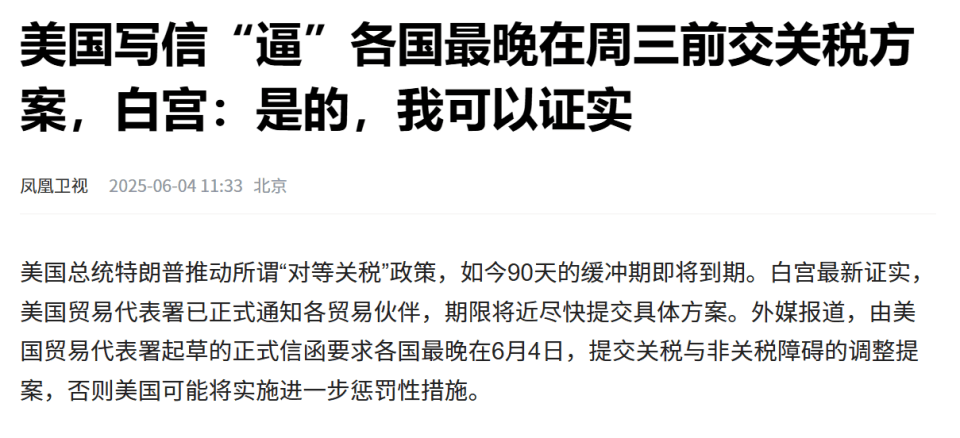
印度或许将成为首批与美国达成关税谈判的国家,不过想要与美国签订协议,印度就得按照美国的要求,减少与"金砖组织"的合作,如果能"退群"那是再好 不过了。 面对美国明晃晃的鱼钩上,那诱人的鱼饵,莫迪究竟会作何选择呢?美国想要逼印度离开"金砖"提的要求,没准能帮中国的大忙。 第一个要求,卢特尼克谈到了印度从俄罗斯购买军事装备的话题,称这一举措让美国感到不满,如果印度转而从美国采购军事装备,那美国就感到大喜了。 因此,增加对美国军事装备的购买,也是印度必须要做的。 第二个要求,美国不想看到印度与金砖国家有更多的合作,要求印度和金砖国家保持距离。卢特尼克还特意提到了金砖国家内部准备推行的"去美元化"进 程,印度如果与金砖国家掺和在一起,那显然会影响到美印之间的关系。 虽然美国没有明说,但意思很明显,在金砖国家和美国之间,印度必须要做出选择。如果印度能够从金砖组织"退群",投入美国的怀抱,那美国肯定会给印 度更多的好处。 近日,美国向那些还在与它展开贸易谈判的国家,发出了"最后通牒",要这些国家尽快提交出"最好报价",否则距离7月9日的关税生效期,没剩多少天了。 特朗普在4月2日提出的"对等关税",迅速引起了全球经贸市场 ...

赶在截止时间前,越南已向美国“提交贸易文件”
Hua Er Jie Jian Wen· 2025-06-05 03:31
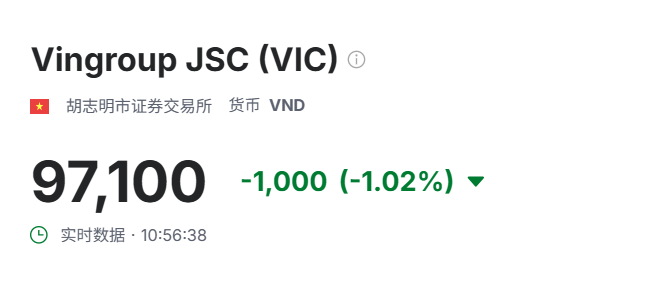
据媒体6月5日报道,越南工贸部周四确认,已在美方设定的截止日期前,向华盛顿提交了回应贸易要求 的文件,展现贸易协商的"决心和诚意"。而此举关乎越南能否避免美国高达46%的"对等关税"重击。 此前央视新闻援引媒体报道称,距离对等关税恢复期限仅剩五周,特朗普政府发出紧急信函要求各国在 本周三前提交贸易谈判的最佳方案。美国政府正在向谈判伙伴施压,要求各国在关键领域提供最佳方 案,包括购买美国工农业产品的关税和配额方案。4月9日,特朗普暂停了对大多数美国贸易伙伴的对等 关税,暂停期限为90天,将高额关税的生效期推迟到7月9日。 消息公布后,越南VN30股指小幅下跌0.2%,出口龙头股Vingroup跌超1%。 当46%的关税利剑悬在头顶时,越南选择了迅速妥协。 该国目前面临46%的"对等关税"威胁,一旦生效将严重冲击其以对美出口为支柱的增长模式——美国正 是越南的最大出口市场。 越南还曾对美国作出过"零关税"承诺。据央视网此前报道,4月4日,越南领导人同特朗普通电话,强调 愿意对美商品实行"零关税"。 风险提示及免责条款 越南率先"妥协",越美双方同意加快谈判进程 报道称,越南工贸部在声明中表示已提交回应美国贸易要求 ...
关税影响专题三:美国对等关税暂缓期,国际品牌表述与供应链梳理
Guoxin Securities· 2025-06-05 02:40
Investment Rating - The report maintains an "Outperform" rating for the textile and apparel industry [1] Core Insights - The report outlines the timeline of Trump's tariff policy, highlighting the uncertainty surrounding tariffs and their impact on international brands [2] - International brands have expressed concerns about the impact of tariffs on profits, with varying exposure levels to the U.S. market and sourcing strategies [2][12] - The report anticipates industry consolidation and the potential for suppliers with lower U.S. exposure and higher profit margins to gain market share [2][35] Summary by Sections 1. Key Timeline of Trump's Tariff Policy - On April 10, the Trump administration announced a 90-day tariff delay for 75 countries, set to expire on July 8 [2] - A court ruling on May 28 deemed Trump's tariff policy invalid, leading to further appeals and ongoing uncertainty [2][11] 2. International Brands' Responses to Tariff Events - Brands like Uniqlo, Adidas, and PUMA have varying U.S. market exposure, with Uniqlo at 7% and Adidas and PUMA at 20% [12][13] - Most brands source less than 10% of their products from China, with a significant portion coming from Southeast Asia, particularly Vietnam [12] - Short-term measures include pre-shipping goods to the U.S. and long-term strategies involve price adjustments and supply chain diversification [12][19] 3. Textile Enterprises' Capacity Distribution and Tariff Risk Exposure - Companies like Shenzhou International and Huayi Group have low U.S. revenue exposure, while those with significant Southeast Asian production face higher U.S. revenue percentages [2][32] - The report lists net profit margins for various companies, with Shenzhou International leading at 20.9% [2][32] - Companies with U.S. revenue below 20% are less sensitive to tariff impacts, while those with higher margins can maintain profitability even under pressure [32] 4. Investment Recommendations - Key recommendations include Shenzhou International for its low U.S. exposure and high net margin, and Huayi Group for its strong market position and demand [35] - Other companies to watch include Weixing Co., Taihua New Materials, and Kairun Co., which are expected to benefit from market share gains [35]





关税影响专题三:美国对等关税暂缓期,国际品牌表述与供应链梳理-20250605
Guoxin Securities· 2025-06-05 02:24
Investment Rating - The investment rating for the textile and apparel industry is "Outperform the Market" [1] Core Insights - The report outlines the timeline of Trump's tariff policy, highlighting the uncertainty surrounding tariffs and their impact on international brands [2][11] - International brands have expressed concerns about the impact of tariffs on profits, with varying exposure to the U.S. market and procurement strategies [2][12] - The report anticipates industry consolidation and the expansion of suppliers with lower exposure to U.S. business and higher profit margins due to tariff-related challenges [2][35] Summary by Sections 1. Key Timeline of Trump's Tariff Policy - On April 10, the Trump administration announced a 90-day delay on tariffs for 75 countries, set to expire on July 8 [2][11] - A significant ruling by the U.S. International Trade Court deemed Trump's tariff policy invalid, leading to an appeal by the Trump administration [2][11] 2. International Brands' Responses to Tariff Events - Brands like Uniqlo, Adidas, and PUMA have varying U.S. market revenue exposure, with Uniqlo at 7% and Adidas and PUMA at 20% [2][12] - Most brands source less than 10% of their products from China, with a significant portion coming from Southeast Asia, particularly Vietnam [2][12] - Brands are implementing short-term measures such as pre-shipping goods to the U.S. and long-term strategies like price increases and supply chain diversification [2][12] 3. Textile Enterprises' Capacity Distribution and Tariff Risk Exposure - Companies like Shenzhou International and Huayi Group have low U.S. revenue exposure, while those with significant production in Southeast Asia face higher risks [2][32] - The report lists net profit margins for various companies, with Shenzhou International leading at 20.9% [2][32] - Companies with U.S. revenue below 20% are less sensitive to tariff impacts, while those with higher exposure may face significant profit margin pressures [2][32] 4. Investment Recommendations - Key recommendations include Shenzhou International for its low U.S. exposure and high net profit margin, and Huayi Group for its strong market position and demand [2][35] - Other companies to watch include Weixing Co., Taihua New Materials, and Kairun Co., which are expected to benefit from market share growth [2][35]
最后通牒!美国逼各国交出“关税方案”,否则美国经济就要崩盘
Sou Hu Cai Jing· 2025-06-04 17:25
Group 1 - The U.S. government is pushing for a "reciprocal tariff" policy, with a 90-day grace period ending soon, demanding trade partners submit proposals by June 4 or face punitive measures [1][3] - The urgency for tariff proposals stems from the U.S. facing significant debt pressure, with national debt exceeding $36 trillion, leading to attempts to increase fiscal revenue through tariffs [3][11] - Countries like China have shown a firm stance against U.S. tariff pressures, emphasizing the importance of equality and mutual benefit in international trade [5][15] Group 2 - Japan, having previously suffered from U.S. tariffs in the 1980s, is adopting a guerrilla strategy and has not easily compromised under U.S. pressure [7] - European nations and ASEAN countries are also resisting U.S. tariff demands, focusing on their own economic strategies and regional stability [7][15] - The U.S. is experiencing a sense of urgency as its key industries, such as automotive and aerospace, are heavily reliant on Chinese rare earth materials, which are crucial for their operations [11][15] Group 3 - The U.S. "reciprocal tariff" policy is characterized as a self-centered unilateral action that may protect some domestic industries but could lead to higher consumer prices and provoke retaliatory measures from other countries [13][15] - The political implications of U.S. tariff policies have drawn international discontent, undermining the principles of the World Trade Organization and potentially isolating the U.S. on the global stage [13][15] - The global economic landscape is shifting towards multipolarity, with emerging economies like China, Europe, and Japan gaining more influence, challenging U.S. economic hegemony [15][17] Group 4 - If the U.S. continues its unilateral and protectionist trade policies, its economic challenges may worsen, while other countries collaborate to promote a fairer global economy [17] - The U.S. must recognize that cooperation and mutual benefit are essential in a globalized world, rather than relying on tariffs to resolve issues [17]
特朗普50%钢铝关税即将生效,专家提醒:未来232和301调查更值得警惕
Di Yi Cai Jing· 2025-06-04 12:05
Core Viewpoint - The Trump administration has announced an increase in tariffs on steel and aluminum imports from 25% to 50%, effective June 4, 2025, citing national security as the primary reason for this adjustment [1][3]. Group 1: Tariff Adjustments - The increase in tariffs aims to provide greater support to the steel and aluminum industries and reduce the threat these imports pose to national security [3]. - An exception is made for imports from the UK, which will maintain the 25% tariff, allowing for negotiations on new tariffs or quotas before the July 9 deadline [3][4]. Group 2: Ongoing Investigations - Multiple Section 232 investigations are still ongoing, and the outcomes could lead to similar tariff adjustments for other industries, making them a point of concern for foreign trade enterprises [1][5]. - Industries currently under Section 232 investigations include semiconductors, pharmaceuticals, wood, copper, heavy trucks, and critical minerals [5]. Group 3: Economic Implications - The imposition of tariffs is expected to increase production costs for U.S. manufacturers reliant on imported intermediate goods, potentially harming their competitiveness in international markets [6]. - The OECD has revised its economic growth forecast for the U.S. down from 2.2% to 1.6% due to the impact of Trump's tariff policies [6].
2025年中期策略展望:震中带韧,应对为王
ZHESHANG SECURITIES· 2025-06-04 09:45
Group 1 - The report highlights the significant impact of tariff policies on global asset pricing, particularly emphasizing the introduction of reciprocal tariffs by the Trump administration, which has exceeded market expectations [13][17][21] - The report discusses the underlying reasons for the aggressive tariff measures, linking them to the U.S. fiscal deficit pressures and the need for revenue generation through tariffs [21][24] - The analysis indicates that the U.S. economy is facing rising recession risks, with inflation expectations increasing sharply, leading to concerns about stagflation [28][29] Group 2 - The report notes that the recent U.S.-China trade negotiations have yielded results that surpass market expectations, with significant tariff reductions agreed upon [39][40] - It emphasizes that China has gained a strategic advantage in the negotiations, reflecting the differing macroeconomic conditions faced by both countries [42] - The report warns of the uncertainties surrounding future tariff policies, suggesting that the recent agreements may be temporary and subject to change based on political dynamics [43] Group 3 - The report outlines the monetary policy measures introduced by the Chinese central bank to support the economy amid external pressures, including a series of interest rate cuts and liquidity provisions [52][56] - It highlights the expected economic recovery in China, driven by these monetary policies and the easing of trade tensions with the U.S. [56][57] - The report suggests that the long-term outlook for the Chinese economy remains positive, with a focus on high-quality development despite short-term uncertainties [49][57]
三权分立面临崩塌?特朗普妄图大权独揽,正在动摇美国200年基业
Sou Hu Cai Jing· 2025-06-04 07:47
Group 1 - The core issue revolves around conflicting court rulings in the U.S. regarding tariff policies, with the Federal Court supporting the Trump administration while the U.S. International Trade Court opposes it, leading to increased uncertainty in global economic conditions [2][4] - Recent court decisions have created new uncertainties for Trump's tariff policies and negotiations with major trading partners, with some foreign officials viewing the chaos as advantageous, allowing them to exert more pressure on the U.S. [4] - The contrasting rulings from the Federal Circuit Court and the International Trade Court highlight a failure in the internal coordination of the judicial system, exacerbating the impact of ideological differences among judges on policy stability [4] Group 2 - The ongoing judicial confusion in the U.S. is reminiscent of the Capitol Hill riots that occurred at the end of Trump's first term, illustrating the fragility of American democracy and the separation of powers [6] - Trump's presidency is characterized by extreme conservatism and a rejection of the modern state system, with his desire for unilateral power to implement "reciprocal tariffs" leading to economic pressures [6] - The internal conflicts between the executive and judicial branches are expected to escalate, potentially resulting in further issues for the U.S. economy and trade policies [6]
财经早报:多家金融机构看好银行股配置价值 医药生物重回券商金股推荐度第一
Xin Lang Zheng Quan· 2025-06-04 00:04
Group 1 - Insurance capital is increasing its market presence with an additional 50 billion yuan, indicating a positive outlook for the A-share market [4] - Major insurance firms are launching private equity funds, such as the 300 billion yuan target fund by Taiping Insurance, focusing on state-owned enterprise reforms and modern industrial systems [4] - The overall trend shows insurance institutions are actively exploring equity investments, particularly in sectors closely related to their main business, such as healthcare and renewable energy [4] Group 2 - The U.S. government has temporarily suspended "reciprocal tariffs" for 90 days, urging countries to submit their best trade negotiation proposals [3] - The EU expressed regret over the U.S. decision to increase tariffs on steel and aluminum, which adds to economic uncertainty between the U.S. and Europe [3] - Ongoing negotiations between the U.S. and EU aim to accelerate discussions on trade agreements [3] Group 3 - The June stock recommendations from 42 brokerage firms show a significant increase in the pharmaceutical and biotechnology sectors, which have regained the top recommendation position after three years [8] - The report indicates a notable rise in recommended stocks from Hong Kong, with 332 stocks receiving a total of 457 recommendations [8] - The decline in the retail sector's recommendation is attributed to renewed trade tensions and previous significant price increases [8] Group 4 - New energy vehicle companies, including Xiaomi, NIO, and Xpeng, are approaching profitability, supported by their systematic capabilities [9] - Xiaomi's automotive business is expected to become profitable in the third or fourth quarter of this year, ahead of Tesla's timeline [9] - The company has invested significantly in autonomous driving technology, with a total budget of 3.5 billion yuan for research and development [9] Group 5 - The introduction of the "Regulations on Government Data Sharing" aims to enhance the efficiency and security of government data sharing, marking a new phase in data management [6] - The regulations will facilitate the flow of data from higher to lower government levels, promoting better governance and service delivery [6] - Experts believe that effective data sharing will be a crucial driver for high-quality economic and social development [6] Group 6 - The banking sector has seen a rise in stock prices, with 20 banks experiencing over a 10% increase in share prices this year [7] - Qingdao Bank has the highest increase at 35.31%, followed by Chongqing Rural Commercial Bank and Chongqing Bank with increases of 32.14% and 24.79% respectively [7] - Analysts suggest that the decline in market interest rates has made bank stocks attractive due to their stable dividend yields [7]

上诉成功,特朗普赚大了,美联储开始倒向降息,将签多份协议!
Sou Hu Cai Jing· 2025-06-03 23:40
在这一背景下,美国财政部副部长迈克尔·福克德于6月2日表示,特朗普政府在贸易谈判方面已经取得"非常好的进展",并称"部分贸易协议即将达成",他 认为,只要继续取得进展,更多协议有望在7月9日之前宣布。 4月2日,美国总统特朗普宣布实施"对等关税"政策,短短一周后的4月9日,他却突然决定为部分国家的"对等关税"设定90天的暂缓期。在这段暂缓期内,关 税将降至10%,同时特朗普政府与多个国家开始进行贸易谈判,旨在达成新一轮的贸易协议。然而,90天的暂缓期所剩时间不多,目前谈判进展较慢,除了 与英国签订了贸易协议,并与中国达成了一些重要共识外,其他国家的谈判几乎停滞不前。 如今,随着90天的暂缓期即将到期,特朗普政府显得十分急迫。特朗普在近期表示,一旦暂缓期结束,他不打算再延长,而是恢复高额的"对等关税"。不 过,特朗普的关税政策一向反复无常,谁也无法预料到最终会发生什么变化,甚至他自己可能也没有确切的答案。 不仅如此,特朗普的关税政策还面临法律挑战。过去两周,特朗普政府先后遭遇了两次与关税相关的法律挑战,均涉及特朗普政府依据《国际紧急经济权力 法》(IEEPA)加征关税的越权问题。5月28日,美国国际贸易法院裁定 ...