降本增效

Search documents
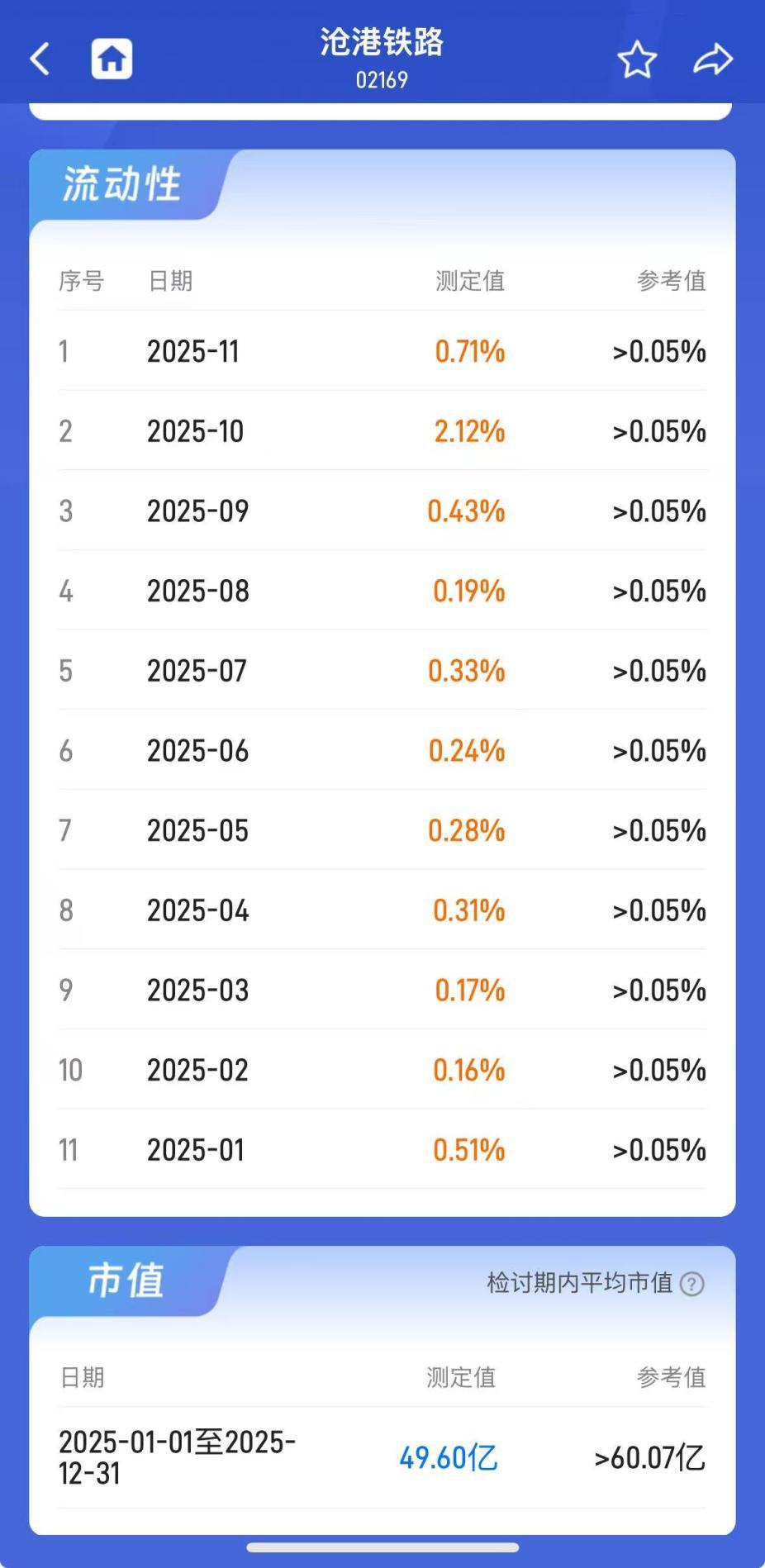
业绩波动+股价疲软之下,沧港铁路或面临剔除港股通风险?
Zhi Tong Cai Jing· 2025-11-27 13:55
Core Viewpoint - Canggang Railway is at risk of being removed from the Hong Kong Stock Connect due to its average market capitalization of HKD 49.60 billion, which is below the threshold of HKD 60.07 billion, and its declining stock liquidity [1][3] Financial Performance - In the first half of 2025, Canggang Railway reported revenue of HKD 13.17 million, a slight decrease of 0.3% compared to HKD 13.21 million in the same period of 2024, primarily due to a 0.5% decline in core railway freight business revenue [4] - The company's net profit for the same period was HKD 30.88 million, reflecting a year-on-year increase of 17.2%, attributed to cost control and improved operational efficiency [4] - For the full year of 2024, the company experienced a significant revenue drop of 25.82% to HKD 25.9 million, mainly due to reduced demand in the coal market [5] Business Structure and Risks - Canggang Railway's core business is heavily reliant on coal transportation, which accounts for over 85% of its revenue, making it vulnerable to fluctuations in coal demand and regulatory changes related to energy transition [3][5] - The company has been facing liquidity issues, with its stock liquidity often falling below the required threshold, as evidenced by liquidity measurements from May to November 2025 [2] Management Actions - Recent actions by the company's executives, including significant share sell-offs by the chairman, have raised concerns about internal confidence in the company's future performance [6] - In contrast, the Hebei Cangzhou Transportation Control Group has increased its stake in Canggang Railway, indicating a commitment to support the company and stabilize market confidence [7] Future Outlook - Canggang Railway plans to expand its operations through new branch line construction, infrastructure upgrades, and market diversification strategies to mitigate reliance on coal [8] - The success of these initiatives will be crucial for the company to achieve sustainable growth and reduce its dependency on coal transportation [8]

龙图光罩:截至目前公司生产经营一切正常
Zheng Quan Ri Bao· 2025-11-27 13:41
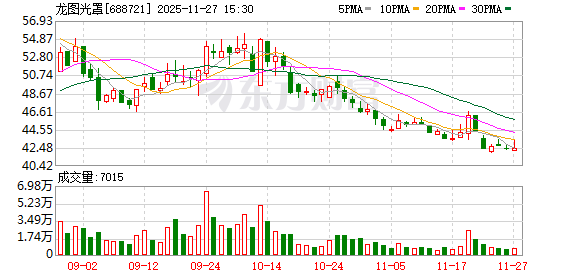
Core Viewpoint - The company is actively monitoring its stock price and trading volume, acknowledging that fluctuations are influenced by macroeconomic factors, industry cycles, and market sentiment [2] Company Operations - The company's production and operations are currently normal, with no undisclosed significant matters [2] - The management aims to enhance investor confidence by focusing on core business areas and improving operational management capabilities [2] Strategic Initiatives - The company is committed to achieving early production and efficiency at its Zhuhai factory project while strictly controlling costs and expenses to enhance profitability [2] - Communication with investors will be strengthened through regular reports, investor interaction platforms, and performance briefings to ensure timely and accurate disclosure of operational updates [2] Compliance and Transparency - All listing-related documents, such as the prospectus, have been audited and verified by intermediaries, ensuring compliance with the Securities Law and related regulations, with no false records or significant omissions [2]
听劝的西贝,遇上了“公关刺客”
3 6 Ke· 2025-11-27 11:16
Core Viewpoint - After a two-month crisis regarding pre-made dishes, the restaurant chain Xibei is transitioning from poor public relations to a more receptive approach, implementing price cuts, salary increases, and freshly made dishes to attract customers back to their restaurants [1][4]. Group 1: Customer Attraction Strategies - Xibei has initiated significant discount campaigns, including a "50 yuan off 50 yuan" voucher promotion, which has been extended to the end of November, aiming to draw customers back to the dining experience [1][2]. - The restaurant chain launched a "Please Eat" campaign on September 24, offering customers a no-strings-attached 100 yuan voucher, which significantly improved foot traffic [2]. - Xibei has also reduced prices on over 40 dishes by 15% to 20%, addressing consumer concerns about high prices and enhancing the overall dining experience [3][6]. Group 2: Employee Engagement and Cost Management - The company announced an average salary increase of 500 yuan per month for frontline employees starting in September, along with additional bonuses and allowances to stabilize staff morale [5]. - This dual strategy of lowering prices while increasing employee wages aims to improve customer service quality, which is crucial for retaining customers [5][6]. Group 3: Financial Performance and Challenges - Xibei reported a revenue of 6.2 billion yuan in 2023, with food procurement costs at 30%, indicating a relatively strong cost control compared to the industry average of 45.2% [6]. - However, the reliance on large subsidies to attract customers poses a risk to profitability, as ongoing discounts may compress profit margins [6][7]. Group 4: Industry Context and Competitive Landscape - The restaurant industry is undergoing a significant shakeout, with many once-popular brands struggling to maintain profitability amid rising costs and changing consumer preferences [8][9]. - Xibei's recent challenges reflect broader industry trends, including a decline in average dining prices and increased competition, which may necessitate structural adjustments to maintain profitability [8][9]. Group 5: Future Outlook and Strategic Considerations - The recent public relations incident involving Xibei's marketing partner has reignited scrutiny, potentially complicating the company's recovery efforts [9][10]. - Moving forward, Xibei must establish transparent pricing and production practices to regain consumer trust and ensure long-term sustainability in a competitive market [10][11].
虎鲸文娱连续三季度盈利背后:优酷步入盈利周期?
2 1 Shi Ji Jing Ji Bao Dao· 2025-11-27 10:41
Core Viewpoint - Youku has achieved profitability amidst market fluctuations, marking three consecutive quarters of profit driven by improved operational efficiency and a successful content premiumization strategy [1][2][3]. Group 1: Financial Performance - Alibaba Group's CFO announced that Youku's parent company, Tiger Whale Entertainment Group, has achieved profitability for three consecutive quarters [1]. - Youku's commercial revenue has seen significant year-on-year growth, attributed to the strong performance of various content offerings [15][18]. Group 2: Content Strategy - Youku has successfully implemented a content premiumization strategy, focusing on high-quality original productions, which has led to a strong rebound in viewership [4][6]. - The platform's original content accounted for 87.5% of its offerings from January to July 2023, leading the industry [6][11]. - Notable successful series include "The Cang Hai Chuan" and "In the Name of Law," which have significantly contributed to Youku's viewership and market share [4][6]. Group 3: Technological Innovation - Youku is leveraging advanced technologies to reduce costs and enhance its profitability model, including the use of virtual filming techniques [12][14]. - The company has established a leading position in virtual filming patents, with 80 inventions, surpassing competitors like Sony [14]. Group 4: Advertising and Commercialization - Youku has developed a diverse matrix of innovative advertising products, leading to a notable increase in brand partnerships and advertising revenue [15][16]. - The integration of advertising within content has evolved from traditional placements to collaborative creations, enhancing viewer engagement and brand affinity [18]. Group 5: Talent Development - Tiger Whale Entertainment has launched a talent cultivation program aimed at nurturing multi-talented young performers across various entertainment fields [18][20]. - The company emphasizes the importance of investing in talent as a long-term strategy for success in the entertainment industry [20].

虎鲸文娱连续三季度盈利背后:优酷步入盈利周期?
21世纪经济报道· 2025-11-27 10:33
Core Viewpoint - Youku has achieved profitability amidst market fluctuations, marking three consecutive quarters of profit driven by improved operational efficiency and a successful content strategy focused on quality [1][9]. Group 1: Financial Performance - Youku's strong performance in the latest fiscal quarter is highlighted by its top-ranking shows, including "Cang Hai Chuan" and "Yi Fa Zhi Ming," which contributed to a significant rebound in viewership [2][4]. - The company reported a notable increase in commercial revenue, attributed to innovative advertising products and successful brand collaborations, particularly with "Cang Hai Chuan" [9][10]. Group 2: Content Strategy - Youku's content strategy emphasizes high-quality, differentiated original productions, with 87.5% of its dramas being exclusive releases, leading the industry [4][6]. - The introduction of a customized drama incentive program and optimized revenue-sharing policies has enhanced Youku's content capabilities [5][6]. Group 3: Technological Advancements - Youku is leveraging advanced technologies, such as virtual filming, to reduce costs and enhance production efficiency, holding the largest number of virtual filming patents globally [8][9]. - The company has established multiple original drama production teams, ensuring high-quality content creation through collaboration with renowned creators [6][8]. Group 4: Talent Development - Youku has launched a talent cultivation program aimed at developing multi-talented young performers across various entertainment fields, reinforcing its commitment to long-term industry growth [13][17]. - The emphasis on nurturing talent reflects the company's belief in the importance of skilled professionals in the entertainment industry [17].

金洲管道(002443) - 2025年11月26日投资者关系活动记录表
2025-11-27 10:22
Company Overview - The company specializes in various types of pipes, including hot-dip galvanized steel pipes, high-frequency welded pipes, and stainless steel pipes, which are used in multiple sectors such as water supply, gas transmission, and construction [1]. - The company maintains a strong financial position with low debt levels and ample cash reserves [2]. Financial Performance - In the first three quarters of 2025, the company experienced a decline in revenue and net profit compared to the previous year, but the rate of decline has narrowed since the first half of the year [1]. - The third quarter saw significant growth in both revenue and net profit compared to the previous quarters [1]. Operational Efficiency - The company has improved inventory turnover and accounts receivable turnover, indicating better liquidity management [2]. - The asset-liability ratio remains low, enhancing the company's financial stability and risk management capabilities [2]. Product Strategy - The company is optimizing its product structure, with stable sales in civil pipes and growth in industrial pipes driven by national pipeline renovation projects [3]. - The introduction of hydrogen pipelines is expected to be a future revenue growth point [3]. Investment and Expansion Plans - The company is cautious about large-scale expansions in the steel pipe industry, focusing instead on technological improvements and customized production based on customer orders [5][6]. - A new subsidiary has been established to align with national development strategies and enhance competitiveness in major infrastructure projects [15][16]. Industry Trends - The steel pipe industry's profit models are evolving, with a shift towards high-end products and customized production to meet specific customer needs [7]. - The company is exploring opportunities in the robotics sector, leveraging its existing market resources to expand into high-end specialized robots [9][20]. Hydrogen Pipeline Project - The company has secured a contract for a 20 km hydrogen pipeline project, part of a larger 195 km hydrogen transport network, marking a significant step in the commercialization of hydrogen energy [12][13]. - This project is aligned with national goals for hydrogen energy infrastructure development, with substantial investments expected in the coming years [13]. Future Outlook - The company anticipates significant growth in the robotics industry, driven by policy support and technological advancements, with a focus on core components and scenario-based solutions [20]. - The integration of AI and robotics is expected to enhance operational efficiency and open new market opportunities [20].

华利集团(300979) - 300979华利集团投资者关系管理信息20251127
2025-11-27 09:58
Group 1: Investor Relations Activities - The investor relations activity was conducted on November 27, 2025, with participation from various financial institutions and analysts [2] - The meeting was held online via Tencent Meeting and offline in Zhongshan [2] Group 2: Impact of Tariff Policies - The increase in U.S. import tariffs will raise costs for customers exporting to the U.S., but will not affect exports to non-U.S. regions [2] - Historically, tariffs have been borne by brand customers (importers), ultimately passed on to consumers [2] - The company is focused on cost optimization across the supply chain in response to tariff impacts [2] Group 3: Factory Operations and Profitability - The first factory in Indonesia achieved profitability in Q3 2025, with management confident in its future performance [2][3] - The company is adjusting management practices to leverage Indonesia's advantages in labor supply and cost [2][3] - The company has three out of four new factories achieving profitability targets in Q3 2025 [3][5] Group 4: Capacity Utilization and Planning - The company maintains flexible capacity utilization, adjusting based on order demand and factory stages [4] - Future capacity expansion is planned, with a focus on new factories in Indonesia [5] - The company aims to keep capacity utilization high by managing production schedules and workforce [4][5] Group 5: Average Selling Price and Revenue - Average selling price fluctuations are influenced by customer and product mix changes [6] - The company employs a diversified brand strategy to optimize customer and product structures, impacting average selling prices [6] Group 6: Dividend Policy - The company has a strong focus on shareholder returns, with cash dividends in 2021 accounting for approximately 89% of net profit [7] - In 2023, cash dividends represented about 44% of net profit, with a projected 70% for 2024 [7] - The company has accumulated significant undistributed profits (approximately 9 billion RMB as of September 2025) and aims to maintain or increase dividend payouts [7]
山东港口日照港:出真招、见实效!接卸效能“冲云霄”
Xin Lang Cai Jing· 2025-11-27 07:15
Core Viewpoint - The company is focusing on cost reduction and efficiency improvement through innovative operational processes and management strategies, which enhance service levels for clients and optimize resource utilization [3][6]. Group 1: Operational Innovations - The company has implemented the "1+8" management model, allowing frontline teams to make real-time decisions based on actual conditions, which optimizes operational processes and reduces costs [3]. - The introduction of the "no flat car weighing" method and "curved arm crane flat car" technology has significantly reduced the number of flat cars needed, leading to a 90% decrease in time spent and a 50% reduction in vehicle fuel consumption [5]. - The company has increased the proportion of direct loading and unloading operations, which has led to a 15.2% year-on-year improvement in single-ship unloading efficiency and a 17.1% increase in single-machine unloading efficiency from January to October [3][6]. Group 2: Technological Advancements - The use of drones for inspections and real-time monitoring has improved train inspection efficiency by 25%, significantly reducing the time trains spend in the port [6]. - Regular technical skill competitions are held every two months to enhance employee skills, resulting in a 2.6% increase in operational efficiency for the crane team due to improved personnel skills [6]. Group 3: Overall Impact - The company's approach integrates cost reduction with service enhancement, creating a win-win situation where client cargo handling is faster and operational costs are lower [6]. - The focus on efficiency improvement is transforming into tangible performance gains, reflecting a shift from merely tracking costs to evaluating overall operational efficiency [6].


辰欣药业股份有限公司 关于2025年第三季度业绩说明会召开情况的公告
Zhong Guo Zheng Quan Bao - Zhong Zheng Wang· 2025-11-27 02:51
Group 1 - The company held its Q3 2025 earnings presentation on November 26, 2025, via an online interactive format, addressing investor concerns [2][3] - The company reported a decline in revenue for the first three quarters of 2025, but the decrease in net profit attributable to shareholders was smaller due to effective cost control and increased investment income [3][4] - The company plans to enhance its core business profitability by improving innovation capabilities and expanding its product supply chain services [3] Group 2 - The company has improved its operating cash flow significantly but acknowledged potential risks related to accounts receivable, implementing measures to strengthen collection management [4] - The company has multiple products that have won bids in the national drug procurement program, which presents both opportunities and challenges, as lower drug prices may be offset by increased sales volume [5][6] - The company is focusing on its overseas business as a key growth area, which has gradually become a significant contributor to its performance [7] Group 3 - The major shareholder, Han Yanzhen, reduced his stake in the company from 7.06% to 4.999% through a combination of block trades and open market transactions, totaling 10,708,500 shares [26][28] - The reduction in shareholding does not trigger a mandatory takeover bid, and the company's control structure remains unchanged [29][30]

曾亏百亿元的大文娱,不再拖累阿里利润丨消费参考
2 1 Shi Ji Jing Ji Bao Dao· 2025-11-27 02:08
Financial Performance - Alibaba reported a revenue increase of 4.77% year-on-year to 247.795 billion yuan for the latest fiscal quarter ending September, but Non-GAAP net profit fell by 71.65% to 10.352 billion yuan, primarily due to costs associated with the food delivery competition [1] - The entertainment segment, particularly the Whale Entertainment Group, has achieved profitability for three consecutive quarters, driven by improved operational efficiency at Youku [2] Industry Comparison - In contrast, iQIYI's revenue declined by 7.8% year-on-year to 6.68 billion yuan, with a net loss of 248.9 million yuan, while Mango TV's revenue also fell by 6.58% to 3.099 billion yuan, with a net profit drop of 33.47% to 252 million yuan [3] Cost Management Strategies - Youku has focused on reducing content costs and increasing efficiency, which is essential for survival in the current market environment. The emphasis is on allocating limited funds to key projects [4][5] - Youku has established over ten original drama studios since 2023, contributing to its successful series like "The Cang Hai Chuan" and "In the Name of Law," which have significantly boosted its visibility and monetization opportunities [6][7] Future Outlook - Although Youku has entered a positive cycle, there may be pressure on revenue growth as Alibaba did not mention any increase in Youku's income in its financial report [8][9]