
即时零售

Search documents
第17届双十一,5大电商平台论剑,规则、流量、战场已彻底改变
Sou Hu Cai Jing· 2025-11-02 04:14
Core Insights - The article discusses the evolution of China's e-commerce industry, particularly focusing on the "Double Eleven" shopping festival, which has transformed from a niche event into the world's largest shopping extravaganza since its inception in 2009 [1][3]. Group 1: Historical Evolution of Double Eleven Strategies - The Double Eleven event can be divided into three main phases from 2015 to 2024, each characterized by distinct features and competitive dynamics [4]. - The first phase (2015-2017) was dominated by Alibaba's Taobao/Tmall and JD.com, with a focus on price competition and traffic acquisition. Sales figures grew from 91.2 billion yuan in 2015 to 168.2 billion yuan in 2017 [7]. - The second phase (2018-2020) saw the entry of content platforms like Douyin and Kuaishou, leading to a more intense competition landscape. Pinduoduo emerged as a significant player with its social group-buying model [8][9]. - The third phase (2021-2024) marked a shift towards refined operations, with platforms focusing on user experience and sustainable growth. Sales peaked at 540.3 billion yuan in 2021, but platforms began emphasizing quality metrics over gross merchandise volume (GMV) [10]. Group 2: Tactical Evolution of Major Platforms - Taobao/Tmall's pricing strategy evolved from "site-wide 50% off" to complex promotional rules, and finally to simplified rules like "official discounts" starting in 2023 [12][44]. - JD.com maintained a straightforward pricing strategy, introducing "official discounts" and "instant sales" while enhancing its logistics capabilities, achieving an average fulfillment time of 18 minutes by 2025 [18][76]. - Pinduoduo's strategy shifted from "lowest price" to "same price for the same item," reflecting a focus on merchant interests and product quality [24][77]. - Douyin e-commerce emphasized content-driven sales, integrating short videos and live streaming to create a seamless shopping experience, with significant sales growth during the Double Eleven period [31][79]. - Kuaishou e-commerce leveraged its "old iron economy" to build strong relationships with users, achieving high repurchase rates through trust-based interactions [37][40]. Group 3: Key Tactical Dimensions - Pricing strategies across platforms transitioned from complex calculations to straightforward discounts, with a notable emphasis on user-friendly promotions [44][46]. - Traffic acquisition methods evolved from traditional advertising to content marketing, with platforms increasingly relying on live streaming and social media to attract users [48][51]. - User operations shifted towards precision marketing, with platforms utilizing data analytics to enhance user engagement and loyalty [55][58]. - Supply chain management became a focal point, with platforms investing in logistics efficiency and real-time delivery capabilities to improve customer experience [62][65].




不做自营的淘宝便利店,将如何改变零售行业?
Sou Hu Cai Jing· 2025-11-02 02:45
Core Insights - The year 2025 is expected to be significant for instant retail, with social retail sales projected to exceed 50 trillion yuan, and online sales accounting for about one-third of this total, while instant retail is estimated to be under 1 trillion yuan, indicating substantial market potential [4][5] - Taobao Flash Purchase has seen rapid growth since its launch, with peak daily orders reaching 120 million in August and a 200% increase in monthly active buyers compared to April [5] Group 1: Market Dynamics - The introduction of the "Taobao Convenience Store" model aims to provide a 24-hour shopping experience with 30-minute delivery, offering a wide range of products [6][12] - The convenience store model is not self-operated but utilizes brand authorization for quality merchants, allowing them to maintain ownership of their stores while adhering to platform standards [6][12] - The convenience store initiative is expected to disrupt the market, as the instant retail sector has seen significant growth, with nearly 40% of convenience store brands now engaging in instant retail, reflecting an 11.4% increase in sales compared to the previous year [6][12] Group 2: Consumer Behavior and Trends - Consumers are increasingly prioritizing quality and service, leading to a demand for a new operational model in instant retail that enhances brand recognition and service quality [7][12] - The shift in consumer habits indicates that instant retail is no longer viewed as a supplementary channel but is now considered equally important as traditional e-commerce [12] - The trend of 24-hour convenience stores is growing, with a 50% increase in the number of such stores over the past year, reflecting a shift in consumer purchasing behavior towards more regular and varied shopping needs [15] Group 3: Technological Integration - Taobao Convenience Store leverages technology to enhance operational efficiency, providing merchants with a comprehensive solution that includes digital systems for inventory management and logistics [14] - The automated systems streamline various processes, resulting in faster service and improved customer satisfaction, with average product ratings exceeding 4.9 [16] - The integration of technology is seen as a key driver for the brandization of instant retail, enabling merchants to better meet consumer demands and adapt to changing market conditions [14][16]

百威亚太(1876.HK)2025年三季报点评:整体销量承压 中国市场持续调整
Ge Long Hui· 2025-11-01 12:47
Core Insights - Budweiser APAC reported Q3 2025 revenue of $1.555 billion, with an organic year-on-year decline of 8.4% [1] - Normalized EBITDA for Q3 2025 was $438 million, reflecting a year-on-year decrease of 6.9% [1] - Normalized net profit attributable to the parent company was $204 million, down 9.3% year-on-year [1] Revenue and Profitability - Q3 2025 sales volume reached 2.2512 million kiloliters, showing an organic year-on-year decline of 8.6% [1] - Revenue per hectoliter in Q3 2025 increased by 0.1% year-on-year [1] - Gross margin stood at 51.4%, with a slight year-on-year increase; normalized EBITDA margin was 28.2%, up 0.46 percentage points year-on-year, benefiting from commodity price advantages and cost management measures [1] Regional Performance - In the Western Asia-Pacific region, Q3 2025 revenue and normalized EBITDA saw organic declines of 12.0% and 11.9%, respectively, with sales volume down 9.9% year-on-year [1] - The Indian market showed strong performance with double-digit revenue growth in Q3 2025, contributing positively to EBITDA [1] - In the Eastern Asia-Pacific region, Q3 2025 revenue and normalized EBITDA increased by 3.9% and 8.7% year-on-year, respectively, with sales volume down 0.6% [1] - South Korea's sales volume remained stable, outperforming the overall market in both ready-to-drink and non-ready-to-drink channels, supported by effective revenue management and a favorable brand mix [1] China Market Dynamics - In Q3 2025, revenue and normalized EBITDA in China experienced organic declines of 15.1% and 17.9%, respectively, with sales volume down 11.4% year-on-year [2] - Revenue per hectoliter in China decreased by 4.0% year-on-year, attributed to increased investment in innovative products and brand promotion, as well as challenges in inventory management [2] - The company has optimized channel inventory, with significant reductions in inventory volume and turnover days, outperforming industry averages [2] - Future strategies include strengthening non-ready-to-drink channels and investing in premium brands like Budweiser and Corona to improve sales in China [2] Profit Forecast and Valuation - Due to weak beer demand in the Chinese market, the company has revised down its net profit forecasts for 2025-2027 to $589 million, $682 million, and $733 million, representing reductions of 15%, 7%, and 6%, respectively [3] - The current stock price corresponds to a PE ratio of 23x, 20x, and 19x for 2025-2027 [3] - The company maintains a positive outlook on its competitive advantage in the high-end and super high-end segments, sustaining a "buy" rating [3]

中日韩中小企业齐聚成都青羊 共探产业合作新机遇
Sou Hu Cai Jing· 2025-11-01 10:12
Group 1 - The conference focused on industries such as biotechnology, healthcare, green food, digital cultural creation, specialized and innovative enterprises, and vocational education, aiming to enhance cooperation among China, Japan, and South Korea in manufacturing and retail sectors [2] - The event included a general assembly, eight parallel activities, and a supporting exhibition, along with business roadshows, project promotions, and one-on-one matchmaking sessions to facilitate economic exchanges and investment promotion [2] - Nearly 400 attendees visited various industrial parks and centers in Chengdu, highlighting the city's solid industrial foundation and competitive key industries like digital cultural creation and aerospace, positioning Chengdu as an attractive investment destination [2] Group 2 - The opening ceremony featured keynote speeches on China's reform and development opportunities, with discussions on topics such as AI in retail, the integration of the healthcare industry between China and Japan, and the expansion of the Korean electronics market [3] - The conference included multiple economic exchange activities, including specialized sessions for small and medium enterprises, aiming to build bridges for trade, investment, and technological cooperation among Chinese, Japanese, and Korean companies [3]
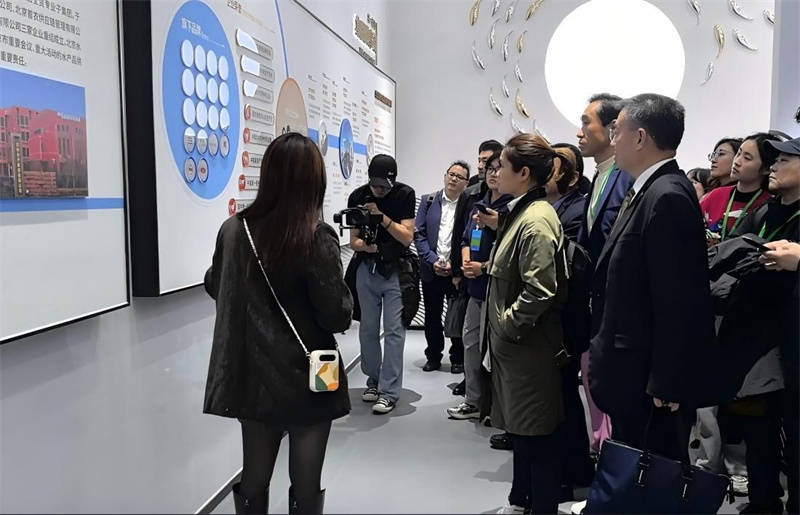
美团闪购将联合上万个品牌建设“品牌官旗闪电仓”
Bei Ke Cai Jing· 2025-11-01 08:52
Core Insights - Meituan Flash Purchase has launched the "Brand Official Flag Lightning Warehouse," allowing brands to set up official flagship stores and providing infrastructure for instant retail [1][2][3] - This initiative represents a significant innovation in the retail sector, expanding from traditional retail brands to purely online e-commerce brands [1][2] - Deloitte's report indicates that traditional offline retail in China is expected to underperform by 2025, while instant retail is rapidly growing, highlighting the need for innovation in retail operations [1][2] Group 1: Brand Collaboration and Expansion - Over a hundred brands, including Sony PlayStation, JBL, and L'Oreal, have already joined the "Brand Official Flag Lightning Warehouse," which has been piloted in major cities like Beijing and Shanghai [2][3] - The initiative aims to transform traditional retail spaces into experience centers while enhancing online presence for brands [2] - The "Brand Official Flag Lightning Warehouse" is seen as a crucial step for brands to upgrade their retail channels and adapt to changing consumer behaviors [2][3] Group 2: Future Prospects and Market Strategy - Meituan Flash Purchase plans to expand the "Brand Official Flag Lightning Warehouse" to thousands of brands across various categories, including electronics, beauty, and household goods [3] - The company is responding to a growing demand from brands for collaboration in instant retail, aiming to facilitate their entry into this market [3] - During the upcoming Double 11 shopping festival, these brands will leverage the new model to participate in both online and offline sales channels [3]

史上最长“双11”:即时零售成关键 顺丰同城发力同城即时配送
Zheng Quan Ri Bao Zhi Sheng· 2025-11-01 03:37
Core Insights - The annual "Double 11" shopping festival has set a record for the longest promotional period, lasting a month, with platforms focusing on simplified rules and instant retail as a key growth area [1] Industry Overview - The third-party delivery sector is positioned as a core infrastructure for instant retail, facing new challenges and opportunities as companies prepare for "Double 11" [2] - SF Express has deployed over 800 unmanned vehicles in more than 100 cities to support last-mile delivery, highlighting the importance of logistics in conversion during the promotional period [2] Company Strategies - SF Express has established deep partnerships with major brands like McDonald's, KFC, Starbucks, and Sam's Club, providing a one-stop solution for multi-platform delivery [3] - The company leverages a "front warehouse/store + same-city delivery" model to enhance supply chain efficiency for e-commerce brands, collaborating with tech giants like Xiaomi and Huawei [3] Market Dynamics - The demand for instant delivery services has surged, with significant order increases reported on platforms like Taobao, indicating a shift in consumer expectations [2] - The competition has evolved from merely speed to a focus on differentiated customer experiences, with varying requirements across different product categories and platforms [4] Future Outlook - As instant retail becomes a critical battleground for "Double 11," the value of third-party delivery infrastructure is expected to grow, driven by the need for customized solutions across multiple platforms and scenarios [4]
海量财经丨淘宝闪购发布闪购仓新品牌“淘宝便利店”:不建仓、不开店、不与商家争利
Sou Hu Cai Jing· 2025-10-31 20:08
Core Insights - Taobao Flash Sale has launched a new convenience brand "Taobao Convenience Store" aimed at providing a comprehensive shopping experience with 24-hour service and 30-minute delivery [1][3] - The brand will operate under a brand authorization model, allowing qualified merchants to use the brand while retaining ownership of their store assets [1][4] Group 1: Market Performance - Since its launch, Taobao Flash Sale has seen significant growth, with peak daily orders reaching 120 million and weekly average orders at 80 million, resulting in a monthly active buyer count of 300 million [3] - Non-food retail segments have experienced rapid growth, with overall order volume increasing by over 200% and product variety expanding by 30% year-on-year [3] Group 2: Consumer Trends - Instant retail demand is surging, characterized by all-time, all-category, and all-scenario consumption patterns [3] - One-third of convenience stores on Taobao Flash Sale operate 24 hours, with the number of such stores increasing by over 50% year-on-year [3] Group 3: Competitive Landscape - The competition for flash warehouses is intensifying, with merchants facing challenges such as product homogeneity, low brand recognition, and weak digital capabilities [4] - Taobao Flash Sale aims to support merchants by providing robust assistance in product selection, supply chain, logistics, and digital systems [4][6] Group 4: Strategic Initiatives - The first batch of Taobao Convenience Stores will open 34 slots for high-quality service providers, focusing on flagship and standard warehouse types [6] - Taobao Flash Sale plans to invest 2 billion yuan in the next year to enhance merchant capabilities, improve product quality, and strengthen logistics [6]
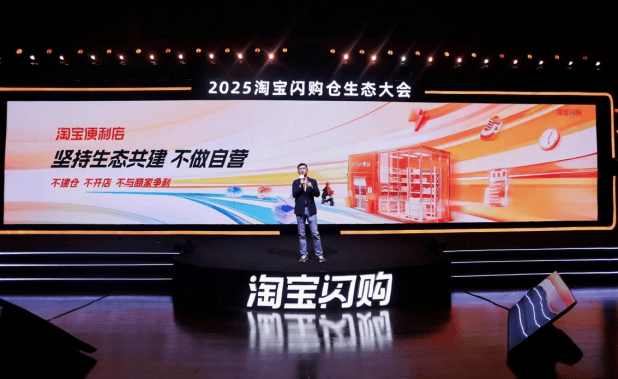
淘宝闪购发布新品牌“淘宝便利店”
Guan Cha Zhe Wang· 2025-10-31 12:43
Core Insights - Taobao Flash Sale has launched a new convenience brand "Taobao Convenience Store" aimed at providing comprehensive 24-hour service with a 30-minute delivery promise, set to officially launch on November 1 [1] - The brand will operate on a model that does not involve building warehouses or stores, instead offering brand authorization to qualified merchants, allowing them to retain ownership of their store assets while adhering to platform standards [1][2] - Taobao Flash Sale has seen significant growth since its launch, with peak daily orders reaching 120 million and a weekly average of 80 million orders, alongside a monthly active buyer count of 300 million [1] Group 1 - The convenience store model is designed to enhance the immediate retail experience, with one-third of stores operating 24 hours and a 50% year-on-year increase in such stores over the past year [1] - The new convenience store format is positioned as one of the fastest-growing segments in the immediate retail sector, with orders from flash warehouses increasing by over 360% year-on-year as of August [1][2] - The company aims to support merchants through improved selection, supply chain, logistics, and digital systems, providing a unified management standard for products, pricing, and service [2] Group 2 - The first batch of Taobao Convenience Stores will open 34 slots for merchants capable of delivering quality service, focusing on flagship and standard warehouse types with around 10,000 SKUs [2] - The company plans to invest 2 billion yuan in the next year to enhance warehouse quality, upgrade product quality, strengthen logistics capabilities, and promote continuous digital capability iteration [3]

外卖大战熄火,但把今年双11配送“带快”了
3 6 Ke· 2025-10-31 12:17
Core Insights - The core change in this year's Double 11 shopping festival is the shift towards instant retail, which has become the central battleground for e-commerce competition [1][12][19] Instant Retail and Delivery Speed - Instant retail has been emphasized by platforms like Alibaba and JD, with Alibaba accelerating the onboarding of over a thousand brands to its Taobao Flash Sale and JD integrating "instant delivery" into its promotional framework [1][11] - The demand for "minute-level" fulfillment has led to a focus on logistics optimization, including the establishment of front warehouses and partnerships with local delivery networks to ensure rapid delivery promises [1][20] - The delivery speed during this year's Double 11 has significantly improved, with many consumers receiving their orders the next day or even within hours of payment [2][8][19] Consumer Experience and Market Trends - Consumer feedback highlights the impressive delivery speeds, with many sharing experiences of receiving packages shortly after payment, indicating a shift in consumer expectations [4][6] - The integration of instant retail services has resulted in a substantial increase in order volumes for high-demand categories, such as convenience store items and fresh produce, with some categories seeing growth rates exceeding 670% [10][12] Supply Chain Innovations - The combination of pre-sale data and front warehouse networks has enabled faster delivery by allowing packages to be dispatched from nearby stores rather than distant central warehouses [13][19] - The traditional supply chain model is evolving from a centralized system to a more distributed network that includes front warehouses and local stores, enhancing delivery efficiency [13][20] Business Implications - Merchants benefit from improved delivery speeds and service quality, leading to increased transaction efficiency and order processing capabilities [15][17] - The collaboration between online and offline inventory systems allows for better stock management and faster fulfillment, transforming physical stores into effective distribution points [15][18] Competitive Landscape - The competition in the instant retail space is intensifying, with platforms leveraging data analytics and inventory management to enhance their fulfillment capabilities [18][20] - The ability to provide rapid and reliable delivery is becoming a key differentiator among leading players in the market, establishing a new competitive barrier [21]

淘宝闪购推出“淘宝便利店”线下闪购仓业态
Bei Jing Shang Bao· 2025-10-31 10:55
Core Insights - Taobao Flash Sale has launched a new convenience store brand called "Taobao Convenience Store" aimed at providing a comprehensive shopping experience with 24-hour service and 30-minute delivery [1] - The first batch of Taobao Convenience Stores will open 34 slots for high-quality service providers, focusing on flagship and standard warehouse models with around 10,000 SKUs [1] - The brand will also introduce special warehouse types to cater to student needs in campus settings, with plans to expand to over 200 cities nationwide in the future [1] - The company emphasizes a collaborative ecosystem approach, stating it will not build warehouses, open stores, or compete with merchants for profits [1] - Taobao Convenience Store will operate under a brand authorization model, allowing qualified merchants to use the brand while retaining ownership of their store assets [1]