
云计算

Search documents
【港交所IPO】白鸽在线港股IPO通过聆讯:以科技重构保险生态,领航AI保险行业新纪元
Sou Hu Cai Jing· 2025-12-24 10:33
Core Insights - Baige Online is set to become the first AI-driven insurance stock in China as it prepares to list on the Hong Kong Stock Exchange, marking a significant milestone in the insurance technology sector [1] Group 1: Technological Foundation - The core competitive advantage of Baige Online lies in its self-developed "Baige e-Bao" SaaS application system, which integrates big data, AI, blockchain, and cloud computing to provide a full lifecycle service matrix covering smart underwriting, policy management, claims service, data analysis, and financial management [1] - The system boasts a high concurrency processing capability of 100,000 policies per second, with a daily processing volume exceeding 5 million policies, and an online claim response time reduced to under 3 minutes, enabling real-time insurance services [1] - The system's capabilities have been validated through partnerships, such as with Hello Chuxing, where it automatically links user riding data with policy information, creating a seamless insurance experience and significantly reducing complaint rates [1] Group 2: Data Security - Baige Online has established a multi-layered security system, including a web application firewall and sensitive data masking technology, achieving a Level 3 security certification and being listed as a financial technology innovation enterprise by the People's Bank of China [2] - The "Baige e-Bao" system received recognition as one of the "Top 20 Digital Insurance Applications" in 2021 and won third place in the Xiamen Financial Technology Excellence Project evaluation, reflecting its strong technical capabilities [2] Group 3: Ecosystem Collaboration - Successful internet insurance intermediaries must provide end-to-end digital solutions, enhancing efficiency and customer experience while utilizing data analysis for decision optimization [3] - Building and maintaining trust with clients and collaborating with various stakeholders, including scenario providers, insurance companies, and government entities, is essential for developing scenario-based insurance products [3] Group 4: Market Positioning - Baige Online ranks first among third-party scenario internet insurance intermediaries in China with a market share of 3.4% as of 2024, attributed to its "scenario customization" strategy that tailors insurance products to the specific needs of diverse partners [4] - The company has accumulated over 381 million insured profiles, 76 scenario data points, 224,500 claims reports, and 8.9 billion policy records, creating a comprehensive risk data network across nine ecosystems [4] Group 5: Innovation and Growth - Research and development expenditures at Baige Online increased from 141 million to 324 million yuan between 2022 and 2024, representing a rise from 3.5% to 4.0% of revenue, leading to significant technological advancements [5] - The company is transitioning from a focus on "scenario deepening" to "ecosystem expansion," integrating risk data from various scenarios to create comprehensive risk profiles for more accurate pricing and broader consumer protection [5] - The Chinese insurance market is projected to grow from 4.5 trillion yuan in 2020 to 5.7 trillion yuan by 2024, with a compound annual growth rate of 5.8%, and is expected to exceed 8.4 trillion yuan by 2029, with internet insurance accounting for 12.6% of the total [5] Group 6: Future Vision - Baige Online aims to empower the insurance industry through technology, enhancing the safety, convenience, and intelligence of insurance experiences for consumers globally, thereby contributing to the digital transformation of the insurance sector [6]


从《原神》到《黑神话:悟空》,中国游戏出海进阶之路
2 1 Shi Ji Jing Ji Bao Dao· 2025-12-24 05:40
Core Insights - The Chinese gaming industry has experienced significant growth, with annual revenue increasing from 140.7 billion RMB to 325.7 billion RMB from 2015 to 2025, marking a doubling in revenue over the decade [1] - The focus has shifted from single product overseas distribution to a comprehensive global strategy encompassing investment, development, testing, publishing, and operation [2] - By 2025, the actual sales revenue of self-developed games in overseas markets is projected to reach 20.455 billion USD (approximately 144.03 billion RMB), reflecting a year-on-year growth of 10.23% [2] Industry Trends - The Chinese gaming industry has seen a comprehensive upgrade from government support to institutional backing and team enhancements, with initiatives like the "Game Shanghai Ten Articles" and the establishment of overseas service centers [3] - Major companies like Tencent and Century Huatong have reported substantial overseas revenues, with Tencent's overseas income reaching 20.8 billion RMB, accounting for about one-third of its total gaming revenue, and a year-on-year growth of 43% [4] - The diversification of game genres and gameplay has been crucial, with successful titles across various categories, including action, simulation, and RPGs, indicating a broadening of market appeal [4][5] Globalization Strategies - Chinese gaming companies are increasingly adopting global strategies from the outset, moving from localized adaptations to deep localization that considers cultural preferences and gameplay mechanics [8] - The shift in publishing strategies includes simultaneous global launches and prioritizing overseas versions, enhancing the relevance of products in international markets [8] - The use of interactive advertising and market testing has become common, allowing developers to gather real-time feedback and adjust their products accordingly [9] Technological Advancements - The integration of advanced technologies such as AI, VR, and cloud computing has become essential for Chinese gaming companies to enhance operational efficiency and market responsiveness [12][14] - AI technologies are being leveraged to streamline creative processes, allowing for rapid development and iteration of game concepts, thus reducing costs and time [15][16] - The 2025 report indicates that the growth in gaming revenue and user base is attributed to improved mobile game quality, successful long-standing titles, and the strong performance of mini-program games [16]


《行政执法监督条例》公布 强化监督乱收费乱罚款等行为
Xin Lang Cai Jing· 2025-12-24 04:23
Core Viewpoint - The newly announced Administrative Law Enforcement Supervision Regulations aim to strengthen and standardize administrative law enforcement supervision, promoting strict, standardized, fair, and civilized law enforcement, thereby enhancing the level of law-based administration and reinforcing the construction of a law-based government [1][2]. Group 1: Overview of the Regulations - The regulations consist of 7 chapters and 44 articles, establishing administrative law enforcement supervision as a fundamental method for coordinating law enforcement work and an important part of the party and state supervision system [1]. - The regulations emphasize the principles of balancing standardization and guidance, prevention and correction, as well as supervision and guarantee, to address issues in administrative law enforcement and improve its quality and effectiveness [1][2]. Group 2: Scope and Methods of Supervision - The regulations clarify the scope of administrative law enforcement supervision, which includes monitoring the implementation of major decision-making deployments by the central government, adherence to various administrative law enforcement systems, and lawful execution of administrative enforcement [2]. - Various methods of supervision are outlined, including daily supervision, key supervision, and special supervision, with specific measures such as designated supervision and elevated supervision for significant issues raised by enterprises and the public [2]. Group 3: Handling and Safeguarding of Supervision - The regulations standardize the handling of issues identified during supervision, allowing for the issuance of administrative law enforcement supervision notices, opinions, or decisions to prompt corrections based on different circumstances [2]. - There is a focus on strengthening the construction of the administrative law enforcement supervision team and enhancing the integration of supervision information through advanced technologies like big data, cloud computing, and artificial intelligence for efficient and real-time monitoring [3].
中威电子涨2.39%,成交额9690.50万元,主力资金净流出369.68万元
Xin Lang Cai Jing· 2025-12-24 03:13
Core Viewpoint - Zhongwei Electronics has shown significant stock price growth this year, with a 67.83% increase year-to-date and a recent rise of 8.99% over the last five trading days [2]. Group 1: Stock Performance - As of December 24, Zhongwei Electronics' stock price reached 12.00 CNY per share, with a market capitalization of 3.634 billion CNY [1]. - The stock has experienced a 2.39% increase during intraday trading on December 24, with a trading volume of 96.905 million CNY and a turnover rate of 3.14% [1]. - The stock has been on the "Dragon and Tiger List" twice this year, with the most recent appearance on September 25 [2]. Group 2: Financial Performance - For the period from January to September 2025, Zhongwei Electronics reported a revenue of 71.1015 million CNY, representing a year-on-year decrease of 34.47%, while the net profit attributable to shareholders was -43.3178 million CNY, showing a year-on-year increase of 14.00% [2]. - The company's main business revenue composition includes 72.66% from system integration and product sales, 14.01% from other services, 6.89% from operation and maintenance services, and 6.43% from property and other sources [2]. Group 3: Shareholder Information - As of September 30, 2025, the number of shareholders for Zhongwei Electronics was 28,700, an increase of 35.50% from the previous period, while the average circulating shares per person decreased by 26.20% to 9,107 shares [2]. - The company has distributed a total of 43.7532 million CNY in dividends since its A-share listing, with no dividends paid in the last three years [3]. Group 4: Company Overview - Zhongwei Electronics, established on March 14, 2000, and listed on October 12, 2011, is located in Hangzhou, Zhejiang Province, and specializes in the research, development, production, and sales of security video surveillance transmission technology and products [2]. - The company is classified under the Shenwan industry category of Computer - Computer Equipment - Security Equipment and is associated with concepts such as cloud computing, switches, Baidu concepts, intelligent transportation, and vehicle networking [2].

承载更多入市资金 ETF市场从量变迈向质变
Zhong Guo Zheng Quan Bao· 2025-12-23 20:18
近年来,国内指数投资正逐步成为资本市场的重要力量。尤其是在今年的结构化行情下,便捷、清晰、 有效的ETF产品成为越来越多投资者的首选投资工具。无论是更具市场代表性的宽基ETF,还是锚定特 定板块的行业主题ETF,抑或是跨资产投资的债券型ETF、商品型ETF,资金的认可度都在显著提升。 如果将今年境内ETF新增的超2万亿元规模拆解来看,根据Wind数据统计,截至12月19日,其中一半左 右来自股票型ETF的大举扩容。A股方面,除跟踪沪深300、中证500、中证1000、上证50等核心指数的 宽基ETF规模新增超3000亿元外,在今年的结构化行情下,行业主题ETF迎来了全面发展。 尤其是以人工智能、通信、云计算、半导体、电池等主题为代表的科技成长风格ETF今年收益率领跑市 场,其中跟踪创业板人工智能、通信设备等指数的ETF今年以来的收益率更是实现了翻倍增长,这些高 弹性产品成为投资者参与板块行情的有力工具,基金规模增长超过千亿元。与此同时,公募行业今年继 续在新兴产业投资方面开辟阵地,首度发行了跟踪科创半导体材料设备、科创创业AI、卫星通信、国 证航天、卫星产业、通用航空等指数的ETF产品,科技投资工具箱进一步丰 ...
AI时代的云计算“牌局”要换新庄家了?|南方产业观
Sou Hu Cai Jing· 2025-12-23 18:09
Group 1 - The Force Original Power Conference is a B2B event that emphasizes practical value, attracting significant attendance and indicating the value of Volcano Engine to B-end users [3] - The new Doubao model 1.8 was introduced, designed to enhance multi-modal agent capabilities, optimizing for tool usage and complex command adherence, marking a step forward for AI assistants [4] - Volcano Engine has become a significant player in the AI era, with a reported 49.2% market share in public cloud model service calls in China, indicating its growing influence in the cloud computing landscape [12] Group 2 - The daily call volume for the Doubao model has exceeded 50 trillion, reflecting over tenfold growth compared to last December, with over 1 million enterprises and individuals utilizing its services across more than 100 industries [12] - Doubao consistently ranks at the top of application download charts, showcasing its popularity and the support provided by Volcano Engine [13] - Traditional industries are increasingly adopting AI as a development accelerator, positioning Volcano Engine favorably in the competitive landscape of large models [14]

ServiceNow以77.5亿美元收购网络安全初创公司Armis
Xin Lang Cai Jing· 2025-12-23 14:29
Core Viewpoint - ServiceNow has agreed to acquire cybersecurity startup Armis for $7.75 billion in cash, aiming to enhance its security capabilities amid increasing cyberattack risks [1][4]. Group 1: Acquisition Details - The acquisition is intended to integrate Armis's security features, such as device scanning, threat detection, and vulnerability prioritization, into ServiceNow's AI-driven platform [1][4]. - The deal is expected to be completed in the second half of 2026 [3][7]. Group 2: Financial Impact - Following the announcement of the potential acquisition, ServiceNow's stock price fell approximately 2%, and it experienced a significant drop of nearly 12% on December 15, resulting in a loss of about $20 billion in market value [5]. - ServiceNow has made several acquisitions recently, including Moveworks for $2.85 billion, Logik.ai for $506 million, and Veza, with financial details undisclosed [5][7]. Group 3: Armis Background - Armis was valued at $6.1 billion during a funding round in November and is preparing for an initial public offering [6]. - Founded in 2015, Armis has set a three-year plan to achieve $1 billion in annual recurring revenue after surpassing the $300 million milestone in August [6].

2025年伊戈尔公司深度报告:“全球造,销全球”,变压器+AIDC产品加速出海(附下载)
Xin Lang Cai Jing· 2025-12-23 12:14
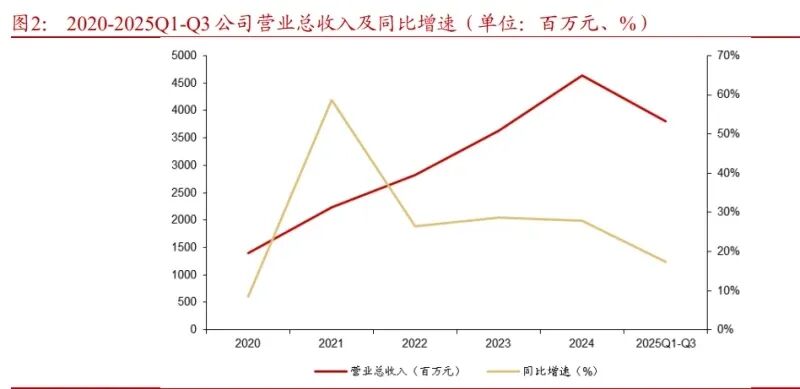
1 聚焦能源、信息行业,专注变压器、电源等产品 公司聚焦能源、信息行业,应用电力电子技术,专注于变压器、电源等产品的研发、 生产及销售。公司自 1999 年设立以来,一直扎根于电源行业,在 20 余年的发展中,依靠 强大的技术研发及客户服务能力,紧贴全球前沿 技术发展趋势,前瞻性产品迭代。公司产 品由成立初期应用于家电、音响、照明的环形变压器,顺应各时期全球 发展热点,陆续推 出电子变压器、LED 照明电源、新能源用变压器等产品,围绕优质客户,不断促进公司业 务 及产品发展。目前,公司产品可广泛应用于光伏发电、工业控制、数据中心及照明领 域。 受益于全球光储装机量增长和海外电力设备升级迭代,公司业绩高速增长。2020-2024 年,公司营业总收入分别 从 14.06 亿元增长至 46.39 亿元,四年 CAGR 达到 35%;归母净 利润从 0.51 亿元增长至 2.93 亿元,四年 CAGR 达到 54%;扣非归母净利润从 0.37 亿元增 长至 2.49 亿元,四年 CAGR 达到 61%。受部分产品销售价格下降、大 宗原材料价格上涨等 因素影响,2025Q1-Q3,公司实现营业总收入 38.08 亿元, ...
不再正面挑战亚马逊,英伟达据称重组云团队
硬AI· 2025-12-23 09:24
Core Insights - Nvidia has made a significant strategic shift in its cloud business, moving away from competing directly with AWS and focusing on internal needs for its chips [2][3] - The restructuring involves integrating the DGX Cloud team into the engineering and operations organization, which will now primarily serve Nvidia engineers rather than external enterprise clients [3][4] Summary by Sections Cloud Business Strategy - Nvidia's CEO Jensen Huang has abandoned the vision of creating a cloud service to compete with AWS, opting instead for a strategy that prioritizes internal chip demand [3][4] - The DGX Cloud service, initially aimed at establishing direct relationships with AI developers, will now focus on supporting Nvidia's internal engineering needs [5][8] Team Restructuring - The cloud team, consisting of hundreds of employees, has been merged into the engineering and operations division led by senior vice president Dwight Diercks [3][4] - Key personnel changes have occurred, including the reassignment of executives and the departure of some team members [3][4] Market Challenges - Nvidia's DGX Cloud has struggled to attract sufficient customers, partly due to operational challenges in providing support across different cloud service providers [7] - The company has been cautious about expanding this business to avoid upsetting major chip customers who are also cloud service providers [7] Financial Outlook - Earlier this year, Nvidia indicated that its cloud business could potentially generate $150 billion in revenue, surpassing AWS's current annual revenue [8] - Nvidia plans to invest $26 billion in renting servers over the next few years to support its cloud initiatives [10] Competitive Landscape - Despite competition from companies like Google and Amazon, Nvidia maintains a strong position in the AI chip market [9] - Nvidia has become one of the largest renters of its own servers, which are procured from AWS and Google, while also using them for developing various AI models [9]


天融信:云计算业务收入五年复合增长率44.76%
Zheng Quan Ri Bao Wang· 2025-12-23 09:13
Core Viewpoint - The company, Tianrongxin, identifies intelligent computing cloud (智算云) as a strategic development direction with significant market potential, expected to become a new growth engine for its performance [1] Group 1: Cloud Computing Business - The company launched its cloud computing products in 2019, with revenue from this segment maintaining rapid growth, achieving a five-year compound annual growth rate (CAGR) of 44.76% [1] - By 2024, cloud computing is projected to account for 9.06% of the company's total revenue [1] - In February 2025, the company will upgrade its cloud computing business to intelligent computing cloud, launching 17 integrated machines to meet various performance needs across different sectors [1] Group 2: Applications and Collaborations - The intelligent computing cloud has already been applied in various fields, including government, education, healthcare, and scientific research [1] - Since 2018, the company has invested in quantum computing, establishing a strategic partnership with Anhui Wentiang Quantum [1] - In 2025, the company will collaborate with Xintong Quantum to promote the innovation and application of "quantum + security" technologies [1] Group 3: Financial Performance - The company emphasizes high-quality development and revenue, with a continuous improvement in gross margin [1]
