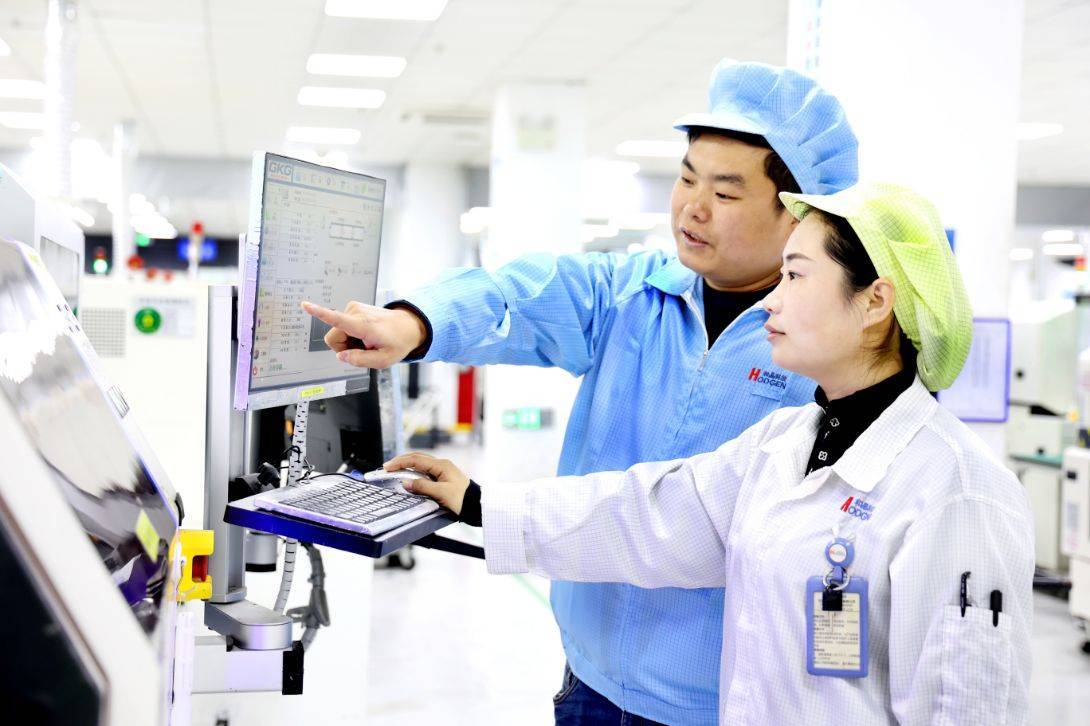
新型工业化

Search documents
金融支持制造业也要防"内卷"
Jing Ji Ri Bao· 2025-08-08 10:38
Core Viewpoint - The People's Bank of China and six other departments have issued guidelines to financially support new industrialization, aiming for a mature financial system that enhances service adaptability for high-end, intelligent, and green manufacturing by 2027 [1] Group 1: Financial Support for New Industrialization - New industrialization requires significant financial support due to its characteristics of high investment, high risk, and long cycles, particularly in areas like intelligent transformation and green transition [1][2] - The financial system faces challenges in supporting new industrialization due to the high risks and uncertainties associated with technology development, especially during the commercialization phase [2] - Small and medium-sized enterprises (SMEs) face pronounced difficulties in financing, necessitating optimized policy tools and the introduction of patient capital to alleviate funding bottlenecks [2] Group 2: Differentiated Financial Strategies - A differentiated approach to financial support is essential, as various industries have different lifecycle stages, technological maturity, and market demands [3] - Over-investment in emerging industries can lead to bubbles, while insufficient support for traditional industries can hinder their upgrade, affecting overall industrial resilience [3] - Financial resources should be directed towards technology innovation, product upgrades, and brand development to foster internationally competitive brands and shift from cost competition to technology and brand competition [3] Group 3: Avoiding Internal Competition - The global manufacturing sector is undergoing significant adjustments, and it is crucial to direct financial resources towards key areas of technological advancement and industrial upgrading to enhance competitiveness [4] - Avoiding "involution" in the industry, characterized by low-level repetitive construction and homogeneous product price wars, is vital for fostering innovation and breaking through core technology bottlenecks [3][4]
图解:七部门联合发文 推动金融支持新型工业化发展
Zhong Guo Jing Ji Wang· 2025-08-08 07:02
七部门联合发文 推动金融支持新型工业化发展 中国人民银行、工业和信息化部、国家发展改革委 政部、金融监管总局、中国证监会、国家外汇局近 合印发《关于金融支持新型工业化的指导意见》 新型工业化重点领域,提出18项针对性支持举措, 加强金融服务能力和长效机制建设、增强金融支持 工业化的强度精度效度。 《安日》 相山 九龙小学堂 一、儿儿、十四十四日 《息儿》 提出, 列推进郝坚上业化、川伏及庚莉陵 力提供高质量金融服务,坚持分类施策、有扶有控 动产业加快迈向中高端,防止"内卷式"竞争。到 2027年,支持制造业高端化智能化绿色化发展的金 体系基本成熟,服务适配性有效增强。 ·提升产业科技创新能力。 优化金融政策工具 引入长期资金和发展耐心资本 支持产业链自主可控 十二十二十 ● 引导银行为集成电路、工业母机等制造业重点产业f 技术和产品攻关提供中长期融资 ● 对突破关键核心技术的科技企业,适用上市融资、 购重组、债券发行"绿色诵道" ● 实施"科技产业金融一体化"专项,开展"一月一链"排 融资路演 ● 鼓励创业孵化机构探索直投、基金、物业租金作价, 股等模式,投资在孵企业 元音开则员款以束,文持难王企业案焦广业链 ...


山东矿机:推进生产线自动化改造实现"机器代人"
Jin Rong Jie· 2025-08-08 04:01
Core Viewpoint - The company emphasizes its commitment to new industrialization trends by providing comprehensive solutions for mining and infrastructure construction, focusing on automation and smart equipment to enhance production safety and efficiency [1] Group 1: Company Strategy - The company is dedicated to the development of new industrialization, particularly in the mining (coal) and infrastructure sectors [1] - Continuous investment in research and development is a priority for the company to advance automation in production lines [1] Group 2: Product Offerings - The company aims to implement "machine replaces human" strategies, aligning with the industrial Internet of Things (IoT) model [1] - Smart devices are being developed to provide intelligent detection, which assists clients in improving production safety and reducing costs [1]

建信期货铁矿石日评-20250808
Jian Xin Qi Huo· 2025-08-08 01:54
黑色金属研究团队 研究员:翟贺攀 zhaihepan@ccb.ccbfutures.com 研究员:聂嘉怡 研究员:冯泽仁 fengzeren@ccb.ccbfutures.com 021-60635736 期货从业资格号:F3033782 投资咨询证书号:Z0014484 021-60635735 niejiayi@ccb.ccbfutures.com 期货从业资格号:F03124070 021-60635727 期货从业资格号:F03134307 报告类型 铁矿石日评 日期 2025 年 8 月 8 日 8 月 7 日,铁矿石期货主力 2509 合约震荡偏弱,低开后震荡运行,午间冲高 回落,随后震荡回升,收报 793.0 元/吨,跌 0.25%。 表2:8月7日黑色系期货持仓情况(单位:手、%) 合约 前 20 多头 持仓 前 20 空头 持仓 前 20 多头 持仓变化 前 20 空头 持仓变化 多空 对比 RB2510 992,977 1,006,896 7,755 -24,951 32,706 3.27% HC2510 1,002,530 1,032,141 -12,817 -26,326 13,50 ...
中经评论:金融支持制造业也要防“内卷”
Jing Ji Ri Bao· 2025-08-08 00:00
Core Viewpoint - The People's Bank of China and other departments have issued guidelines to support the new industrialization, aiming for a mature financial system by 2027 that enhances service adaptability for high-end, intelligent, and green manufacturing [1] Group 1: Financial Support for New Industrialization - The new industrialization requires significant financial support due to its characteristics of high investment, high risk, and long cycles, particularly in areas like intelligent transformation and green transition [1][2] - Financial support must address the challenges of high risk and uncertainty in technology development, especially during the commercialization phase where failures and market acceptance issues are prevalent [2] - Small and medium-sized enterprises face significant challenges in financing, necessitating optimized policy tools and the introduction of patient capital to alleviate funding bottlenecks [2] Group 2: Differentiated Financial Strategies - A differentiated approach to financial support is essential, as various industries have different lifecycle stages and technology maturity levels, which can lead to resource misallocation if not properly addressed [3] - Over-investment in emerging industries can create bubbles, while insufficient support for traditional industries can hinder their upgrade and weaken overall industry resilience [3] - Financial resources should be directed towards technology innovation, product upgrades, and brand building to foster internationally competitive brands and shift from cost competition to technology and brand competition [3] Group 3: Avoiding Internal Competition - The current global manufacturing landscape is undergoing significant changes, with developed countries pushing for manufacturing return and emerging economies accelerating industrialization [4] - To avoid internal competition, financial resources should focus on key areas of technological breakthroughs and industrial upgrades, enhancing China's manufacturing competitiveness in the international arena [4]
“白领”和“蓝领”,年轻人该如何择业
Ren Min Ri Bao· 2025-08-07 23:35
Group 1 - The number of college graduates in China is expected to reach 12.22 million in 2025, marking a historical high, while the growth of "white-collar" job opportunities is slowing down or even shrinking, prompting some young people to shift towards skilled "blue-collar" jobs as a pragmatic response to reality [1] - In the first half of the year, 6.95 million new urban jobs were created, achieving 58% of the annual target, supported by various employment stabilization policies from the central to local governments [1] Group 2 - The perception of "blue-collar" jobs has evolved, showcasing new appeal as China transitions from a manufacturing giant to a manufacturing powerhouse, with a significant increase in demand for high-skilled talent in emerging industries like information communication and artificial intelligence [3] - High-skilled talent in China has surpassed 60 million, yet challenges such as insufficient total numbers and structural imbalances remain, prompting the government to enhance support for skill development through various initiatives [5] - The integration of personal development with national and societal needs is emphasized, highlighting that every job holds significance and can contribute meaningfully to society [4][5]
金融支持制造业也要防“内卷”
Jing Ji Ri Bao· 2025-08-07 23:04
Core Viewpoint - The People's Bank of China and other departments have issued guidelines to support the new type of industrialization, aiming for a mature financial system by 2027 that enhances service adaptability for the manufacturing sector [1][2]. Financial Support for New Industrialization - The new industrialization requires significant financial support due to its characteristics of high investment, high risk, and long cycles, particularly in areas like smart transformation and green transition [1][2]. - Financial support must address the challenges of high-risk technology development and the long-term investment needs of sectors like quantum computing and chip manufacturing, which may require over 10 years of continuous funding [2]. Policy Tools and Solutions - The guidelines propose optimizing policy tools and introducing patient capital to resolve funding bottlenecks in technology transfer [2]. - A "data credit + physical credit" model is suggested to alleviate financing difficulties for small and medium-sized enterprises [2]. - The plan includes establishing credit plans and training versatile talents to maintain reasonable investment ratios in manufacturing while enhancing financial service precision [2][3]. Differentiated Financial Strategies - A classification strategy is necessary to align financial support with the lifecycle and maturity of different industries, preventing resource misallocation [3]. - Over-investment in emerging industries could lead to bubbles, while insufficient support for traditional industries may hinder their upgrade [3]. Avoiding "Involution" in Financial Support - The guidelines emphasize the need to avoid "involution" characterized by low-level repetitive construction and homogeneous product price wars, which can stifle innovation [3][4]. - Financial resources should be directed towards technology innovation, product upgrades, and brand development to foster internationally competitive brands [3][4]. Global Context and Competitive Advantage - The global manufacturing sector is undergoing significant adjustments, with developed countries promoting manufacturing return and emerging economies accelerating industrialization [4]. - To enhance China's manufacturing competitiveness, financial resources must flow towards critical areas of technological advancement and industrial upgrading [4].
我国高技能人才总量突破6000万人,但仍面临总量不足、结构失衡问题 “白领”和“蓝领”,年轻人该如何择业(民生一线)
Ren Min Ri Bao· 2025-08-07 22:43
Core Viewpoint - The article highlights the increasing number of college graduates in China, reaching a record high of 12.22 million in 2025, while the demand for "white-collar" jobs is slowing down, prompting some young people to shift towards skilled "blue-collar" jobs as a pragmatic response to the current job market [1]. Group 1: Employment Trends - The number of new urban jobs created in the first half of the year reached 6.95 million, achieving 58% of the annual target [1]. - The shift towards skilled "blue-collar" jobs is seen as a practical response to the challenges faced in the job market, with a growing recognition of the value of these roles [3]. Group 2: Skills and Education - The total number of skilled workers in China has surpassed 60 million, yet there are still issues related to insufficient numbers and structural imbalances [5]. - The government is intensifying efforts to support the growth of skilled talent through various initiatives, including the promotion of vocational education and training programs [5]. Group 3: Industry Evolution - The new wave of industrialization is calling for a blend of intelligence and skills, leading to an increased demand for high-skilled talent in sectors like information communication and artificial intelligence [3]. - Emerging fields such as high-end housekeeping and customized tourism are driving innovation and upgrading in the service industry, creating new opportunities for skilled professionals [3]. Group 4: Value of Work - The distinction between "white-collar" and "blue-collar" jobs is seen as superficial; both contribute significantly to societal needs and development [4]. - The article emphasizes that the value of a job lies not in its label but in its contribution to personal growth and societal needs, advocating for a holistic view of career fulfillment [4].
“白领”和“蓝领”,年轻人该如何择业(民生一线)
Ren Min Ri Bao· 2025-08-07 22:40
2025年全国普通高校毕业生规模达1222万人,创历史新高;同时,部分行业经营承压,"白领"岗位数量 增长趋缓甚至萎缩。调整职业路径,投身技能型"蓝领"工作,成为一部分年轻人应对现实的务实之举。 未来,让"蓝领"更有吸引力,还需各方协同发力:相关部门做好前瞻规划,强化人力资源分析预测,加 大对职教和技能培训投入;院校教育要深化产教融合、校企合作;个人规划与兴趣、能力和市场需求结 合,不盲目跟风;企业完善内部培养体系,建立科学的技能人才评价与晋升机制。当国家培养与个人投 入,都能精准转化为社会所需、个人所长时,人才浪费的担忧方能消解。无论是"白领"还是"蓝领",都 能在合适的位置上发光发热。 职业价值不在"领子的颜色",而在于将"小我"融入"大我",将个人发展融入国家和时代需要。每一个岗 位、每一份工作都是有意义的,也都会熠熠生辉。 新型工业化浪潮呼唤"智""技"融合的顶尖工匠。我国正从制造大国加速迈向制造强国,信息通信、人工 智能等领域的新技术产业化应用加快,企业对高技能人才的需求显著增加。高学历人才不断加入,为传 统产业转型升级注入强劲动力。大学生詹兆君入职联想合肥生产基地,从一线操作员干起,逐渐成长为 技 ...
划重点!金融支持新型工业化,七部门重磅发文!
Sou Hu Cai Jing· 2025-08-07 03:35
Core Viewpoint - The People's Bank of China and other regulatory bodies have issued guidelines to support the new industrialization process, aiming for a mature financial system that enhances the manufacturing sector's high-end, intelligent, and green development by 2027 [1][8]. Financial Support for Manufacturing - The guidelines emphasize the core role of financial services in supporting the real economy, particularly in new industrialization, to prevent financial risks and avoid disconnection between finance and the real economy [1][5]. - Financial tools such as loans, bonds, equity, and insurance will be better integrated to meet the effective credit demand of manufacturing enterprises, with an expected increase in the number and scale of bond issuances [1][4]. Enhancing Technological Innovation and Supply Chain Resilience - Specific measures are proposed to enhance technological innovation capabilities and supply chain resilience, including long-term financing for key industries like integrated circuits and medical equipment [3][4]. - Financial institutions are encouraged to collaborate with technology intermediaries to explore diverse financing models and support the transformation of technological achievements [3][4]. Financial Services for Key Enterprises - The guidelines call for financial institutions to provide comprehensive services to key enterprises in the supply chain, particularly those affected by external factors, and to support private enterprises in building a self-controlled supply chain [4][9]. - Policies will be improved to facilitate mergers and acquisitions, enabling leading enterprises to invest in their supply chains [4][9]. Promoting Innovation and Reducing Financing Costs - The guidelines aim to address funding challenges for new industrialization enterprises by providing various financing channels, including bank loans and equity financing [4][5]. - Financial institutions are expected to offer interest rate discounts and government subsidies to reduce financing costs for eligible enterprises [4][9]. Development of Green and Digital Finance - The guidelines propose the development of green finance standards and innovative financial products to meet the financing needs of enterprises pursuing green development [8][9]. - Financial institutions are encouraged to leverage technologies like big data and blockchain to enhance service efficiency for manufacturing, especially for small and medium-sized enterprises [7][9]. Strengthening Policy Coordination - The guidelines emphasize the need for coordination between financial and industrial policies to create a supportive environment for new industrialization [9][10]. - Local governments are encouraged to enhance financing support for small and micro enterprises through improved capital mechanisms and risk compensation [9][10]. Risk Prevention and Management - A joint risk assessment and early warning mechanism will be established to monitor financial and industrial risks, ensuring timely information sharing among relevant departments [10]. - The guidelines advocate for a classification approach to support high-potential enterprises while restricting inefficient ones, promoting optimal resource allocation in the industry [10].