逼仓风险

Search documents
市场预期供应继续缩减,关注炼厂开工
Hua Tai Qi Huo· 2026-03-12 05:20
1. Report Industry Investment Rating No information provided. 2. Core Viewpoints of the Report - On March 11, the main contracts of PX, PTA, PF, PR, and MEG in the polyester industry chain rebounded in a "V" shape and finally closed higher, with large fluctuations. The night session mainly declined due to the downward shift of crude oil prices, but rose during the day on news of refinery production cuts and force majeure from some major manufacturers [1]. - The current geopolitical situation has put pressure on the rise of crude oil prices, but the overall supply of crude oil is still decreasing, and the impact on the supply of chemical products continues. The long - term production cuts by refineries may lead to a shortage of physical supplies and increase the risk of short squeezes. Attention should also be paid to the potential negative feedback on downstream production if the cost remains high [1]. - In terms of cost, the focus is on the Iran situation, which has led to an increase in crude oil prices. PX supply is affected, with a decrease in load and an increase in inventory depletion. PTA is in a state of inventory accumulation in March, but its price is supported by cost, and the processing fee is expected to improve in the medium to long term [2]. - The polyester operating rate is 84.1% (a month - on - month increase of 4.6%). After the Spring Festival, the loads of polyester and weaving are gradually recovering. The recent rise in raw material prices has driven some speculative demand and inventory depletion. The inventory pressure of polyester products is not high, but attention should be paid to the replenishment actions of downstream and export orders [3]. - The strategy is to cautiously go long and hedge PX, PTA, PF, and PR at low prices. In the absence of actual troop withdrawals or negotiations, the cost support and supply concerns remain, but the situation also shows signs of improvement, so it is not advisable to chase up or sell down [4]. 3. Summary According to the Directory Price and Basis - The report includes figures on the TA main contract, basis, and inter - period spread trends; PX main contract trends, basis, and inter - period spread; PTA East China spot basis; and short - fiber 1.56D*38mm semi - bright natural white basis [10][11][16] Upstream Profits and Spreads - Figures cover PX processing fee (PXN: PX China CFR - Naphtha Japan CFR), PTA spot processing fee, South Korean xylene isomerization profit, and South Korean STDP selective disproportionation profit [18][20] International Spreads and Import - Export Profits - It includes figures on the toluene US - Asia spread (FOB US Gulf - FOB South Korea), toluene South Korea FOB - Japan Naphtha CFR, and PTA export profit [25][27] Upstream PX and PTA Operation - Figures show the operating rates of PTA in China, South Korea, and Taiwan, as well as the operating rates of PX in China and Asia [28][31][33] Social Inventory and Warehouse Receipts - It includes figures on PTA weekly social inventory, PX monthly social inventory, PTA total warehouse receipts + forecast volume, PTA warehouse receipt inventory, PX warehouse receipt inventory, and PF warehouse receipt inventory [39][41][42] Downstream Polyester Load - Figures cover the sales of filament and short - fiber, polyester load, direct - spun filament load, polyester staple fiber load, polyester bottle - chip load, filament factory inventory days, and the operating rates of weaving, texturing, and dyeing in Jiangsu and Zhejiang [50][52][60] Detailed PF Data - It includes figures on polyester staple fiber load, polyester staple fiber factory equity inventory days, 1.4D physical inventory, 1.4D equity inventory, recycled cotton - type staple fiber load, pure polyester yarn operating rate, pure polyester yarn production profit, polyester - cotton yarn operating rate, and polyester - cotton yarn processing fee [72][74][79] Detailed PR Fundamental Data - Figures show the polyester bottle - chip load, bottle - chip factory bottle - chip inventory days, bottle - chip spot processing fee, bottle - chip export processing fee, bottle - chip export profit, and the price difference between East China water bottle - chips and recycled 3A - grade white bottle - chips, as well as the inter - month spreads of bottle - chips [92][97][99]
白银卖疯铜条禁售 谁在让它们接棒黄金"狂飙"?
Xin Lang Cai Jing· 2026-01-25 12:06
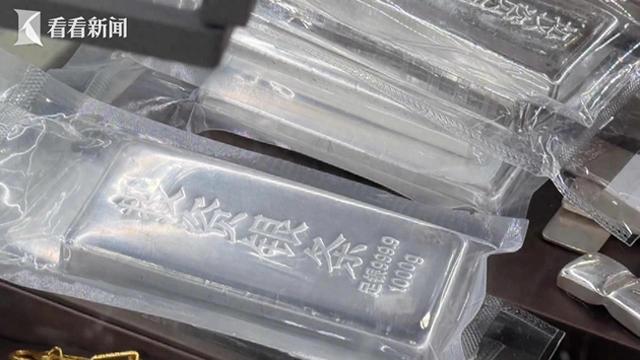
Group 1 - International silver prices have reached a historic milestone, with London spot silver prices surpassing $100 per ounce for the first time, marking a year-to-date increase of nearly 45% [1] - The surge in silver prices has led to a significant increase in demand for physical silver products, such as silver bars and coins, with some retail stores experiencing stock shortages [3][5] - The price of a 30-gram panda silver coin has risen from approximately 300 yuan to over 820 yuan, indicating a substantial increase in consumer interest and purchasing behavior [5] Group 2 - The current market dynamics show that silver prices have outperformed gold prices, with the international silver price increasing by nearly 148% from early last year to the end of December, and an additional 45% increase this year [14] - The "gold-silver ratio" has narrowed to about 50, suggesting that silver prices are entering a strong phase, as a ratio below 50 typically indicates undervaluation of silver [16] - Analysts attribute the recent surge in silver prices to geopolitical tensions and speculative investments, with liquidity and market sentiment playing a significant role in driving prices higher [18] Group 3 - Retail outlets are experiencing a boom in silver sales, with some stores reporting that they cannot keep up with the demand, leading to a notable increase in processing and production activities [7][11] - The price of silver jewelry has also increased significantly, with retail prices rising over threefold compared to last year, highlighting the growing interest in silver as an investment [11] - The potential imposition of tariffs on silver by the U.S. has created supply tightness in the international market, making the outcome of these tariff discussions a critical factor for future silver price movements [20]

有色金属ETF(512400.SH)涨2.21%,紫金矿业涨4.15%
Jin Rong Jie· 2025-12-22 06:09
Group 1: Precious Metals - The precious metals sector is experiencing strong upward momentum driven by expectations of interest rate cuts and rising risk aversion due to geopolitical uncertainties [1] - Recent performance shows spot gold and silver prices reaching new highs, with platinum and palladium futures seeing significant daily gains, particularly platinum prices exceeding 800 yuan per gram [1] - Major economies are adjusting monetary policies, with the Bank of Japan raising rates by 25 basis points to 0.75%, while the Bank of England cut rates by 25 basis points to 3.75%, reinforcing expectations of a global monetary easing cycle [1] Group 2: Industrial Metals - The industrial metals sector benefits from dual support of global monetary easing expectations and domestic growth stabilization policies, with U.S. inflation data reinforcing these expectations [1] - The copper supply chain is tightening, as evidenced by a significant drop in processing fees for copper concentrate, reflecting a constrained supply environment [1] - The aluminum sector shows a mixed supply-demand dynamic, with slight increases in supply but weakening demand, leading to a notable rise in social inventory levels [1] Group 3: New Energy Metals and Minor Metals - The lithium carbonate market is currently in a phase of tight supply and demand, with prices expected to remain volatile at high levels due to ongoing inventory depletion [2] - The rare earth sector has a clear long-term outlook, driven by export controls that enhance China's pricing power in the global market, which is expected to boost industry profitability and valuation [2]

铜:新高之后,再上层楼?
2025-12-16 03:26
Summary of Key Points from the Conference Call Industry Overview - The conference call focuses on the copper industry, particularly the impact of U.S. tariff policies and supply-demand dynamics on copper prices and market conditions [1][3]. Core Insights and Arguments - **U.S. Tariff Impact**: The U.S. has implemented tariffs on copper, starting at 5% and potentially rising to 30% by 2028, leading to international copper procurement and supply shortages in non-U.S. regions [1][3]. - **Long-term Price Support**: A fundamental long-term support for rising copper prices is attributed to insufficient capital expenditure leading to supply shortages. The equilibrium price is projected to exceed $10,000 per ton by 2028, with actual prices potentially higher [1][4]. - **Short-term Speculation**: Speculative sentiment is currently driving copper prices higher due to inventory movements and tightness in exchange deliveries, with expectations of shortages outweighing current spot market conditions [1][5]. - **U.S. Inventory Dynamics**: The U.S. has locked in approximately 720,000 tons of excess inventory, alleviating pressure on refined copper oversupply and contributing to a structural imbalance in global inventories [6][10]. - **Arbitrage Opportunities**: Arbitrage trading has emerged due to expectations of U.S. tariffs on refined copper, with price differentials between markets increasing to 4%-5% [7]. Additional Important Content - **Limited Short-Squeeze Risk**: Despite potential for short-squeeze behavior, actual risks are limited due to high export willingness from Chinese smelters and strict LME controls [8][9]. - **Challenges in U.S. Refining Capacity**: The U.S. faces challenges in refining and processing capacity, relying heavily on imports despite having sufficient copper elements. Regulatory hurdles hinder domestic production expansion [2][10]. - **Future Supply Projects**: Large-scale projects planned before 2028 are limited, with existing projects facing various challenges, indicating a potential long-term supply gap [11][12]. - **Price Forecasts**: Short-term price forecasts for refined copper are set at $11,750 per ton for the next six months, with a long-term stabilization expected around $11,000 per ton [14]. This summary encapsulates the key points discussed in the conference call, highlighting the dynamics of the copper market influenced by tariffs, supply constraints, and speculative trading behaviors.
政策利好推动指数止跌!跨年行情来临,还有哪些投资机会?
Sou Hu Cai Jing· 2025-12-08 07:29
Group 1 - The A-share market is expected to benefit from upward liquidity trends, with valuations currently at a relatively reasonable level compared to global equity markets, remaining at a medium to low level [1] - By 2026, earnings are anticipated to become the focal point for the market, with the improvement of listed companies' fundamentals driven by China's economic transformation and the development of emerging industries [1] - The narrowing decline in PPI is expected to support a further recovery in corporate profit margins, while attention should be paid to potential disruptions from the US midterm elections, geopolitical risks, and the pace of domestic economic recovery [1] Group 2 - The pharmaceutical sector has seen a slowdown in its upward momentum after a strong rally earlier in the year, with a significant reduction in the number of "doubling funds" [3] - As of November 28, only two pharmaceutical-themed funds maintained year-to-date doubling returns, indicating a shift in market sentiment from aggressive accumulation to cautious observation [3] - Despite the current transitional phase characterized by clear policy bottoms and visible valuation bottoms, the long-term growth logic of the pharmaceutical industry remains intact, supported by ongoing policy reinforcement and improvements in cash flow [3] Group 3 - Lithium battery production is expected to increase month-on-month in December, with a strong demand leading to price increases across multiple segments [5] - Sample companies reported a battery production of 143.3 GWh, a month-on-month increase of 2.3%, marking the first month-on-month increase in battery production since 2022 [5] - The tightening supply and strong demand in the energy storage sector are anticipated to lead to improved profitability across the lithium battery supply chain [5] Group 4 - The short-term trend of the market is strong, with significant inflows of incremental capital and a strong profit-making effect [7] - The Shanghai Composite Index's rebound is seen as a positive stimulus from insurance capital, although the actual implementation of beneficial policies is still pending [11] - The market is expected to maintain a slow bull trend, with potential for further liquidity easing and a focus on sectors such as new energy equipment, industrial machinery, computing power, and high-end manufacturing [11]

美国铜库存持续流入,非美地区低库存引发逼仓风险
GOLDEN SUN SECURITIES· 2025-12-07 13:33
Investment Rating - The report maintains a "Buy" rating for several companies in the non-ferrous metals sector, including 山金国际, 赤峰黄金, 洛阳钼业, 中国宏桥, and 中钨高新 [5][6]. Core Insights - The report highlights the continuous inflow of copper inventory in the US, while low inventory levels in non-US regions raise concerns about potential short squeezes [2]. - In precious metals, the report notes significant inflows into silver ETFs, with silver prices reaching new highs, supported by a favorable macroeconomic environment [1][33]. - The report emphasizes the mixed factors affecting lithium prices, with a downward trend observed, while cobalt prices remain high due to supply constraints from the Democratic Republic of Congo [3][24]. Summary by Sections Non-Ferrous Metals - **Copper**: US copper inventory continues to flow in, while low inventory in non-US regions raises short squeeze risks. Global copper inventory decreased by 13,000 tons, with a notable reduction in Chinese inventory by 35,000 tons [2]. - **Aluminum**: Positive macro sentiment drives short-term aluminum prices, with theoretical operating capacity in China's electrolytic aluminum industry increasing to 44.17 million tons [2]. - **Nickel**: Nickel prices remain low as consumption enters a seasonal downturn, with supply remaining ample and demand from stainless steel markets weak [2]. Precious Metals - **Silver**: The SLV silver ETF saw a net inflow of 837 tons as of December 5, supporting silver prices amid a favorable macroeconomic backdrop [1][33]. - **Gold**: Gold prices have shown resilience, with COMEX gold at $4,228 per ounce, reflecting a slight weekly decline but a significant annual increase of 60.2% [20]. Energy Metals - **Lithium**: Lithium prices are experiencing a downward trend, with industrial-grade lithium carbonate at 93,000 yuan per ton, reflecting a 0.5% weekly decline [24]. - **Cobalt**: Cobalt prices remain elevated at 398,000 yuan per ton, supported by tight supply conditions and increased purchasing interest from downstream sectors [3][24]. Market Trends - The non-ferrous metals sector has shown a general upward trend, with the overall sector index rising by 5.35% this week, driven by strong performances in industrial metals [17][19].
铜价创下历史新高 逼仓风险与供应紧张共推涨势
Di Yi Cai Jing· 2025-12-04 12:15
Group 1: Copper Price Surge - Domestic and international copper prices have reached new highs, with LME copper futures hitting $11,540 per ton on December 3 and Shanghai copper reaching 91,450 yuan per ton on December 4 [1][2] - The price increase is attributed to expectations of Federal Reserve interest rate cuts and regional tightness in global copper inventories, driven by anticipated high demand for copper in the AI era [1][3] - Analysts predict that the upward trend in copper prices may continue, but caution that negative factors or unmet demand expectations could lead to significant price corrections [1][8] Group 2: Market Dynamics and Supply Concerns - The global copper inventory is increasingly concentrated in the U.S., raising concerns about supply tightness in Asia, with LME copper inventories at 162,150 tons as of December 3 [3][4] - The copper market is experiencing a supply-demand imbalance, exacerbated by reduced capital investment in copper resource development and increasing demand from renewable energy and AI sectors [3][5] - The potential for a "short squeeze" environment is noted, as the tightness in deliverable resources continues to support upward price momentum [2][4] Group 3: Impact on Industry Players - Different segments of the copper industry are affected variably by rising prices; overseas mines benefit the most, while smelting companies with high external copper ore procurement face greater challenges [5][6] - Copper processing enterprises are under pressure from rising procurement costs and low processing fees, which may lead to reduced operating rates [6][7] - Downstream industries, such as traditional copper users in cables and appliances, are experiencing significant cost pressures, while sectors like semiconductors are less affected due to their growth phase [6][7] Group 4: Future Market Outlook - Analysts suggest that copper prices may remain volatile, with potential for further increases, but also caution that high prices could suppress downstream consumption or lead to substitution [8][9] - Key factors to monitor include the Federal Reserve's interest rate decisions, the recovery of copper supply in response to high prices, and the realization of copper consumption growth driven by AI and energy storage [9]
建信期货锌期货日报-20251202
Jian Xin Qi Huo· 2025-12-02 01:41
1. Report Industry Investment Rating - No information provided 2. Core Viewpoints of the Report - Inventory shortages and potential squeeze risks supported a new high in silver, leading to a collective increase in the non - ferrous metals sector. The main contract of Shanghai zinc closed at 22,590 yuan/ton, up 235 yuan or 1.05%. The top 20 positions increased both long and short positions, with net long positions increasing by 3,467 lots. [7] - As the price rose, downstream buyers showed fear of high prices, and market trading weakened. The premium in the Shanghai market for the 01 contract was 130 yuan/ton, the Tianjin market was at a discount of 70 yuan/ton compared to the Shanghai market, and the Guangdong market was at a discount of 20 yuan/ton for the 01 contract, with the price difference between Shanghai and Guangdong widening. [7] - There were limited changes in the industrial chain. The domestic concentrate treatment charge (TC) remained flat this week, while the imported concentrate TC continued to decline. The shortage at the mine end was transmitted to the smelting end, and the refined zinc output in November was expected to decrease by about 20,000 tons month - on - month. The tightening supply strengthened the support for zinc prices. [7] - The export window was still open, and with downstream pick - ups, the domestic social inventory had been decreasing for three consecutive weeks. The expectation of an interest rate cut in December increased, and the bullish sentiment in precious metals remained. Shanghai zinc was boosted and showed a strong performance. [7] 3. Summary by Relevant Catalogs 3.1 Market Review - **Futures Market Quotes**: The opening, closing, highest, and lowest prices, price changes, price change percentages, open interest, and open interest changes of different Shanghai zinc contracts (2512, 2601, 2602) are presented. For example, the 2601 contract opened at 22,450 yuan/ton, closed at 22,590 yuan/ton, up 235 yuan or 1.05%, with an open interest of 105,756 lots and an increase of 4,214 lots. [7] 3.2 Industry News - **Price Ranges in Different Regions**: On December 1, 2025, the mainstream transaction prices of 0 zinc in different regions were as follows: 22,600 - 22,750 yuan/ton in the general market, 22,600 - 22,720 yuan/ton in the Ningbo market, 22,420 - 22,610 yuan/ton in the Tianjin market, and 22,440 - 22,610 yuan/ton in the Guangdong market. Different brands also had corresponding price ranges and premium/discount situations. [8] 3.3 Data Overview - **Graphs**: The report includes graphs such as the price trends of zinc in two markets, SHFE month - to - month spreads, SMM's weekly inventory of zinc ingots in seven regions (in ten thousand tons), and LME zinc inventory (in tons). [10][12]
监管升级!LME或永久限制近月大额持仓 分析人士:有望重塑金属交易逻辑
Qi Huo Ri Bao· 2025-11-18 00:35
Core Viewpoint - The London Metal Exchange (LME) is seeking to permanently limit large positions in near-month contracts to mitigate the risk of short squeezes in a low inventory environment, reflecting a systemic restructuring to adapt to changes in the global metal market [1][3]. Group 1: Risk Mitigation - The proposed permanent near-month lending rules aim to prevent short squeeze risks associated with low inventory levels and large positions, as evidenced by past incidents like the LME nickel squeeze in 2022 and the copper inventory transfer in 2023 [3]. - LME copper inventory dropped significantly from 270,900 tons in early February to approximately 95,900 tons by the end of June, a decline of over 60%, which contributed to substantial price volatility in LME copper futures [3]. Group 2: New Rules and Regulations - In June, LME introduced temporary regulations limiting the total long positions held by traders in delivery month contracts to the available inventory, requiring excess positions to be closed or converted to zero premium lending within 24 hours [4]. - The new rules proposed for late October focus on "position control" and "liquidity supply," with specific thresholds for lending premiums based on the percentage of total inventory held [4][5]. Group 3: Market Impact - Analysts suggest that the implementation of these new rules will have both short-term and long-term effects, stabilizing price volatility in the short term while potentially reshaping trading logic in the long term [7][9]. - The new regulations are expected to enhance market transparency and reduce the potential for manipulative practices, leading to a more effective price discovery mechanism [7][9]. Group 4: Strategic Considerations - LME's recent initiatives indicate a strategic focus on better serving the Chinese market, including establishing warehouses in Hong Kong and aligning offshore renminbi interest rates with other currencies [8]. - The LME is also optimizing its options market, including plans to convert American-style options to European-style options, which reflects ongoing efforts to enhance market efficiency [8]. Group 5: Regulatory Insights - The new rules from LME may serve as a regulatory reference for domestic futures markets in China, emphasizing the importance of proactive risk prevention measures [9]. - The public consultation period for the proposed rules will continue until November 21, with market participants keenly observing potential adjustments to the tiered thresholds [9].
监管升级!LME或永久限制近月大额持仓,分析人士:有望重塑金属交易逻辑
Qi Huo Ri Bao· 2025-11-17 23:29
Core Viewpoint - The London Metal Exchange (LME) is seeking feedback on a proposal to permanently limit large positions in near-month contracts, aiming to mitigate the risk of short squeezes in a low inventory environment and adapt to changes in the global metal market landscape [1][2]. Group 1: Risk Mitigation - The LME's adjustment of lending rules is driven by significant market risks due to declining inventories over the past two years, highlighted by events such as the nickel squeeze in 2022 and the copper inventory transfer in 2023 [2]. - The proposed Front Month Lending Rules aim to prevent short squeeze risks by permanently limiting large positions in near-month contracts, addressing the issues arising from low inventory levels [2][3]. - LME copper inventory dropped over 60% from 270,900 tons in early February to approximately 95,900 tons by the end of June, leading to significant price volatility in LME copper futures [2]. Group 2: New Rules and Their Implications - The temporary rules introduced in June required traders holding long positions in delivery month contracts to limit their total holdings to the available inventory, with excess positions needing to be closed or converted to zero premium lending [3]. - The new rules focus on "position control" and "liquidity supply," with specific thresholds for lending premiums based on the percentage of total inventory held [3][4]. - Analysts suggest that the implementation of these new rules will stabilize price volatility in the short term and reshape trading logic in the long term, enhancing market transparency and reducing the potential for manipulative practices [5][6]. Group 3: Market Dynamics and Strategic Considerations - The LME's recent initiatives indicate a strategic focus on better serving the Chinese market, including establishing warehouses in Hong Kong and aligning offshore RMB collateral rates with other currencies [7]. - The LME's proposed changes are seen as a shift towards proactive regulation, moving from reactive measures to preventive strategies in global metal market oversight [8]. - The feedback period for the proposed rules will last until November 21, with market participants keenly observing potential adjustments to the tiered thresholds [8].