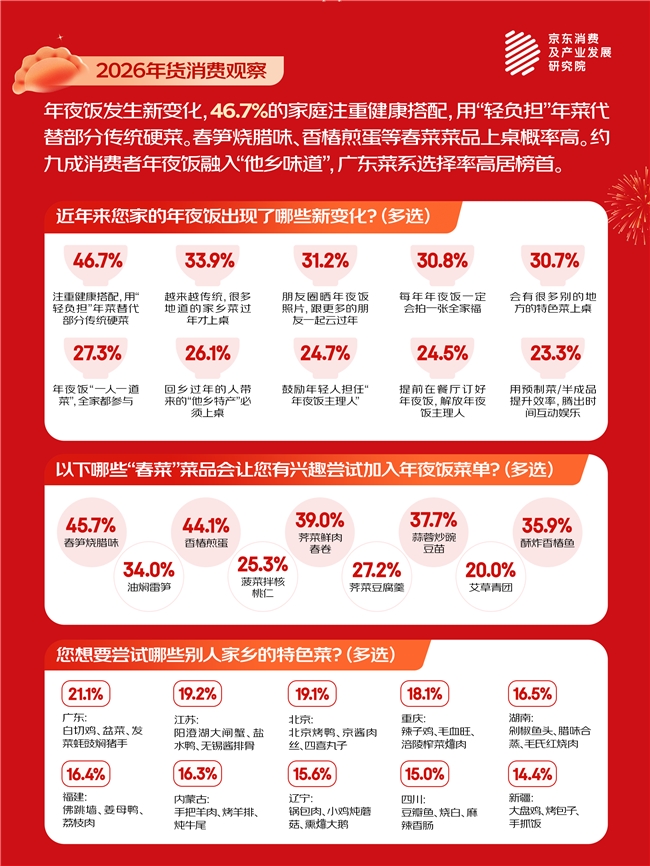
健康理念

Search documents
京东春节消费观察:“每逢佳节胖3斤” 75%的消费者接受体重小幅增加并会进行温和管理
Zhong Jin Zai Xian· 2026-02-14 03:46
Core Insights - The upcoming Spring Festival is seeing a shift in consumer preferences towards diverse and healthier dining options, with a significant interest in incorporating regional flavors into traditional meals [6][9][11]. Group 1: Dining Trends - Approximately 90% of families plan to include "regional flavors" in their New Year's Eve dinner, with over half starting preparations early [6][9]. - Health-conscious choices are on the rise, with 46.7% of families opting for "light burden" dishes that are low in fat and sugar, and high in protein [11]. - Spring vegetables are gaining popularity, with 87.1% of consumers interested in including them in their New Year's Eve menu, particularly spring bamboo shoots, pea shoots, and asparagus [2][11]. Group 2: Family Dynamics - 75% of families have elders responsible for meal preparations, but 24.8% of younger individuals are taking on this role, leading to more diverse preparation methods [12]. - Younger generations prefer ordering takeout or using semi-finished products, while elders favor preparing all dishes from fresh ingredients [12]. Group 3: Weight Management Attitudes - 75% of consumers are accepting of slight weight gain during the holiday, with only 10% willing to accept an increase of more than 3 pounds [13][15]. - Various approaches to weight management during the holiday season are evident, with 32.8% maintaining healthy habits, while 31.1% choose to indulge fully [15][16]. Group 4: Travel Preferences - 45.2% of respondents plan to celebrate the New Year at home, while 42.1% are considering travel, with a focus on family bonding and creating memories [4][17]. - Popular travel destinations include warm locations like Sanya and cultural experiences in rural areas, reflecting a desire for both relaxation and cultural immersion [17][19]. Group 5: New Year Goods - Emotional and technological gifts are becoming increasingly popular, with 44.9% of respondents valuing items that enhance relaxation and festive atmosphere [5][20]. - AI products are viewed positively for their potential to ease social awkwardness during family gatherings, with 79.3% of consumers believing they can help alleviate uncomfortable questions [20][22]. Group 6: Home Services - Over 90% of consumers are likely to book home services for the New Year, prioritizing transparency in pricing and service quality [23]. - The integration of traditional and modern customs is evident, with a growing interest in local traditions and unique cultural practices [24].

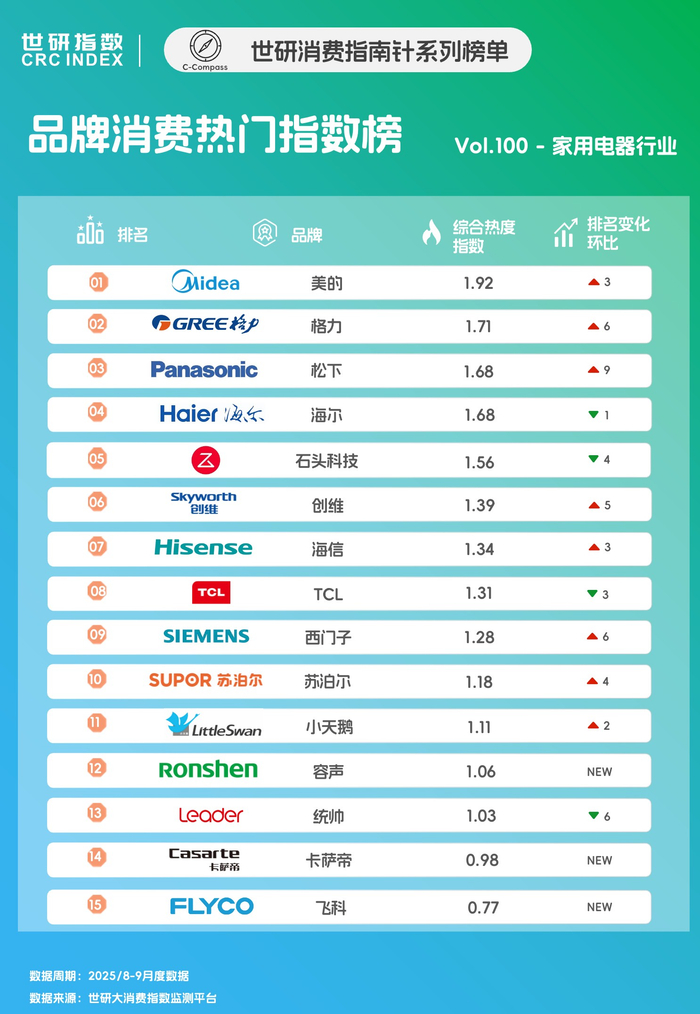
家电消费新主张,要大美好,更要“真智能”|世研消费指数品牌榜Vol.100
3 6 Ke· 2026-01-27 09:48
Core Insights - The traditional growth logic of "price for volume" is becoming unsustainable as market growth slows and consumer behavior becomes more rational, prompting leading brands to focus on technological innovation and strategic transformation in the home appliance industry [1] Group 1: Industry Trends - Key trends reshaping the home appliance industry include AI empowerment, health concepts, high-end positioning, and cross-industry integration [1] - The current monitoring period shows that Midea, GREE, and Panasonic lead the heat index rankings with scores of 1.92, 1.71, and 1.68 respectively [2][3] Group 2: Technological Innovations - Midea has launched a new dual-air outlet central air conditioning system aimed at providing a revolutionary user experience, while GREE focuses on AI and energy-saving technologies with its new product lines [4] - Haier emphasizes comprehensive air solutions and has introduced several innovative products, including the industry's first AI air conditioning group standard [4] Group 3: Strategic Transformations - The slowdown in industry growth has led brands to pursue high-end and cross-industry strategies for counter-cyclical growth, as seen with Skyworth's significant revenue increase driven by its new energy business [5] - High-end brands like Casarte have shown resilience, achieving positive growth in a challenging market, highlighting the importance of differentiated competitive strategies [5]





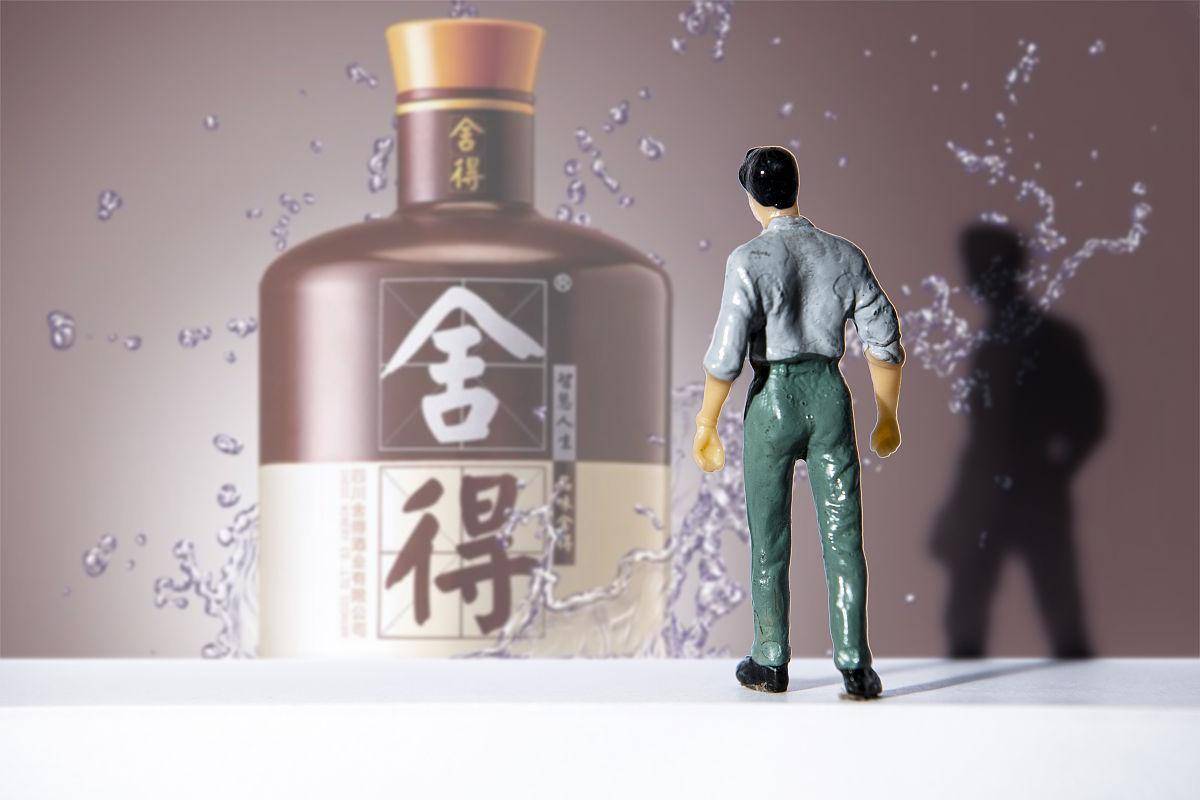
年轻人为何集体抛弃白酒?这届消费者在反抗什么?
Sou Hu Cai Jing· 2025-12-24 04:27
Core Insights - The white liquor industry in China is facing a deep crisis, highlighted by a significant decline in production and changing consumer preferences among younger generations [1][4] Group 1: Industry Trends - The production of white liquor is projected to decline by 5.8% year-on-year in the first half of 2025, with a nearly 70% drop from the peak production in 2016 [1] - Young consumers show a marked preference for lower-alcohol beverages, with 62% finding traditional white liquor "spicy and stimulating" and 51% feeling that "drinking is a heavy burden" [4][3] - The sales of health-oriented and lower-alcohol products, such as health liquor and fruit wine, have seen over 100% growth in instant retail channels, indicating a shift towards lower-alcohol consumption [4] Group 2: Cultural Shifts - The traditional hierarchical drinking culture is being rejected by Generation Z, who are increasingly resistant to power dynamics associated with drinking rituals [3] - A tragic incident in 2024 highlighted the dangers of traditional drinking culture, leading to a collective awakening among young people who refuse to participate in such practices [3] Group 3: Market Dynamics - The ban on alcohol in government receptions has reduced the share of government consumption to less than 5%, while sales of budget-friendly liquor have increased by 20% in new social settings like camping [7] - The rise of "solo drinking" trends on platforms like Bilibili reflects a desire among young consumers for personal enjoyment rather than social obligation [7] - The market for whiskey has seen a significant increase, with imports topping the list of imported spirits and a cumulative growth of over 200% in recent years [9] Group 4: Future Outlook - The white liquor industry must undergo a fundamental restructuring of its value proposition rather than superficial attempts at modernization [9] - Companies that adapt to the "self-pleasure economy" and understand the changing consumer landscape will be the ones to succeed in the future [9]
别让感谢止于心底!燕教授「以信唤心计划」,写故事送健康礼,致敬 TA 与自己
Sou Hu Wang· 2025-12-11 09:54
Core Viewpoint - The company "燕教授" emphasizes the importance of health and emotional connections, launching the "以信唤心计划" to promote gratitude and well-being through health products and services [1][6]. Group 1: Company Mission and Values - Founded in 2012, the company aims to meet global health needs through its products and services, aspiring to be a health system for every family [3]. - The brand focuses on the health philosophy of "balancing the body and nurturing the spirit," supported by 19 proprietary patents across three core areas: body management, beauty anti-aging, and daily internal nourishment [3]. Group 2: Product Offerings - The company offers a range of products that combine scientific rigor with warmth, including: - Nutritional meal 6.0, rich in over 20 essential nutrients for health management [5]. - Light-burning MCT coffee, which balances metabolism with patented strains and natural ingredients [5]. - Flash collagen peptide drink, recognized for its innovative anti-aging solution [5]. - Pre-Qian solid beverage, utilizing traditional herbal extracts to regulate bodily fluids [5]. - Personalized health care services are provided by national-level nutritionists, tailoring plans based on individual constitution and lifestyle [5]. Group 3: Social Responsibility - The company actively engages in social responsibility initiatives, including the Million Forest Project, donating 600,000 yuan to plant 60,000 trees for desertification restoration [6]. - It supports the establishment of hope primary schools and participates in disaster relief and health promotion activities, demonstrating a commitment to community welfare [6]. Group 4: Engagement and Promotions - The "以信唤心计划" invites participants to share their stories of gratitude, with opportunities to win health gifts from the brand [6][7]. - Winners will receive their prizes within 10 working days after the event, ensuring that every gesture of appreciation is honored [9].

“双十一”的消费进化论
Xin Lang Zheng Quan· 2025-11-11 08:25
Group 1 - The "Double Eleven" shopping festival has started earlier this year, with major platforms like Tmall reporting significant sales figures, including 80 brands exceeding 100 million yuan in sales within the first hour [1] - New entrants like Xiaohongshu have also shown strong performance, with a 77% year-on-year increase in purchasing users and a 73% increase in transaction orders on the first day [1] Group 2 - The early start of promotions has led to a decrease in discussion around "Double Eleven" on November 11, with the consumer market showing mixed performance [2] - The food and beverage sector saw a notable increase of 3.22% on November 10, while traditional consumer sectors have been relatively quiet [2] Group 3 - The consumer sector has adjusted valuations, providing a safety margin for investors, with the food and beverage index currently at a price-to-earnings ratio of 21.29, which is low compared to the past decade [3] - The domestic consumer market shows resilience, supported by a large population and ongoing improvements in living standards, leading to a diverse demand landscape [3] Group 4 - Structural opportunities within the consumer sector are emerging, with new trends like emotional consumption and the silver economy driving growth [4] - The integration of technology in the consumer space is transforming the market, with companies like Tmall and JD.com emphasizing the role of AI in enhancing consumer experiences [4] Group 5 - After recent adjustments, valuations in traditional sectors have compressed, but leading companies maintain strong positions with robust cash flows and attractive dividend yields [5] - In the new consumption sector, despite high overall sentiment, there is significant valuation differentiation, necessitating careful selection of companies with strong brand and channel advantages [6]

以健康理念促成长 赞助企业为“百队杯”保驾护航
Bei Jing Ri Bao Ke Hu Duan· 2025-11-02 14:08
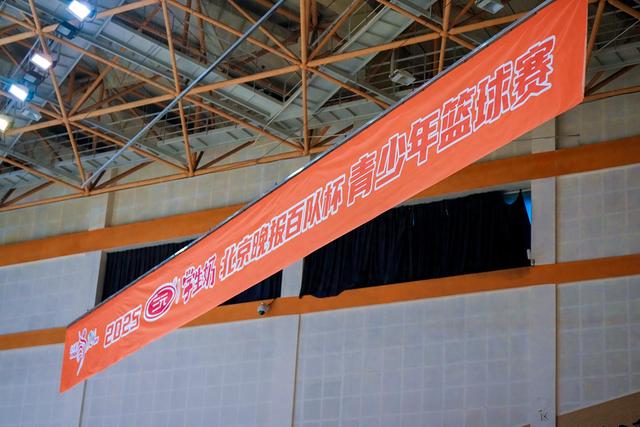
Core Points - The 2025 Beijing Evening News Youth Basketball Cup concluded successfully, celebrating its tenth anniversary with enhanced scale and support from various companies [2] - Companies like Sanyuan Student Milk, Kayo, Beijing Huatian Group, and Yida Gum contributed significantly to the event, promoting healthy growth concepts among young athletes [2][4] Company Involvement - Sanyuan Student Milk emphasizes its role not just as a product but as a partner in safeguarding children's health, aiming to integrate scientific milk consumption with sports health concepts into daily growth [4] - Sanyuan's General Manager, Chen Haifeng, expressed commitment to using high-quality products to support children's health and contribute positively to society and the future generation [4] - Beijing Huatian Group introduced the "Eat-Move Balance" health concept, linking traditional cuisine with sports vitality during the event [4] - Yida Gum provided solutions for stress relief and emotional regulation for children before the games, enhancing the overall experience [4]

雪天盐业亮相中国厨师节
Jing Ji Ri Bao· 2025-10-28 12:02
Core Points - The 34th China Chef Festival and the 2025 China Culinary and Catering Expo were held in Suzhou, showcasing the integration of culinary culture and health concepts [1] - Xue Tian Salt Industry emphasized "technology, health, and heritage" at their exhibition, presenting a range of salt products including ecological well salt and low-sodium seaweed iodized salt [1] - The event marked the launch of the "Reduce Salt Without Reducing Flavor" initiative, promoting a consensus in the catering industry on salt reduction and scientific salt usage [1] Company Initiatives - Xue Tian Salt Industry introduced product packages aimed at reducing salt intake, tailored for different seasons, demographics, and scenarios, providing scientific salt solutions for households and the food industry [1] - The company collaborated with renowned chefs from the eight major Chinese cuisines to promote the "Reduce Salt Action," highlighting the importance of health in culinary practices [1] - The chairman of Hunan Salt Industry Group and Xue Tian Salt Industry, Ma Tianyi, stated that the initiative is a response to national health needs, emphasizing the broader value of Chinese brands beyond market share [1]

佳沛「举勺挖金月,祈愿健康多益点」中秋活动圆满收官
Zhong Guo Shi Pin Wang· 2025-10-20 07:33
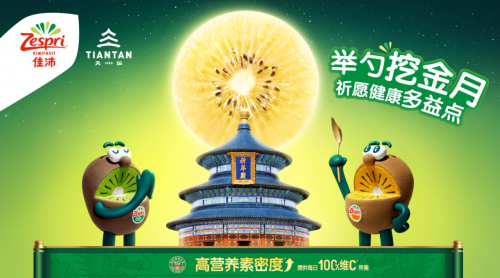
Core Insights - Zespri successfully concluded its Mid-Autumn Festival campaign themed "Scoop the Golden Moon, Wish for Health" which promotes health and nutrition through its kiwifruit products [1][2] - The campaign integrates traditional Chinese culture with modern health concepts, emphasizing the importance of health during family reunions [2][4] Group 1: Campaign Overview - The campaign featured a collaboration with the Temple of Heaven, a significant cultural landmark in China, to enhance the theme of health wishes [2][5] - Zespri's initiative included both online and offline activities, such as the ScoopTheGoldenMoon topic on Xiaohongshu, generating over 20,000 quality posts and over 300 million impressions [4][5] Group 2: Consumer Engagement - The "Wish Garden" events held in four major cities attracted over 8,000 participants, allowing consumers to engage in health rituals and receive Zespri kiwifruit as part of the experience [5][7] - The campaign also included a cycling challenge in partnership with Hello Bike, promoting a balanced lifestyle and encouraging over 100,000 participants to engage in physical activity [7][9] Group 3: Future Initiatives - Zespri plans to continue its community engagement by collaborating with the Shanghai Children's Foundation to support health initiatives for children and families [10]
休闲食品玩出新花样
Jing Ji Ri Bao· 2025-10-19 21:49
Core Insights - The leisure food market in China has experienced robust growth, surpassing a market size of 1 trillion yuan, driven by diverse consumer demands and innovative channels [1][2] - Consumer demand has shifted from mere indulgence to a focus on health, novelty, and emotional value, leading to a transformation in product offerings towards functional and health-oriented snacks [1] - The rapid development of internet channels, content platforms, and instant retail has opened new growth opportunities for snack consumption, with e-commerce penetration increasing and niche regional products becoming national hits [1] Market Potential - Current per capita consumption of leisure foods in China is significantly lower than that of developed countries, indicating substantial growth potential as income levels rise and consumer awareness improves [2] - Companies need to focus on continuous innovation, maintaining a "clean" ingredient philosophy while effectively combining health concepts with taste experiences [2] - Emphasizing regional characteristics and cross-category combinations can rejuvenate traditional flavors, while attractive packaging and brand narratives that resonate with consumers can enhance market presence [2]
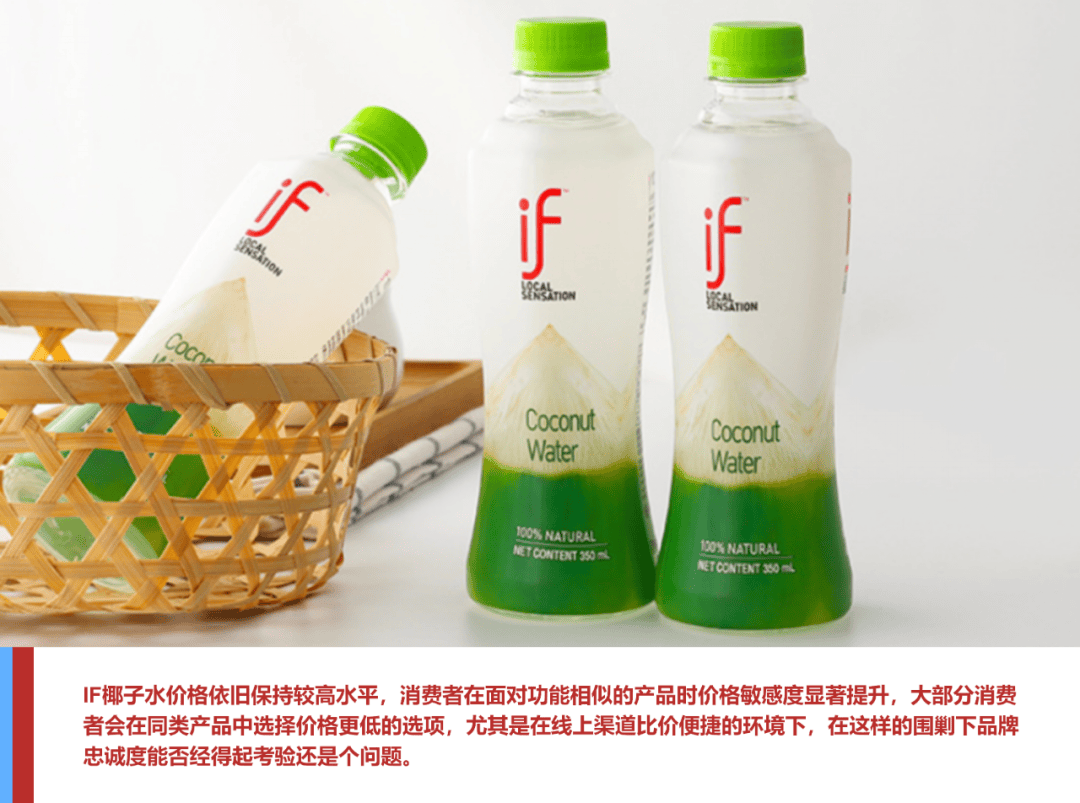
半年狂卖6.7亿!看椰子水的“完美答卷”下,暗藏哪些危机?
Sou Hu Cai Jing· 2025-09-29 09:19
Core Insights - The article highlights the rapid growth of coconut water in the beverage market, driven by health trends, but also points out significant risks and challenges for IFBH as competition intensifies [1][2]. Financial Performance - IFBH reported a revenue of $9,446.4 million for the first half of 2025, a year-on-year increase of 31.5%, with coconut water sales reaching $9,151 million, up 33.3% [2]. - The proportion of coconut water revenue in total income increased from 95.6% to 96.9%, indicating a growing dependency on a single product [2]. - The company's net profit decreased by approximately 5% to $1,497.6 million, with a gross margin decline of 4.7 percentage points to 33.7% [9]. Market Dependency - Over 92% of IFBH's revenue comes from the Chinese mainland market, which poses a risk of growth saturation as competition intensifies [4]. - The coconut water market in China is expected to reach $1.3117 billion by 2025, with over 50 brands competing, leading to price wars that could impact IFBH's market share [4][15]. Supply Chain Risks - IFBH's supply chain is highly concentrated, with the top five suppliers accounting for 96.9% of procurement, and a single Thai factory supplying over 70% of coconut water raw materials [3][9]. - The cost of raw materials has surged, with Thai coconut prices increasing nearly fivefold due to adverse weather conditions, raising raw material costs from 61% to over 75% of total expenses [2][9]. Growth Strategy Challenges - The company faces challenges in expanding beyond its current market, with plans for national and global expansion hindered by high price sensitivity in lower-tier markets and low brand recognition in international markets [5]. - The growth of "other beverages" at a 57% year-on-year increase is not sufficient to offset the reliance on coconut water, as these products have not yet proven to be a significant revenue contributor [6][7]. Competitive Landscape - The coconut water market is becoming increasingly competitive, with established brands and new entrants offering similar products at lower prices, which could erode IFBH's market position [11][15]. - The company's light-asset model, relying on outsourcing production and logistics, may hinder its ability to maintain growth amid rising costs and competitive pressures [12]. Financial Health Concerns - A significant increase in trade receivables from $704 million to $2,074 million raises concerns about potential financial risks, as the growth rate of receivables far exceeds revenue growth [13][14]. - The operating cash flow decreased by 37.5% to $960 million, indicating potential issues with cash flow management despite revenue growth [14].