
投资回报

Search documents
大新金融(00440)发布年度业绩 股东应占溢利20.57亿港元 同比增长22.9% 末期息1.42港元
智通财经网· 2026-03-30 04:17
Core Viewpoint - Daxin Financial (00440) reported strong financial performance for the fiscal year 2025, with significant growth in net interest income and shareholder profit, driven by favorable market conditions and effective cost management [1] Financial Performance - Net interest income reached HKD 5.901 billion, an increase of 9.3% year-on-year [1] - Shareholder profit amounted to HKD 2.057 billion, reflecting a year-on-year growth of 22.9% [1] - Basic earnings per share were HKD 6.45, with a final dividend of HKD 1.42 [1] Trading and Investment Activities - The company's trading activities in 2025 were robust, benefiting from a decrease in Hong Kong dollar interest rates and significant fluctuations in the foreign exchange market [1] - Investment business showed steady growth in total investment returns, supported by a favorable stock market environment [1] - Total assets under management from insurance and investment businesses increased by 17% year-on-year, enhancing the company's ability to generate future investment returns [1] Operational Efficiency - The group demonstrated resilience in a mixed economic environment, with operating profit before impairment losses growing by 24% [1] - Operating expenses recorded a moderate increase, leading to an improved cost-to-income ratio of 43.3%, down from 47.8% the previous year [1] Net Interest Margin - Despite a general decline in interest rates, Daxin Bank's net interest margin expanded by 24 basis points to 2.41% [1] - This improvement reflects the company's success in increasing current and savings deposit balances while maintaining strict control over funding costs [1] - The company's measures have positioned it to expand its net interest margin even amid pressure from the Federal Reserve's rate cuts on the local banking sector [1]

李嘉诚家族被大大低估,李泽钜又凡尔赛,长和日产石油近百万桶
Sou Hu Cai Jing· 2026-03-23 04:52
Core Insights - The Li Ka-shing family is significantly undervalued, with Li Zeju revealing that the group currently produces nearly 1 million barrels of oil per day [1] - The family's oil business has generated substantial profits over the years, with the current production level surpassing that of many small oil-producing countries [5] Group 1: Investment Background - Li Ka-shing acquired a stake in Husky Energy in 1985 during a period of economic downturn and oil crisis, eventually becoming the majority shareholder [1] - This investment is considered one of Li Ka-shing's most successful, contributing at least $10 billion in returns [3] Group 2: Recent Developments - In 2020, the Li family merged Husky Energy with another Canadian energy giant, maintaining a 29.4% stake in the newly formed company, which became Canada's third-largest energy company [3] - The new company increased its oil production from over 800,000 barrels to 1 million barrels per day after acquiring MEG Energy for approximately HKD 40 billion [3] Group 3: Financial Performance - The daily production of 1 million barrels corresponds to annual revenues exceeding $30 billion, indicating significant earnings for the Li family from oil [5] - The family's holdings in oil companies are primarily privately owned, meaning dividends go directly into the family's pockets rather than through publicly listed entities [5] Group 4: Overall Wealth - The Li family’s total holdings are valued at over HKD 120 billion, with cumulative dividends from Husky Energy amounting to approximately HKD 50 billion, representing about 20 times their initial investment [7] - Total profits from oil investments are estimated to be around HKD 200 billion, primarily benefiting the family's private wealth [7] Group 5: Strategic Positioning - Li Zeju expressed confidence in the group's diversified business model, which allows for risk mitigation across different sectors, ensuring stability even during crises [8] - The family's long-term strategy positions them as a leading force in Asia, contrasting with the volatility seen among some American billionaires [8]


The Buckle, Inc. (NYSE: BKE) Reports Strong Quarterly and Annual Financial Results
Financial Modeling Prep· 2026-03-13 19:03
Core Viewpoint - The Buckle, Inc. demonstrates strong financial performance and competitive positioning in the casual apparel retail sector, with significant growth in both revenue and net income [2][3][4]. Financial Performance - For the fiscal quarter, BKE reported an EPS of $1.59, exceeding the forecast of $1.51, with a net income of $80.8 million [2]. - Quarterly revenue reached $399.14 million, surpassing expectations of $396.45 million, supported by a 5.3% year-over-year increase in net sales [3]. - For the entire fiscal year, BKE's net income was $209.7 million, translating to $4.17 per share, with a diluted EPS of $4.14 [4]. Sales Growth - Net sales for the fiscal year rose by 6.6%, indicating a strong competitive edge [4]. - Comparable store net sales increased by 3.9%, while online sales grew by 6.4%, totaling $74.2 million [3]. Valuation Metrics - The company has a P/E ratio of 12.29 and a price-to-sales ratio of 2.02, reflecting solid valuation [4]. - The enterprise value to operating cash flow ratio is approximately 10.17, and the earnings yield stands at 8.14% [5]. Financial Structure - BKE maintains a debt-to-equity ratio of 0.73 and a current ratio of 2.21, indicating a balanced financial structure and strong short-term financial health [5].


BK Technologies Corporation (BKTI) Surpasses Earnings and Revenue Estimates
Financial Modeling Prep· 2026-03-13 04:00
Financial Performance - The company reported an earnings per share (EPS) of $1.07 for the fourth quarter of 2025, surpassing the estimated EPS of $0.70 [1][6] - Revenue for the fourth quarter reached $21.51 million, exceeding the estimated revenue of $19.5 million [1][6] - Full-year revenue for 2025 totaled $86.1 million, reflecting a 12.5% increase compared to the previous year [2] Gross Margins - The gross margin for the fourth quarter improved to 50.4%, up from 41.2% in the previous year [2] - For the full year 2025, the gross margin increased to 48.8%, compared to 37.9% in 2024 [2] Earnings Growth - Fourth quarter diluted EPS rose to $1.07 from $0.93 in the fourth quarter of 2024 [3] - Full-year diluted EPS for 2025 increased to $3.44, up from $2.25 in 2024 [3] - Non-GAAP diluted adjusted EPS for the fourth quarter was $1.17, an increase from $0.61 in the same period of the previous year [3] Cash Position and Debt - The company reported a record cash balance of $22.8 million and maintained a debt-free balance sheet as of December 31, 2025 [4] - BKTI's low debt-to-equity ratio of 0.035 indicates conservative use of debt in its capital structure [4] Future Plans - The company plans to submit the BKR9500 multi-band mobile for Federal Communications Commission (FCC) approval in the second half of 2026 [5] - BKTI has a strong current ratio of 4.21, indicating good short-term financial health [5] - The price-to-earnings (P/E) ratio is approximately 21.26, with an earnings yield of about 4.70% [5]

春节前夕再现“红包雨”:深市公司全年现金分红超5000亿
2 1 Shi Ji Jing Ji Bao Dao· 2026-02-12 10:44
Core Viewpoint - The Shenzhen Stock Exchange (SZSE) companies are increasingly engaging in cash dividend distributions, with a total of over 375 billion yuan distributed since December 2025, indicating a robust investment return mechanism and a shift towards a more favorable dividend ecosystem [1][4]. Group 1: Dividend Distribution Trends - Nearly 120 SZSE companies have implemented profit distributions since December 2025, with cumulative cash dividends exceeding 375 billion yuan [1]. - In 2025, SZSE companies distributed a total of 5,475.59 billion yuan in cash dividends, marking the second consecutive year of surpassing 5,000 billion yuan [1]. - During the "14th Five-Year Plan" period, the total amount of dividends distributed by SZSE companies exceeded 20 trillion yuan, reflecting a growing trend of companies willing to distribute and frequently pay dividends [1]. Group 2: Company Performance and Profitability - As of January 31, 2026, 1,714 out of 2,866 SZSE companies pre-disclosed their 2025 operating performance, accounting for 59.39% of the total number of companies and 48.48% of market capitalization, with nearly 60% showing improved performance [1]. - The pre-disclosed companies collectively achieved a net profit of 820.09 billion yuan, an increase of 1,556.70 billion yuan year-on-year [1]. - Among the top 100 companies by market capitalization, 40 disclosed their 2025 operating performance, all of which are expected to be profitable, with a combined net profit forecast of 2,056.27 billion yuan, representing a year-on-year growth of 66.51% [1]. Group 3: Notable Companies and Their Dividend Policies - Luxshare Precision announced a cash dividend of 1.6 yuan per 10 shares, totaling approximately 1.165 billion yuan, supported by a revenue increase of 24.69% year-on-year [2]. - Tianshan Aluminum implemented a cash dividend of 1 yuan per 10 shares, totaling about 459 million yuan, with a commitment to a minimum cash dividend of 50% of the net profit attributable to shareholders for 2025 [2]. - Yilian Network, known for its high dividend payout, distributed 5 yuan per 10 shares, totaling 633 million yuan, maintaining a high payout ratio of over 50% of its net profit [3]. Group 4: Regulatory and Market Changes - The new "National Nine Articles" has led to a continuous increase in dividend levels among SZSE companies, with multiple distributions per year becoming the norm, enhancing investor satisfaction and establishing a positive cycle in capital market returns [4].
Insurer MetLife adjusted quarterly profit rises on strong investment returns
Reuters· 2026-02-04 21:58
Core Viewpoint - MetLife reported an increase in fourth-quarter adjusted profit, driven by a stronger return on its investment portfolio [1] Company Summary - The insurer's performance in the fourth quarter was positively impacted by improved returns on investments [1]


MPLX(MPLX) - 2025 Q4 - Earnings Call Transcript
2026-02-03 15:30
Financial Data and Key Metrics Changes - Adjusted EBITDA for 2025 reached just over $7 billion, reflecting a mid-single-digit three-year growth CAGR [4] - Adjusted EBITDA for the fourth quarter increased by 2% year-over-year to $1.8 billion, while Distributable Cash Flow decreased by 4% to $1.4 billion due to increased interest expenses [16][18] - Total returns for 2025 amounted to $4.4 billion, with a distribution increase of 12.5% [4][18] Business Line Data and Key Metrics Changes - In the crude oil and products logistics segment, adjusted EBITDA increased by $52 million year-over-year, driven by a revised FERC tariff and higher rates, despite a 2% decrease in terminal volumes [13] - The natural gas and NGL services segment saw adjusted EBITDA decrease by $10 million year-over-year, primarily due to the divestiture of non-core assets and lower NGL prices, although gathered volumes increased by 2% [14] Market Data and Key Metrics Changes - Natural gas demand in the U.S. is expected to grow over 15% through 2030, driven by LNG export capacity expansion and rising power needs [5] - The company is experiencing higher gas-to-oil ratios in key shale basins, which is increasing supplies of NGL-rich gas [5] Company Strategy and Development Direction - The company plans to invest $2.4 billion in 2026, focusing on capital projects that support long-term structural growth, particularly in the natural gas and NGL services segment [5] - The strategy includes optimizing the portfolio through divestitures of non-core assets to align future capital deployment with the strongest return opportunities [5] Management's Comments on Operating Environment and Future Outlook - Management expressed confidence in the long-term fundamentals of the energy market and the company's ability to capture value from growth opportunities [7] - The company anticipates growth in 2026 to exceed that of 2025, driven by increased throughput on existing assets and new assets coming online [19] Other Important Information - The company has secured key construction permits for its projects, reflecting strong regulatory and stakeholder engagement [10] - The Titan Treating Complex is expected to treat over 400 million cubic feet per day of sour gas by the end of 2026 [7] Q&A Session Summary Question: Can you talk about your confidence in the mid-teens return target for the project backlog? - Management emphasized strict capital discipline and the expectation of mid-teens returns from capital investments, supporting mid-single-digit growth [22][23] Question: Can you provide an update on the commercialization of Northwind synergy projects? - Management confirmed that the Northwind sour gas facility is critical for future growth and will support both legacy and new volumes [26][27] Question: How do recent trends in the upstream community affect your growth outlook? - Management indicated that recent consolidations among upstream customers do not pose immediate risks to contract renegotiations [46] Question: What are the expectations for growth in 2026 compared to 2025? - Management stated that growth in 2026 is expected to be stronger than in 2025, inclusive of headwinds from the Rockies asset sale [50][51] Question: How does the new FERC index change impact your outlook? - Management noted that the negative FERC adder was anticipated and is already factored into their growth plans [52] Question: Can you comment on new growth projects in the Marcellus? - Management highlighted the importance of the Harmon Creek III project and its expected contribution to capacity and returns [55]

超4万亿,大消息!投资收入创新高,创2007年以来最佳表现
Zhong Guo Ji Jin Bao· 2026-01-28 14:39
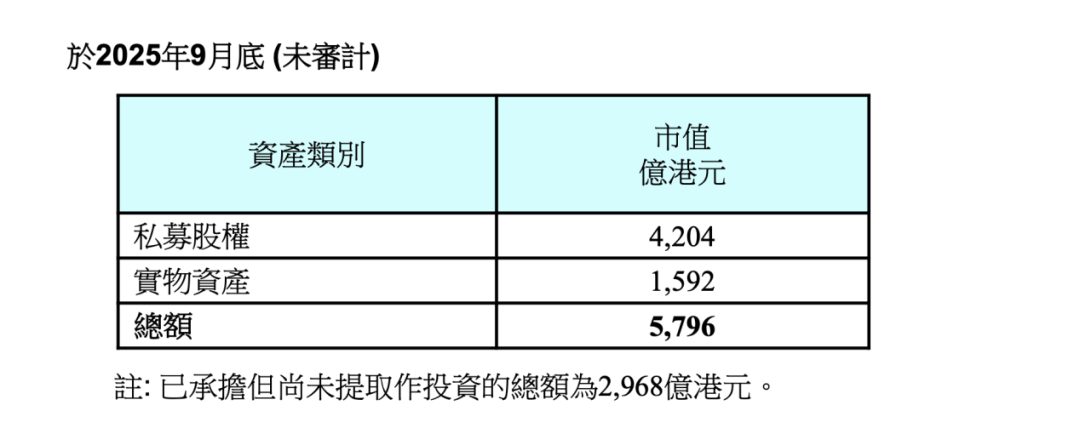
Core Insights - The Hong Kong Monetary Authority (HKMA) reported a record investment income of HKD 331 billion for the Hong Kong Exchange Fund in 2025, marking the highest return in history [1][6] - The fund's total assets reached HKD 41,514 billion by the end of 2025 [1] Investment Performance - The investment return rate for the Exchange Fund in 2025 was 8%, the best performance since 2007 [7][9] - The "investment portfolio" achieved a return rate of 12.4%, while the "support portfolio" had a return rate of 5.2% [6] - All major components of the fund recorded positive returns, a rare occurrence in the past 15 years [6][4] Asset Composition - As of the end of 2024, the proportion of non-USD assets in the Exchange Fund increased, with USD assets accounting for 79%, down from 85% in previous years [2] - The fund held HKD 4,204 billion in private equity and HKD 1,592 billion in physical assets as of September 2025 [3] Long-term Strategy - The HKMA emphasized a cautious and flexible management approach, focusing on capital preservation and long-term value growth [6] - The long-term growth portfolio has an annualized internal return rate of 11.2% since its inception in 2009 [6]
If You Had Invested the Cost of 5 Disney Trips in Disney Stock 20 Years Ago, You’d Have a Six-Figure Return Today
Yahoo Finance· 2026-01-24 12:56
Core Insights - The cost of a typical weeklong trip to Disney World for a family of four in 2025 is estimated to be around $6,785, excluding airfare and other travel expenses, which could bring the total cost between $5,000 and $10,000 [3][4] - Investing the equivalent of five Disney trips, approximately $37,500, into Disney stock 20 years ago would have resulted in owning about 1,877 shares, which would be worth $197,648 today, given the current share price of $105.30 [4][5] - The comparison illustrates that investing in Disney stock instead of spending on vacations could have more than quadrupled the original investment, highlighting the opportunity cost of discretionary spending [6] Cost Analysis - A typical Disney trip includes seven nights of accommodations, six days of theme park tickets, Lightning Lane access, and a dining plan, with additional food costs estimated at $20 per person per day [6] - The historical price of Disney stock was $19.97 on December 5, 2005, allowing for the purchase of approximately 1,877 shares with the investment amount equivalent to five trips [4] Investment Comparison - Disney stock has shown an average annual rate of return of about 8.67% over the past 20 years, which is lower than the S&P 500's average annual return of 10.5%, indicating that alternative investments could have yielded higher returns [6][7]
海尔智家:公司高度重视投资回报
Zheng Quan Ri Bao· 2026-01-13 09:37
Core Viewpoint - Haier Smart Home demonstrates operational stability, reflecting the effectiveness of its strategy and the resilience of its core business, which serves as a solid foundation for long-term value recovery [1] Group 1: Company Strategy and Performance - The company emphasizes the importance of investment returns and has established a diversified return mechanism, including cash dividends and share buybacks [1] - Management will continue to focus on core business operations, enhancing operational quality and core competitiveness [1] Group 2: Future Outlook - The company is committed to delivering steady performance growth and long-term development prospects to reward investor trust [1]
