
全球经济风险

Search documents
欧洲央行管委Kocher:贸易威胁推升经济风险
Jin Rong Jie· 2026-01-23 15:48
欧洲央行管理委员会成员Martin Kocher警告称,为实现政治目的而抛出关税言论,可能会损害经济增 长。尽管美国总统唐纳德·特朗普围绕格陵兰问题提出的关税措施如今已被撤回,但"不确定性的急剧上 升尤为棘手,"这位奥地利央行行长在接受Platow采访时表示,"这影响投资决策,削弱企业和家庭的信 心,由此产生的负面效应远超贸易层面的直接影响"。"将贸易政策威胁作为政治施压手段,会在中长期 内推高全球经济整体风险,并损害所有相关方,"他补充道。 ...
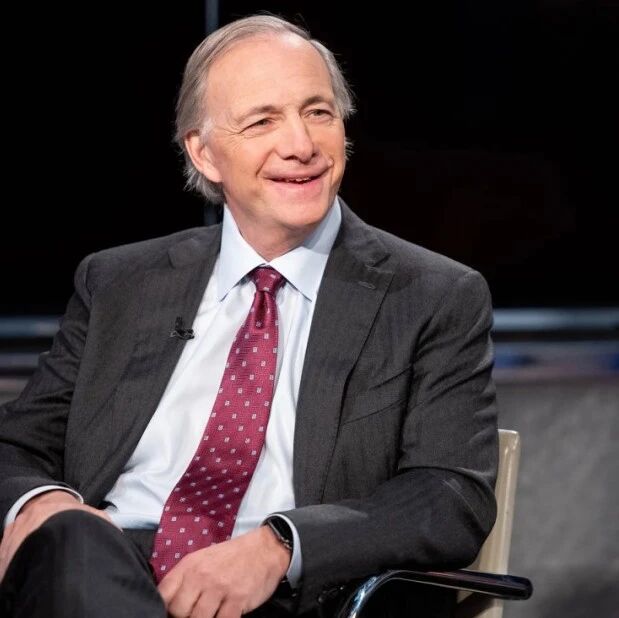
达利欧:未来两年全球经济“岌岌可危”,不要因为AI估值过高就急于退出
美股IPO· 2025-12-09 00:55
Core Viewpoint - Dalio warns that the global economy will face dangers in the next one to two years due to the overlapping cycles of debt, political conflict, and geopolitical tensions [1][3] Group 1: Economic Risks - The global debt burden is beginning to exert pressure on specific market segments, with governments unable to raise taxes or cut welfare, leading to fiscal dilemmas [3] - Political polarization is intensifying, with the rise of left-wing and right-wing populism indicating irreconcilable divisions [3][4] Group 2: AI Bubble Concerns - Dalio acknowledges that the AI sector has entered a bubble phase, though he believes it is not as severe as the 1929 bubble [5] - Investors should not hastily exit AI investments solely due to high valuations but should focus on identifying substantial signals of bubble bursts [5][6] - The catalysts for bubble bursts typically arise from monetary tightening or forced asset sales to meet debt obligations [6] Group 3: Investment Strategies - Attention is drawn to the pressures in venture capital, private equity, and commercial real estate, where low-cost debt is facing challenges due to higher interest rates [7] Group 4: Middle East as an Emerging AI Hub - Dalio compares the rise of certain Middle Eastern countries to Silicon Valley, noting that the region is rapidly becoming a significant global AI center [8][9] - The UAE and neighboring countries are combining vast capital pools with global talent inflows, attracting investment managers and AI innovators [9] - Major projects worth hundreds of billions of dollars are being initiated in cloud computing, data centers, and other AI infrastructure, supported by sovereign wealth capital and global tech partners [9][10]

1000亿蒸发!一场潜在的全球危机即将爆发?
大胡子说房· 2025-11-04 11:21
Core Viewpoint - The recent bank failures in the U.S. highlight a significant macroeconomic issue, specifically a liquidity crisis in the dollar, which could impact global asset prices and wealth [1][2]. Group 1: Bank Failures - Two regional banks in the U.S., Zion Bank and Western Alliance Bank, reported significant bad debts due to loan fraud, amounting to approximately $50 million and $99 million respectively [1]. - The exposure of these bad debts led to a loss of over $100 billion in market capitalization for 74 major U.S. banks in a single day [1]. Group 2: Dollar Liquidity Crisis - The liquidity crisis is evidenced by the decline in the U.S. banking system's reserves, which have fallen below $3 trillion, indicating that banks are increasingly using their emergency funds [2]. - The SOFR (Secured Overnight Financing Rate) has risen above the banks' benchmark rates, indicating a severe cash shortage among banks, with the overnight rate reaching 4.3% compared to a benchmark of 4.11% [3]. Group 3: Impact of Non-Dollar Assets - Non-dollar assets, particularly gold, have absorbed a significant amount of dollars, with gold's market value exceeding $30 trillion, making it comparable to U.S. Treasury securities [4][6]. - The rise of cryptocurrencies, with a market value of approximately $3 trillion, has also contributed to the depletion of dollar liquidity [6]. Group 4: Federal Reserve's Role - The Federal Reserve has been reducing its balance sheet for nearly four years, decreasing from $9 trillion to about $6.7 trillion, which has significantly reduced market liquidity [7]. - Despite recent interest rate cuts, the liquidity crisis persists, and the Fed has not provided a clear timeline for transitioning from balance sheet reduction to expansion [7]. Group 5: Global Economic Risks - The liquidity crisis in the dollar could lead to a global financial crisis, as historical patterns suggest that such crises often precede significant banking failures in the U.S. [8]. - The potential for systemic risks in the global economy is heightened by ongoing geopolitical tensions and economic policies [8].

1000亿蒸发!一场潜在的全球危机即将爆发?
大胡子说房· 2025-10-22 11:01
Core Viewpoint - The recent bank failures in the U.S. highlight a significant macroeconomic issue, specifically a liquidity crisis in the dollar, which could impact global asset prices and wealth [1][2]. Group 1: Bank Failures - Two regional banks in the U.S., Zion Bank and Western Alliance Bank, reported significant bad debts due to loan fraud, amounting to approximately $50 million and $99 million respectively [1]. - The exposure of these bad debts led to a loss of over $100 billion in market capitalization for 74 major U.S. banks in a single day [1]. Group 2: Dollar Liquidity Crisis - The liquidity crisis is evidenced by the decline in the U.S. banking system's reserves, which have fallen below $3 trillion, indicating that banks are increasingly using their emergency funds [2]. - The SOFR (Secured Overnight Financing Rate) has risen above the banks' benchmark rates, indicating a severe cash shortage among banks, with the overnight rate reaching 4.3% compared to a benchmark of 4.11% [3]. Group 3: Impact of Non-Dollar Assets - Non-dollar assets, particularly gold, have absorbed a significant amount of dollars, with gold's market value exceeding $30 trillion, making it comparable to U.S. Treasury securities [4][6]. - The rise of cryptocurrencies, with a market value of approximately $3 trillion, has also contributed to the depletion of dollar liquidity [6]. Group 4: Federal Reserve's Role - The Federal Reserve has been reducing its balance sheet for nearly four years, decreasing from $9 trillion to about $6.7 trillion, which has further constrained market liquidity [7]. - The Fed's potential shift from balance sheet reduction to expansion remains uncertain, indicating that the liquidity crisis may not be resolved in the short term [7]. Group 5: Global Economic Implications - A worsening dollar liquidity crisis could lead to a global financial crisis, as historical patterns suggest that liquidity risks often precede significant banking failures in the U.S. [8]. - The current geopolitical climate, particularly actions by U.S. leadership, may exacerbate systemic risks in the global economy [8].

IMF和世界银行年会聚焦全球经济风险
Huan Qiu Shi Bao· 2025-10-13 22:49
Core Insights - The upcoming meetings of global policymakers and finance ministers will focus on the escalating tensions in world trade, exacerbated by the U.S. government's threats of imposing significant tariffs, alongside political uncertainties in countries like Japan and France, raising concerns about potential shocks to the global economy [1] - The three major risks facing the global economy are identified as tariffs, government debt, and the potential bubble in technology stocks [2] - The International Monetary Fund (IMF) is expected to update its global GDP growth forecast during the annual meetings, with a previous prediction of a 3% growth rate for this year, indicating a slowdown in growth for 2024 [4] Group 1: Trade and Tariffs - The global economy has so far withstood the largest tariff shocks initiated by the U.S. since the 1930s, but experts warn that this resilience is unsustainable and a slowdown is anticipated [2] - The World Trade Organization (WTO) has projected that the growth rate of global merchandise trade will plummet to 0.5% by 2026, significantly lower than the expected 2.4% growth for this year [2] Group 2: Technology Sector - Concerns are rising regarding a potential reversal in the boom of artificial intelligence, with the S&P 500 index having risen 32% since its low in April, despite recent tariff threats impacting the market [3] - The IMF president has cautioned that U.S. stock valuations are nearing levels seen during the internet bubble 25 years ago, suggesting that a significant market correction could tighten financial conditions and hinder global economic growth [3] Group 3: Government Debt - The issue of rising public debt is a focal point of the meetings, with global debt increasing by over $21 trillion in the first half of this year, reaching a record high of nearly $338 trillion [3] - Analysts indicate that struggling governments are cutting back on healthcare and education spending, prompting calls from leading economists for debt relief measures [3]
【环球财经】欧元区8月通胀率升至2.1%
Xin Hua She· 2025-09-03 06:33
Core Insights - Eurozone inflation rate for August is reported at 2.1%, up from 2.0% in July, indicating a return above the European Central Bank's medium-term target level [1] - Core inflation, excluding energy, food, and tobacco, remains steady at 2.3% for August, unchanged from July [1] Inflation Details - Food and tobacco prices increased by 3.2% year-on-year in August - Service prices rose by 3.1% year-on-year - Non-energy industrial goods prices saw a rise of 0.8% - Energy prices decreased by 1.9% [1] Country-Specific Inflation Rates - Germany's inflation rate stands at 2.1% - France's inflation rate is at 0.8% - Italy's inflation rate is recorded at 1.7% - Spain's inflation rate is at 2.7% [1] Economic Outlook - Chief economist at ING, Bert Colijn, highlights that global economic risks remain significant, and inflation volatility risks persist - Current data suggests inflation will remain close to the European Central Bank's 2% target level [1] Central Bank Policy - The European Central Bank announced on July 24 to maintain the three key interest rates unchanged, marking the first pause in interest rate cuts since June of the previous year [1]
美国增加印度关税至50% 国际白银行情拉高反转
Jin Tou Wang· 2025-08-07 07:58
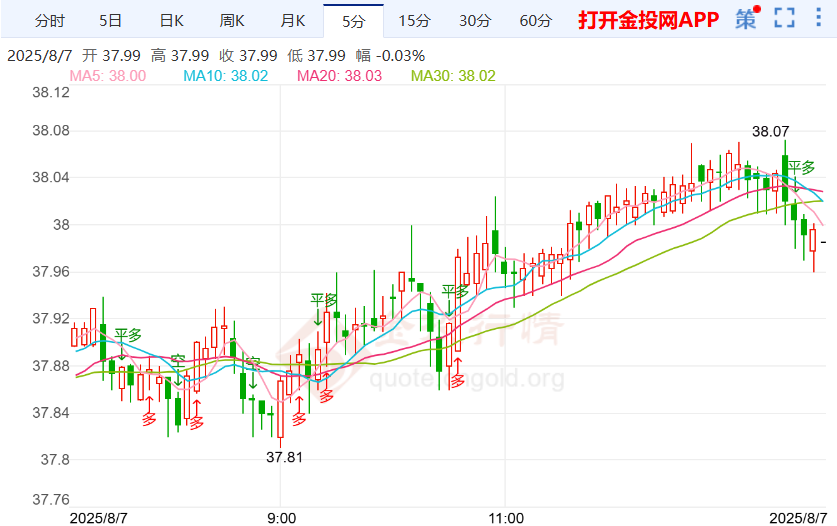
Group 1 - International silver is currently trading below $38.01, with a recent report indicating a price of $38.00, reflecting a 0.44% increase from the opening price of $37.82 per ounce [1] - The highest price reached today was $38.07, while the lowest was also $38.07, indicating a short-term bullish trend in the silver market [1] - Analysts suggest that silver has room for further increases, with potential targets around $38.5, while support levels are noted at $37.65 and $37.50 [4] Group 2 - President Trump has imposed an additional 25% tariff on Indian goods due to India's continued purchase of Russian energy, raising the total tariff rate to 50% [3] - Following this announcement, the iShares MSCI India ETF dropped to a session low, and oil prices increased, indicating market reactions to the tariff news [3] - The U.S. is set to raise import tariffs on several trade partners, including India, as part of a strategy to reduce trade deficits and boost domestic manufacturing [3]
G-20公报达成共识,承诺加强合作
news flash· 2025-07-18 13:13
Group 1 - The G-20 communiqué highlights that the global economy is facing greater uncertainty and complex challenges, including ongoing wars and conflicts, geopolitical tensions, and trade disputes [1] - The communiqué emphasizes the importance of strengthening multilateral cooperation to address existing and emerging risks to the global economy [1]
G20财长和央行行长会议公报:我们强调加强多边合作以应对现有和新出现的全球经济风险的重要性。
news flash· 2025-07-18 12:59
Core Points - The G20 finance ministers and central bank governors emphasized the importance of strengthening multilateral cooperation to address existing and emerging global economic risks [1] Group 1 - The meeting highlighted the need for collaborative efforts among nations to effectively tackle economic challenges [1] - There is a focus on both current and new economic risks that could impact global stability [1] - The statement reflects a commitment to enhancing international cooperation in economic policy-making [1]

国际清算银行报告指出——美加征关税颠覆世界经济软着陆预期
Jing Ji Ri Bao· 2025-07-10 22:02
Group 1 - The comprehensive tariff war initiated by the US government in April has disrupted the expected soft landing of the global economy, leading to increased policy uncertainty and a downward revision of economic growth forecasts [1] - The report highlights that the global economy showed signs of soft landing at the beginning of 2025, with inflation rates nearing target levels and a global growth rate slightly above 3% in 2024, but the sudden tariff war has darkened the global economic outlook [1][2] - The report indicates that the potential growth rate of the real economy has been declining, with high public debt levels and risks in non-bank financial institutions exacerbating global economic risks [2] Group 2 - The report emphasizes that the role of non-bank financial institutions has increased significantly in cross-border financial transactions, raising concerns about liquidity mismatches and potential market panic [3] - Effective economic policies must maintain economic and financial stability while promoting sustainable growth, which requires clear goals and appropriate tools to build and maintain public confidence [3] - To restore the global economy, the report calls for structural reforms, fiscal policies, regulatory policies, and monetary policies to enhance market vitality and ensure debt sustainability [4]