关税新政

Search documents
8.25黄金逆袭70美金 挺进3400
Sou Hu Cai Jing· 2025-08-25 07:50
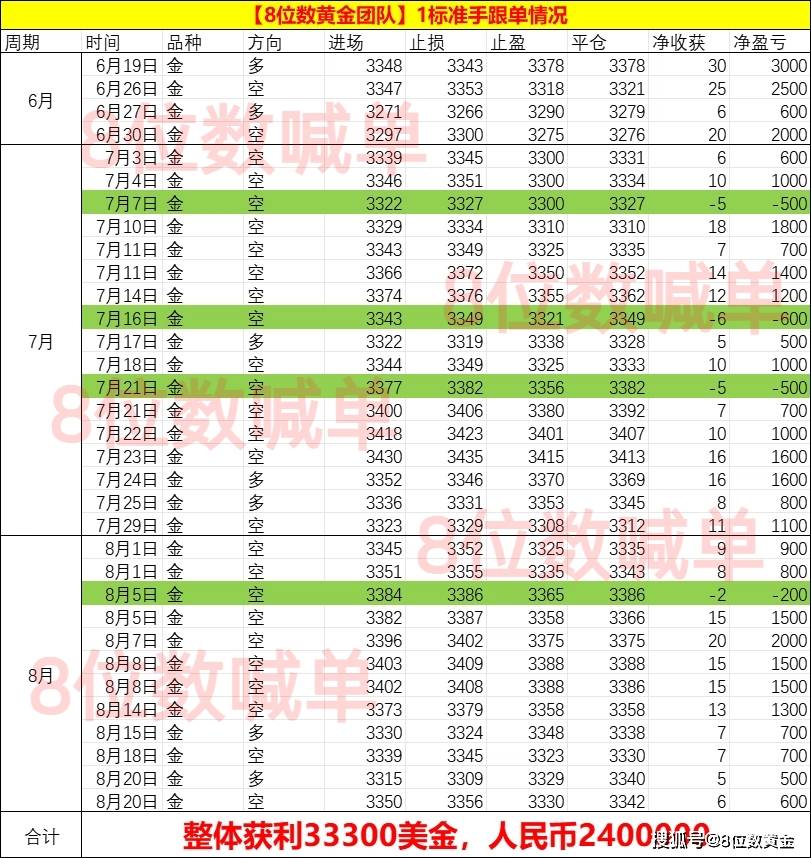
Group 1 - Gold experienced a strong rebound last week, rising by $70, indicating a return of bullish sentiment with a target of $3400 [1][4] - The overall strategy in July and August has been consistently profitable [1] - The gold market has shown a pattern of volatility, with significant price fluctuations around the $3300 mark over the past four months [11] Group 2 - Key factors influencing the gold market include geopolitical tensions easing due to US-Russia meetings and stronger-than-expected US economic data, which has led to a mixed outlook for the Federal Reserve [12] - The unexpected dovish stance from the Federal Reserve Chairman, amid pressure from President Trump, has contributed to a decline in the dollar, benefiting gold prices [12] - Upcoming economic indicators, such as the July PCE price index and consumer confidence index, are critical for assessing inflation and may impact Federal Reserve decisions [13] Group 3 - The investment strategy emphasizes the importance of accurately determining entry and exit points for gold trading, which requires extensive practical experience [13] - Risk management is essential for maximizing profit opportunities, with a focus on following experienced traders to achieve higher accuracy in trades [14] - The gold trading team claims an impressive accuracy rate of 85% or higher, with significant profit potential per trade [14]

中美博弈开始动真格了!中国抽走美债筹码,特朗普失算了
Sou Hu Cai Jing· 2025-07-01 05:55
Core Insights - The turmoil triggered by U.S. Treasury bonds is causing significant disruptions in global markets, with China taking decisive actions that have caught the U.S. off guard [1] - The surge in the 10-year U.S. Treasury yield, which rose by 50 basis points to 4.49% in just one week, marks the largest weekly increase since 2003, leading to massive sell-offs in the investment market [3] - The trend of "de-dollarization" is gaining momentum, with the dollar's share in global foreign exchange reserves dropping to 57.8%, the lowest since 2000 [22] Group 1: U.S. Treasury Market Dynamics - China has reduced its holdings of U.S. Treasury bonds for two consecutive months, bringing its April holdings down to $757 billion, a 40% decrease from its peak of $1.3 trillion a decade ago [8] - Canada has also significantly sold off U.S. Treasury bonds, offloading $57.8 billion in a single move, indicating a rapid exit from the market [8] - The Federal Reserve has temporarily adjusted bank capital rules to allow banks to purchase more U.S. Treasuries, aiming to stabilize the market amid rising sell-offs [14] Group 2: Global Economic Implications - The U.S. is facing a looming debt crisis, with $6.6 trillion in debt maturing by June 2025, equivalent to Germany's annual GDP [18] - Moody's downgraded the U.S. sovereign credit rating from Aaa to Aa1, citing political risks and uncontrollable debt, marking the first downgrade in twenty years [20] - The combination of rising tariffs and a debt crisis is leading to increased global risk aversion, prompting investors to flee the U.S. Treasury market [12][10] Group 3: Shifts in Global Financial Landscape - The trend of using the Chinese yuan for oil transactions is increasing among Middle Eastern oil-producing countries, further promoting the de-dollarization movement [40] - The U.S. military-industrial complex is feeling the impact of these financial shifts, with critical supply chains being disrupted due to reduced access to essential materials like rare earth elements [30] - The ongoing geopolitical tensions and economic strategies are reshaping global supply chains and financial systems, with countries like China leveraging their resources and financial tools to counter U.S. dominance [42][45]

PTA:假期终端减产预期下,PTA延续成本主导,MEG:向上动能不足,乙二醇延续震荡格局
Zheng Xin Qi Huo· 2025-04-28 11:29
1. Report Industry Investment Rating There is no information provided in the content about the report industry investment rating. 2. Core Views of the Report - In the short - term, PTA is expected to continue its cost - driven market. The supply is expected to shrink due to multiple PTA device overhauls next week, and the polyester load remains high, maintaining a tight balance in supply and demand. However, trade disputes have led to a continuous decline in the terminal weaving load, increasing the negative feedback and the expectation of polyester production cuts [6]. - In the short - term, ethylene glycol is expected to continue its oscillating pattern. The domestic ethylene glycol operating rate has dropped to around 60%, and the polyester operating rate remains high. There was inventory reduction in April from a marginal supply - demand perspective. But macro - uncertain factors affect the market, and the negative feedback from the terminal weaving industry is intensifying, resulting in insufficient upward momentum in the market [6]. 3. Summary According to the Directory 3.1 Upstream Analysis of the Industrial Chain - **Market Review**: Terminal demand was sluggish, but the negative impact of the new US tariff policy weakened significantly. Crude oil prices rose, and PX prices increased slightly. As of April 25, the closing price of Asian PX was $752/ton CFR China, up $12/ton from April 17 [16]. - **PX Supply**: The weekly average PX capacity utilization rate was 77.17%, a 0.87% decrease from the previous week. The PX supply was at a low level under the overhaul process [20]. - **PX - Naphtha Spread**: As of April 25, the PX - naphtha spread was $170.3/ton, down $2/ton from April 17. The additional tariffs had a significant impact on the terminal textile and clothing industry, and the PX processing fee continued to decline during the week [21]. 3.2 PTA Fundamental Analysis - **Market Review**: With the restart of previously overhauled devices, domestic supply increased. The polyester end was operating at a high load, and the supply - demand remained in a tight pattern. At the beginning of the week, the terminal performance was poor, polyester sales were mediocre, and the market center weakened. In the middle of the week, there was an expectation of easing in the tariff dispute, the commodity sentiment recovered, and the PTA spot center strengthened. As of April 18, the PTA spot price was 4,428 yuan/ton, and the spot basis was 2505 + 18 or 09 + 43 [26]. - **Capacity Utilization**: The weekly average PTA capacity utilization rate reached 80.04%, a 3.30% increase from the previous week. Yisheng Dahua and Fujian Baihong restarted as scheduled, and other devices remained stable, resulting in a significant increase in domestic capacity utilization. In April, there were overhaul plans for Yisheng Hainan, Baihong, Sichuan Energy Investment, and Jiayuan Energy, and there were restart plans for Yisheng Dahua, Baihong, and Taihua within the month. There was an expectation of capacity utilization recovery for domestic PTA in April [31]. - **Processing Fee**: Due to the increase in domestic supply and the spread of pessimism on the demand side, the PTA processing fee decreased significantly compared to the previous period. The average PTA processing fee was 281 yuan/ton, a 11.8% decrease. Next week, the supply will shrink significantly, but the terminal and downstream are pessimistic, and the probability of polyester load reduction is high. The PTA processing fee may remain at a low level [34]. - **Inventory Expectation**: In April, some PTA devices had overhaul plans, and there would be no new PTA device put into production. Downstream polyester new devices were continuously being put into production, and the demand for polyester bottle chips increased during the peak season for soft drinks in the second quarter. There was still an expectation of inventory reduction in April [35]. 3.3 MEG Fundamental Analysis - **Market Fluctuation**: After briefly breaking through the support level of 4,200 yuan in Zhangjiagang, bargain - hunting buyers entered the market, and ethylene glycol stabilized and rebounded. However, due to the unstable external economic environment, the upward momentum was insufficient, and the fluctuation of ethylene glycol narrowed. As of April 25, the closing price of ethylene glycol in Zhangjiagang was 4,184 yuan/ton, and the delivered price in the South China market was 4,380 yuan/ton [40]. - **Production**: The total domestic ethylene glycol capacity utilization rate was 61.93%, a 0.01% decrease from the previous week. Among them, the capacity utilization rate of integrated devices was 67.01%, a 2.06% decrease, and the capacity utilization rate of coal - based ethylene glycol was 53.17%, a 3.53% increase. In April, the downstream and terminal were in the consumption peak season, and there was still an expectation of further increase in the operating rates of polyester and weaving. With multiple ethylene glycol devices having overhaul plans, there was an expectation of inventory reduction in the ethylene glycol supply - demand structure [45]. - **Inventory**: As of April 24, the total ethylene glycol port inventory in the main ports of East China was 68.77 tons, an increase of 1.1 tons from April 21 and a decrease of 1.9 tons from April 17. The inventory increased due to the slowdown in port shipments and relatively stable arrivals this week. As of April 30, 2025, the total expected arrival volume of ethylene glycol in East China was 24.82 tons, including 9.92 tons in Zhangjiagang, 7.7 tons in Taicang, 6 tons in Ningbo, and 1.2 tons in Jiangyin [48]. - **Production Profit**: With ethylene glycol operating weakly, the production profits of various processes declined. The profit of naphtha - based production was - $121.49/ton, a decrease of $24.47/ton from the previous week, and the sample profit of coal - based ethylene glycol was - 269.7 yuan/ton, a decrease of 72.25 yuan/ton from the previous week [52]. 3.4 Downstream Demand Analysis of the Industrial Chain - **Polyester Capacity Utilization**: The weekly average polyester capacity utilization rate was 91.75%, a 0.67% increase from the previous week. There were both device overhauls and restarts during the week. Although the Sanfangxiang device was overhauled and Sheng Hong reduced production, devices such as Wankai, Xingbang, and Yihua restarted, and Jingwei increased its load. The overall supply increase was slightly higher than the decrease, resulting in a slight increase in weekly production and capacity utilization [55]. - **Polyester Production**: In April, there were both overhauls and restarts within the month, and there was an expectation of new device commissioning. It was expected that the monthly polyester production would decline slightly [56]. - **Product Inventory**: This week, downstream rigid - demand replenishment led to a surge in polyester sales, and the inventory of polyester products decreased [62]. - **Polyester Cash Flow**: Downstream textile enterprises mostly planned to shut down for overhauls during the May Day holiday, and the terminal outlook was pessimistic. Polyester factories mainly promoted sales with price concessions [65]. - **Weaving Industry**: As of April 24, the operating load of the weaving industry was 55.15%, a 0.79% decrease from the previous data. The average number of terminal weaving order days was 8.65 days, a decrease of 0.30 days from the previous week. The recent US reciprocal tariff policy has dragged down market demand, and the demand in the textile and clothing industry has been continuously poor. Factories mainly produced based on actual orders, and raw material procurement was more cautious due to poor orders, with purchases made as needed [70]. 3.5 Summary of Polyester Industrial Chain Fundamentals - **Cost End**: Terminal demand was sluggish, but the negative impact of the new US tariff policy weakened significantly. Crude oil prices rose, and PX prices increased slightly [72]. - **Supply End**: The weekly average PTA capacity utilization rate reached 80.04%, a 3.30% increase from the previous week. The total domestic ethylene glycol capacity utilization rate was 61.93%, a 0.01% decrease from the previous week [72]. - **Demand End**: The weekly average polyester capacity utilization rate was 91.75%, a 0.67% increase from the previous week. As of April 24, the operating load of the weaving industry was 55.15%, a 0.79% decrease from the previous data. The average number of terminal weaving order days was 8.65 days, a decrease of 0.30 days from the previous week [72]. - **Inventory**: There was an expectation of supply reduction for PTA, and the polyester load remained high, maintaining a tight balance in supply and demand. As of April 24, the total ethylene glycol port inventory in the main ports of East China was 68.77 tons, an increase of 1.1 tons from April 21 and a decrease of 1.9 tons from April 17 [72].
供应端依然紧张 燃料油期货短线呈现震荡偏强走势
Jin Tou Wang· 2025-04-23 06:13
Group 1 - The core viewpoint indicates that fuel oil futures are showing a strong performance, with the main contract reaching 3035.00 yuan/ton, reflecting a 2.57% increase [1] Group 2 - As of April 22, the Shanghai Futures Exchange reported low-sulfur fuel oil warehouse futures at 11,250 tons, unchanged from the previous trading day; fuel oil futures warehouse receipts stood at 46,170 tons, also unchanged [2] - The Chinese government has allowed the blending of high and low sulfur fuel oil using bonded logistics methods [2] - With a decrease in drone attacks, Russia's crude oil processing has increased, leading to a rise in fuel oil exports to Asia in April, while India has issued tenders for fuel oil sales, indicating a sufficient supply side [2] Group 3 - According to Ruida Futures, the market sentiment is influenced by the Federal Reserve's stance, with concerns over new tariff policies easing and the dollar index recovering; however, international oil prices have rebounded due to increased sanctions on Iran [3] - The downstream sector is experiencing a risk-averse mentality, putting pressure on refinery shipments, resulting in a bearish trading atmosphere in the fuel oil market [3] - Technical analysis suggests that the main contract for FU should focus on resistance around 3050 and support near 2900, indicating a short-term oscillating strong trend; for LU, resistance is around 3550 and support near 3380, also showing a short-term strong oscillating trend [3] Group 4 - South China Futures notes that in April, reduced exports from Russia and Iran have kept supply tight; however, there is a slight recovery in import demand from China and India, while the U.S. has seen a decline [3] - The overall import demand is weakening on a month-on-month basis, and due to tax deduction issues for high-sulfur fuel oil imports in China, a reduction in imports is expected to be a major trend [3] - High inventory levels in Singapore and Malaysia are easing the tight supply situation in the Singapore market, although short-term delivery products remain limited, keeping the short-term crack spread firm [3]
独家洞察 | 特朗普关税新政引发全球市场震荡,美经济衰退风险骤升
慧甚FactSet· 2025-04-10 06:43
美东时间4月2日下午,美国总统特朗普正式宣布酝酿已久的关税新政,核心内容包括对所有国家征收10% 的"基准关税",以及对部分贸易伙伴征收更高的"个性化对等关税",即任何一个国家对美国征收多少关 税,美国将以同等力度回敬。 全球股市遭抛售 新政一出,全球资本市场迅速反应,美股首当其冲。4月3日(周四)S&P 500大跌4.84%,创下自2020年 6月11日以来单日最差表现,随后在4月4日(周五)又下跌5.97%,是自2020年3月16日新冠疫情以来表 现最差的交易日。该指数两日跌幅达到10%。 高盛顶级交易员John Flood在周日的客户简报中表示,近期市场可能尚未见底,全球关税升级对GDP增 长、企业盈利和通胀的负面影响刚刚开始显现,市场波动性将持续,指数层面上可能尚未见到近期/中期 低点。不过他表示,高盛数据显示,当市场情绪降至目前极低水平时,未来两周S&P 500有70%概率实现 正回报。 亚太市场也未能幸免。清明节假期过后,恒生指数周一收报19828点,全日跌3021点,跌幅13.2%,创下 自1997年10月28日以来的单日跌幅纪录。而上证指数当日在有"国家队"的支持下,仍收跌7.34%,失守 3 ...


独家洞察 | 特朗普关税新政引发全球市场震荡,美经济衰退风险骤升
慧甚FactSet· 2025-04-10 06:43
Core Viewpoint - The article discusses the significant impact of the new tariff policy announced by President Trump, which includes a 10% baseline tariff on all countries and higher personalized tariffs on specific trade partners, aiming to reduce the U.S. trade deficit and reshape the global economic order [1][3]. Tariff Policy Details - The new tariff policy includes a 10% baseline tariff effective from April 5, 2023, and personalized tariffs that will take effect on April 9, 2023. Countries like China will face a 34% tariff, while others such as the EU, Vietnam, and Japan will see tariffs ranging from 20% to 49% [1][3]. - The policy is expected to have far-reaching effects on global trade, potentially increasing inflation and slowing economic growth in the U.S. [3]. Market Reactions - Following the announcement, global markets reacted negatively, with the S&P 500 dropping 4.84% on April 3 and an additional 5.97% on April 4, marking a total decline of 10% over two days [4]. - The Hang Seng Index fell by 13.2%, marking its largest single-day drop since October 1997, while the Shanghai Composite Index dropped 7.34% [5]. Economic Outlook - The risk of a U.S. economic recession has increased, with Goldman Sachs raising the probability of recession within the next 12 months from 35% to 45% and predicting a GDP growth of only 0.5% by Q4 2025 [6]. - Morgan Stanley is even more pessimistic, estimating a 60% chance of recession starting in June 2023 [6]. Expert Opinions - Former U.S. Treasury Secretary Larry Summers criticized the tariff policy as potentially the "largest suicidal policy in U.S. history," highlighting the increased uncertainty and risk of recession [7].